Old Delhi in January is colder than anyone warns you about.
I was walking back toward Chandni Chowk with numb fingers when I smelled something I couldn't place.
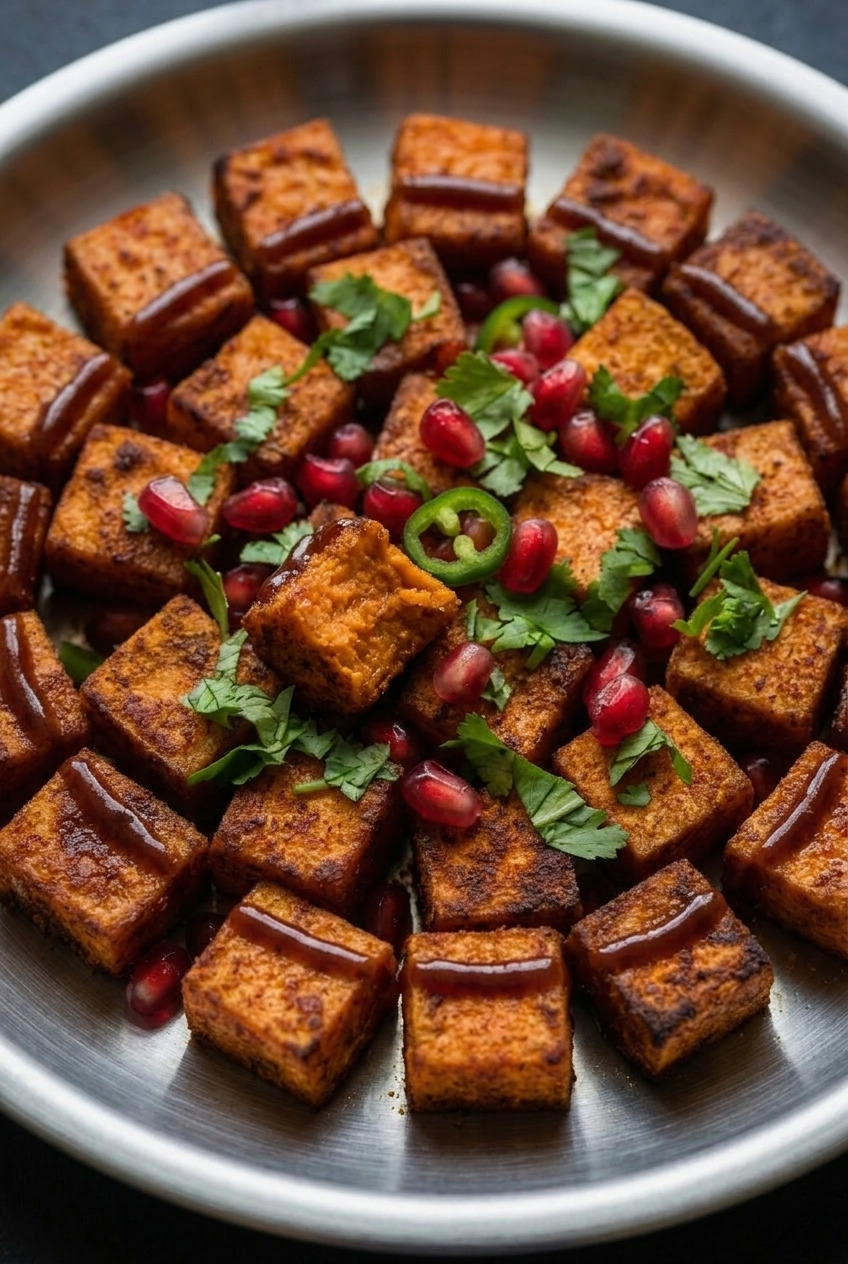
Sweet and smoky at once, coming off a cart with a flat bed of glowing coals.
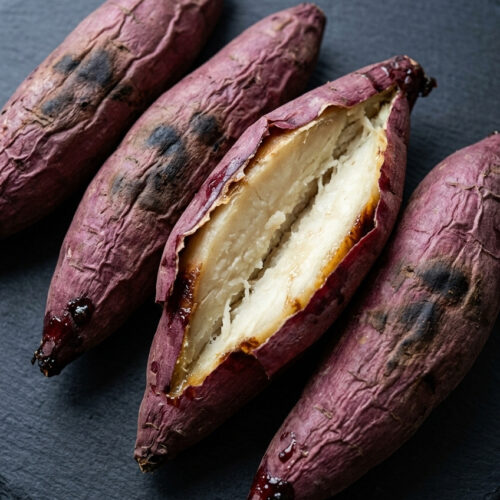
Whole sweet potatoes were sitting right on them, skins blackened and split.
The vendor pulled one off with his bare hands, peeled it in about four seconds, and cut it into rough chunks on a scarred wooden board.
A squeeze of lime, a hard shake of something rust-colored from a battered tin, a drizzle of dark chutney, and a scatter of coriander.
Sweet, sour, salty, smoky, faintly funky, all at the same time.
That's shakarkandi chaat. Shakarkandi is sweet potato in Hindi and Urdu, and chaat is the whole family of tangy, spiced Indian street snacks, from a verb that basically means to lick.
Carts across North India and Pakistan sell it from roughly November through February and then it vanishes until the next winter.
It is served WARM. That single fact fixes most of what goes wrong with the home versions I've tried.
My version roasts the cubes in the oven instead of boiling them, because roasting is the closest a home kitchen gets to those coals.
Boiled cubes taste fine and then collapse the second the chutney lands on them!
What Shakarkandi Chaat Is
This is street food with a season and a place, not a year-round salad. Knowing that changes how you serve it.
Chaat is enormous as a category. Aloo chaat, papdi chaat, fruit chaat, dahi puri, bhel puri, the list runs long.
What ties them together is a flavor idea rather than an ingredient: something starchy or crisp, hit with sour, salt, heat and sweetness all at once, then finished with something fresh.
Indians have a word for that combination, chatpata, and there's no clean English equivalent.
Shakarkandi chaat is the winter member of the family.
The traditional method is what I watched in Delhi, whole sweet potatoes roasted directly on charcoal until the skins char and the sugars caramelize.
Some carts boil them instead, which is faster and more common in Mumbai.
Either way it's cut to order, dressed to order, and eaten standing up within about ninety seconds.
It has a second life too, and I want to be straight about it.
During Navratri and other Hindu fasting periods, sweet potato is one of the permitted foods, so a fasting version of this chaat is genuinely popular.
That version is seasoned differently, and I've given it its own section below rather than pretending the two are the same dish.
Ingredients: Notes and Substitutions
Three of these are worth explaining properly rather than just listing. They're the ones that make it taste Indian rather than like spiced sweet potato.
- Sweet potatoes (1 ½ pounds, about 2 large). Any orange variety. Peel and cut into ¾ inch cubes. Bigger cubes hold their edges better once dressed.
- Neutral oil (1 tablespoon). For roasting. Nothing with a strong flavor.
- Lime (1, juiced). Lemon is what most Indian carts actually use. Either is right. The acid is the spine of the whole dish, so don't hold back.
- Roasted ground cumin (½ teaspoon). Toast whole seeds in a dry pan for 2 minutes and grind them. Pre-ground works, roasted is significantly better.
- Kashmiri red chili powder (¼ teaspoon). Mild, and mostly there for color. Cayenne works, use half as much.
- Pomegranate seeds (¼ cup) and fresh coriander (3 tablespoons). The finish. Cilantro if that's what your store calls it.
- Green chili (1, thinly sliced, optional). Serrano or Indian green chili. Heat, plus a grassy note.
Chaat Masala
This is the single most important ingredient and most recipes just say "add chaat masala." Here's what's actually in the tin.
It's a blend, usually of amchur (dried green mango powder, which brings the sourness), roasted cumin, black salt, coriander, dried ginger, black pepper, chili, and a whisper of asafoetida.
Buy it if you can. MDH and Everest are the standard boxes and both are excellent.
If you can't: combine 2 teaspoons amchur, 1 teaspoon roasted ground cumin, 1 teaspoon kala namak, ½ teaspoon ground coriander, ¼ teaspoon ground ginger, ¼ teaspoon black pepper, and a pinch of asafoetida. That gets you most of the way there.
Kala Namak, the Black Salt
This is the flavor people can't identify and can't stop eating. It is worth ordering online.
Kala namak is a kiln-fired volcanic rock salt, pinkish grey rather than black, and it smells distinctly sulfurous, a little like a boiled egg.
That sounds off-putting written down and it is exactly what makes chaat taste like chaat.
A four dollar bag will last you two years.
Substitute: fine sea salt plus an extra ¼ teaspoon of amchur. The dish will be good and it will be missing its signature note. I'd rather tell you that than pretend otherwise.
Tamarind Date Chutney
Called imli chutney, and it's what separates a real chaat from a bowl of spiced sweet potato. Sweet, sour, dark and sticky.
The proper version simmers tamarind pulp with dates, jaggery and spices for half an hour.
Any Indian grocery sells it in a jar and the jarred stuff is genuinely good.
My five minute version is below in the method, built from tamarind concentrate and a few Medjool dates.
How to Make Shakarkandi Chaat
Almost all of this is hands-off oven time. The assembly takes about two minutes and happens right before you eat.
Step 1: Roast the Sweet Potatoes
Heat the oven to 425°F.
Toss the ¾ inch cubes with the tablespoon of oil and a pinch of salt, and spread them on a sheet pan in a single layer.
Give them space. Crowded cubes steam instead of roasting, and steamed cubes are just boiled cubes with extra steps.
Roast for 30 to 35 minutes, turning once at the halfway point, until the edges are browned and slightly caramelized.
You want them tender all the way through but still holding a sharp edge.
Step 2: Make the Quick Tamarind Chutney
While the cubes roast, put 3 chopped Medjool dates in a small bowl with ⅓ cup of hot water and let them sit for 10 minutes.
Mash them into the water with a fork until it turns thick and pulpy.
Stir in 2 tablespoons of tamarind concentrate, 1 teaspoon of jaggery or brown sugar, ¼ teaspoon of roasted cumin, and a pinch of salt.
Taste it. It should be aggressively sour with the sweetness arriving second, not the other way round.
Pro tip: make a double batch. It keeps for two weeks and it improves everything from samosas to a cheese board.
Step 3: Toss While Warm
Tip the hot roasted cubes into a wide bowl.
Add the chaat masala, the roasted cumin, the kala namak, the chili powder and the lime juice.
Toss gently with a spoon, lifting rather than stirring, so the cubes stay whole.
Do this while they're still hot. Warm sweet potato absorbs the spice and the acid in a way cooled sweet potato simply won't.
Step 4: Finish and Serve Immediately
Move the dressed cubes to your serving plate.
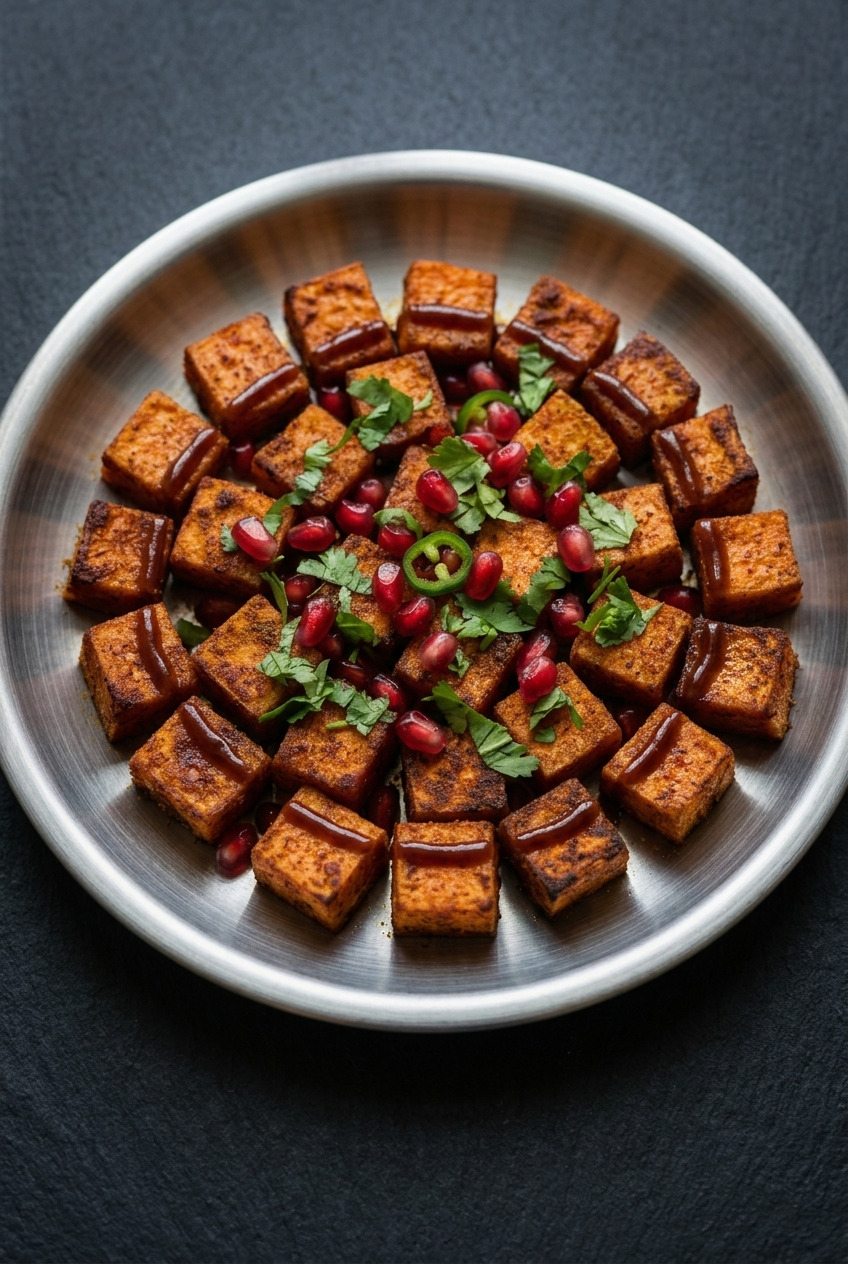
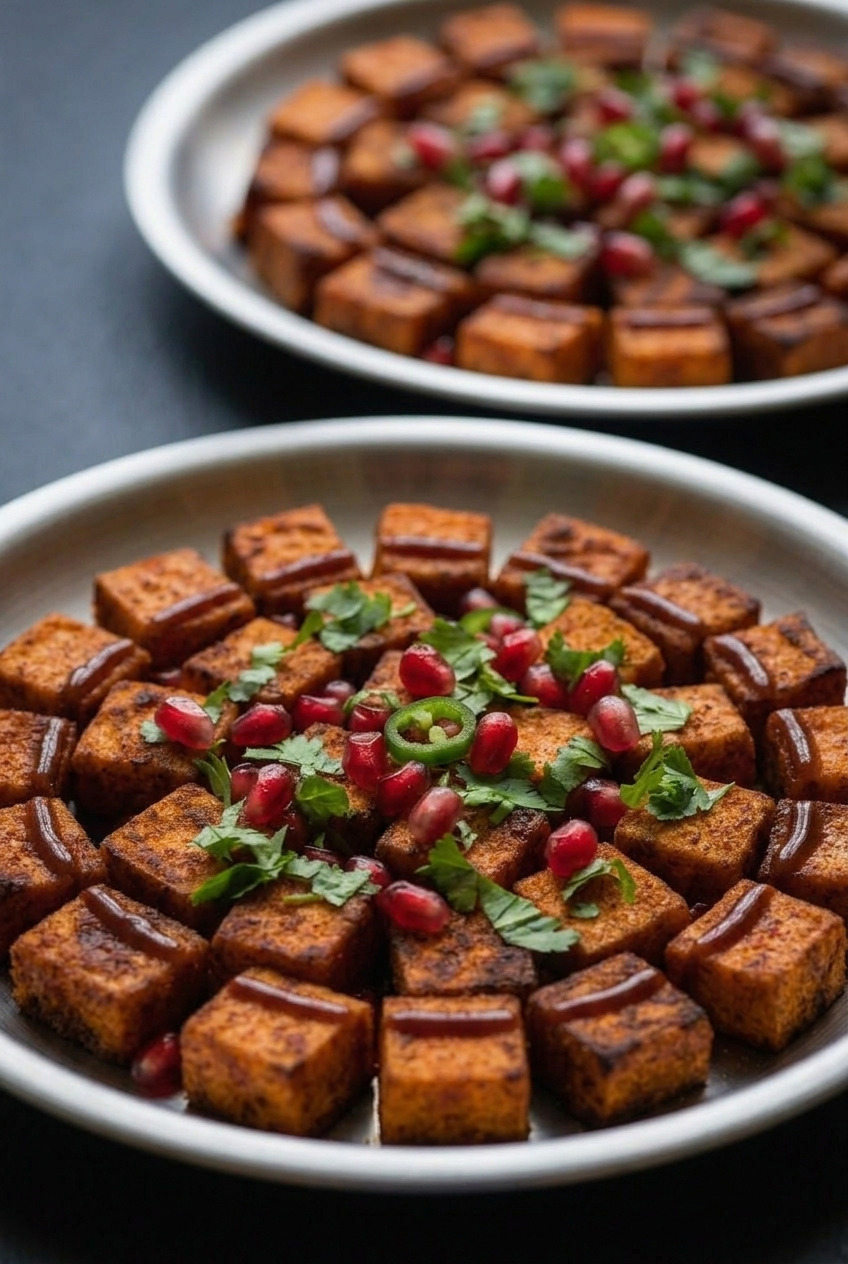
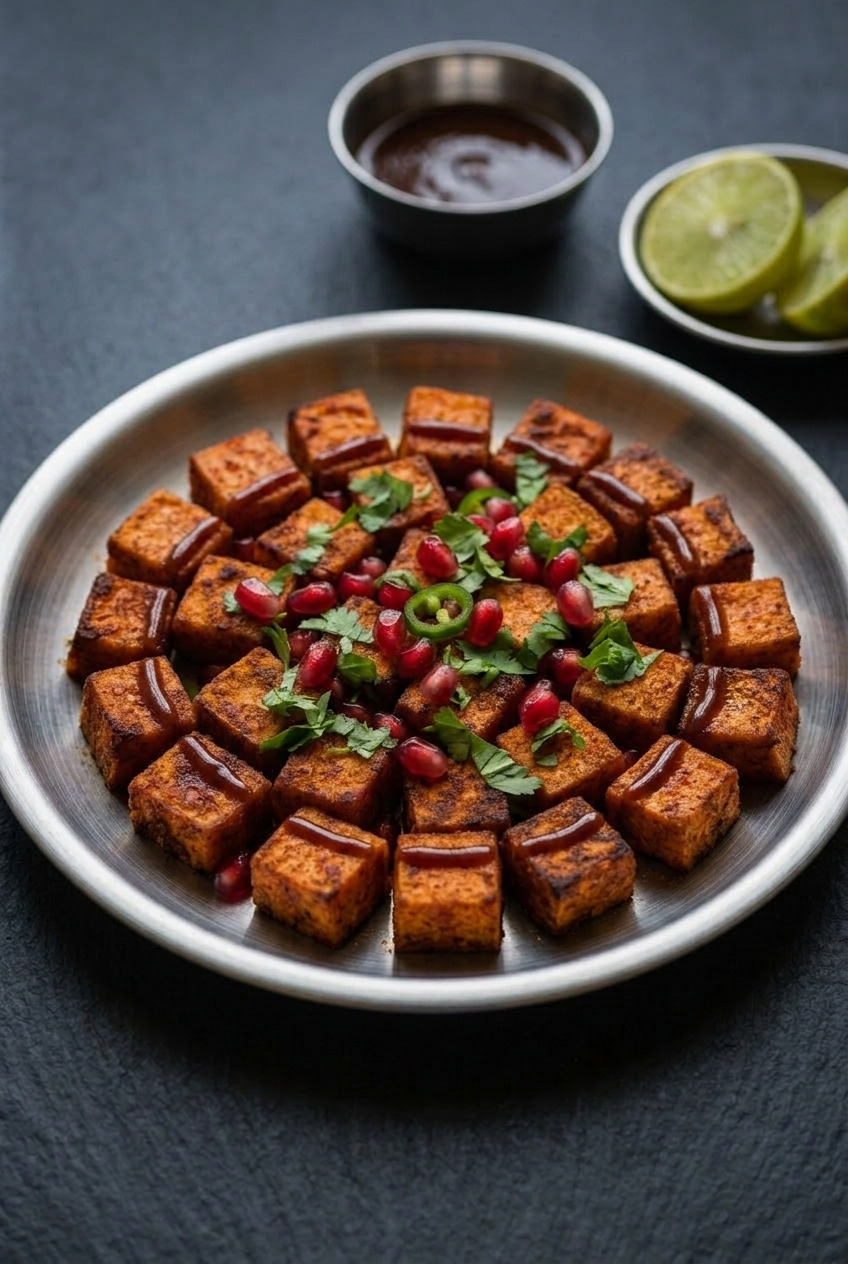
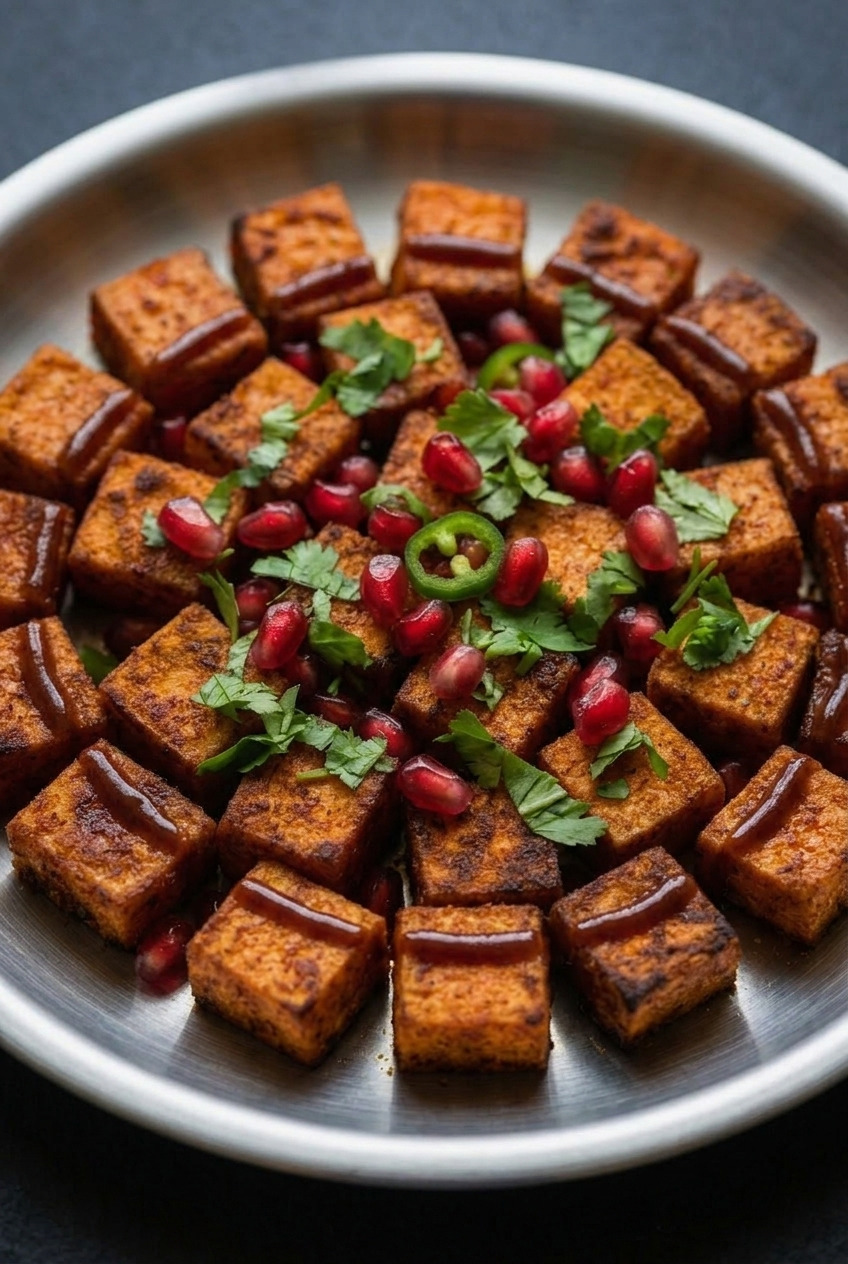
Drizzle the tamarind chutney over the top in thin lines rather than mixing it in.
Add the pomegranate seeds, the coriander, and the green chili if you're using it.
Serve right now, while it's warm, with extra chaat masala and lime on the table.
Waiting is the one thing that ruins it!
Boiled or Roasted? What Actually Changes
The internet is split down the middle on this and nobody explains the tradeoff. Both are legitimate. They give you different dishes.
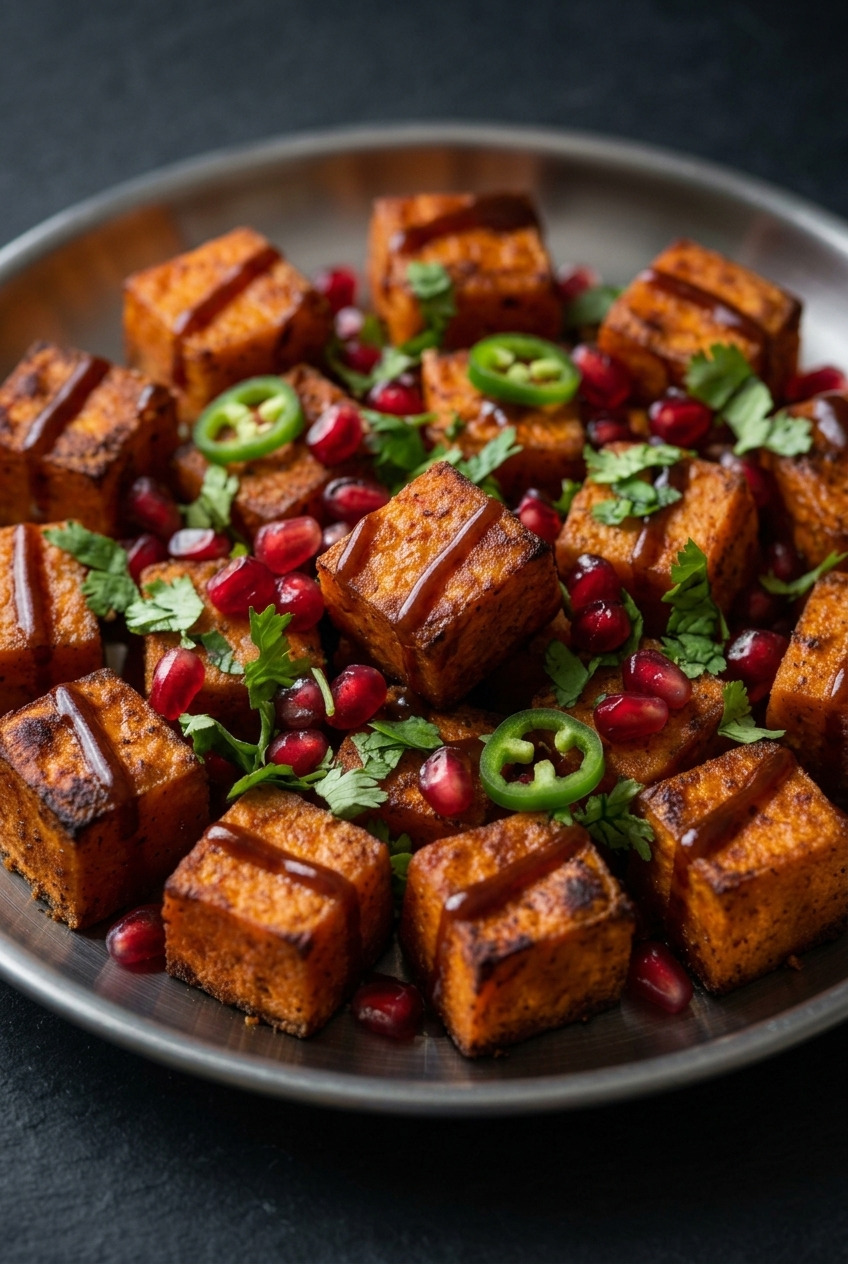
- Roasted, which is what I do. 425°F for 30 to 35 minutes. The cut faces caramelize and the cubes hold their shape after dressing. This is the closest a home oven gets to the charcoal carts of Delhi, and it's the version that still looks good ten minutes after you toss it.
- Boiled, which is the faster cart method. Whole in the skin for 25 to 30 minutes, or cubed for 10 to 12 minutes. Softer, more uniform, and honestly very authentic to Mumbai. Be warned that the cubes go fragile and start breaking down within minutes of the chutney hitting them.
- Air fryer, the compromise. 400°F for 18 to 20 minutes, shaking twice. Nearly as good as the oven and considerably faster.
- Grill or open flame, the real thing. Whole sweet potatoes directly on the coals of a charcoal grill for 40 to 50 minutes, turning occasionally, until the skin is black and blistered. If you're already grilling, do this. It's a completely different level.
Expert Tips
Five small things separate a good bowl from a flat one. Most of them are about timing.
- Cut after cooking if you can. Roasting demands cubes up front, but if you boil or grill whole, peel and cut afterward. The flesh holds together far better and it's what the vendors do.
- Dress warm, always. This is a winter street food. Cold from the fridge it tastes dull and slightly waxy, and the spices sit on the surface instead of soaking in.
- Chutney goes on last, over the top. Mix it through and it soaks in, the cubes go soggy, and you lose the sweet-sour hits that should arrive in separate bites.
- Go easy on extra salt. Chaat masala is already salted and so is kala namak. Taste before you add anything more.
- Check the acid before it goes out. Sweet potato varieties differ wildly in sugar. One batch will need a whole extra squeeze of lime and the next won't. Taste, then decide.
Serving Suggestions
Small portions, warm, eaten standing up. That's the format and it's worth copying.
- As a snack, the traditional way. Small bowls with a toothpick or a short skewer. No fork. That's how it comes off the cart.
- As part of a chaat spread. Alongside aloo tikki, papdi chaat and samosas. It's the warm, mellow one on the table and it balances the crunchier ones.
- As a winter side. It's excellent next to grilled chicken or a simple dal and rice, and it does something that no American sweet potato side does.
- As a party starter. Roast the cubes ahead, keep them warm in a low oven, and dress a batch every twenty minutes as people arrive.
- With yogurt, the softer version. A few spoonfuls of thick whisked yogurt under the cubes turns it into something closer to dahi chaat. Cooling, and good if you've gone heavy on the chili.
The Navratri Fasting Version
This is a genuinely different recipe, not just the same one relabeled. Worth knowing if you're cooking for someone observing a fast.
During Navratri and similar Hindu fasts, ordinary table salt, most commercial spice blends, onion, garlic and asafoetida are all off the table.
Chaat masala contains asafoetida and regular salt, so it goes.
Here's what changes:
- Sendha namak instead of chaat masala and table salt. Rock salt, the permitted one. It's clean and plain, so the seasoning has to come from elsewhere.
- Amchur carries the sourness. ½ teaspoon of dry mango powder, plus more lemon juice than the street version uses.
- Black pepper instead of chili powder. Some fasting traditions permit green chili, many don't allow red chili powder.
- No tamarind chutney. It's usually made with regular salt and asafoetida. Skip it, or make a fasting-safe version with sendha namak.
- Boil rather than roast. The fasting version is traditionally boiled and kept very simple. Sweet potato, rock salt, black pepper, amchur, lemon, coriander. That's the whole thing.
Make Ahead and Storage
Everything holds except the assembled chaat, which holds for about twenty minutes. Build your timing around that.
- The roasted cubes. Up to 2 days in the fridge, undressed and in a covered container. Reheat in a 400°F oven for 8 minutes to bring back the edges before you dress them.
- The tamarind chutney. 2 weeks refrigerated in a jar, and it thickens as it sits. Loosen with a spoonful of hot water.
- Assembled chaat. Twenty minutes, maybe thirty. The salt pulls water out of the sweet potato and the whole thing goes watery at the bottom of the bowl. There's no fixing that, so assemble at the last minute.
- Leftovers. Honestly not great, but not wasted. Mash them the next day with a little more lime and eat them on toast.
- The spice mix. Premix the chaat masala, cumin, kala namak and chili powder in a small jar and it keeps 3 months. That turns a weeknight batch into a two minute job.
Warm, sour, sweet and just a little funky. Give it a try!
Recipe Card
Recipe
Shakarkandi Chaat (Indian Sweet Potato Street Salad)
Ingredients
For the Chaat
- 1 ½ lb sweet potatoes about 2 large, peeled and cut into ¾ inch cubes
- 1 tablespoon neutral oil
- 1 ½ teaspoon chaat masala
- ½ teaspoon roasted ground cumin
- ½ teaspoon kala namak black salt
- ¼ teaspoon Kashmiri red chili powder
- 1 lime juiced
For the Quick Tamarind Chutney
- 3 Medjool dates pitted and chopped
- ⅓ cup hot water
- 2 tablespoon tamarind concentrate
- 1 teaspoon jaggery or brown sugar
- ¼ teaspoon roasted ground cumin
- 1 pinch salt
To Finish
- ¼ cup pomegranate seeds
- 3 tablespoon fresh coriander chopped, also sold as cilantro
- 1 green chili thinly sliced, optional
Instructions
Roast the Sweet Potatoes
- Heat the oven to 425°F. Toss the sweet potato cubes with the oil and a pinch of salt and spread them in a single layer on a sheet pan, leaving space between them so they roast rather than steam.
- Roast for 30 to 35 minutes, turning once halfway, until the edges are browned and caramelized and the cubes are tender but still holding a sharp edge.
Make the Quick Tamarind Chutney
- Soak the chopped dates in the hot water for 10 minutes, then mash with a fork until thick and pulpy. Stir in the tamarind concentrate, jaggery, roasted cumin and salt. It should taste sour first and sweet second.
Dress and Serve
- Tip the hot roasted cubes into a wide bowl. Add the chaat masala, roasted cumin, kala namak, chili powder and lime juice, and toss gently, lifting rather than stirring so the cubes stay whole. Dress them while hot so the spice and acid soak in.
- Move to a serving plate. Drizzle the tamarind chutney over the top in thin lines rather than mixing it through. Scatter over the pomegranate seeds, coriander and green chili.
- Serve immediately while warm, with extra chaat masala and lime on the table.
Notes
- Serve it warm: This is a winter street food. Chilled, the spices sit on the surface and the flavor goes flat.
- Chutney last, over the top: Mixed through, it soaks in and the cubes go soggy.
- Kala namak: The sulfurous black salt is what makes chaat taste like chaat. Substitute fine sea salt plus an extra ¼ teaspoon amchur, accepting that the signature note is lost.
- Boiled instead of roasted: Boil cubes 10 to 12 minutes, which is faster and authentic to many carts, but the cubes break down quickly once dressed.
- Navratri version: Replace the chaat masala and salt with sendha namak, use amchur and black pepper for seasoning, and skip the tamarind chutney.