A friend picked one of these off the cooling rack, took a big confident bite, and stopped chewing.
Her whole face reorganized itself.
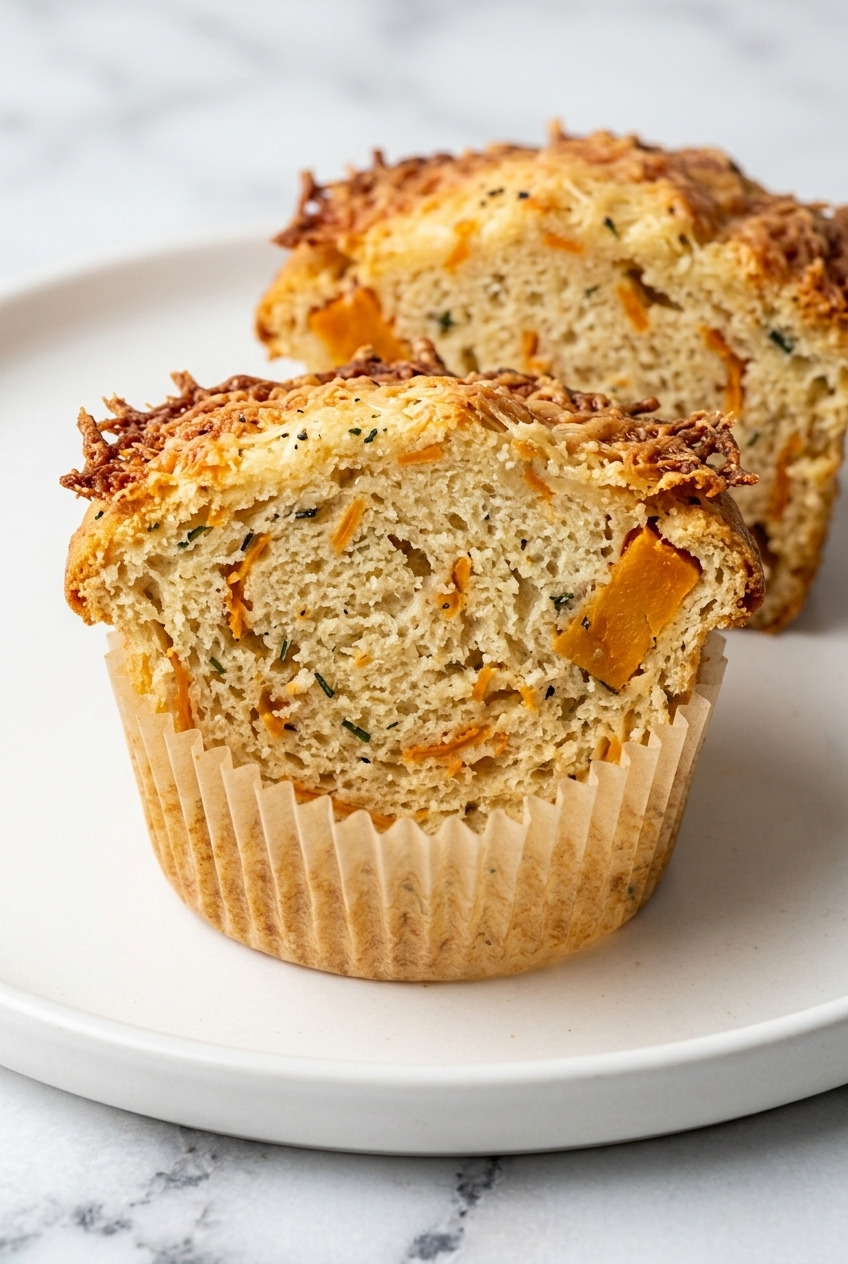
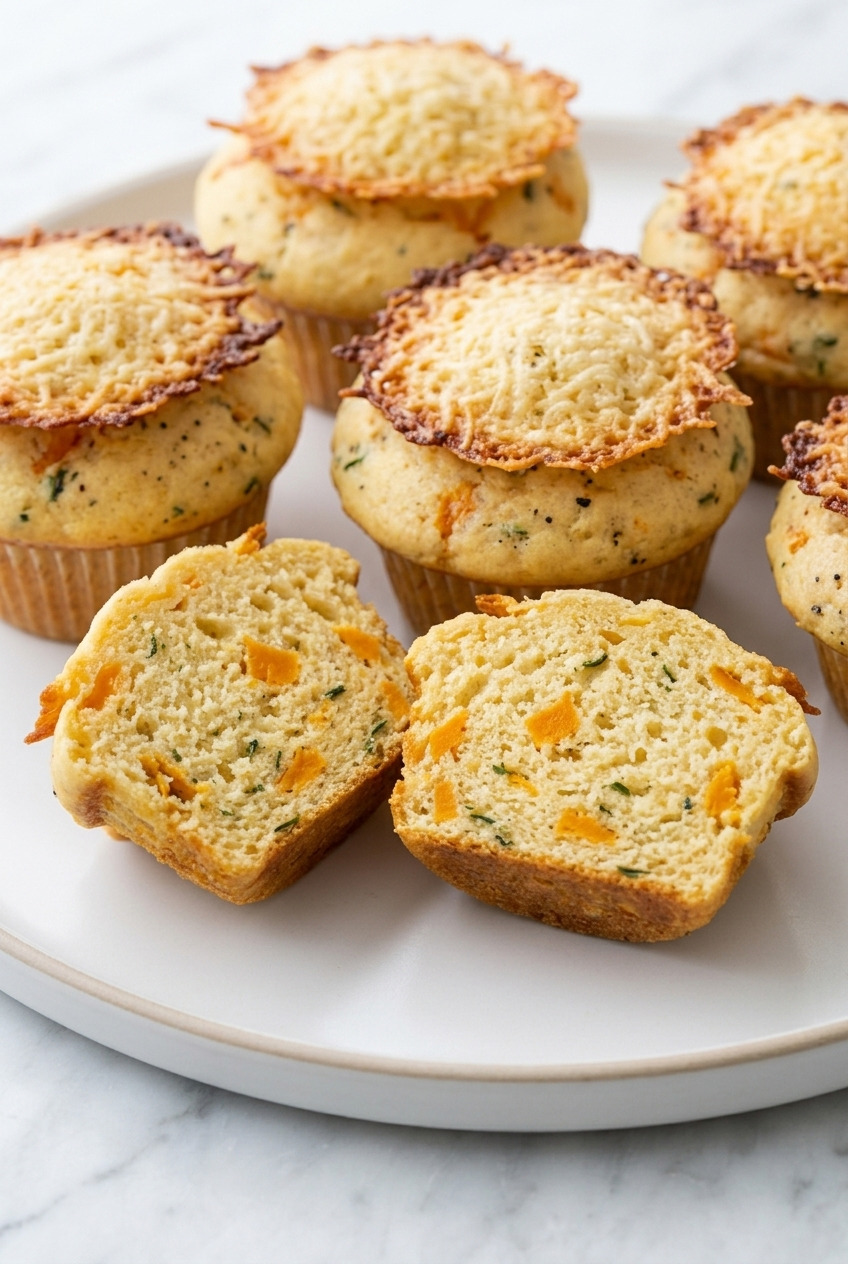
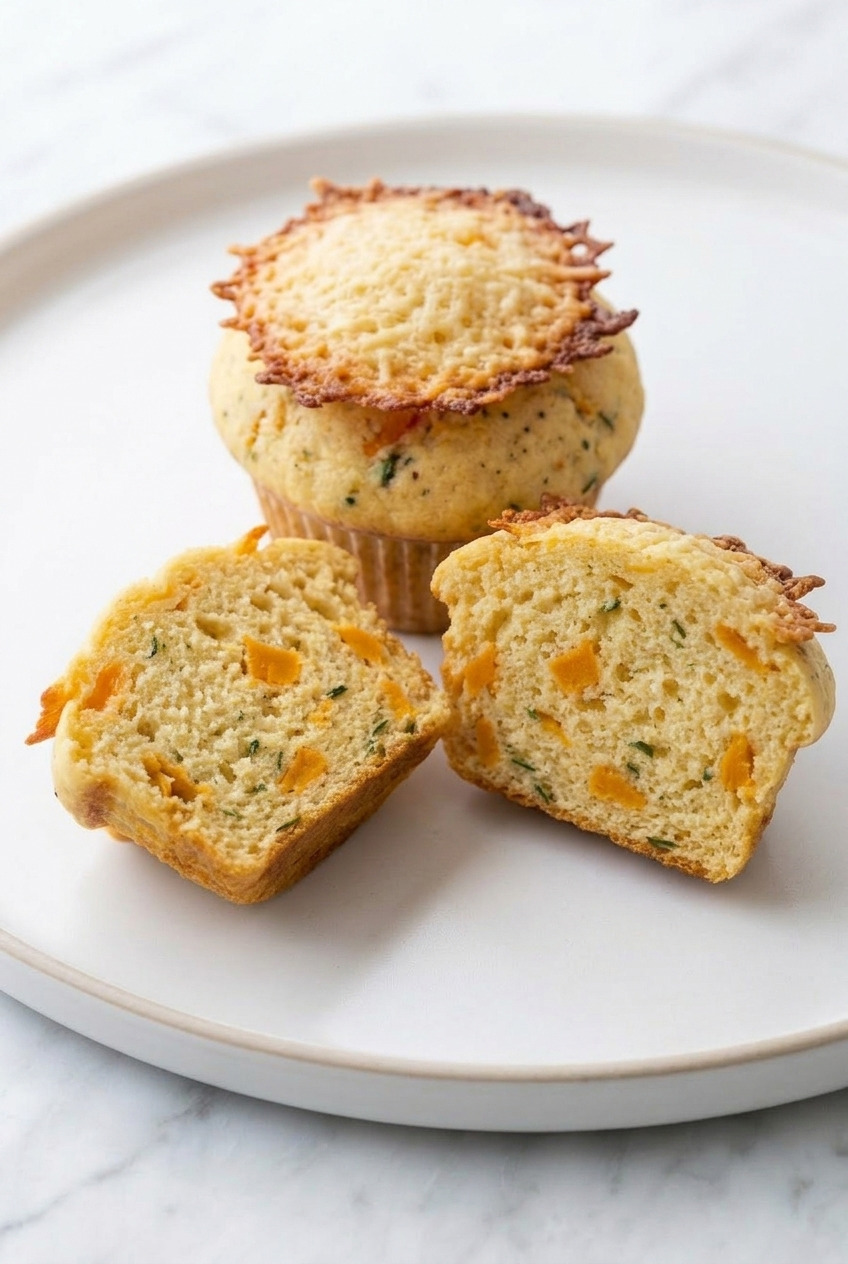
She'd seen orange flecks in a muffin and her brain had already filled in cinnamon.
What she got instead was parmesan, thyme, and a serious amount of black pepper.
Once she'd recalibrated she ate two more.
That mismatch is the entire appeal, and it's the reason I keep making them.
There isn't a single gram of sugar in the batter. Not a spoonful, not a drizzle, nothing.
Which means these behave differently from every sweet muffin you've baked.
They come out paler, they hold less water, and the crumb is tighter and closer to a good cornbread.
Two things fix all of that.
Roast the sweet potato instead of boiling it, so you get concentrated flesh rather than a waterlogged mash.
And put a lid of grated parmesan on every muffin before it goes in, because the batter itself will not brown and the cheese will.
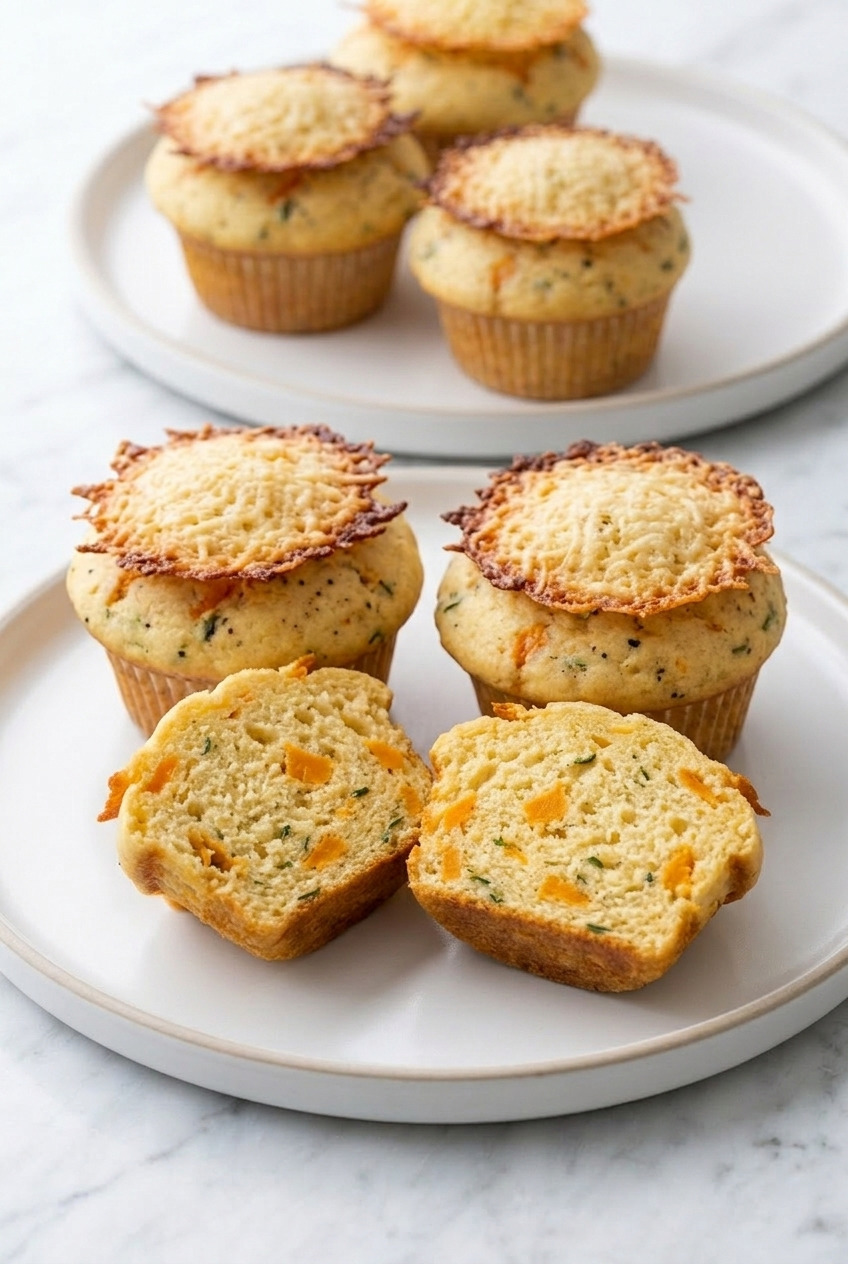
That cap crisps into a savory little disc on top.
My wife eats them split and buttered while they're still too hot to hold properly.
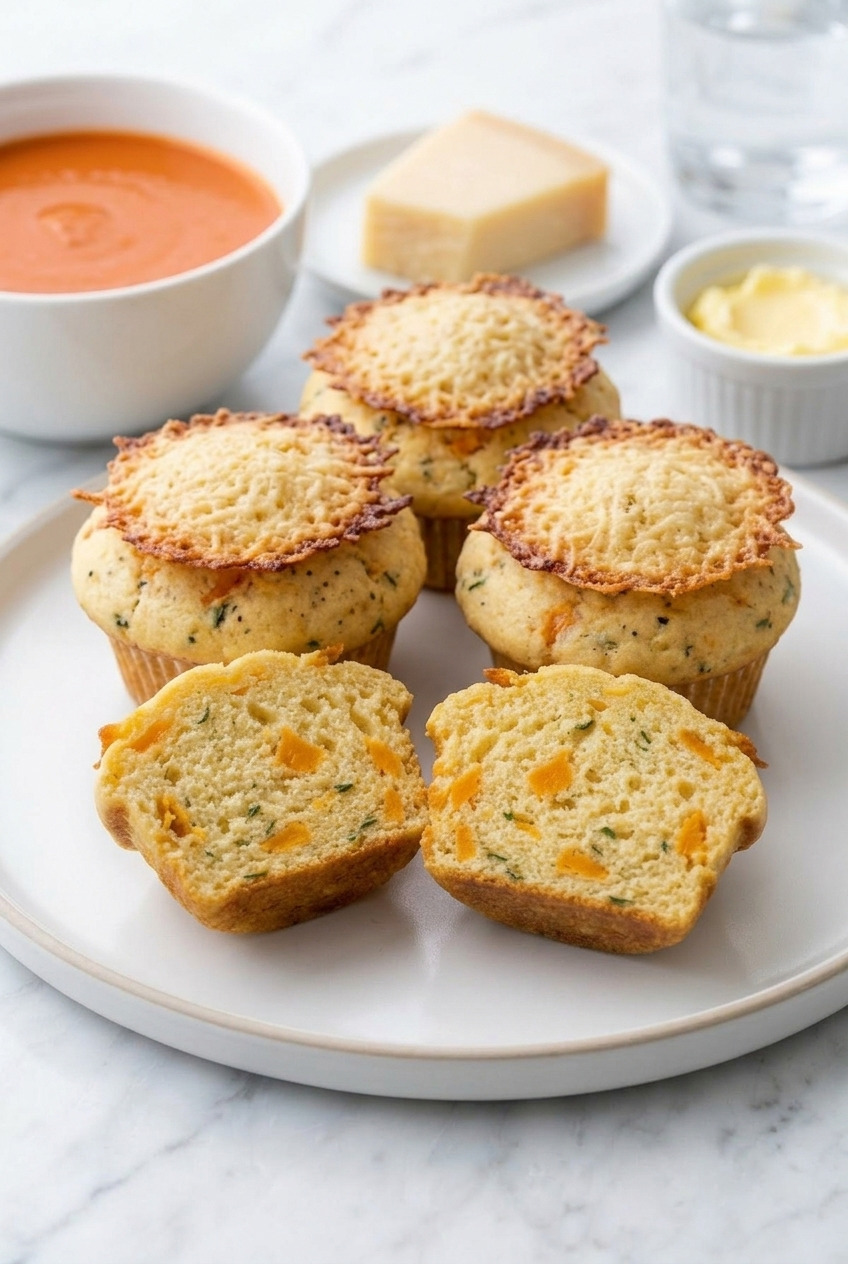
I put them next to a bowl of soup and they disappear.
Why These Muffins Work
This is a savory muffin, not a sweet one with cheese thrown in. The recipe is built from the ground up around that difference.
- Zero sugar. No sugar, no maple, no cinnamon, no streusel. The sweetness you taste is the sweet potato itself and nothing else.
- Two bowls and a fork. Wet in one, dry in the other, twelve strokes to combine.
- A browned parmesan cap. Crisp, salty, and the only part of the muffin that gets any real color.
- Ready in 45 minutes. If you roast the sweet potato the night before, it's twenty five.
- Freezer friendly. Three months, and they reheat with the cap crisping back up.
- Good at any meal. Next to soup, next to eggs, in a lunchbox, or split and buttered at breakfast.
Why a Savory Muffin Behaves Differently
Take the sugar out of a muffin and two things change immediately. Both of them catch people out, and neither one is your fault.
The first is browning.
Sugar is what drives caramelization, and it feeds the Maillard reaction that turns a muffin top golden.
Pull it out and the batter simply cannot get there.
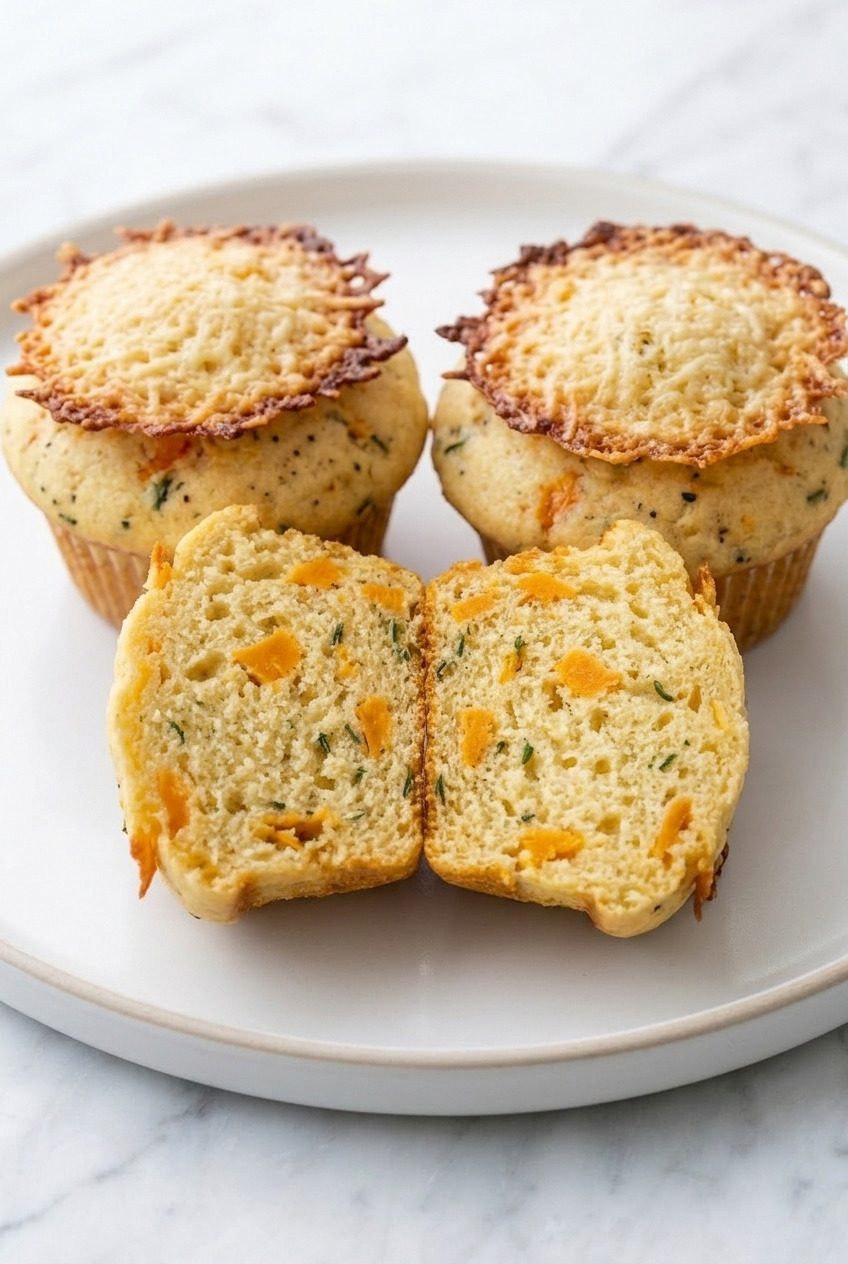
So a savory muffin comes out pale gold and looks underbaked when it's perfectly done.
People see that and put them back in the oven, and ten minutes later they have twelve dry pucks.
Judge doneness with a skewer, never with color. Clean skewer, done muffin, out of the oven regardless of how pale it looks.
Two things push the color back in your favor without adding sugar.
Buttermilk plus a little baking soda raises the batter's pH, and a more alkaline batter browns noticeably better.
And the parmesan cap browns on its own, because cheese doesn't need sugar to go golden.
The second change is moisture.
Sugar is hygroscopic, which is a long way of saying it grabs water and holds onto it.
That's a large part of why a sweet muffin is still soft on day three.
Take it away and the moisture has to come from somewhere else: roasted sweet potato puree, melted butter, and buttermilk, all doing the job together.
Fair warning: overmixing punishes you harder here too. Sugar tenderizes gluten, so a sugarless batter toughens faster. Stop stirring the second the flour disappears.
Ingredients and Substitutions
Nothing exotic, but two of these are non-negotiable. The parmesan and the sweet potato both have to be handled a specific way.
- Mashed roasted sweet potato (1 ¼ cups). From about 1 pound of whole sweet potatoes. Roast them, don't boil them. More on that below.
- All purpose flour (2 cups). Plain flour. Oat flour and cornmeal both work but they change the crumb into something denser.
- Baking powder (2 teaspoons) and baking soda (½ teaspoon). The powder does the lifting. The soda is there for the buttermilk and for browning, and it needs the acid to work.
- Parmesan (1 ¼ cups, finely grated, divided). Grate it yourself off a wedge. The pre-grated tubs are coated in cellulose or potato starch to stop them clumping, and that coating means they sit on top and refuse to melt. Real parmesan is the difference between a cheese muffin and a muffin with cheese in it.
- Eggs (2 large). Room temperature, so they don't seize the melted butter.
- Buttermilk (¾ cup). Tang, tenderness, and the acid the baking soda needs. No buttermilk? Put 2 teaspoons of lemon juice in a measuring cup and top to ¾ cup with milk, then wait five minutes.
- Unsalted butter (6 tablespoons, melted and cooled). Butter over oil here, because it carries the parmesan flavor in a way neutral oil doesn't.
- Fresh thyme (2 tablespoons) and chives (3 tablespoons, chopped). Thyme is woody and holds up to the oven. Chives go in for freshness and green flecks.
- Mustard powder (1 teaspoon). You won't taste mustard. It sharpens the cheese, which is the same reason it goes in a cheese sauce.
- Smoked paprika (½ teaspoon) and black pepper (¾ teaspoon). Grind the pepper fresh and be generous. It's a lead flavor here, not seasoning.
- Kosher salt (1 teaspoon). Measure it properly. Parmesan is already salty, so this is calibrated to the cheese and going by feel will oversalt them.
How to Make Them
The only step with any technique in it is the sweet potato. Everything after that is stirring.
Step 1: Roast and mash the sweet potato
Prick 1 pound of whole sweet potatoes, put them on a foil-lined tray, and roast at 400°F for 50 to 60 minutes, until they're collapsing and leaking dark syrup.
Split them, scoop out the flesh, and mash it smooth with a fork.
You need 1 ¼ cups. Measure it rather than guessing, because a big sweet potato can throw the hydration right off.
Boiling seems easier and it isn't. Boiled flesh is waterlogged, and a savory batter has no sugar to bind that extra water, so you end up with a gummy streak through the middle. Roasting drives the water off and concentrates the flavor instead.
Step 2: Heat the oven and prep the tin
Drop the oven to 400°F if it isn't there already and line a 12-cup muffin tin with paper cases.
Step 3: Dry bowl
Whisk the flour, baking powder, baking soda, salt, mustard powder, smoked paprika, and black pepper together.
Stir in 1 cup of the parmesan and all the herbs, keeping the last ¼ cup of cheese back for the tops.
Step 4: Wet bowl
Whisk the mashed sweet potato, eggs, and buttermilk until smooth, then whisk in the melted butter.
Make sure the butter has cooled or it will scramble the eggs.
Step 5: Combine, barely
Pour the wet into the dry and fold with a spatula in about twelve strokes.
Stop while it still looks slightly rough and streaky. It should be thick enough to hold a spoon shape.
Step 6: Fill and cap
Divide between the twelve cases, filling each about three quarters full.
Any fuller and the tops spread sideways across the tin instead of doming.
Sprinkle the reserved parmesan over each one so it covers the surface.
Step 7: Bake
Bake 22 to 25 minutes, until a skewer comes out clean and the cheese caps are browned and crisp at the edges.
Remember: pale muffin, browned cap. That's what done looks like.
Cool in the tin 5 minutes, then move them to a rack.
Top Tips for Success
Most failures with these come down to two things: mixing and measuring. Get both right and they're very hard to mess up.
- Grate the parmesan yourself. The anti-caking coating on pre-grated cheese stops it melting into the crumb.
- Measure the mashed potato. 1 ¼ cups, packed lightly. Too much and the centers stay damp.
- Do NOT overmix. Twelve strokes. A streaky batter bakes into a tender muffin, a smooth one bakes into a chewy dome.
- Three quarters full, no more. These are savory and dense enough that overfilled cups spill rather than rise.
- Let a warm puree rest. If the mash is still warm when you mix, give the filled tin ten minutes before it goes in so the batter settles.
- Taste your cheese first. Parmesans vary a lot in saltiness. A very sharp aged wedge means you can pull the salt back to ¾ teaspoon.
Variations
The sweet potato, cheese, and pepper stay. Past that, treat it as a template.
- Bacon or ham. Four slices of crisp crumbled bacon, or a half cup of diced ham, folded in with the cheese.
- Different cheese. Pecorino is sharper and saltier, so cut the salt. Aged cheddar is milder and melts more, which gives you pockets instead of an even distribution.
- Rosemary or sage. Instead of thyme. Chop rosemary very fine, it's aggressive.
- Chilli flakes. A half teaspoon in the dry bowl. Sweet potato takes heat well.
- Roasted garlic. Mash a whole roasted head into the sweet potato. It's a bigger change than it sounds.
- Spring onion instead of chives. Slice the whites and greens thin and use a half cup.
Storage and Freezing
These keep better than a sweet muffin in the freezer and worse on the counter. That's the sugar again, or rather the lack of it.
- Room temperature. 3 days in an airtight tin. Put a piece of kitchen paper in with them to catch condensation, which softens the caps.
- Fridge. 5 days, sealed. They firm up cold, so always reheat.
- Freezer. 3 months. Cool completely, wrap individually, and bag them.
- Reheating. 325°F for 12 minutes from frozen, or 8 minutes from the fridge. The cheese cap crisps back up and they taste freshly baked.
- The microwave. It works in a pinch but it steams the cap soft, and the cap is the best part.
What to Serve Them With
Think of these as bread, not as breakfast. That reframe is what makes them click.
A bowl of tomato soup with one of these on the side is a full lunch.
They're excellent next to chili, where the sweet potato does something nice against the heat.
Split one, butter it, and put it beside scrambled eggs on a Saturday.
Or send one in a lunchbox with soup in a flask, which is where most of mine end up.
How can you go wrong with cheese, pepper, and something warm to dunk it in?
Recipe
Savory Sweet Potato and Parmesan Muffins
Ingredients
Dry Ingredients
- 2 cups all purpose flour
- 2 teaspoons baking powder
- ½ teaspoon baking soda
- 1 teaspoon kosher salt
- 1 teaspoon mustard powder
- ½ teaspoon smoked paprika
- ¾ teaspoon black pepper freshly ground
- 1 ¼ cups parmesan finely grated, divided
- 2 tablespoons fresh thyme leaves
- 3 tablespoons fresh chives chopped
Wet Ingredients
- 1 ¼ cups mashed roasted sweet potato from about 1 pound whole sweet potatoes
- 2 large eggs room temperature
- ¾ cup buttermilk
- 6 tablespoons unsalted butter melted and cooled
Instructions
Roast the Sweet Potato
- Prick 1 pound of whole sweet potatoes and roast on a foil lined tray at 400F for 50 to 60 minutes, until collapsing and leaking dark syrup.
- Split them, scoop out the flesh, and mash smooth with a fork. Measure out 1 ¼ cups and let it cool.
Mix the Batter
- Heat the oven to 400F and line a 12 cup muffin tin with paper cases.
- Whisk the flour, baking powder, baking soda, salt, mustard powder, smoked paprika, and black pepper together. Stir in 1 cup of the parmesan and all the herbs, keeping ¼ cup of cheese back for the tops.
- In a second bowl, whisk the mashed sweet potato, eggs, and buttermilk until smooth, then whisk in the cooled melted butter.
- Pour the wet into the dry and fold with a spatula in about twelve strokes. Stop while the batter still looks slightly rough and streaky.
Fill and Bake
- Divide the batter between the twelve cases, filling each about three quarters full, and sprinkle the reserved parmesan over the tops.
- Bake 22 to 25 minutes, until a skewer comes out clean and the cheese caps are browned and crisp at the edges. The muffins themselves stay pale, which is correct.
- Cool in the tin 5 minutes, then move to a wire rack.
Notes
- Roast, do not boil: boiled sweet potato is waterlogged and a sugarless batter cannot hold that water, so you get a gummy streak.
- Pale is done: with no sugar there is nothing to brown the batter. Use a skewer, not color, and take them out when it comes back clean.
- Grate your own parmesan: pre grated cheese is coated to stop clumping and will not melt into the crumb.
- Twelve strokes: sugar tenderizes gluten, so a savory batter toughens faster when overmixed.
- Storage: 3 days at room temperature, 5 refrigerated, 3 months frozen. Reheat at 325F for 12 minutes from frozen so the cap crisps again.