Mustard seeds popping in hot oil is one of the great kitchen sounds.
It starts as a single tick, then turns into a rattle against the lid, and about fifteen seconds later it stops.
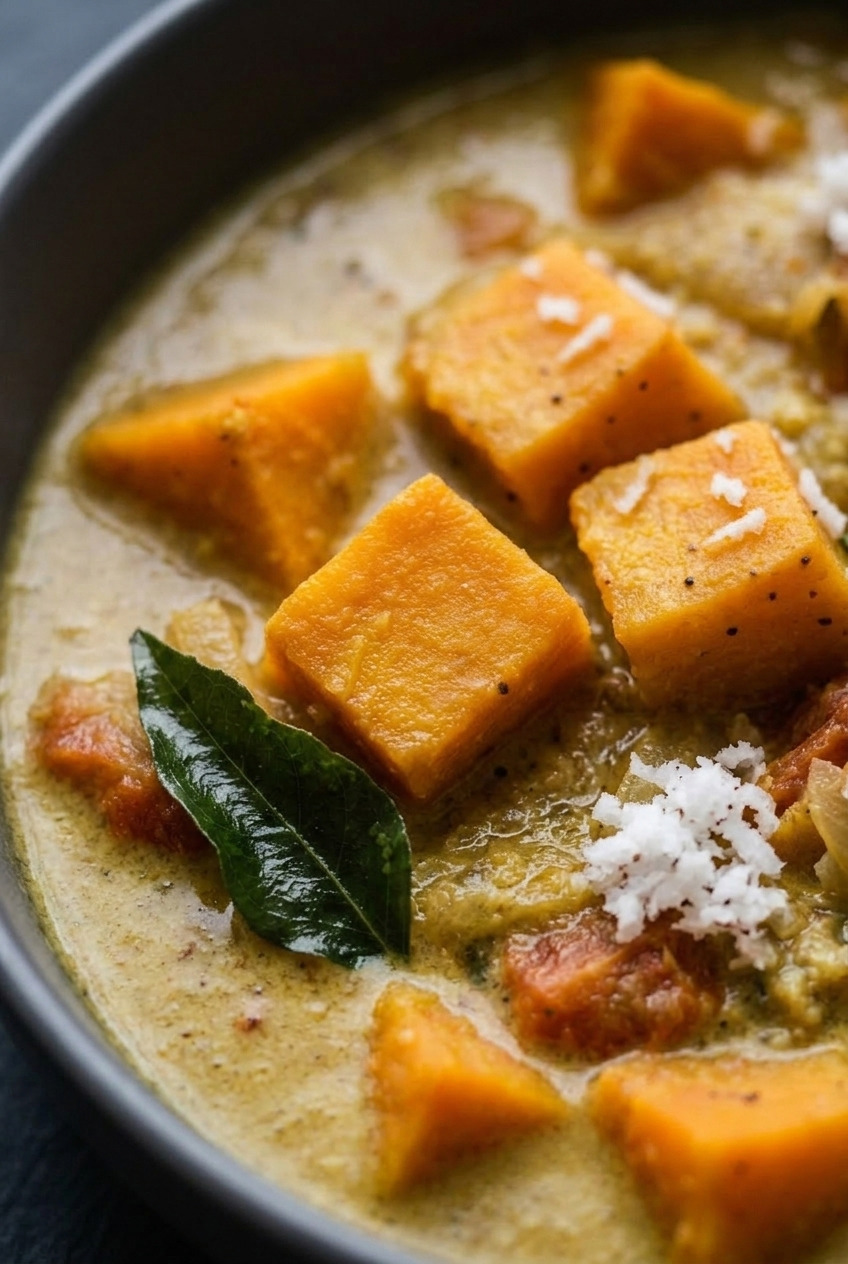
That is your cue for the curry leaves, and they go in with a hiss and a smell nothing else in my pantry produces.
My wife can identify that sound from the next room.
The step is called tadka, or thalippu in Tamil, and it is a tempering: whole spices bloomed in hot fat and poured into or built under a dish.
It takes ninety seconds and it is the entire difference between a South Indian curry and a generic one.
I say that because most English language sweet potato curries reach for two tablespoons of jarred curry powder and a can of coconut milk.
That makes a decent dinner. It just is not this.
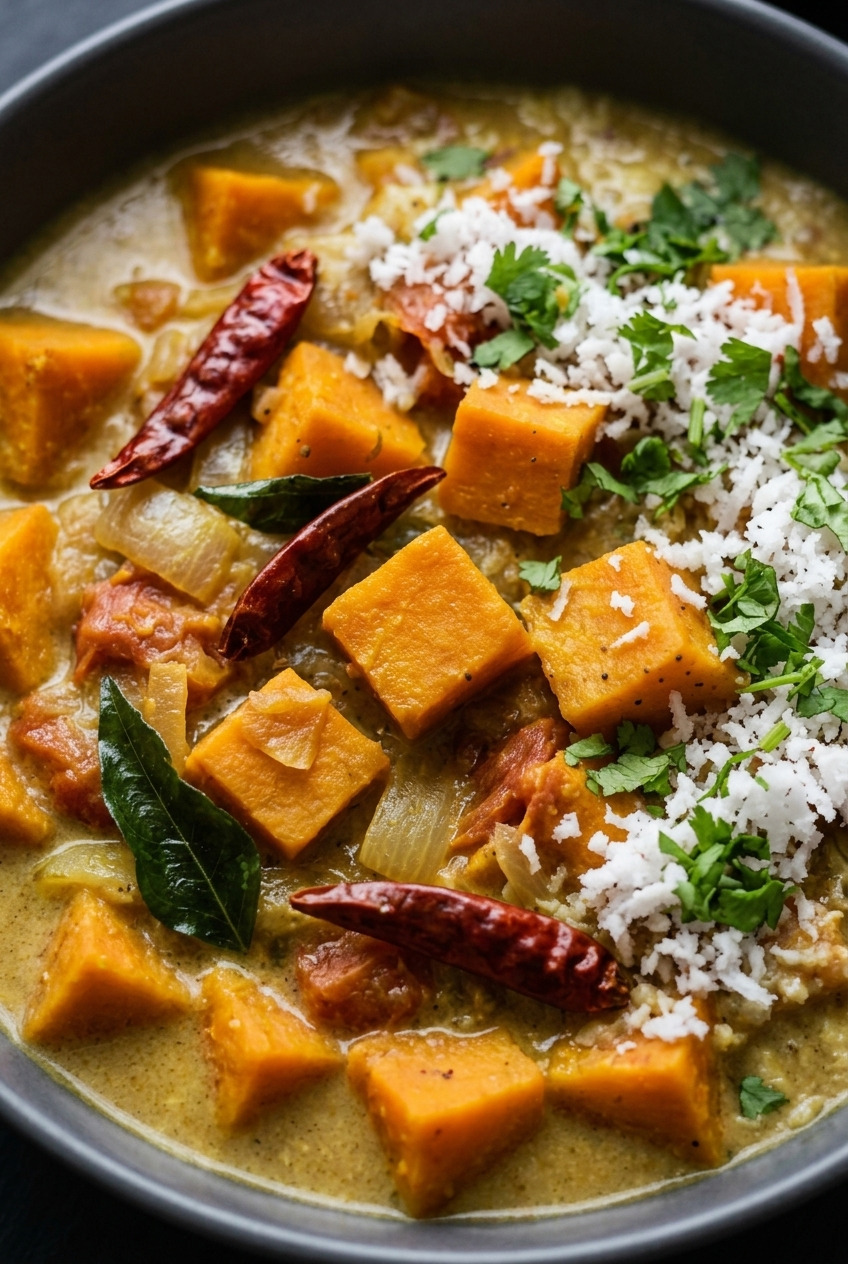
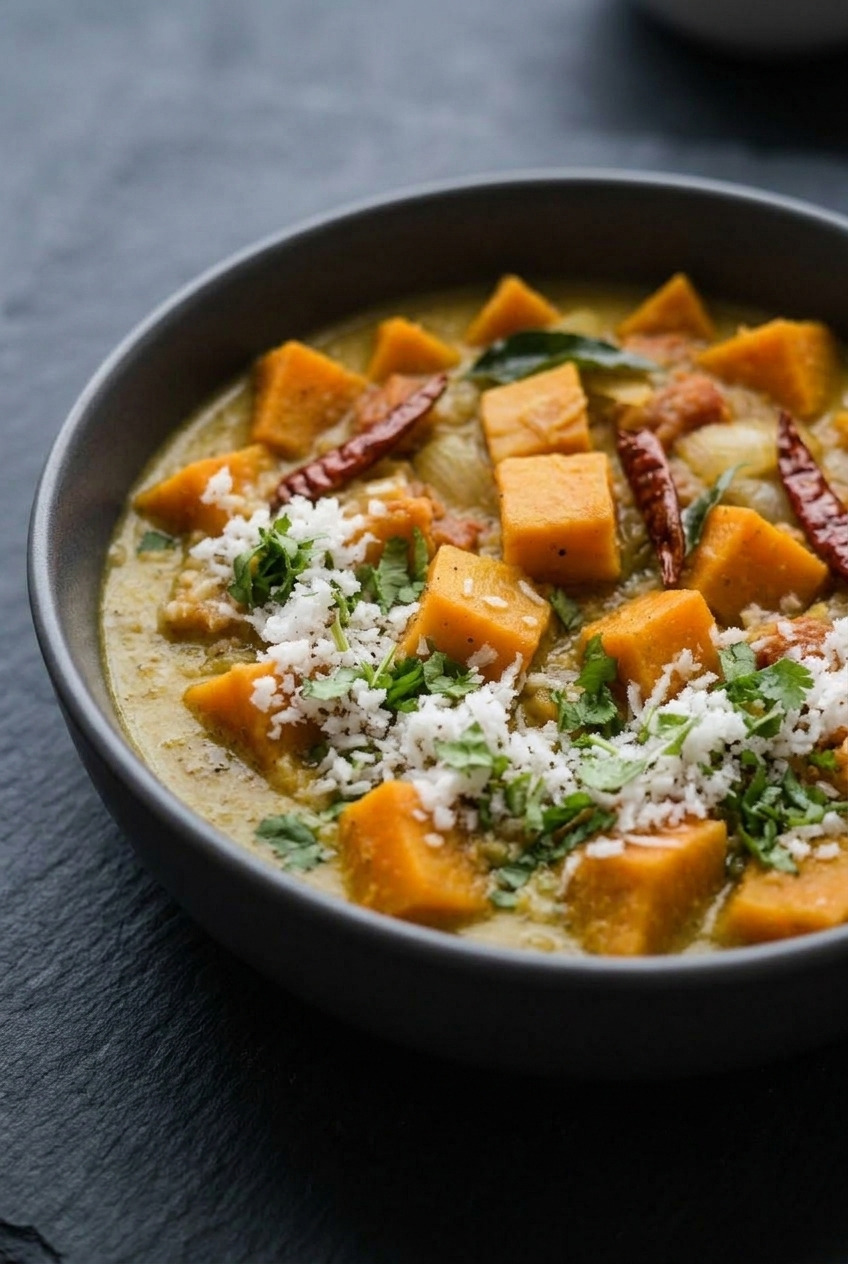
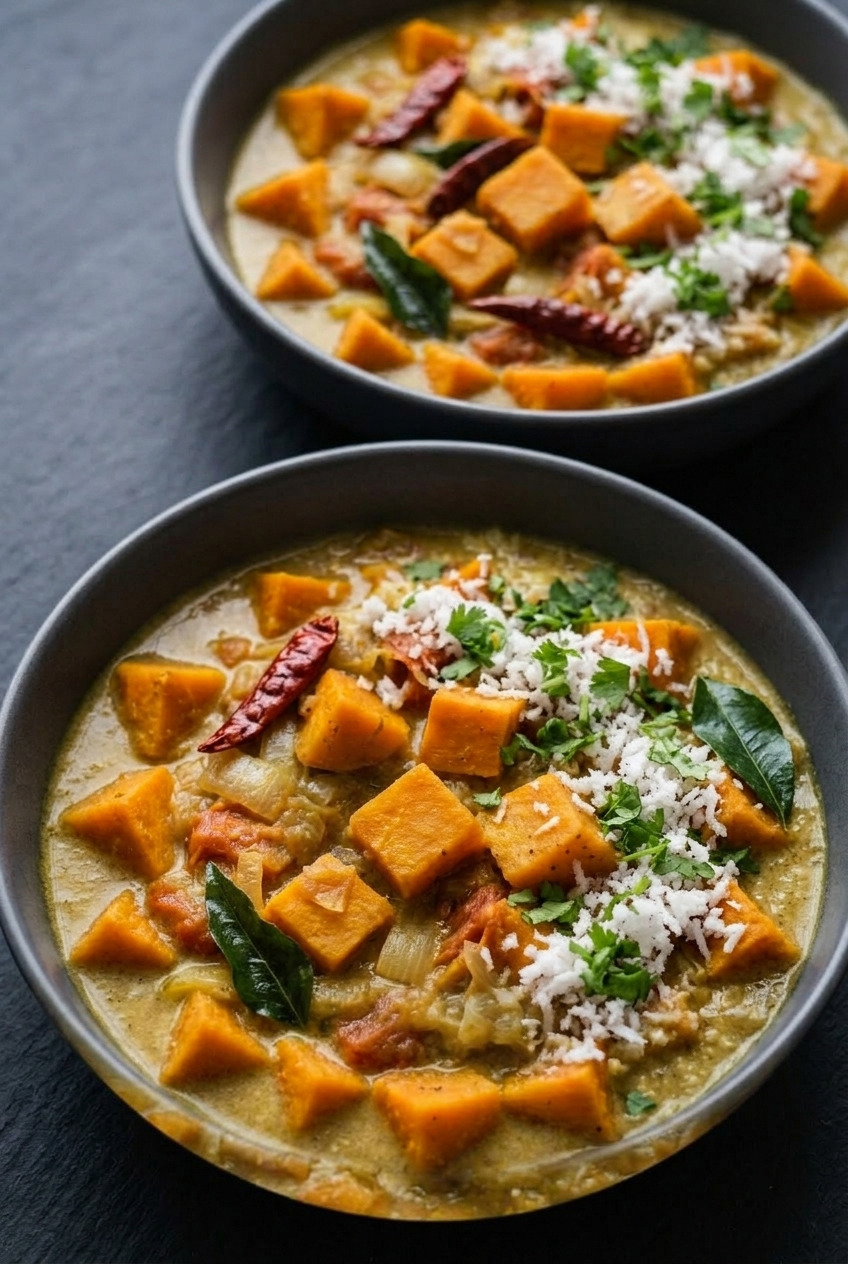
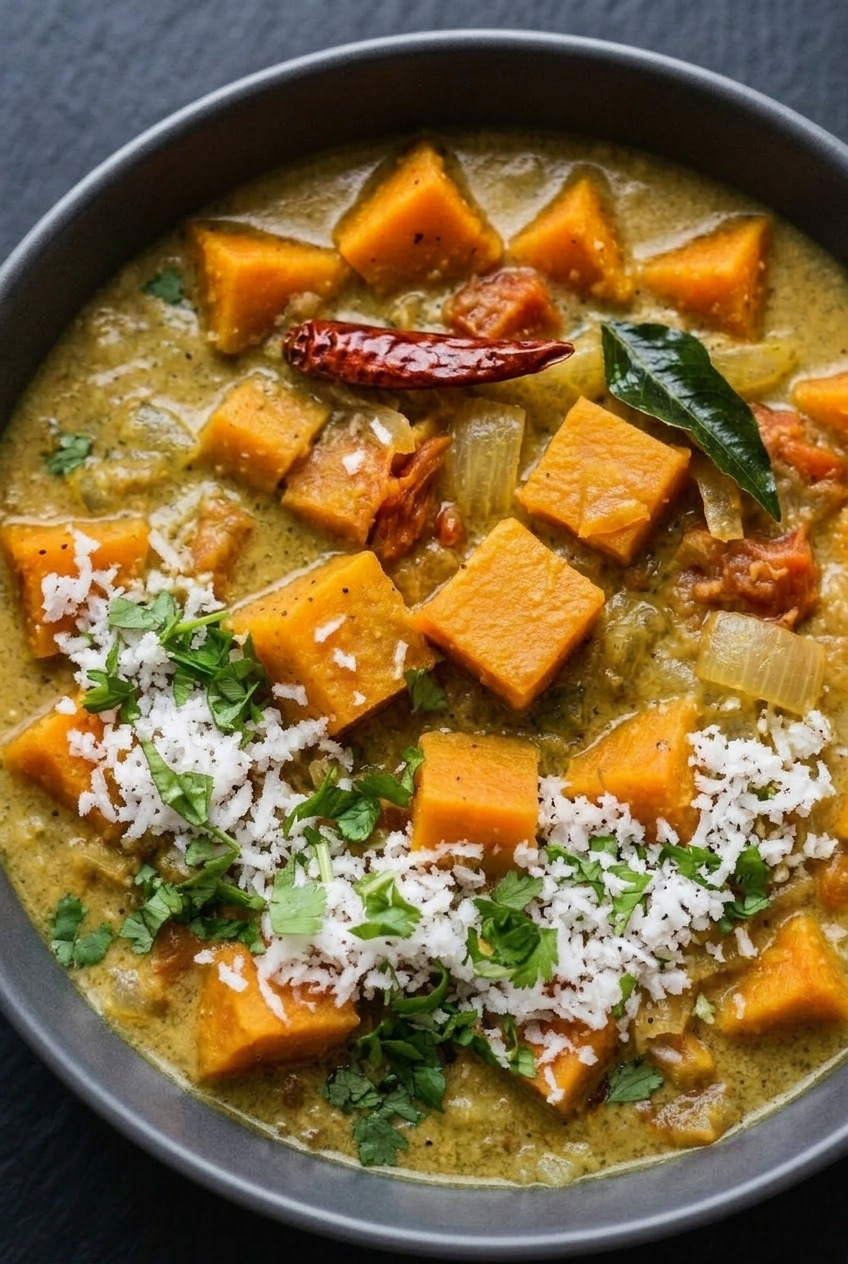
This is a home style curry, the kind that shows up next to rice and sambar on a weeknight, mildly spiced, coconut forward, with cubes of sweet potato that hold their shape.
I make it about twice a month through the winter and eat the leftovers with dosa.
Forty minutes, one pan, and the only unusual shopping is a sprig of curry leaves.
Get those and the rest is pantry work.
What Makes This Curry South Indian
Four things, and none of them are optional. Mustard seeds, curry leaves, coconut, and the absence of a jarred blend.
North Indian curries lean on onion and tomato cooked down into a heavy gravy, often finished with cream or cashew paste.
South Indian home cooking starts in the opposite place: a small amount of hot oil, whole spices, and a lot of restraint.
The coconut is not a trend here. It grows everywhere along the coast and it goes into everything from chutney to kootu.
There is also no cream in this pan. The richness comes from coconut milk, and the finish comes from fresh grated coconut stirred in at the end.
Curry powder, the yellow jar, is a British invention. Indian kitchens use individual spices, which is why the flavor here is layered instead of flat.
Tadka, the Tempering That Defines It
Get this right and the rest of the recipe is easy. Tadka is whole spices bloomed in hot fat, and it is the first thing that happens in the pan.
What to Listen For
Heat 2 tablespoons of coconut oil over medium heat until it thins and shimmers.
Add the mustard seeds and wait. They will sit still for maybe 20 seconds, then start popping hard.
When the popping slows, they are done. Push past that and they turn bitter.
The Order Matters
Cumin seeds and dried red chilies go in next and need about 15 seconds.
Curry leaves go in LAST, because they are wet and they spit. Stand back, they will crackle for a few seconds and go translucent.
A pinch of hing goes in right at the end, off the heat for a second if the pan is very hot. It burns faster than anything else in the pan.
Ninety seconds total, and you now have the foundation.
Ingredients You'll Need
The authentic version first, substitutes after. Two items are worth a trip to an Indian grocery and both freeze well.
- Fresh curry leaves (1 sprig, about 12 leaves). Not bay leaves, not curry powder, a completely different plant. Buy them fresh at an Indian or Asian grocery and freeze the rest in a bag. Frozen leaves are the fallback. Dried ones are barely worth it.
- Black mustard seeds (1 teaspoon). Small and dark. Yellow mustard seeds are milder and larger but will do.
- Coconut oil (2 tablespoons). The regional fat. Any neutral oil works.
- Cumin seeds (½ teaspoon) and dried red chilies (2). Both go into the tempering whole.
- Hing, asafoetida (1 pinch). Savory and slightly funky. Skip it rather than substitute it.
- Sweet potatoes (1 ½ pounds). Peeled, cut into 1 inch cubes. Even sizing matters more than you think.
- Onion (1 medium), ginger (1 tablespoon grated), garlic (2 cloves), green chili (1, slit). The aromatic base.
- Ripe tomato (1 large), chopped. Acidity to push back against the sweetness.
- Ground spices. ½ teaspoon turmeric, 1 ½ teaspoons ground coriander, ¾ teaspoon Kashmiri chili powder. Kashmiri gives color without much burn.
- Full fat coconut milk (1 cup). Canned, well shaken. Light coconut milk gives you a thin, sad gravy.
- Fresh grated coconut (¼ cup). The real finish. Frozen grated coconut is an excellent substitute. Unsweetened desiccated coconut soaked in 2 tablespoons of warm water is the last resort. Never sweetened flake.
- Cilantro and lime. To finish.
How to Make South Indian Sweet Potato Curry
Step 1: Temper
Coconut oil over medium heat, then mustard seeds, cumin, dried chilies, and curry leaves in that order, with the hing last.
Ninety seconds, as described above.
Step 2: Build the Base
Add the onion, green chili, and a pinch of salt and cook 5 to 6 minutes until soft and pale gold.
Ginger and garlic go in for 1 minute, just until the raw smell goes.
Add the tomato and cook 4 minutes until it collapses and the oil separates a little at the edges.
Step 3: Spices and Sweet Potato
Stir in the turmeric, coriander, and chili powder and let them cook 30 seconds in the oil. Ground spices need fat and heat, not water.
Add the sweet potato cubes and turn them to coat every surface.
Step 4: Simmer
Pour in the coconut milk, ¾ cup water, and 1 teaspoon salt.
Bring to a bare simmer, cover, and cook 15 to 18 minutes over low heat.
Stir twice, gently, and no more than that.
They are done when a knife slides into a cube with slight resistance, not when they collapse.
Step 5: Finish
Off the heat, stir in the grated coconut, cilantro, and lime juice.
Taste for salt. Rest 5 minutes before serving so the gravy thickens.
Getting the Sweetness Right
Sweet potato plus coconut milk is already sweet, so do not add sugar. Some popular recipes add two tablespoons of brown sugar to this exact combination, and the result tastes like dessert.
Your levers run the other way.
- Salt. The first and biggest one. Under salted, this curry reads cloying.
- Acid. Tomato during cooking, lime at the end. Add more lime before you add anything else.
- Heat. The green chili and the dried reds. Chili does not just add burn, it balances the sugar.
- Tamarind. ½ teaspoon of tamarind paste is the traditional South Indian answer and it works beautifully here.
Too sweet already? Lime, salt, and a slit chili, in that order.
Tips for Sweet Potatoes That Hold Their Shape
- Cut them evenly. One inch cubes. Small pieces disintegrate and thicken the gravy into paste.
- Simmer, never boil. A rolling boil knocks the cubes apart against each other.
- Keep the lid on. Gentle steam cooks them through without agitation.
- Stir twice, maximum. Use a folding motion from underneath, not a stir.
- Check early. Start testing at 15 minutes. They go from firm to mush in about three minutes.
- Salt at the start. Salted liquid firms the outside of the cubes slightly.
Variations
- Chickpeas. Add a drained 15 ounce can with the coconut milk. Makes it a full meal.
- Chicken. Brown 1 pound of boneless thighs cut into chunks after the tempering, set aside, and return them for the last 12 minutes.
- Spinach. Two big handfuls stirred in during the final two minutes.
- Poriyal style. Skip the coconut milk entirely, use ½ cup water, and double the grated coconut. You get a dry stir fry instead of a curry, which is how it is often eaten in Tamil Nadu.
- Milder. Drop the green chili and use one dried red instead of two. The tempering still does its job.
What to Serve With It
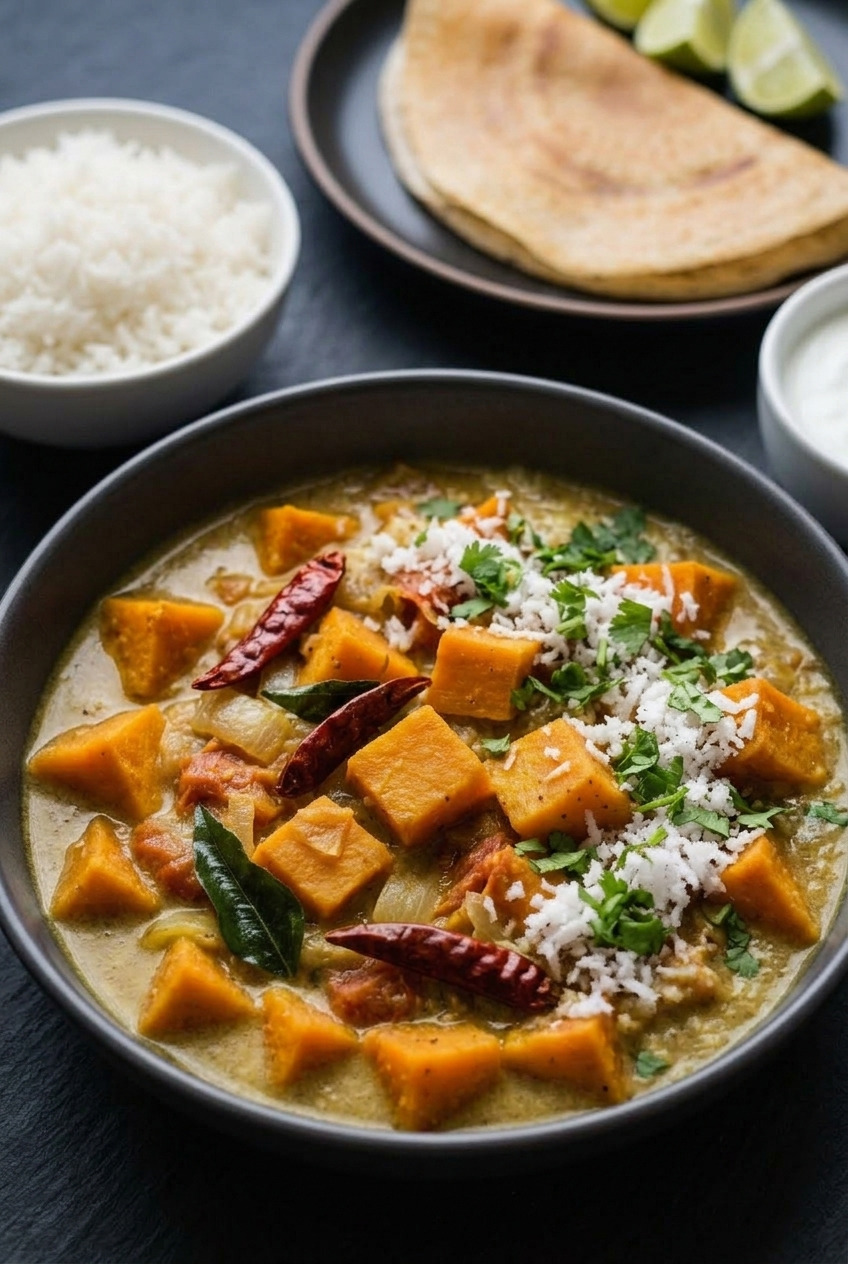
- Steamed rice. The default, and the best vehicle for the gravy.
- Sambar or rasam. This works as one dish in a larger South Indian meal rather than the center of the plate.
- Dosa or appam. My favorite use for the leftovers, hands down.
- Chapati or paratha. Less traditional here, still excellent.
- Plain yogurt. A spoon on the side cools the heat and cuts the coconut richness.
- Papadum. Thirty seconds of crunch for very little effort.
Storing and Reheating
- Refrigerated. 3 days in an airtight container. The spices settle in and day two is genuinely better.
- Reheating. Low heat on the stove with a splash of water. Coconut milk splits if you push it hard.
- Freezer. Up to 2 months, but be realistic: the sweet potato softens and the gravy goes slightly grainy. Fine for a weeknight, not for company.
- Thickening. The curry firms up cold. Loosen with water, not more coconut milk, or it turns heavy.
Recipe
South Indian Sweet Potato Curry With Coconut
Ingredients
For the Tempering (Tadka)
- 2 tablespoons coconut oil or neutral oil
- 1 teaspoon black mustard seeds
- ½ teaspoon cumin seeds
- 2 dried red chilies
- 1 sprig fresh curry leaves about 12 leaves
- 1 pinch hing (asafoetida) optional
For the Curry
- 1 medium onion finely chopped
- 1 green chili slit lengthwise
- 1 tablespoon fresh ginger grated
- 2 cloves garlic minced
- 1 large ripe tomato chopped
- ½ teaspoon ground turmeric
- 1 ½ teaspoons ground coriander
- ¾ teaspoon Kashmiri red chili powder
- 1 ½ pounds sweet potatoes peeled, cut into 1 inch cubes
- 1 cup full fat coconut milk canned, well shaken
- ¾ cup water
- 1 teaspoon salt or to taste
To Finish
- ¼ cup fresh grated coconut or frozen grated coconut
- 2 tablespoons cilantro chopped
- 1 teaspoon lime juice
Instructions
Temper the Spices
- Heat the coconut oil in a wide pan over medium heat until it shimmers.
- Add the mustard seeds and wait until they pop hard and the popping starts to slow, about 20 to 30 seconds.
- Add the cumin seeds and dried red chilies for 15 seconds, then the curry leaves, which will crackle. Add the hing last.
Build the Curry
- Add the onion, green chili, and a pinch of salt and cook 5 to 6 minutes until soft and pale gold.
- Stir in the ginger and garlic and cook 1 minute, then add the tomato and cook 4 minutes until it collapses.
- Add the turmeric, coriander, and chili powder and cook 30 seconds in the oil, then add the sweet potato cubes and turn to coat.
- Pour in the coconut milk, water, and salt. Bring to a bare simmer, cover, and cook 15 to 18 minutes over low heat, stirring gently no more than twice.
- The cubes are ready when a knife meets slight resistance. Off the heat, stir in the grated coconut, cilantro, and lime juice, then rest 5 minutes before serving.
Notes
- Curry leaves: Buy fresh at an Indian or Asian grocery and freeze what you do not use. Frozen works, dried is weak.
- No curry powder: Individual spices bloomed in oil give a layered flavor a jarred blend cannot.
- Do not add sugar: Sweet potato and coconut milk are sweet enough. Balance with salt, lime, chili, or ½ teaspoon tamarind paste.
- Shape: Even 1 inch cubes, a bare simmer, lid on, and no more than two gentle stirs.
- Storage: 3 days refrigerated and better on day two. Reheat over low heat with a splash of water so the coconut milk does not split.