There were no forks on the table.
A woman set down a metal platter the size of a car tire, lined with a pale spongy flatbread, and spooned six different stews onto it.
Then she handed us a second flatbread, rolled up like a towel, and walked away.
My wife looked at me.
I looked at the next table over and copied what they were doing.
You tear off a piece, pinch some stew with it, and eat the bread along with the bite.
That was a small Ethiopian place off a highway in Columbus, nine or ten years ago now.
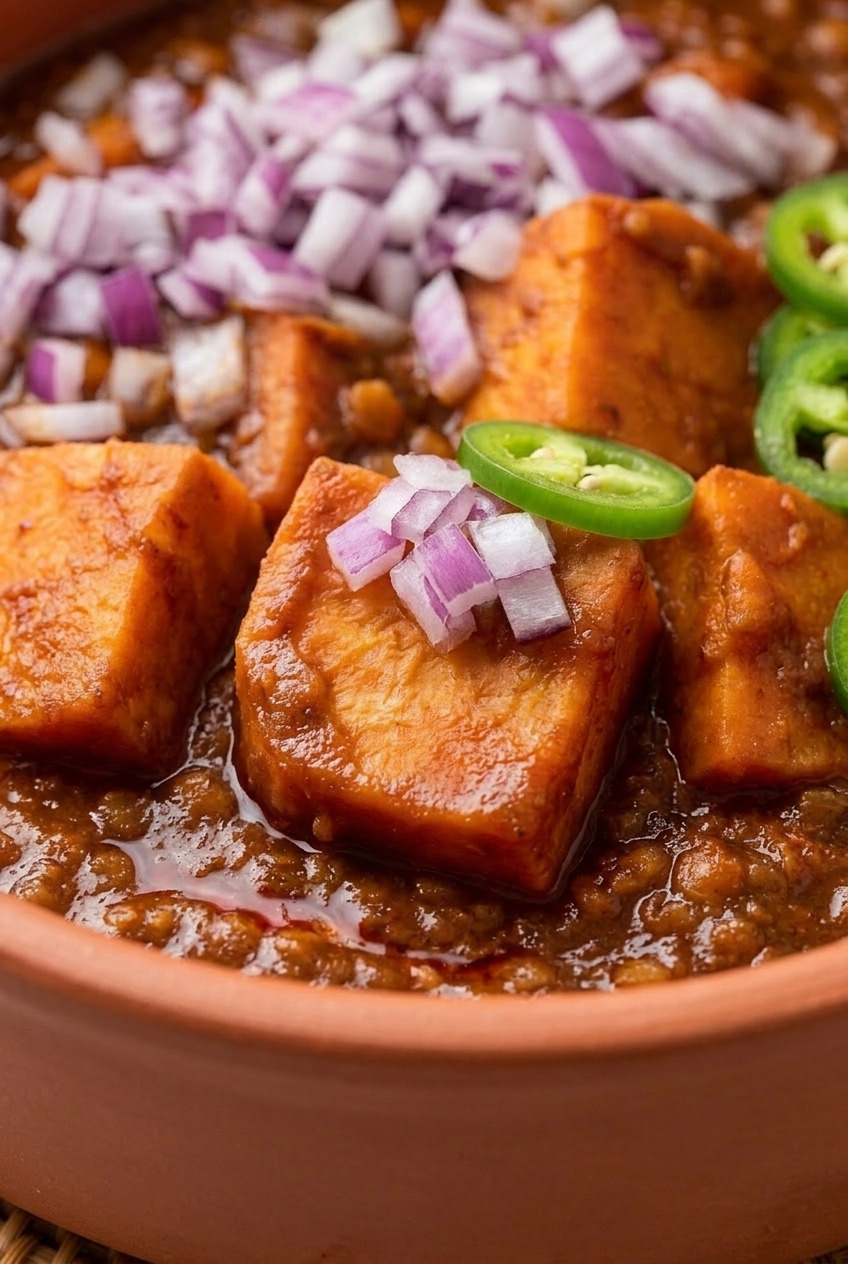
The one I kept thinking about for weeks afterward was the sweet potato, sitting in a thick brick red sauce.
Underneath the heat was something bitter and faintly maple-like that I could not name for months.
That is fenugreek, and it is the thing that makes berbere taste like berbere rather than like chili powder.
Here is my home version.
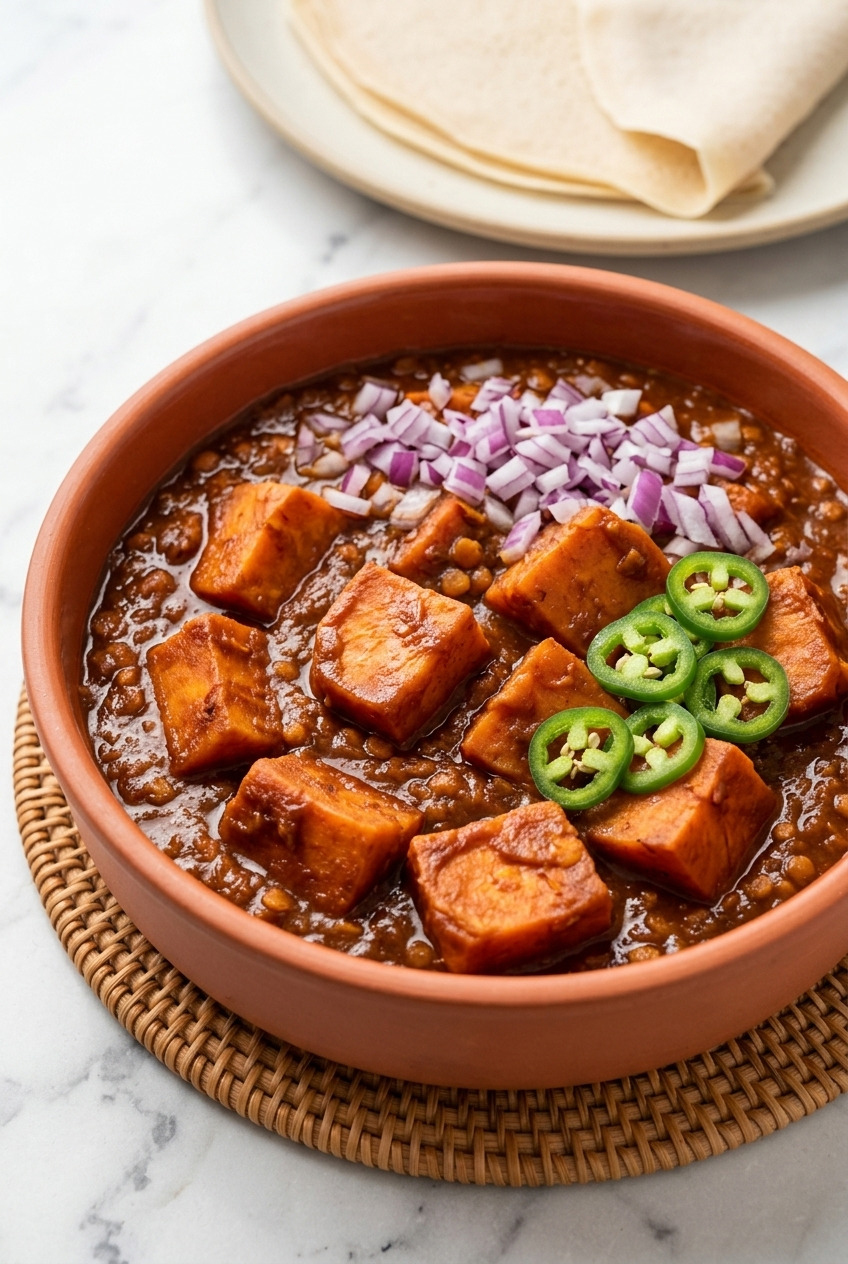
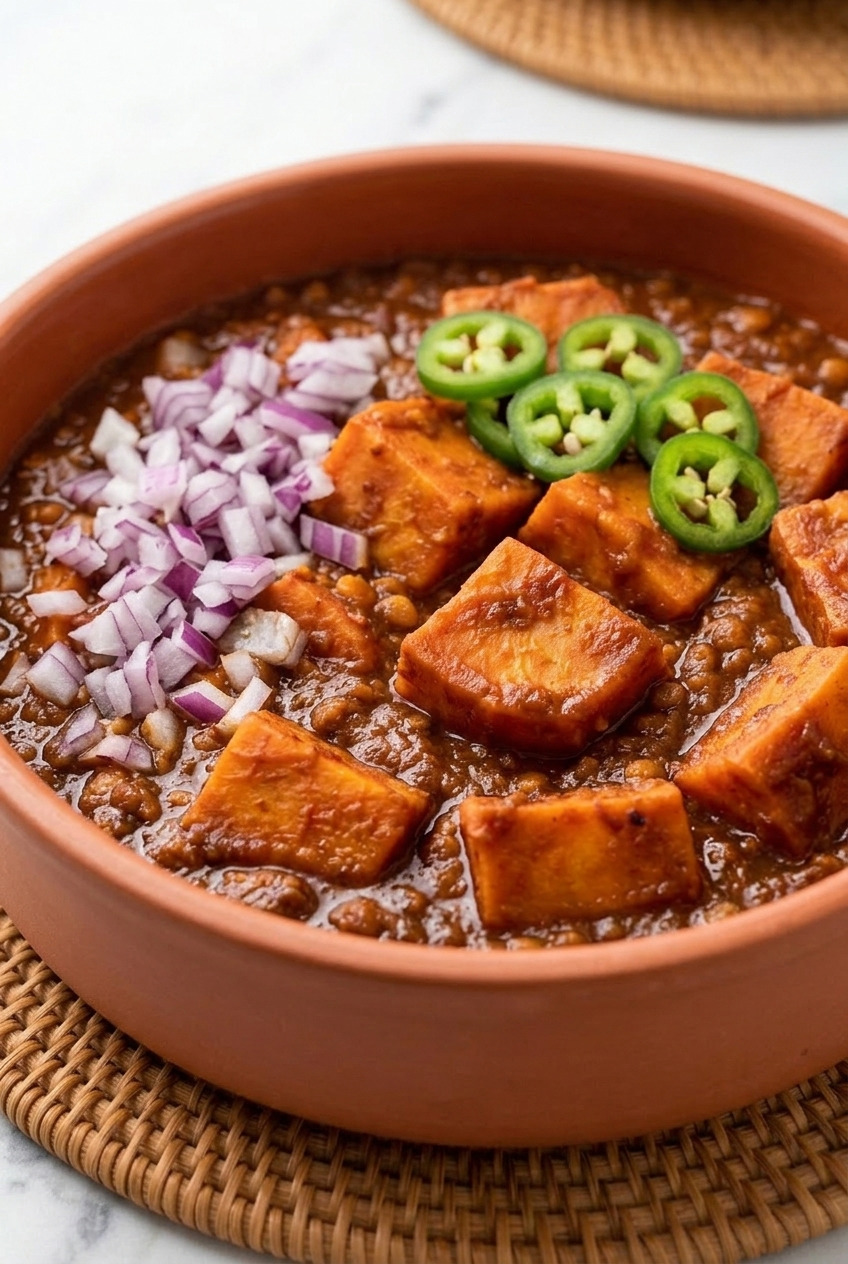
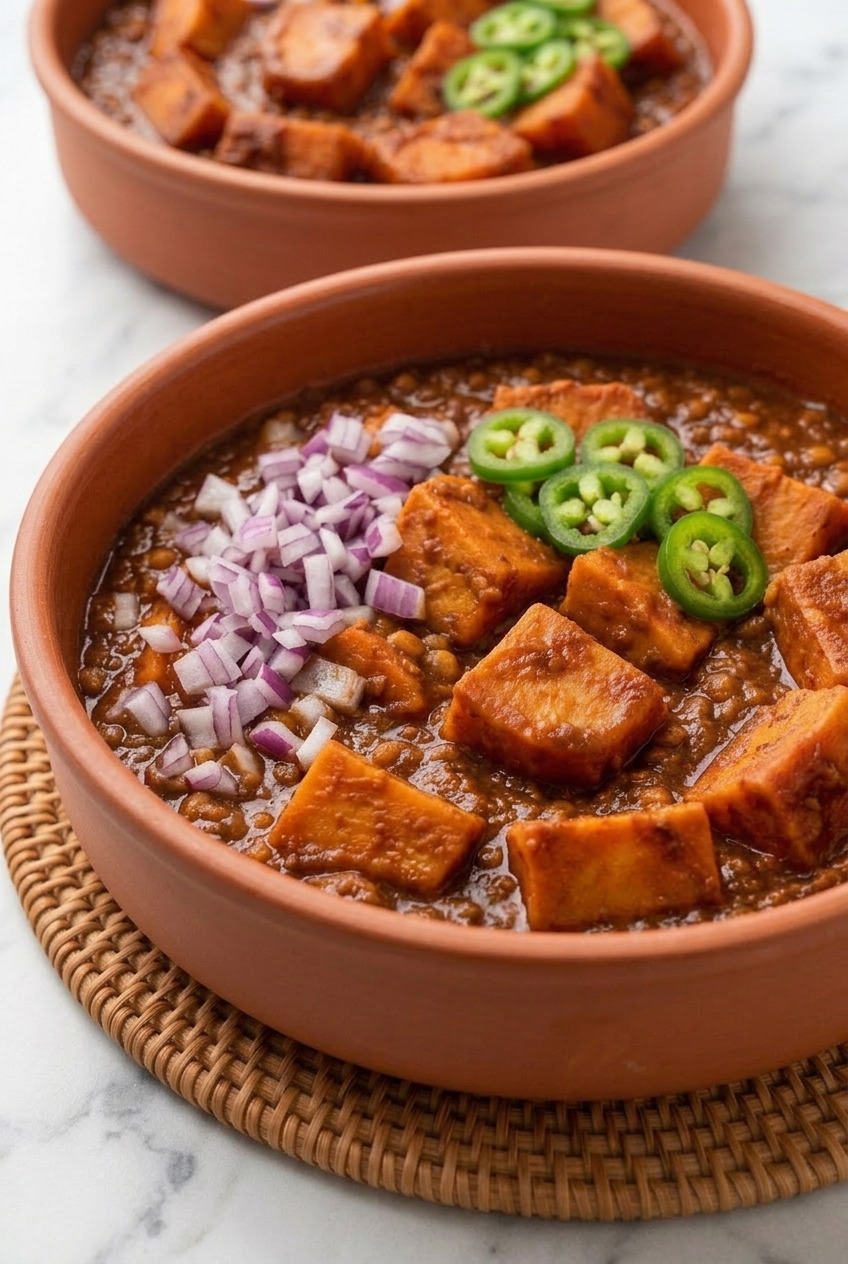
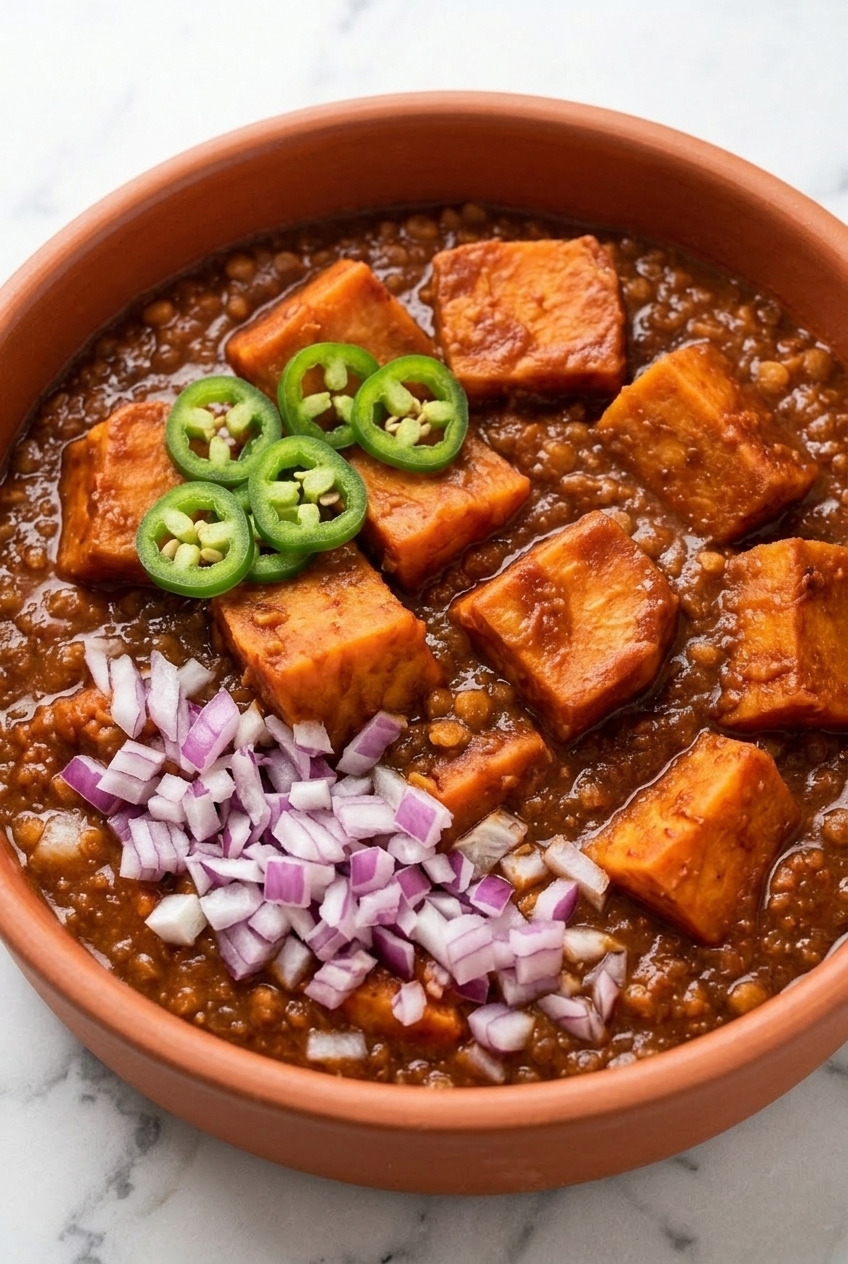
It is a chunky stew, not a puree, and the sweet potato stays in pieces you can see and bite.
It is also not a curry, no matter how orange it looks in the pot.
The technique that carries the whole thing is the onions, cooked down hard and almost dry before any fat comes near them.
That is how a wat gets thick without flour or cream.
What Berbere Actually Is
Berbere is a dry blend, and it is the reason this dish exists. Get a good one and the recipe almost cooks itself.
The base is dried red chiles and paprika, which is where the color comes from.
Built on top of that, in varying amounts: fenugreek, ginger, garlic, coriander, korarima (Ethiopian cardamom), ajwain, nigella seed, cloves, cinnamon and allspice.
There is no single official recipe.
Proportions shift by region, by market, and honestly by family.
Two jars from two different shops can taste noticeably different from each other, and both are correct.
What Does Berbere Taste Like?
Warm rather than sharp.
The heat builds slowly across a few bites instead of hitting you in the front of the mouth.
Around it there is fruitiness from the chiles, a savory garlic and ginger layer, and that bitter, slightly maple fenugreek note running underneath everything.
Taste yours before you measure. Some blends are barely warm and some will genuinely make you sweat, so put a pinch on your tongue and adjust the 3 tablespoons accordingly.
Where Do I Buy Berbere?
Ethiopian and Eritrean grocery stores, first choice by a wide margin.
Good spice merchants and a handful of online sellers stock it too.
Buy from somewhere that moves a lot of it. The volatile spices in the blend fade fast, and a jar that has sat on a shelf for a year is mostly paprika.
The Onion Is the Method
If you take one thing from this article, take this. The onions go in first, and they go in without fat.
Most stew recipes start by sweating onions in oil.
Ethiopian wat does the opposite.
Finely chopped onions go into a dry or barely oiled heavy pot over medium heat, and they cook for 15 to 20 minutes until they collapse.
They give up their water, then they darken, then they turn into a soft jammy mass at the bottom of the pot.
Only then does the fat go in.
The order is the whole trick.
Onions that lose their water before they meet fat melt into the sauce instead of frying in it.
That is your thickener. No flour, no cream, no cornstarch.
Sound like a long time to stand at a stove? It is about five minutes of actual attention.
Stir every couple of minutes, and if they start to catch on the bottom, add a spoonful of water and scrape.
Niter Kibbeh, and What to Use Instead
Niter kibbeh is clarified butter that has been simmered with whole spices and then strained.
It is the standard cooking fat in Ethiopian kitchens, and it is a real part of why the food tastes the way it does.
You can buy it, and you can also make a rough version in 15 minutes.
Quick Stovetop Niter Kibbeh
Melt ½ cup unsalted butter over low heat with 2 crushed garlic cloves, a 1 inch piece of sliced ginger, 3 crushed cardamom pods, ½ teaspoon fenugreek seeds, ½ teaspoon coriander seeds and a small piece of cinnamon.
Let it bubble very gently for 10 to 15 minutes, until the milk solids sink and go golden.
Strain it through a fine sieve and keep it in a jar in the fridge for a month.
No time for that? Plain unsalted butter plus a pinch each of ground cardamom and ground fenugreek gets you most of the way. Neutral oil works for a leaner stew, and you lose some depth.
Ingredients You'll Need
Short list, and the shopping trip is really just two items: berbere and injera. Everything else is a normal grocery run.
- Red onions (3 large, about 2 pounds). Yes, that much. Finely chopped. They are the sauce, not a background note.
- Niter kibbeh (¼ cup). Or unsalted butter, or neutral oil. Added after the onions collapse.
- Garlic (6 cloves). Minced. Ethiopian stews are not shy with it.
- Fresh ginger (2 tablespoons, grated). Bright and warming against the chile heat.
- Berbere (3 tablespoons). The defining ingredient. Taste your blend first.
- Tomato paste (2 tablespoons). Deepens the color and adds body and a little savory backbone.
- Sweet potatoes (2 ½ pounds). Peeled, cut into 1 ½ inch chunks. Big pieces on purpose, see the texture section.
- Red lentils (¾ cup). Rinsed. They break down completely and thicken the sauce around the potato.
- Chicken broth (4 cups). Vegetable broth or water both work.
- Fine salt (2 teaspoons). Plus more at the end.
- To serve: injera. Plus chopped fresh green chile and a little raw chopped red onion if you like.
Ingredient Notes and Substitutions
- Berbere strength. Start with 2 tablespoons if yours is fierce or if you are cooking for kids, then add more at the end. You can always put heat in, you cannot take it out.
- The lentils. Leave them out for a brothier, looser stew. Chickpeas or split red lentils both work as swaps. Brown lentils hold their shape and give you a different, chewier dish.
- Onion type. Red onions are traditional and go sweeter. Yellow onions are a perfectly good substitute.
- Broth. Chicken broth is what I use for depth. Water genuinely works here because the onions and berbere carry so much flavor.
- Making it hotter. A chopped serrano or two with the garlic, or an extra tablespoon of berbere at the end.
- Making it milder. Cut the berbere to 1 ½ tablespoons and add 1 teaspoon sweet paprika to keep the color.
How to Make Berbere Sweet Potato Stew
One heavy pot and about an hour and fifteen minutes, most of it hands off.
Step 1: Cook the Onions Down Hard
Put the chopped red onions in a large heavy pot over medium heat with no fat and a pinch of the salt.
Cook 15 to 20 minutes, stirring every couple of minutes.
They will release water, then that water will cook off, then they will slump into a soft dark mass.
Add a spoonful of water any time they threaten to stick.
Step 2: Add the Fat and Aromatics
Stir in the ¼ cup niter kibbeh and let it melt into the onions.
Add the garlic and grated ginger and cook 2 minutes, stirring.
The pot will smell completely different at this point, and that is the signal you are on track.
Step 3: Cook the Berbere and Tomato Paste
Add the 3 tablespoons berbere and the 2 tablespoons tomato paste straight into the fat.
Stir constantly for 2 minutes over medium-low heat.
The mixture goes dark red and glossy and the raw dusty smell disappears.
Fair warning: this step scorches easily. Keep the heat down and keep the spoon moving.
Step 4: Add the Sweet Potato, Lentils and Broth
Tip in the sweet potato chunks and turn them gently to coat.
Add the rinsed red lentils, the 4 cups broth and the rest of the salt.
Bring it to a boil, then drop to a bare simmer and cover.
Cook 30 to 35 minutes.
Step 5: Judge It Done
The lentils should have disappeared into the sauce entirely.
The sweet potato should hold its shape but give instantly to the side of a spoon.
The sauce should be thick enough to coat the back of a spoon and hold a line when you drag a finger through it.
Taste for salt, and add more berbere now if you want more heat.
Let it sit off the heat for 10 minutes before serving. It thickens and settles.
Keeping It Chunky
This is a stew and it should look like one. The single biggest failure mode is ending up with orange mush.
- Cut big. 1 ½ inch chunks survive a 35 minute simmer. One inch cubes do not.
- Stir gently and rarely. Once the potato is in, stir only enough to stop the bottom catching, and use a flat wooden spoon rather than a whisking motion.
- Simmer, do not boil. A rolling boil knocks the pieces apart.
- If it is too thin: mash three or four chunks against the side of the pot and stir them back through. That thickens the sauce and leaves the rest of the pieces intact.
- If it is too thick: a splash of broth, off the heat.
Serving It With Injera
Injera is a large soft flatbread made from teff, a tiny Ethiopian grain, and it is fermented for a few days before cooking.
That fermentation gives it a distinct sour tang, which is not a flaw, it is the point.
It cooks on one side only, so the top stays spongy and covered in tiny holes that soak up sauce.
How It Is Actually Eaten
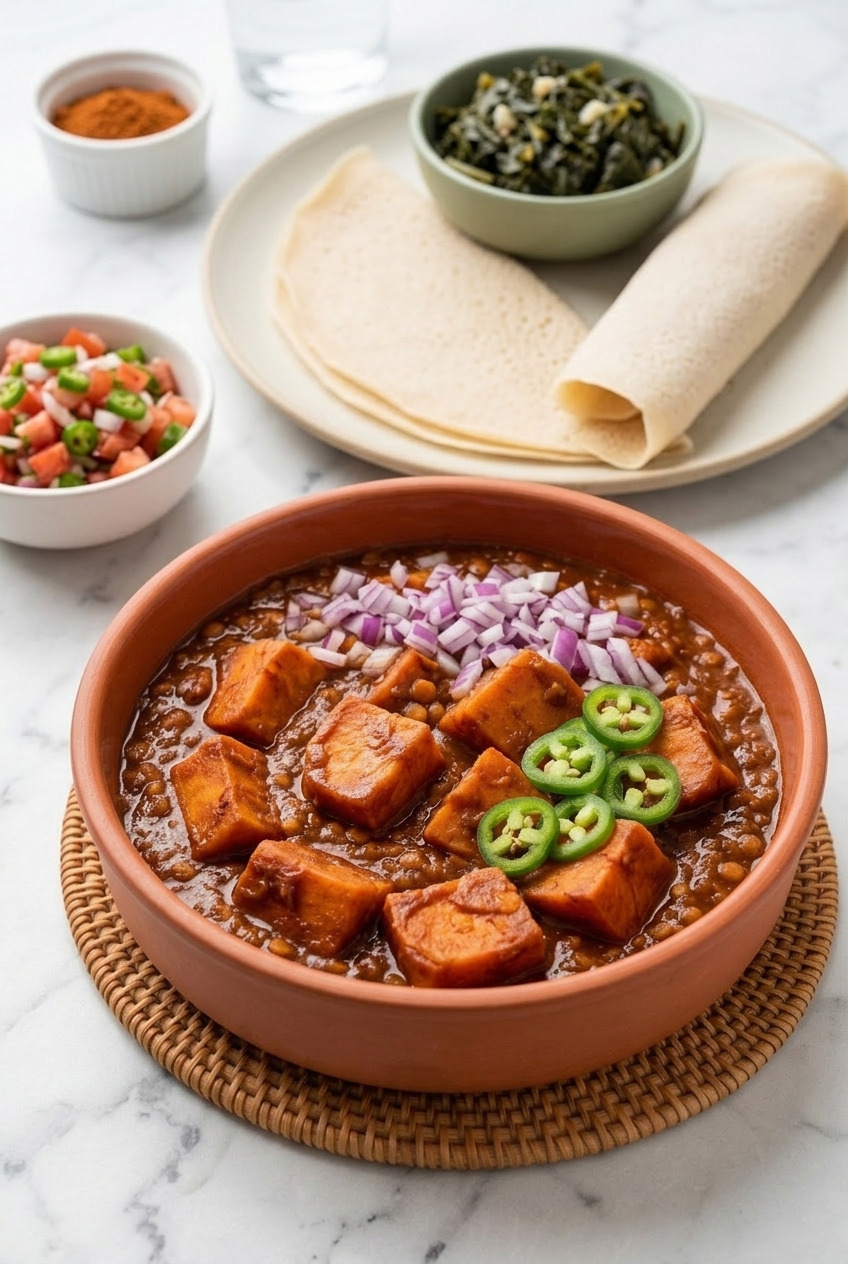
The injera is the plate and the utensil at once.
You lay a sheet down, spoon the stew on top, and tear pieces from a second rolled up sheet at the side.
Pinch a bite of stew with the torn piece, and eat the whole thing.
No cutlery, and it is a shared platter rather than individual portions.
Where to Buy Injera
Ethiopian and Eritrean grocers, most international markets, and a growing number of online sellers who ship it frozen.
It freezes well and thaws in about an hour on the counter.
Can't find it? Warm flatbread or plain rice both carry the stew perfectly well. Just know that it is a genuinely different eating experience, and worth seeking out the real thing once.
What Else Goes on the Platter
In an Ethiopian meal this stew would never be alone. Several dishes share one platter, and the contrast between them is half the pleasure.
- Gomen. Collard greens cooked slowly with garlic, ginger and onion. Mild and green against the heat of the berbere.
- Timatim salata. Chopped tomato, onion and green chile with lemon and oil. Cold, sharp, raw.
- A mild lentil dish. Yellow split peas cooked with turmeric give you somewhere to rest between spicy bites.
- Plain yogurt. Not traditional, but it is what I put out when we have people over who are not used to the heat.
Storage and Leftovers
- Fridge. Airtight, up to 5 days, and it is better on day two once the berbere settles into everything.
- Freezer. Up to 3 months. The sweet potato softens on thawing, which matters less here than it would in a chunkier dish.
- Reheating. Low and slow with a splash of broth. It thickens hard in the fridge.
- Leftover ideas. Spooned over rice, folded into an omelet, or thinned with broth into a soup.
Variations
The onion and berbere base takes almost anything you put in it.
- Add chicken. Brown 1 ½ pounds of bone-in thighs, set them aside, and return them with the sweet potato. This edges toward doro wat.
- Add beef. 1 ½ pounds of cubed chuck, browned and simmered for an hour before the sweet potato goes in.
- Hard boiled eggs. Score them lightly and nestle them in for the last 10 minutes, the way doro wat is finished. They take on the color and the spice.
- Mixed roots. Swap half the sweet potato for regular potato and carrot for something a little less sweet.
- More greens. Stir in a few handfuls of chopped collards in the last 10 minutes.
More Stew Recipes
A pot of stew and something to scoop it with is my favorite kind of cooking. Once you have berbere in the cupboard and the onion technique in your hands, a whole category of food opens up.
Make it once and tell me whether you found injera near you!
Recipe
Ethiopian Berbere Sweet Potato Stew
Ingredients
For the Stew
- 3 large red onions about 2 pounds, finely chopped
- ¼ cup niter kibbeh or unsalted butter, or neutral oil
- 6 cloves garlic minced
- 2 tablespoons fresh ginger grated
- 3 tablespoons berbere plus more to taste
- 2 tablespoons tomato paste
- 2 ½ pounds sweet potatoes peeled and cut into 1 ½ inch chunks
- ¾ cup red lentils rinsed
- 4 cups chicken broth
- 2 teaspoons fine salt plus more to taste
Quick Niter Kibbeh (optional, makes about ½ cup)
- ½ cup unsalted butter
- 2 cloves garlic crushed
- 1 inch fresh ginger sliced
- 3 pods green cardamom crushed
- ½ teaspoon fenugreek seeds
- ½ teaspoon coriander seeds
To Serve
- 6 sheets injera or warm flatbread
- 1 fresh green chile thinly sliced, optional
- 2 tablespoons red onion finely chopped, optional
Instructions
Make the Niter Kibbeh (optional)
- Melt the butter over low heat with the crushed garlic, sliced ginger, cardamom pods, fenugreek seeds and coriander seeds. Simmer very gently 10 to 15 minutes, until the milk solids sink and turn golden.
- Strain through a fine sieve into a jar. It keeps in the fridge for a month.
Build the Base
- Put the chopped red onions in a large heavy pot over medium heat with no fat and a pinch of the salt. Cook 15 to 20 minutes, stirring every couple of minutes, until they release their water, it cooks off, and they collapse into a soft dark mass. Add a spoonful of water any time they threaten to stick.
- Stir in the niter kibbeh and let it melt into the onions. Add the garlic and grated ginger and cook 2 minutes.
- Add the berbere and tomato paste and stir constantly over medium-low heat for 2 minutes, until the mixture darkens and turns glossy and the raw spice smell disappears. Keep the heat low, this scorches easily.
Simmer
- Add the sweet potato chunks and turn them gently to coat. Add the rinsed red lentils, the broth and the remaining salt.
- Bring to a boil, then reduce to a bare simmer, cover, and cook 30 to 35 minutes. Stir only enough to stop the bottom catching so the chunks stay whole.
- It is done when the lentils have disappeared into the sauce and the sweet potato holds its shape but gives instantly to a spoon. If the sauce is thin, mash three or four chunks against the side of the pot and stir them back in.
- Taste for salt and add more berbere if you want more heat. Rest off the heat 10 minutes, then serve on injera with sliced green chile and chopped red onion.
Notes
- The onions come first, without fat: Cooking them down dry before the niter kibbeh goes in is what thickens the sauce. There is no flour or cream in this stew.
- Taste your berbere: Blends vary enormously in heat. Start with 2 tablespoons if yours is fierce and add more at the end.
- Keep it chunky: Cut the sweet potato in 1 ½ inch pieces, simmer gently, and stir as little as possible.
- Niter kibbeh substitute: Unsalted butter with a pinch each of ground cardamom and fenugreek, or neutral oil for a leaner version.
- Storage: Keeps 5 days in the fridge and is better on day two. Freezes 3 months. Reheat low with a splash of broth.