There is a sound I wait for every time I make this.
Batter hitting a screaming hot buttered skillet.
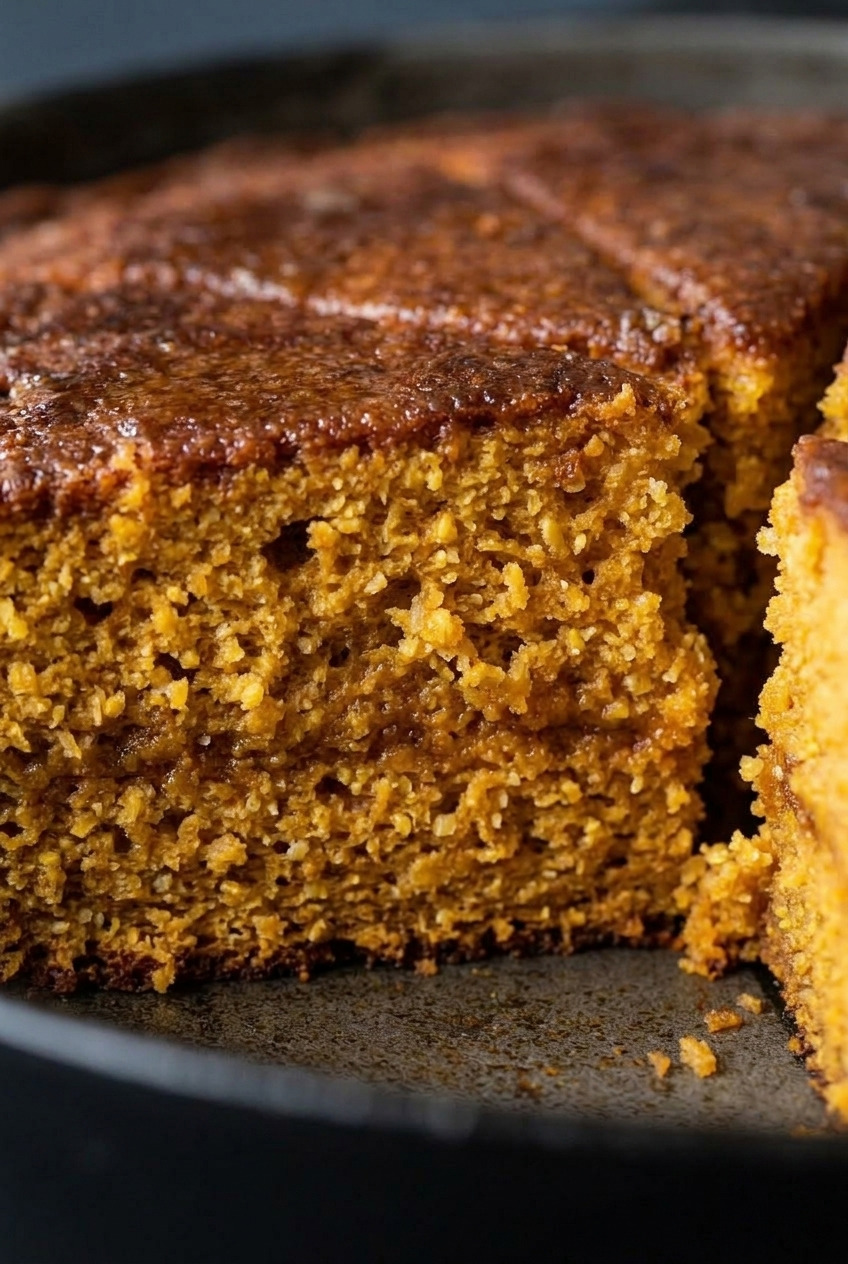
It hisses at the edges and starts setting before the pan even gets back in the oven, and that half second is the whole difference between good cornbread and the kind people remember.
My grandmother kept her skillet on the back burner permanently, the way some people keep a kettle.
She never measured sugar into cornbread and had opinions about people who did.
I fall somewhere in the middle, which is exactly where sweet potato cornbread lives.
The roasted sweet potato does most of the sweetening, and two tablespoons of molasses do the rest.
You get warmth and depth instead of a sugar hit.
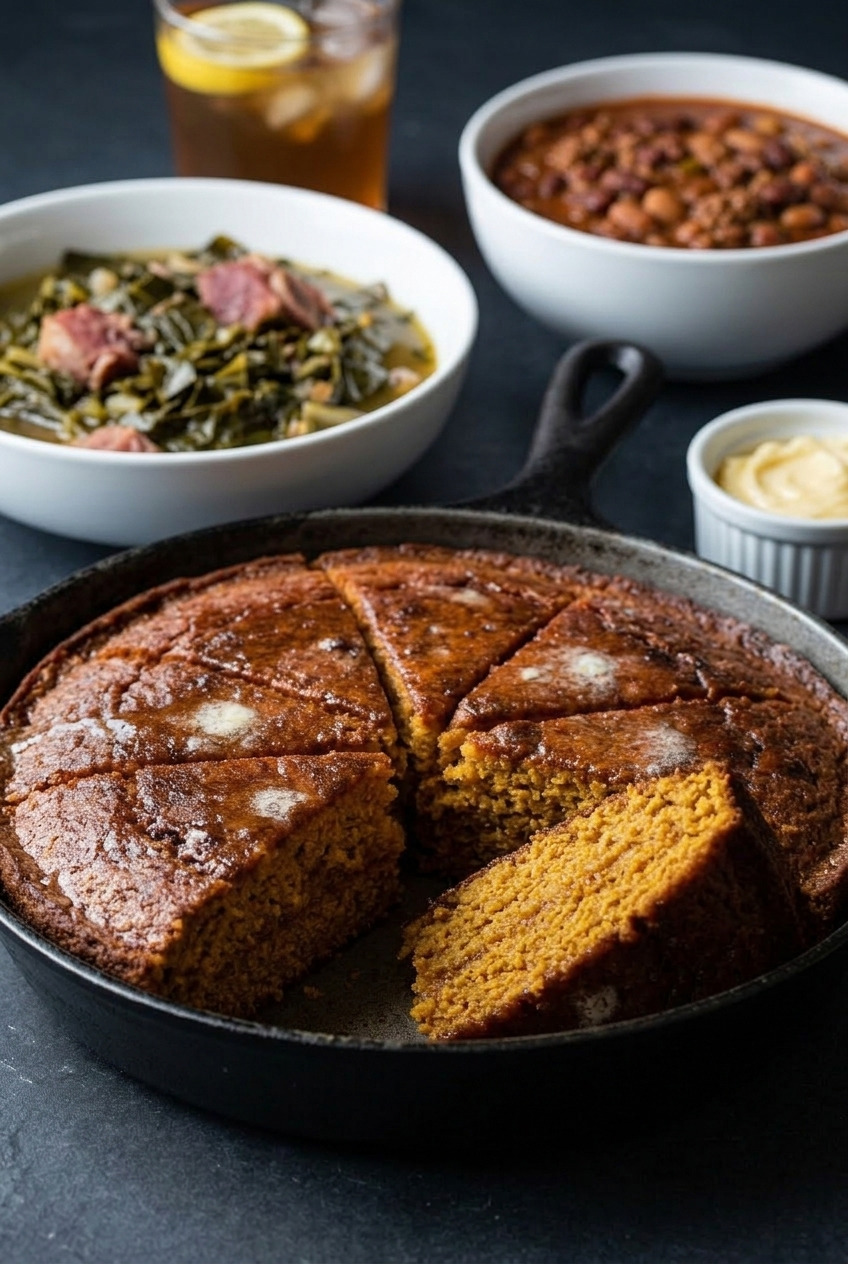
I make this all through fall, mostly for collards and chili, sometimes just to eat standing at the counter with butter melting into it.
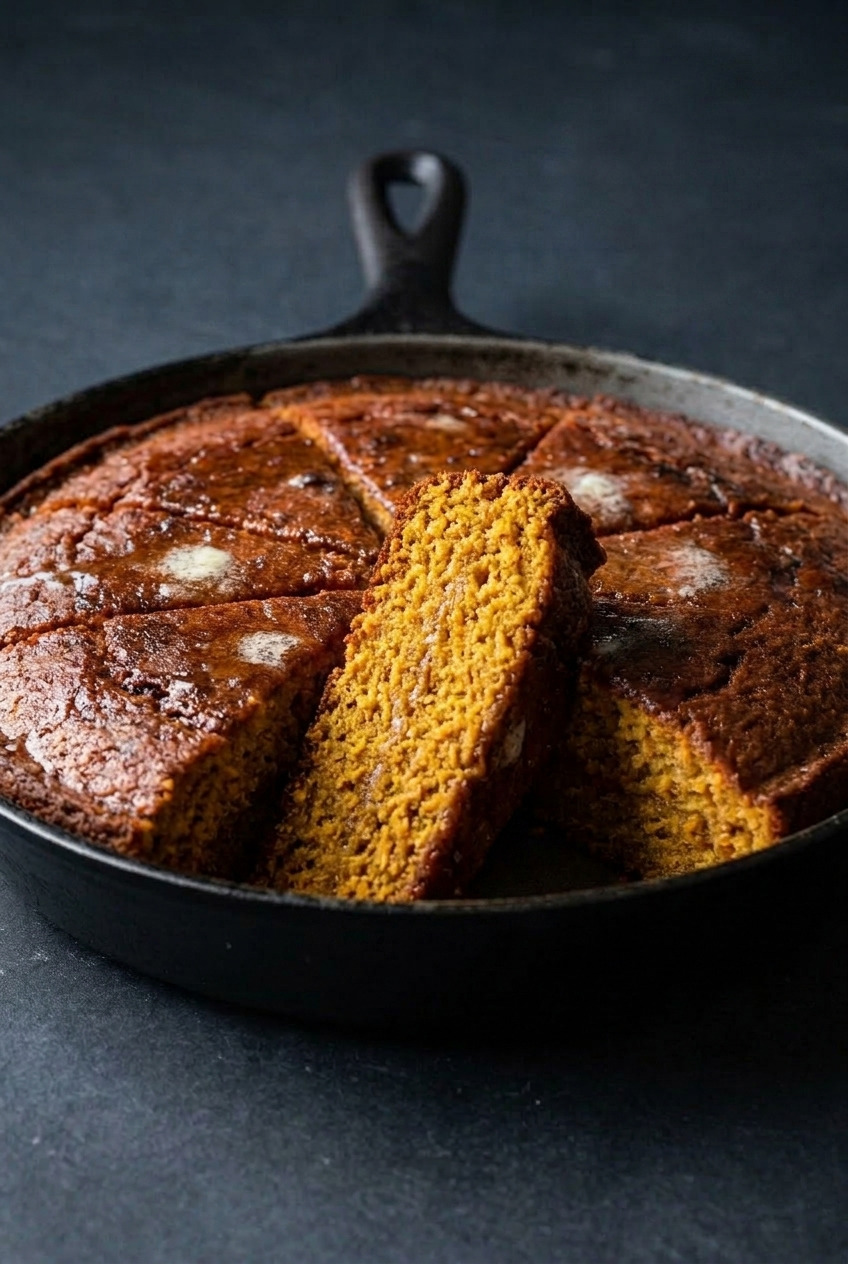
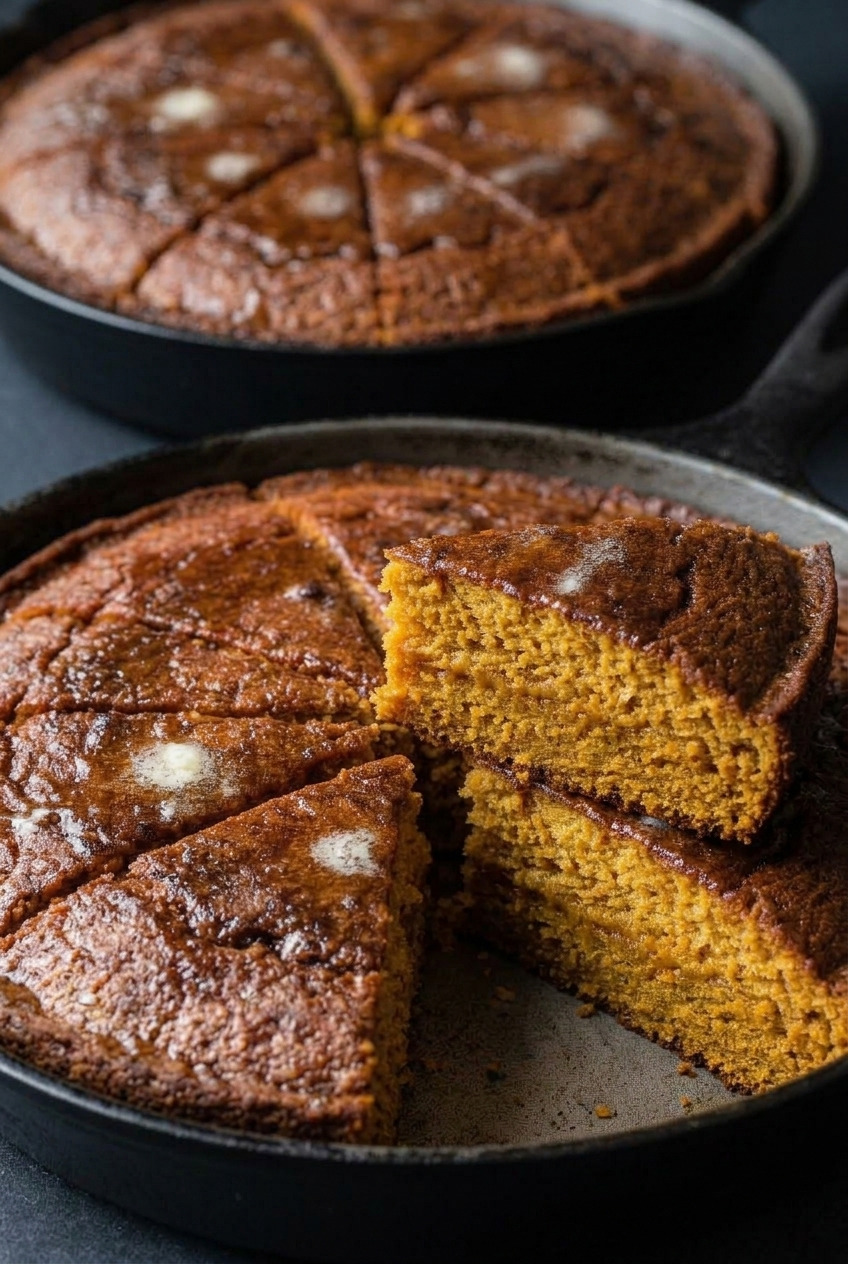
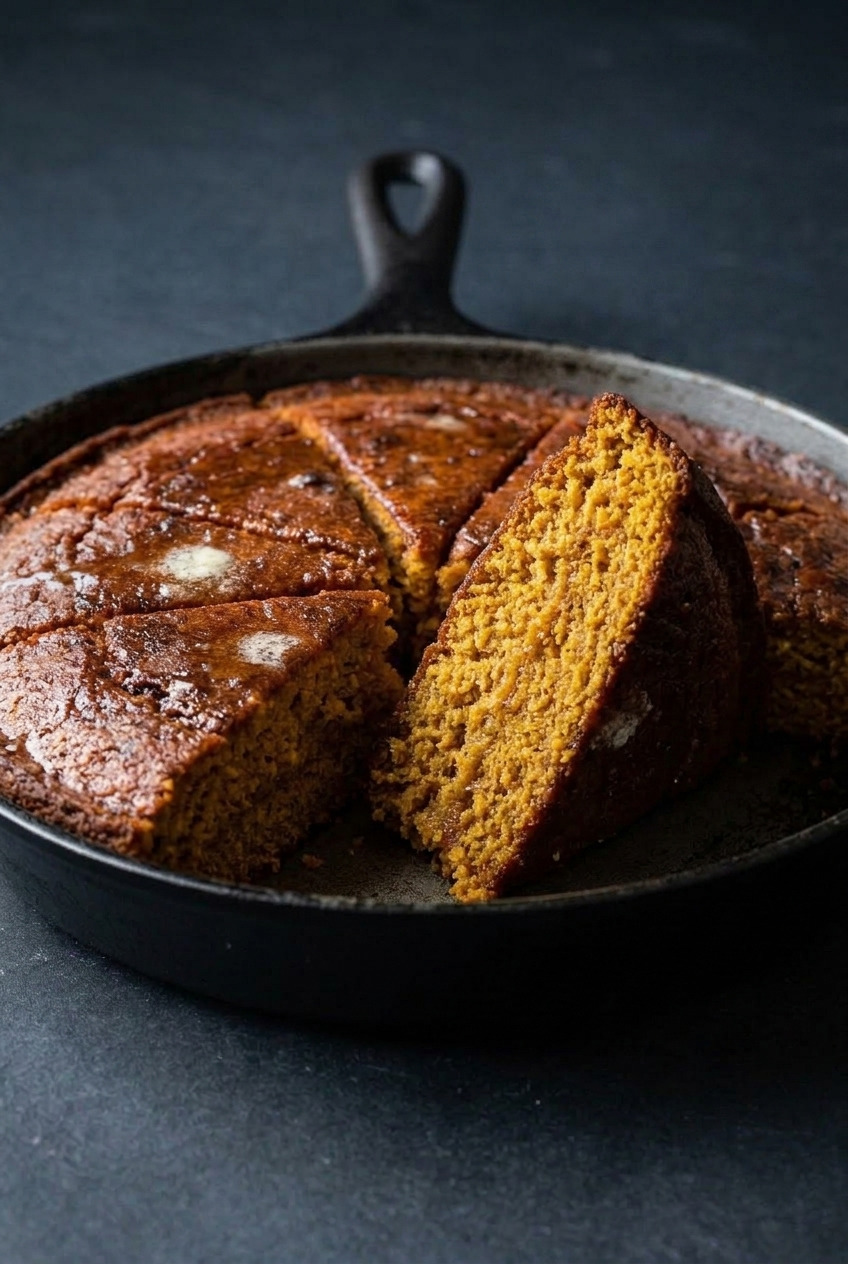
The crumb comes out orange, soft, and heavier than plain cornbread, which is the point.
My wife has claimed the crust edge as hers for about nine years now.
I have stopped fighting her on it.
Total time is under an hour, most of it hands off, and the only equipment that really matters is a 10 inch cast iron skillet.
Make it once in a hot pan and you will not go back to a baking dish.
What Makes Sweet Potato Cornbread Different
The sweet potato changes the texture before it changes the flavor. A cup and a half of roasted puree carries a lot of moisture and a lot of starch into the batter.
That softens the grit of the cornmeal and gives you a crumb that stays tender for three days instead of drying out overnight.
The color is the other giveaway. Deep orange all the way through, no food coloring needed.
Flavor wise, you get an earthy sweetness that sits underneath the corn rather than on top of it.
Cinnamon, nutmeg, and a little clove round it out.
It tastes like cornbread that spent the afternoon with a sweet potato pie, and I mean that as high praise.
Southern Cornbread Versus Sweet Cornbread
This is a real argument at real tables, so let's have it. Traditional Southern cornbread is savory: cornmeal, buttermilk, egg, salt, baked in hot fat, with little or no sugar and often no flour at all.
Sweet cornbread, the kind most boxed mixes produce, runs closer to a corn cake.
Where does this one sit?
Right in between, and deliberately.
There is ⅓ cup of brown sugar and 2 tablespoons of molasses in the whole skillet, which is less than half what most sweet potato cornbread recipes call for.
The vegetable is already sweet. Piling sugar on top of it turns supper bread into dessert.
If you grew up on savory cornbread, cut the brown sugar to two tablespoons and keep the molasses.
If you like it sweeter, brush the honey butter glaze over the top and you are there.
Why Cast Iron Matters
The skillet is not a serving suggestion, it is the recipe. Cast iron holds heat the way nothing else in a home kitchen does.
You preheat the empty pan in the oven, drop in butter or bacon drippings, swirl, and pour the batter into fat that is already shimmering.
The outside of the bread fries against the metal while the inside bakes.
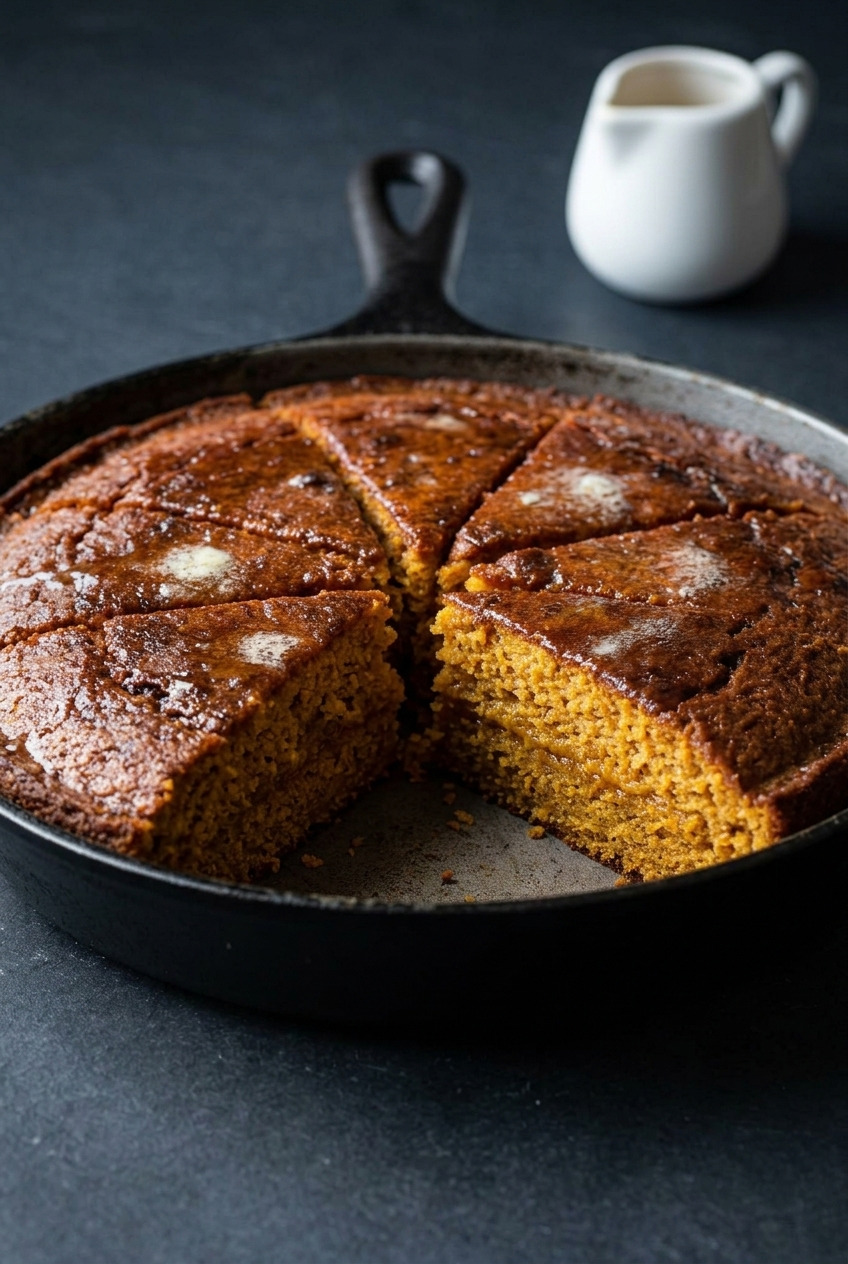
That gives you a crisp, almost crunchy brown edge and a rim you can hear when you tap it.
A glass or metal baking dish gives you a soft pale side wall instead. Perfectly edible, completely forgettable.
Sound like a fussy extra step? It adds ten minutes of preheating and nothing else.
Ingredients You'll Need
Nothing here is hard to find. The molasses is the only bottle you might not already own, and it earns its place.
- Yellow cornmeal (1 ½ cups). Stone ground if you can get it, medium grind. This is the backbone and it should still have some texture.
- All purpose flour (1 cup). Keeps the crumb tender rather than crumbly. All cornmeal versions exist, but with this much puree in the batter you want the structure.
- Roasted sweet potato puree (1 ½ cups). About 1 pound of sweet potatoes. Roasted, not boiled, for reasons I get into below.
- Light brown sugar (⅓ cup). Modest on purpose.
- Molasses (2 tablespoons). Unsulphured, not blackstrap. This is the Southern sweetener that gives the crumb its dark, slightly bitter backbone.
- Buttermilk (1 cup). Real buttermilk. The tang cuts the sweetness and the acid wakes up the baking soda.
- Eggs (2 large). Room temperature so the melted butter does not seize.
- Melted unsalted butter (6 tablespoons). Plus 2 more tablespoons for the skillet.
- Baking powder and baking soda. One tablespoon and half a teaspoon. Both, not one or the other. The puree is heavy and it needs the lift.
- Warm spices. 1 teaspoon cinnamon, ½ teaspoon nutmeg, ¼ teaspoon ground cloves. The cloves are easy to overdo, so measure them.
- Fine salt (1 teaspoon). Cornbread without enough salt tastes like sweetened sand.
Pro tip: If you have bacon drippings in the fridge, use them in the skillet instead of butter. That is how this was made for a hundred years and it is still the better answer.
How to Prepare the Sweet Potato Puree
Roast them, do not boil them. A boiled sweet potato absorbs water and gives up sugar to the pot.
A roasted one loses water and concentrates everything good.
Pierce 1 pound of sweet potatoes, set them on a foil lined sheet, and roast at 400°F for 45 to 55 minutes, until a knife slides through with no resistance and the ends are leaking dark syrup.
Let them cool enough to handle, then peel and mash smooth with a fork or run them through a ricer.
You want about 1 ½ cups of puree.
Canned sweet potato works in a pinch. Buy the plain kind packed in water, never the candied yams in heavy syrup, and drain it well.
Fair warning: canned puree is wetter. Hold back two tablespoons of buttermilk if you use it.
How to Make Southern Sweet Potato Cornbread
Step 1: Heat the Skillet
Put the empty 10 inch cast iron skillet in the oven and heat the oven to 400°F with the pan inside.
Give it a full 10 minutes at temperature after the oven beeps.
Step 2: Whisk the Dry Ingredients
Cornmeal, flour, baking powder, baking soda, salt, cinnamon, nutmeg, and cloves in a large bowl.
Whisk until the color is even.
Step 3: Whisk the Wet Ingredients
In a second bowl, whisk the sweet potato puree, brown sugar, molasses, and eggs until completely smooth.
Add the buttermilk and the 6 tablespoons of melted butter and whisk again.
Step 4: Combine
Pour the wet into the dry and fold with a spatula until you no longer see dry cornmeal.
Stop there. Overmixing develops the flour and gives you a tough, rubbery crumb.
The batter will be thick and scoopable, closer to muffin batter than pancake batter.
Step 5: Pour and Bake
Pull the hot skillet out, add the 2 tablespoons of butter or drippings, and swirl to coat the bottom and sides.
Pour the batter in all at once. It should hiss immediately.
Smooth the top and bake 28 to 32 minutes, until the center springs back and a tester comes out with a crumb or two but no wet batter.
Step 6: Glaze and Rest
Brush the honey butter over the hot surface and let it soak in for 10 minutes before cutting.
Cutting it straight out of the oven gives you a gummy center. I know because I do it anyway about half the time.
Honey Butter Glaze
This takes one minute and it is worth doing. Melt 4 tablespoons of butter, whisk in 3 tablespoons of honey and a pinch of salt, and brush the whole thing over the bread while it is still steaming in the pan.
It sinks in and leaves the top glossy and just barely sticky.
Skip it if you are serving this with something savory and rich. Collards and pot likker do not need a honey lacquer.
Recipe Tips
- Preheat the skillet, always. Ten minutes of empty pan in a hot oven is the single biggest quality lever in this recipe.
- Do not overmix. Fold until the dry disappears and put the spatula down.
- Room temperature eggs and buttermilk. Cold dairy plus melted butter equals butter pebbles in the batter.
- Test at the center. The edges set long before the middle does, and this batter is heavy.
- Rest ten minutes. The crumb finishes setting off the heat.
- Measure the cloves. A heavy hand turns the whole skillet medicinal.
Substitutions and Variations
- Canned yams. Drain and rinse the syrup off, then mash and measure. Pull back two tablespoons of buttermilk.
- The Jiffy shortcut. Two boxes of corn muffin mix, 1 cup of sweet potato puree, 2 eggs, ⅔ cup buttermilk, and the spices. Skip the added sugar entirely, the mix already has plenty.
- Pumpkin instead. Straight swap by volume, and it bakes a little wetter. Use canned pumpkin puree, not pie filling.
- Gluten free. Swap the cup of flour for a cup for cup blend. The texture holds up better here than in most breads.
- Savory turn. Drop the sugar and spices, add 1 diced jalapeno and 1 cup sharp cheddar. Keep the molasses.
- Muffins. Fill a greased tin two thirds and bake at 400°F for 16 to 18 minutes.
How to Serve It
This is supper bread, not dessert. It belongs next to something with a lot of pot likker or gravy.
- Collard greens. The classic pairing, and the sweetness plays against the smoke and vinegar perfectly.
- Chili. A wedge on the side, or crumbled straight into the bowl.
- Smothered chicken or pork chops. Anything with onion gravy to mop.
- Black eyed peas. Especially on New Year's Day.
- Thanksgiving. It holds its own on a crowded table and it doubles as the stuffing base the next morning.
- Breakfast. Split, toasted in butter, honey on top. My favorite way to eat the leftovers.
Storing and Reheating
- Room temperature. Covered in the skillet or wrapped tight, 2 days. The puree keeps it moist longer than plain cornbread.
- Refrigerated. Up to 5 days in an airtight container. It firms up cold, so warm it before serving.
- Freezer. Wrap wedges individually and freeze up to 3 months. Thaw on the counter.
- Reheating. A dry skillet over medium heat, cut side down, for 2 to 3 minutes. The microwave works but you lose the edge.
FAQ
What is the difference between Southern cornbread and sweet cornbread?
Southern cornbread is savory, heavy on cornmeal, made with buttermilk and baked in hot fat, with little or no sugar. Sweet cornbread adds more flour and a lot more sugar, which pushes it toward cake. This recipe sits between the two, sweetened mostly by the sweet potato and molasses.
What makes sweet potato cornbread unique?
The puree adds moisture, color, and a natural earthy sweetness, so the crumb is softer and denser than plain cornbread and it stays fresh noticeably longer.
Can I bake this in a cast iron skillet?
Yes, and you should. The skillet is the default here, preheated empty in the oven then greased right before the batter goes in. That is what creates the crisp brown edge.
Can I use canned sweet potatoes or canned yams?
Yes. Use the plain kind packed in water if you can find it. If all you have is candied yams in syrup, drain and rinse them, then hold back two tablespoons of buttermilk since the batter will already be wetter.
Can I make it with a Jiffy mix?
You can. Use two boxes, 1 cup of sweet potato puree, two eggs, ⅔ cup of buttermilk, and the spice blend. Add no extra sugar. Bake it in the same preheated skillet.
How do I make it less sweet?
Cut the brown sugar to two tablespoons, keep the molasses, and skip the honey butter glaze. The sweet potato alone still carries plenty.
Can I substitute pumpkin for the sweet potato?
Yes, one for one by volume with canned pumpkin puree. It bakes slightly wetter and tastes a little less sweet, so give it an extra two or three minutes in the oven.
How do I store and reheat leftovers?
Two days at room temperature, five in the fridge, three months in the freezer. Reheat wedges cut side down in a dry skillet over medium heat for a couple of minutes to bring the crust back.
Recipe
Southern Sweet Potato Cornbread
Ingredients
For the Cornbread
- 1 ½ cups yellow cornmeal medium grind, stone ground preferred
- 1 cup all purpose flour
- 1 tablespoon baking powder
- ½ teaspoon baking soda
- 1 teaspoon fine salt
- 1 teaspoon ground cinnamon
- ½ teaspoon ground nutmeg
- ¼ teaspoon ground cloves
- 1 ½ cups roasted sweet potato puree from about 1 pound sweet potatoes
- ⅓ cup light brown sugar packed
- 2 tablespoons unsulphured molasses not blackstrap
- 2 large eggs room temperature
- 1 cup buttermilk room temperature
- 6 tablespoons unsalted butter melted
For the Skillet
- 2 tablespoons unsalted butter or bacon drippings
Honey Butter Glaze
- 4 tablespoons unsalted butter melted
- 3 tablespoons honey
- 1 pinch fine salt
Instructions
Roast the Sweet Potatoes
- Pierce 1 pound of sweet potatoes and roast on a foil lined sheet at 400 degrees F for 45 to 55 minutes, until a knife meets no resistance.
- Cool until you can handle them, peel, and mash smooth. You need about 1 ½ cups of puree.
Make the Cornbread
- Set a 10 inch cast iron skillet in the oven and heat the oven to 400 degrees F with the empty pan inside. Leave it a full 10 minutes after the oven reaches temperature.
- Whisk the cornmeal, flour, baking powder, baking soda, salt, cinnamon, nutmeg, and cloves together in a large bowl.
- In a second bowl, whisk the sweet potato puree, brown sugar, molasses, and eggs until smooth, then whisk in the buttermilk and the 6 tablespoons of melted butter.
- Pour the wet mixture into the dry and fold with a spatula only until no dry cornmeal remains. The batter is thick. Do not overmix.
- Pull the hot skillet from the oven, add the 2 tablespoons of butter or bacon drippings, and swirl to coat the bottom and sides.
- Pour the batter into the hot pan all at once, smooth the top, and bake 28 to 32 minutes, until the center springs back and a tester comes out clean.
Glaze and Serve
- Whisk the melted butter, honey, and salt together and brush over the hot cornbread as soon as it comes out of the oven.
- Rest in the skillet for 10 minutes before cutting into wedges.
Notes
- Preheat the skillet: Ten minutes of empty cast iron in a hot oven is what creates the crisp brown edge.
- Roast, do not boil: Boiling waterlogs sweet potatoes and washes out the sweetness.
- Canned sweet potato: Use the plain kind packed in water, drained. If you use candied yams, rinse them and hold back 2 tablespoons of buttermilk.
- Less sweet version: Cut the brown sugar to 2 tablespoons, keep the molasses, and skip the glaze.
- Storage: 2 days at room temperature, 5 days refrigerated, 3 months frozen. Reheat cut side down in a dry skillet.