For about ten years I put a bowl of dessert on the table and called it a side dish.
Brown sugar, cinnamon, vanilla, a splash of maple syrup for good measure.
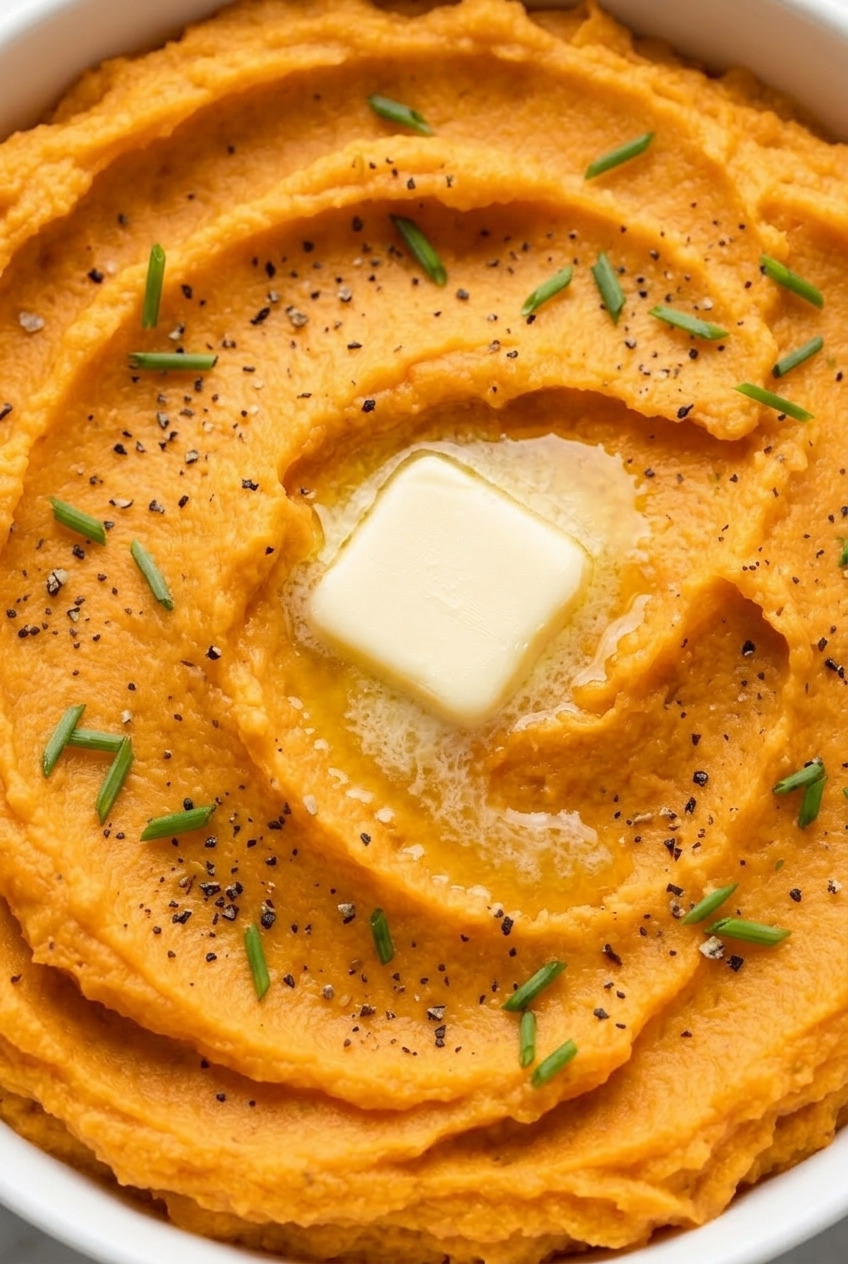
It was fine. Everybody ate it.
Then I had Thanksgiving at a friend's place in Vermont and his mother served mashed sweet potatoes that were just potato, butter, cream and salt.
I went back for a second spoonful before I had finished the first.
They tasted more like sweet potato than anything I had ever made with sweet potatoes in it.
All that sugar I had been adding for a decade was covering up the exact thing I was supposed to be tasting.
The potato is already sweet. It does not need help.
What it needs is salt, a serious amount of butter, and enough cream to make it silky without making it soup.
I came home and made them her way, and I have not gone back since.
These sit next to a roast chicken or a pork chop on a random Tuesday and they are perfect there.
There are two things that make or break them, and neither one is an ingredient.
One is that you never let them touch water. The other is what you mash them with.
Get those right and this is a fifteen minute side dish that people ask about.
A Side Dish, Not a Dessert
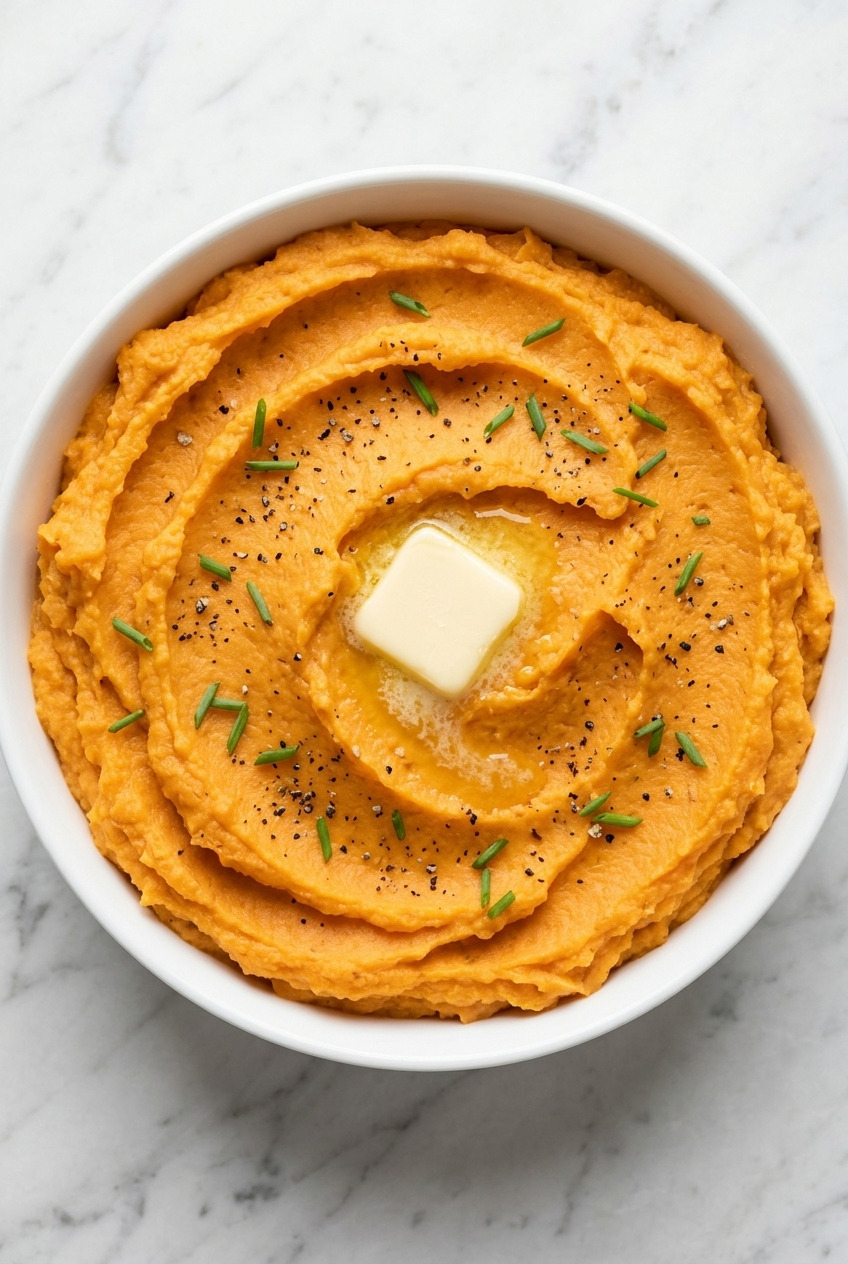
This is a savory side, full stop. Butter, cream, salt, black pepper, and that's the whole flavor profile.
There is one teaspoon of sugar in the recipe and I want to explain it before anyone panics.
It is not there to sweeten anything.
It does for the potato what a pinch of salt does for caramel: it sharpens the flavor that's already there and makes it taste more like itself.
You will not taste sugar. You'll taste more potato.
Now, the marshmallow and brown sugar casserole is a genuinely wonderful thing and I make one every November.
It's just a completely different dish that happens to share an ingredient.
One is dinner and one is basically pie. Both are allowed. Not in the same bowl.
What You Need
Six ingredients, and three of them are salt, pepper and sugar. With a list this short, each one has to be right.
- Sweet potatoes (3 pounds). Look for the deep orange fleshed ones sold as garnet or jewel. They're moister and sweeter than the pale varieties and they mash beautifully. Peeled and sliced ¼ inch thick, which matters more than you'd think.
- Unsalted butter (6 tablespoons). This is a lot and it is supposed to be. Unsalted, so you control the seasoning, and cut into pieces so it melts evenly.
- Heavy cream (½ cup, plus more). Not milk, not half and half. The fat is what makes the mash silky instead of just wet, and milk will thin it out before it enriches it.
- Granulated sugar (1 teaspoon). A seasoning, not a sweetener. See above.
- Kosher salt (1 ¼ teaspoons, plus more). Sweet potatoes take more salt than you expect. Season, taste, season again.
- Black pepper (½ teaspoon). Freshly ground. It keeps the whole bowl on the savory side of the line.
- Garlic clove (1, halved, optional). Dropped into the pot and fished out at the end. It leaves a warm savory background note that nobody can quite identify.
Pro tip: buy potatoes of a similar size and thickness. Uneven slices mean some are falling apart while others are still firm.
Do Not Boil Them in Water
This is the whole recipe, really. Almost every mashed sweet potato recipe tells you to boil chunks in a pot of water, drain them, then mash in butter and cream.
Skip the water entirely.
A sweet potato is already about three quarters water by weight.
Boiling it in more water waterlogs the flesh and leaches flavor into a pot you then pour down the drain.
Then you add cream on top of all that absorbed water, and you get a loose, pale, faintly bland mash that no amount of butter can rescue.
Instead, the sliced potatoes go straight into a saucepan with the butter, the cream and the salt, lid on, over low heat.
They cook in the dairy.
Nothing leaches out, the fat gets absorbed as they soften, and by the time they're tender the mash is basically already made.
Worth the small amount of attention it takes? Every time.
If you really want another route: steam them over an inch of water, or roast them whole at 400°F and scoop the flesh out. Both keep the water out of the potato. Boiling is the only method I'd actually argue against.
How to Make Them
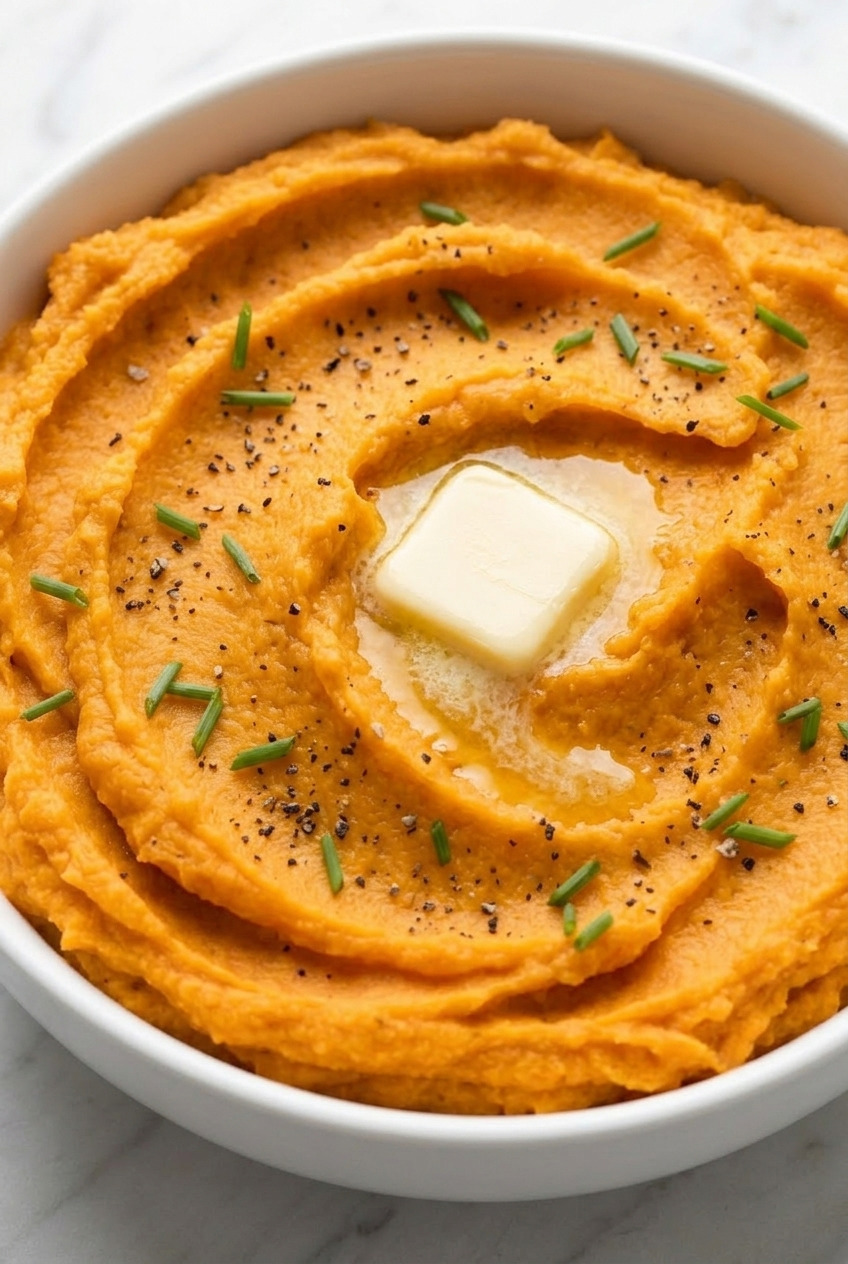
One pot, about thirty minutes, and no draining.
Step 1: Slice
Peel the potatoes and cut them into ¼ inch slices. Thin slices cook evenly at a low temperature, which is the only reason this method works.
Quarter the fat ones lengthwise first so the pieces stay a manageable size.
Step 2: Cook Covered
Put the slices in a large heavy saucepan with the butter, the cream, the salt, the sugar and the halved garlic clove if you're using it.
Cover and cook over low heat for 25 to 35 minutes, stirring every ten minutes or so.
You want a bare simmer under the lid, not a boil. If it's bubbling hard, turn it down.
They're ready when a slice collapses under almost no pressure.
Step 3: Mash in the Pot
Pull out the garlic. Mash everything right there in the saucepan, off the heat.
The liquid in the pot is butter and cream, not water, so all of it goes into the mash.
Step 4: Season and Finish
Taste. Add salt, then the black pepper, then taste again.
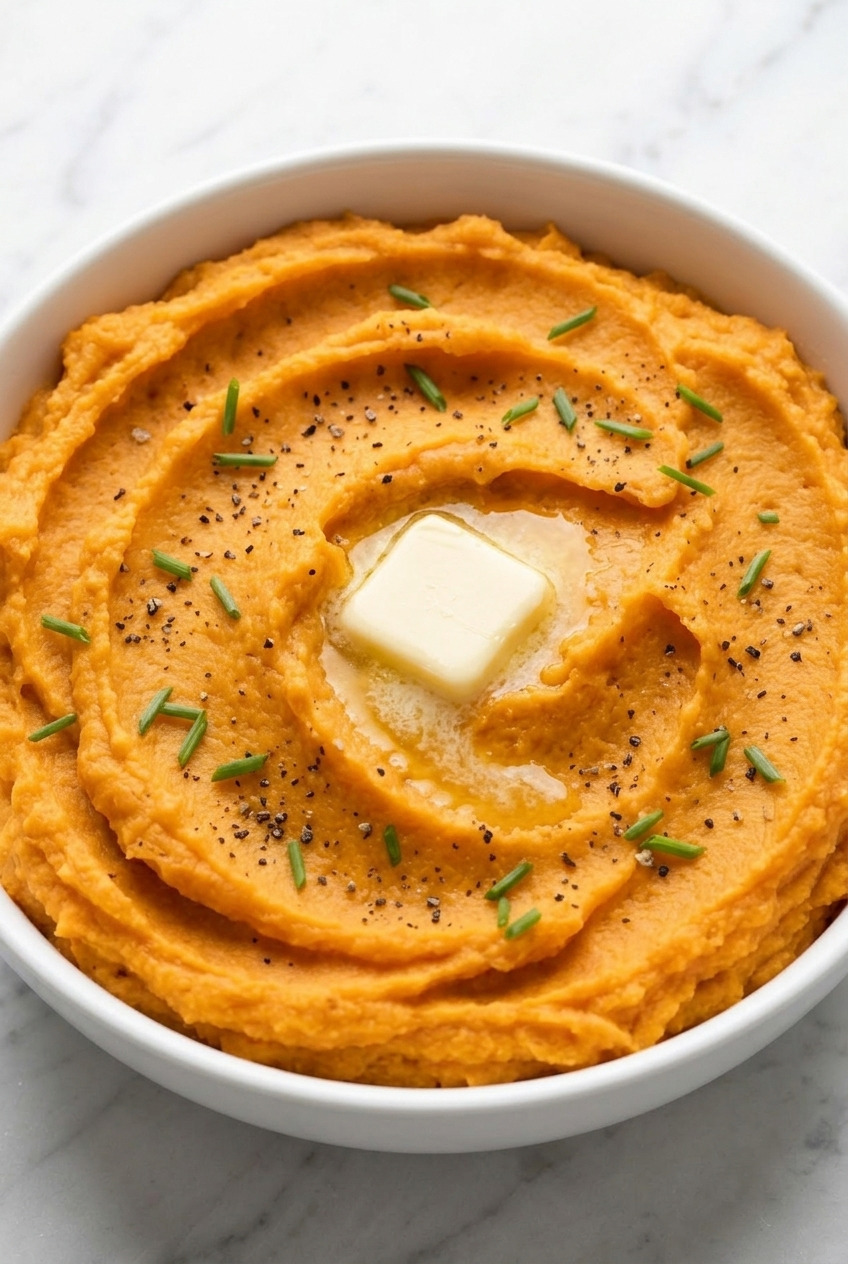
Stir in the last 2 tablespoons of butter and scatter chives over the top.
The Mashing Tool Matters
NEVER use a food processor or a blender. This is the single most important sentence in this article.
Those blades shear the starch cells open and release long strands of starch into the mix.
What you get is stretchy, gummy, and closer to wallpaper paste than to a side dish.
And there is no undoing it. None. You throw it out and start over.
- A potato ricer. The smoothest, silkiest result there is. My preference, and the extra minute is worth it.
- A hand masher. Slightly rustic, a few soft lumps, completely delicious. What I use most nights.
- A hand mixer on LOW. Acceptable if you keep it brief. Ten seconds too long and you're into gluey territory.
- A food mill. Excellent, if you own one and don't mind washing it.
Getting the Texture Right
Start with less cream than you think you need. You can always add more. You can never take it out.
Sweet potatoes vary a lot in how much water they're holding, depending on the variety and how long they sat in the store.
So the half cup in the recipe is a starting point, not a rule.
Once it's mashed, add warm cream one tablespoon at a time until it looks right.
Right means it holds a soft peak on the spoon and settles slowly when you drop a spoonful back into the pot.
If it spreads flat and runs, you've gone past it, and warming it back down takes a long, sad twenty minutes.
Always warm the cream before it goes in. Cold cream seizes the starch and drops the temperature of a dish you want to serve hot.
Seasoning and Tasting
Sweet potatoes soak up salt like nothing else on the table. Season in stages and taste every time.
I salt once in the pot at the start, then again after mashing, and a bowl this size usually takes more than the recipe says.
Pepper goes in at the end, ground coarse so you get little sparks of it.
A few savory additions I rotate through:
- Brown butter. Brown the finishing butter until it smells nutty, then pour it over the top. Excellent with pork.
- Creme fraiche or sour cream. A heaping spoonful stirred in at the end adds a little tang that keeps the richness in check.
- Fresh thyme or sage. A sprig in the pot while it cooks, removed before mashing.
- A bay leaf. Same idea, and it makes the whole thing taste vaguely like a good restaurant made it.
How to Serve Them
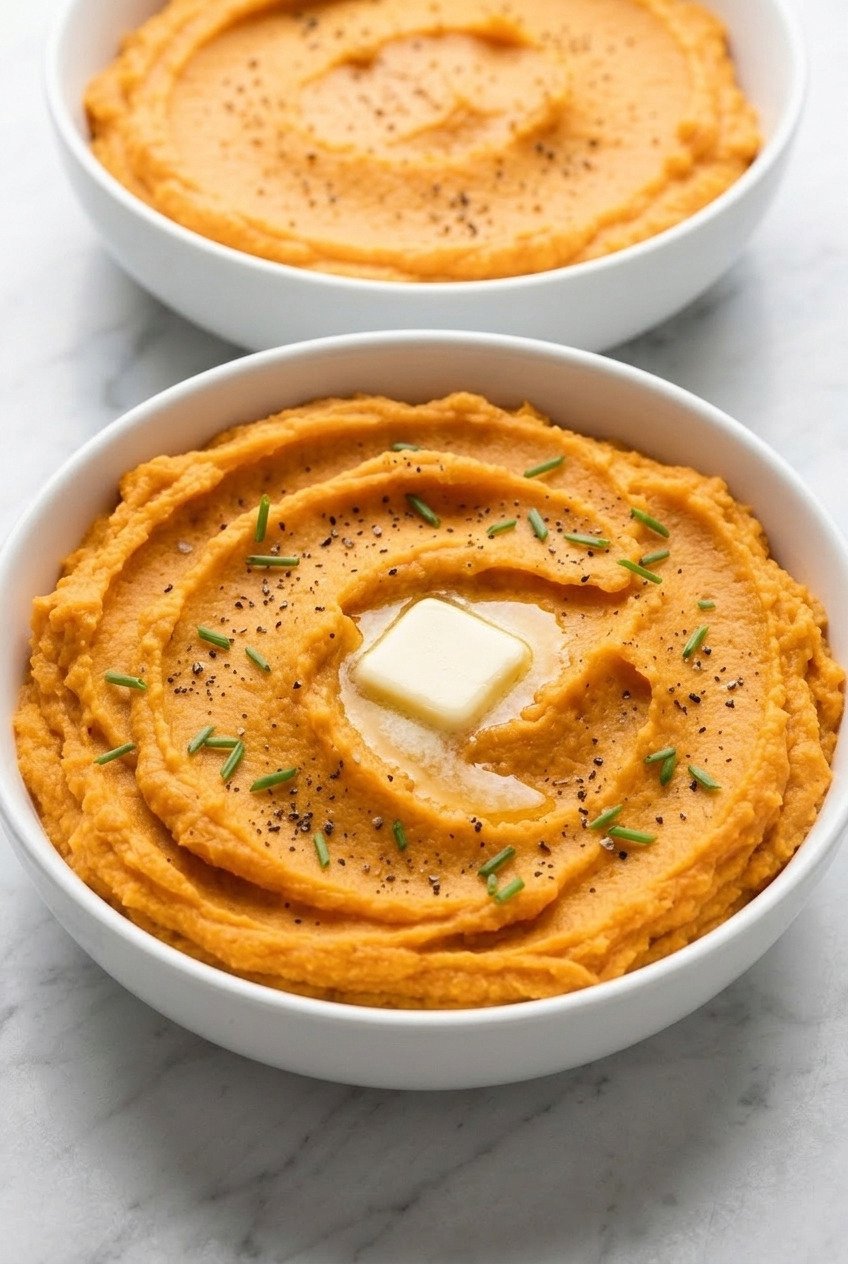
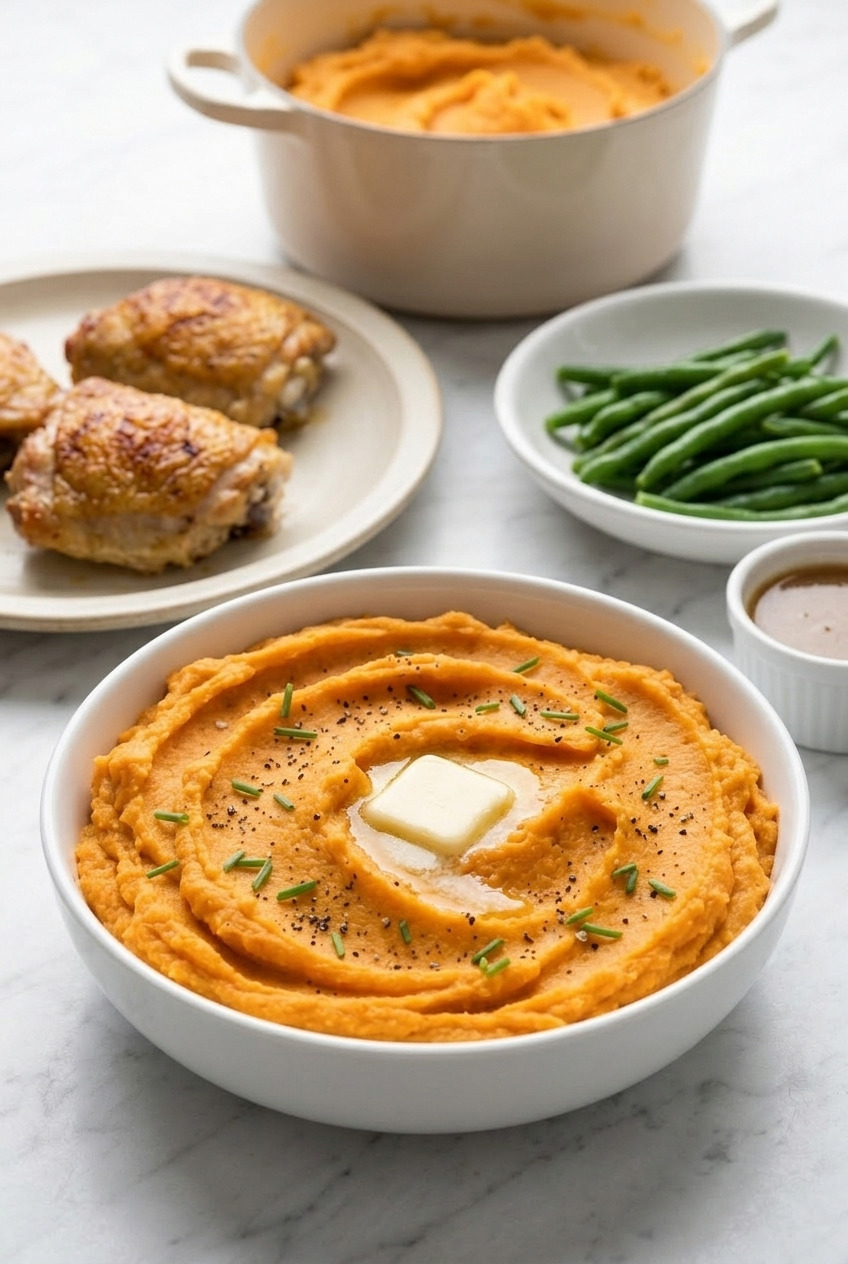
Anything you'd put regular mashed potatoes next to, this works with. The savory version slots into a weeknight dinner in a way the sugary one never could.
- Roast chicken. My favorite pairing. The pan juices over the top are fantastic.
- Pork chops. Sweet potato and pork is a classic for good reason.
- Meatloaf. Comfort food on both sides of the plate.
- Braised short ribs. The mash soaks up the braising liquid perfectly.
- Thanksgiving turkey. It holds its own next to gravy, which the sweet version cannot say.
For the top: brown butter, sliced chives, cracked pepper, or a few crisped sage leaves. Keep it savory and you'll be happy.
Variations
- Garlic and thyme. Three cloves in the pot instead of one, plus a thyme sprig, all fished out before mashing.
- Chipotle. One minced chipotle in adobo. Smoky, a little hot, and outstanding with pork.
- Dairy free. Full fat coconut milk in place of the cream and olive oil in place of the butter. Different, and genuinely good.
- Extra rich. Southern style, with a full stick of butter. I won't stop you.
- The sweet direction. Brown sugar, cinnamon and marshmallows exist and they're delicious. That's a casserole, and it belongs in a baking dish, not here.
If your family insists on the sweet version at Thanksgiving, my sweet potato casserole with marshmallow topping is where that belongs. Keep this one for the rest of the year.
Make Ahead, Storage and Reheating
- Make ahead. Up to 2 days ahead in the fridge, which is a real gift on a holiday morning.
- Reheating. Low heat in a covered saucepan with a splash of cream, stirring now and then. They tighten up in the fridge and the cream brings them straight back.
- Holding for a crowd. A slow cooker on warm holds them for 2 to 3 hours. Stir occasionally and add cream if the edges look dry.
- Freezing. Up to 3 months in a sealed container. Thaw overnight and reheat gently with extra butter.
- Leftovers. Excellent stirred into soup, spread on toast under a fried egg, or fried into small cakes.
Make them plain once and you'll see what the sugar was hiding.
For a holiday table with some color, I put these next to a bowl of purple mashed potatoes. Nobody expects two mashes, and nobody complains.
Recipe
Classic Mashed Sweet Potatoes With Butter And Cream
Ingredients
For the Mash
- 3 pounds sweet potatoes peeled and sliced ¼ inch thick
- 6 tablespoons unsalted butter cut into pieces
- ½ cup heavy cream warmed, plus more as needed
- 1 teaspoon granulated sugar
- 1 ¼ teaspoons kosher salt plus more to taste
- ½ teaspoon black pepper freshly ground
- 1 clove garlic peeled and halved, optional
To Finish
- 2 tablespoons unsalted butter
- 1 tablespoon chives thinly sliced
Instructions
Prep
- Peel the sweet potatoes. Quarter the thicker ones lengthwise, then slice everything about ¼ inch thick so the pieces cook evenly over low heat.
Cook in the Butter and Cream
- Put the sliced sweet potatoes in a large heavy saucepan with the 6 tablespoons of butter, the heavy cream, the sugar, the salt and the halved garlic clove if using. Do not add water.
- Cover and cook over low heat for 25 to 35 minutes, stirring every 10 minutes. Keep it at a bare simmer under the lid. The potatoes are ready when a slice collapses under almost no pressure.
Mash and Season
- Remove the garlic and take the pan off the heat. Mash the potatoes directly in the pan with a potato ricer, a food mill or a hand masher, working all the buttery liquid in. Never use a food processor or blender, which turns sweet potatoes gummy and cannot be undone.
- Taste and add salt, then stir in the black pepper. If the mash is stiffer than you want, add warm cream one tablespoon at a time until it holds a soft peak on the spoon.
- Stir in the last 2 tablespoons of butter, scatter the chives over the top and serve hot.
Notes
- Never boil them in water: sweet potatoes are already about three quarters water, and boiling waterlogs the flesh and washes flavor into the pot.
- Never use a food processor: the blades shear the starch and produce a gummy, stretchy mash that cannot be fixed. A ricer or a hand masher only.
- Warm the cream: cold cream seizes the starch and cools the dish.
- Sugar is a seasoning here: 1 teaspoon sharpens the potato flavor without making the dish sweet.
- Make ahead: up to 2 days in the fridge, reheated gently with a splash of cream, or held on warm in a slow cooker for 2 to 3 hours.