My family has the same argument every November and nobody has ever won it.
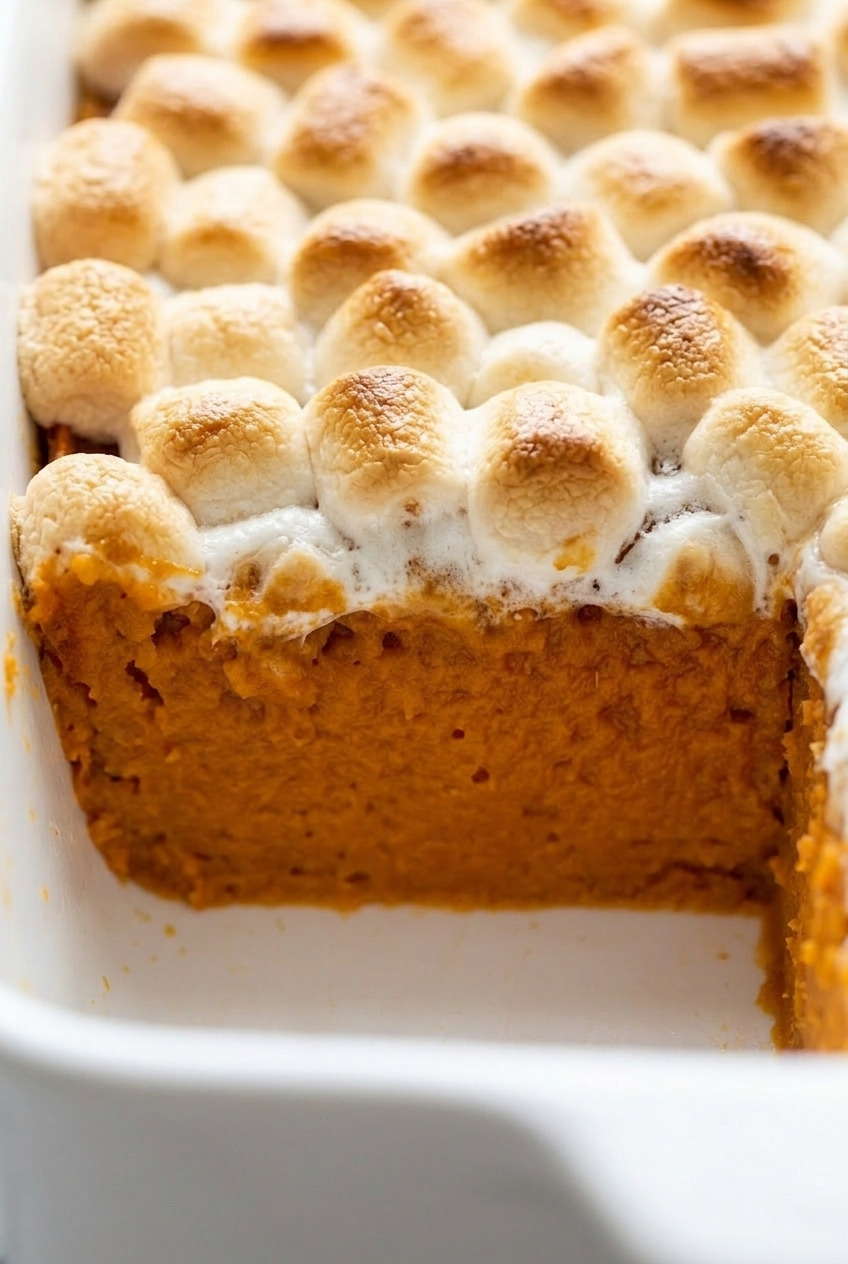
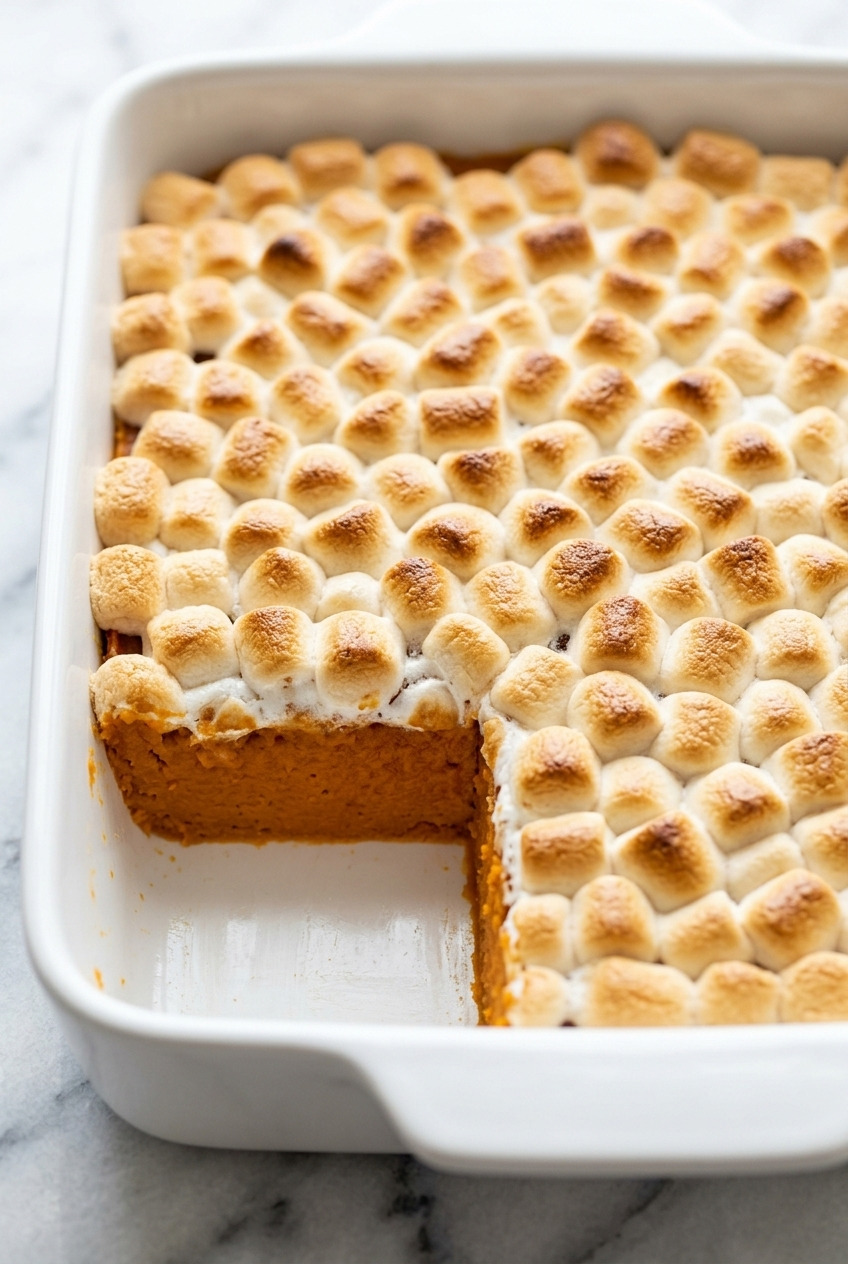
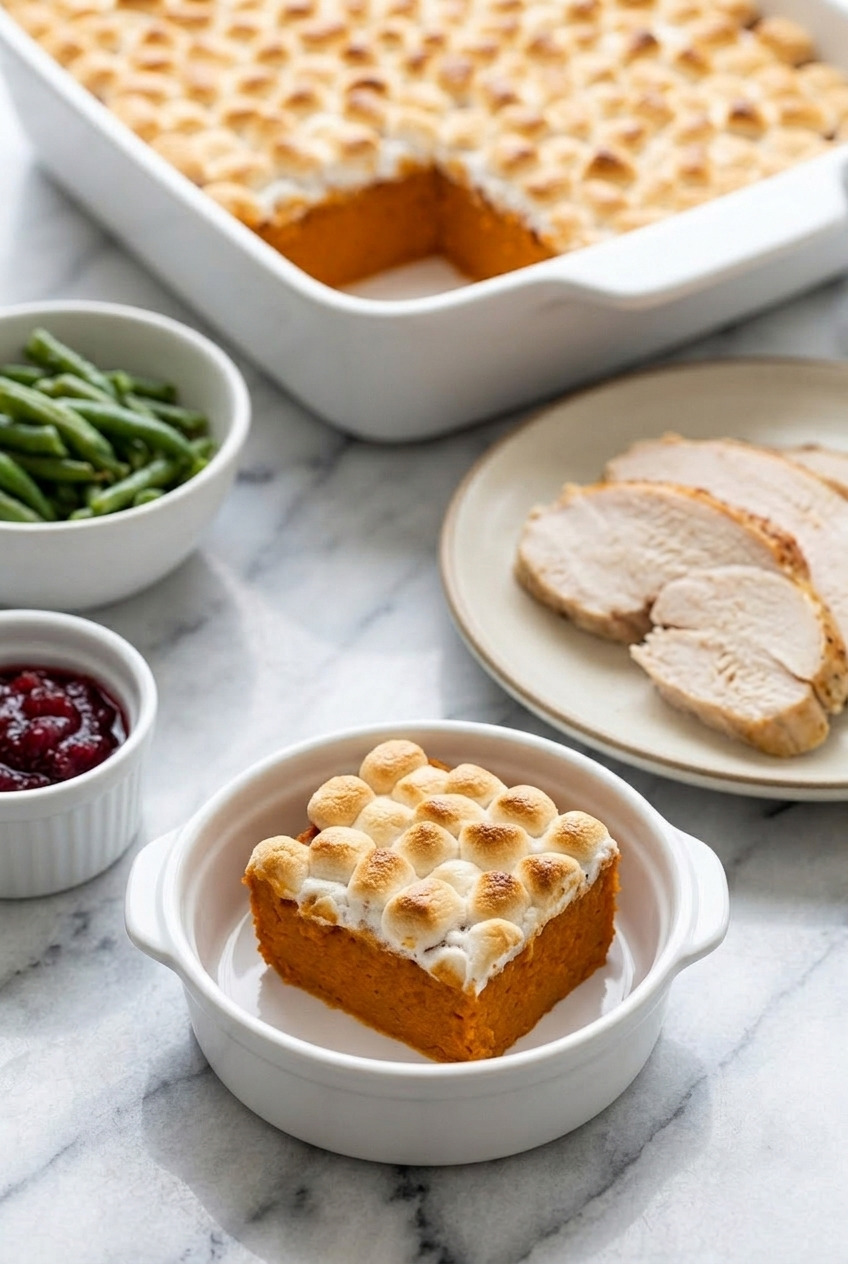
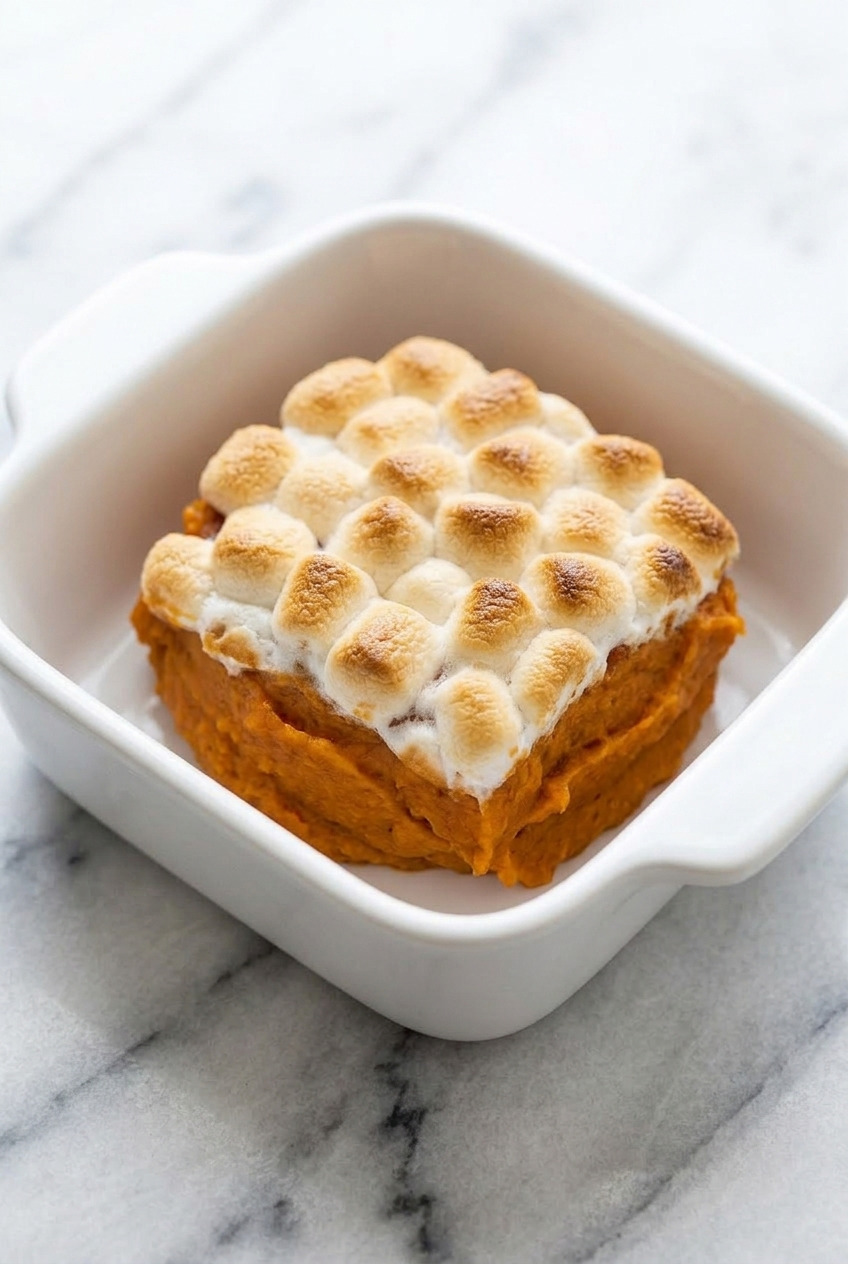
It starts when this casserole comes out of the oven with its marshmallow blanket puffed and browned at the tips.
My brother in law says it's a dessert.
He says it should come out after the pie, or not at all, and that putting candy next to turkey is a crime against the gravy.
My wife says it's a side dish and always has been, and that his opinion has been noted and ignored since 2014.
What I've noticed is that he takes a spoonful anyway.
Then he goes back for more while he's clearing plates, standing at the counter, eating it out of the dish.
So I think we all know where the argument lands.
Look, this one is the sweet camp and I'm not going to pretend otherwise.
Brown sugar, vanilla, cinnamon, and three cups of mini marshmallows toasted on top.
It's the version I grew up on, and it disappears first.
Two things make it good instead of just sweet.
The potatoes get roasted, never boiled, so the filling is thick and sets into something you can actually scoop.
And the marshmallows go on near the end, not at the start, which is the mistake I made for years.
Get those two right and this is the dish people talk about.
Why You Will Love This Casserole
It's the most reliable dish on my holiday table. Not the fanciest, just the one I never worry about.
- The filling actually sets. Roasted potatoes and two eggs mean a spoonful holds its shape on the plate instead of running into the stuffing.
- Make it ahead. The filling keeps 2 days in the fridge. On Thursday all you do is bake and top.
- Five minutes of assembly. Once the potatoes are roasted, everything goes in one bowl.
- That toasted marshmallow top. Puffed, golden, a little chewy where it meets the filling. It's the whole point.
- Kids finish it. The one holiday side that comes back to the kitchen empty.
What You Will Need
Ten ingredients, and the sweet potatoes are doing most of the work. Everything else is supporting cast.
- Sweet potatoes (3 pounds, about 4 medium). Fresh, roasted whole. Garnet or jewel varieties with deep orange flesh. This is the single biggest quality decision in the recipe.
- Unsalted butter (4 tablespoons, melted). More than most recipes use, and it makes the filling silkier.
- Light brown sugar (½ cup, packed). Less than you'll see elsewhere, on purpose. Three cups of marshmallows are coming and they bring plenty of sugar with them.
- Eggs (2 large, room temperature). The binder. They set as the casserole bakes and turn mashed potato into something with structure.
- Vanilla extract (1 teaspoon). Rounds out the brown sugar.
- Cinnamon and nutmeg (½ teaspoon and ¼ teaspoon). Warm, not overwhelming. A pinch of cloves works instead of the nutmeg if you like it stronger.
- Kosher salt (½ teaspoon). Most recipes skip it and that's why so many versions taste flat and cloying. Do not skip it.
- Orange juice (1 tablespoon, optional). A little acid that keeps the sweetness from going one note. You won't taste orange.
- Mini marshmallows (3 cups). Mini, not large. More on that below.
Are Canned Yams and Sweet Potatoes the Same Thing?
Yes, basically. What American grocery stores label canned yams is sweet potato. A true yam is a starchy African tuber with rough bark-like skin, and it's a completely different vegetable that most US stores don't carry.
So canned yams work here. Just know what you're trading.
They're packed in syrup, they're already sweeter than fresh, and they hold a lot of water even after draining.
If you go canned, use two 29 ounce cans, drain them well, then let them sit in a colander for 10 minutes.
Cut the brown sugar to ⅓ cup and expect a softer set.
How to Cook Sweet Potatoes for a Casserole
Roast them whole. Do not boil them. This is where a watery casserole gets fixed, before you've mixed anything.
A sweet potato is roughly three quarters water before you do anything to it.
Boiling chunks in a pot adds more water to that, and the flesh soaks it up.
Then you mash it, bake it, and watch a thin orange liquid seep out at the edges of the dish.
Roasting does the opposite.
Whole potatoes on a foil lined sheet at 400°F for 50 to 60 minutes, until the skins wrinkle and a knife meets no resistance at the thickest point.
Water leaves, the sugars concentrate and caramelize slightly, and the flesh comes out dense and deep orange.
You'll see some syrup leaking onto the pan. That's the good stuff.
The acceptable alternative: steam them in chunks over an inch of water, about 20 minutes. Less flavor than roasting, but no waterlogging either.
How to Make It
Step 1: Roast and Scoop
Roast the potatoes whole as above, then let them cool until you can handle them.
Split each one and scoop the flesh into a large bowl. The skins slip away in one piece.
Step 2: Mash and Mix
Mash the flesh with the melted butter while it's still warm.
Add the brown sugar, vanilla, cinnamon, nutmeg, salt and the orange juice, and stir until smooth.
Let it cool for 5 minutes, then beat in the eggs.
Warm mash plus cold eggs is fine. Hot mash plus eggs gives you scrambled egg in your casserole.
Step 3: First Bake
Spread the filling in a buttered 9x13 dish and smooth the top.
Bake at 350°F for 25 to 30 minutes, until the center is hot and no longer jiggles when you nudge the dish.
Step 4: Top and Finish
Cover the surface with the marshmallows in an even layer, right to the edges.
Back in the oven for 8 to 10 minutes, until puffed and golden.
Rest it 10 minutes before serving. The filling firms up as it cools.
Getting the Filling to Set
The eggs are the whole reason this holds a scoop. Leave them out and you have mashed sweet potato with marshmallows on it, which is fine, but it's not a casserole.
Before it goes in the dish, the filling should be thick enough to hold a spoon mark for a second or two.
If it looks loose and glossy and settles flat immediately, there's too much water in it.
Fix it by spreading the mash in a wide skillet over medium heat for 5 minutes, stirring, to drive some moisture off. Cool it before the eggs go in.
And don't overmash. A few soft lumps are good texture, and beating it to a puree makes it gluey.
When to Add the Marshmallow Topping
Near the end. NEVER at the start. This is the mistake almost everyone makes, myself included for about six years.
Marshmallows that sit through a full 30 minute bake melt completely, sink into the filling and go flat, dark and slightly bitter.
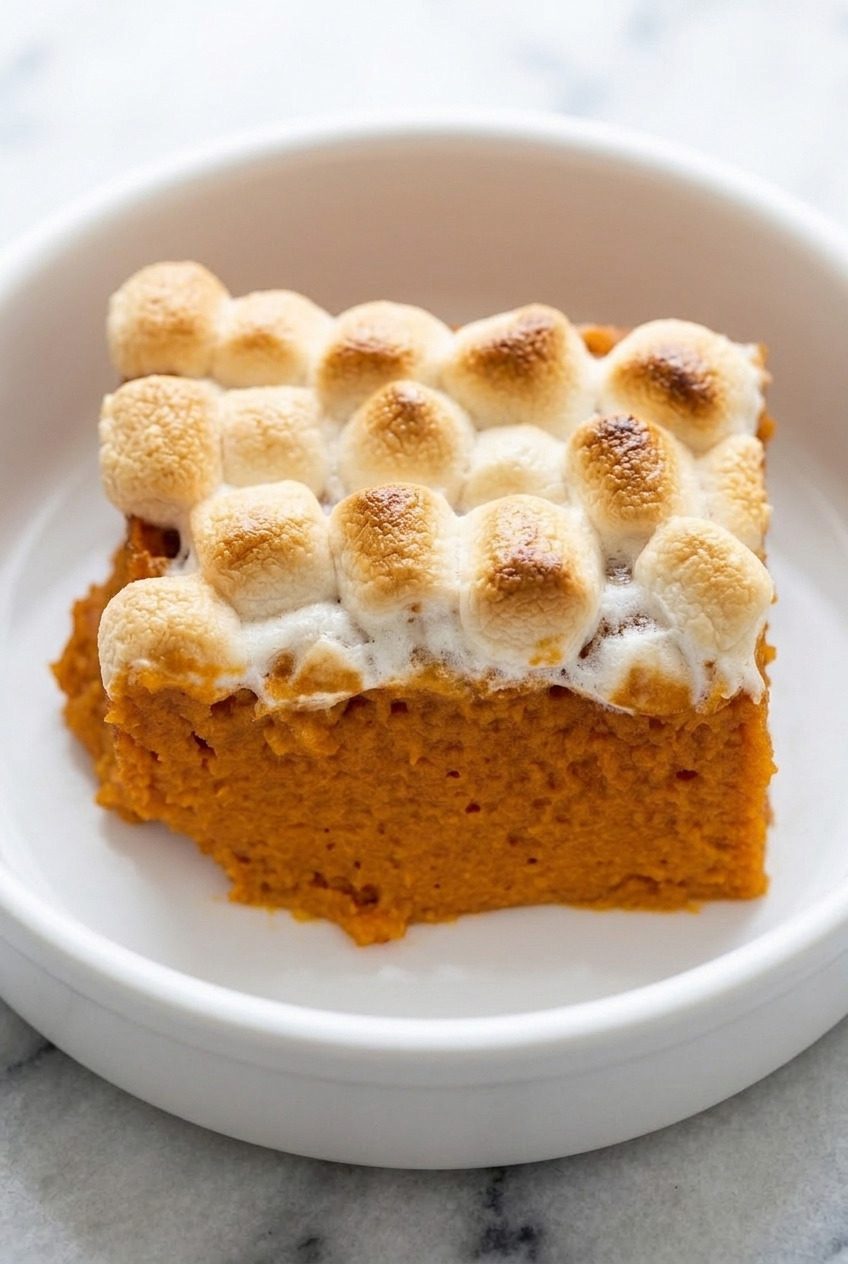
What you want is a puffed blanket with a clear line between the marshmallow and the filling underneath.
That means baking the filling by itself first, then adding the topping for a short second bake.
Two ways to finish it:
- The oven method (safer). Add the marshmallows and return the dish to the 350°F oven for 8 to 10 minutes. Even puffing, gentle color, very hard to ruin.
- The broiler method (better looking). Add them and broil 60 to 90 seconds. Do NOT walk away, do not check your phone, do not leave the kitchen. They go from ivory to black in about ten seconds at the end.
Perfect looks like this: puffed and swollen, ivory in the valleys, deep gold across the surface, dark brown only at the very tips.
Mini, large or fluff? Minis pack into an even blanket and brown uniformly, which is why they're standard. Large ones look dramatic but leave gaps and brown in patches. Marshmallow fluff spreads into a smooth sheet and browns fast and unevenly, so use the oven method if you go that route.
Marshmallows or Pecan Streusel?
These are the two camps, and both of them are right. I make the marshmallow one, but I'm not going to pretend the other doesn't have a case.
The streusel version swaps the marshmallows for brown sugar, butter, flour and chopped pecans, baked until crisp.
People choose it for texture. You get crunch against the soft filling instead of chew on chew.
You also get toasted pecan and browned butter flavor, which is more grown up and less sugary, and the whole dish reads more like a side and less like dessert.
If your table has someone who thinks a marshmallow blanket belongs on a s'more, streusel is the peace offering.
So why do I still make this one? Nostalgia, mostly, and the fact that it's the only holiday dish my nieces reliably eat.
The diplomatic option: marshmallows on one half of the dish, streusel on the other. I've done it twice and both halves came back empty.
If your family treats this as dessert anyway, go all in with a bourbon sweet potato pie. My mother-in-law approved it, which is saying something.
Tips for the Best Sweet Potato Casserole
- Salt it properly. Half a teaspoon minimum. Unsalted sweet filling tastes flat and heavy after two bites.
- Add the orange juice. A tablespoon of acid brightens the whole thing and nobody will identify it.
- Room temperature eggs. They blend in evenly instead of seizing against warm mash.
- Do not overmash. A little texture is good. A puree turns gluey.
- Leave headroom. Fill the dish to about three quarters. Marshmallows expand and you don't want them going over the sides.
- Watch the broiler. I mean it. Stand there.
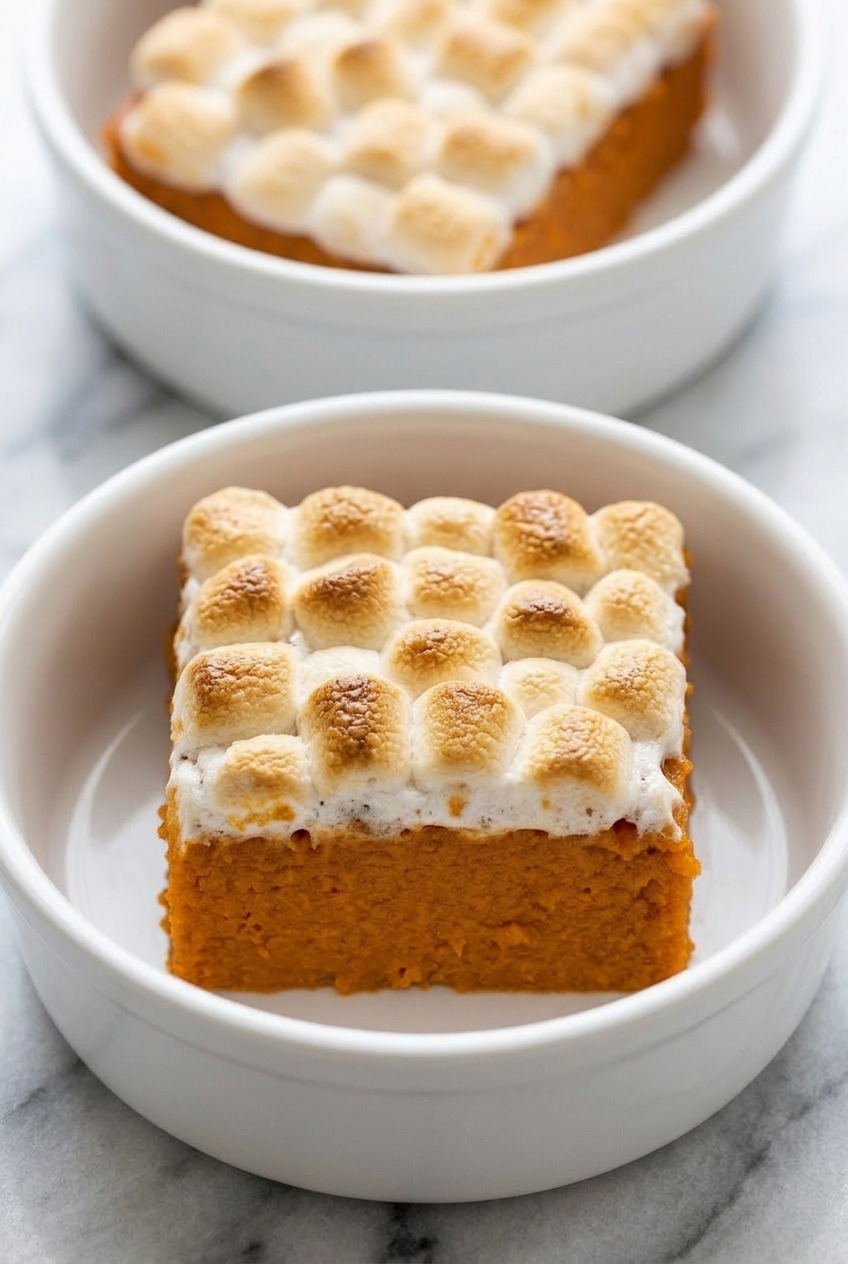
- Rest it 10 minutes. The filling firms as it cools and the first scoop comes out clean.
Can I Make This Ahead?
Yes, and it's better this way on a holiday. The filling is the part that takes time, and it keeps beautifully.
Mix the filling through the eggs, spread it in the baking dish, cover and refrigerate up to 2 days.
Pull it out 45 minutes before baking so it comes toward room temperature, or add 10 minutes to the first bake.
Never add the marshmallows before storing. They absorb moisture from the filling overnight and turn into a sticky film that won't puff.
Another holiday side that makes ahead beautifully is an apricot wild rice stuffing. Bake both the day before and reheat together.
What to Serve With It
- Roast turkey. The classic pairing and the reason this dish exists.
- Glazed ham. Sweet on sweet, and it works better than it sounds.
- Roast chicken. For a Sunday when it isn't November.
- Green bean casserole. Savory and salty next to this. A necessary counterweight.
- Cornbread dressing and cranberry sauce. The rest of the plate, basically.
- A sharp green salad. Vinaigrette, bitter greens. It cuts through everything else on the table.
For the main, an apricot glazed ham is hard to beat. Sweet glaze, salty ham, and this casserole on the side.
Storage, Reheating and Freezing
- Fridge. Covered, up to 4 days. The marshmallow top deflates and gets sticky, which is normal.
- Reheating. Covered with foil at 325°F for 20 minutes. The foil keeps the marshmallows from scorching before the middle warms up.
- Single portions. The microwave is fine for a plate of leftovers. Nobody's judging.
- Freezing. Freeze the filling only, unbaked and untopped, up to 3 months. Thaw overnight, bake, then top.
- Refreshing leftovers. Scatter a handful of fresh marshmallows over the reheated dish and give it 5 minutes uncovered. It comes right back.
Make it once with roasted potatoes and late marshmallows and you'll see why my brother in law keeps losing this argument.
Recipe
Classic Sweet Potato Casserole With Marshmallow Topping
Ingredients
For the Filling
- 3 pounds sweet potatoes about 4 medium, roasted whole
- 4 tablespoons unsalted butter melted
- ½ cup light brown sugar packed
- 2 large eggs at room temperature
- 1 teaspoon vanilla extract
- ½ teaspoon ground cinnamon
- ¼ teaspoon ground nutmeg
- ½ teaspoon kosher salt
- 1 tablespoon orange juice optional
For the Topping
- 3 cups mini marshmallows
Instructions
Roast the Sweet Potatoes
- Heat the oven to 400F. Prick the whole sweet potatoes a few times and roast them on a foil lined sheet pan for 50 to 60 minutes, until the skins wrinkle and a knife slides into the thickest part with no resistance. Do not boil them, boiled potatoes make a watery casserole.
- Cool until you can handle them, then split each potato and scoop the flesh into a large bowl. Discard the skins.
Make the Filling
- Mash the warm flesh with the melted butter, leaving a little texture rather than beating it to a puree.
- Stir in the brown sugar, vanilla, cinnamon, nutmeg, salt and orange juice until smooth. Let the mixture cool for 5 minutes, then beat in the eggs.
- Butter a 9x13 baking dish and spread the filling in an even layer, filling the dish about three quarters full so the marshmallows have room to expand.
Bake and Top
- Lower the oven to 350F and bake the filling alone for 25 to 30 minutes, until it is hot through and the center no longer jiggles when you nudge the dish.
- Cover the surface with the mini marshmallows in an even layer out to the edges. Return the dish to the oven for 8 to 10 minutes, until puffed and golden. For a darker top, broil for 60 to 90 seconds instead and do not leave the oven while it broils.
- Rest the casserole for 10 minutes before serving so the filling firms up.
Notes
- Roast, never boil: boiling adds water to a vegetable that is already about three quarters water and the baked casserole weeps at the edges.
- Marshmallows go on late: added at the start they melt into the filling and go flat and dark. Bake the filling first, top second.
- Canned sweet potatoes: use two 29 ounce cans, drained well and left in a colander for 10 minutes, and cut the brown sugar to ⅓ cup.
- Make ahead: refrigerate the assembled filling up to 2 days, untopped. Never store it with marshmallows on it.
- The other camp: for a brown sugar pecan streusel top instead, skip the marshmallows entirely. You can also do half of each in one dish.