The sound came from the far end of the kitchen and it made me flinch.
A hard, spitting crackle, like someone had dropped a handful of gravel into a hot pan.
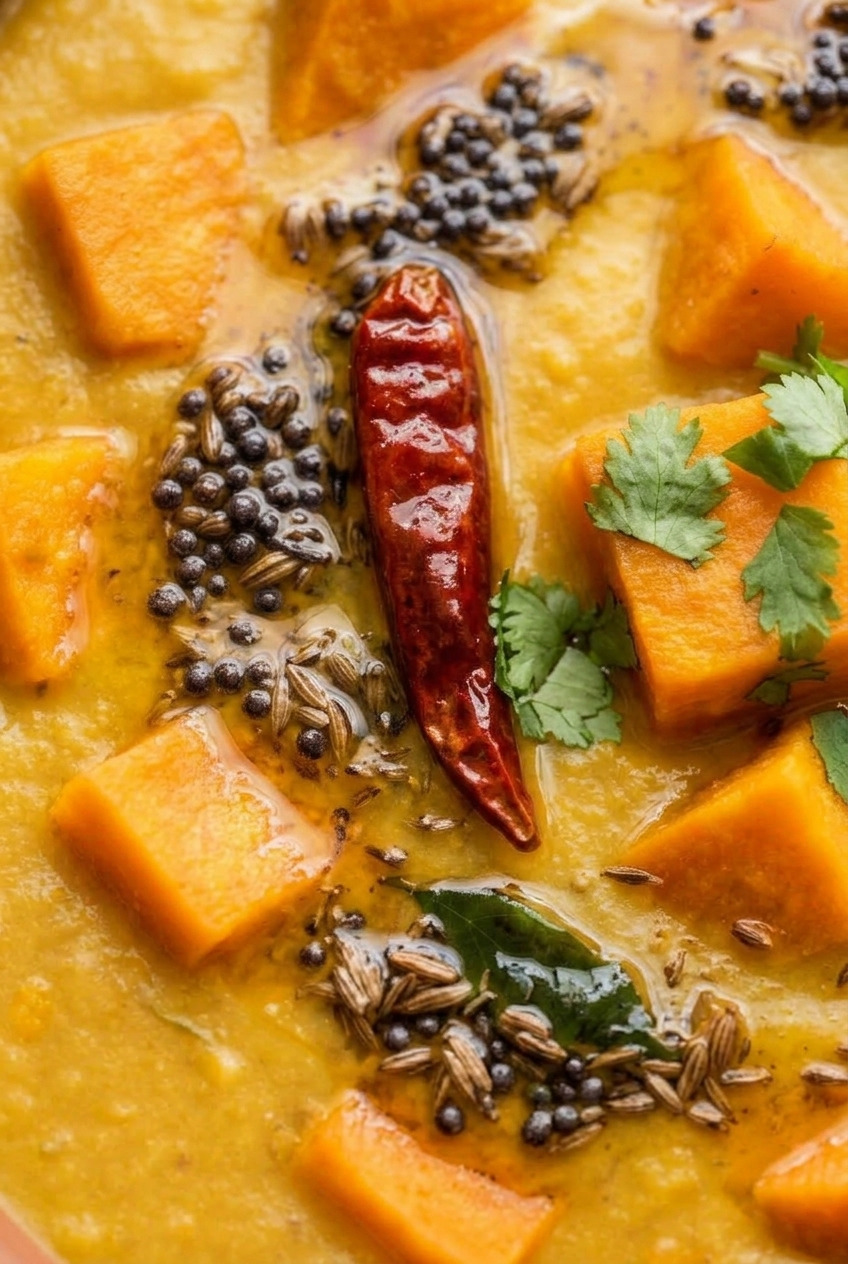
My friend's mother had a small steel pan going with ghee in it, and she was standing back with her arm out while black mustard seeds jumped around inside it.
Curry leaves went in, hissed, and curled.
Then she poured the whole spitting spoonful over the top of a pot of dal that had already looked finished to me.
The smell hit the room in about four seconds.
I'd been making red lentil dal for years at that point and I had never once done that.
Mine was fine. Warm, orange, comforting, fine.
It was also, I understood standing in that kitchen, lentil soup with turmeric in it.
The tempering is called a tadka, and it takes about ninety seconds at the very end.
Whole spices bloomed in hot fat and poured over the finished dal so their aromatics land on top instead of getting simmered into nothing.
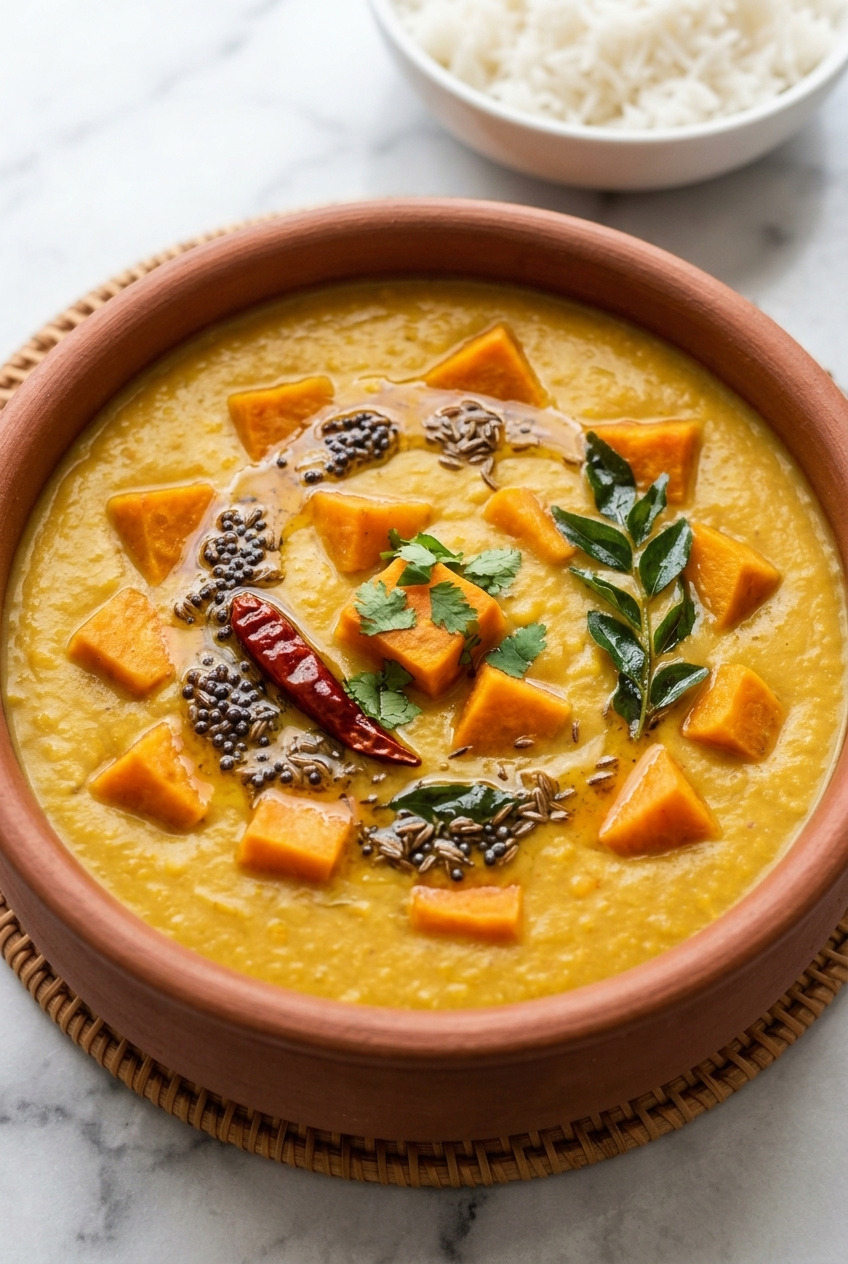
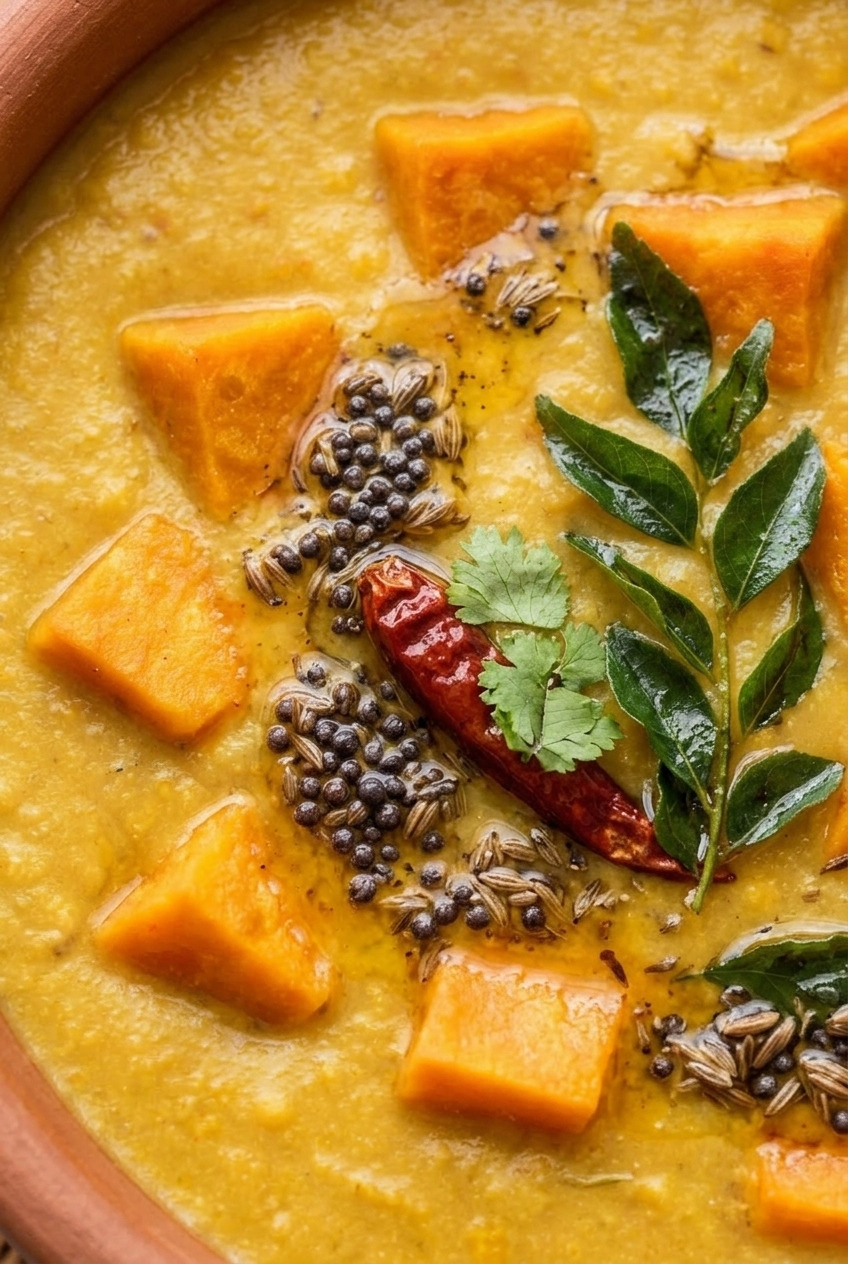
This version goes smooth and thick and a soft yellow orange, with the lentils completely broken down and half inch sweet potato cubes as the only pieces left with any shape.
The sweetness sits right against the mustard seed and the dried chili.
One pot, one small pan, and about forty five minutes.
Why You'll Love This Dal
This is the cheapest good dinner in my rotation and it's not close. A bag of red lentils costs a couple of dollars and feeds you for a week.
- One pot plus one small pan. The second pan is for the tadka and it takes ninety seconds to use and ten to wash.
- Ready in 45 minutes. Red lentils need no soaking, which is why they're the weeknight member of the family.
- Genuinely filling. Lentils and sweet potato together carry a full dinner with no meat in the pot.
- The tempering changes everything. Same base, ninety extra seconds, completely different dish.
- Better tomorrow. The spices settle overnight and it turns into an excellent lunch.
- Naturally gluten free. And vegan if you use coconut oil in place of the ghee.
What Dal Actually Is
Dal means two things at once, which is where a lot of confusion starts. It's the name for the split pulses themselves, and it's the name of the finished dish you make from them.
Red lentils are masoor dal, and they're the fastest of the whole family.
No soaking, no long simmer, done in about twenty five minutes.
Let me be straight with you about this recipe though.
This is a home style dal with sweet potato in it. It isn't a regional recipe from any one place in India and I'm not going to dress it up as one.
The one thing here that is traditional, and that I won't compromise on, is the tempering poured over the top at the end.
The Tempering, and Why It Is the Whole Point
A tadka is whole spices bloomed in hot fat and poured over a dish that's already cooked. The point is timing. Aromatics that would have simmered away over twenty five minutes land on the surface at full strength instead.
The order matters, because the spices need different amounts of heat.
- Ghee first. 2 tablespoons in a small pan over medium-high heat, until it shimmers and thins out.
- Black mustard seeds next. 1 teaspoon, and they need the most heat. Wait for them to pop and jump, about 30 seconds. Keep a lid nearby, they genuinely fly.
- Whole cumin seeds and the dried chili. About 15 seconds. The cumin darkens fast.
- Curry leaves last. They crackle hard, go glossy and darken, and then it's done. Another 10 to 15 seconds and no more.
The whole thing should smell nutty and toasted, never sharp or raw.
Pour it straight over the dal, stir about half of it in, and leave the rest sitting on the surface where you can see the seeds and leaves.
Fair warning: skip this step and you've made a perfectly nice lentil soup. It just isn't dal.
Why Sweet Potato Belongs in Dal
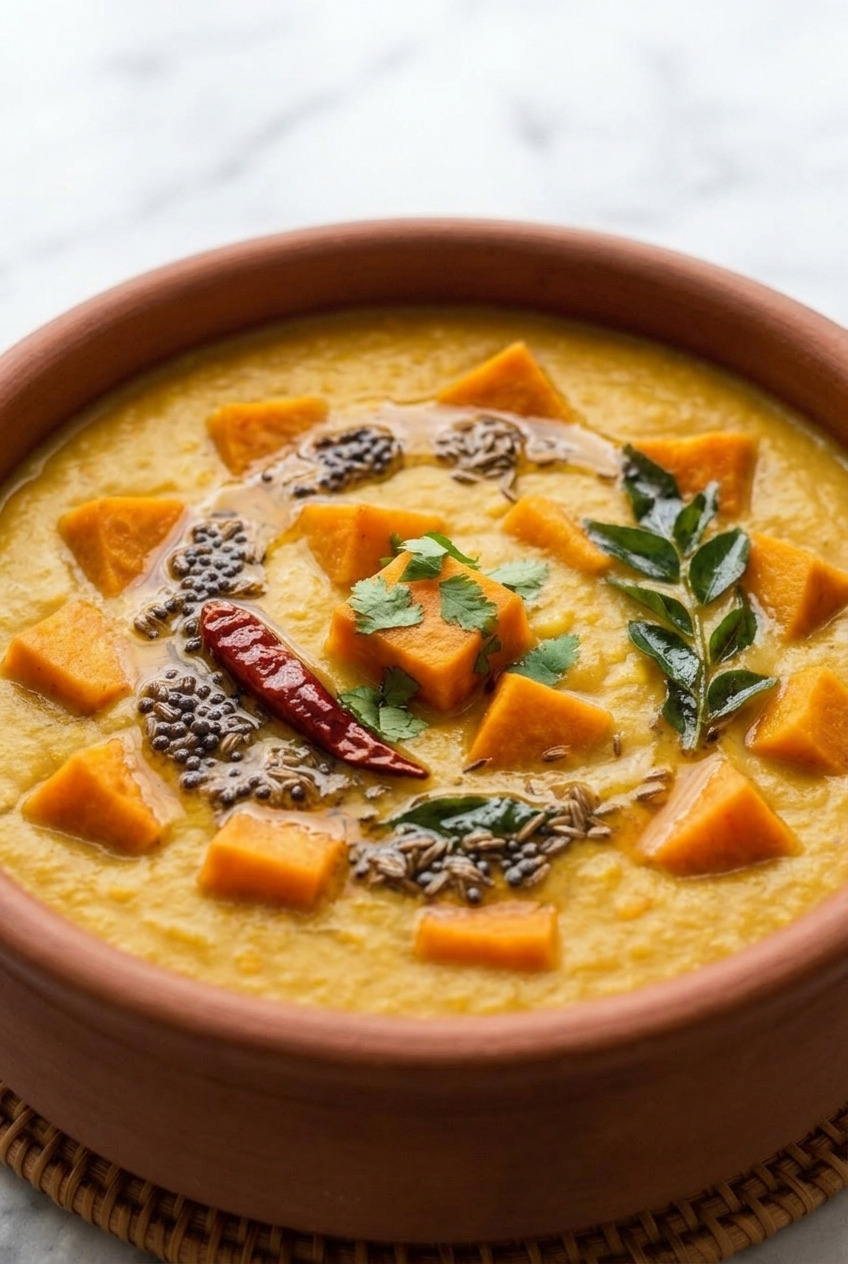
Red lentils go completely smooth, and that's not a flaw, it's the target. But a bowl with no texture in it gets boring around the fifth spoonful.
Sweet potato cubes give you something to actually bite.
They also bring sweetness that plays directly against the mustard seed and the dried chili in the tadka, which is the same balancing act that a spoonful of sugar does in a good curry.
Sweet, smoky, sharp, and creamy, all in one spoon.
Ingredients You'll Need
Two short lists, and the second one is what makes the dish.
For the dal:
- Coconut oil (1 tablespoon). For softening the aromatics.
- Yellow onion (1 large, finely diced). Fine dice, since it needs to disappear into a smooth base.
- Garlic (4 cloves) and fresh ginger (1 tablespoon, grated). Fresh ginger only.
- Ground cumin, coriander, and turmeric (1 teaspoon each). Toasted in the oil before any liquid.
- Cayenne pepper (¼ teaspoon). Background heat in the base itself.
- Red lentils (1 cup). Rinsed until the water runs clear.
- Diced tomatoes (1 can, 15 ounces). With juices.
- Vegetable broth (3 cups). Or water plus more salt.
- Sweet potatoes (12 ounces). Peeled, cut into ½ inch cubes.
- Full fat coconut milk (1 cup). Added near the end so it stays fresh.
- Fine salt (1 ½ teaspoons) and ½ lemon. Salt goes in after the lentils soften.
- Fresh cilantro (¼ cup, chopped). Over the top.
For the tempering:
- Ghee (2 tablespoons). This is what makes the spices smell right.
- Black mustard seeds (1 teaspoon). The defining flavor of the tadka.
- Whole cumin seeds (1 teaspoon). Whole, not ground.
- Dried red chili (1, whole). Broken in half if you want more heat out of it.
- Fresh curry leaves (about 12). Worth going out of your way for.
Ingredient Notes and Substitutions
- Red lentils only. Brown and green lentils hold their shape, which is exactly what you don't want here. If you use them, you'll get a lentil stew instead of a dal.
- Curry leaves. Indian grocers and most large supermarkets carry them fresh, and they freeze perfectly in a bag. There's no real substitute, so if you can't find them, just leave them out rather than reaching for a bay leaf.
- Ghee versus coconut oil. Ghee is traditional and it browns the spices better. Coconut oil is a solid swap for a vegan version.
- Black versus yellow mustard seeds. Black are smaller and more pungent. Yellow will do in a pinch, use a little more.
- Full fat coconut milk. Light coconut milk leaves the dal thin and slightly watery instead of creamy.
- Heat level. As written this is mild. Add a second dried chili to the tadka or double the cayenne.
How to Make Sweet Potato Red Lentil Dal
Step 1: Rinse the Lentils
Put the lentils in a bowl, cover with cold water, swirl, and pour off the cloudy water. Repeat 3 or 4 times, until it runs nearly clear.
Unrinsed lentils foam heavily and the finished dal tastes muddy.
Step 2: Soften the Aromatics
Heat the coconut oil in a large pot over medium heat and cook the onion 7 minutes, until soft and translucent.
Add the garlic and ginger and cook 1 minute more.
Step 3: Toast the Ground Spices
Add the cumin, coriander, turmeric, and cayenne and stir for 60 seconds. The pot should smell deep and slightly nutty.
Step 4: Lentils, Tomatoes, Sweet Potato
Add the rinsed lentils, the tomatoes with their juices, the broth, and the sweet potato cubes. Stir and bring to a simmer.
Step 5: Simmer Until the Lentils Collapse
Cook at a low simmer for 20 to 25 minutes, stirring the bottom every few minutes. Lentils sink and they will catch if you leave them alone.
You're not done when they're soft. You're done when they've lost their shape entirely and the base is smooth and thick with no distinct grains left in it.
The sweet potato cubes should be tender and still square. Add the salt now.
Step 6: Coconut Milk
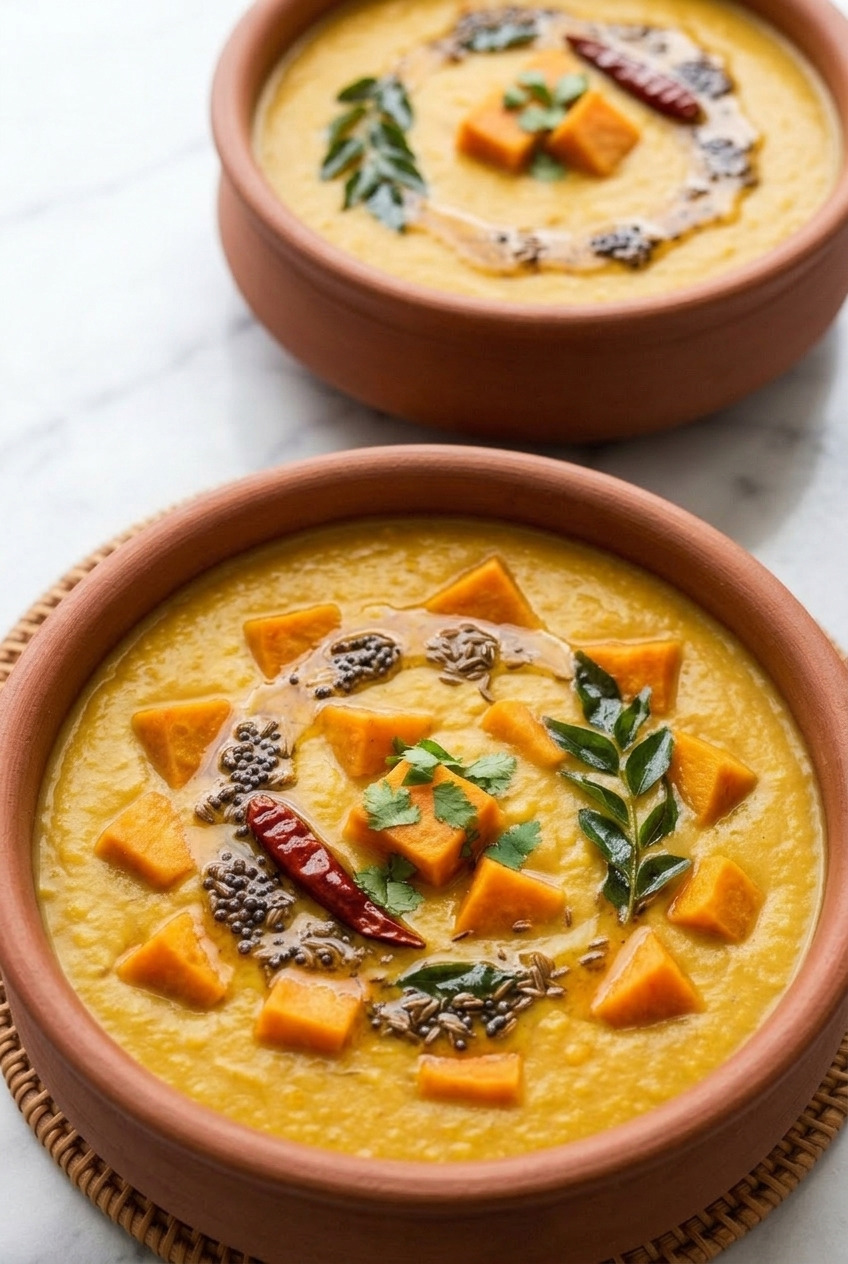
Stir in the coconut milk and simmer gently 8 minutes. The color lightens to a soft yellow orange and the whole thing turns creamy.
Add a splash of water if it's thicker than you want. It should pour slowly off a spoon.
Step 7: Make the Tempering and Pour It Over
Heat the ghee in a small pan over medium-high heat until it shimmers. Add the mustard seeds and wait for them to pop, about 30 seconds.
Add the cumin seeds and the dried chili for 15 seconds, then the curry leaves for another 10 to 15 seconds.
Pour the whole pan over the dal immediately.
Stir half of it in, squeeze in the lemon, and scatter the cilantro on top.
Tips for the Best Dal
- Rinse the lentils properly. Three or four changes of water. It takes a minute and it matters.
- Low simmer, and stir the bottom. Scorched lentils taint the entire pot and there's no fixing it.
- Salt after they soften. Early salt can slow the lentils down, and the pot reduces a lot anyway.
- Coconut milk goes in near the end. Boiled a long time it goes flat and slightly grainy.
- Get the ghee properly hot. Lukewarm ghee gives you soggy spices instead of a tadka. It should shimmer.
- Stand back. Mustard seeds jump out of the pan. Keep a lid in your other hand.
- Lemon off the heat. Right at the end, after the tempering has gone in.
What to Serve With It
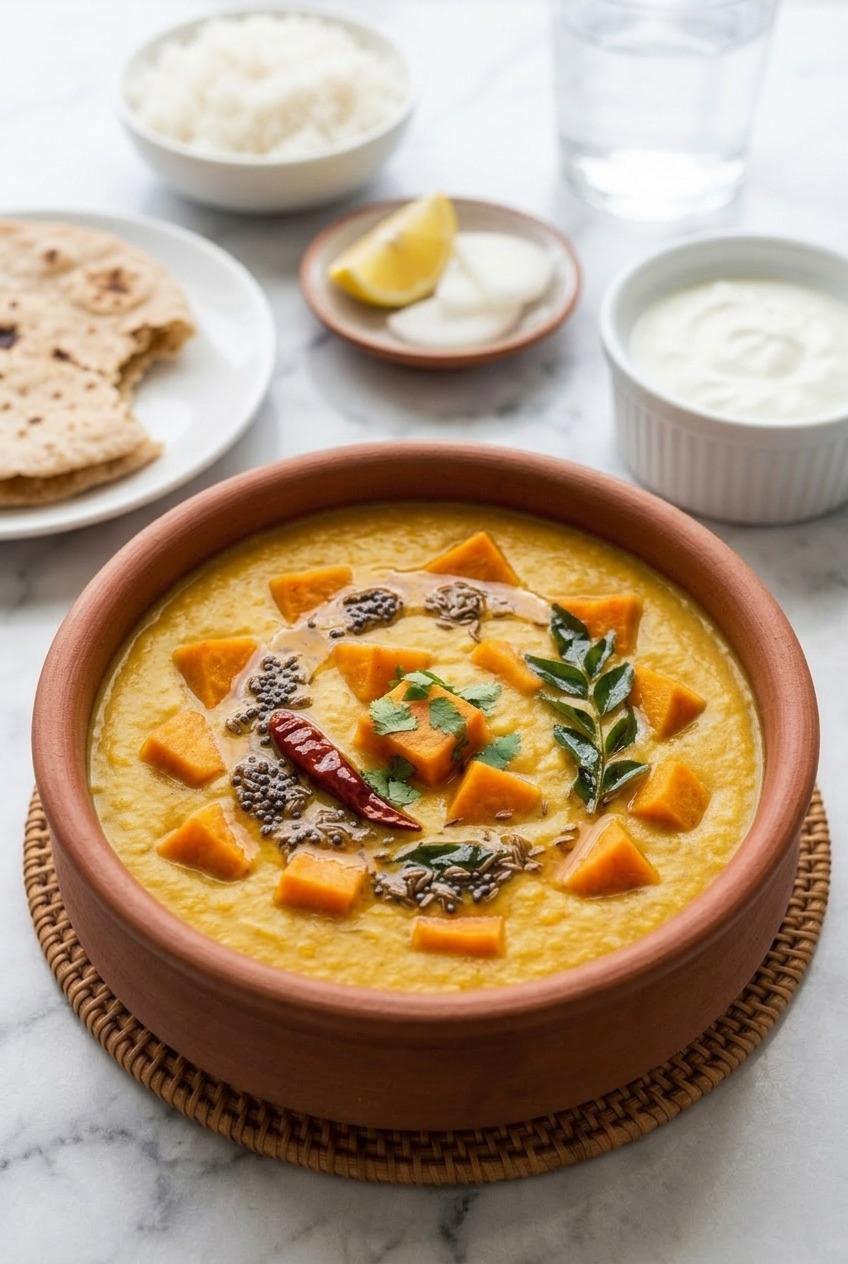
Dal is built to be eaten with something starchy underneath or alongside.
- Basmati rice. The classic pairing and my usual choice.
- Naan or roti. For scooping, which is the correct way to eat it.
- Plain yogurt. A spoonful on the side cools the chili heat.
- Sliced raw onion and a lemon wedge. Sharp, cheap, and it cuts the richness perfectly.
Storage and Reheating
- Refrigerator. Up to 5 days. It sets into a near solid block in the cold, which is completely normal.
- Freezer. Up to 3 months in portions.
- Reheating. Low heat with water or broth stirred in until it loosens back to a pourable consistency.
- Make it taste new. Make a fresh tempering over the reheated bowl. It takes ninety seconds and leftovers taste like you cooked them that day.
Make it once with the tadka and you'll never go back to the version without it. Delicious.
Recipe
Sweet Potato Red Lentil Dal With Tadka
Ingredients
For the Dal
- 1 tablespoon coconut oil
- 1 large yellow onion finely diced
- 4 cloves garlic minced
- 1 tablespoon fresh ginger grated
- 1 teaspoon ground cumin
- 1 teaspoon ground coriander
- 1 teaspoon ground turmeric
- ¼ teaspoon cayenne pepper
- 1 cup red lentils rinsed until the water runs clear
- 15 ounce can diced tomatoes with juices
- 3 cups vegetable broth
- 12 ounces sweet potatoes peeled and cut into ½ inch cubes
- 1 cup full fat coconut milk
- 1 ½ teaspoons fine salt
- ½ lemon juiced
- ¼ cup fresh cilantro chopped
For the Tempering
- 2 tablespoons ghee or coconut oil
- 1 teaspoon black mustard seeds
- 1 teaspoon whole cumin seeds
- 1 dried red chili
- 12 fresh curry leaves
Instructions
Make the Dal
- Rinse the red lentils in cold water 3 or 4 times, until the water runs nearly clear.
- Heat the coconut oil in a large pot over medium heat. Cook the onion 7 minutes, until soft, then add the garlic and ginger and cook 1 minute more.
- Add the ground cumin, coriander, turmeric, and cayenne and stir for 60 seconds.
- Add the rinsed lentils, the tomatoes with their juices, the broth, and the sweet potato cubes. Bring to a simmer.
- Simmer 20 to 25 minutes, stirring the bottom every few minutes, until the lentils have lost their shape entirely and the base is smooth. The sweet potato should be tender and still cubed. Stir in the salt.
- Stir in the coconut milk and simmer gently 8 minutes, until creamy and pale yellow orange. Loosen with a splash of water if needed.
Make the Tempering
- Heat the ghee in a small pan over medium-high heat until it shimmers. Add the black mustard seeds and wait for them to pop, about 30 seconds. Stand back, they jump.
- Add the cumin seeds and the dried chili for 15 seconds, then the curry leaves for another 10 to 15 seconds, until they crackle and go glossy.
- Pour the tempering over the dal immediately. Stir about half of it in and leave the rest on the surface. Squeeze in the lemon juice and scatter the cilantro on top.
Notes
- The tempering is the dish: without it you have a good lentil soup, not dal. It takes 90 seconds.
- Red lentils only: brown and green lentils hold their shape and will not break down into a smooth base.
- Curry leaves: buy them fresh at an Indian grocer and freeze what you do not use. There is no real substitute, so leave them out rather than swapping in bay leaf.
- Vegan: use coconut oil in place of the ghee.
- Storage: keeps 5 days refrigerated and freezes 3 months. It sets solid when cold, so loosen it with water when reheating, and make a fresh tempering over leftovers.