A neighbor two doors down runs a Cuban kitchen out of a house that smells like garlic from the sidewalk.
She invited us over for Nochebuena a few Decembers back, and I went in expecting the roast pork to be the thing I remembered.
It wasn't.
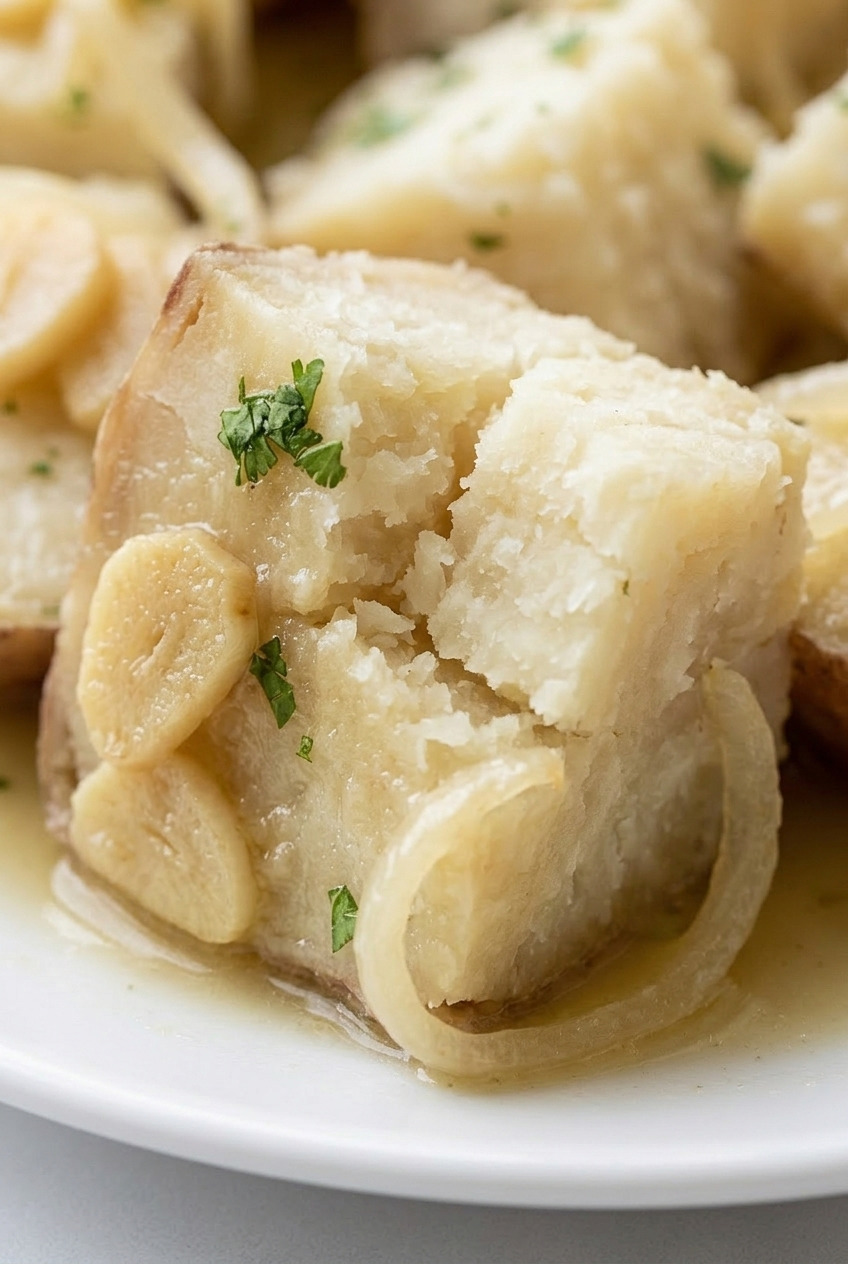
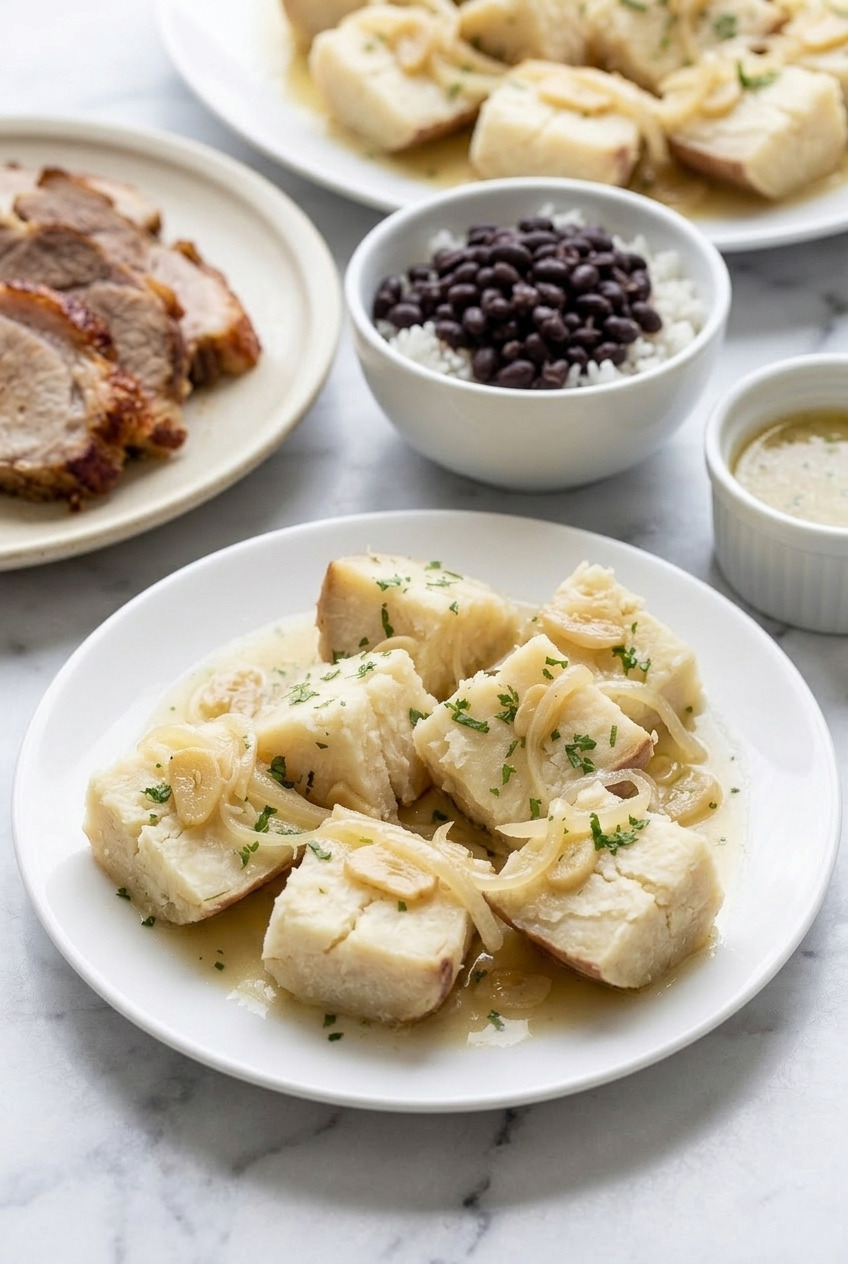
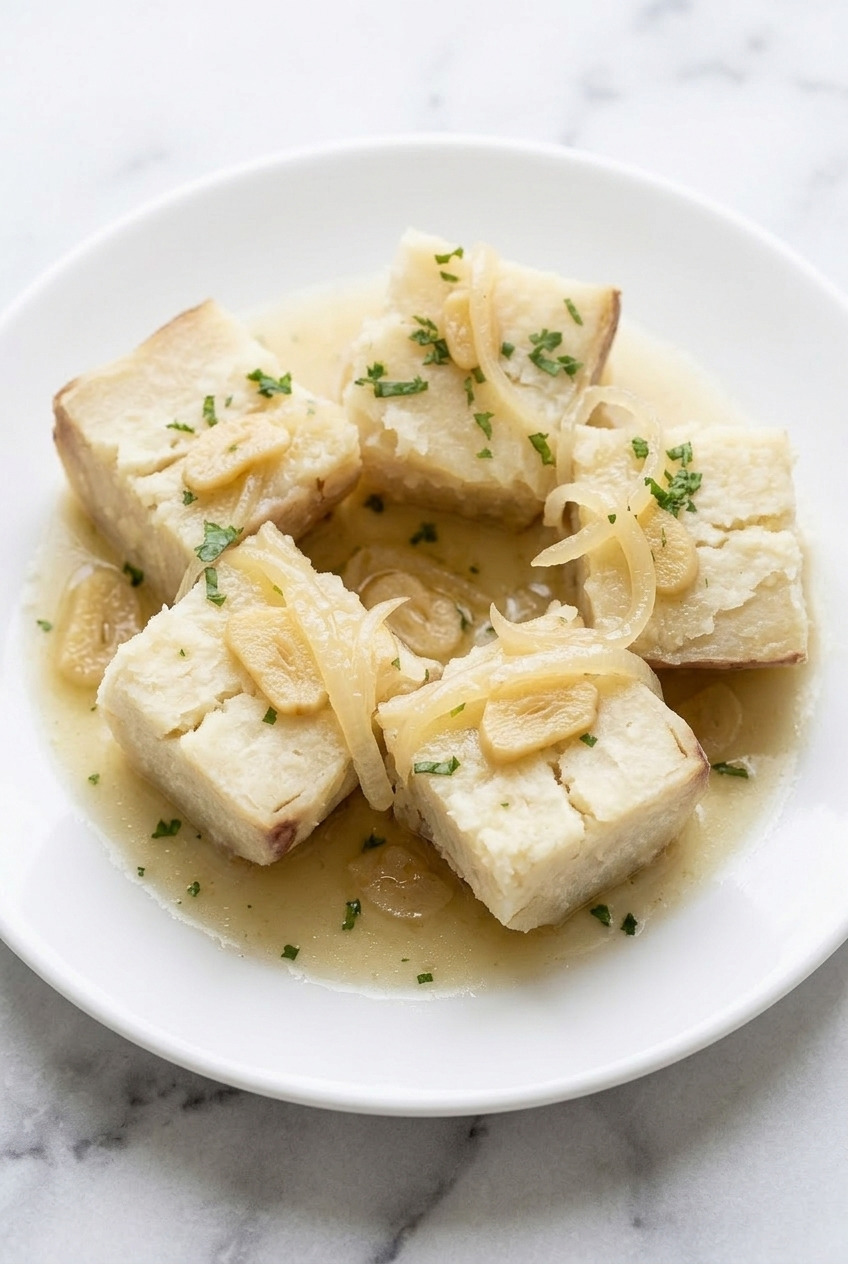
What I kept going back for was a plain looking bowl of pale potato chunks sitting in an oily, cloudy, aggressively garlicky sauce.
I asked what it was and she waved a hand like it was nothing.
Boniato con mojo. Boiled root, garlic sauce, done.
I've made it probably thirty times since, and I still think it's the best thing on that table.
The root itself is quiet, a little dry, a little chestnutty, nothing like the orange sweet potatoes I grew up with.
That's the point!
It soaks up the sauce instead of fighting it.
My wife eats it cold out of the container the next day, standing at the counter, which tells you something.
The whole thing takes about 40 minutes, and most of that is a pot of water doing its job while you slice garlic.
You need one small pan and about five minutes to make the mojo.
Make it once next to a roast and you'll understand why Cubans put this sauce on everything!
What Is Boniato?
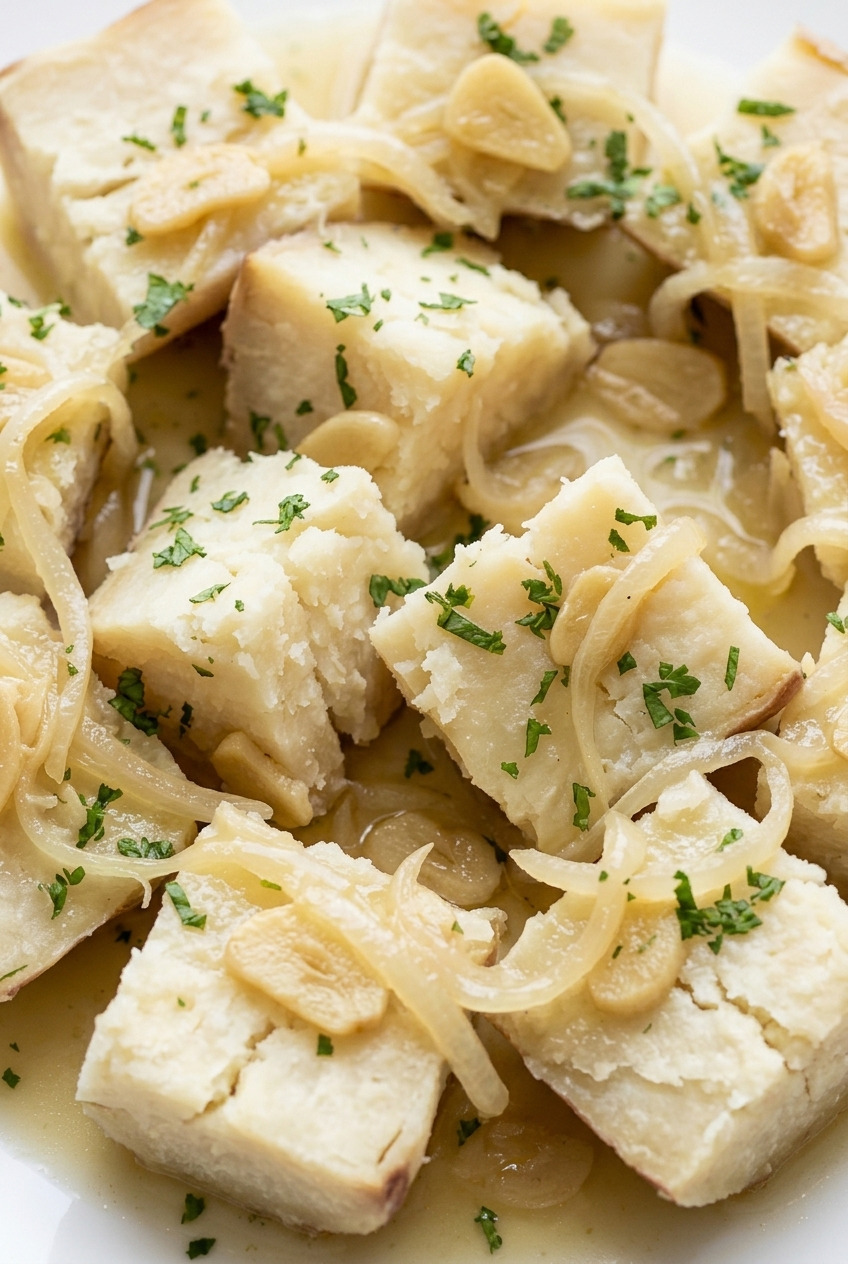
Boniato is the Cuban sweet potato, and it is white inside. The skin runs pinkish tan to dusty rose, and the flesh under it is ivory to pale cream, not orange.
It goes by a pile of other names depending on the market you're standing in: batata, Cuban sweet potato, camote, and sometimes just "white yam" on a hand-lettered sign.
Texture is the real difference.
- Drier and starchier. Boniato cooks up fluffy and crumbly, closer to a russet potato than to a candied sweet potato.
- Much less sweet. There's a gentle chestnut sweetness and that's it, which is exactly why a sharp garlic sauce works on it.
- Faster to fall apart. It goes from firm to mushy in about two minutes, so start testing early.
Where to find it: Latin and Caribbean markets year round, and a lot of regular supermarkets in Florida, Texas, New York and New Jersey carry it in the specialty produce bin.
Can't find boniato? A regular orange sweet potato works. The dish will be sweeter and wetter, and the mojo has to fight a little harder, but it's still very good.
What Is Mojo?
Mojo is the Cuban garlic and citrus sauce that goes on almost everything. Olive oil, a lot of garlic, sour orange juice, salt. That's the whole idea.
Mojo criollo is the same sauce family that marinates the Nochebuena pork, dresses boiled yuca, and gets spooned over plantains.
The version here is the pour-over kind: warm, loose, and made to soak into something starchy.
Sound too simple? It is. That's why the details matter.
Ingredients You Will Need
Eight ingredients, and two of them are salt and water. Here's what each one is doing.
For the boniato:
- Boniato (2 pounds). Peeled and cut into 2 inch chunks. Big pieces on purpose, because small ones disintegrate.
- Kosher salt (1 tablespoon). For the water. Salt it like pasta water, since this is the only chance the inside of the root gets seasoned.
For the mojo:
- Sour orange juice (⅓ cup). Naranja agria, the bitter Seville orange. This is the flavor that makes it Cuban, sharp and floral at once. Latin markets sell it fresh in season and bottled all year, usually near the vinegar.
- Substitute for sour orange. ¼ cup fresh orange juice plus 2 tablespoons fresh lime juice. Close enough that nobody at my table has called me on it.
- Garlic (8 to 10 cloves). Sliced thin, not minced. Slices stay in the sauce as little soft chips instead of burning into grit.
- Extra virgin olive oil (⅓ cup). It carries the garlic and it coats the boniato. Don't cut it down, the oil is the body of the sauce.
- Yellow onion (1 small). Halved and sliced thin. It goes soft and sweet in the oil and balances the acid.
- Ground cumin (½ teaspoon). A home-kitchen touch. Earthy, warm, and it makes the sauce taste cooked rather than mixed.
- Black pepper and cilantro. Pepper to taste, and a handful of chopped cilantro at the end if you like it.
How to Make Boniato Con Mojo
The order matters more than the technique. Boil first, sauce second, pour while both are hot.
Step 1: Peel and Hold in Water
Peel the boniato and cut it into 2 inch chunks.
Drop the pieces into a bowl of cold water as you go.
This is the step nobody tells you about. Cut boniato oxidizes fast, and within about ten minutes on the counter it turns a sad grey-brown that never really cooks out.
Step 2: Boil Until a Knife Slides Through
Put the chunks in a pot, cover with cold water by an inch, and add the 1 tablespoon of salt.
Bring it to a boil, then drop to a steady simmer for 18 to 25 minutes.
Start checking at 15 minutes with the tip of a paring knife. You want it to slide in with almost no resistance and come out clean.
Fair warning: boniato does not give you a long window. Two minutes past done and you have a pot of mash.
Step 3: Bloom the Garlic and Onion
While the pot works, warm the ⅓ cup of olive oil in a small skillet over medium-low heat.
Add the sliced garlic and onion with the cumin.
Cook 4 to 6 minutes, stirring, until the onion is limp and the garlic is pale gold at the edges.
Pale gold. Not brown. Browned garlic turns the whole sauce bitter and there's no fixing it.
Step 4: Add the Sour Orange Off the Heat
Pull the skillet off the burner completely.
Wait about thirty seconds, then pour in the sour orange juice. It will hiss and steam.
Stir in ¾ teaspoon salt and the black pepper, then taste it. It should be sharp enough to make you blink.
Adding juice to a hot pan on the flame cooks off exactly the brightness you're after, so kill the heat first. This is the one step people skip.
Step 5: Pour and Rest
Drain the boniato well and pile it into a warm serving dish.
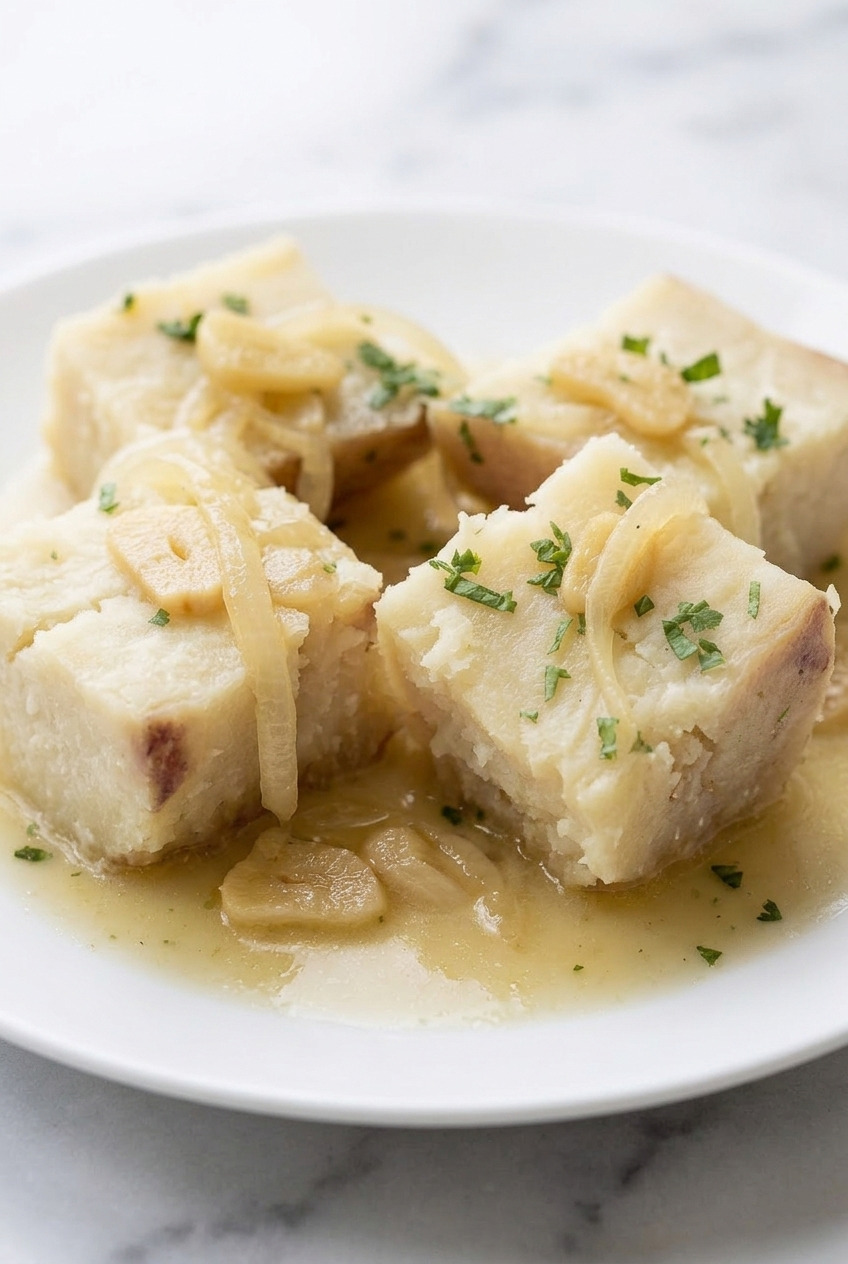
Pour the hot mojo over the top, garlic slices, onion and all.
Let it sit 5 minutes before anyone touches it.
The starch pulls the sauce in during those five minutes, and that's the difference between dressed potatoes and boniato con mojo.
Scatter cilantro over it if you're using it, and serve.
Tips for the Best Boniato Con Mojo
- Salt the water hard. Unsalted boniato tastes like paper no matter how good the sauce is. The root is bland by design.
- Slice, don't mince. Minced garlic sinks and scorches. Thin slices float and turn silky.
- Keep the heat LOW under the garlic. If it's sizzling loudly, it's too hot.
- Never add the juice on the flame. Off the heat, every time.
- Cut the chunks big. 2 inch minimum. This root falls apart faster than you expect.
- Rest it. Five minutes, uncovered. It's not optional if you want the sauce inside the potato.
Substitutions and Variations
- Orange sweet potato. Straight swap, same weight. Cut the boil to 12 to 15 minutes and expect a sweeter, softer result.
- Yuca con mojo. Same sauce, boiled cassava instead. Arguably the more famous dish, and the mojo recipe here works unchanged.
- Mashed boniato con mojo. Mash the drained chunks with a little of the cooking water, then swirl the mojo through. Great under roast pork.
- Fried finish. Boil, cool, then brown the chunks in a hot pan before saucing. Crispy edges, soft middles.
- More heat. A sliced fresh chile or a pinch of red pepper flakes into the oil with the garlic. Not classic, still delicious.
- Lard instead of olive oil. Some old-school Cuban kitchens use it and the sauce is richer for it.
Can't find boniato? The mojo is also excellent spooned over my crispy smashed sweet potatoes.
What to Serve With It
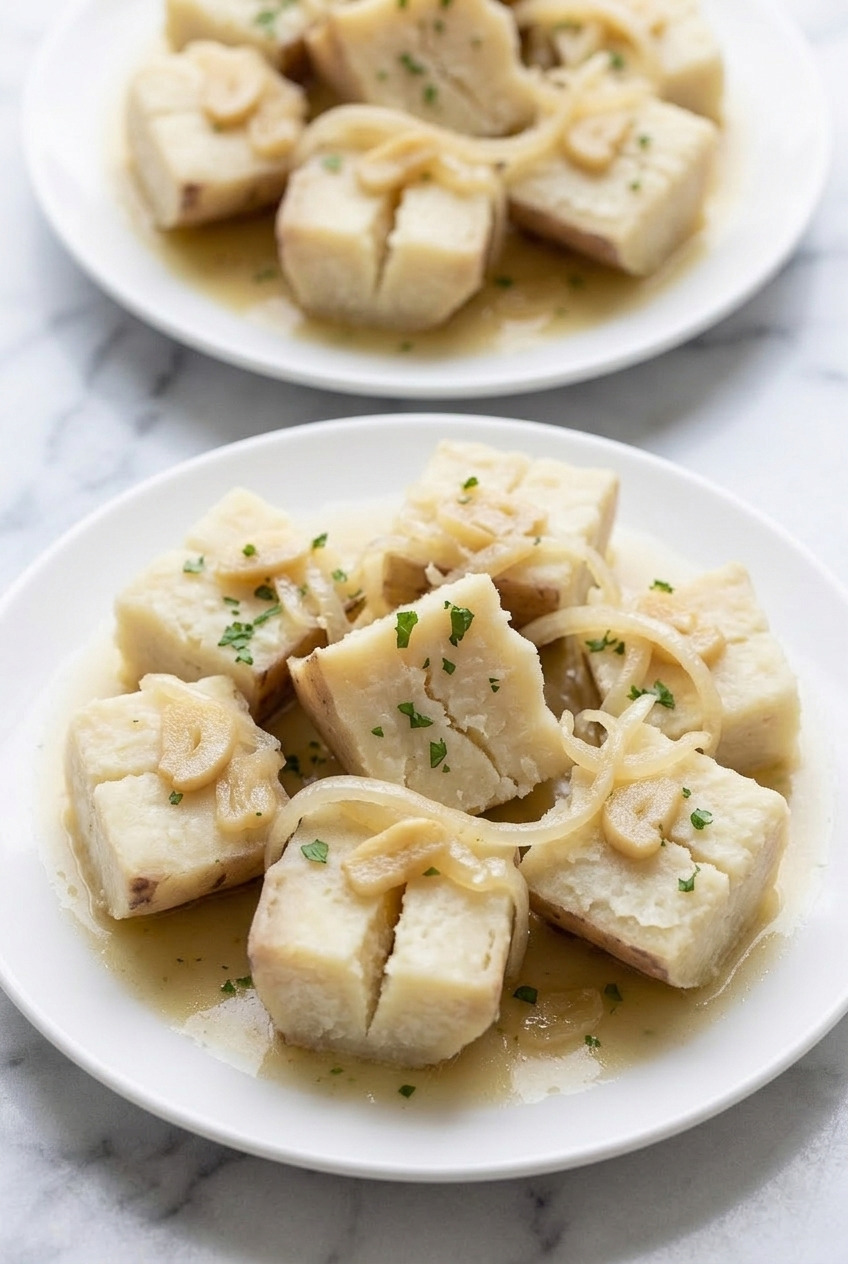
This is a side dish and it knows it. It belongs next to something roasted and rich.
- Roast pork shoulder. The classic pairing, especially lechon asado at Christmas.
- Ropa vieja. Shredded beef in tomato and pepper, with the boniato soaking up both sauces.
- Black beans and white rice. The everyday plate, and the mojo runs into the beans in the best way.
- Fried sweet plantains. Sweet against garlic and sour orange. Hard to beat.
- Roast chicken. Not Cuban, completely works.
- Avocado and onion salad. Just avocado, thin white onion, olive oil, salt. It cuts everything.
For dessert, stay with the same tuber: my boniatillo is a Cuban sweet potato custard.
Storage and Reheating
- The finished dish. Airtight in the fridge for 3 to 4 days. It is genuinely good cold.
- Reheating. Low oven at 300°F covered, or a covered skillet over low heat with a splash of water. Microwaving works but it dulls the garlic.
- Mojo on its own. A jar in the fridge keeps 2 weeks easily and the flavor deepens. Double the batch and thank yourself Wednesday.
- Freezing. Skip it. Boniato goes grainy and watery after a thaw.
Frequently Asked Questions
What is boniato and how is it different from an orange sweet potato?
Boniato is a white fleshed sweet potato grown across the Caribbean and Latin America. It's drier, starchier, and much less sweet than the orange kind, with a mild chestnut flavor. Think of it as sitting halfway between a russet potato and a sweet potato.
What can I use instead of sour orange juice?
Mix ¼ cup fresh orange juice with 2 tablespoons fresh lime juice. That gets you the sweet-tart balance of naranja agria. Bottled sour orange is also sold in most Latin markets and it's perfectly good here.
Why did my boniato turn grey after peeling?
It oxidized. Cut boniato discolors within minutes in open air. Drop the pieces into cold water the moment they're cut and the problem disappears.
Can I make the mojo ahead of time?
Yes, and it improves overnight. Make it up to 5 days ahead, keep it refrigerated, then warm it gently before pouring. Don't boil it when you reheat.
Is it served hot or at room temperature?
Both are correct. Hot is the standard at a holiday table. Room temperature is common at a buffet and, honestly, the garlic reads even stronger that way.
How do I keep the pieces from falling apart?
Cut them at least 2 inches, keep the water at a lazy simmer instead of a hard boil, and start testing at 15 minutes. Drain the second a knife slides through.
Recipe
Boniato Con Mojo (Cuban Sweet Potato with Garlic Sauce)
Ingredients
For the Boniato
- 2 pounds boniato peeled, cut into 2-inch chunks
- 1 tablespoon kosher salt for the cooking water
- water to cover by 1 inch
For the Mojo
- ⅓ cup extra virgin olive oil
- 8 cloves garlic thinly sliced, up to 10
- 1 small yellow onion halved and thinly sliced
- ½ teaspoon ground cumin
- ⅓ cup sour orange juice (naranja agria) or ¼ cup orange juice plus 2 tablespoons lime juice
- ¾ teaspoon kosher salt plus more to taste
- ¼ teaspoon black pepper freshly ground
- 2 tablespoons fresh cilantro chopped, optional
Instructions
Cook the Boniato
- Peel the boniato and cut it into 2-inch chunks, dropping each piece into a bowl of cold water as you go so it does not discolor.
- Drain the chunks and put them in a large pot. Cover with cold water by 1 inch and add 1 tablespoon kosher salt.
- Bring to a boil, then reduce to a steady simmer and cook 18 to 25 minutes. Start testing at 15 minutes: a paring knife should slide in with almost no resistance.
- Drain well and pile the chunks into a warm serving dish.
Make the Mojo
- While the boniato cooks, warm the olive oil in a small skillet over medium-low heat.
- Add the sliced garlic, onion and cumin. Cook 4 to 6 minutes, stirring, until the onion is limp and the garlic is pale gold at the edges. Do not let the garlic brown.
- Take the skillet completely off the heat and wait about 30 seconds.
- Pour in the sour orange juice, then stir in ¾ teaspoon salt and the black pepper. Taste and adjust the salt.
Finish and Serve
- Pour the hot mojo over the drained boniato, garlic slices and onion included.
- Let it rest 5 minutes so the starch absorbs the sauce.
- Scatter the chopped cilantro over the top if using, and serve warm or at room temperature.
Notes
- Sour orange substitute: ¼ cup fresh orange juice plus 2 tablespoons fresh lime juice.
- No boniato? Use orange sweet potato and cut the boil time to 12 to 15 minutes.
- Never add the juice over the flame. Pull the pan off the heat first or the sauce loses its brightness.
- Hold peeled pieces in cold water. Cut boniato turns grey within minutes in open air.
- Make ahead: The mojo keeps 2 weeks refrigerated and improves overnight. Warm it gently, never boil it.
- Storage: Airtight for 3 to 4 days. Do not freeze, boniato goes grainy after thawing.