A friend from Auckland cooked in my kitchen for one week in 2019 and asked me where I kept the kumara.
I handed her a sweet potato and hoped for the best.
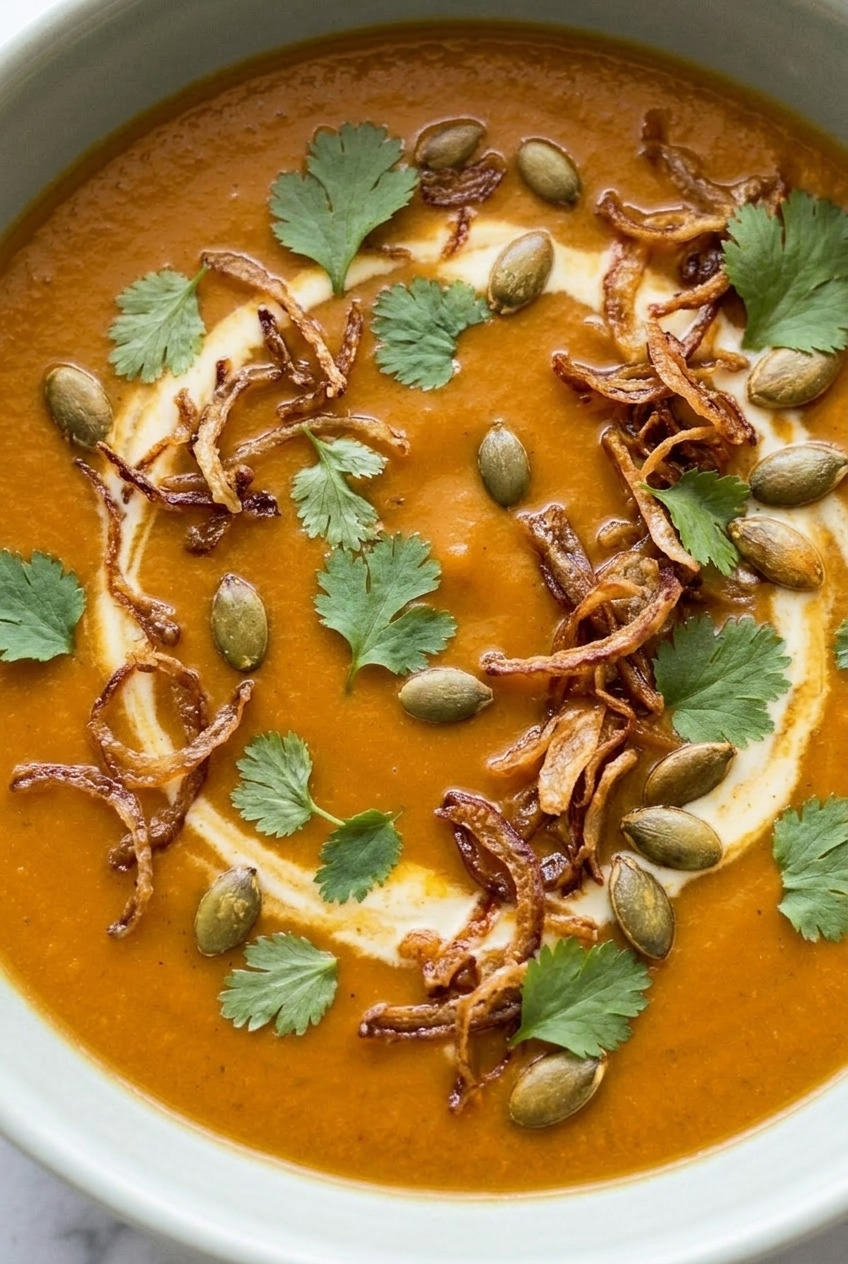
She laughed and said close enough, then made a pot of soup that ruined every other sweet potato soup for me.
Kumara is the Maori name for sweet potato, and in New Zealand it is not a Thanksgiving side, it is a weekly vegetable.
The soup she made was gently curried, which surprised me.
That is the classic Kiwi version, the one Alison Holst put in front of a generation of home cooks, and the curry powder is not there to make it spicy.
It is there to keep all that sweetness honest.
I've made it probably thirty times since, and the one change I've stuck with is roasting half the kumara instead of simmering all of it.
Roasted chunks caramelize at the edges and bring a deeper flavor that boiling alone never gets to.
My wife asks for it the first cold weekend every year.
It comes together in under an hour, most of which is hands off.
I promise it is the silkiest bowl of sweet potato soup you'll make at home.
What Kumara Is
Kumara is simply the New Zealand name for sweet potato, borrowed from te reo Maori. It arrived in New Zealand with Polynesian voyagers centuries before Europeans did, and it has been a staple crop ever since.
Three types dominate New Zealand supermarkets.
- Red kumara (Owairaka Red). Purple-red skin, pale creamy flesh, the most common one. It is less sweet than what most Americans think of as a sweet potato.
- Gold kumara (Toka Toka Gold). Golden skin, golden flesh, sweeter and moister.
- Orange kumara (Beauregard). The one that is genetically the same thing you buy in any US grocery store.
Here is the honest version: if you're shopping in the States, the orange sweet potato labeled "yam" at your supermarket is Beauregard kumara.
Same plant, different name, different marketing.
It is not a true yam, which is a completely different African and Asian tuber with white flesh and bark-like skin.
Fair warning: if you can find gold or red kumara at a specialty grocer, use them. The soup will be less sweet and a little more savory, which is closer to what you'd eat in Wellington.
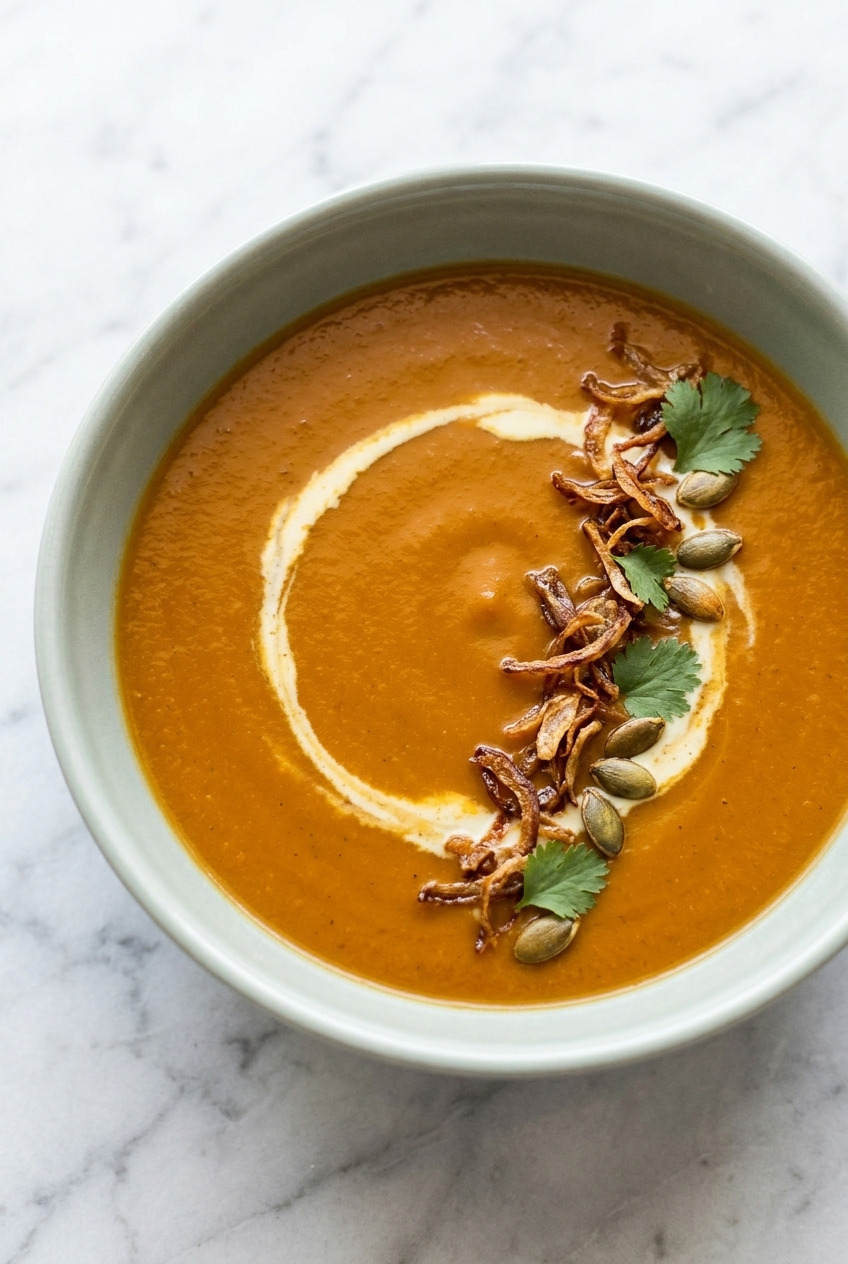
Ingredient Notes
This is a short list and every item earns its place. The two that decide whether the soup is good or great are the stock and the curry powder.
- Kumara, that is orange sweet potato (2 lb, about 3 medium). Peel it and cut it into even 1 inch chunks so half can roast and half can simmer at the same rate. Firm ones with tight skin, no soft spots.
- Unsalted butter (3 tablespoons). Every top ranking version of this soup starts in butter, not oil. Butter browns the onion sugars and gives the finished soup a rounder body.
- Onion (1 large, diced). Yellow, not red. It needs to go soft and sweet without adding color.
- Garlic (3 cloves, minced). Goes in late, after the onion is soft, or it turns bitter.
- Fresh ginger (1 tablespoon, grated). Optional in the classic, non-negotiable in mine. It cuts the sweetness with a bright, almost citrusy edge.
- Mild curry powder (2 teaspoons). A standard mild Madras style blend. This is the Kiwi signature, and at this amount the soup does not taste like curry, it tastes seasoned.
- Chicken or vegetable stock (5 cups, low sodium). Use low sodium so you control the salt after blending, when the flavor concentrates. Chicken gives more depth, vegetable keeps it lighter.
- Heavy cream (½ cup). Real cream, added off the heat. Half-and-half breaks more easily and milk thins the texture without adding richness.
- Kosher salt and black pepper. Season at the end, never at the start.
Who doesn't love a soup with nine ingredients that tastes like it has twenty?
How to Make Creamy Kumara Soup
Step 1: Roast Half the Kumara
Heat the oven to 425°F.
Toss half the kumara chunks with 2 tablespoons of olive oil and a pinch of salt, spread them on a sheet pan in a single layer, and roast 25 to 30 minutes until the edges are browned and a little shrunken.
You want actual color on them, not pale steamed cubes.
Step 2: Sweat the Aromatics
Melt the butter in a heavy pot over medium heat.
Add the onion with a pinch of salt and cook 8 to 10 minutes, stirring now and then, until it is soft and translucent with no browning.
Add the garlic and ginger and cook 1 minute more.
Step 3: Bloom the Curry Powder
Add the curry powder straight into the buttery onions and stir constantly for 30 to 45 seconds.
The smell changes the moment it hits the fat, from dusty to warm and toasted.
Pro tip: if you skip this and dump the curry powder into the liquid, you get a raw, chalky flavor that no amount of simmering fixes.
Step 4: Simmer
Add the raw half of the kumara and the stock, bring it to a boil, then drop it to a bare simmer.
Cook 18 to 22 minutes, until a chunk falls apart against the side of the pot with no resistance.
Stir in the roasted kumara and let it sit in the hot stock 2 minutes.
Step 5: Blend
Take the pot off the heat and blend with an immersion blender until smooth.
Stop as soon as it is smooth, which is usually 45 to 60 seconds.
Step 6: Finish with Cream
With the pot off the burner, stir in the cream.
Now season: 1 ½ teaspoons of kosher salt and ½ teaspoon of black pepper to start, then taste and adjust.
A squeeze of lemon at the very end wakes the whole pot up.
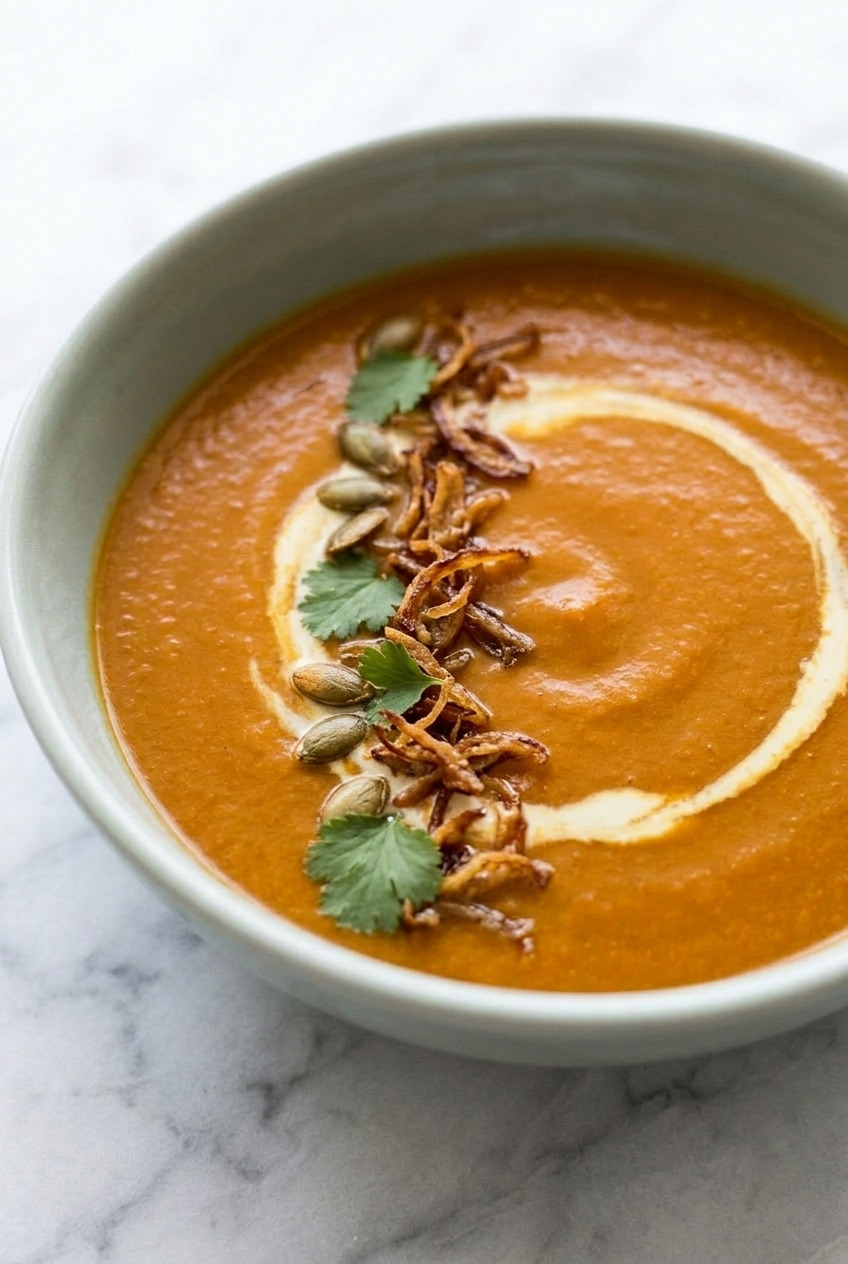
Getting the Texture Right
Gluey sweet potato soup is the most common failure here and it is almost always over blending. Sweet potato starch turns stringy and elastic when you beat it hard for too long.
- Blend less than you think. Forty five seconds with an immersion blender is plenty. A high powered countertop blender needs even less, maybe 20 seconds on low.
- Never blend it hot in a sealed jar. Steam pressure blows the lid off. Cool it slightly and vent the lid if you use a countertop blender.
- Too thick? Add hot stock ¼ cup at a time, off the heat, stirring by hand.
- Too thin? Simmer uncovered 10 minutes before you add the cream, not after.
- Grainy instead of silky? The kumara was undercooked. Simmer it longer next time, it cannot be blended into submission.
Worth the extra care? Every time.
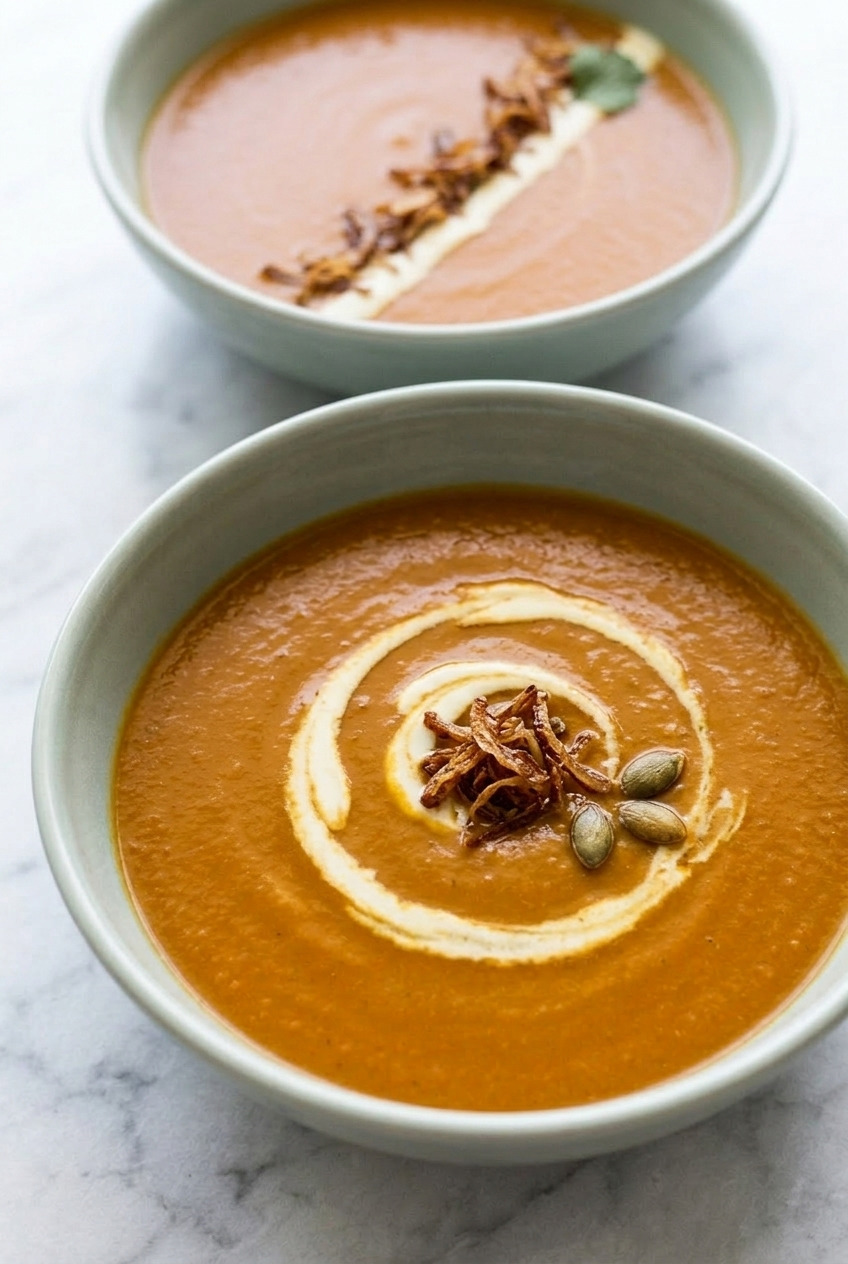
Toppings and What to Serve With It
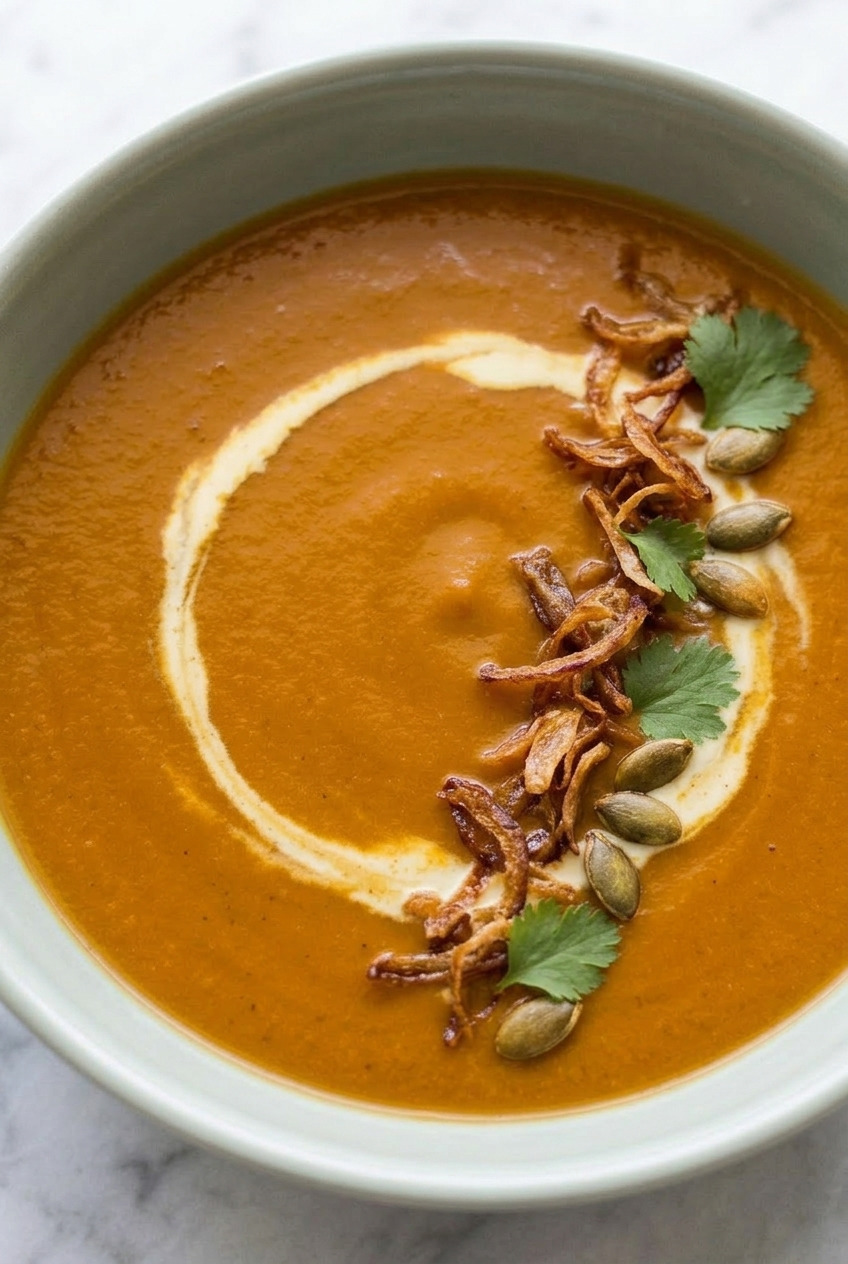
This soup is soft all the way through, so it needs something with crunch on top. Skip this and it reads as one note, no matter how well seasoned it is.
- Crispy fried shallots. The best of the bunch, salty and sharp against the sweetness. Store bought is completely fine and I use them constantly.
- Toasted pumpkin seeds. Toss them in a dry pan 3 minutes with salt until they pop.
- A swirl of cream or plain yogurt. Yogurt adds a tang that plays well with the curry.
- Chopped cilantro or sliced scallion. Fresh, green, cuts the richness.
- Crumbled bacon. Not traditional, but a bowl of this with bacon on top is hard to beat.
For the side, a thick slice of buttered toast or a warm flatbread does the job. My rule is that soup without bread is just a hot drink.
Warm homemade pita bread is my favorite thing to tear and dip here. It soaks up the curry without falling apart.
Variations
- Coconut milk version. Swap the cream for ⅔ cup of full fat coconut milk. It is a very common NZ move and it pairs perfectly with the curry powder.
- Leek and kumara. Replace half the onion with 2 leeks, white and pale green only, sliced and washed well. Softer and sweeter.
- Watercress or spinach. Stir 2 large handfuls into the hot soup right before blending. It turns the soup a deep green and adds a peppery bite.
- Plain, no curry. Leave the curry powder out and add 1 teaspoon of smoked paprika and a grating of nutmeg instead.
- Spicier. Add ¼ teaspoon of cayenne with the curry powder, or a chopped red chili with the garlic.
Can't find kumara? Regular orange sweet potatoes work, and my creamy roasted sweet potato soup shows how to get the most flavor from them.
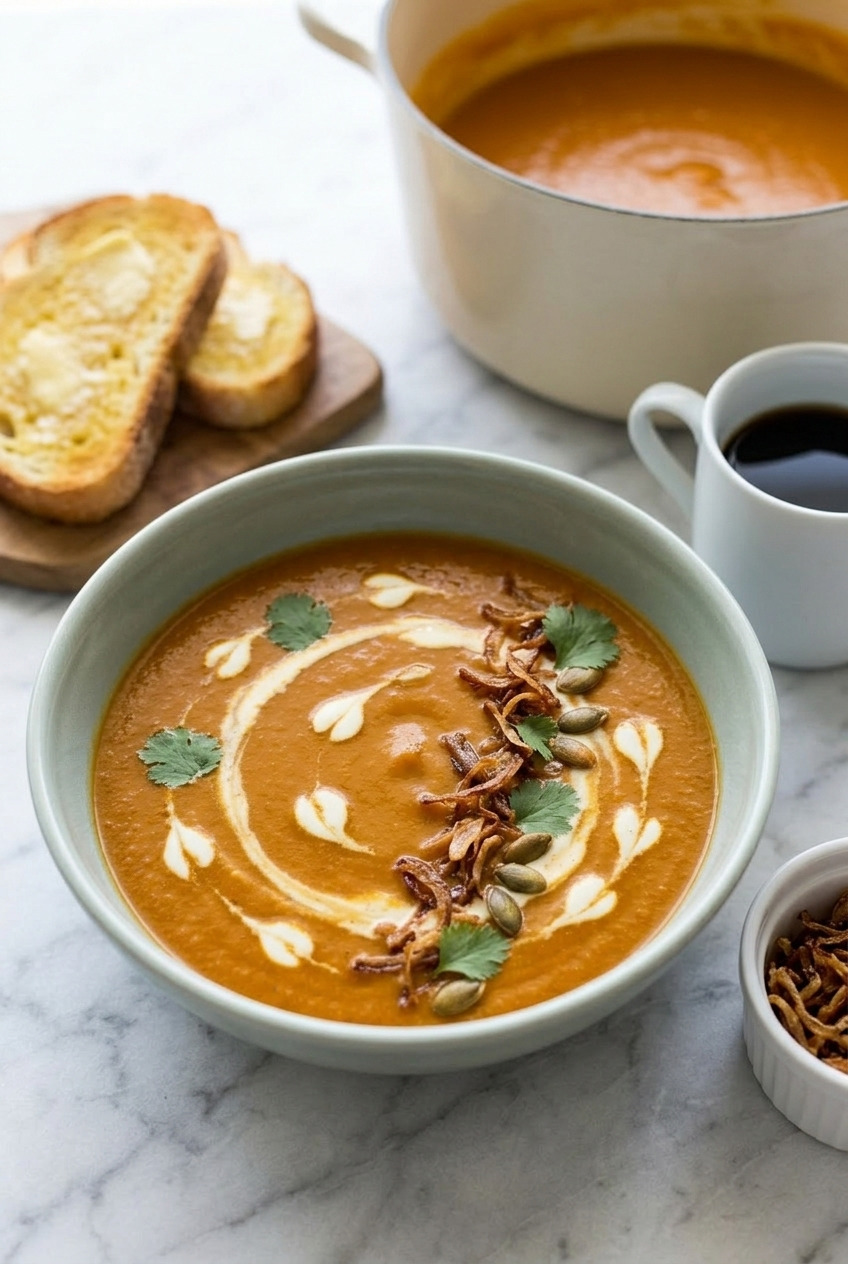
Make Ahead, Storage and Freezing
- Fridge. Keeps 4 days in an airtight container. It thickens as it sits, so thin it with a splash of stock when you reheat.
- Freezer. Up to 3 months. Freeze it BEFORE you add the cream, because dairy can go grainy through a freeze and thaw. Stir the cream in after reheating.
- Reheating. Low and slow on the stove, stirring. A hard boil after the cream is in can split it.
- Make ahead. You can do everything through the blend a full day early, then reheat and finish with cream in 10 minutes when guests arrive.
Okay, one last thing. Make a double batch. This is the rare soup that people go back to the pot for, and I've never once had leftovers when I planned on them.
Give it a try!
Recipe
Creamy New Zealand Kumara Soup
Ingredients
For the Soup
- 2 lb kumara (orange sweet potato) peeled, cut into 1 inch chunks
- 2 tablespoon olive oil for roasting
- 3 tablespoon unsalted butter
- 1 large yellow onion diced
- 3 cloves garlic minced
- 1 tablespoon fresh ginger grated
- 2 teaspoon mild curry powder Madras style
- 5 cups chicken or vegetable stock low sodium
- ½ cup heavy cream
- 1 ½ teaspoon kosher salt plus more to taste
- ½ teaspoon black pepper freshly ground
For Topping
- ⅓ cup crispy fried shallots
- 2 tablespoon toasted pumpkin seeds
- 2 tablespoon heavy cream for swirling
- 2 tablespoon fresh cilantro chopped
Instructions
Roast and Simmer
- Heat the oven to 425F. Toss half the kumara chunks with the olive oil and a pinch of salt, spread on a sheet pan in a single layer, and roast 25 to 30 minutes until the edges are browned.
- Melt the butter in a heavy pot over medium heat. Add the onion with a pinch of salt and cook 8 to 10 minutes until soft and translucent with no browning.
- Add the garlic and ginger and cook 1 minute. Add the curry powder and stir constantly for 30 to 45 seconds until it smells toasted.
- Add the remaining raw kumara and the stock. Bring to a boil, then reduce to a bare simmer and cook 18 to 22 minutes, until a chunk falls apart with no resistance.
- Stir in the roasted kumara and let it sit in the hot stock 2 minutes.
Blend and Finish
- Take the pot off the heat. Blend with an immersion blender just until smooth, about 45 to 60 seconds. Do not over blend or the starch turns gluey.
- With the pot off the burner, stir in the heavy cream. Season with the salt and pepper, then taste and adjust. A squeeze of lemon at the end brightens it.
- Ladle into bowls and top with crispy fried shallots, toasted pumpkin seeds, a swirl of cream, and chopped cilantro.
Notes
- Kumara: Kumara is the Maori name for sweet potato. The orange sweet potato sold in US stores is the same Beauregard variety grown in New Zealand, so no substitution is needed.
- Do not over blend: Sweet potato starch turns stringy and gluey if beaten too long. Stop as soon as the soup is smooth.
- Cream off the heat: Adding cream to a boiling pot can split it. Always take the pot off the burner first.
- Freezing: Freeze the soup before adding cream, up to 3 months. Stir the cream in after reheating.
- Coconut version: Swap the cream for ⅔ cup full fat coconut milk, a very common New Zealand variation.