Four days after Christmas, the cookie tins on my grandmother's sideboard told the whole story.
Her soft molasses cookies were still bending in half when you picked one up, while the sugar cookies beside them had gone stiff enough to snap.
The shortbread was mostly crumbs at the bottom of the tin.
And somebody always got to those dark, sugar-crackled molasses cookies before me.
I spent years trying to figure out why hers stayed soft and mine turned into hockey pucks.
This recipe is the answer I finally landed on, and they've earned a permanent spot on my holiday cookie tray.
It comes down to three small things: brown sugar working alongside the molasses, a short chill in the fridge, and pulling the pan while the centers still look a little underdone.
That's really it, and none of it takes any special skill.
My wife packs them into gift tins for the neighbors every December, and they're the cookie people text her about in January.
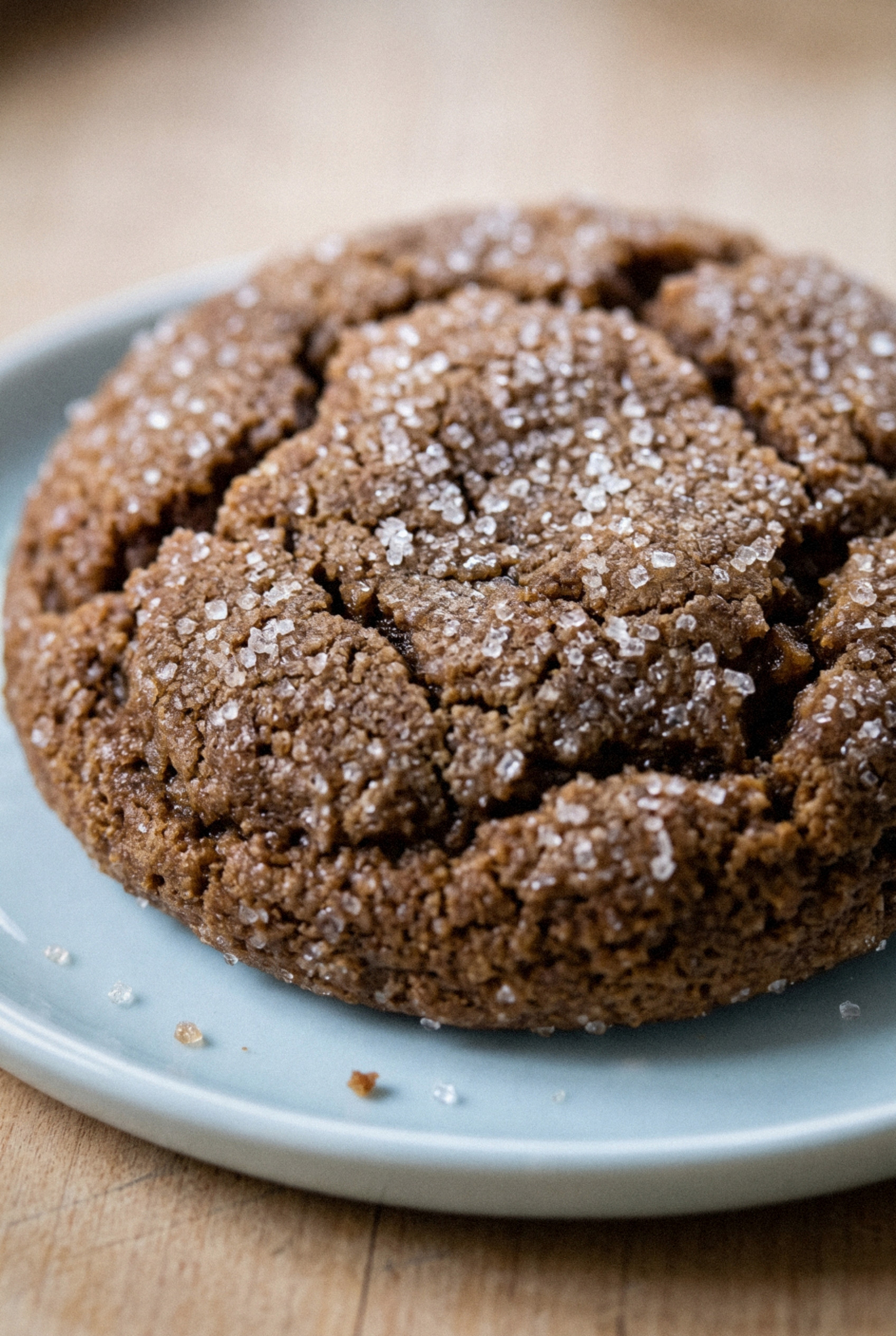
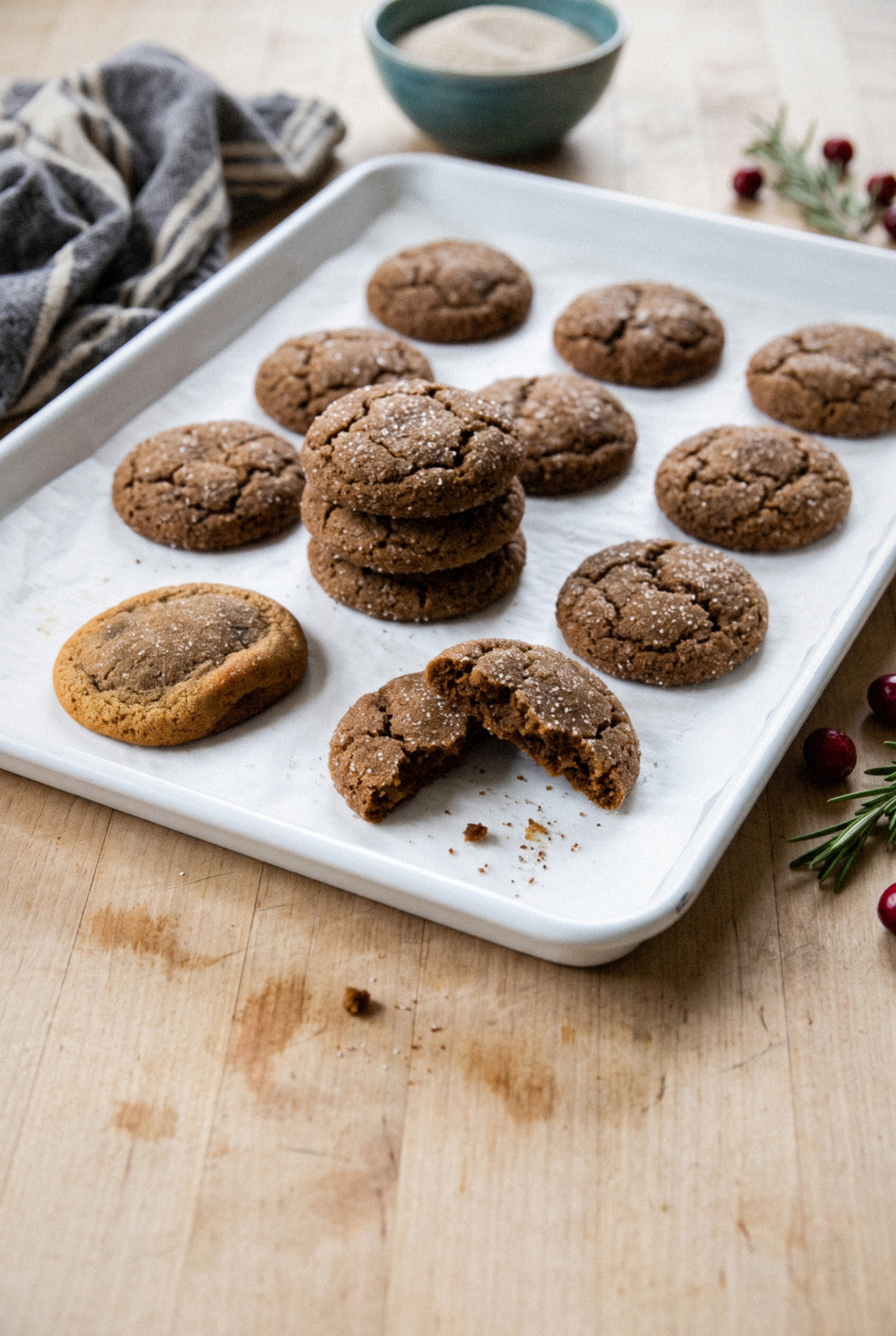
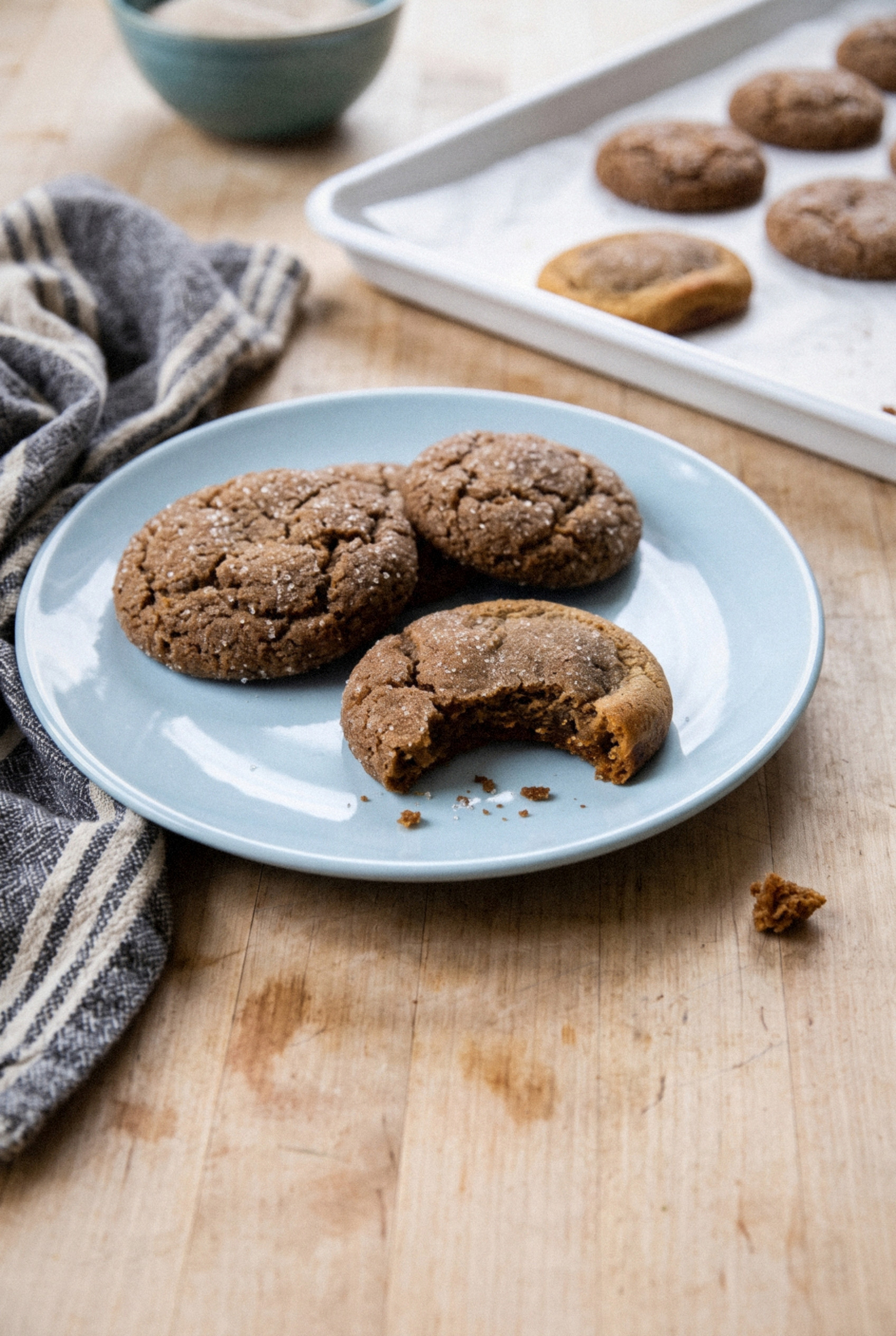
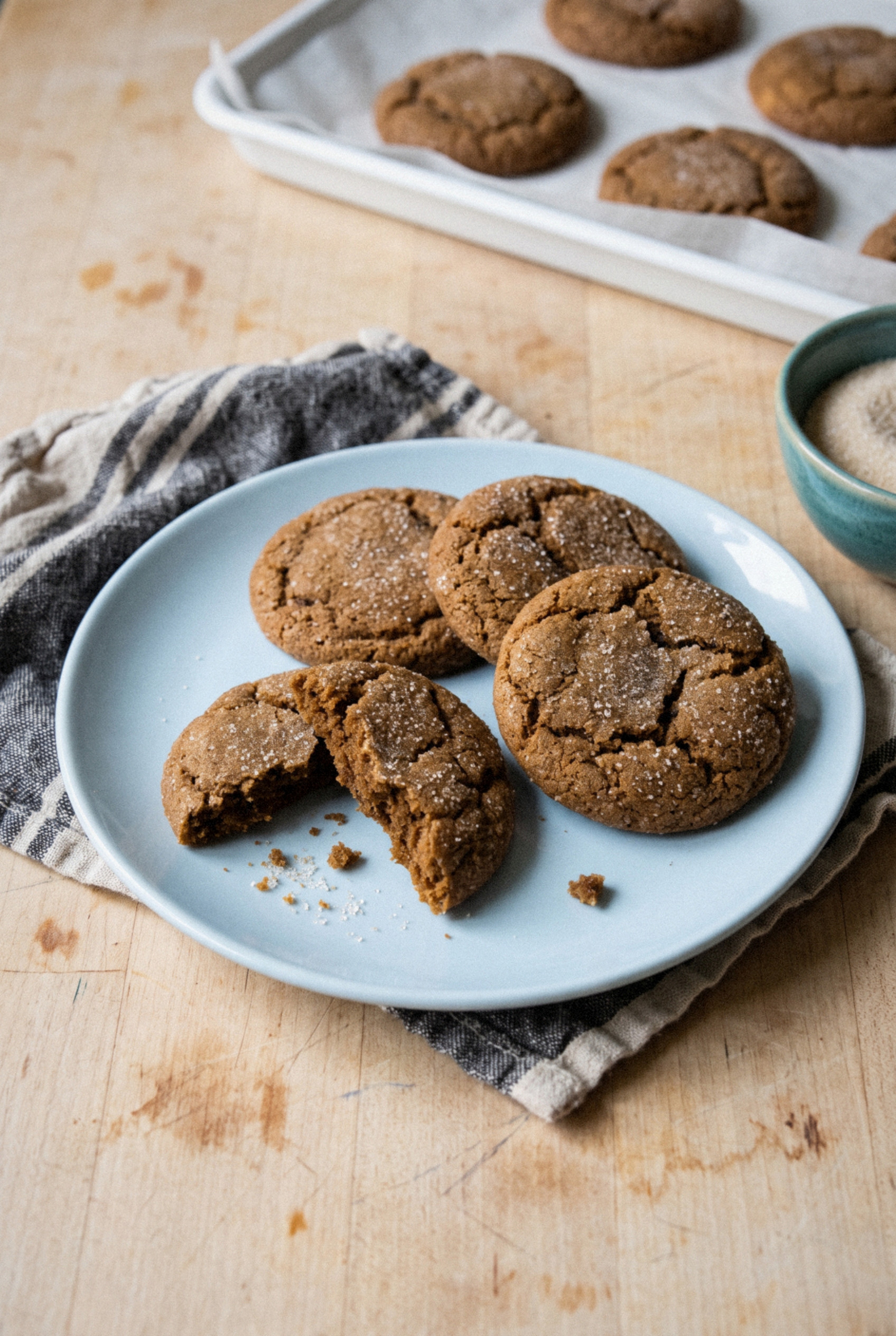
They're chewy, warmly spiced, and coated in a sparkly sugar shell that cracks into little canyons as they cool.
Make them once and you'll see why they outlast everything else on the plate.
Why These Molasses Cookies Stay Soft
Soft molasses cookies are all about moisture, and this dough is built to hold on to it. Every ingredient choice pushes toward a tender, bendy middle instead of a crisp snap.
- Brown sugar plus molasses. Both are hygroscopic, which is a fancy way of saying they pull moisture from the air and keep it in the cookie. That's why these taste just as soft on day five as day one.
- Butter, not too much flour. I use 2 ¼ cups of flour to ¾ cup of butter. Any more flour and the cookies turn cakey and dry.
- Enough baking soda for lift. 1 ½ teaspoons puffs the dough up in the oven and then lets it fall as it cools. That rise and collapse is what cracks the sugar crust.
- A slightly underbaked center. This is the part most people miss. The cookies finish setting on the hot pan, so they come out of the oven looking puffy and a little shiny in the middle.
So what's the trick to soft cookies in general? Pull them early.
Carryover heat does the rest, and you keep all that chew.
Which Molasses to Use
Reach for unsulphured molasses, either the mild or the full-flavor kind. I use Grandma's Original because it's easy to find and the flavor is round and sweet, not harsh.
- Mild or light molasses. Gentle, caramel-like, and great if you're baking for kids.
- Full-flavor or dark molasses. Deeper and a bit more bitter. This is my pick for a cookie that tastes old-fashioned.
- Blackstrap molasses. I skip it here. Blackstrap is the last boil of the cane syrup, so it's less sweet, more bitter, and it makes the cookies drier and darker. Some bakers love that edge, but it fights the soft texture we're after.
- Sulphured molasses. It has a sharper, slightly chemical taste. Unsulphured is the cleaner choice.
Fair warning: molasses is sticky and clings to measuring cups. Give the cup a quick spray of cooking spray first and it slides right out.
Ingredients You Need
Everything here is a pantry staple, and most of it is probably already in your cupboard. A quick rundown:
- All-purpose flour (2 ¼ cups). Spoon it into the cup and level it off. Scooping straight from the bag packs in extra flour and makes the cookies dense.
- Baking soda (1 ½ teaspoons). The only leavener. It reacts with the acidic molasses and brown sugar for lift and those cracks.
- Ground ginger (2 teaspoons). The backbone of the spice blend. Fresh jar, please, because old ginger tastes like dust.
- Ground cinnamon (1 ½ teaspoons). Warm and familiar.
- Ground cloves and nutmeg (¼ teaspoon each). Small amounts, big payoff. Cloves especially can take over, so measure carefully.
- Salt (½ teaspoon). Keeps the molasses from tasting flat.
- Unsalted butter (¾ cup). Softened to room temperature so it creams properly. It should dent easily but not look greasy.
- Dark brown sugar (½ cup, packed). More molasses flavor and more moisture than light brown. Light brown works too.
- Granulated sugar (¼ cup). Helps the edges set and balances the brown sugar.
- Unsulphured molasses (⅓ cup). The whole point of the cookie.
- Egg (1 large). Room temperature so it blends smoothly into the butter.
- Vanilla extract (1 ½ teaspoons). Rounds out the spices.
- Rolling sugar (⅓ cup). Plain granulated sugar works, but coarse sparkling sugar looks extra festive on a Christmas tray.
Butter or Shortening?
I'm team butter, and it isn't close. Butter gives these cookies a rich, toffee-like flavor that shortening just can't match.
Shortening does make a slightly taller, paler cookie that holds its shape a little better, and plenty of old church cookbooks use it.
If you want the best of both, swap ¼ cup of the butter for shortening. You'll get a touch more puff and still keep most of the buttery flavor.
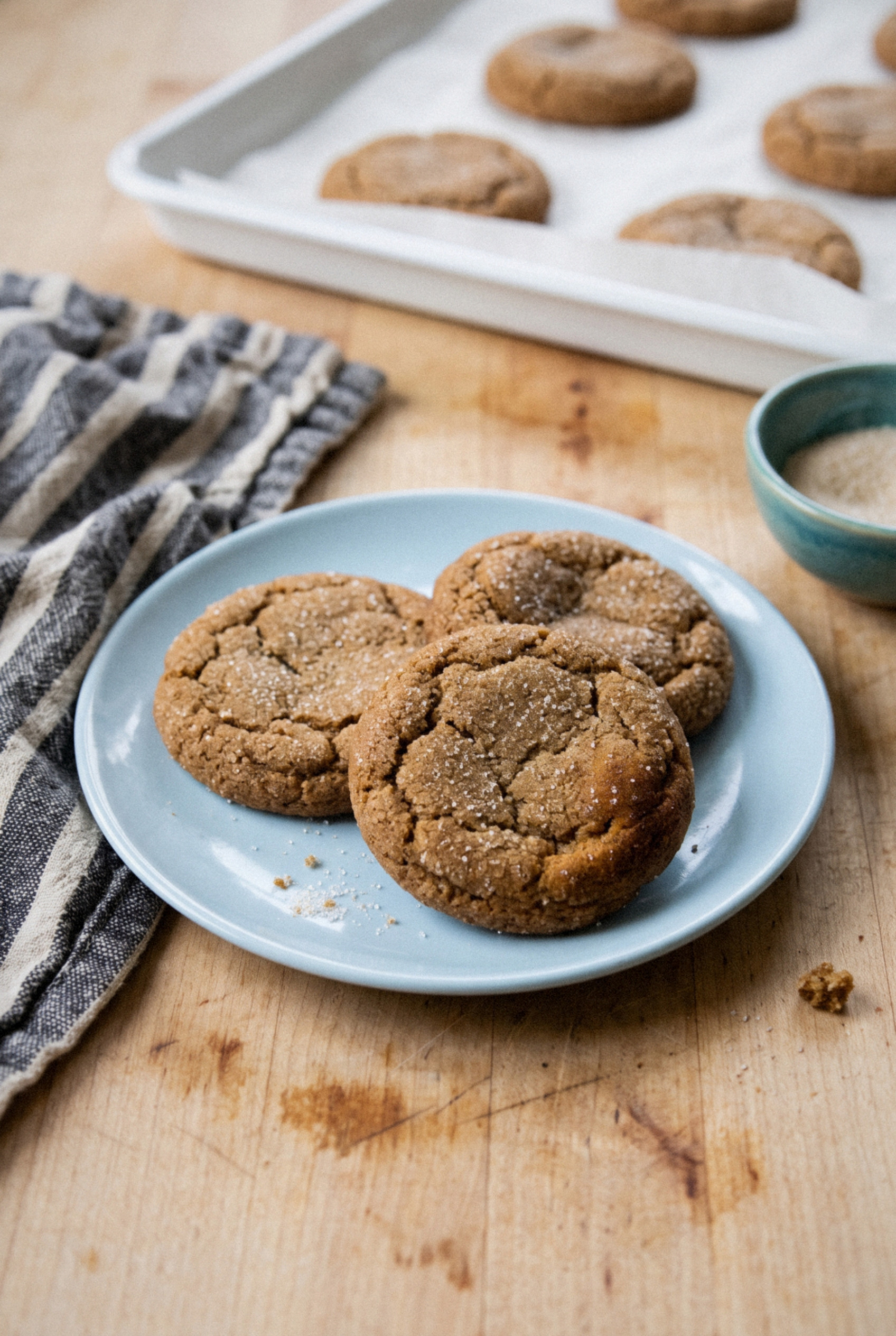
How to Make Soft Molasses Cookies
The method is simple, and the only real wait is the chill. Here's how it goes.
Step 1: Make the Dough
Whisk the flour, baking soda, ginger, cinnamon, cloves, nutmeg, and salt together in a medium bowl and set it aside. In a large bowl, beat the softened butter with the brown sugar and granulated sugar on medium-high for about 2 minutes, until it looks lighter and fluffy.
Beat in the molasses, then the egg and vanilla, and scrape down the bowl. Turn the mixer to low and add the dry ingredients, mixing just until no streaks of flour remain. The dough will be soft and a little sticky, which is exactly right.
Step 2: Chill the Dough
Cover the bowl and refrigerate for at least 1 hour, or up to 3 days. Chilling firms up the butter so the cookies don't spread into thin, crispy disks. It also gives the spices time to bloom.
Pro tip: If the dough has been in the fridge longer than a couple of hours, let it sit on the counter for 20 to 30 minutes before scooping. Rock-hard dough won't spread or crack properly.
Step 3: Roll in Sugar and Bake
Heat the oven to 350°F and line two baking sheets with parchment. Pour the rolling sugar into a shallow bowl. Scoop the dough into 1 ½ tablespoon balls, roll them smooth between your palms, and coat each one completely in sugar.
Space them about 2 ½ inches apart, since they spread. Bake one sheet at a time for 10 to 11 minutes, until the edges look set and the centers still look puffy and slightly glossy. Let them cool on the pan for 5 minutes, then move them to a wire rack.
Step 4: Getting the Crinkle Tops
Most batches crack on their own as the puffed centers sink. If yours come out smooth, lift the pan a couple of inches and drop it flat onto the counter 2 or 3 times right out of the oven. The tops settle and split into those deep, sugary fissures.
Still smooth? Your dough was probably too cold or a bit too floury. Give the next sheet an extra 10 minutes on the counter.
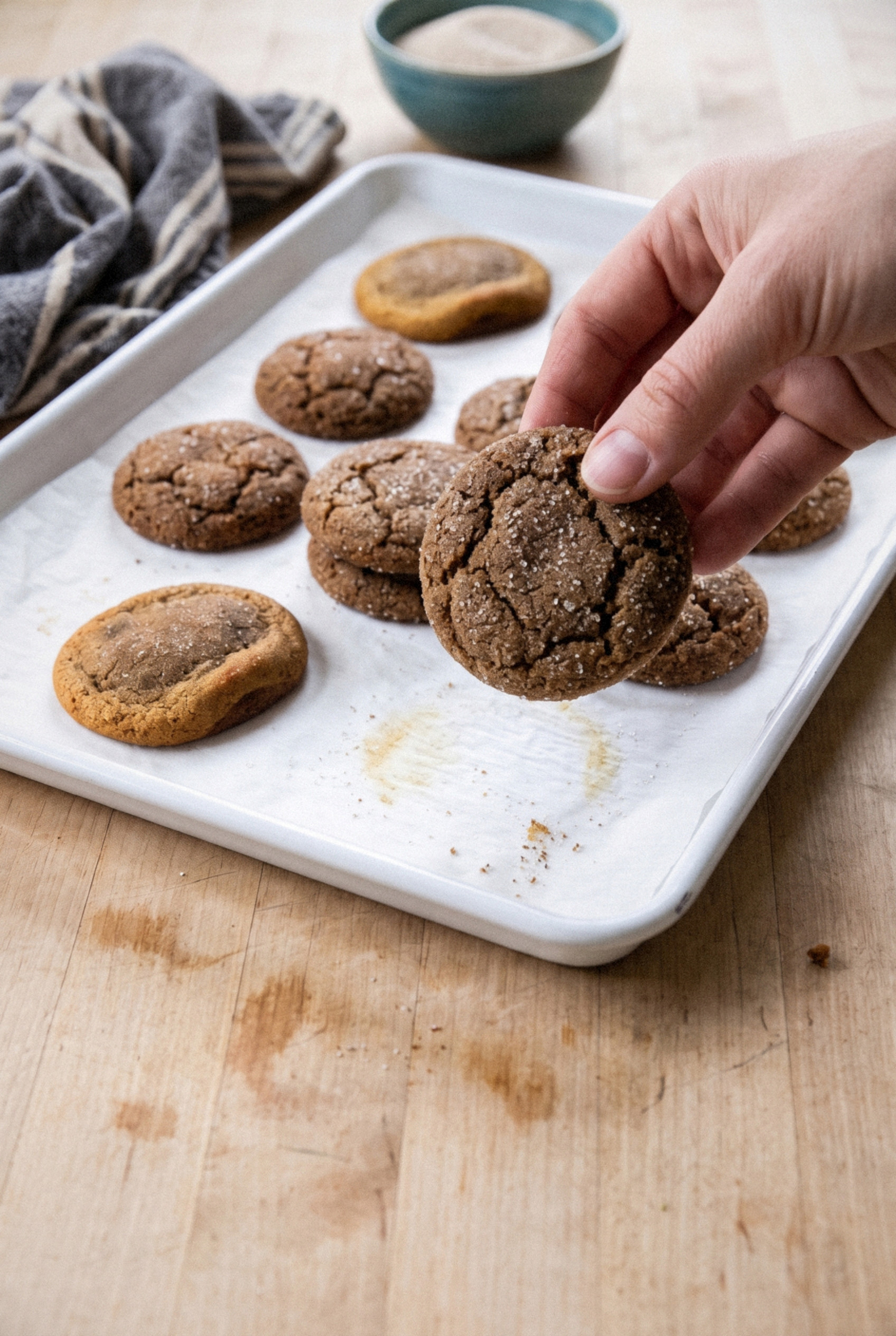
Tips for the Softest Molasses Cookies
A few small habits make a big difference in texture. These are the ones I swear by.
- Use a cookie scoop. Even balls bake evenly, so you don't end up with some cookies raw and others crisp.
- NEVER bake until the centers look dry. If the middle looks done in the oven, it'll be crunchy by the time it cools.
- Bake one sheet at a time. The middle rack gives the most even heat and the best crackle.
- Cool on the pan first. Those 5 minutes on the hot sheet finish the centers gently.
- Store with a slice of bread. Tuck a piece of sandwich bread into the container. The cookies pull moisture from it and stay soft for days.
- Watch dark pans. Dark or nonstick sheets run hot, so start checking at 8 minutes.
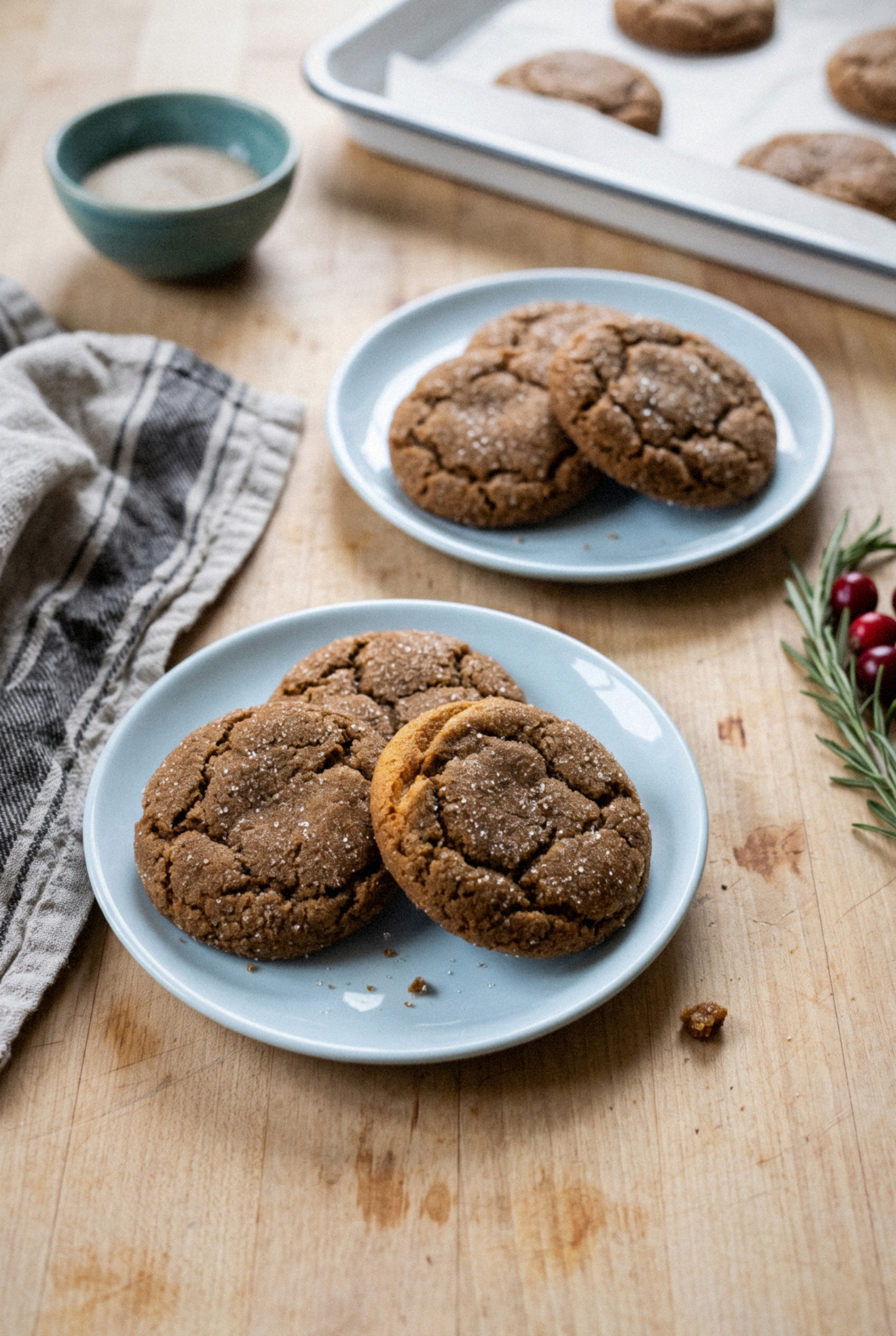
Easy Variations for the Christmas Cookie Tray
The base dough is a great canvas for holiday twists. Here are my favorites.
- Extra ginger kick. Add 1 teaspoon of freshly grated ginger and a pinch of black pepper with the molasses for a spicier bite.
- Orange molasses. Beat the zest of one orange into the butter and sugar. It's bright and so good with the cloves.
- White chocolate drizzle. Melt 2 ounces of white chocolate and zigzag it over cooled cookies. It looks like snow on a dark cookie.
- Molasses sandwich cookies. Spread cream cheese frosting between two cookies for a festive dessert. Keep these in the fridge.
- Pumpkin pie spice swap. Replace the ginger, cinnamon, cloves, and nutmeg with 4 teaspoons of pumpkin pie spice if that's what you have.
Substitutions
A few swaps work well if you're missing something. Others, not so much.
- Light brown sugar. Works one for one. The cookies will be a shade lighter in color and flavor.
- Salted butter. Use it and cut the added salt to ¼ teaspoon.
- Gluten-free flour. A cup-for-cup blend with xanthan gum works. The cookies spread a little less, so flatten the balls slightly before baking.
- Honey or maple syrup for molasses. I don't recommend it. You lose the flavor that makes these molasses cookies in the first place.
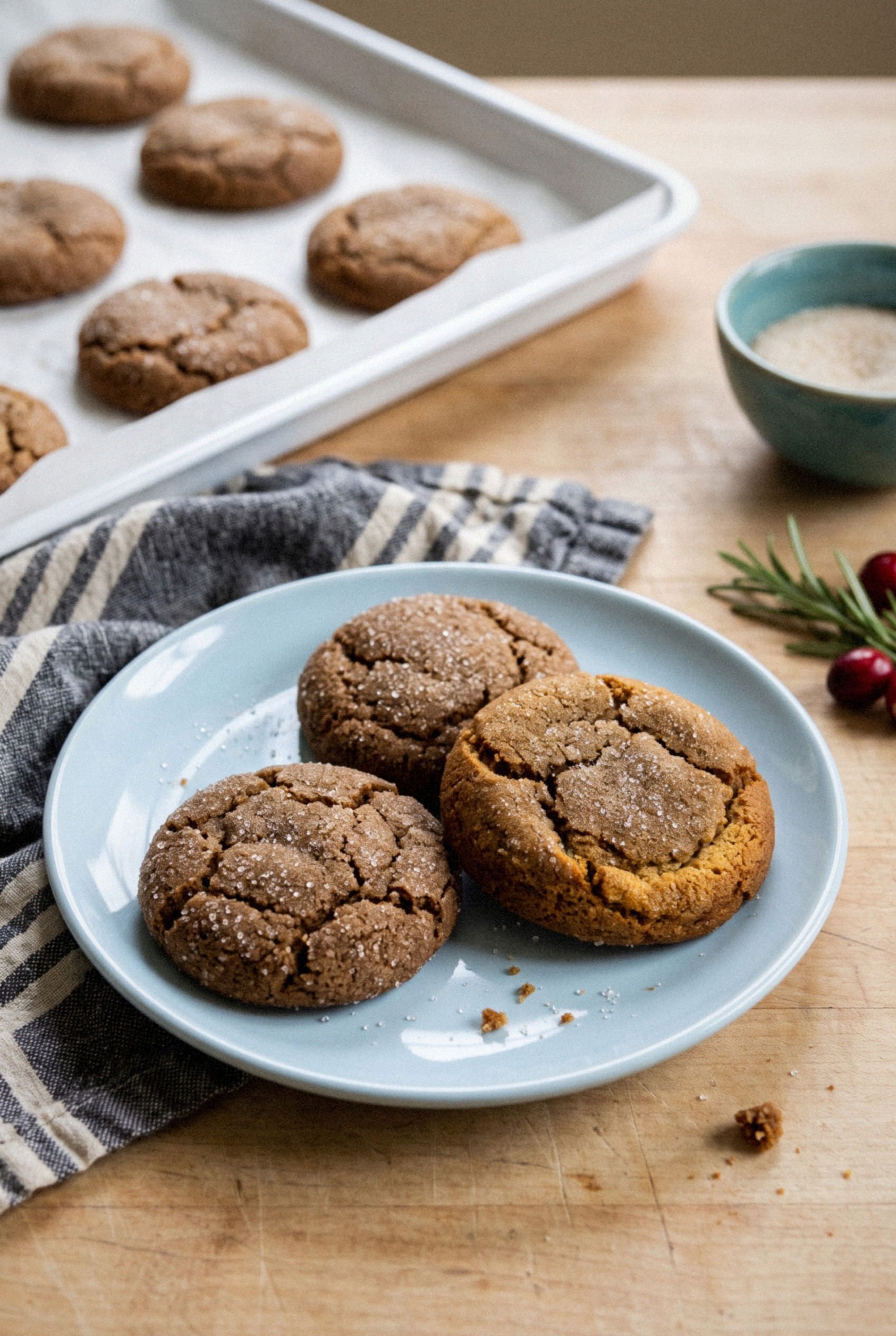
What to Serve With Soft Molasses Cookies
These are a cozy cookie, so pair them with cozy things. A few ideas from my house:
- Hot coffee or chai. The spices in the cookie and the cup play off each other perfectly.
- A cold glass of milk. Classic for a reason, and the kids' favorite.
- Vanilla ice cream. Sandwich a scoop between two cookies for an easy holiday dessert.
- A mixed Christmas cookie tray. Their dark color looks great next to sugar cookies, shortbread, and powdered sugar snowballs.
Storage, Freezing and Make-Ahead
These are one of the best make-ahead Christmas cookies I know. Here's how to plan around them.
- Room temperature. Store in an airtight container for up to 1 week. Add a slice of bread to keep them extra soft.
- Refrigerated dough. Keeps tightly covered for up to 3 days. Let it soften briefly before scooping.
- Frozen dough balls. Roll the dough into balls, freeze them on a tray, then bag them for up to 3 months. Roll in sugar just before baking and add 1 to 2 minutes to the bake time. No need to thaw.
- Frozen baked cookies. Freeze in a single layer, then stack in a container with parchment between layers for up to 3 months. Thaw at room temperature.
- Gift tins. Pack them once they're completely cool, with wax paper between layers so the sugar coating stays sparkly. Keep them in their own tin, since crisp cookies packed alongside will go soft.
I freeze a few dozen dough balls in early December and bake a sheet whenever company drops by.
Warm cookies in 12 minutes, and nobody has to know how little effort it took.
Recipe
Soft Molasses Cookies
Ingredients
For the Cookies
- 2 ¼ cups all-purpose flour spooned and leveled (281 g)
- 1 ½ teaspoons baking soda
- 2 teaspoons ground ginger
- 1 ½ teaspoons ground cinnamon
- ¼ teaspoon ground cloves
- ¼ teaspoon ground nutmeg
- ½ teaspoon salt
- ¾ cup unsalted butter softened to room temperature (170 g)
- ½ cup dark brown sugar packed (100 g)
- ¼ cup granulated sugar 50 g
- ⅓ cup unsulphured molasses not blackstrap (113 g)
- 1 large egg room temperature
- 1 ½ teaspoons vanilla extract
For Rolling
- ⅓ cup granulated or coarse sparkling sugar
Instructions
Make the Dough
- Whisk the flour, baking soda, ginger, cinnamon, cloves, nutmeg, and salt together in a medium bowl.
- In a large bowl, beat the butter, brown sugar, and granulated sugar on medium-high speed for about 2 minutes until light and fluffy.
- Beat in the molasses, then the egg and vanilla, scraping down the bowl.
- On low speed, add the dry ingredients and mix just until no streaks of flour remain. The dough will be soft and slightly sticky.
Chill
- Cover and refrigerate the dough for at least 1 hour or up to 3 days. If chilled longer than 2 hours, let it sit at room temperature for 20 to 30 minutes before scooping.
Shape and Bake
- Heat the oven to 350°F and line two baking sheets with parchment paper. Place the rolling sugar in a shallow bowl.
- Scoop the dough into 1 ½ tablespoon balls, roll smooth, and coat completely in sugar. Place about 2 ½ inches apart on the prepared sheets.
- Bake one sheet at a time for 10 to 11 minutes, until the edges are set and the centers still look puffy and slightly glossy.
- If the tops have not cracked, drop the pan flat onto the counter 2 or 3 times. Cool on the pan for 5 minutes, then transfer to a wire rack to cool completely.
Notes
- Molasses: Use unsulphured mild or full-flavor molasses. Blackstrap makes drier, more bitter cookies.
- Doneness: Pull the cookies while the centers still look underdone. They finish setting on the hot pan.
- Dark pans: Start checking at 8 minutes on dark or nonstick sheets.
- Storage: Airtight at room temperature for up to 1 week. Add a slice of bread to keep them soft.
- Freezing: Freeze dough balls up to 3 months and bake from frozen, rolled in sugar, adding 1 to 2 minutes. Baked cookies freeze for up to 3 months.