Halfway down a long folding table at my wife's office cookie swap sat a plate of plain little sandwich cookies that nobody was touching.
Pale, round, a few fork lines on top. Next to the frosted gingerbread men, they looked like they'd shown up to the wrong party.
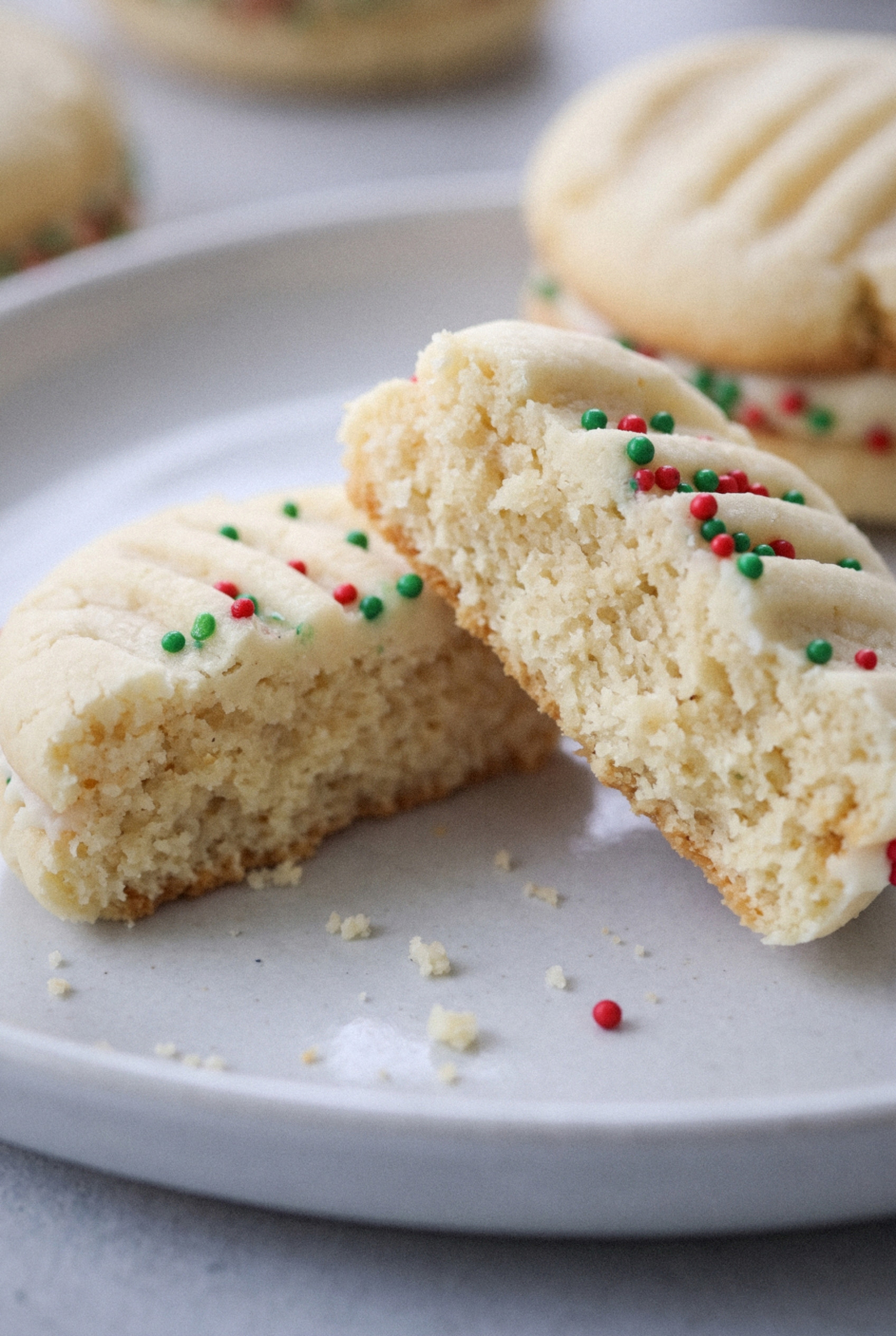
I grabbed one mostly to be polite.
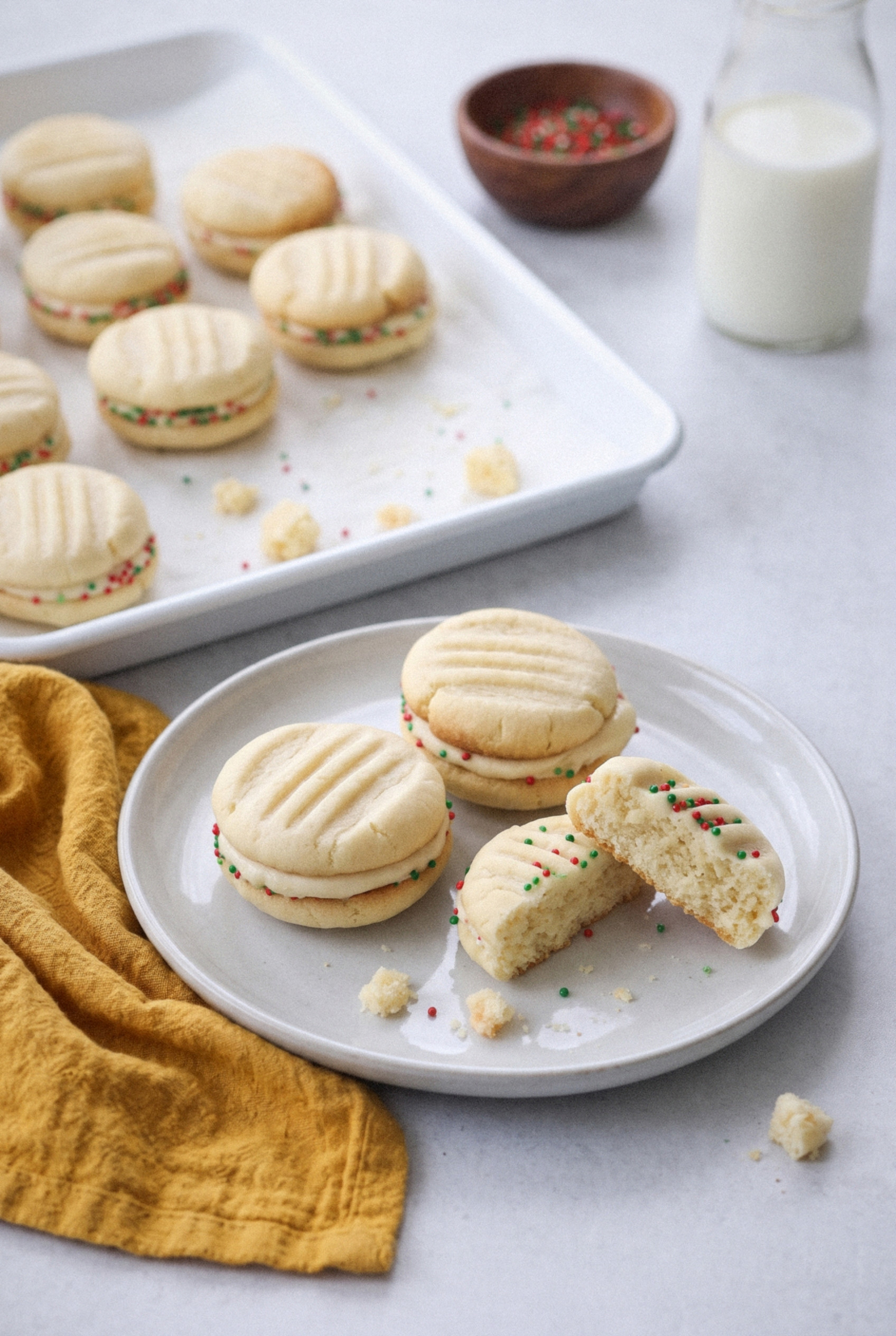
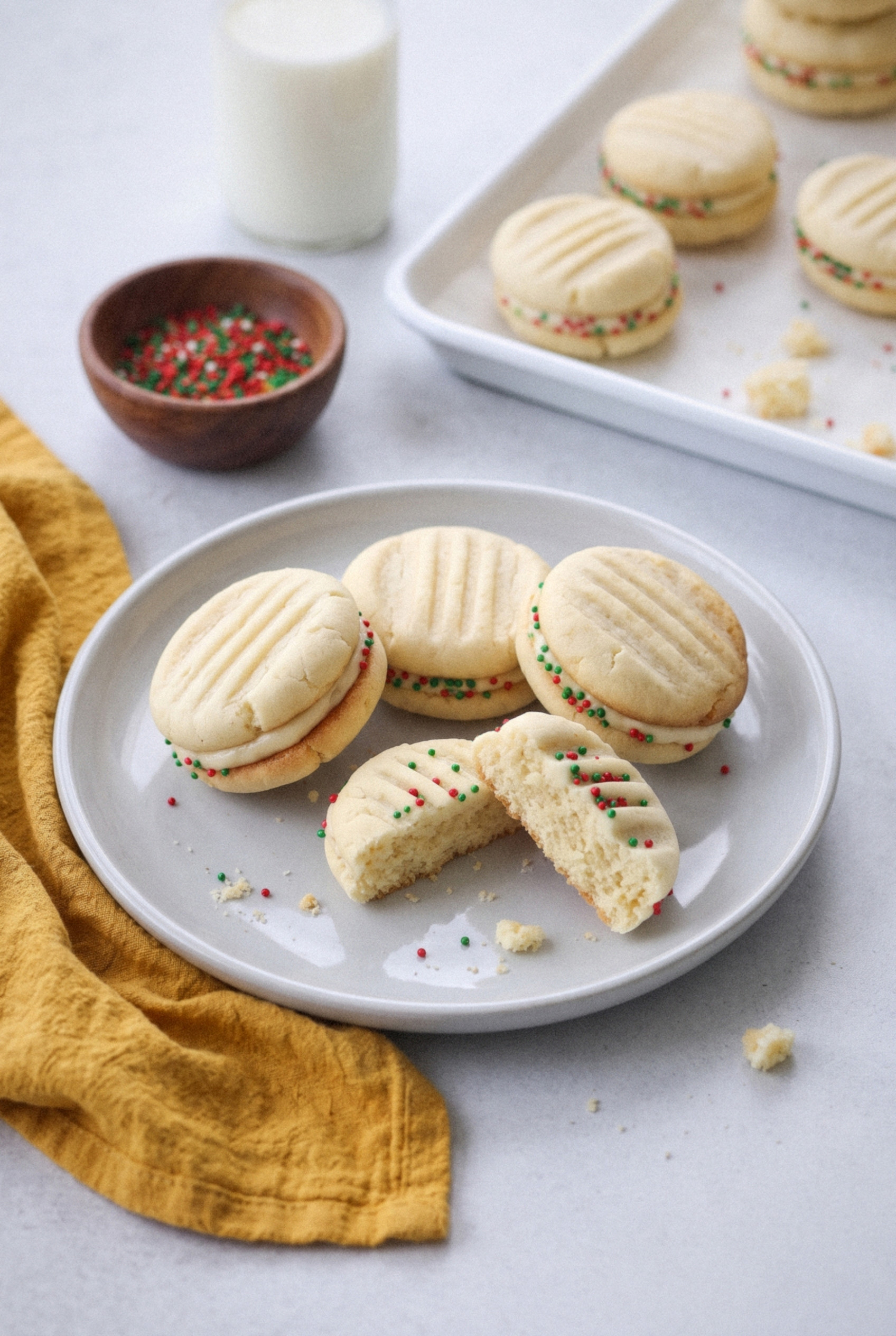
It dissolved on my tongue almost before I could chew. I actually stopped talking mid-sentence.
I spent the rest of the afternoon convinced the baker had some pastry-school trick I'd never pull off at home.
She laughed and told me it was cornstarch.
That's the whole secret behind these Melting Moments Christmas Cookies.
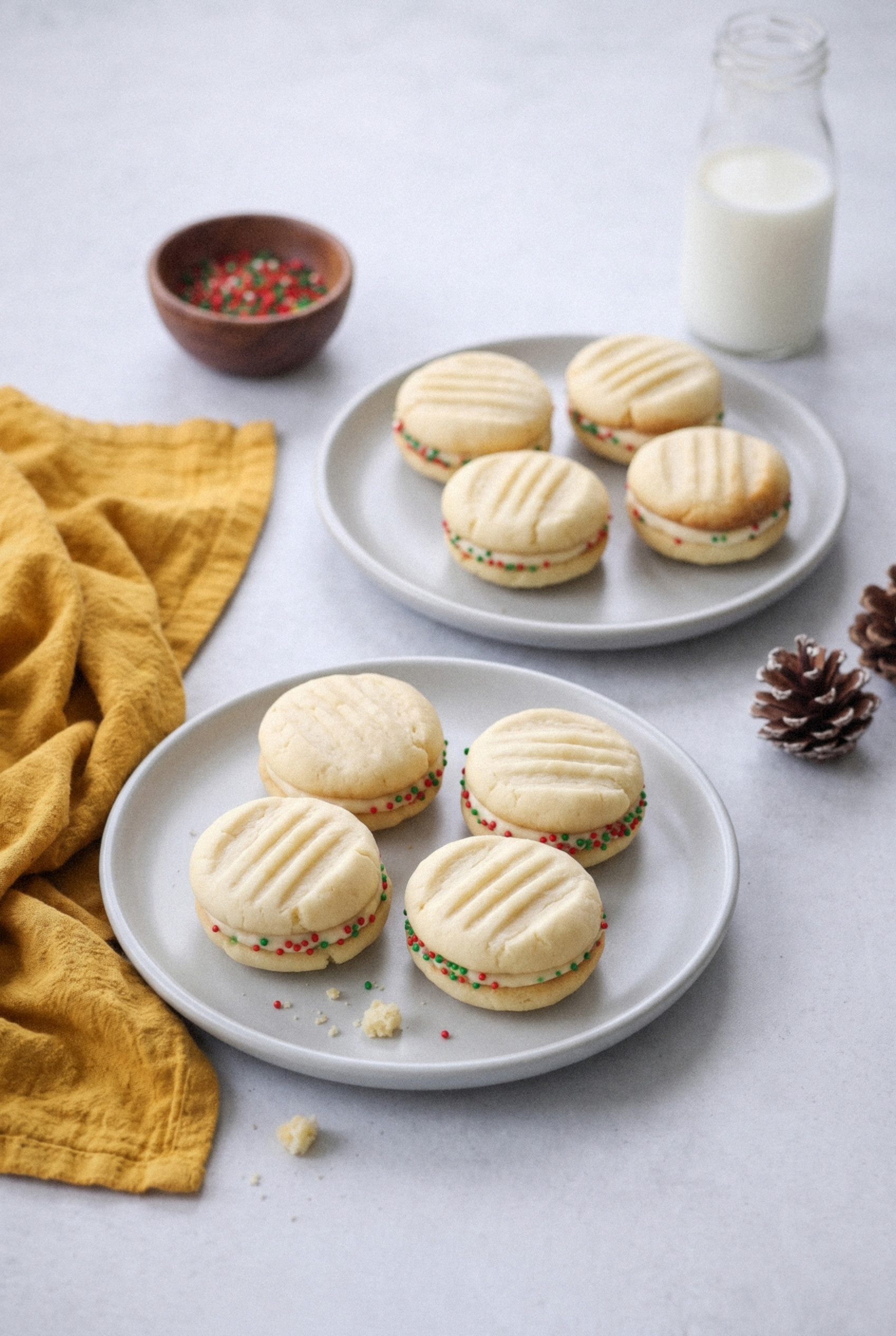
They're an old Australian and British cafe classic: tender shortbread-style rounds made with butter, powdered sugar, flour and a good scoop of cornstarch, then sandwiched with buttercream.
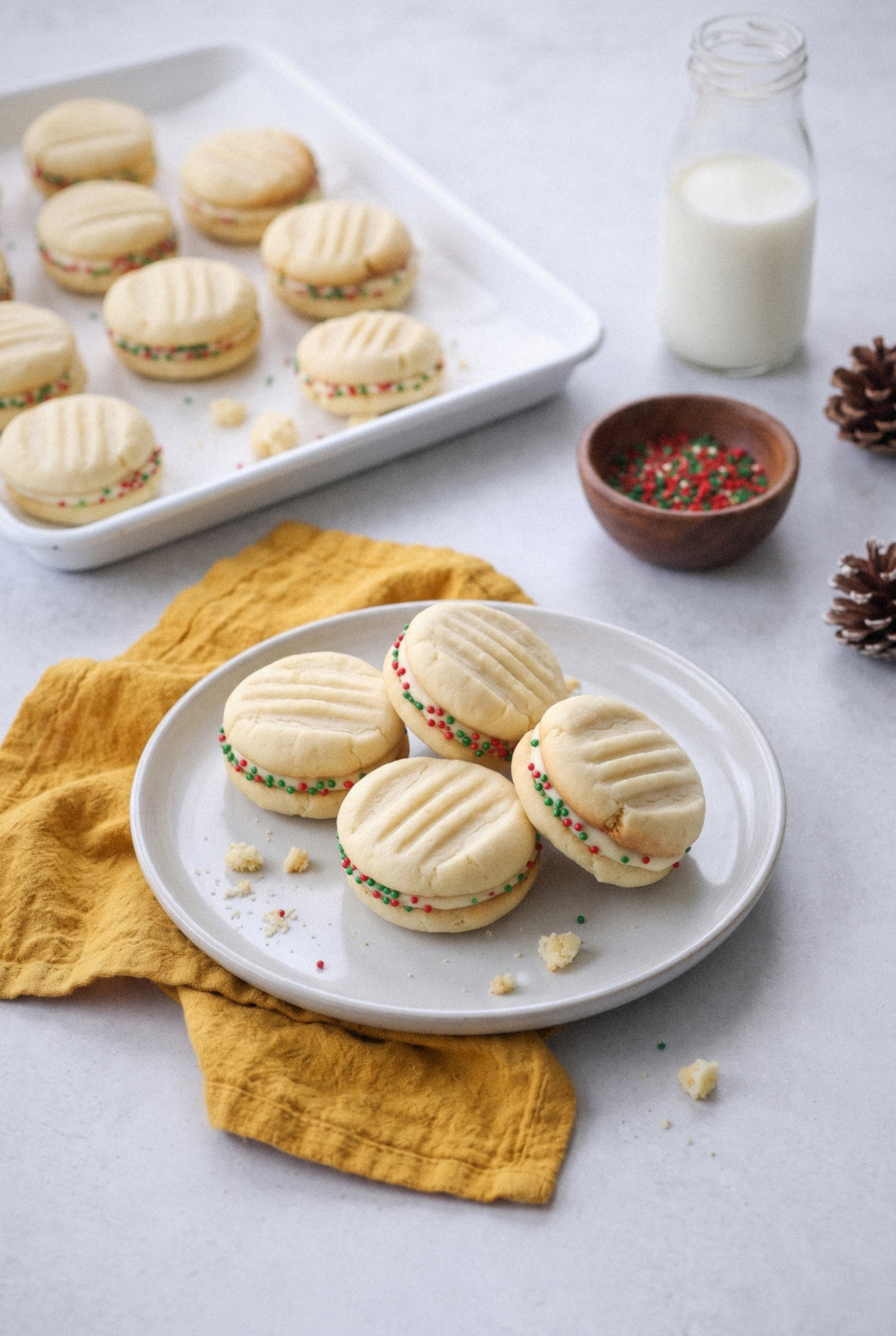
My Christmas version fills them with an orange vanilla buttercream and rolls the edges in tiny red and green sprinkles, so they look right at home on a holiday cookie tray.
No eggs, no piping bag, and just a handful of pantry ingredients.
I've made them every December since that swap, and they're always the first thing to disappear from the tin.
Bake one batch and I promise you'll understand the name.
Why You'll Love These Melting Moments
These cookies look humble and taste like something from a bakery case. Here's why they've become my favorite Christmas bake.
- A true melt-in-your-mouth texture. Cornstarch keeps the crumb tender, sandy and delicate, so the cookie dissolves instead of crunching.
- Pantry ingredients only. Butter, powdered sugar, flour, cornstarch, vanilla and salt. That's the cookie.
- No eggs. A great way to bake for friends with an egg allergy at Christmas.
- Festive with zero piping skill. A swipe of buttercream and a roll in sprinkles is all the decorating they need.
- Make-ahead friendly. The dough freezes, the unfilled cookies keep for days, and the filling waits in the fridge.
- A cookie tray crowd-pleaser. They add something soft and buttery next to all the crisp sugar cookies and chewy gingerbread.
What Are Melting Moments?
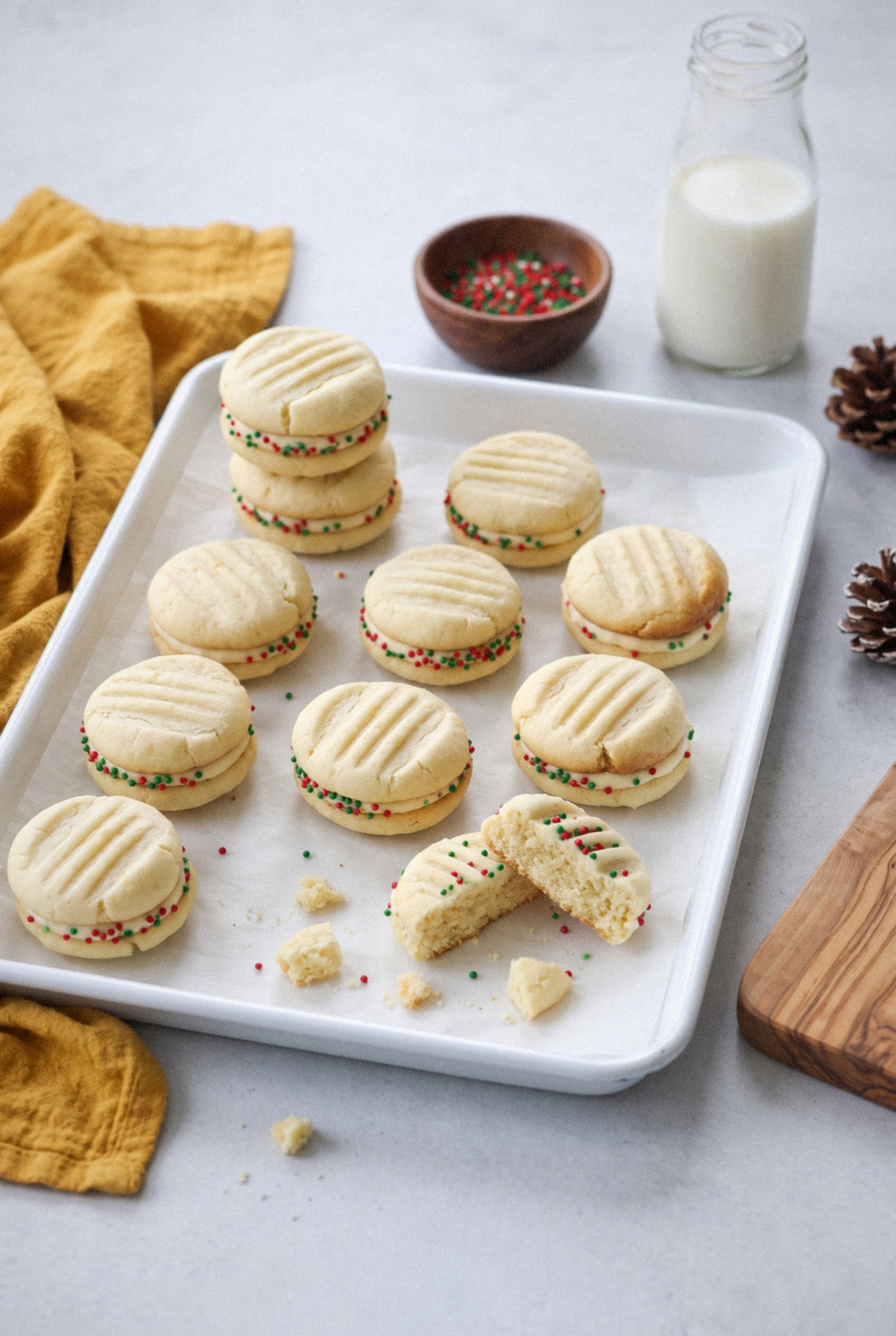
Melting moments are a cornstarch shortbread cookie, usually sandwiched with buttercream. You'll find them in cafes all over Australia and in old British recipe books, often filled with lemon or passionfruit icing.
In the US they sometimes go by cornstarch cookies or butter balls, and plenty of families bake them single, dusted in powdered sugar.
So what's the difference between shortbread and melting moments?
Classic shortbread is butter, granulated sugar and flour, and it has a firm, snappy bite. Melting moments swap in powdered sugar and replace part of the flour with cornstarch.
Cornstarch has no gluten, so the cookie ends up softer, lighter and more crumbly than shortbread. It's the same buttery family, just a lot more delicate.
Ingredients for Melting Moments Christmas Cookies
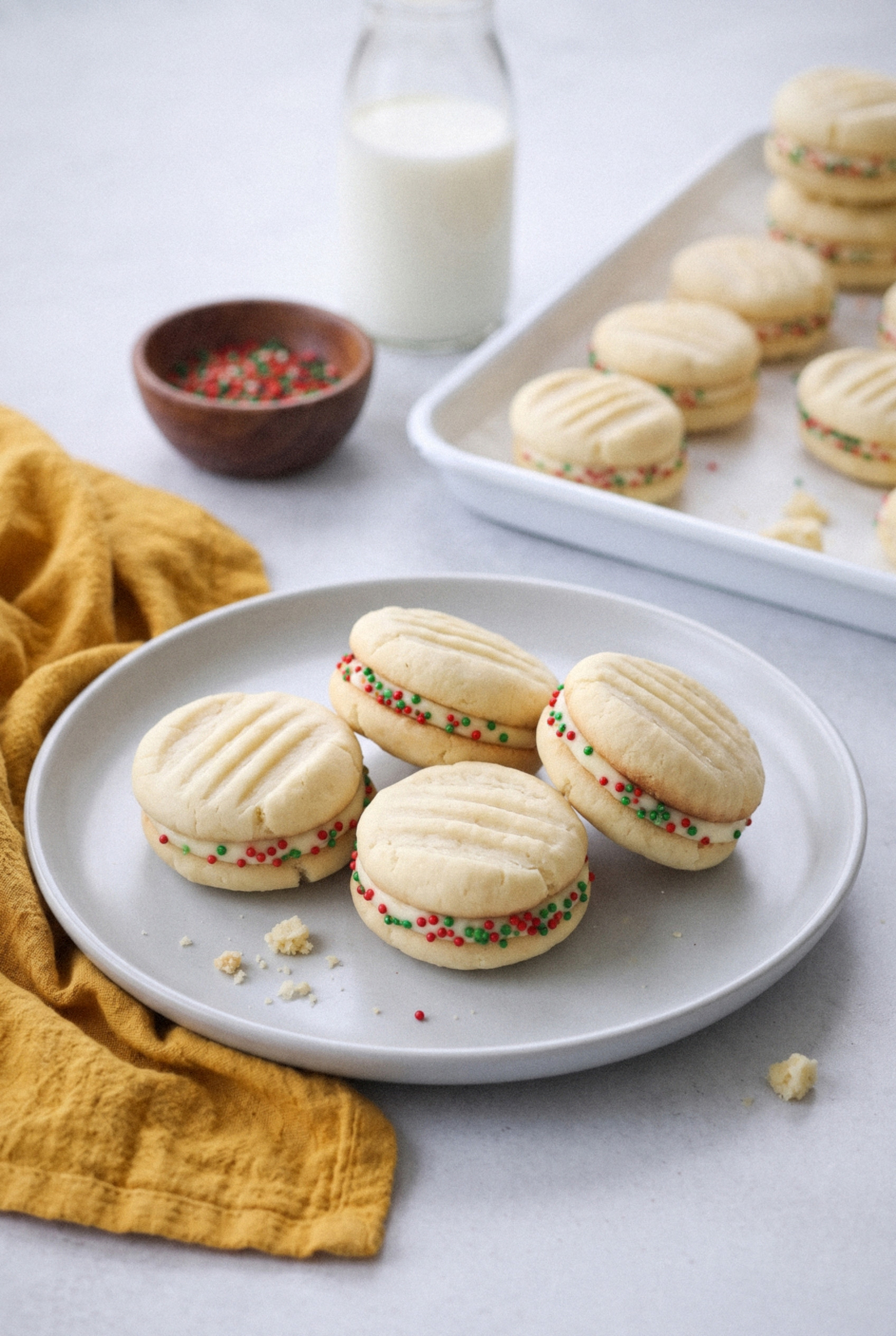
The ingredient list is short, so each one matters. Measure carefully, especially the flour and cornstarch.
For the Cookies
- Unsalted butter (1 cup, softened). The main flavor here, so use a good one. It should be soft enough to press a finger into easily, but never shiny or melted.
- Powdered sugar (½ cup). Dissolves instantly into the butter for that smooth, fine crumb. Granulated sugar makes the cookies gritty and crisp.
- Vanilla extract (1 teaspoon). Rounds out the butter flavor.
- All-purpose flour (1 ¼ cups). Spoon and level it, or weigh 160 grams. Extra flour is the number one cause of dry, crumbly cookies.
- Cornstarch (½ cup). This is non-negotiable. It's what makes the cookies melt.
- Fine salt (¼ teaspoon). Keeps the buttery flavor from tasting flat.
For the Christmas Buttercream Filling
- Unsalted butter (⅓ cup, softened). The base of a smooth, spreadable filling.
- Powdered sugar (1 ½ cups). Sift it if it's lumpy so the filling stays silky.
- Orange zest (1 teaspoon, finely grated). A bright, festive note that cuts through the butter. Use fresh fruit, not dried peel.
- Vanilla extract (½ teaspoon). Pairs perfectly with the orange.
- Milk (1-2 teaspoons). Just enough to loosen the filling to a soft, spreadable texture.
- Red and green nonpareils (3 tablespoons). Tiny round sprinkles for rolling the edges. They give the cookies their Christmas look.
Swaps: Salted butter works in the cookies if you skip the added salt. Lemon zest makes a classic Australian-style filling instead of orange.
How to Make Melting Moments Christmas Cookies
This dough comes together in minutes, and the rest is gentle handling. Have two baking sheets lined with parchment before you start.
Step 1: Make the Dough
Beat the softened butter and powdered sugar on medium speed for 2-3 minutes, until pale and fluffy. Beat in the vanilla.
Whisk the flour, cornstarch and salt together in a separate bowl. Add them to the butter on low speed and mix just until a soft dough forms with no dry patches. Stop there, because overmixing makes a tougher cookie.
Step 2: Shape and Fork-Press
Roll the dough into 1-inch balls, about 2 teaspoons each, and set them 2 inches apart on the lined sheets. You should get about 36 balls.
Dip a fork in flour and press each ball gently to about ½ inch thick, leaving those classic ridges on top. Re-flour the fork every few cookies so it doesn't stick.
Step 3: Chill and Bake
Chill the trays for 30 minutes while the oven heats to 325°F. Cold dough holds its round shape instead of spreading.
Bake one tray at a time for 12-14 minutes, until the tops are still pale and the bottoms are just barely golden. Cool them on the tray for 10 minutes, because they're very fragile while warm, then move them to a rack with a thin spatula.
Fair warning: If they brown on top, they've gone too far. These should look almost underbaked.
Step 4: Make the Buttercream
Beat the butter until creamy, then add the powdered sugar, orange zest and vanilla. Beat for 2 minutes, adding milk a teaspoon at a time until the filling is soft and spreadable but still holds its shape.
Step 5: Sandwich and Decorate
Once the cookies are COMPLETELY cool, pair them up by size. Spread or pipe about 1 ½ teaspoons of buttercream onto the flat side of one cookie, then press a second cookie on top until the filling just reaches the edge.
Pour the nonpareils into a shallow dish and roll the edge of each sandwich through them so the exposed filling is coated. Chill the cookies for 15 minutes to set the filling.
Pro tip: Press gently. Too much pressure and the cookie cracks or the filling squirts out the sides.
Tips for Perfect Melting Moments
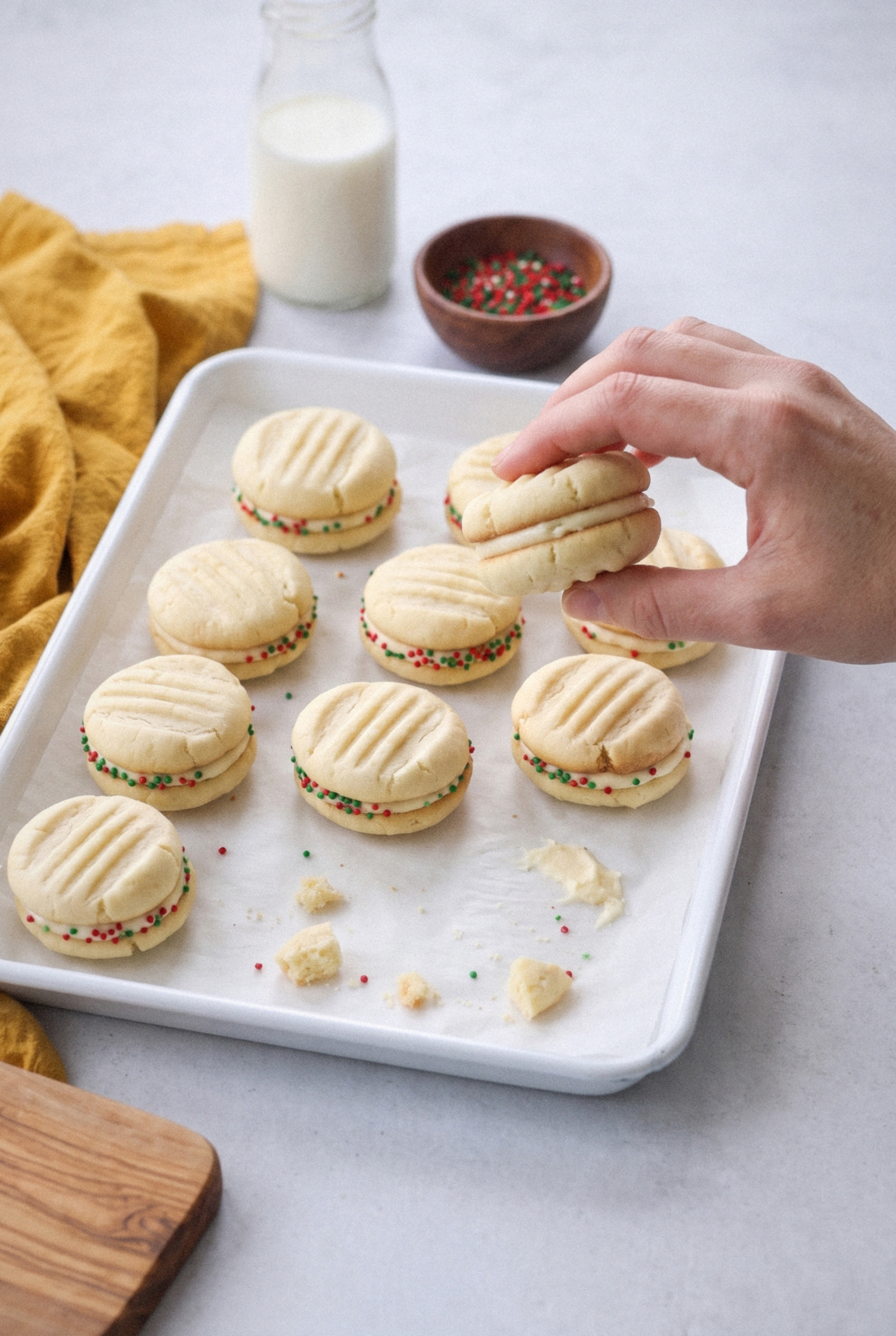
These are simple cookies, but they're delicate. A few habits make all the difference.
- Get the butter right. Room temperature, soft but cool. Melted or greasy butter makes the cookies spread.
- Weigh the flour. Even an extra tablespoon makes them dry and crumbly.
- Don't overmix. Mix the dry ingredients in on low speed and stop as soon as the dough comes together.
- Chill before baking. 30 minutes in the fridge keeps the rounds from spreading, especially in a warm kitchen.
- Use cool trays. Putting dough on a hot tray straight from the oven causes spreading. Let trays cool between batches.
- Bake them pale. Golden tops mean a crisp cookie instead of a melting one.
- Cool completely before filling. Warm cookies melt the buttercream and break under pressure.
- Use a thin filling layer. About 1 ½ teaspoons per cookie keeps them neat and easy to bite.
Dough too crumbly to roll? Knead it a few times with your hands. The warmth brings it together.
Christmas Variations
One dough, lots of holiday looks. Here are my favorite ways to change it up.
- Classic lemon. Swap the orange zest for lemon zest and a teaspoon of lemon juice in the filling.
- Peppermint. Add ¼ teaspoon peppermint extract to the filling and roll the edges in crushed candy cane.
- Raspberry centers. Spread a thin layer of seedless raspberry jam on one cookie and buttercream on the other before sandwiching.
- Chocolate-dipped. Dip half of each finished sandwich in melted dark chocolate and let it set on parchment.
- Old-fashioned single cookies. Skip the filling and toss the warm cookies in powdered sugar, then again once cool.
- Tinted filling. A drop of red or green gel coloring makes the filling itself festive.
Storage, Freezing and Make-Ahead
Melting moments are a great Christmas make-ahead cookie. You just need to plan when to add the filling.
- Filled cookies. Store in an airtight container in a single layer, or with parchment between layers, for up to 4-5 days in a cool spot or the fridge. Let them sit at room temperature for 15 minutes before serving.
- Unfilled cookies. Keep in an airtight tin at room temperature for up to 1 week.
- Buttercream. Refrigerate for up to 1 week. Bring it to room temperature and beat briefly before using.
- Frozen dough balls. Freeze on a tray, then bag them for up to 3 months. Press with a fork and bake from frozen, adding 1-2 minutes.
- Frozen baked cookies. Freeze unfilled cookies between layers of parchment for up to 2 months. Thaw in the container, then fill.
A Christmas-Week Timeline
- Weeks ahead. Roll and freeze the dough balls.
- 3-4 days ahead. Bake the cookies and store them unfilled.
- 2 days ahead. Make the buttercream and refrigerate it.
- The day before. Fill, roll in sprinkles and chill.
Gifting and Cookie Tray Tips
These cookies are fragile, but they still travel fine with a little care. Here's how I pack them for neighbors and parties.
- Use a sturdy tin. A metal tin or rigid box protects them far better than a bag.
- Pack in single layers. Separate layers with parchment and don't stack more than two high.
- Keep them cool. Buttercream softens in a warm car, so pack them last.
- Put them on top. On a mixed cookie tray, set them where nothing heavy can lean on them.
Recipe
Melting Moments Christmas Cookies
Ingredients
For the Cookies
- 1 cup unsalted butter softened
- ½ cup powdered sugar
- 1 teaspoon vanilla extract
- 1 ¼ cups all-purpose flour 160 g, spooned and leveled
- ½ cup cornstarch 64 g
- ¼ teaspoon fine salt
For the Christmas Buttercream Filling
- ⅓ cup unsalted butter softened
- 1 ½ cups powdered sugar sifted
- 1 teaspoon orange zest finely grated
- ½ teaspoon vanilla extract
- 1-2 teaspoons milk
- 3 tablespoons red and green nonpareils for rolling
Instructions
Make the Dough
- Beat the butter and powdered sugar on medium speed for 2 to 3 minutes until pale and fluffy. Beat in the vanilla.
- Whisk the flour, cornstarch and salt together. Add to the butter mixture on low speed and mix just until a soft dough forms.
Shape and Bake
- Line two baking sheets with parchment. Roll the dough into 1-inch balls, about 2 teaspoons each, and place 2 inches apart.
- Press each ball gently with a floured fork to about ½ inch thick.
- Chill the trays for 30 minutes. Meanwhile, preheat the oven to 325°F.
- Bake one tray at a time for 12 to 14 minutes, until the tops are pale and the bottoms are just barely golden. Cool on the tray for 10 minutes, then transfer to a rack to cool completely.
Make the Buttercream
- Beat the butter until creamy. Add the powdered sugar, orange zest and vanilla and beat for 2 minutes, adding milk a teaspoon at a time until soft and spreadable.
Sandwich and Decorate
- Pair the cooled cookies by size. Spread about 1 ½ teaspoons of buttercream on the flat side of one cookie and gently press a second cookie on top.
- Roll the edge of each sandwich in the nonpareils to coat the exposed filling.
- Chill for 15 minutes to set the filling before serving or storing.
Notes
- Flour: Weigh the flour and cornstarch if possible. Extra flour makes the cookies crumbly.
- Bake pale: The tops should stay pale. Golden tops mean the cookies are overbaked.
- Storage: Keep filled cookies airtight in a cool spot or the fridge for up to 5 days. Unfilled cookies keep for 1 week.
- Make ahead: Freeze dough balls up to 3 months and bake from frozen, adding 1 to 2 minutes.
- Single cookies: Skip the filling and dust with powdered sugar for about 36 cookies.