Autumn in Japan smells like sweet potatoes.
Not the marshmallow kind, the smoky kind, roasted whole over stones and sold out of a truck.
I got hooked on that smell years ago and came home wanting to cook with the same vegetable.
Then I found out where it actually shows up most in a Japanese kitchen.
Breakfast.
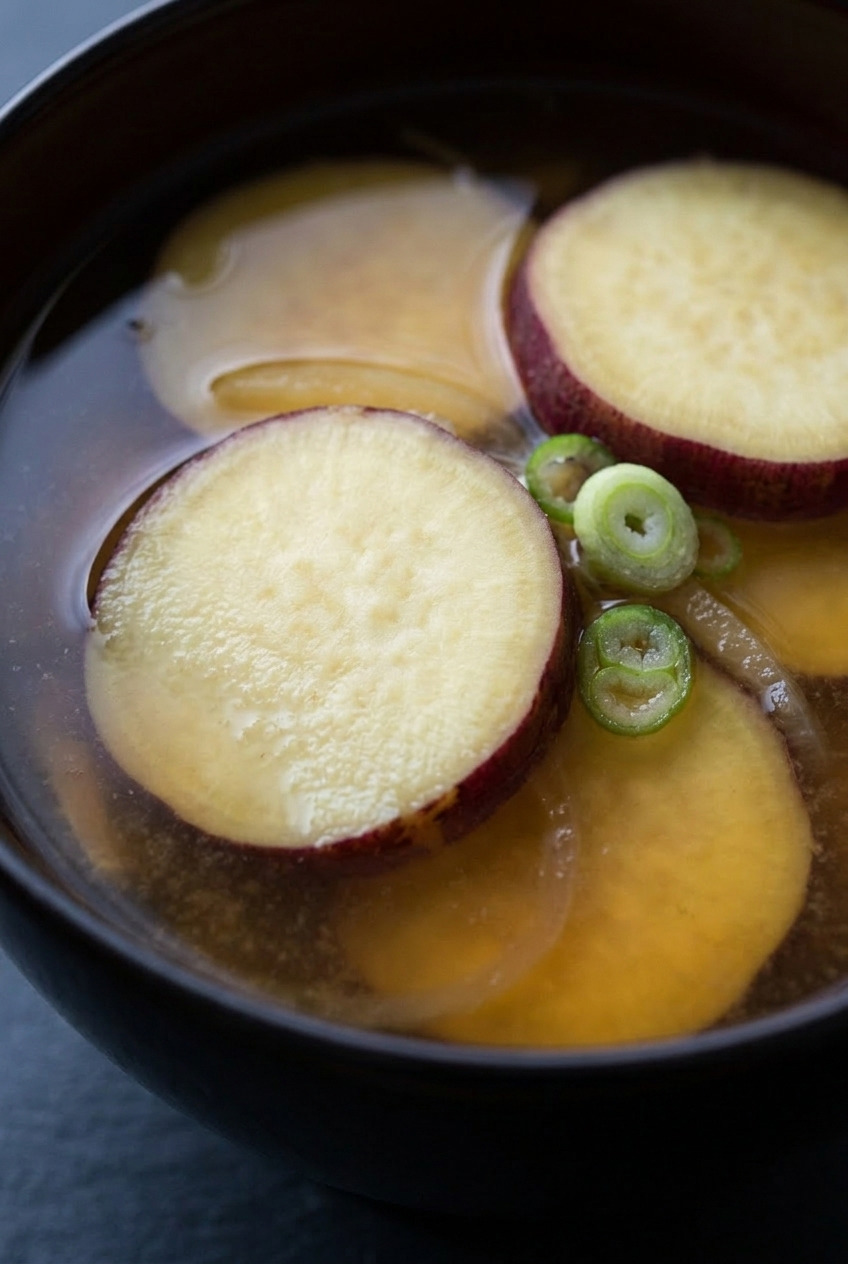
Floating in a bowl of miso soup, cut into thick rounds with the purple skin still on.
Satsumaimo is the Japanese sweet potato, and it belongs in a broth far more often than it belongs under brown sugar.
Okay, a warning before you scroll any further.
If you search this dish online you'll mostly find blended orange purees with coconut milk and ginger in them.
That is a nice soup, but it isn't this one.
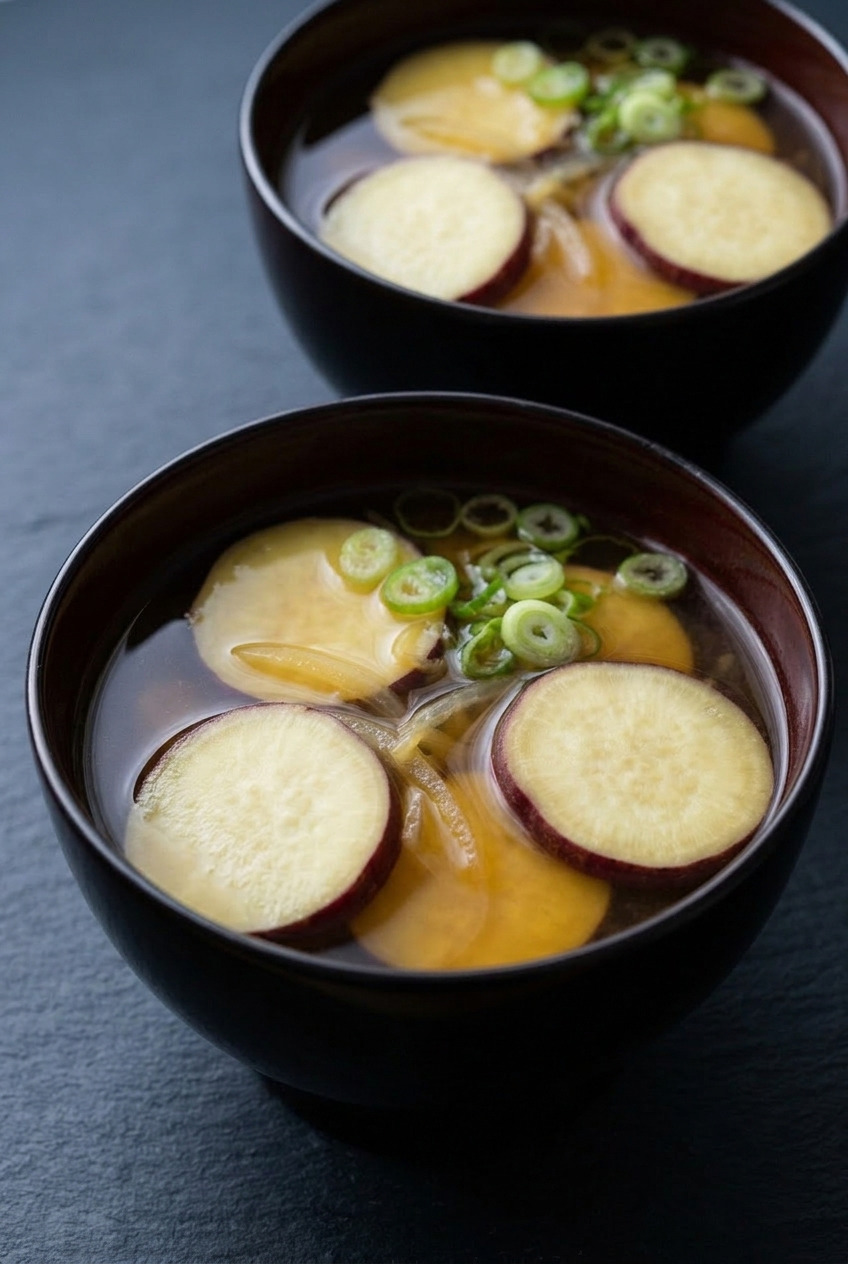
Mine is a clear amber dashi with soft rounds of potato sitting in it, thin sliced onion, and a spoonful of miso whisked in at the very end.
You can see through the broth.
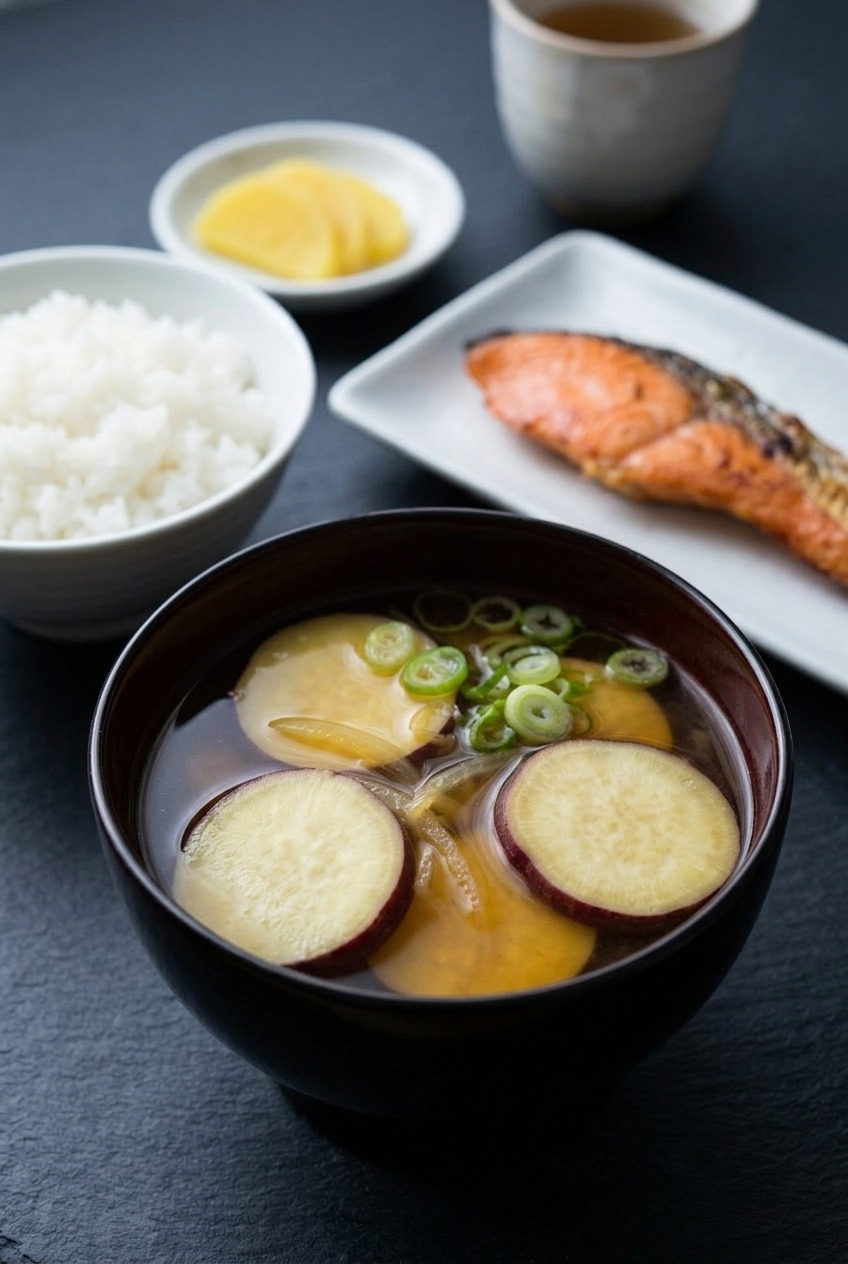
I make it on cold mornings and about once a week all winter, usually with rice and a pickle and nothing else.
The dashi takes ten minutes and it's the difference between this tasting Japanese and tasting like squash soup.
The whole pot is on the table in half an hour!
What Is Satsumaimo?
Satsumaimo is the Japanese sweet potato, and it is a genuinely different vegetable from the orange one in your supermarket. Once you cook with it the difference is obvious.
The skin is deep purple to reddish, smooth and thin.
The flesh inside is pale yellow, almost creamy white when raw.
It's drier and starchier than an American sweet potato, and the sweetness is more like chestnut than like candy.
That dryness is exactly why it works in a soup. It holds its shape instead of dissolving.
Look for it at Japanese, Korean or Chinese grocers, often labeled Japanese sweet potato, Murasaki, or Beni Haruka.
Can I Use a Regular Orange Sweet Potato?
You can, and I've done it plenty of times when I couldn't get to the Asian market.
Two things change.
It goes softer faster, so cut the rounds a little thicker and watch them closely.
It also releases more starch and clouds the broth, which matters when a clear broth is half the appeal.
Still good. Just not quite the same bowl.
This Is a Brothy Soup, Not a Puree
Nothing in this pot gets blended. I want to be completely clear about that before you start, because most of what's written about sweet potato miso soup is about something else entirely.
Three of the recipes ranking for this dish right now are silky purees with coconut milk stirred through.
Miso soup in Japan is not creamy.
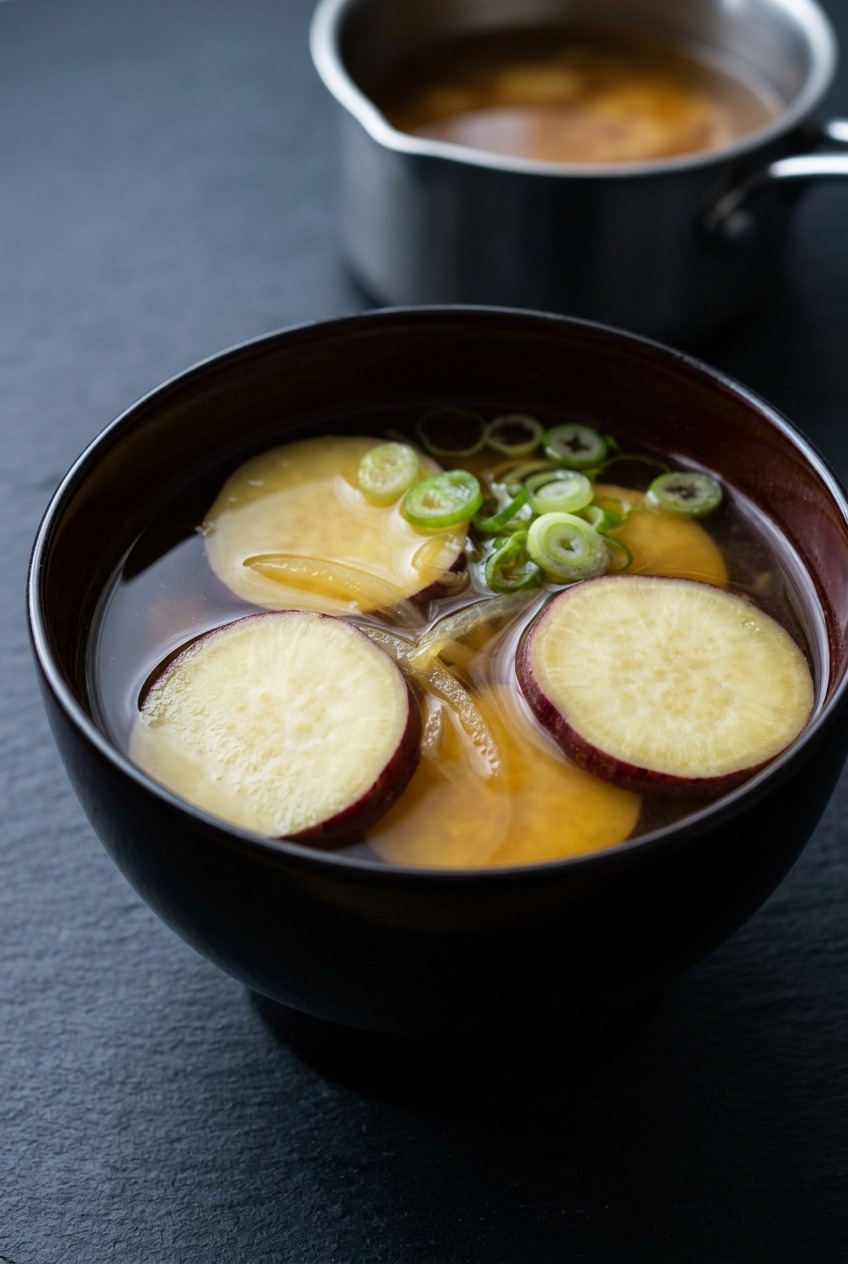
It's a thin, savory, faintly cloudy broth with a few solid things suspended in it.
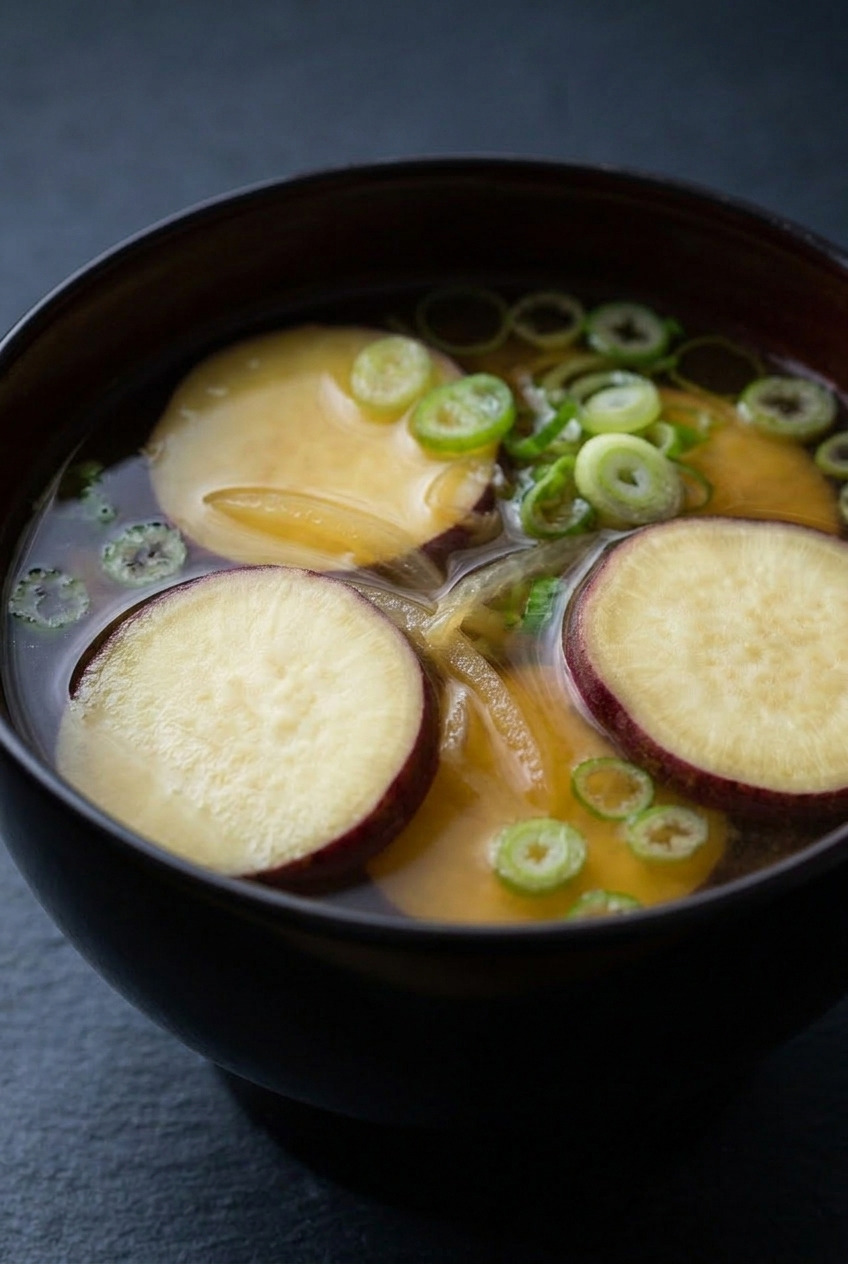
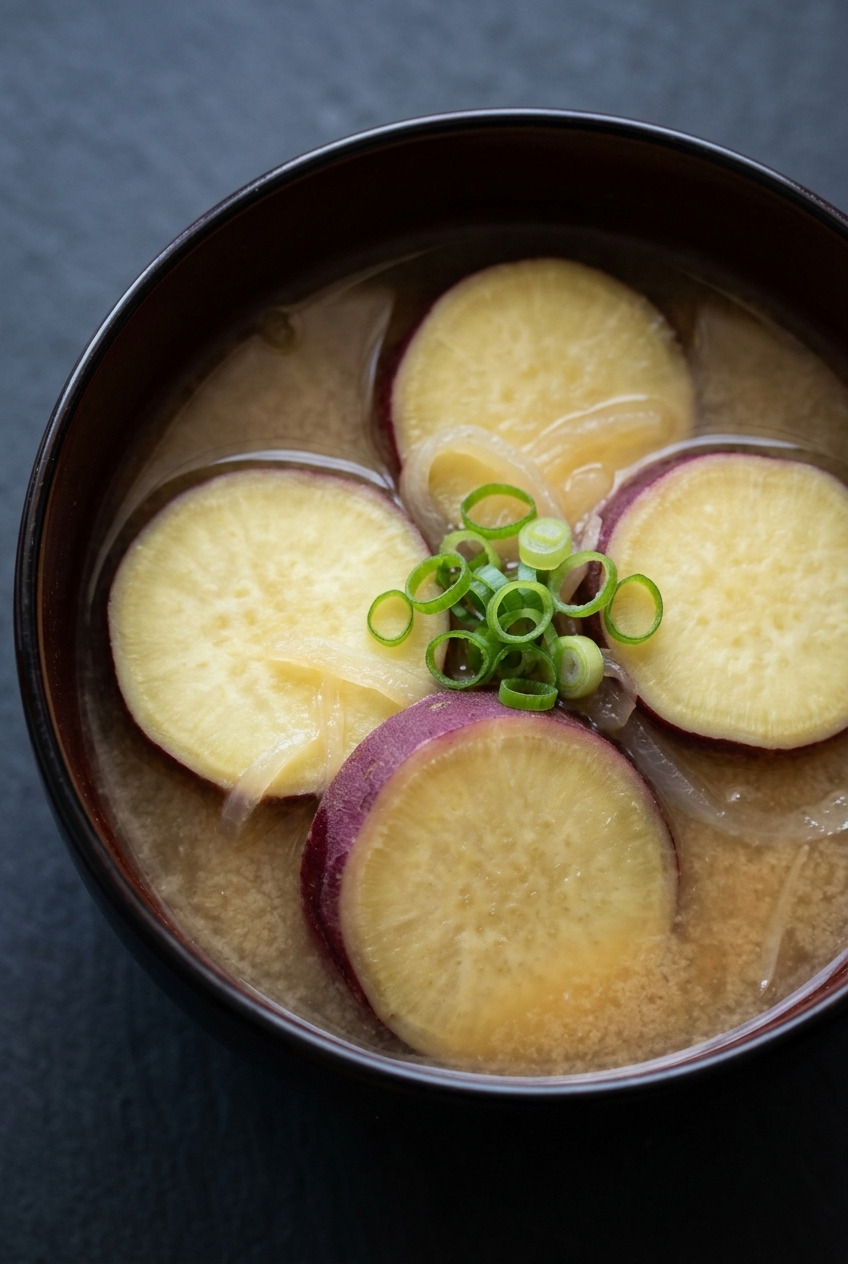
Here's what lands in front of you: clear amber liquid, six or seven rounds of pale yellow potato edged in purple, threads of soft onion, and a scatter of green scallion on top.
Blending it would ruin two things at once. The potato starch thickens the liquid into baby food, and the dashi you spent ten minutes on disappears completely.
Leave it chunky.
Dashi Is the Whole Flavor Base
If you make one thing from this article, make the dashi. It is ten minutes of nearly no work and it carries the entire soup.
Dashi is a stock of kombu, which is dried kelp, and katsuobushi, which is shaved dried bonito.
Both together is called awase dashi and it's the standard for miso soup.
It tastes like the sea in a very quiet way. Savory, clean, a little smoky.
How to Make a 10 Minute Awase Dashi
Put 4 cups of cold water and one 4 inch piece of kombu in a saucepan.
Bring it slowly to just below a simmer over medium-low heat, about 8 minutes.
Pull the kombu out the moment small bubbles start climbing the sides. NEVER let it boil.
Kill the heat, drop in 1 packed cup of katsuobushi, and let it sit 2 minutes while the flakes sink.
Strain it through a fine sieve and don't press on the flakes.
Pro tip: Boiled kombu turns slimy and bitter, and there's no fixing it once it happens. Watch the pot for those first bubbles.
Can I Make This Without Dashi?
You have three honest shortcuts.
- Instant dashi granules (hondashi). 1 teaspoon per 4 cups of water. This is what a lot of Japanese home cooks actually use on a weekday and nobody should feel bad about it.
- A dashi packet. Steep it like tea for 5 minutes. Very close to homemade.
- Kombu only. Steep the kelp in cold water overnight in the fridge for a vegetarian dashi. Softer and less smoky, and it's the traditional temple version.
What I wouldn't do is use chicken stock or a vegetable carton. Those flavors fight the miso instead of holding it up.
Choosing Your Miso
The miso you buy decides how strong this tastes more than anything else you do. All three types work, they just make different bowls.
- White miso (shiro). Mild, faintly sweet, short fermentation. My default here because it lets the potato lead. Use about 1 tablespoon per cup of dashi.
- Yellow or awase miso. The middle ground and the most common in Japanese homes. More savory, still friendly. This is what I reach for when I want the soup to taste like a meal rather than a starter.
- Red miso (aka). Long fermented, dark, assertive. It will bury a sweet potato if you're not careful. Start with two thirds the amount and taste.
Taste before you add the last spoonful. Miso brands vary wildly in salt, and the only way to know yours is to try it.
How to Make Miso Soup With Satsumaimo
Total time is about thirty minutes and most of it is the potato simmering. Have the miso measured before you start, because the last step happens fast.
Step 1: Make the Dashi
Steep the kombu in 4 cups cold water, pull it before it boils, add the katsuobushi off the heat for 2 minutes, then strain.
Return the strained dashi to the pot.
Step 2: Slice the Satsumaimo
Scrub the potatoes well but leave the skin on.
Slice them into rounds a full ½ inch thick.
Rinse the cut rounds under cold water for a few seconds to wash off the loose surface starch, then drain them.
Step 3: Simmer the Potato and Onion
Add the rounds and the 1 cup of thinly sliced onion to the dashi.
Bring it to a gentle simmer over medium heat and cook 10 to 12 minutes.
They're ready when a skewer slides through a round with no push.
Don't stir hard. Every stir knocks starch off the potato and clouds the broth.
Step 4: Add the Miso Off the Heat
Turn the burner off.
Ladle a little hot broth into a small bowl, add the 4 tablespoons of miso, and whisk until it's completely smooth.
Pour that back into the pot and stir once, gently.
Step 5: Serve Right Away
Divide it between four bowls and scatter the sliced scallion over the top.
Miso soup does not sit well. Serve it within a few minutes of the miso going in.
Cooking Tips for Satsumaimo
The potato is the only thing in this soup that can go wrong. Three details cover all of it.
Skin On or Off?
Skin on, always.
The skin holds each round together through the simmer, and the purple ring against the pale yellow flesh is the look of this dish.
It's also thin enough that nobody notices it in the eating.
How Thick Should the Rounds Be?
½ inch. This is not a place to eyeball it.
Cut them thinner and they break apart into the broth.
Cut them thicker and the outside is mush by the time the middle is cooked through.
Cloudy Broth and Bitter Edges
A quick rinse after slicing takes the surface starch off and keeps the dashi looking clear.
If your potato tastes faintly bitter near the skin, that's the cut end oxidizing, and sitting in water for 5 minutes before cooking fixes it.
Never Boil the Miso
This is the single most common way this soup gets ruined, and it takes about four seconds. Once miso boils, it's done.
Miso is a living, fermented paste, and hard heat flattens its aroma into something dull and vaguely harsh.
It also goes grainy, separating into little specks instead of staying suspended in the broth.
Two rules and you'll never do it.
- Dissolve it separately. A ladle of hot broth in a small bowl, whisked smooth, then poured back in. This also kills any chance of lumps.
- Add it with the heat off. The residual heat in a pot of hot dashi is more than enough.
Reheating leftovers? Bring it to steaming and stop there. If you see a bubble break the surface, you've gone too far.
What Else Goes In
Satsumaimo and onion is the plain version, and it's the one I make most. These are the additions that actually belong.
- Silken tofu. Cut into ½ inch cubes and slid in during the last minute, before the miso. The classic partner and it needs no cooking.
- Abura age. Thin fried tofu pouches, sliced into strips. Sweet potato and abura age together is a very traditional pairing and my favorite of these.
- Wakame. A tablespoon of dried wakame, rehydrated in cold water for 5 minutes, squeezed and added at the end.
- Shiitake. Thin sliced fresh shiitake, in with the potato so they have time to soften.
- Daikon. Quarter-moons of daikon simmered alongside, for something a little more like a country soup.
How to Serve It
The bowl is part of the dish. Japanese miso soup is served in a lidded lacquer bowl, and there's a practical reason for it.
Lacquer is light and insulates well, so you can hold a bowl of hot soup in one hand.
Which is how it's meant to be eaten. You pick the bowl up and drink the broth straight from the rim, using chopsticks for the solid pieces.
Don't fill the bowl to the brim, leave a good inch of clearance for that reason.
- With a plain meal. A bowl of rice, a piece of grilled fish, a pickled vegetable. That's a traditional Japanese breakfast and it's excellent at 7 a.m.
- As a starter. Before anything grilled or fried, particularly katsu.
- Shichimi togarashi at the table. A pinch of the seven-spice blend on top of each bowl. This is the one condiment I always put out.
Storage and Reheating
Miso soup is best in the first ten minutes and I won't pretend otherwise. That said, leftovers are still worth keeping.
- Fridge. 3 days in a covered container. The potato rounds soften a little more each day and by day three they're very soft.
- Reheating. Gently, on the stove, to steaming and no further. Never a boil.
- The better plan. Keep the dashi and cooked potato separate from the miso and season each portion as you heat it. Takes an extra minute and the soup tastes freshly made every time.
- Freezing. I'd skip it. The potato goes grainy and the miso loses its aroma in the freezer.
- Dashi ahead. Strained dashi keeps 3 days in the fridge and freezes well for 1 month. Making a double batch is the smartest thing you can do here.
Make it once on a cold morning and tell me you don't want it again the next day!
Recipe
Miso Soup With Satsumaimo (Japanese Sweet Potato)
Ingredients
For the Dashi
- 4 cups cold water
- 1 piece kombu about 4 inches square
- 1 packed cup katsuobushi dried bonito flakes, about ½ ounce
For the Soup
- 2 small satsumaimo Japanese sweet potatoes, about 11 ounces total, scrubbed and sliced into ½ inch rounds
- 1 cup yellow onion thinly sliced
- 4 tablespoons white or yellow miso to taste
- 2 scallions thinly sliced
- 1 pinch shichimi togarashi optional, at the table
Instructions
Make the Dashi
- Put the cold water and the kombu in a saucepan and bring it slowly to just below a simmer over medium-low heat, about 8 minutes. Pull the kombu out as soon as small bubbles climb the sides. Do not let it boil.
- Turn off the heat, add the katsuobushi, and let it stand 2 minutes while the flakes sink. Strain through a fine sieve without pressing the flakes, and return the dashi to the pot.
Simmer and Season
- Slice the scrubbed satsumaimo into ½ inch rounds with the skin on. Rinse the rounds briefly under cold water to remove surface starch, then drain.
- Add the potato rounds and the sliced onion to the dashi. Bring to a gentle simmer over medium heat and cook 10 to 12 minutes, until a skewer slides through a round with no resistance. Stir as little as possible.
- Turn the heat off. Ladle a little hot broth into a small bowl, whisk the miso into it until completely smooth, then stir that back into the pot. Never let the soup boil after the miso goes in.
- Divide between four bowls, scatter the sliced scallion over the top, and serve immediately with shichimi togarashi at the table.
Notes
- Never boil the kombu: Pull it at the first bubbles or the dashi turns slimy and bitter.
- Never boil the miso: Dissolve it in a ladle of broth and stir it in with the heat off. Boiling flattens the aroma and turns the soup grainy.
- Cut ½ inch rounds: Thinner rounds fall apart, thicker rounds go mushy outside before the center cooks.
- Skin on: It holds the rounds together and the purple against the pale flesh is the look of the dish.
- Shortcut dashi: 1 teaspoon of instant dashi granules per 4 cups of water, or a dashi packet steeped 5 minutes.
- Storage: 3 days in the fridge. Reheat to steaming only, never to a boil.