Breakfast at my house used to mean sugar in one form or another.
Cereal, toast with jam, oatmeal with maple syrup poured over the top until it pooled.
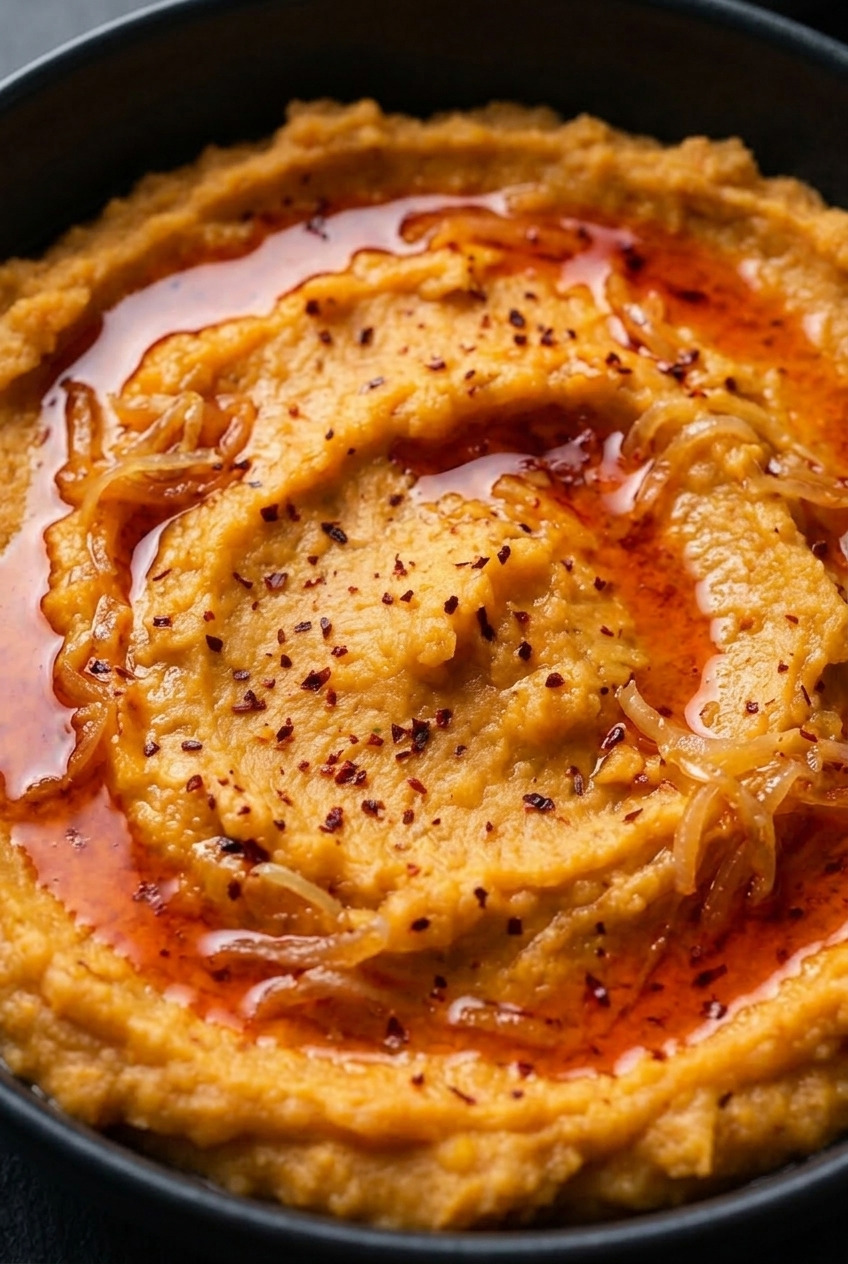
Then a colleague from Ho, in the Volta Region of Ghana, described what her mother made on school mornings.
Sweet potato, boiled in a small amount of water and mashed right in the pot.
Salt. Onion. Pepper.
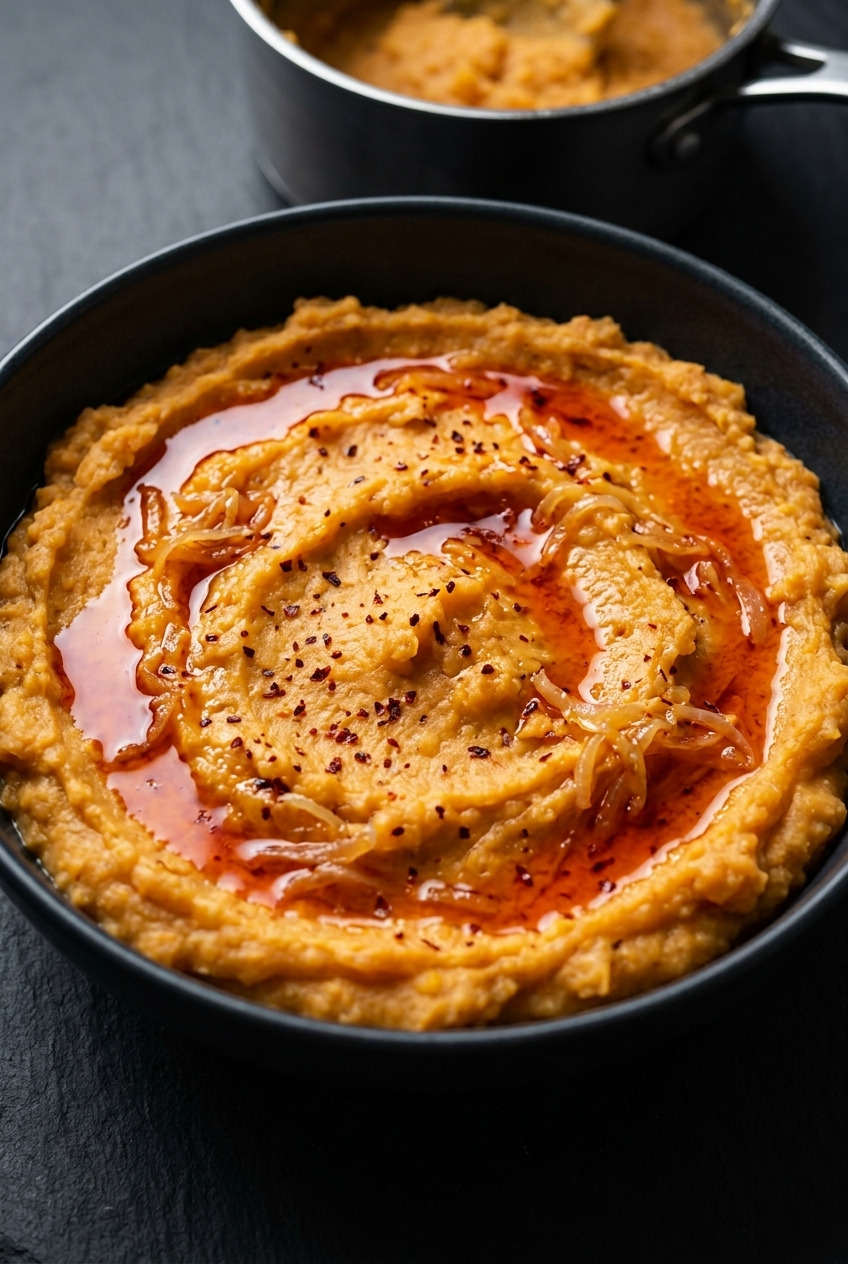
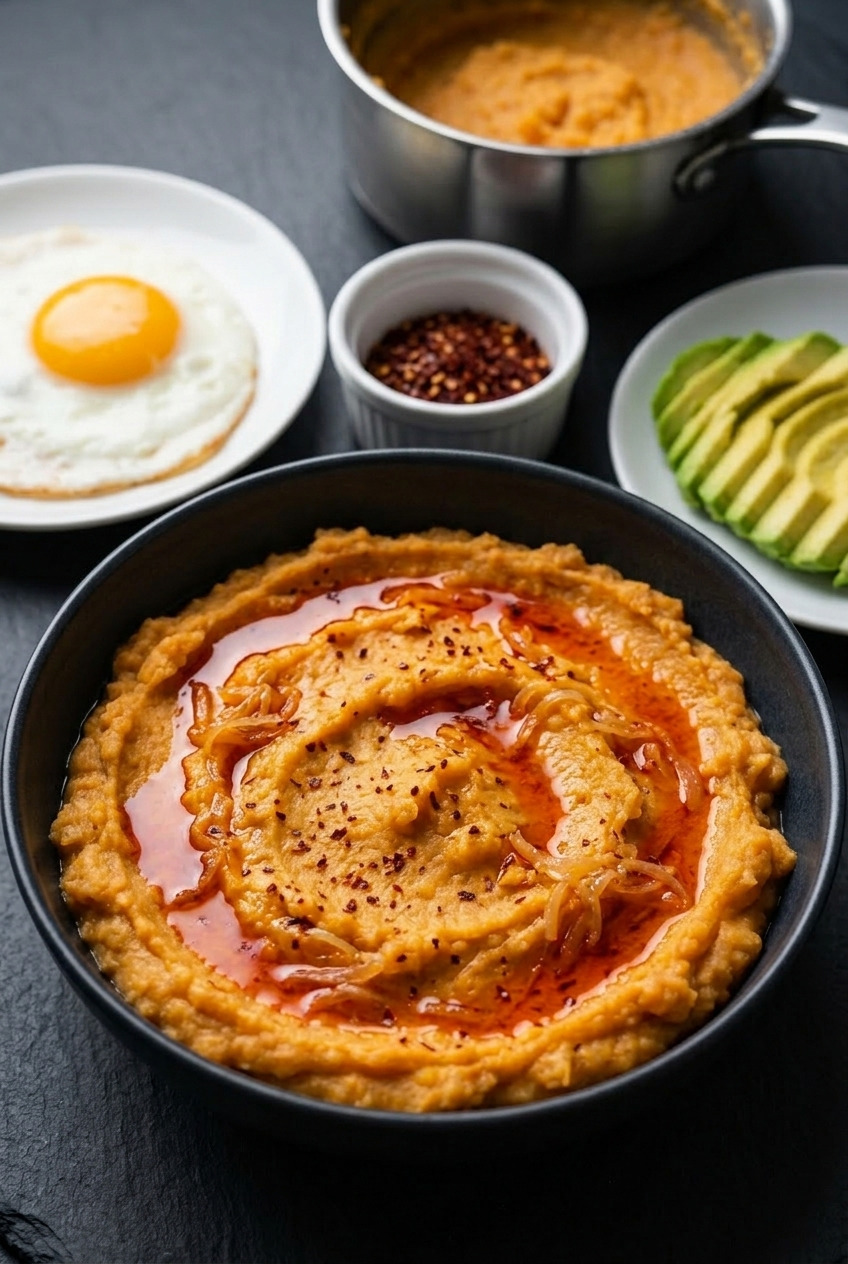
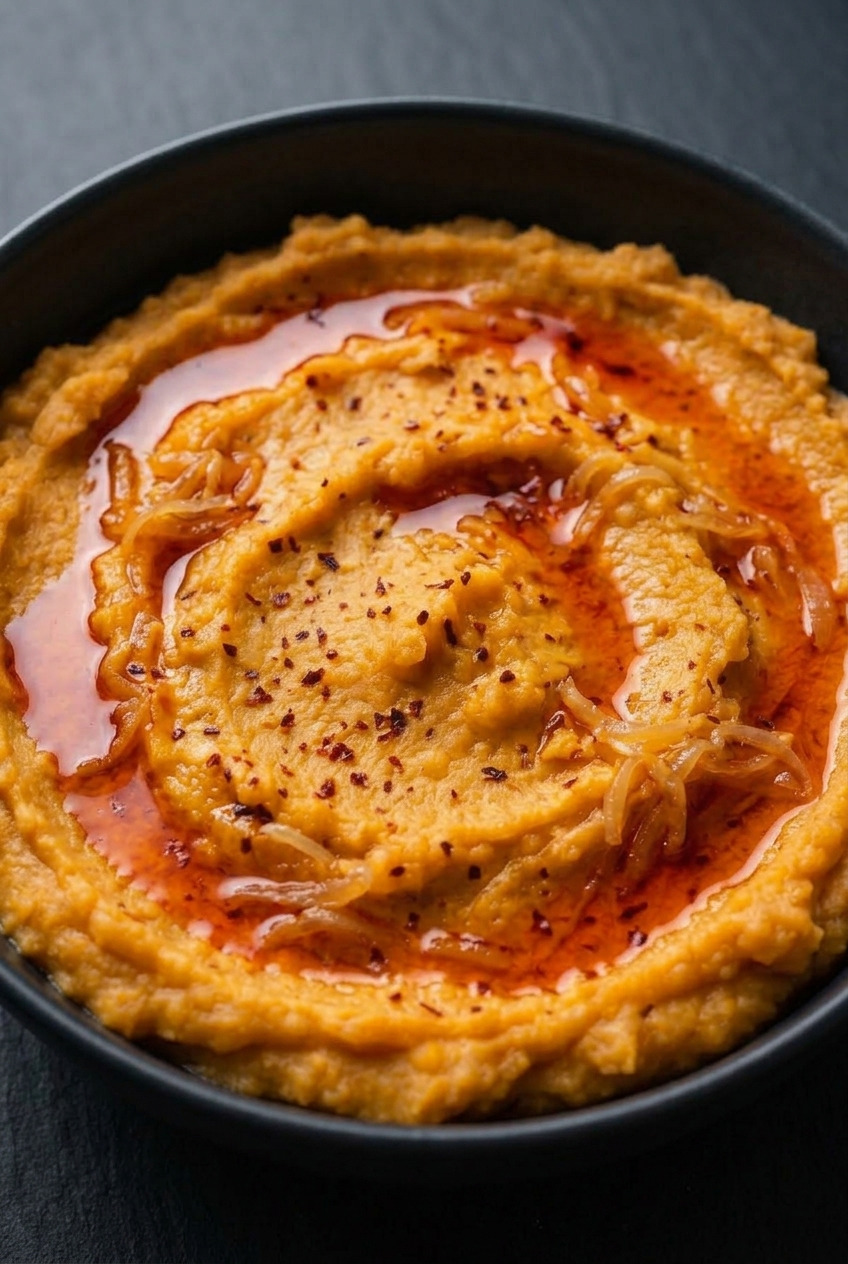
Red palm oil poured over the top so it ran in bright orange streaks.
No sugar anywhere.
She called it nagoti dzogbo, and she was slightly amused that I found the idea so surprising.
I made it the next morning and I've made it most weeks since.
It's an Ewe dish, from southeastern Ghana and across the border into Togo, and it is genuinely fast.
Twenty minutes, start to bowl, most of which is the pot doing its own thing.
The sweet potato is still sweet, obviously, but salt and chili turn that sweetness into something savory rather than dessert.
The palm oil is the entire personality of the dish, and I'll show you how to spice your own.
My wife was skeptical for exactly one bowl.
If you've only ever met sweet potato under marshmallows, this will reset how you think about it!
What Nagoti Dzogbo Is
Nagoti dzogbo is a fast savory breakfast porridge from Eweland, made of sweet potato mashed into its own cooking water and finished with spiced red palm oil. The Ewe are one of the major peoples of southeastern Ghana and southern Togo, and this is weekday food in Ewe kitchens, not a special occasion dish.
It's unsweetened, on purpose.
Sweet potato brings plenty of its own sugar, and the point of the dish is to set salt, onion and chili against that instead of piling more sweetness on top.
It's water based, not milk based.
That's worth saying because most of the sweet potato porridges you'll find online are Caribbean, built on coconut milk with cinnamon, nutmeg and condensed milk. Those are lovely and they are a completely different dish.
Is this the same as mpotompoto? No, and the two get confused constantly. Mpotompoto is a longer simmered Ghanaian pottage where the starch cooks in a seasoned, often fish based liquid with tomato and ginger, and it stays chunky. Nagoti dzogbo is quicker, plainer, and mashed. Think of mpotompoto as a stew and nagoti dzogbo as a mash.
Zomi, the Spiced Palm Oil That Defines It
If you take one thing from this page, take this section. Zomi is red palm oil that's been gently infused with onion, ginger, garlic and chili, then strained. It's a Ghanaian pantry staple and it's the reason this porridge tastes like something rather than like plain mashed sweet potato.
Plain red palm oil works. Zomi is better.
Worth the extra step? Every time.
To make your own zomi, heat 1 cup of red palm oil in a small saucepan over low heat until it liquefies and turns bright orange. Add 1 sliced onion, 4 smashed garlic cloves, a 2 inch piece of sliced ginger and 2 to 3 dried chilies. Keep it at a bare shimmer for 15 minutes, never letting it smoke, then cool and strain into a jar. It keeps for 3 months in the cupboard.
NEVER take palm oil to the smoking point. It scorches fast and burnt palm oil ruins whatever it touches.
Where to find red palm oil: West African, Caribbean and many Latin markets carry it, and it's easy to order online. Look for a deep orange-red oil that's semi solid in the jar.
If you truly can't get any: use 2 tablespoons of neutral oil bloomed with 1 teaspoon of sweet paprika and a pinch of cayenne. It gets you the color and some of the warmth. It does not get you the flavor, and I'd rather be straight with you about that.
Ingredients You'll Need
Five things, and one of them is water. This is a short list because the dish is short by design.
- Sweet potatoes (1 ¼ pounds). Peeled and cut into 1 inch chunks. Orange fleshed is easiest to find in the US and works perfectly. White or pale fleshed sweet potato is closer to what's used in Ghana, drier and less sweet, and if your market has it, grab it.
- Water (¾ cup). Measure it. This is the one number in the recipe that actually matters, because the cooking water becomes the porridge instead of getting poured down the sink.
- Salt (¾ teaspoon). Goes in with the water, not at the end. The sweet potato seasons from the inside out this way.
- Zomi or red palm oil (2 tablespoons). The authentic finish. See the section above for making your own.
- Onion (1 small). Thinly sliced. Half goes into the pot, half gets softened in the oil for the top.
- Chili (½ to 1 teaspoon ground dried, or 1 fresh). Ghanaian cooks would reach for a fresh kpakpo shito or a dried ground pepper. Cayenne or a chopped bird's eye chili both do the job.
- To serve (optional). A fried egg, sliced avocado, or flaked smoked mackerel. Any of the three turns a light breakfast into a substantial one.
How to Make Nagoti Dzogbo
Step 1: Cut and Boil
Put the sweet potato chunks in a small saucepan with the ¾ cup of water, the salt, and half the sliced onion.
Bring it to a boil, then cover and drop to a low simmer.
Cook 12 to 15 minutes, until a piece gives way completely under a fork.
Check at 12 minutes. Overcooked is fine here, but dry is not, so add a splash of water if the pan looks like it's running low.
Step 2: Mash in the Pot
Take the lid off and mash everything directly in the pan with a fork or a wooden spoon.
Mash, don't blend.
A blender turns this into wallpaper paste in about four seconds, and the slight unevenness of a hand mash is part of what makes it good.
The remaining cooking water gets absorbed as you go and pulls the whole thing into a thick, spoonable porridge.
Step 3: Season
Stir in the chili and taste.
Add more salt now if it needs it, and it probably does.
Sweet potato takes more salt than you'd think before it stops tasting like a dessert that wandered into the wrong meal.
Step 4: Finish with the Oil
Warm the zomi in a small pan over low heat with the remaining sliced onion for 2 minutes, just until the onion softens.
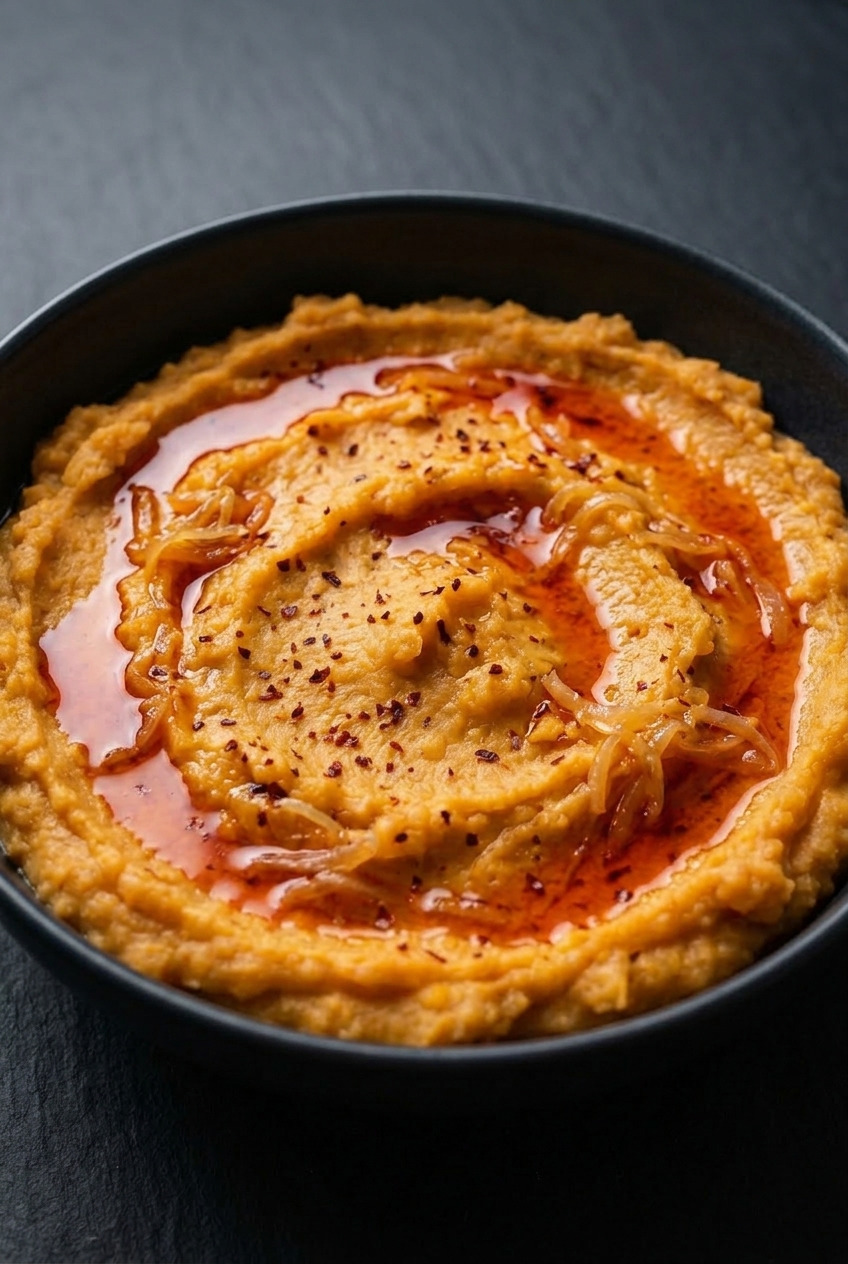
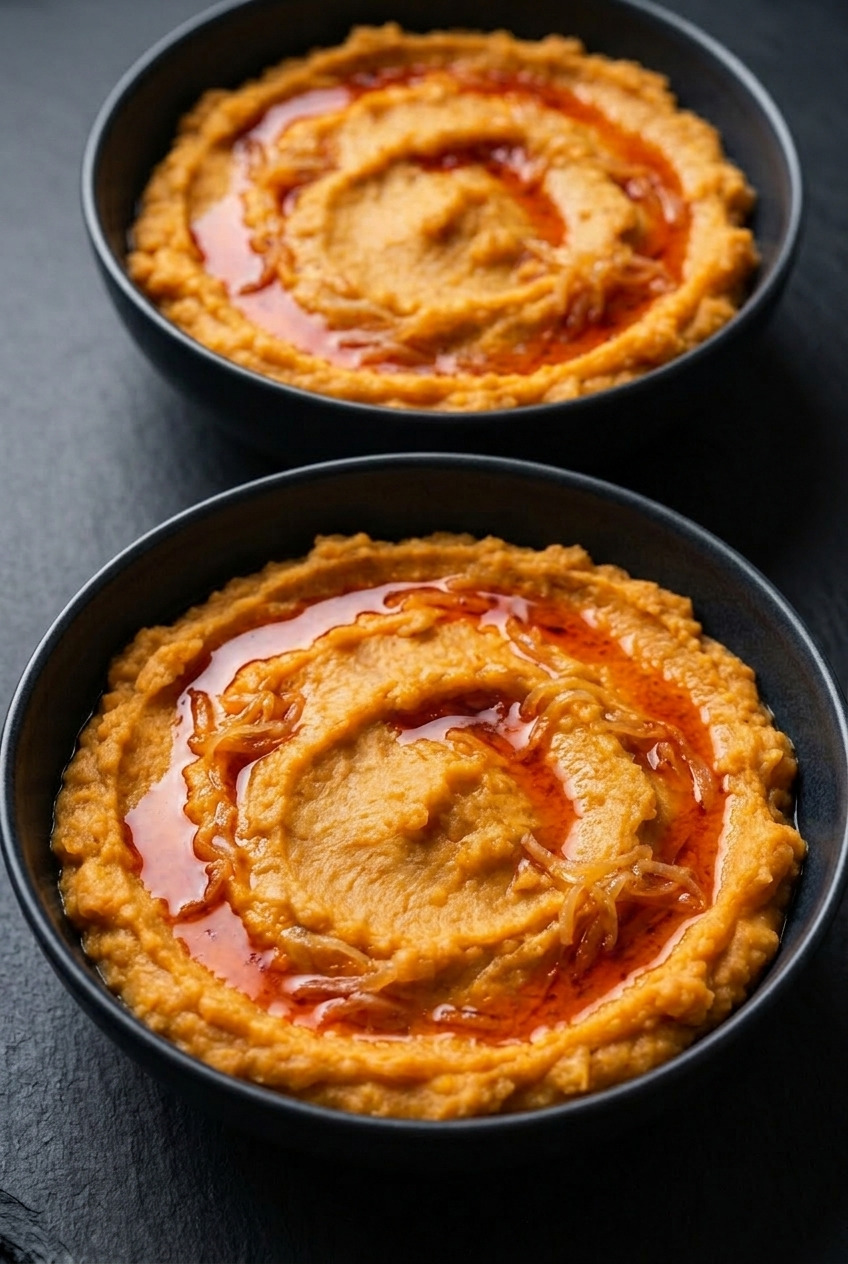
Spoon the porridge into bowls and pour the oil and onion over the top.
Don't stir it all in.
The bright orange streaks running across the surface are how it's served, and each spoonful should hit a different amount of it.
Getting the Texture Right
The target is thick, soft and spoonable, with a bit of unevenness left in it. Not smooth like a puree, not stiff like a mashed potato side dish.
A spoonful should hold its shape briefly and then relax.
Tilt the bowl and it should move slowly rather than slide.
Too thick? Beat in hot water, 1 tablespoon at a time. It loosens fast, so go slowly.
Too loose? Set the uncovered pan back over low heat for 2 or 3 minutes, stirring, and it will tighten right up.
Tips
None of this is difficult, but a few small choices decide whether it's good or forgettable.
- Measure the water. ¾ cup for 1 ¼ pounds. Cover the sweet potato in water like you're boiling potatoes and you'll end up draining away the porridge.
- Salt in the pot, not on the bowl. Salt in the cooking water seasons the whole mash. Salt sprinkled on top just tastes like salt.
- Mash by hand. I've said it twice because I've made the blender mistake once and it was inedible.
- Low heat under the palm oil. It only needs to warm through and soften the onion. Smoking palm oil turns bitter and there's no coming back.
- Cut evenly. 1 inch chunks all around, so everything is done at the same moment.
- Make it the night before? Don't. This one is genuinely better fresh, and it only takes 20 minutes.
Variations and What to Serve It With
The base is plain on purpose, which makes it a great platform.
- With a fried egg. Runny yolk broken over the top. This is how I eat it four times out of five.
- With smoked fish. Flaked smoked mackerel stirred through at the end pushes it toward mpotompoto territory and it's excellent.
- With avocado. Sliced over the top with a little extra salt. The Volta Region grows superb avocados and the pairing is not an invention.
- The fish stock version. Cook the sweet potato in light fish stock instead of water. Deeper and more savory, and closer to a quick mpotompoto.
- With garden eggs. Small West African eggplants, simmered alongside and mashed in. Slightly bitter, very traditional in Ewe cooking.
- Extra greens. A handful of chopped spinach stirred in during the last minute of cooking.
Storage and Reheating
It keeps, but it was built to be eaten immediately.
- Refrigerator. Airtight, up to 3 days. It sets firm and pale once it's cold, which looks alarming and means nothing.
- Reheating. A saucepan over low heat with 2 tablespoons of hot water per serving, stirring until it loosens. The microwave works too, in 30 second bursts with a stir between each.
- Fresh oil on reheat. Add the zomi after warming, never before. Reheated palm oil loses its brightness.
- Freezer. I'd skip it. Mashed sweet potato goes watery on thawing and the payoff isn't worth it for a dish this quick.
A savory breakfast is a habit worth building, and this is a great way to start. Give it a try!
Recipe
Nagoti Dzogbo (Ewe Sweet Potato Breakfast Porridge)
Ingredients
Porridge
- 1 ¼ pounds sweet potatoes peeled, cut into 1 inch chunks
- ¾ cup water plus a splash more if needed
- ¾ teaspoon salt plus more to taste
- 1 small onion thinly sliced, divided
- ½ to 1 teaspoon ground dried chili or 1 fresh chili, finely chopped
To Finish
- 2 tablespoons zomi (spiced red palm oil) or plain red palm oil
- 1 fried egg, sliced avocado, or flaked smoked mackerel optional, to serve
Instructions
Cook and Mash
- Put the sweet potato chunks in a small saucepan with the water, salt and half the sliced onion. Bring to a boil, cover, and reduce to a low simmer.
- Cook 12 to 15 minutes, until the sweet potato gives way completely under a fork. Add a splash of water if the pan runs dry.
- Uncover and mash everything directly in the pan with a fork or wooden spoon until thick and spoonable. Mash by hand, do not use a blender.
- Stir in the chili, taste, and add more salt as needed.
Finish with Zomi
- Warm the zomi in a small pan over low heat with the remaining sliced onion for 2 minutes, until the onion softens. Never let the oil smoke.
- Spoon the porridge into bowls and pour the oil and onion over the top without stirring it in. Serve with a fried egg, avocado or smoked fish if you like.
Notes
- Measure the water: ¾ cup for 1 ¼ pounds of sweet potato. The cooking water becomes the porridge, so it never gets drained.
- Zomi: spiced red palm oil. Infuse 1 cup of red palm oil over low heat with a sliced onion, 4 garlic cloves, 2 inches of ginger and 2 to 3 dried chilies for 15 minutes, then strain. Keeps 3 months.
- Palm oil substitute: 2 tablespoons neutral oil with 1 teaspoon sweet paprika and a pinch of cayenne. Close on color, not on flavor.
- Mash, do not blend: a blender turns this into paste.
- Not mpotompoto: mpotompoto is a longer simmered chunky pottage. This is a quick Ewe mash.
- Storage: fridge up to 3 days. Reheat with 2 tablespoons of hot water per serving and add fresh oil after warming.