Half the tray never makes it to the table.
I pull the pan out, slide the coins onto a board to salt them, and by the time I've turned around to grab a plate there's a gap where the corner of the pan used to be full.
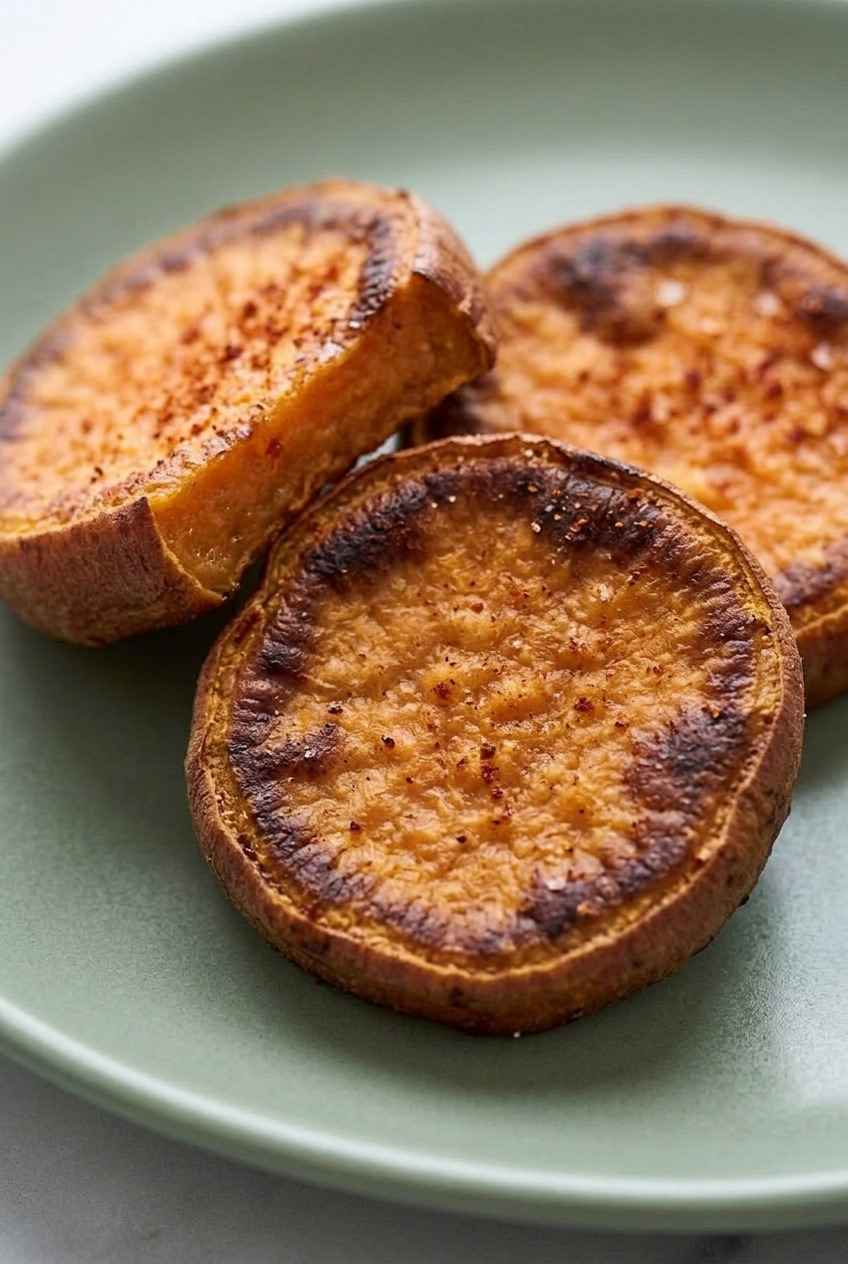
My wife claims she's quality checking.
I've stopped pretending I'm any better.
They're picked at like chips, which is a strange thing for a vegetable side to be.
The reason is geometry.
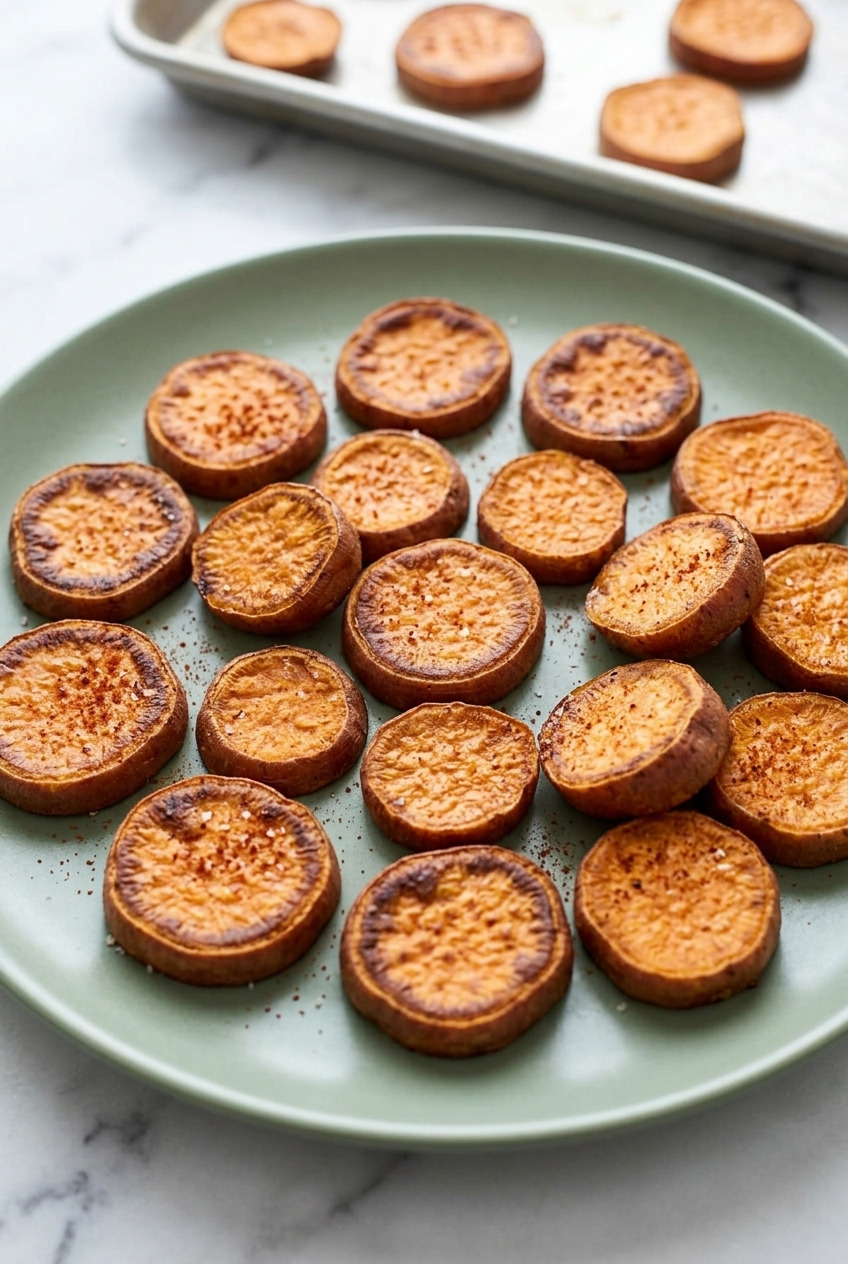
Cut a sweet potato into ¼ inch coins and almost every square inch of that potato ends up as a flat face pressed against hot metal.
Two browned sides per piece, edge to edge, with barely any pale interior left in between.
That's caramelized surface in a proportion you simply cannot get out of a wedge, which keeps a fat soft spine on purpose.
I started making them as a plain side, then realized the flat shape is doing more work than that.
A round is a platform.
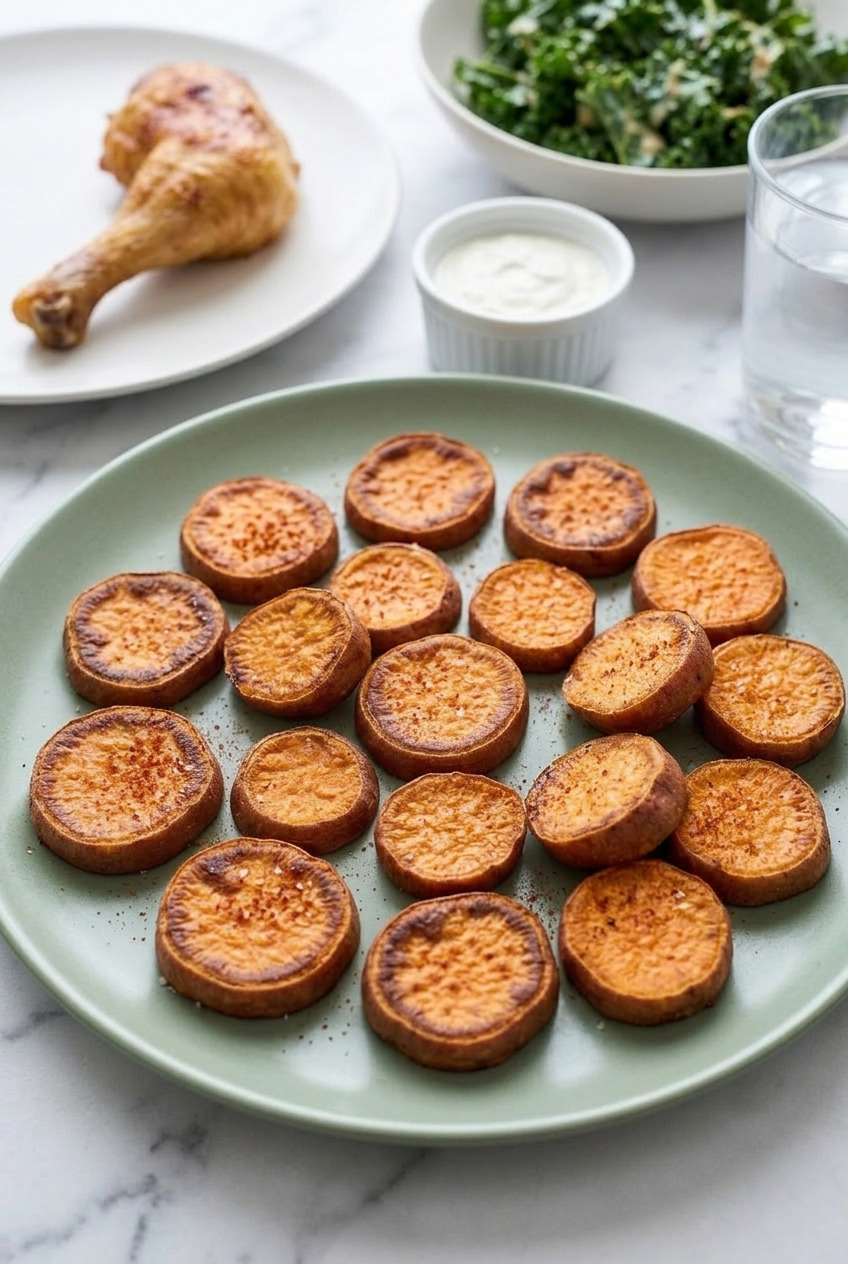
I use them under a fried egg at breakfast, scattered over a kale salad where they replace croutons, and lined up on a board with a bowl of yogurt dip when people come over.
Four ingredients, forty minutes, one sheet pan, and no peeling.
Just don't stand near the pan if you want any to survive.
Why Rounds Beat Every Other Cut Here
Surface area is the whole argument. A round is two flat faces with almost nothing in between, so the ratio of browned exterior to soft interior is about as high as it gets.
Cut the same potato into wedges and you keep a thick creamy spine that never sees the pan.
That's a great thing to want. It's just a different dish.
Rounds also cook evenly in a way no other shape does, because every piece is the same thickness by definition.
No thin stragglers burning while fat ones stay raw.
Choose rounds when: you want caramelized surface in every bite, uniform pieces, or a flat shape to put something on top of.
Choose wedges when: you want a soft, almost custard interior and a side with more heft.
How Thick to Slice Them
Thickness is the recipe. It decides texture more than the temperature does, and it's where most recipes for this quietly disagree with each other.
- ⅛ inch. Too thin. The sugars scorch before the center sets and you get bitter, curled, papery discs. This is chip territory and it needs a different method.
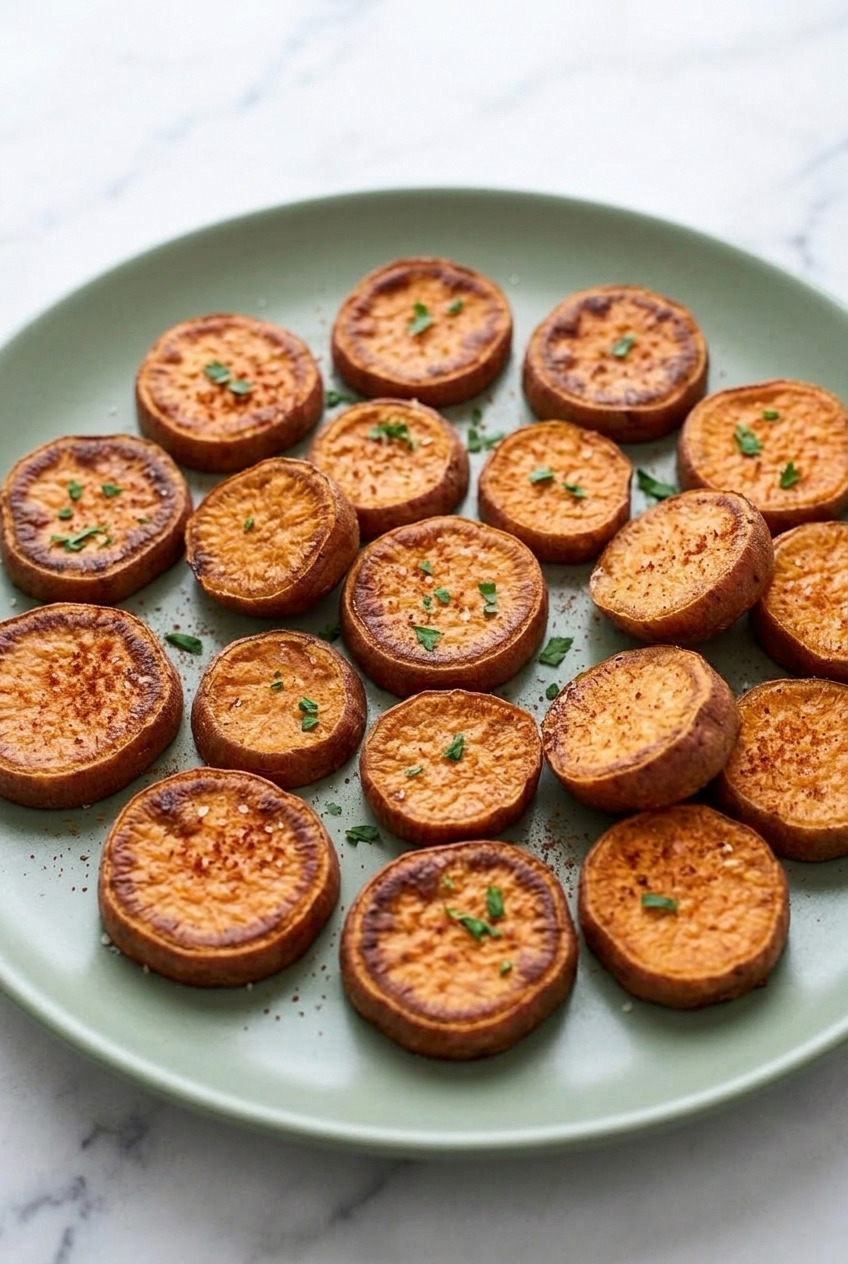
- ¼ inch. The target. Enough body to stay tender in the middle, thin enough that both faces brown deeply in about half an hour.
- ½ inch. Soft and velvety, closer to a little roasted medallion than a crisp coin. Genuinely good, just don't expect much browning. Drop the oven to 400°F and give it an extra ten minutes.
Pro tip: If you're slicing by eye, cut one coin, look at it, and use it as a reference for the rest. A mandoline set to ¼ inch is faster and I use one, but a sharp knife and a little attention gets you there.
Ingredients You'll Need
Four things, and one of them is salt. This is a recipe that lives or dies on technique, not on the shopping list.
- Sweet potatoes (2 pounds, about 3 medium). Look for ones that are evenly cylindrical rather than lumpy, because you want coins that are all roughly the same diameter. Scrub them and leave the skin on.
- Olive oil (2 tablespoons). Enough to coat both faces. More than that and the coins poach in a puddle.
- Kosher salt (1 teaspoon). Half before roasting, half after. Sweet potato takes salt well and needs it to stay savory.
- Black pepper (½ teaspoon). Freshly ground.
- Smoked paprika (1 teaspoon). My default. It pushes the dish firmly savory.
- Fresh thyme (1 teaspoon, optional). Swap it for the paprika when you want the herby, buttery version instead.
- Unsalted butter (3 tablespoons, optional). Melted, in place of the oil. Richer, softer, and it browns fast, so watch it.
Do I peel them? No. The skin on a round is a thin ring, it crisps rather than turning leathery, and it keeps the coin from falling apart when you flip it.
How to Roast Sweet Potato Rounds
Every step below exists to keep water away from the pan. Browning starts once the surface is dry, and not one second before.
Step 1: Slice Even Coins
Scrub the potatoes, trim the ends, and slice crosswise into ¼ inch coins.
Try to keep them consistent. Uniform coins are the reason this recipe cooks evenly.
Step 2: Dry the Faces
Spread the coins on a towel and pat both faces.
Freshly cut sweet potato is wet, and that moisture is the number one reason rounds steam instead of browning.
Step 3: Toss with Oil and Seasoning
In a big bowl, toss the coins with the olive oil until every face has a thin sheen, then add half the salt, the pepper, and the paprika.
Toss again until the color is even.
Step 4: Single Layer, Bare Pan
Heat the oven to 425°F.
Lay the coins flat on an unlined metal sheet pan so none of them overlap, with a little space around each one.
Two pans is better than one crowded pan. NEVER pile them.
Step 5: Roast, Flip Once
Roast 15 minutes, then flip each coin with a thin spatula and roast another 12 to 15 minutes.
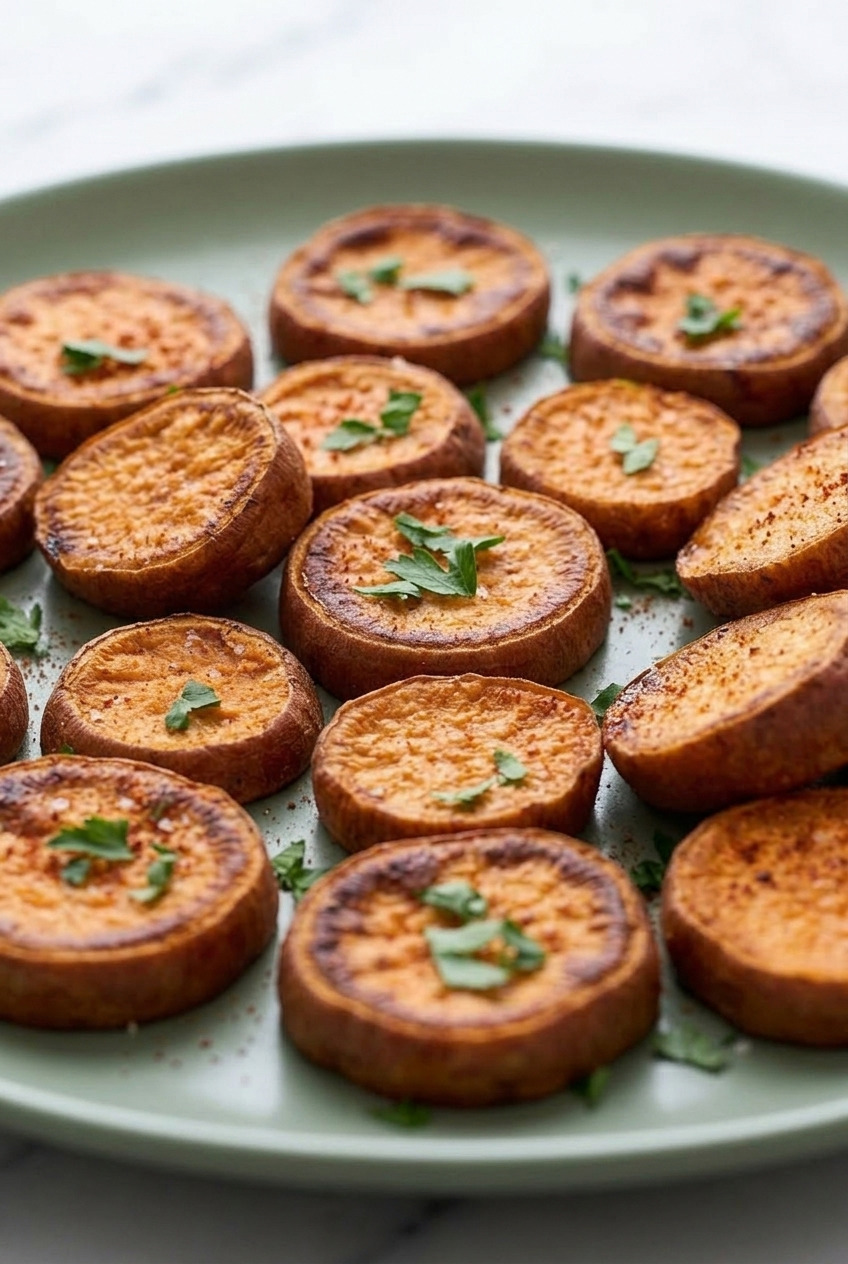
They're ready when the down face has gone deep bronze at the edges and the center of a coin gives easily under a fork.
Salt them the moment they leave the oven, while the surface is still hot enough to hold it.
400 or 425 Degrees
425 for quarter inch coins, 400 for anything thicker. That's the short answer and it's about timing the two things that have to happen at once.
The exterior has to brown and the interior has to go tender, and you want them to arrive together.
At 425°F a thin coin browns in roughly the same time it takes the middle to soften, so you get color and tenderness in one pass.
At 400°F a thin coin softens through well before the face has taken on any real color, and you end up with pale, floppy discs.
Flip it around for ½ inch slices. At 425 the outside darkens too fast, so drop to 400 and give them the extra time.
Above 450 the natural sugars start to scorch and turn bitter. There's no upside up there.
Why They Steam Instead of Browning
If your rounds came out pale and floppy, it's one of these five.
- A crowded pan. Each coin gives off steam. Coins that touch trap it, and trapped steam holds the surface at boiling temperature, which is far too cool to brown.
- Wet slices. Straight from the cutting board to the bowl with no towel. The first ten minutes get spent evaporating instead of browning.
- Parchment or foil. Both put a layer between the coin and the hot metal. The down face is where most of your browning comes from, so don't insulate it.
- Uneven thickness. Thin coins burn, thick ones stay raw, and you pull the pan early to save the thin ones.
- Flipping too soon. A coin that hasn't released from the pan isn't done browning. If it sticks, give it two more minutes and it will lift cleanly.
Seasoning Variations
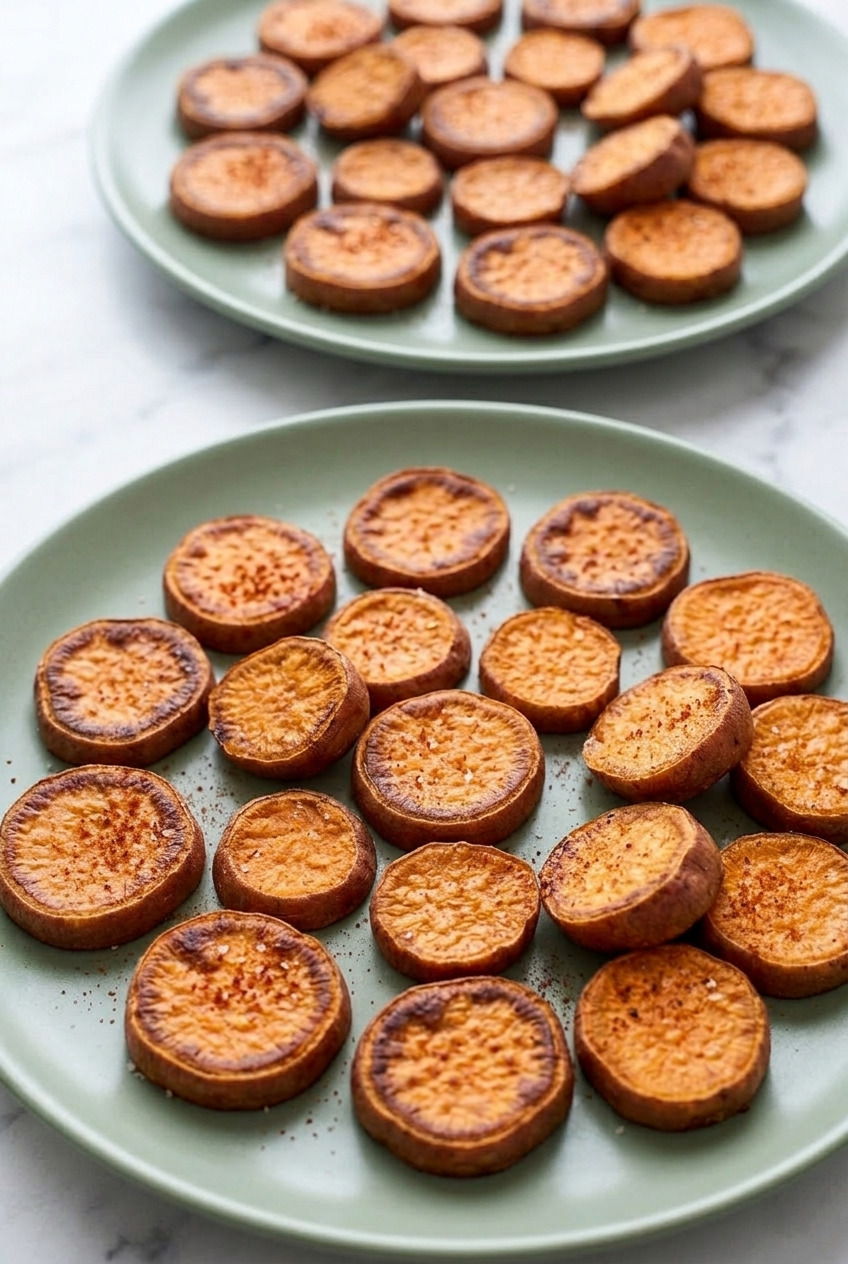
- Garlic herb. 1 teaspoon garlic powder with the paprika, and a shower of chopped parsley at the end.
- Chili lime. 1 teaspoon chili powder in place of the paprika, and a squeeze of lime over the hot coins.
- Thyme butter. Melted butter instead of oil with 1 teaspoon of fresh thyme leaves. Softer, richer, and the version I make when it's going next to a roast.
- Curry. 2 teaspoons of curry powder and a pinch of cayenne, finished with cilantro.
- Cumin and coriander. Half a teaspoon of each, which is my pick when the rounds are going into a grain bowl.
Ways to Use Them
The flat face is an invitation. This is where rounds earn their keep over any other cut.
- Salad topping. Warm coins over kale or arugula, where they do the job croutons usually do.
- Under a fried egg. Two or three coins on a plate, an egg on top, hot sauce. My standing weekend breakfast.
- Grain bowls. Quinoa, greens, rounds, and a lemon tahini drizzle.
- A snack board. Pile them next to a bowl of garlicky yogurt and let people pick.
- A plain side. Roast chicken, pork chops, salmon. Anything that wants something sweet and savory next to it.
Meal Prep and Storage
- Slice ahead. Coins hold in cold water in the fridge for 24 hours. Dry them well before they hit the oil.
- Refrigerated. Roasted rounds keep 4 days in an airtight container. They soften in the fridge, which is expected.
- Reheating. On a wire rack set over a sheet pan at 425°F for 6 to 8 minutes. The rack lets air reach both faces and the coins crisp up again.
- Cold. Honestly good straight from the container, chopped into a salad.
- Freezing. Skip it. They thaw watery and limp.
Are Roasted Sweet Potatoes Healthy
They're a vegetable roasted in a little olive oil, so yes, in the ordinary sense.
Sweet potatoes bring a lot of beta carotene, some fiber, potassium, and vitamin C, and leaving the skin on keeps more of the fiber.
Two tablespoons of oil across two pounds works out to very little per serving.
I'm not going to make bigger claims than that.
They taste good and they're a vegetable, which is enough of a reason to put them on a sheet pan.
Recipe
Roasted Sweet Potato Rounds
Ingredients
For the Rounds
- 2 pounds sweet potatoes about 3 medium, scrubbed, skin on
- 2 tablespoons olive oil or 3 tablespoons melted unsalted butter
- 1 teaspoon kosher salt divided
- ½ teaspoon black pepper freshly ground
- 1 teaspoon smoked paprika or 1 teaspoon fresh thyme leaves
Optional
- ½ teaspoon garlic powder
- 2 tablespoons fresh parsley chopped
Instructions
Slice and Season
- Heat the oven to 425 degrees F.
- Scrub the sweet potatoes, trim the ends, and slice crosswise into even ¼ inch coins.
- Spread the coins on a towel and pat both faces dry.
- Toss the coins in a large bowl with the olive oil until every face has a thin sheen, then add half the salt, the pepper, the smoked paprika, and the garlic powder if using, and toss until evenly colored.
Roast
- Lay the coins flat on an unlined metal sheet pan in a single layer with a little space around each one. Use two pans rather than crowding one.
- Roast 15 minutes, then flip each coin with a thin spatula.
- Roast another 12 to 15 minutes, until the faces are deep bronze at the edges and a fork slips easily into the center of a coin.
- Salt with the remaining half teaspoon straight out of the oven, scatter over the parsley if using, and serve hot.
Notes
- Thickness rules everything: ¼ inch is the target. ⅛ inch scorches, and ½ inch turns soft and velvety with little browning, so drop the oven to 400 degrees F and add 10 minutes for thicker slices.
- 425 for thin coins: At 400 degrees F a quarter inch coin softens through before the face takes on color.
- Dry both faces: Freshly cut sweet potato is wet, and wet surfaces steam instead of browning.
- No parchment: A bare metal pan is where the browning comes from.
- If a coin sticks when you flip it, give it two more minutes. It releases on its own once the face has browned.
- Storage: 4 days refrigerated. Reheat on a wire rack at 425 degrees F for 6 to 8 minutes.