Last October I made a bowl of savory sweet potato mash for a Sunday roast and watched almost nobody touch it.
It wasn't bad.
It was correct, and correct is a terrible thing for a side dish to be.
The bowl came back to the kitchen still three quarters full while the potatoes with a crust on them were scraped clean.
I'd taken the brown sugar out and put absolutely nothing in its place.
That's the trap with going savory here.
You strip out the sugar, congratulate yourself for being an adult about vegetables, and end up with a plainer version of the sweet one.
What fixed it was a head of garlic and a small pan of oil.
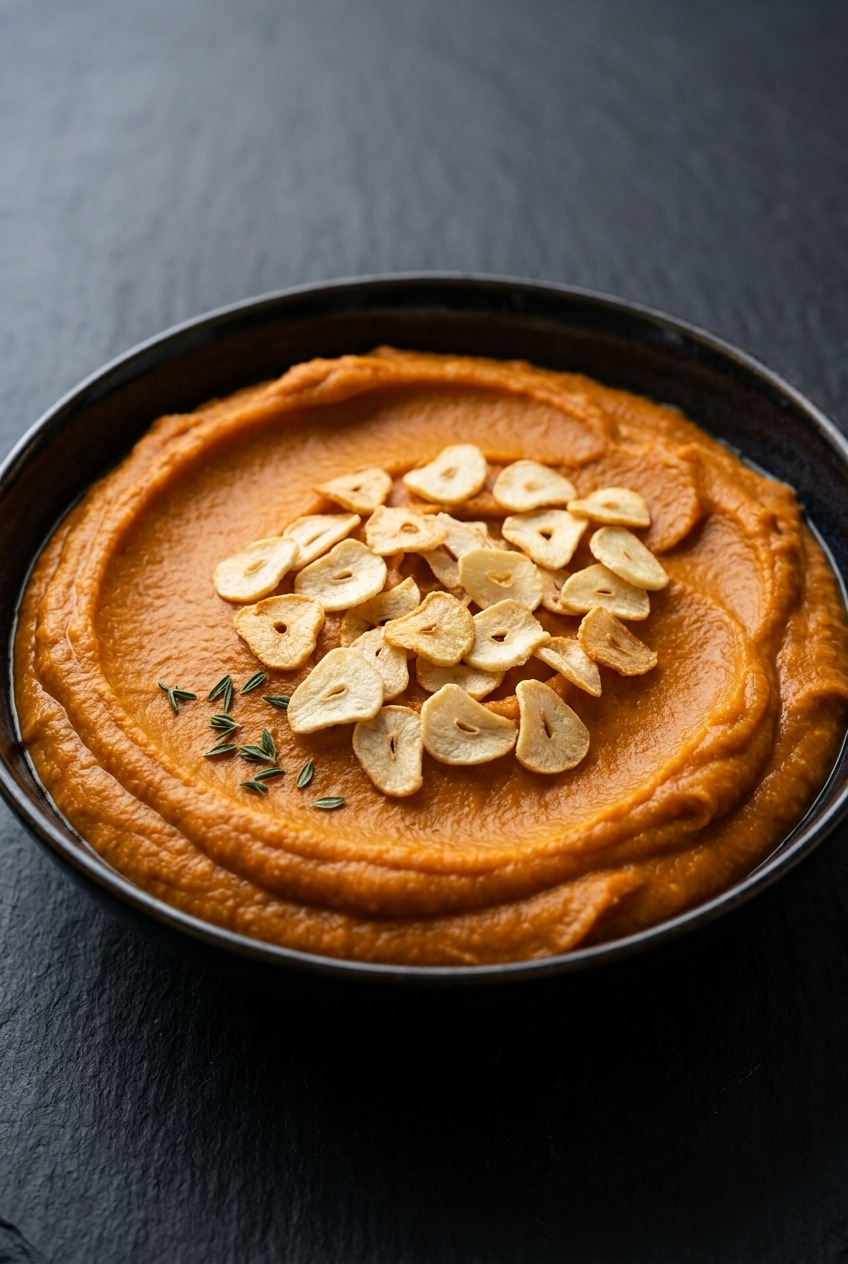
Sliced thin and fried slow, garlic turns into pale gold chips that shatter, and it leaves behind a pan of oil that tastes like the best part of a roast dinner.
So you get two things from one head.
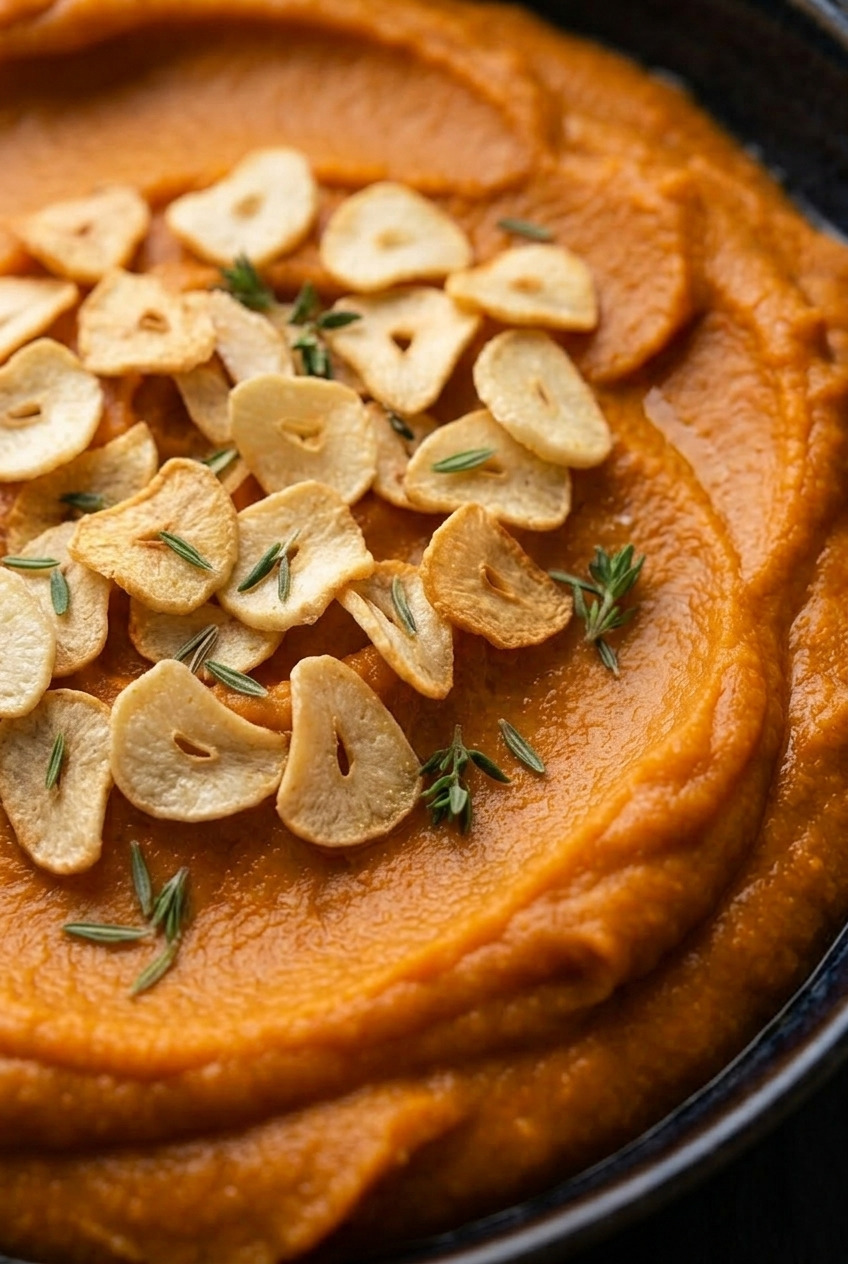
Crunch on top, and a deep toasted garlic flavor beaten right into the puree.
I make these at least twice a month now, usually next to pork chops or a roast chicken.
My wife eats the chips off the top before the bowl reaches the table, every single time.
Nobody has ever asked me where the marshmallows went.
Why This Is a Dinner Side, Not a Dessert
Sweet potatoes are already sweet, so the job here isn't to add sweetness. It's to build against it.
Salt, black pepper, real butter, and toasted garlic all push the other direction, and what you get is a puree that belongs next to meat instead of next to pie.
There are two camps on this vegetable and both of them are legitimate.
- The casserole camp. Brown sugar, marshmallows, sometimes a pecan streusel. It's a holiday dish and it's delicious, but it's dessert wearing a side dish costume and everybody knows it.
- The savory camp. No sugar at all. Salt, fat, alliums, herbs. This is what you want on a Tuesday, and honestly what I want on Thanksgiving too.
This recipe is firmly in the second camp.
Here's what it sits next to: roast chicken thighs, thick pork chops with a pan sauce, a seared ribeye, braised short ribs, a holiday turkey.
Anything with salt and browned edges.
Sound too plain? It isn't, because the garlic does the heavy work that sugar was doing before.
Ingredients You Need
Two short lists, and the second one has three items on it. That's not me cutting corners, that's the whole point of the technique.
For the Whipped Sweet Potatoes
- Sweet potatoes (3 pounds). Peeled and cut into 1 inch cubes. Uniform size matters more than the exact weight, because mixed sizes mean some cubes are falling apart while others are still firm.
- Kosher salt (2 teaspoons for the water, plus more later). Salt the cooking water like pasta water. An undersalted sweet potato puree tastes like dessert by default, and you cannot fix that at the end with a pinch.
- Unsalted butter (4 tablespoons), cubed. Cold and cubed so it goes in gradually. Unsalted, because you're already controlling the salt yourself.
- Heavy cream (½ cup), warmed. This is the ingredient that earns the word whipped. Cold cream seizes the butter and drops the temperature of the whole bowl.
- Sour cream (¼ cup), optional. Tang is a real lever here. A quarter cup makes the whole bowl taste sharper and more savory without changing the texture. I use it about half the time.
- Black pepper (1 teaspoon), freshly ground. A full teaspoon sounds like a lot. It isn't, and it's one of the things that pushes this out of dessert territory.
- Fresh thyme (1 tablespoon), leaves picked. Woody herbs beat soft ones against sweet potato. Rosemary works too if you chop it finer than you think you need to.
- Reserved garlic oil (2 tablespoons). From the chips. You're getting it for free, and it's the ingredient that ties the top of the dish to the bottom.
For the Crispy Garlic Chips
- Garlic (1 whole head, about 10 to 12 cloves). Peeled and sliced paper thin. Buy a firm head with tight skins, because sprouted cloves go bitter fast in hot oil.
- Neutral oil (½ cup). Grapeseed, canola, or a light vegetable oil. Not olive oil, which has a lower smoke point and its own flavor that competes.
- Fine salt, a pinch. It goes on the chips the second they leave the oil, while they're still damp enough to hold it.
What I deliberately left out: garlic powder. Plenty of savory sweet potato recipes lean on it, but once you've fried actual garlic properly, powder is a crutch and it muddies the color of the puree.
How to Make Crispy Garlic Chips
Make the chips first, before you touch the potatoes. They need to drain and cool, and you need that oil for the puree.
Slice Them Thin and Even
Peel the cloves and slice them as thin as you can hold them, ideally around 1/16 inch.
A sharp knife works fine and takes about five minutes for a whole head.
A mandoline with the guard on is faster if you own one.
Even thickness is the thing that matters. A thick slice next to a thin one means one is still soft when the other has gone bitter.
Start Them in COLD Oil
Put the slices and the ½ cup of oil in a small saucepan together, before any heat.
Then bring it up over medium-low heat.
This is the whole trick.
Garlic dropped into already hot oil scorches on the outside before the inside has dried out, which is exactly why home cooks end up with bitter black flecks instead of chips.
Starting cold lets the moisture leave slowly and the sugars toast evenly.
Pull Them Early at Pale Gold
You'll get lazy bubbling for 6 to 8 minutes, then the bubbles get smaller and quieter as the water cooks off.
Watch for the color to move from white to pale straw gold, and take them out right then.
Fair warning: they keep cooking after they leave the pan. If you wait for the color you actually want, you've already gone too far.
Lift them out with a slotted spoon onto a paper towel and salt them immediately.
Spread them in a single layer and leave them uncovered.
They go crisp as they cool, in about two minutes.
Save the Oil
Strain what's left in the pan and set it aside.
That golden oil is now an ingredient, and 2 tablespoons of it goes into the puree.
Whatever's left keeps in a jar in the fridge for a week and makes any vegetable you roast in it better.
How to Make Savory Whipped Sweet Potatoes
The potatoes take about thirty minutes and most of that is unattended. Get the water on while the garlic is still frying.
Boil and Dry the Sweet Potatoes
Put the cubes in a large pot, cover with cold water by an inch, and add the 2 teaspoons of kosher salt.
Bring to a boil, then simmer 15 to 20 minutes, until a knife slides through a cube with no resistance at all.
Drain them well, then put the empty cubes back in the dry hot pot over low heat for 1 minute, shaking once or twice.
You'll see steam come off them.
That minute is not optional. Wet potatoes make a loose, watery puree, and it's the number one reason a whip comes out sad.
Whip Them, and the Tool That Matters
Here is the part almost nobody tells you.
You've been warned your whole cooking life never to put potatoes in a food processor, and for russets that warning is completely correct, because the blade ruptures their starch granules and you get wallpaper paste.
Sweet potatoes do not behave that way. Their starch is different, and the machine that destroys a russet is exactly the tool that gets sweet potatoes silky.
- Food processor. The smoothest result, about 30 seconds. This is what makes it whipped rather than mashed.
- Potato ricer. Nearly as smooth, no risk at all, more arm work. My pick when I'm already washing enough dishes.
- Hand masher. Perfectly good, but you'll get a mash with texture in it, not a whip. Nothing wrong with that, just call it what it is.
Butter, Cream, and Garlic Oil
Warm the ½ cup of heavy cream in the microwave or a small pan until it's hot to the touch, not boiling.
Add the 4 tablespoons of butter to the hot potatoes first and let it melt in.
Then the warm cream, in two additions, so you can stop when the texture is right.
Then the 2 tablespoons of garlic oil, the sour cream if you're using it, the 1 teaspoon of black pepper, and the thyme.
Season twice. Once before the cream goes in and once after, tasting both times. Sweet potatoes absorb salt strangely and a bowl that tasted right at the halfway point almost never tastes right at the end.
Top and Serve
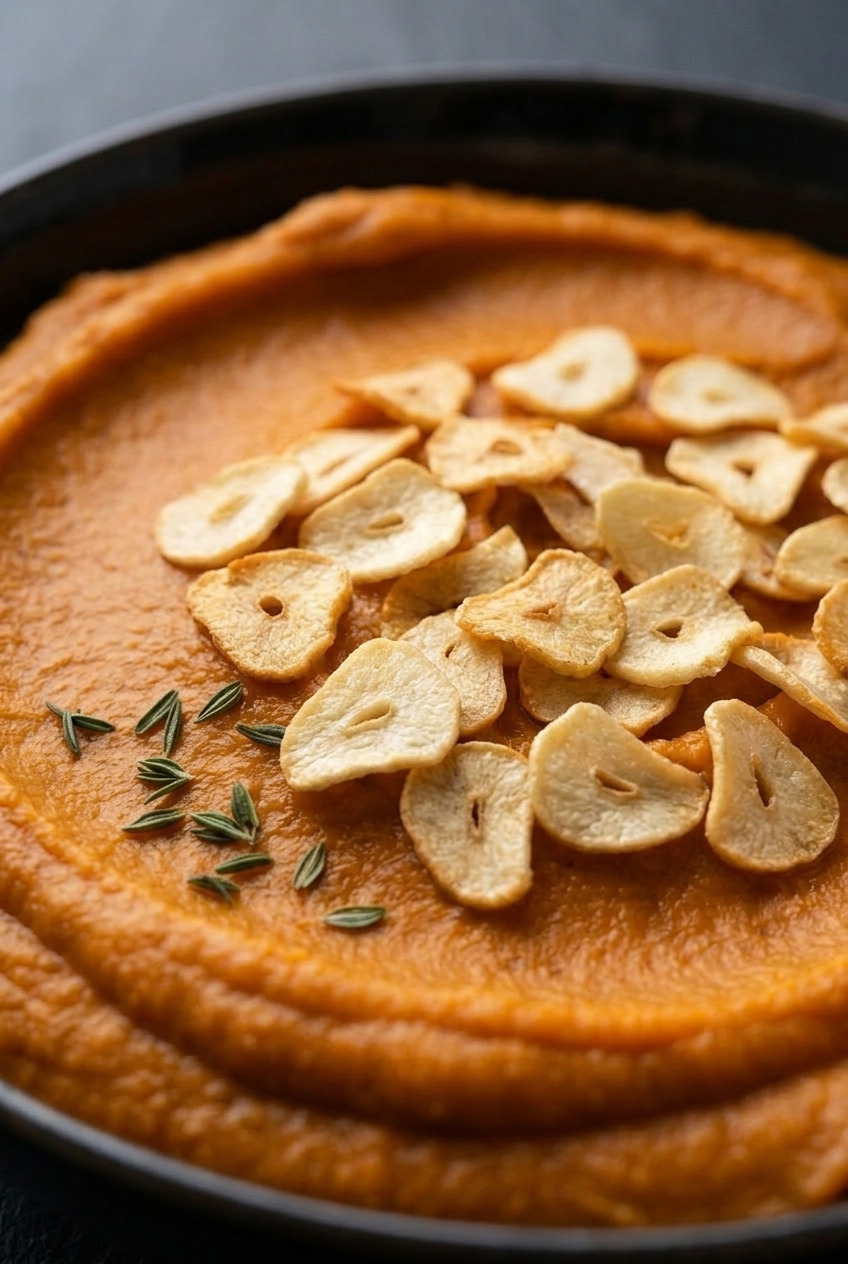
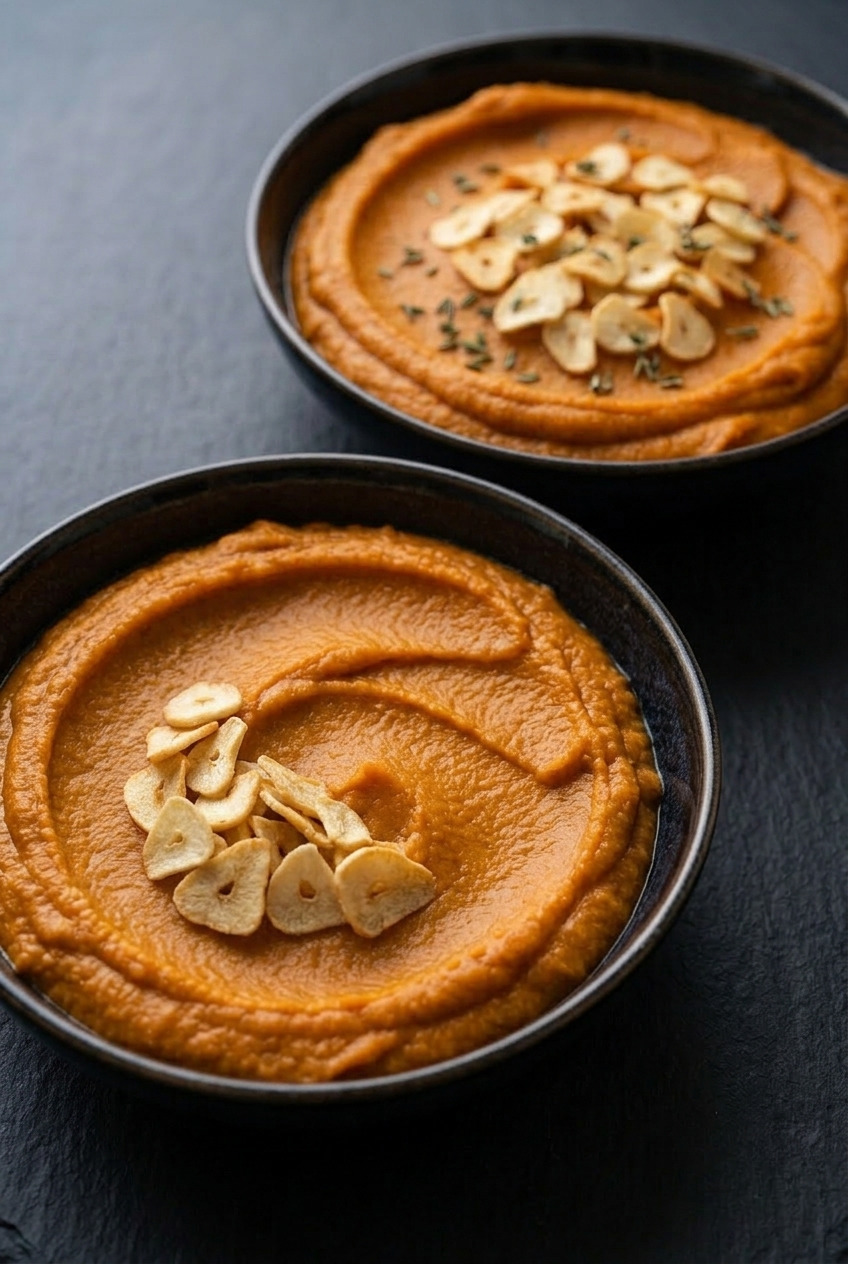
Scrape the puree into a warm serving bowl and smooth the top.
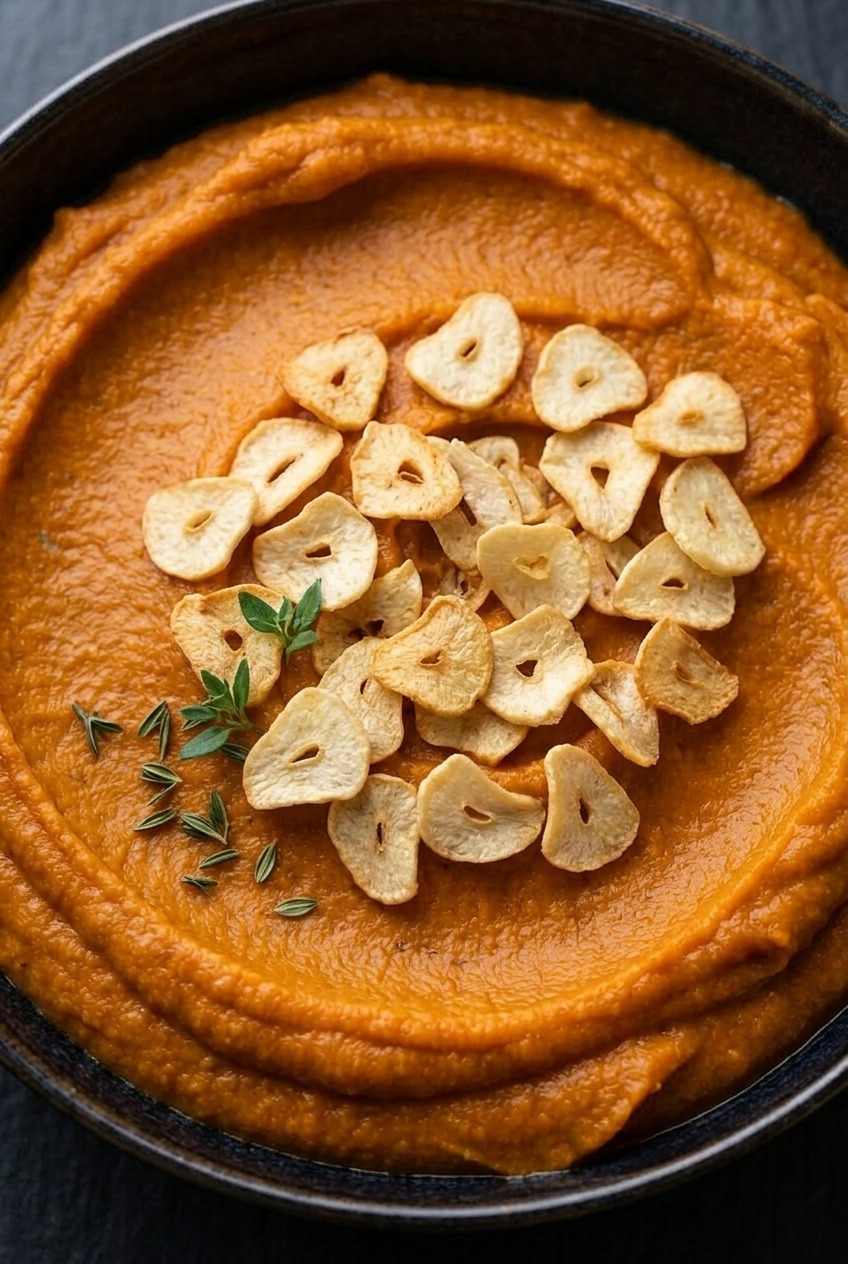
Add the garlic chips in an even layer across the surface, right before it goes to the table.
Not a minute earlier.
Steam is the enemy of a fried chip, and a hot puree makes a lot of it.
Cooking Tips and Troubleshooting
Almost every problem with this dish is one of six things. Here they are with the fix attached.
- My garlic chips won't get crisp. The oil never got hot enough, or you crowded the pan. Garlic needs the water driven out of it before it can crisp, and a pan packed with slices traps that steam. Use a small pan with a real depth of oil and give the slices room to move.
- My garlic went bitter. You went past gold. Garlic runs from pale straw to bitter brown in roughly 15 seconds and then keeps darkening on the towel. Pull it a shade lighter than looks right.
- Do I need to soak anything first? No. Soaking is a rule for potato chips and fries, where you're rinsing off surface starch. Garlic has almost no starch to rinse, and wet garlic in hot oil spits at you.
- My puree is too loose. Either the potatoes weren't dried in the pot or too much cream went in at once. Put it back over low heat and stir for 3 to 4 minutes to drive some moisture off. It will tighten.
- My puree is too stiff. More warm cream, a tablespoon at a time. Warm, not cold, or the butter seizes into little flecks.
- It tastes flat, or it tastes too sweet. Same problem, and the answer is salt before it's anything else. Add salt in small amounts until the sweetness stops leading. If it's still cloying after that, the sour cream is your fix.
Pro tip: if you have a food processor and you're worried, blitz a small spoonful first and look at it. Thirty seconds will tell you more than any warning I can write.
What to Serve With Whipped Sweet Potatoes
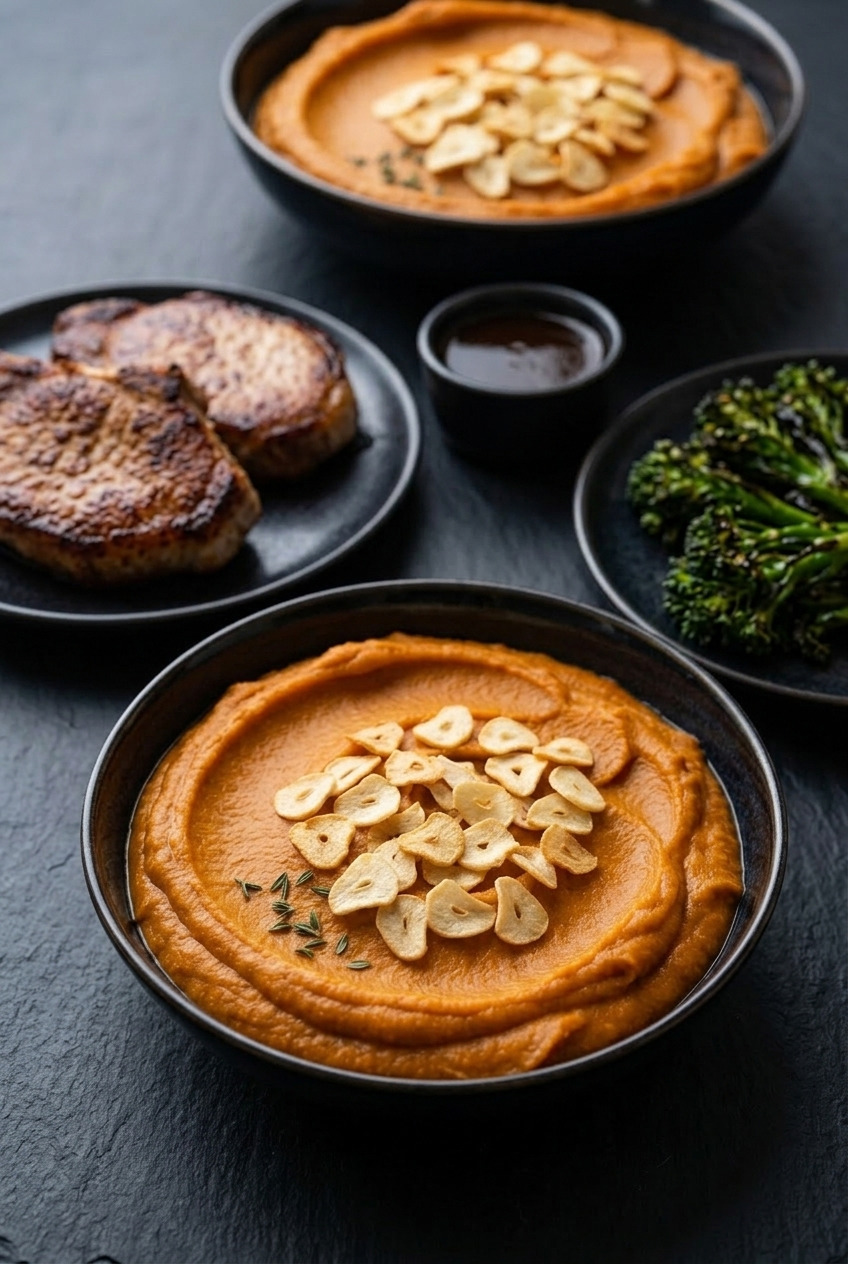
This is a rich side, so it wants something with salt and browned edges next to it. It pairs perfectly with almost anything that came out of a hot pan.
- Weeknight. Roast chicken thighs, thick cut pork chops with a mustard pan sauce, seared sausages, a simple steak.
- Sunday. Braised short ribs, a pork shoulder, roast chicken with the skin properly crisped.
- Holiday. Turkey and gravy, glazed ham, a standing rib roast. It does the job the sweet casserole usually does, without competing with dessert.
- On the side of the side. Something green and slightly bitter. Charred broccolini, sauteed kale, a sharp dressed salad.
What to avoid: another sweet thing on the same plate. Glazed carrots and honey roasted parsnips next to this is one note played three times.
Make Ahead, Storage, and Reheating
The puree makes ahead beautifully and the chips absolutely do not. Treat them as two different foods, because they are.
- The puree, made ahead. Up to 2 days in the fridge in a covered container. Reheat over low heat with a splash of cream, stirring, or covered in a 325°F oven for 25 minutes.
- The puree, frozen. Up to 3 months. It comes back slightly looser, so hold back some of the cream when you make it and add it on the reheat.
- The garlic chips. Same day only, and honestly same hour. They soften as they sit. Fry them in the last ten minutes before you eat, every time.
- The garlic oil. A sealed jar in the fridge for 1 week. Use it on roast vegetables, eggs, or toast.
- Never microwave the puree on high. It weeps and separates, and you get a watery ring around the edge of the bowl.
Holiday timing, since that's when most people make this: the puree goes in a covered dish in a 250°F oven and holds happily for an hour while everything else fights over the good rack.
Variations
- More tang. Swap the sour cream for creme fraiche, or use a full ⅓ cup. Sharper, richer, and it takes the dish further from dessert.
- Brown the butter. Cook it until the milk solids go nutty before it goes in. Two extra minutes for a noticeably deeper bowl.
- Piney herbs. Rosemary and thyme together instead of thyme alone. Chop the rosemary finer than feels necessary.
- A little heat. A pinch of cayenne or a teaspoon of Aleppo pepper stirred through. Against all that sweetness, heat reads as savory.
- Green onion and chives. Scattered over with the chips for a fresher, oniony top.
- Smoked paprika. Half a teaspoon in the puree if you're serving it with pork.
Give it a try, and fry the whole head of garlic even if it looks like too much. It never is.
Recipe
Savory Whipped Sweet Potatoes With Crispy Garlic Chips
Ingredients
For the Crispy Garlic Chips
- 1 head garlic about 10 to 12 cloves, peeled and sliced paper thin
- ½ cup neutral oil grapeseed or canola
- 1 pinch fine salt for the drained chips
For the Whipped Sweet Potatoes
- 3 lb sweet potatoes peeled and cut into 1 inch cubes
- 2 teaspoon kosher salt for the cooking water, plus more to taste
- 4 tablespoon unsalted butter cubed
- ½ cup heavy cream warmed
- ¼ cup sour cream optional
- 1 teaspoon black pepper freshly ground
- 1 tablespoon fresh thyme leaves
- 2 tablespoon reserved garlic oil from frying the chips
Instructions
Fry the Garlic Chips
- Peel the garlic and slice it paper thin, about 1/16 inch, keeping the slices as even as you can.
- Put the slices and the oil in a small saucepan together while the pan is still cold, then set it over medium-low heat.
- Fry for 6 to 8 minutes. The bubbling will slow and quiet as the moisture cooks off. Remove the slices with a slotted spoon the moment they turn pale straw gold, before they look as dark as you want them, because they keep cooking off the heat.
- Spread the chips in a single layer on paper towel, salt them right away, and leave them uncovered for 2 minutes to crisp.
- Strain the oil and reserve it. You need 2 tablespoons for the puree.
Boil and Dry the Sweet Potatoes
- Put the sweet potato cubes in a large pot, cover with cold water by 1 inch, and add the 2 teaspoons of kosher salt.
- Bring to a boil, then simmer 15 to 20 minutes, until a knife slides through a cube with no resistance.
- Drain well, return the cubes to the dry hot pot over low heat for 1 minute, and shake the pot once or twice to steam off the surface water. Do not skip this.
Whip and Finish
- Whip the hot dried potatoes in a food processor for about 30 seconds, or pass them through a ricer, until completely smooth. Sweet potatoes do not turn gluey in a processor the way regular potatoes do.
- Warm the heavy cream until hot to the touch but not boiling.
- Beat the butter into the hot puree first, then the warm cream in two additions, stopping when the texture is right.
- Stir in the 2 tablespoons of reserved garlic oil, the sour cream if using, the black pepper, and the thyme. Taste and salt, then taste and salt again.
- Scrape into a warm serving bowl, smooth the top, and add the garlic chips in an even layer just before serving.
Notes
- Cold oil start: Garlic dropped into hot oil scorches outside before it dries inside. Starting cold is the difference between chips and bitter flecks.
- Pull the garlic early: It runs from pale gold to bitter in about 15 seconds and carries on browning on the towel.
- Dry the potatoes: One minute in the dry hot pot is what keeps the puree from going watery.
- Warm the cream: Cold cream seizes the butter into flecks and drops the temperature of the bowl.
- Chips at the last second: Steam from the hot puree softens them within minutes. Fry them right before you eat.
- Salt twice: Sweet potatoes absorb salt oddly. Season before the cream and again after.