Candied sweet potatoes, where I grew up, meant a casserole dish and a bag of marshmallows.
Then a friend took me to a Northeastern Chinese restaurant in a strip mall and ordered something at the end of the meal that I didn't recognize.
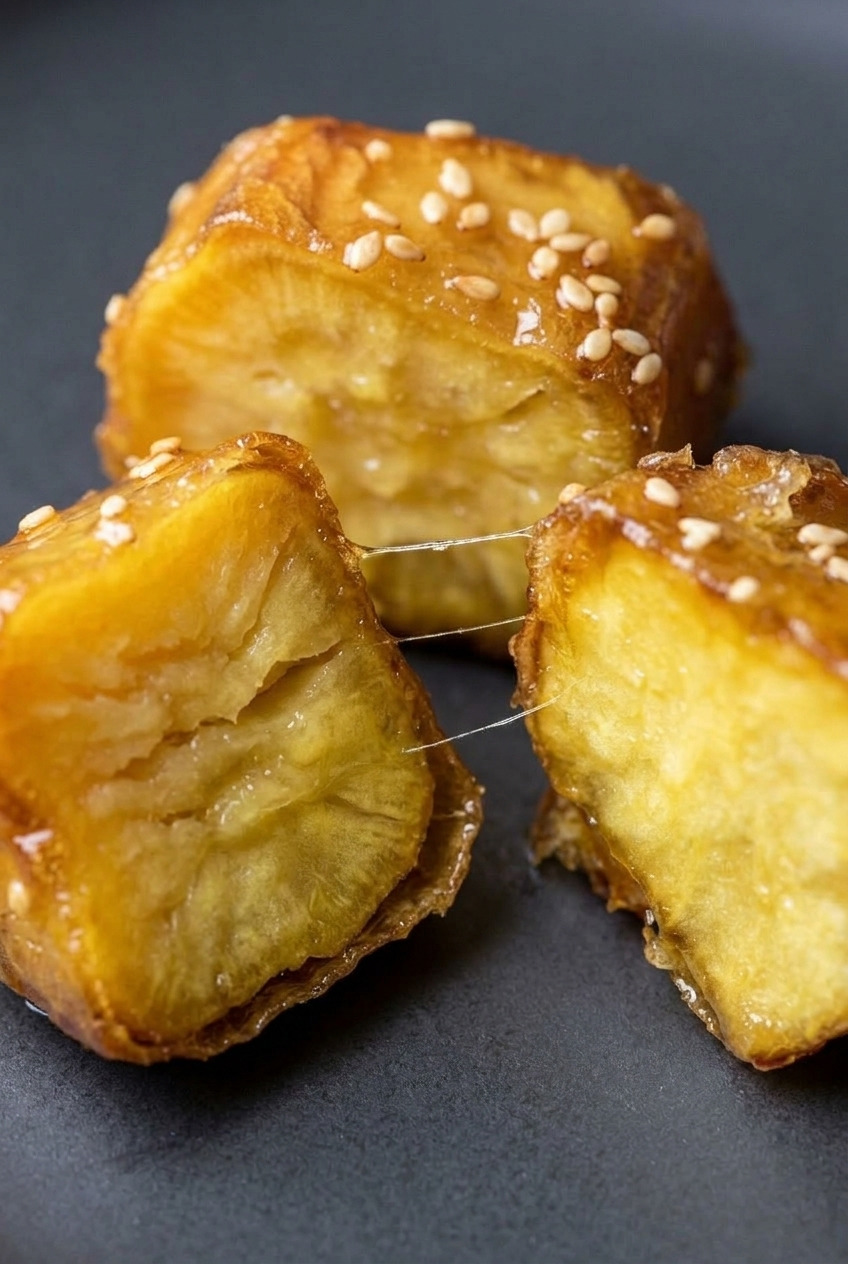
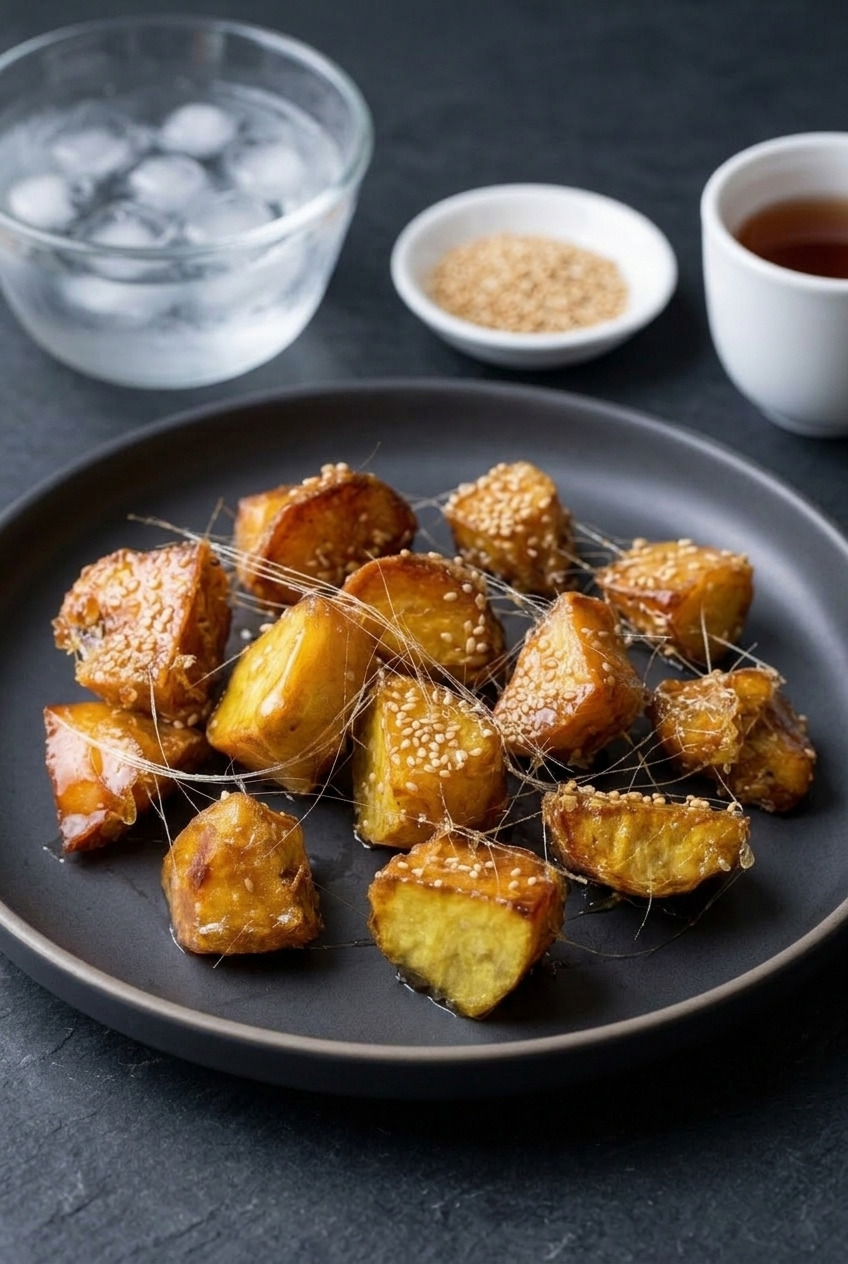
It came out on an oiled plate with a big bowl of ice water sitting next to it.
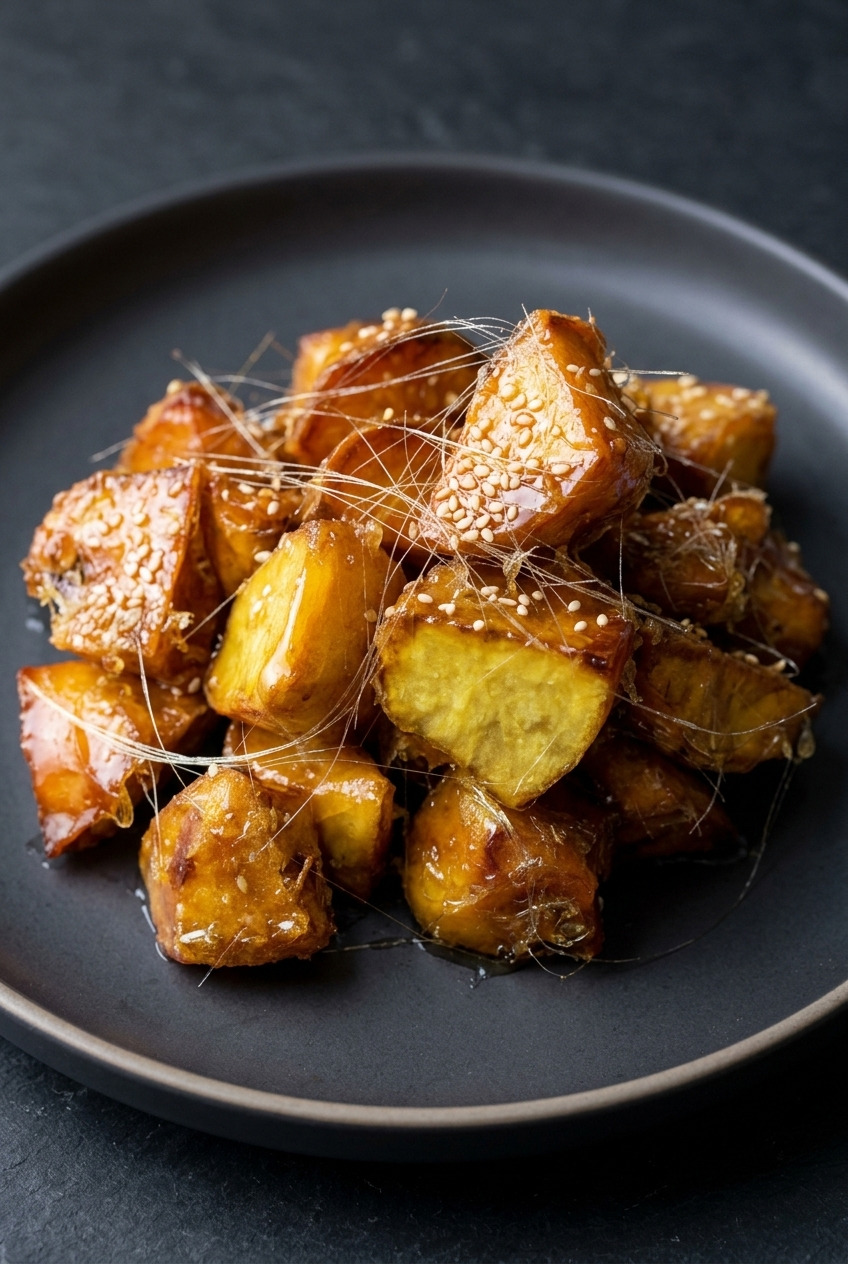
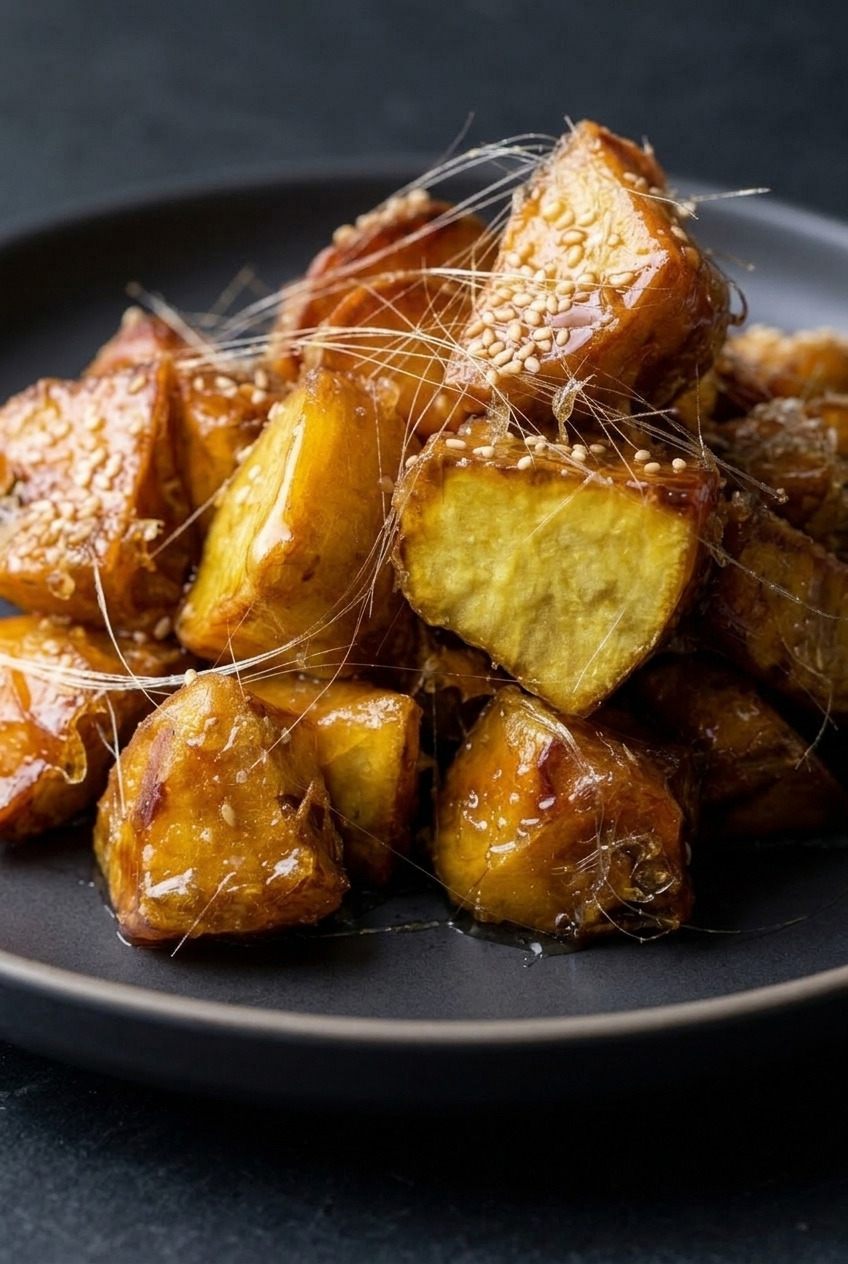
Golden cubes, glossy, still hot enough that you could see the syrup moving.
He lifted one with his chopsticks and a thread of sugar came away with it, thin as fishing line, stretching a foot across the table before it snapped and hardened in the air.
That thread is the entire point of the dish.
Ba si means pulling silk. Di gua means sweet potato.
You dunk each hot piece in the ice water for a second so the coating goes cold and shatters when you bite it.
I went home and ruined two batches learning where the sugar wants to be.
The third one worked, and I've made it a dozen times since.
My wife asks for it whenever we have people over, mostly because everyone ends up doing the same slow chopstick lift.
It takes about twenty minutes of real attention and nothing special beyond a pot and a bowl of ice.
Make it once and the technique stops being mysterious.
What Is Basi Digua?
It's fried sweet potato coated in molten sugar, from Northeastern China. The name is descriptive rather than poetic.
Ba si translates to pulling silk, and it refers to the strands of sugar that trail behind each piece as you lift it off the plate.
Di gua is sweet potato. Put them together and you have the dish.
It's a banquet dessert, the thing that arrives after the last savory plate, and it's meant to be shared and eaten immediately while the sugar is still hot and mobile.
The same basi technique gets used on apple (basi pingguo), banana, and taro.
Sweet potato is the most common version and the most forgiving.
Here's the part that trips people up: the syrup never sets hard on the plate.
It stays glossy and molten, which is exactly why it pulls threads. That's the whole trick, and it's also why the bowl of ice water is not optional.
Basi Digua Is Not the Same as Candied Sweet Potatoes
Three different dishes get filed under the same English words, and they are genuinely not the same food. Worth sorting out before you shop.
- American candied sweet potatoes. Sliced or cubed sweet potato baked in brown sugar and butter, often with marshmallows on top. Soft, syrupy, served as a Thanksgiving side dish, not a dessert. Delicious, completely unrelated.
- Korean mattang (goguma mattang). Fried sweet potato in a sugar syrup that sets into a hard, dry candy shell as it cools. You eat it at room temperature and it crunches like brittle. Closer, but the coating is deliberately set and there are no threads.
- Basi digua. Fried sweet potato in a plain sugar syrup that stays molten and glossy on the plate. Served scorching. Each piece gets dipped in ice water at the table, which chills that one piece's coating into a thin shatterable glass while the rest stays liquid.
If you cook your syrup with corn syrup, or cook it too dark, you'll land somewhere between the last two and lose the silk.
Plain granulated sugar, pale amber, off the heat fast. That's the target.
Ingredients You'll Need
Six things, and two of them are oil and water. This is a technique recipe, not a shopping recipe.
- Sweet potatoes (2 medium, about 1 ½ pounds). Japanese sweet potato is the best choice here: purple skinned, pale yellow flesh, drier and firmer than the orange American kind. It holds its cube shape in hot syrup instead of collapsing. Orange sweet potato works and tastes great, it just goes softer.
- Neutral oil for frying (about 4 cups). Peanut, canola, or vegetable. You need enough depth to float the cubes.
- Granulated sugar (¾ cup). Plain white sugar. NOT corn syrup, NOT brown sugar, NOT honey. Corn syrup is added to candy recipes specifically to stop sugar from crystallizing, and crystallizing at the right moment is what gives you threads. Brown sugar burns before it reaches the right stage.
- Water (2 tablespoons). Just enough to dissolve the sugar evenly so it melts without scorching in spots.
- Neutral oil for the syrup (1 tablespoon). Goes into the syrup itself. It keeps the coating fluid and glossy and helps it release from the plate.
- Toasted white sesame seeds (1 teaspoon). Optional, traditional, and they stick beautifully to the wet syrup.
Pro tip: you also need a bowl of ice water on the table and a lightly oiled serving plate. They're equipment, not garnish, and I'll explain both below.
Equipment
- A wok or deep heavy pot. For frying. A wok is ideal because you can fry in it, wipe it, and make the syrup in the same pan.
- A second small saucepan (optional). If you'd rather not wipe out the wok, make the syrup separately.
- A candy thermometer. Helpful but not required. Color is a better guide than temperature here.
- A large bowl of ice water. On the table, not in the kitchen. This is part of eating the dish.
- A serving plate, lightly oiled. Wipe a thin film of neutral oil across it before the sweet potato lands. Skip this and the syrup welds itself to the ceramic.
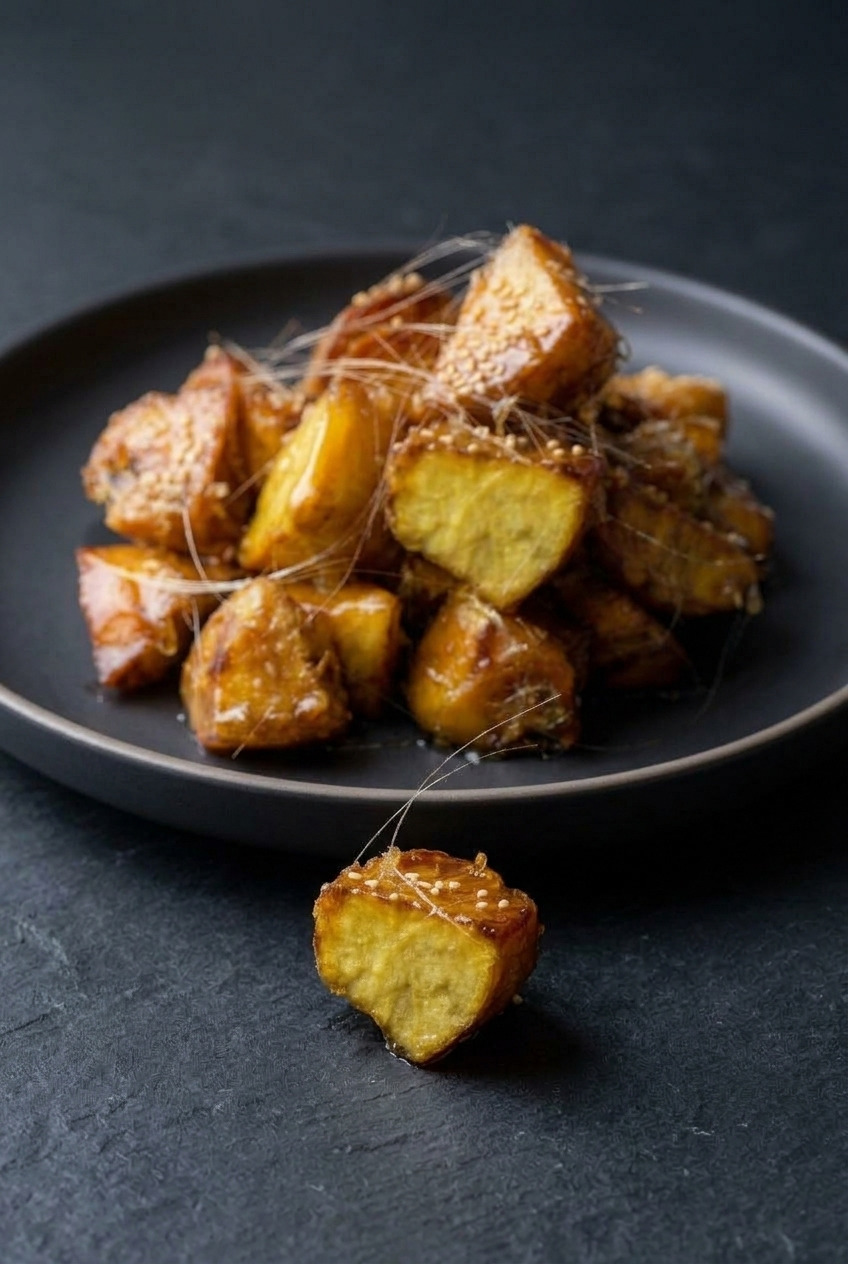
How to Make Basi Digua
Everything gets fried and drained BEFORE the sugar goes near the heat. The syrup gives you maybe ninety seconds of working time, and it will not wait for you.
Cut and Fry the Sweet Potato
Peel the sweet potatoes and cut them into rough 1 inch chunks. Irregular edges are good, they catch more syrup.
Rinse the cut pieces in cold water and pat them completely dry. Surface starch makes the oil foam and the syrup slide off.
Heat the oil to 325°F and fry the chunks in two batches for 6 to 8 minutes, until a chopstick goes through easily and the outsides are pale gold.
Raise the heat to 375°F and give them a second fry of 1 to 2 minutes to firm the outside.
Drain on a rack, not paper. Keep them warm.
Cook the Sugar Syrup
Wipe the wok clean or grab your saucepan. Add the ¾ cup sugar, 2 tablespoons water, and 1 tablespoon oil.
Set it over medium heat and stir gently only until the sugar dissolves.
Then stop stirring. Completely.
Let it bubble. The bubbles start big and loose, then get small and tight, then the whole surface calms down and the color shifts from clear to the palest amber, like weak tea.
That's your moment. On a thermometer it's around 300°F to 310°F.
Test it by lifting a little on a chopstick: if a fine thread follows the chopstick up out of the pan, you're there.
Pull it off the heat immediately. It keeps cooking in the pan.
Toss and Serve Immediately
Tip all the fried sweet potato into the syrup at once.
Fold it over fast with a spatula, ten or fifteen seconds, until every piece is coated and shining.
Turn it straight out onto the oiled plate and separate the pieces slightly so they don't fuse into one mass.
Scatter the sesame seeds over while the syrup is still wet.
Carry it to the table right now, with the ice water. Not in five minutes.
How to Eat It
Each person picks up one piece and dips it in the ice water for about one second. That's it, one second, then straight into your mouth.
The cold shocks the syrup on that piece into a thin brittle shell.
The inside is still hot and soft, so you get shattering glass over steaming sweet potato in the same bite.
Skip the water and the coating is molten sugar at well over 200°F, which will genuinely burn your mouth.
As you lift each piece away, the syrup still pooled on the plate follows in a strand and hardens midair.
That's the silk. It's supposed to happen, and half the fun of serving this dish is watching people notice.
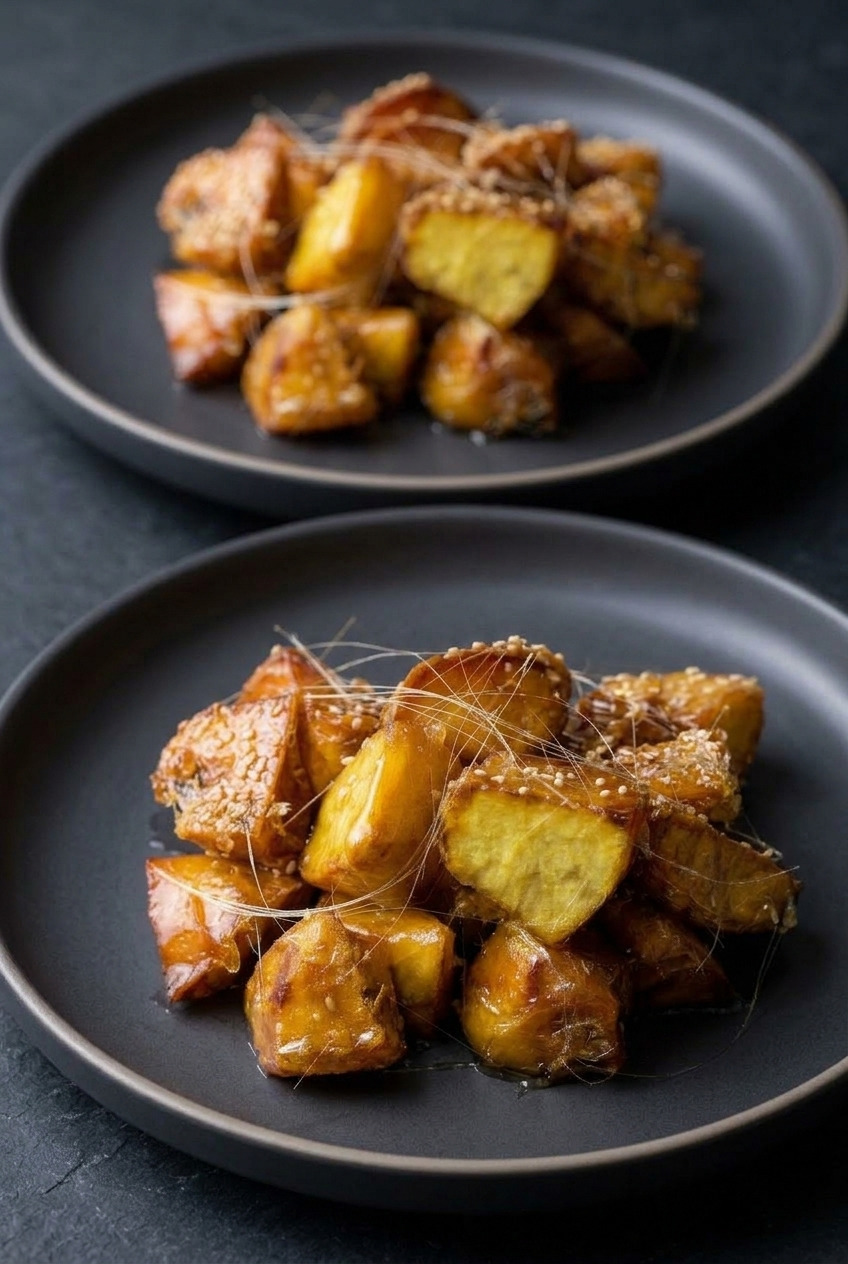
Fair warning: the plate ends up looking like a spun sugar cobweb by the end. Soak it in hot water and it dissolves right off.
If pulling sugar sounds stressful, my daigaku imo gets you glazed sweet potato with a lot less drama.
Tips for Sugar That Pulls Threads
- Do all your prep first. Fried, drained, plate oiled, ice water on the table, sesame in a dish. Once the sugar melts you have no free hands and no spare seconds.
- NEVER stir after the sugar dissolves. Agitation drops crystals into the syrup and the whole pan seizes into wet sand. If you need to move it, swirl the pan.
- Trust color over time. Pale amber is done. Medium amber is caramel, which tastes fine but has lost the pull. Dark amber is bitter.
- Warm the plate. Thirty seconds under hot tap water, dried, then oiled. A cold plate sets the syrup on contact and the pieces cement together.
- Work in a single layer. Piling the cubes traps heat and softens the coating from underneath.
- Dry sweet potato only. Any water on the surface makes the syrup bead up and slide off instead of clinging.
Frequently Asked Questions
What is basi digua?
A Northeastern Chinese dessert of deep fried sweet potato chunks tossed in molten sugar syrup and served scorching hot with a bowl of ice water for dipping. It's a banquet and restaurant dish, usually the last thing served.
What does basi mean?
Ba si literally means pulling silk. It describes the fine threads of sugar that stretch behind each piece when you lift it from the plate. The same technique and name apply to basi pingguo (apple), banana, and taro.
What is the best sugar for basi digua, and can I use corn syrup?
Plain granulated white sugar. Skip the corn syrup. Corn syrup exists in candy making to prevent crystallization, and here you want the syrup right at the edge of crystallizing, because that's the state that draws threads. Corn syrup gives you a soft sticky glaze instead.
Why did my sugar seize into grainy crystals?
Almost always stirring after the sugar dissolved, or a stray sugar crystal from the side of the pan falling in. Once it seizes you can sometimes recover it by adding a tablespoon of water and melting it down again over low heat, but it's faster to wash the pan and start over with ¾ cup of sugar. It costs you four minutes.
Do I really need the bowl of ice water?
Yes, for two reasons. It's how the dish is actually eaten, and molten sugar straight off the plate is hot enough to blister your mouth. The dip also creates the thin brittle shell that makes the texture work against the soft interior.
Is basi digua the same as Korean candied sweet potato (mattang)?
No. Mattang's coating is cooked and cooled so it sets into a hard dry candy shell, and it's eaten at room temperature. Basi digua's syrup stays molten on the plate and only hardens on the individual piece you dip. Same starting ingredients, different dish.
Can I make basi digua ahead of time?
Not really, and this is the honest answer. The syrup is the dish and it only behaves for a few minutes. You CAN fry the sweet potato up to two hours ahead, hold it at room temperature, and re-crisp it for three minutes in a 400°F oven right before you make the syrup. Do that and the last stage takes five minutes.
Can I use apples or taro instead?
Absolutely, both are traditional. Peel and cube apple, dust the pieces in cornstarch before frying since they release more water. Taro behaves almost exactly like sweet potato. Banana needs a light batter or it falls apart.
Variations and Substitutions
- Oven roasted instead of fried. Toss the cubes in a tablespoon of oil and roast at 425°F for 25 minutes, turning once. It's a real departure from the traditional method and the exterior is softer, but the syrup still works.
- Orange sweet potato. Sweeter, moister, softer in the middle. Cut the pieces slightly larger and fry a minute longer.
- Black sesame. Swap in toasted black sesame seeds for a sharper look against the amber.
- Basi pingguo. Same syrup, apple instead. A classic in its own right and arguably the more famous version.
For a chewier sweet potato snack, try my Taiwanese sweet potato balls.
Storage
- Leftovers. There usually aren't any, but coated pieces go sticky and soft within an hour and won't come back. Eat them cold from the fridge the next day as a chewy candied snack, which is genuinely good, just not the same dish.
- Fried sweet potato, uncoated. Room temperature up to 2 hours, or refrigerated up to 2 days. Re-crisp at 400°F for 3 to 5 minutes before syruping.
- The pan and plate. Fill with hot water and leave for ten minutes. Hardened sugar dissolves completely, no scrubbing.
This is one of the few desserts I make where the cooking is the entertainment.
Everyone crowds the table, someone lifts a piece too slowly and gets a three foot strand, and the plate is empty in about four minutes.
Give it a try!
Recipe
Basi Digua (Chinese Sugar-Coated Sweet Potato)
Ingredients
For the Sweet Potato
- 1 ½ lb Japanese sweet potatoes about 2 medium, peeled and cut into 1 inch chunks
- 4 cups neutral oil for frying
For the Sugar Syrup
- ¾ cup granulated sugar plain white, no corn syrup
- 2 tablespoon water
- 1 tablespoon neutral oil
- 1 teaspoon toasted white sesame seeds optional
For Serving
- 1 large bowl ice water for dipping at the table
- 1 teaspoon neutral oil to wipe the serving plate
Instructions
Fry the Sweet Potato
- Peel the sweet potatoes and cut them into rough 1 inch chunks. Rinse in cold water and pat completely dry.
- Heat the frying oil to 325°F. Fry the chunks in two batches for 6 to 8 minutes, until a chopstick passes through easily and the outsides are pale gold.
- Raise the oil to 375°F and fry each batch a second time for 1 to 2 minutes to firm the exterior. Drain on a wire rack and keep warm.
Prepare to Serve
- Warm a serving plate under hot water, dry it, and wipe a thin film of oil across the surface. Set a large bowl of ice water on the table.
Cook the Syrup and Toss
- Wipe the wok clean or use a small saucepan. Combine the sugar, water, and 1 tablespoon oil over medium heat. Stir gently only until the sugar dissolves, then stop stirring completely.
- Let the syrup bubble undisturbed. When the bubbles turn small and tight, the surface calms, and the color reaches the palest amber, around 300°F to 310°F, it is ready. A chopstick lifted from the pan should draw a fine thread.
- Remove from the heat immediately. Add all the fried sweet potato at once and fold for 10 to 15 seconds until every piece is coated and glossy.
- Turn out onto the oiled plate, separate the pieces slightly, scatter the sesame seeds over while the syrup is wet, and serve at once with the ice water. Each person dips a piece for about one second before eating.
Notes
- Prep everything first: The syrup gives you about 90 seconds of working time. Fry, drain, oil the plate, and set out the ice water before the sugar goes on the heat.
- Never stir after the sugar dissolves: Agitation seizes the syrup into grainy crystals. Swirl the pan instead.
- No corn syrup: It prevents crystallization, and controlled crystallization is exactly what draws the sugar threads.
- Color beats the thermometer: Pale amber is done. Medium amber has lost the pull. Dark amber is bitter.
- Make ahead: Fry the sweet potato up to 2 hours in advance and re-crisp at 400°F for 3 to 5 minutes before syruping. The coated dish cannot be held.