The vendor at the Ningxia night market never stopped moving her hands.
She had a wok of oil in front of her and about forty little orange balls bobbing on the surface, and every few seconds she flattened a handful of them with a wide flat spider.
They squashed. Then they puffed back up bigger than before.
She did it over and over for six or seven minutes, and I stood there in the way of everyone behind me watching it happen.
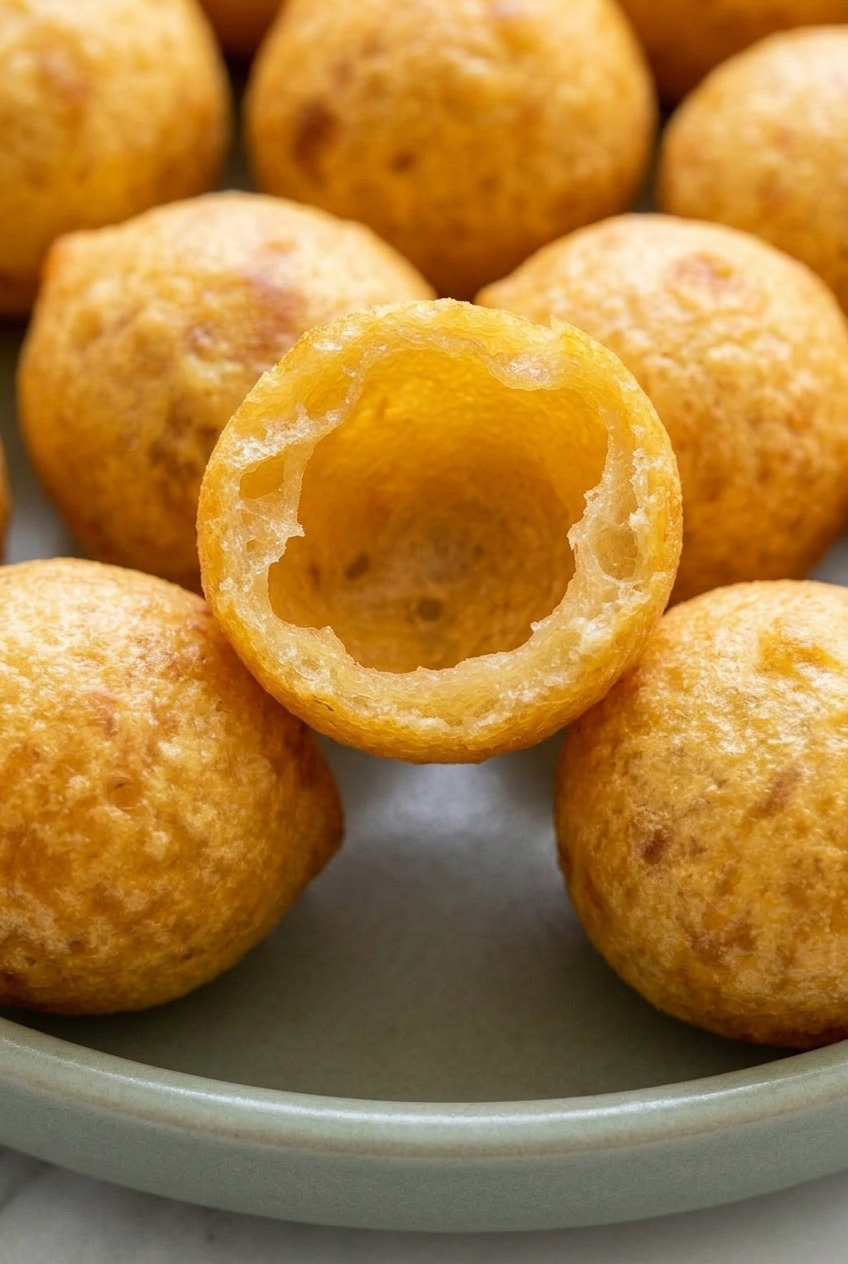
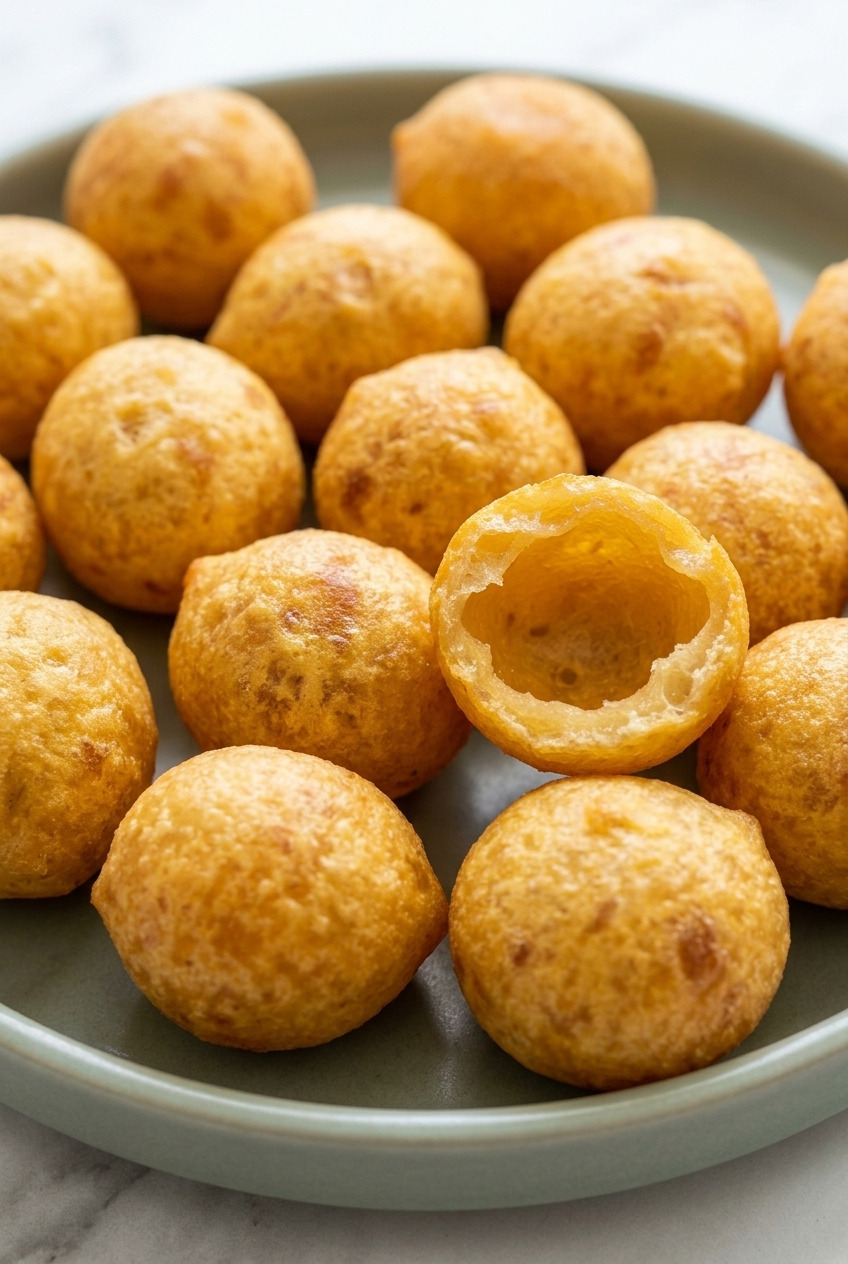
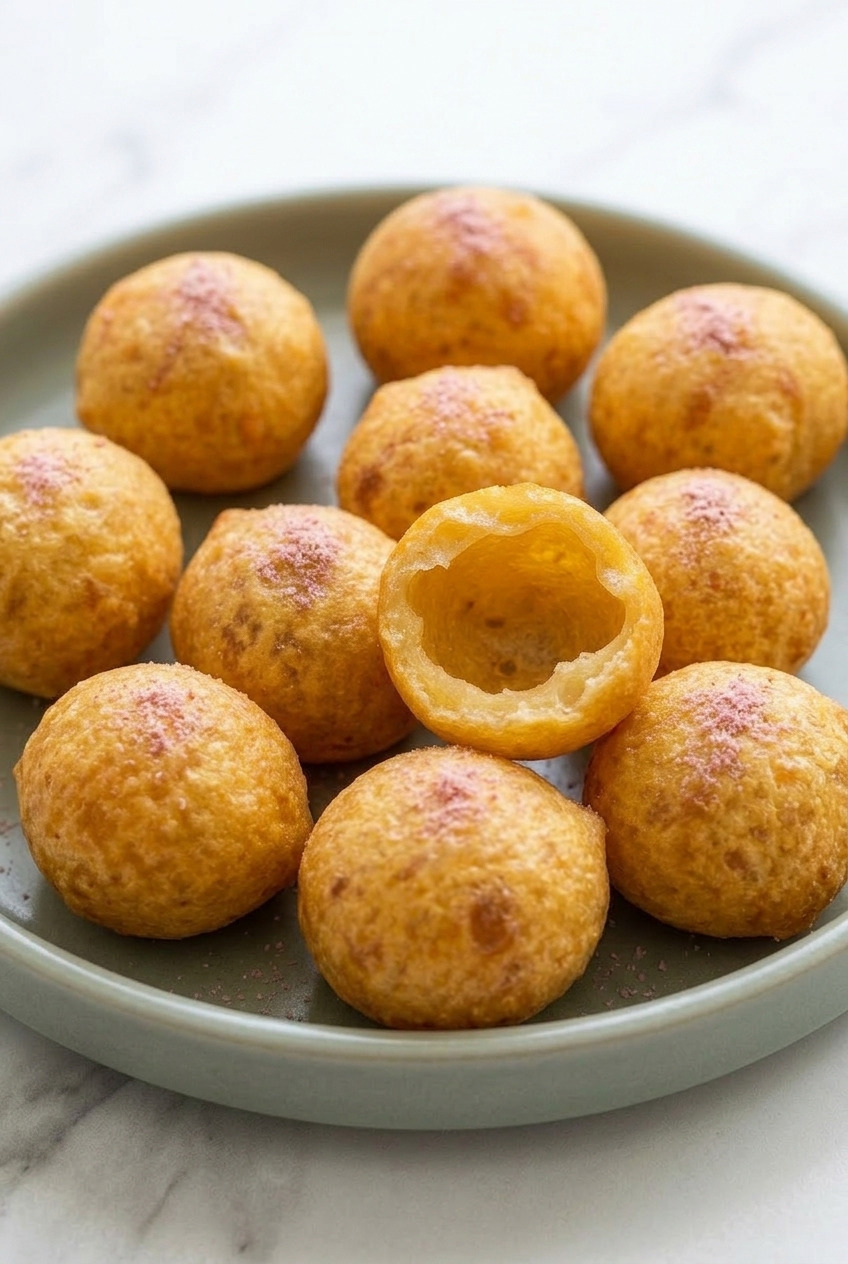
What she handed me was a paper bag of hot golden balls that gave a little crackle and then went completely stretchy in the middle.
Hollow inside. Almost nothing there.
I've since learned that the hollow is not an ingredient, it is that pressing, and once you know it the whole recipe makes sense.
These are not sweet, not really.
They taste faintly of sweet potato and mostly of texture, which is the point in Taiwan and the thing most Western recipes get wrong by loading them with sugar.
I make them on Friday nights when my wife and I want something to stand around eating.
They take about an hour and the technique is the only tricky part.
Get the press right and you'll have something you genuinely cannot buy in the States.
I promise the chew is worth the oil.
What Digua Qiu Is, and What It Is Not
Digua qiu (地瓜球) is a deep fried, hollow, chewy sweet potato ball sold from carts and stalls at Taiwanese night markets. Golden, roughly the size of a large marble, crisp for a half second and then stretchy all the way through.
Digua means sweet potato. Qiu means ball.
They come in a paper bag, hot, and you eat them walking.
Here is the confusion this dish suffers from in English. Search for Taiwanese sweet potato balls and half the results give you a completely different dish.
- Digua qiu (地瓜球). What we are making. Deep fried, hollow, crisp then chewy, eaten hot as a street snack. Mostly tapioca starch.
- Digua yuan (地瓜圓). The Jiufen dessert ball. Boiled, solid, soft and springy, served cold in ginger syrup with taro balls and shaved ice. Usually a blend of tapioca and glutinous rice flour.
Same country, same potato, different snack.
Both are worth making. Only one of them is the night market ball, and that is the one this recipe is for.
Ingredient Notes
The working ratio Taiwanese cooks use is 6 parts sweet potato to 2 parts tapioca to 1 part sugar, by weight. Memorize that and you can make these with any size potato you happen to have.
- Sweet potato (1 lb, about 450 g). Orange or yellow flesh both work. Yellow gives a paler, more traditional looking ball. Steam it, do not boil it, and I explain why in the chew section below.
- Tapioca starch (1 cup, about 150 g, plus more for dusting). This is the entire structure of the dish. Tapioca is what stretches, what puffs, and what makes the ball hollow. Cornstarch will NOT work, it fries brittle and dead.
- Glutinous rice flour (3 tablespoons, about 30 g). A small amount only. It softens the chew from rubbery toward tender. Skip it if you want a bouncier ball.
- Granulated sugar (¼ cup, about 50 g). Modest on purpose. These are a texture snack, not a dessert.
- Fine salt (¼ teaspoon). Keeps the sweet potato flavor from going flat.
- Hot water (1 to 2 tablespoons, only if needed). The potato usually brings enough moisture on its own. Add water a teaspoon at a time or you'll be chasing it with flour.
- Neutral oil (about 4 cups). You need enough depth for the balls to float freely. Crowded balls cannot puff.
Six ingredients and one technique. What's not to love?
How to Make Digua Qiu
Step 1: Steam the Sweet Potato
Peel the potato and cut it into 1 inch slices.
Steam over boiling water 18 to 20 minutes, until a fork goes through with zero resistance.
Step 2: Mash It Hot
Mash it while it is still steaming, as smooth as you can get it.
Lumps become weak spots that split in the oil.
Weigh the mash now if you can. You want roughly 300 g of cooked mash from a 1 lb raw potato.
Step 3: Build the Dough
Add the sugar and salt to the hot mash and stir until dissolved.
Add the glutinous rice flour and about three quarters of the tapioca starch, then work it together with a spatula until it cools enough to handle.
Knead it 3 to 4 minutes, adding the rest of the tapioca a spoonful at a time.
The target: a soft dough that holds a clean fingerprint and does not stick to your palm. It should feel like fresh play dough, not like bread dough.
Knead while it is warm. The heat gelatinizes some of the starch, and that is what gives the dough its stretch.
Step 4: Roll and Rest
Roll the dough into ropes about ¾ inch thick, cut into ¾ inch pieces, and roll each piece into a ball between your palms.
You should get about 45 balls.
Dust them lightly with tapioca starch and let them sit uncovered 10 minutes so the surface dries slightly.
Step 5: The Low Fry
Heat the oil to 285°F. This is much lower than normal deep frying and it matters.
Slide the balls in and let them sit 2 minutes without touching them, until they rise and float.
Too hot and the shell sets before the inside can expand, which gives you a solid, dense, disappointing ball.
Step 6: Press Them
Once they are all floating, start pressing. This is the section below, and it deserves the space.
Step 7: Finish Hot
When the balls are puffed, golden, and light in the spider, raise the oil to 340°F for a final 45 seconds to firm the shell.
Drain on a rack.
Eat them within 20 minutes. That is not me being dramatic, it is how long the texture lasts.
The Press, and How the Balls Go Hollow
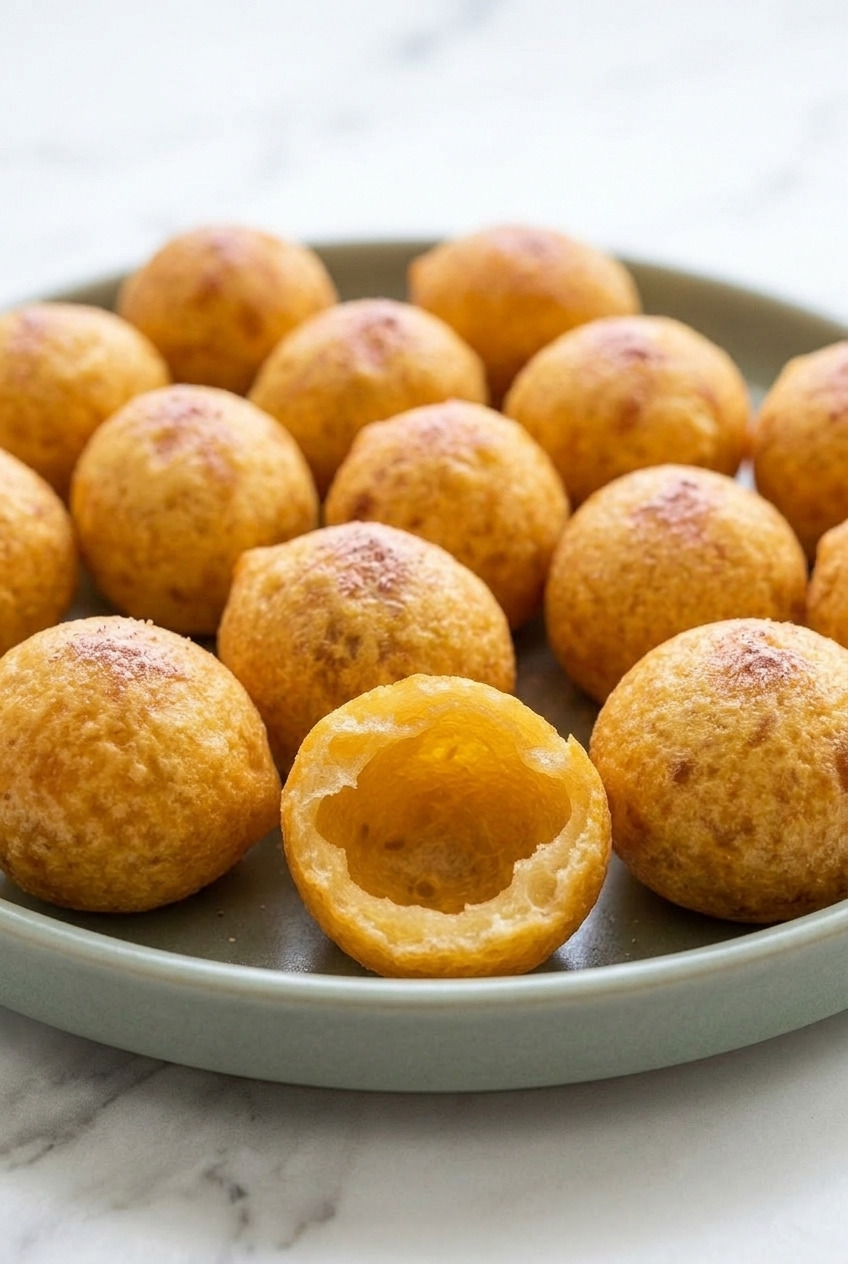
The hollow center comes from pressing the balls repeatedly while they float, and nothing else does it. No leavening, no baking powder, no trick ingredient.
Here is what is happening. Steam builds inside the ball. You flatten it, the steam escapes and the elastic tapioca wall collapses. You release, and the wall springs back and pulls fresh air in behind it. Do that fifteen times and the wall has been stretched into a shell around a cavity.
- When to start. The moment every ball is floating and the surface has firmed enough that it does not tear. Usually 2 to 3 minutes in.
- How to press. A wide flat spider or a slotted spoon, pressed straight down against the ball until it flattens to about half its height. Firm and quick, not a slow squeeze.
- How often. Every 15 to 20 seconds, working across the whole surface so every ball gets its turn.
- How long. A total of 6 to 8 minutes of pressing. Expect 12 to 20 presses per ball.
- What you should see. They get visibly bigger, noticeably lighter in the spider, and they start bouncing back up faster after each press. When a ball springs back instantly it is hollow.
Fair warning: the first two or three presses feel wrong. The ball squashes and looks ruined. Keep going, it recovers.
Press too early and they tear open. Press too late and the shell has hardened and will not stretch anymore.
Getting the Chew Right
The chew is the dish, so every failure here is a texture failure. These are the five that come up.
- Solid, dense balls. The oil was too hot at the start, or you did not press enough. Drop the starting temperature and press more often.
- Rubbery and tough. Too much tapioca. Sweet potato moisture varies a lot, so go by the fingerprint test, not the gram count.
- Cracked dough that will not roll. Too dry. Add hot water 1 teaspoon at a time and knead it back together.
- They split open in the oil. You pressed before the surface set, or the mash had lumps in it.
- Waterlogged, gummy dough. You boiled the potato instead of steaming it. Boiled sweet potato carries extra water, which forces you to add more starch to compensate, and that extra starch is what turns the chew into rubber. NEVER boil the potato.
Worth the fuss? The first hollow one convinces you.
Seasonings and How to Serve
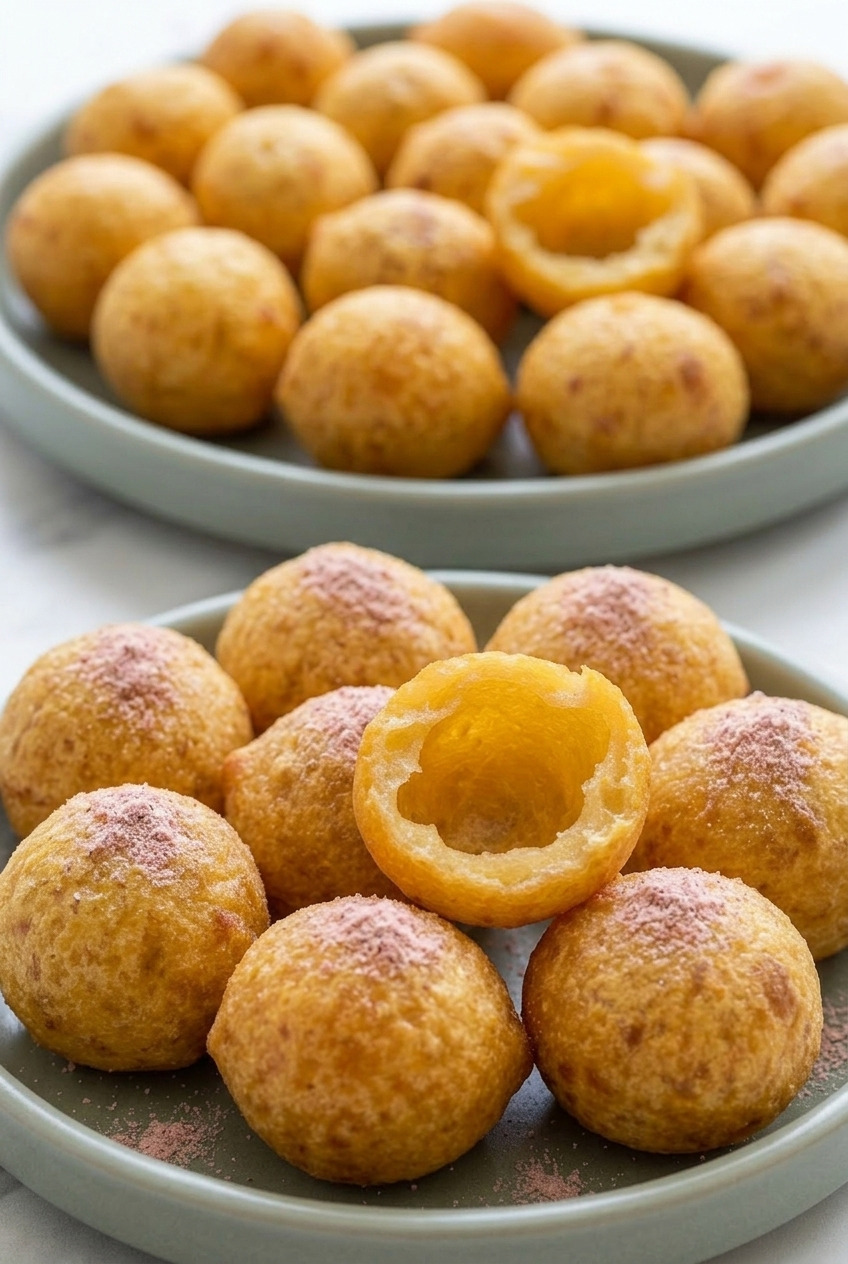
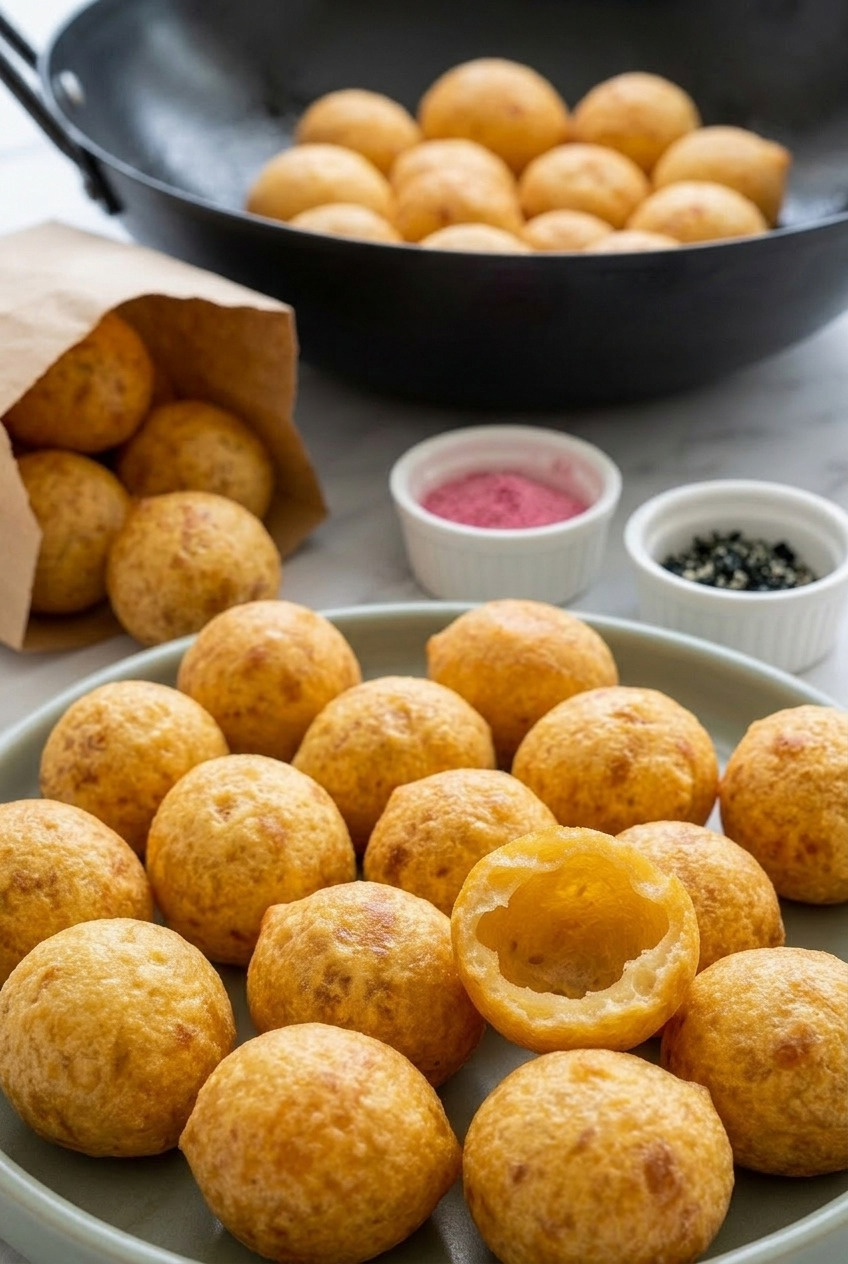
- Plain. Straight from the rack into a paper bag, shaken. Most stalls sell them exactly like this.
- Plum powder. Sour, salty, bright pink. Sold at any Taiwanese or Chinese grocer, and my favorite of the three.
- Seaweed salt. Crushed nori and fine salt. Savory and unexpected.
- Five spice sugar. 2 tablespoons of sugar with ¼ teaspoon of five spice powder.
- How to eat them. Hot, standing up, with your fingers. They deflate and stiffen as they cool, so there is no polite way to do this and no reason to try.
If you want the sugar-glass side of sweet potato, my basi digua pulls long caramel threads off every piece. Different technique, same street-food spirit.
Make Ahead, Freezing and Storage
- Freezing raw. The best make-ahead by far. Freeze the dusted raw balls on a tray until solid, then bag them for up to 2 months. Fry from frozen, adding 1 to 2 minutes to the low fry stage.
- Dough ahead. Refrigerate the kneaded dough up to 1 day, sealed. Let it come to room temperature before you roll it or it will crack.
- Leftovers. Honestly, there is no good answer. Fried digua qiu goes tough within an hour and the hollow collapses.
- Reheating. 5 minutes at 375°F in the oven brings back some crispness but never the stretch.
Make a small batch, eat them all standing at the stove, and don't feel bad about it. Give it a try!
In the same spirit, my chè khoai lang turns sweet potato into a warm coconut dessert soup.
Recipe
Digua Qiu (Taiwanese Sweet Potato Balls)
Ingredients
For the Balls
- 1 lb sweet potato about 450 g, peeled and sliced
- 1 cup tapioca starch about 150 g, plus more for dusting
- 3 tablespoon glutinous rice flour about 30 g
- ¼ cup granulated sugar about 50 g
- ¼ teaspoon fine salt
- 1-2 tablespoon hot water only if the dough will not come together
- 4 cups neutral oil for deep frying
Optional Finishes
- 2 teaspoon plum powder
- 1 teaspoon seaweed salt
- 2 tablespoon five spice sugar sugar mixed with ¼ teaspoon five spice powder
Instructions
Make the Dough
- Steam the sweet potato slices over boiling water 18 to 20 minutes, until a fork goes through with no resistance. Do not boil them.
- Mash the potato while still hot, as smooth as possible. You want about 300 g of cooked mash.
- Stir the sugar and salt into the hot mash until dissolved. Add the glutinous rice flour and about three quarters of the tapioca starch and work it together until cool enough to handle.
- Knead 3 to 4 minutes, adding the remaining tapioca a spoonful at a time, until the dough is soft, holds a clean fingerprint and does not stick to your palm. Add hot water 1 teaspoon at a time only if it cracks.
- Roll into ropes ¾ inch thick, cut into ¾ inch pieces, and roll each into a ball. Dust lightly with tapioca starch and rest uncovered 10 minutes.
Fry and Press
- Heat the oil to 285F. Slide the balls in and leave them undisturbed 2 minutes, until they rise and float.
- Once every ball is floating, press them with a wide flat spider or slotted spoon, flattening each ball to about half its height. Press every 15 to 20 seconds, working across the whole surface, for a total of 6 to 8 minutes.
- The balls get visibly larger, lighter in the spider, and spring back faster after each press. That instant spring back means they are hollow.
- Raise the oil to 340F for a final 45 seconds to firm the shell, then drain on a wire rack. Toss with plum powder, seaweed salt or five spice sugar if using, and eat within 20 minutes.
Notes
- Not the Jiufen dessert: Digua qiu (地瓜球) is the fried, hollow night market ball. Digua yuan (地瓜圓) is the boiled, solid Jiufen dessert ball served cold in ginger syrup. Different dish.
- The ratio: 6 parts sweet potato to 2 parts tapioca to 1 part sugar by weight. Adjust the starch by feel, since sweet potato moisture varies a lot.
- Steam, never boil the potato. Boiled potato is waterlogged and forces extra starch into the dough, which turns the chew rubbery.
- Tapioca starch only. Cornstarch will not stretch or puff.
- The press makes the hollow. There is no leavening in this dough. Expect 12 to 20 presses per ball.
- Freeze raw: Freeze the dusted raw balls on a tray, bag up to 2 months, and fry from frozen with 1 to 2 extra minutes at the low temperature.