The first one I ever made came out of the oven looking scorched, and I nearly threw it away.
Then I cut into it.
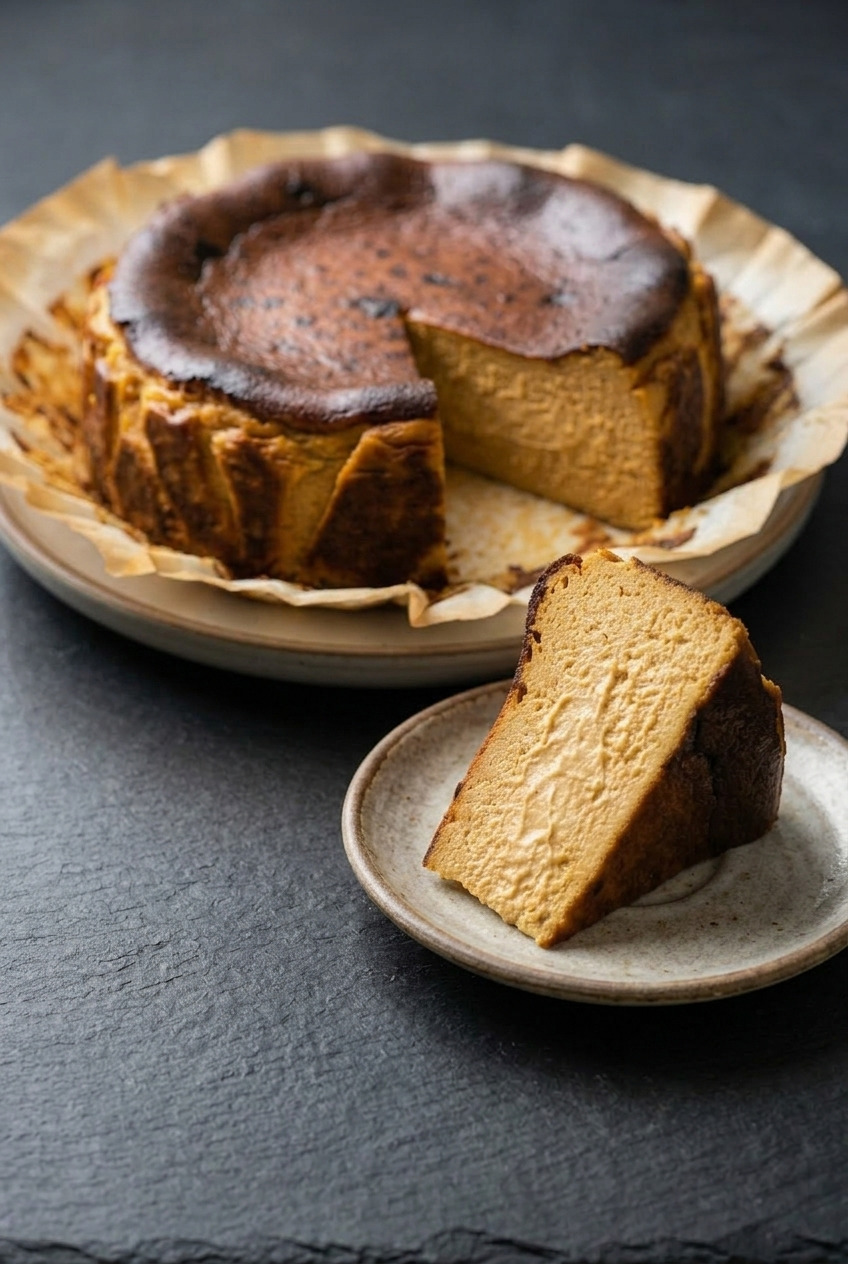
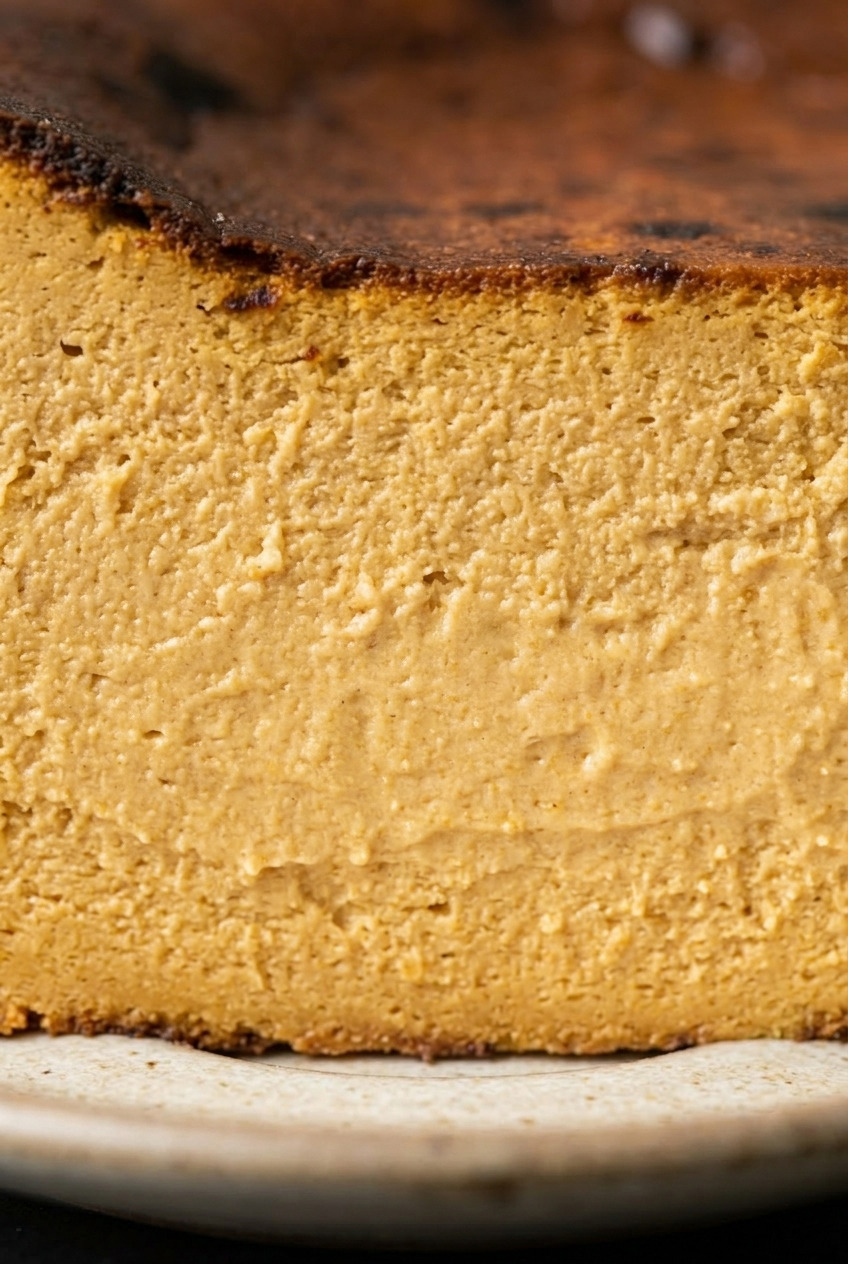
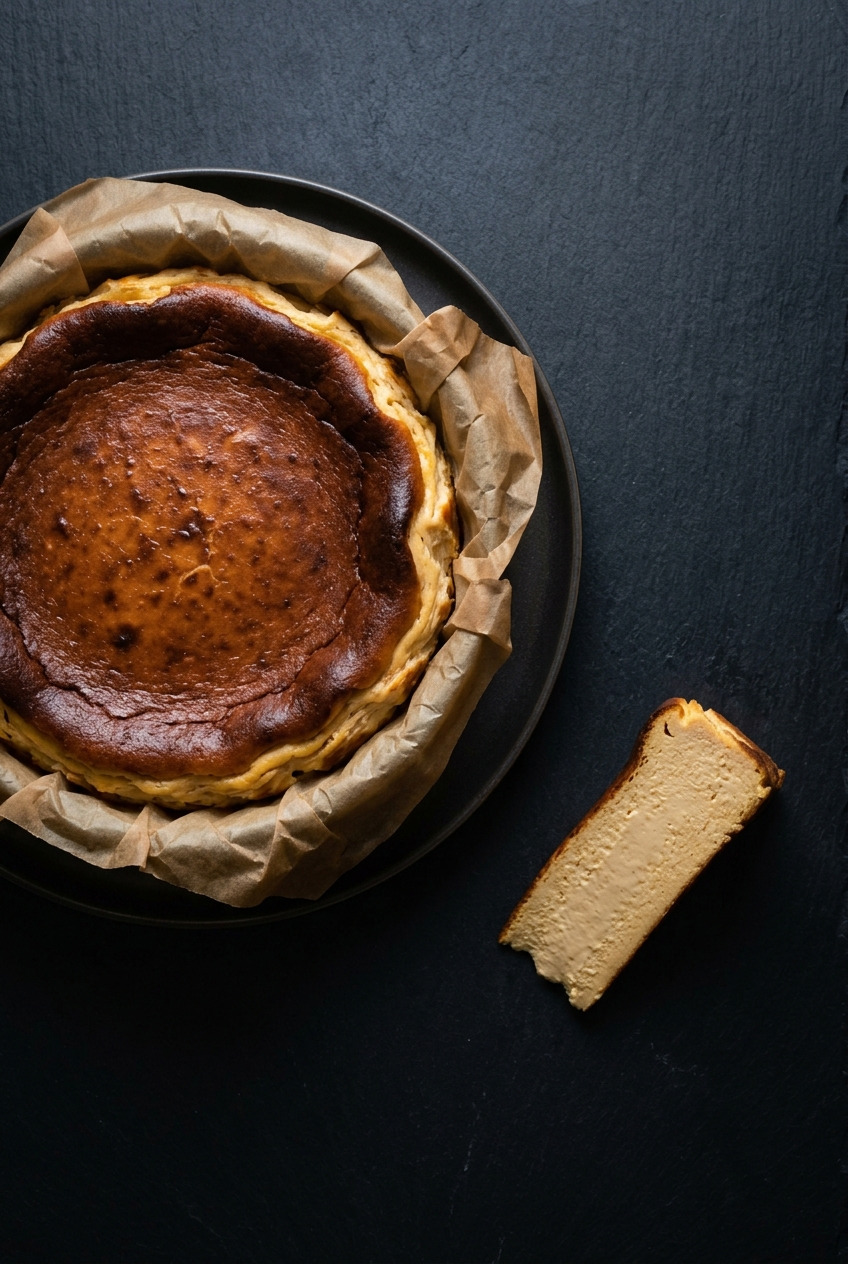
Under that dark, cracked top was the silkiest, most custardy pumpkin center I'd ever tasted.
That deep mahogany surface is the whole signature of a Basque cheesecake, the kind that started in a little bar in San Sebastian, Spain.
It's meant to look burnt. That caramelized top is where all the toffee, almost campfire flavor lives.
I add pumpkin and a big hit of warm spice, and suddenly it's the fall dessert everyone remembers.
What sold me for good is how forgiving it is.
No crust to blind-bake. No water bath to babysit. No cracks to stress over, because the cracks are the point.
You blend the batter in one bowl, pour it into a lined pan, and bake it hot and fast.
It looks like something from a fancy bakery, but it might be the easiest cheesecake you'll ever pull off. I promise the burnt top is a feature, not a mistake.
What Makes a Basque Cheesecake Different
A Basque cheesecake breaks almost every cheesecake rule. That's exactly why I love it.
There's no crust. None. You just pour the batter straight into a parchment-lined pan.
There's no water bath either, which is the step that scares people off regular cheesecake.
It bakes at a high heat, so the top scorches to a deep burnt-mahogany while the inside stays soft and custardy.
The recipe traces back to La Vina, a bar in San Sebastian, Spain, where this rustic, crackled style was born.
The whole look is meant to be imperfect. Cracked, sunken, dark on top. That's the charm.
Why You'll Love This Pumpkin Version
This is a showstopper that asks almost nothing of you. Here's why it earns a spot on the table.
- No crust, no water bath. You skip the two fussiest steps of classic cheesecake.
- One bowl. Blend, pour, bake. That's basically it.
- Deep fall flavor. Real pumpkin and warm spice run all the way through the custard.
- The look does the work. That dramatic burnt top makes it look like bakery work with zero fuss.
Ingredients You'll Need
The ingredient list is short and honest. Quality cream cheese and real pumpkin do the heavy work.
- Cream cheese (24 oz, room temperature). The base. Let it soften fully so the batter blends smooth. I like Philadelphia.
- Granulated sugar (1 cup). Sweetens and helps that top caramelize.
- Light brown sugar (½ cup). Adds a molasses, caramel depth.
- Large eggs (4, room temperature). They give the custardy, just-set center.
- Pumpkin puree (1 cup). Use pure pumpkin, NOT pie filling.
- Heavy cream (¾ cup). Loosens the batter into that pourable, silky texture.
- Cornstarch (¼ cup). Just enough to stabilize the extra moisture from the pumpkin.
- Warm spices. Cinnamon, ginger, nutmeg, and a little clove.
- Vanilla extract (1 tsp). Rounds out the spice.
- Kosher salt (½ tsp). Keeps it from tasting flat.
How to Make Pumpkin Basque Cheesecake
This is a blend-and-bake situation. The hardest part is waiting for it to cool.
Step 1: Prep the Pan and Oven
Preheat your oven to 450°F.
Line a 9-inch springform pan with two sheets of parchment, pressing it in and letting it stick up well above the rim. The rough, pleated edges are part of the look.
Step 2: Blend the Batter
Beat the room-temperature cream cheese with both sugars until completely smooth.
Add the eggs one at a time, then mix in the pumpkin, heavy cream, cornstarch, spices, vanilla, and salt until silky.
Don't overmix. You want it smooth, not whipped full of air.
Step 3: Bake Hot
Pour the batter into the lined pan.
Bake at 450°F for 50 to 55 minutes, until the top is deeply browned and the center still has a big, confident jiggle.
Trust the jiggle. It sets as it cools.
Step 4: Cool and Chill
Let it cool completely in the pan on the counter.
For clean, custardy slices, chill it at least 4 hours or overnight, then bring it back toward room temperature before serving.
Recipe Tips
A few details separate a good Basque cheesecake from a great one. These are the ones that matter.
- Room-temperature cream cheese is a must. Cold cream cheese leaves lumps you can't blend out.
- Don't overmix. Too much air makes it puff and crack unevenly. Smooth, not fluffy.
- Line the pan tall. Let the parchment stand above the rim so the batter can't spill and the edges ruffle up.
- Go hot. High heat is what gives you that burnt top before the inside overcooks.
- Pull it jiggly. A firm center out of the oven means a dry, dense cake once it cools.
Serving
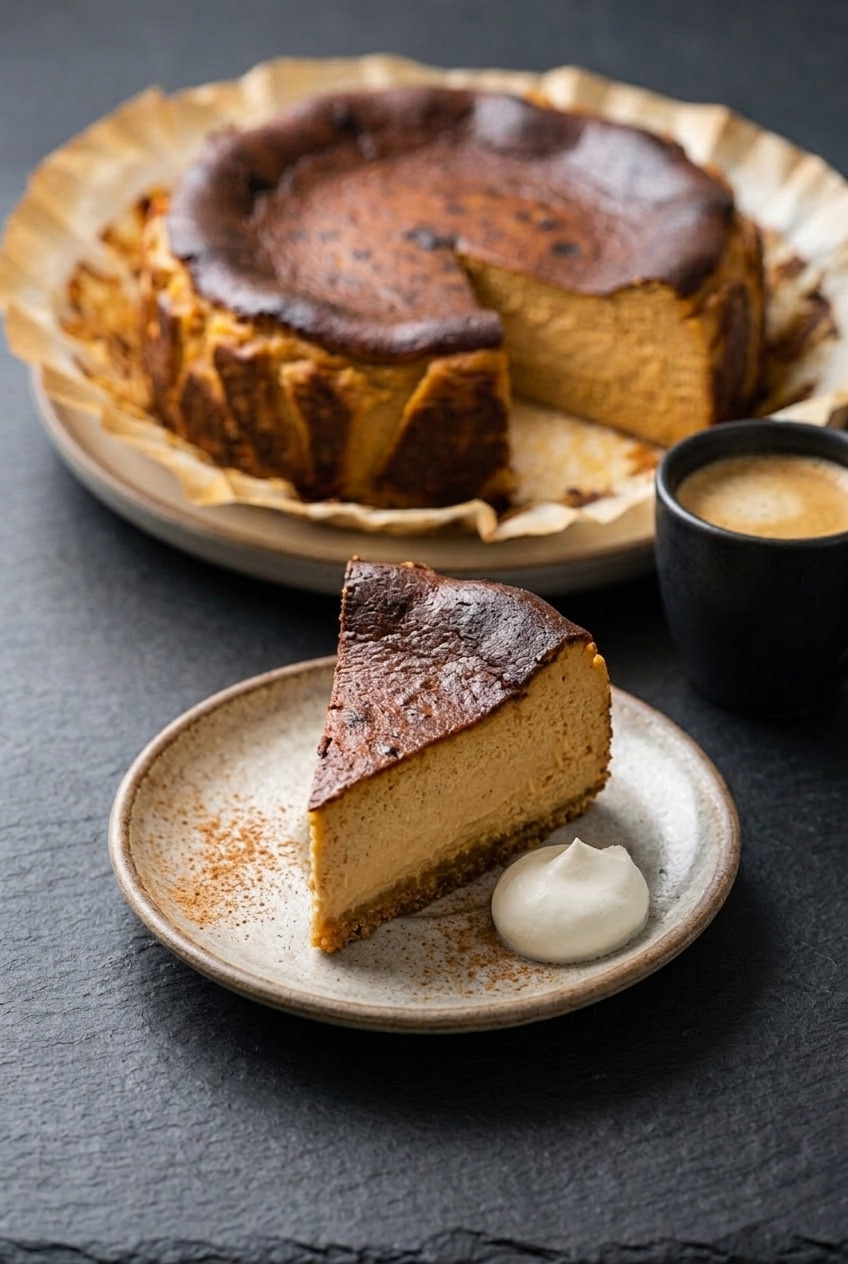
This cheesecake tastes best just below room temperature. Cold from the fridge mutes the custardy texture.
- Plain. Honestly, it needs nothing. The burnt top carries the flavor.
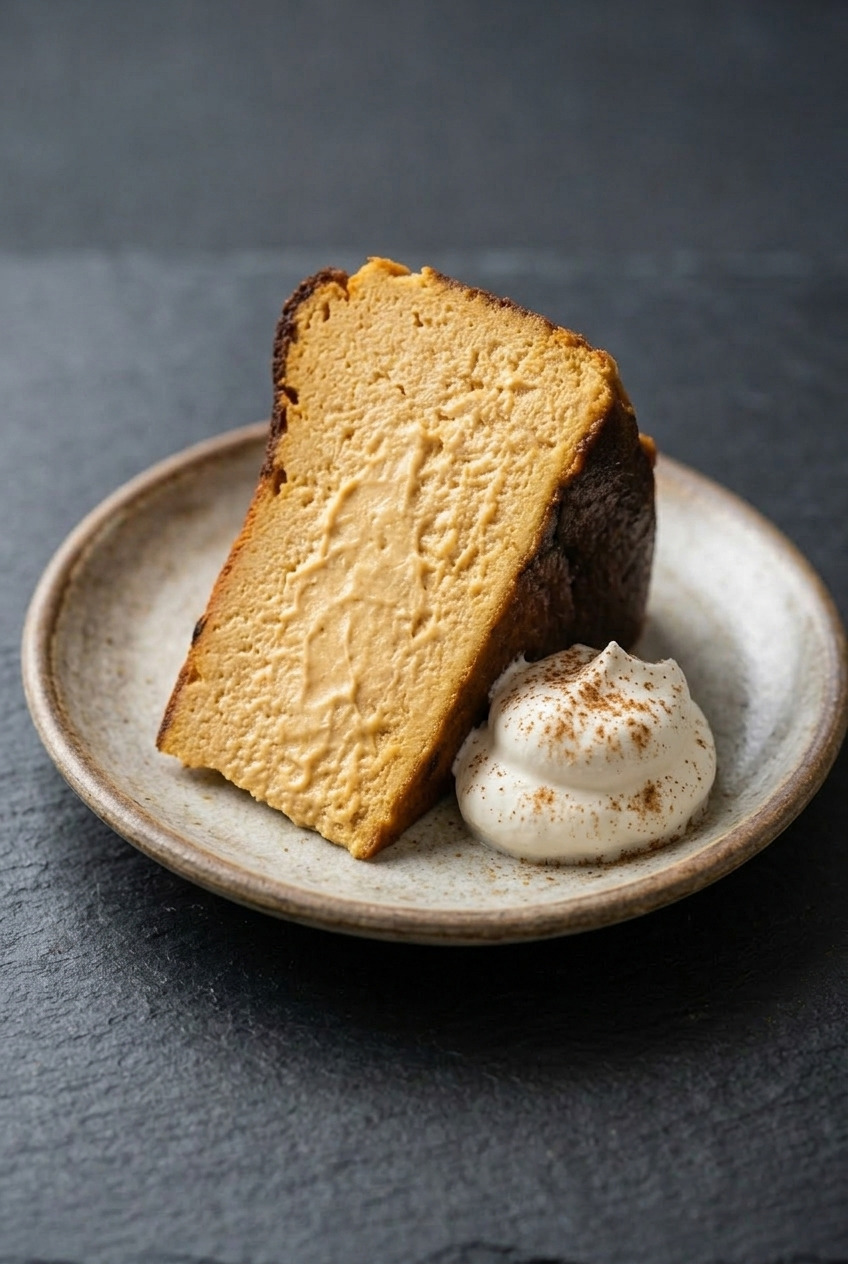
- With whipped cream. A soft dollop and a dusting of cinnamon is hard to beat.
- Small wedges. It's rich, so cut it into slim slices.
If you like the burnt top, this dulce de leche Basque cheesecake is worth a try.
Make-Ahead and Storage
This is a make-ahead dessert by design. It genuinely improves after a night in the fridge.
- Refrigerator. Cover and chill up to 4 to 5 days.
- Freezer. Wrap individual wedges and freeze up to 1 month. Thaw in the fridge overnight.
- Make-ahead tip. Bake it a day before your gathering and let the flavor settle overnight.
For a classic-looking one, my pumpkin swirl cheesecake is the showpiece.
Recipe
Pumpkin Basque Burnt Cheesecake
Ingredients
For the Cheesecake
- 24 oz cream cheese room temperature
- 1 cup granulated sugar
- ½ cup light brown sugar packed
- 4 large eggs room temperature
- 1 cup pure pumpkin puree not pumpkin pie filling
- ¾ cup heavy cream
- ¼ cup cornstarch
- 2 teaspoon ground cinnamon
- 1 teaspoon ground ginger
- ½ teaspoon ground nutmeg
- ¼ teaspoon ground cloves
- 1 teaspoon vanilla extract
- ½ teaspoon kosher salt
Instructions
Prep
- Preheat the oven to 450 degrees F. Line a 9-inch springform pan with two sheets of parchment, pressing it in and letting it stand well above the rim.
Blend the Batter
- Beat the room-temperature cream cheese with the granulated and brown sugars until completely smooth.
- Add the eggs one at a time, then mix in the pumpkin, heavy cream, cornstarch, cinnamon, ginger, nutmeg, cloves, vanilla, and salt until silky. Do not overmix.
Bake
- Pour the batter into the lined pan. Bake at 450 degrees F for 50 to 55 minutes, until the top is deeply browned and the center still jiggles noticeably.
Cool and Chill
- Cool completely in the pan on the counter. Chill at least 4 hours or overnight, then bring back toward room temperature before slicing and serving.
Notes
- Room-temp cream cheese: Cold cream cheese leaves lumps that will not blend out.
- Pull it jiggly: A firm center out of the oven means a dry cake once cooled. It sets as it chills.
- Serve just below room temperature: Cold from the fridge mutes the custardy texture.