The sign-up sheet for our church cookie walk had my name on it in pen, and I had zero memory of writing it there.
Four dozen cookies. Due Saturday morning.
That was Thursday night, around nine.
My wife just laughed and pointed at the pantry.
Sitting behind the oatmeal was a box of white cake mix I'd bought for a birthday that never needed it.
That box turned into my first batch of these red and green Christmas crinkle cookies, and they've been on my December list ever since.
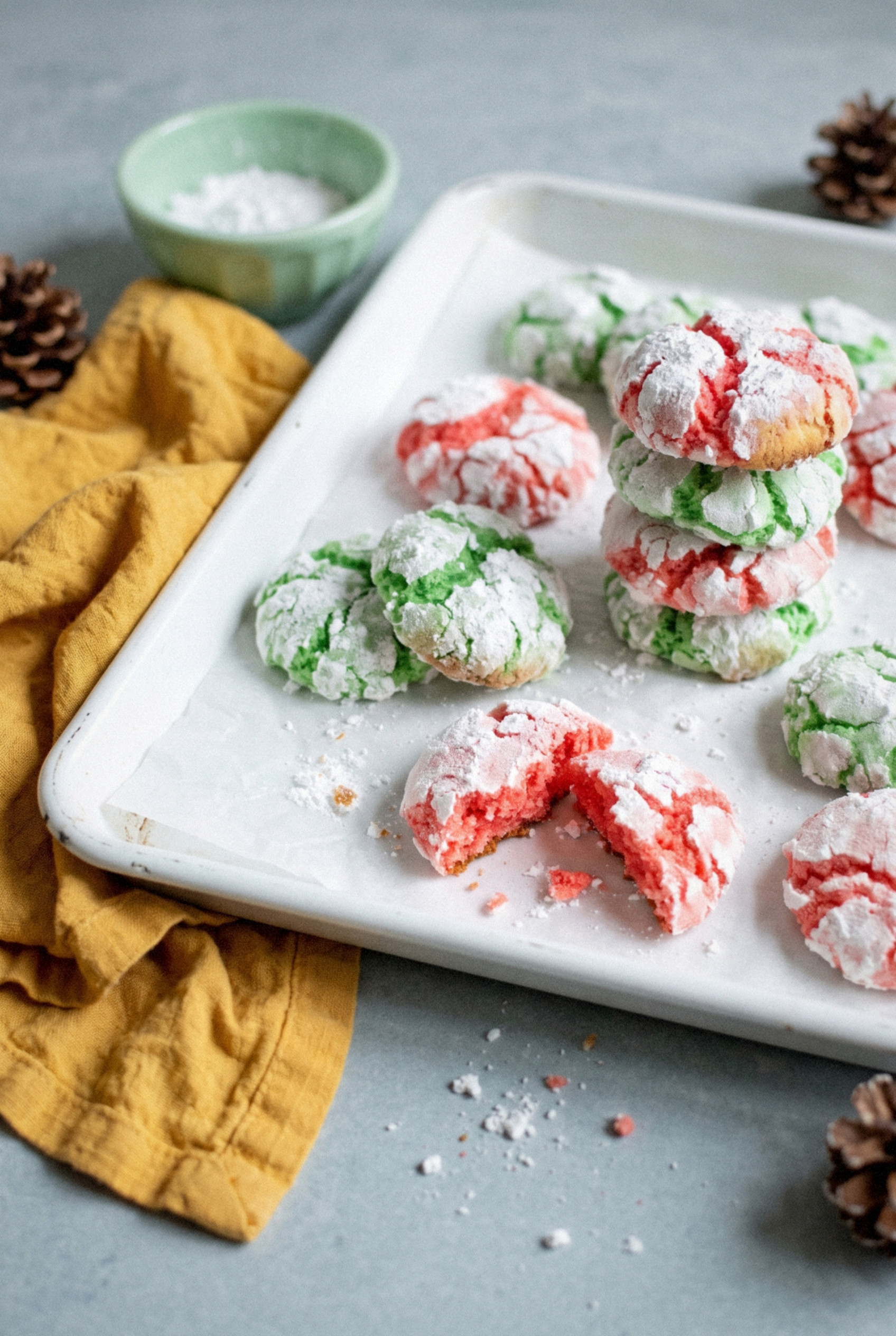
I split the dough, tint half red and half green, and roll every ball through a thick coat of powdered sugar.
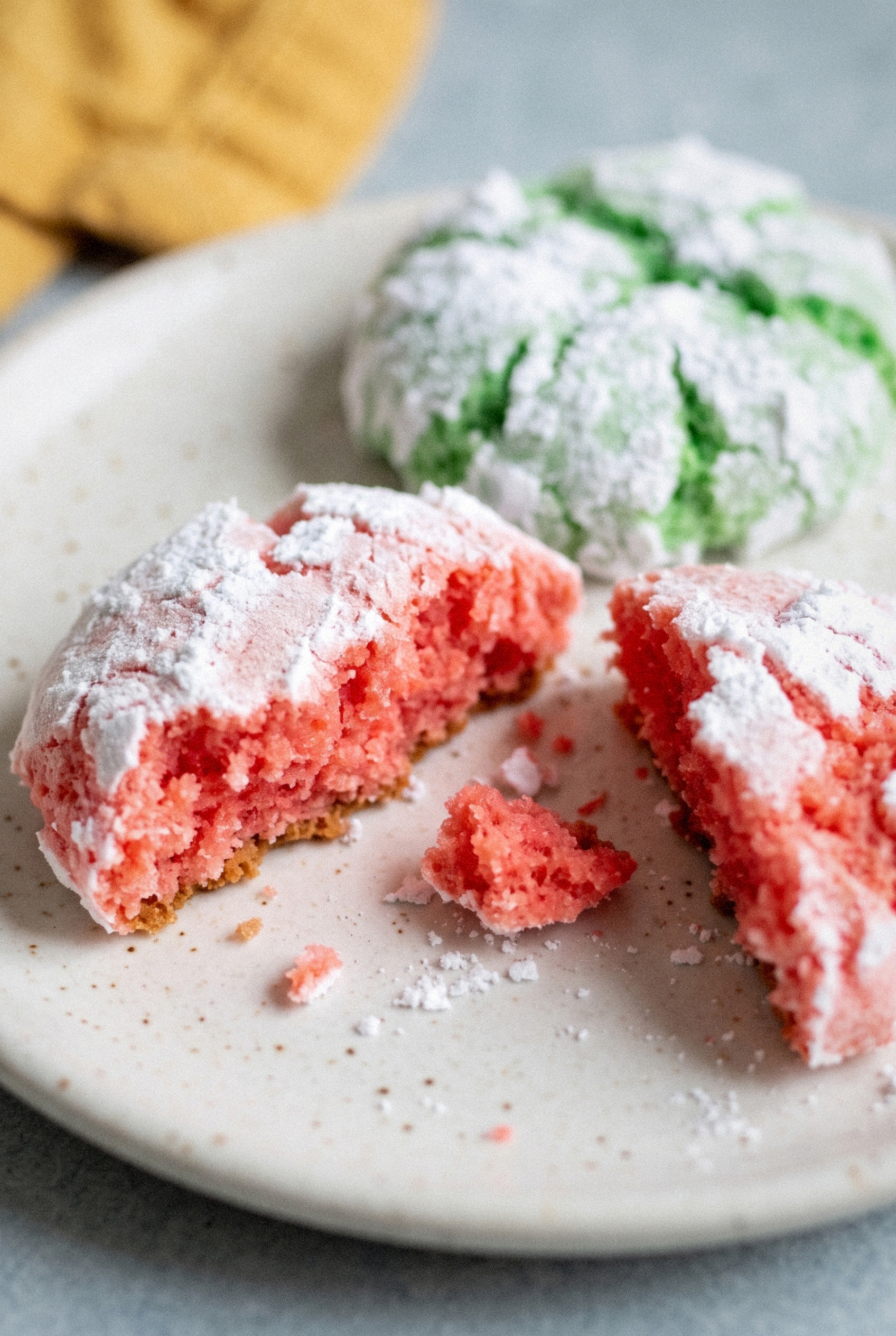
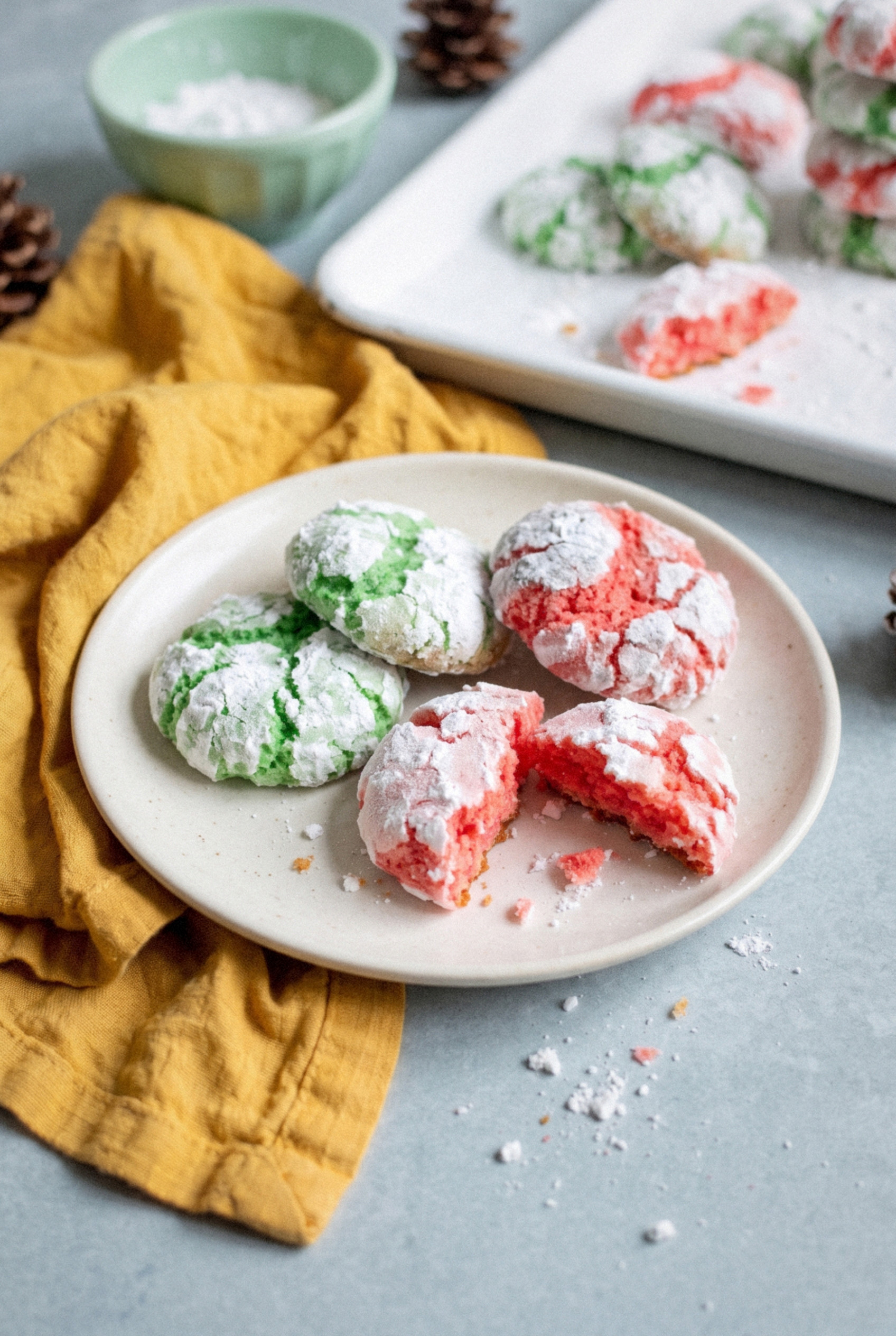
The oven does the fun part, cracking that snowy coating wide open so the bright color peeks through.
People always assume I fussed over them.
I didn't.
You need a box of cake mix, a few pantry staples, about 20 minutes of hands-on time, and a short chill in the fridge.
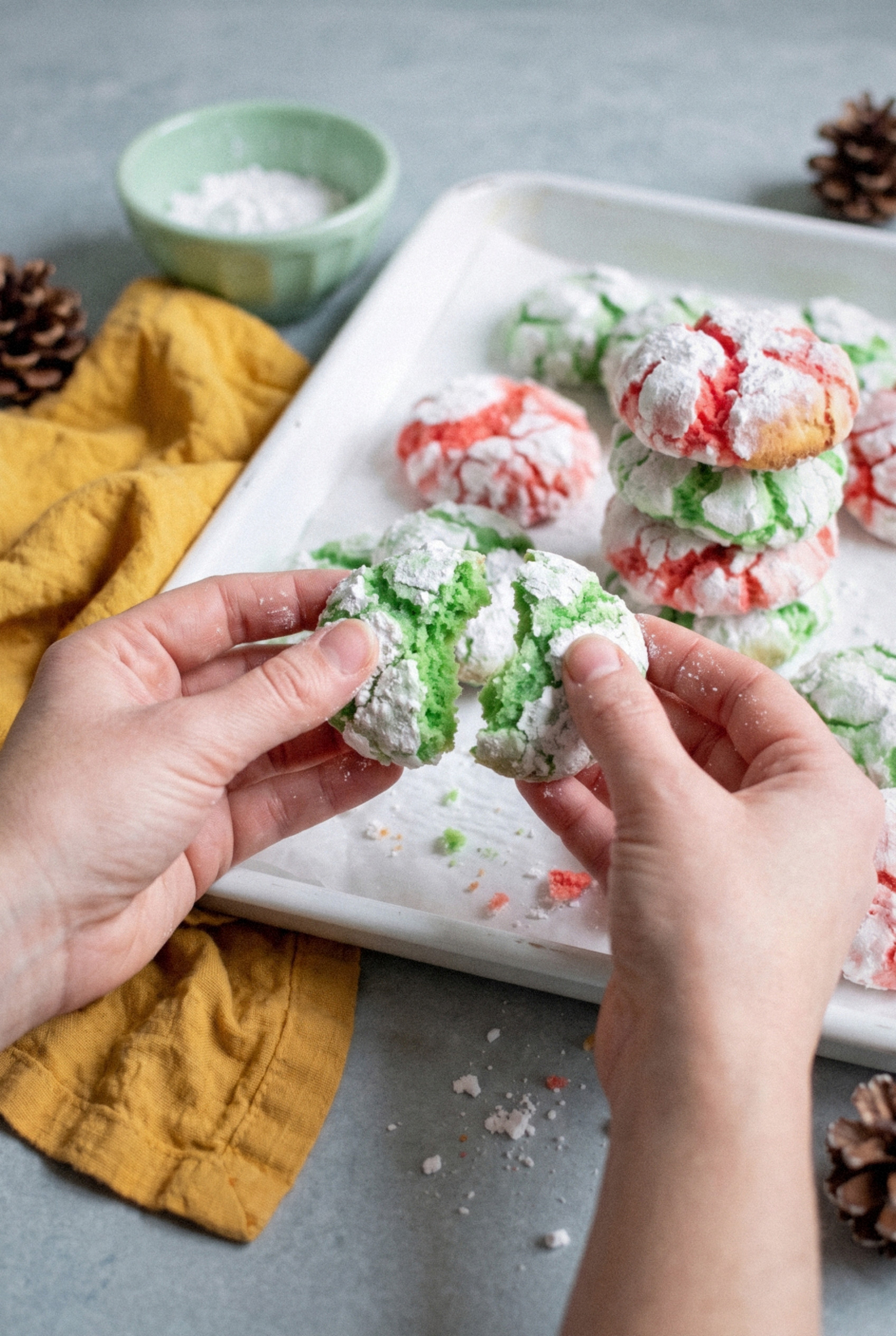
The centers stay soft and almost brownie-like, the edges set just enough, and they're the first cookie gone from every tray I bring.
Make one batch for your own cookie exchange and you'll get asked for the recipe before the plate's empty.
Why You'll Love These Cookies
These are the cookies I make when I'm short on time but still want a showstopper on the tray. Here's why they keep earning a spot.
- About 20 minutes of hands-on work. No creaming butter, no rolling pin, no cookie cutters.
- Christmas colors without decorating. The red and green do all the work. No piping bags, no icing, no sprinkles to chase across the counter.
- Soft, chewy centers. They bake up soft in the middle and lightly crisp at the edges, almost like a brownie.
- Kid-friendly. Rolling dough balls in sugar is the perfect job for little helpers.
- Freezer-friendly dough. Make it in November, bake it fresh in December.
Ingredients for Red and Green Crinkle Cookies
Most of the flavor and structure comes straight from the box. The extras are small, but they make these taste homemade.
- White cake mix (one 13.25 to 15.25-ounce box). Use WHITE, not yellow. Yellow mix tints the dough and turns your red a little orange and your green a little muddy. Betty Crocker, Pillsbury, and Duncan Hines all work. Just grab a full-size box, not a mini.
- Large eggs (2). They bind the dough and give the cookies their chewy, cake-like middle.
- Vegetable oil (⅓ cup). Keeps the cookies soft for days. Any neutral oil works.
- Vanilla extract (1 teaspoon). Takes the edge off that boxed-mix taste.
- Almond extract (½ teaspoon). My favorite addition. It gives them that bakery-style flavor people can't quite place.
- Red and green gel food coloring (about ½ teaspoon each). Gel, not liquid. Liquid color thins the dough and you'd need half the bottle for a deep shade.
- Granulated sugar (¼ cup). The first roll. It sounds odd, but it keeps the powdered sugar coat bright white.
- Powdered sugar (½ cup). The second roll and the source of all those snowy cracks.
How to Make Red and Green Christmas Crinkle Cookies
Mix, color, chill, roll, bake. That's the whole process, and it moves fast once you get going.
Step 1: Mix the Dough
In a large bowl, stir together the cake mix, eggs, oil, vanilla, and almond extract with a sturdy spatula. Keep going for about a minute until there are no dry streaks left.
The dough will be thick, soft, and sticky, a lot like brownie batter that's been left to set. That's exactly right, so don't add more mix.
Step 2: Split and Color
Divide the dough evenly between two bowls. Add red gel to one and green gel to the other, starting with about ½ teaspoon each.
Stir until the color is completely even with no white swirls. Go a shade bolder than you think you need, because the color lightens a little in the oven.
Pro tip: Wear disposable gloves for the next two steps. Red gel will stain your fingers pink for a day.
Step 3: Chill the Dough
Cover both bowls and refrigerate for 30 minutes. Cold dough rolls into clean balls instead of sticking to everything it touches.
While it chills, heat your oven to 350°F and line two baking sheets with parchment.
Step 4: Roll and Coat
Put the granulated sugar in one shallow bowl and the powdered sugar in another. Scoop 1 ½ tablespoons of dough at a time and roll it into a smooth ball.
Roll each ball in granulated sugar first, then drop it into the powdered sugar and roll until it's completely white. You want a thick coat, not a light dusting. Set the balls about 2 inches apart on the sheets.
Worried that's too much sugar? It isn't. A thin coat gives you a flat cookie with barely any cracks.
Step 5: Bake
Bake one sheet at a time for 9 to 10 minutes. The cookies will puff, spread to about 2 ½ inches, and crack across the top.
Pull them when the edges are set and the centers still look slightly soft. Let them rest on the sheet for 5 minutes, then move them to a wire rack to cool.
Tips for the Best Crinkle Cookies
Little details make the difference between flat cookies and crackly ones. These are the tricks I've learned from a lot of December batches.
- Stick with gel color. It gives you deep red and true green without making the dough runny.
- Don't skip the chill. Warm cake-mix dough spreads too fast and the cracks come out thin.
- Use a cookie scoop. Same-size balls bake in the same time. No burnt small ones next to raw big ones.
- Coat thickly. If you can see red or green through the powdered sugar before baking, roll it again.
- Sift the powdered sugar. Lumps leave bald patches on the cookies.
- Underbake slightly. They keep cooking on the hot sheet. Pull them early for soft, chewy centers.
- Keep the bowls separate. Use two scoops or rinse between colors so the red doesn't streak into the green.
Why Crinkle Cookies Crack
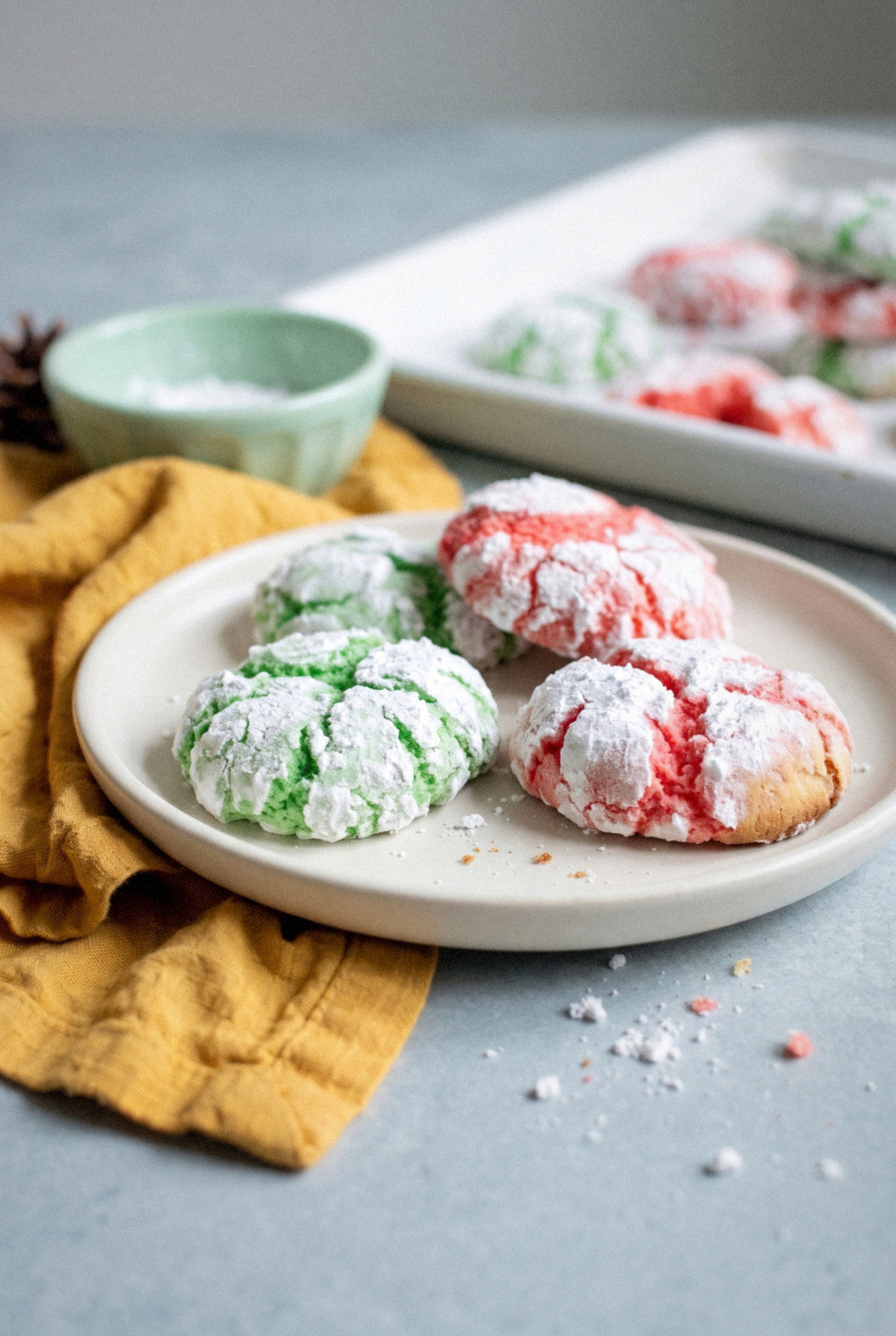
The cracks aren't luck, they're physics. The powdered sugar pulls moisture from the surface of the dough and dries it into a thin, firm shell.
In the oven, the inside of the cookie puffs and spreads. That shell can't stretch, so it splits apart into those snowy fissures, and the colored dough shows through the gaps.
The granulated sugar layer underneath helps two ways. It dries the surface even faster, and it stops the powdered sugar from melting into the dough and going gray.
So if your cookies come out flat and smooth, it's almost always a thin coating or dough that was too warm. Both are easy fixes.
Variations
Once you've made the classic version, it's super easy to play with. Here are a few that have made it onto my trays.
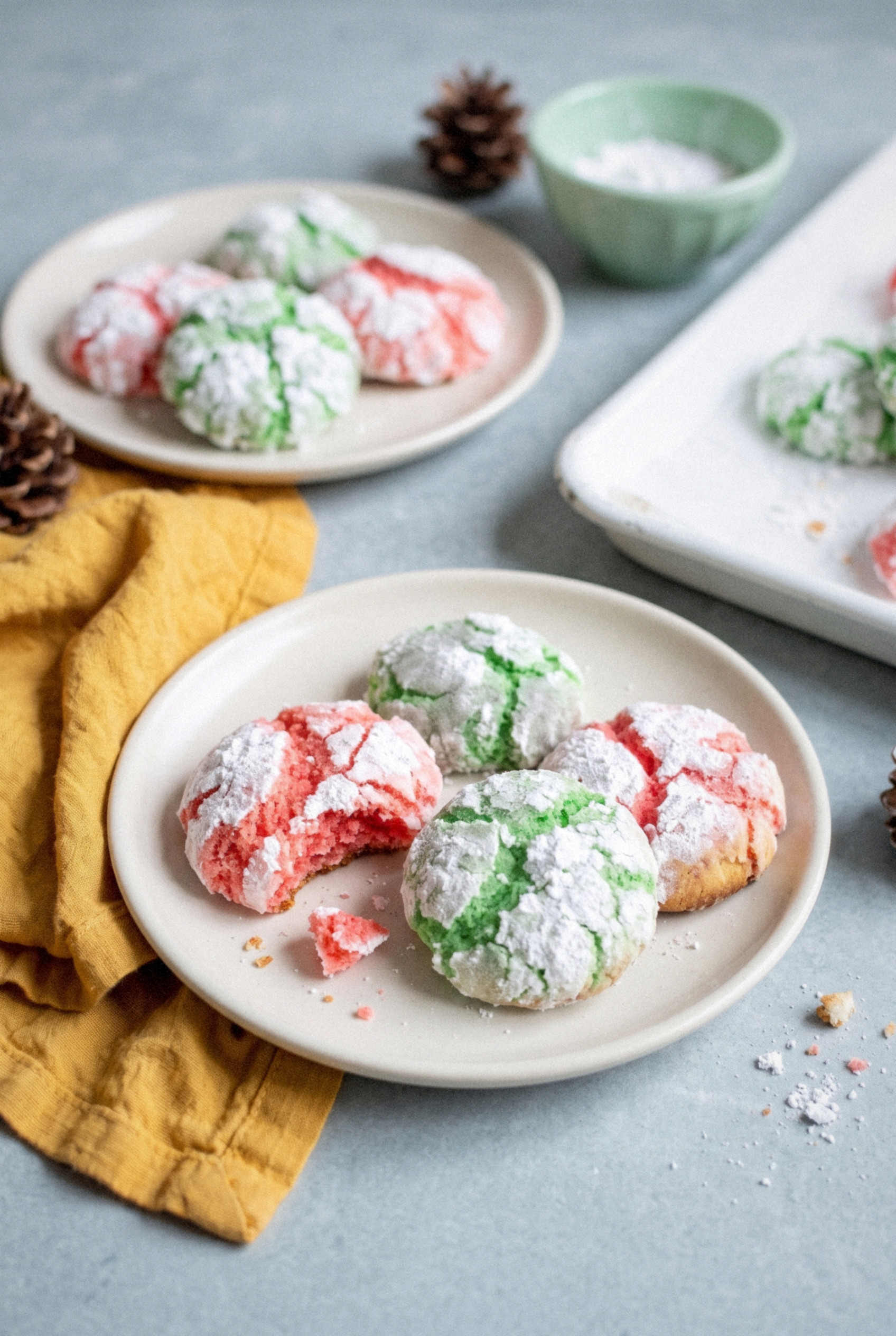
- Swirled red and green. Pinch a small piece of each color, press them together, and roll into one ball. Every cookie gets both colors.
- Peppermint. Swap the almond extract for ½ teaspoon peppermint extract. It tastes like a candy cane in cookie form.
- White chocolate chips. Fold ½ cup mini white chocolate chips into each half of the dough.
- Vanilla only. Leave out the almond extract if someone in the house doesn't love it.
- Melted butter. Swap the oil for 6 tablespoons melted butter for a richer flavor and slightly crisper edges.
- Other holidays. Pink and red for Valentine's Day, orange and purple for Halloween. Same dough, new colors.
What to Serve with Christmas Crinkle Cookies
These cookies are a crowd-pleaser on their own, but they're even better with the right company.
- A holiday cookie tray. The red and green look great next to gingerbread, shortbread, and fudge.
- Hot cocoa or cold milk. Classic for a reason. And yes, they're perfect for Santa's plate.
- Coffee or eggnog. The almond flavor pairs perfectly with both.
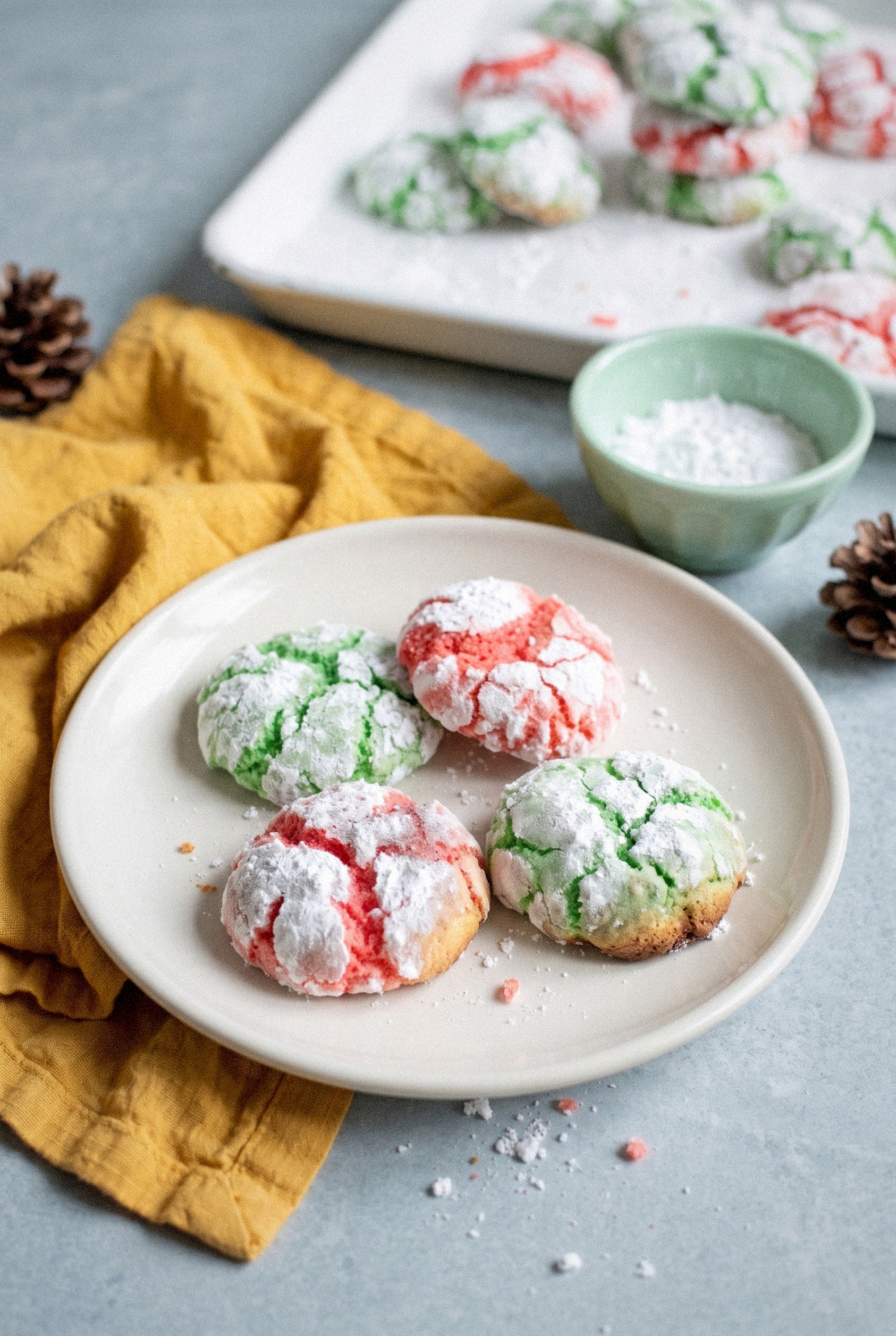
- Gift bags and tins. Stack them in clear cellophane bags tied with ribbon for neighbors and teachers.
Make-Ahead and Storage
This is one of the easiest Christmas cookies to plan ahead. The trick is to freeze the dough, not the finished cookies.
- Room temperature. Store baked cookies in an airtight container for up to 5 days. Put parchment between layers so the sugar doesn't smudge.
- Dough in the fridge. Colored, covered dough keeps for 2 days. Let it sit out for 10 minutes if it's too firm to scoop.
- Freezing dough balls. Roll the colored balls, but DON'T coat them. Freeze on a tray, then bag them for up to 3 months.
- Baking from frozen. Let the balls sit out for 10 minutes, roll in both sugars, and add 1 to 2 minutes to the bake time.
- Freezing baked cookies. It works, but the powdered sugar melts away as they thaw. Give them a fresh dusting before serving.
Frequently Asked Questions
Do I need to chill the dough before baking?
I strongly recommend it. Thirty minutes makes the sticky dough easy to roll, and cold dough spreads more slowly for thicker cookies with deeper cracks.
Why didn't my cookies crinkle?
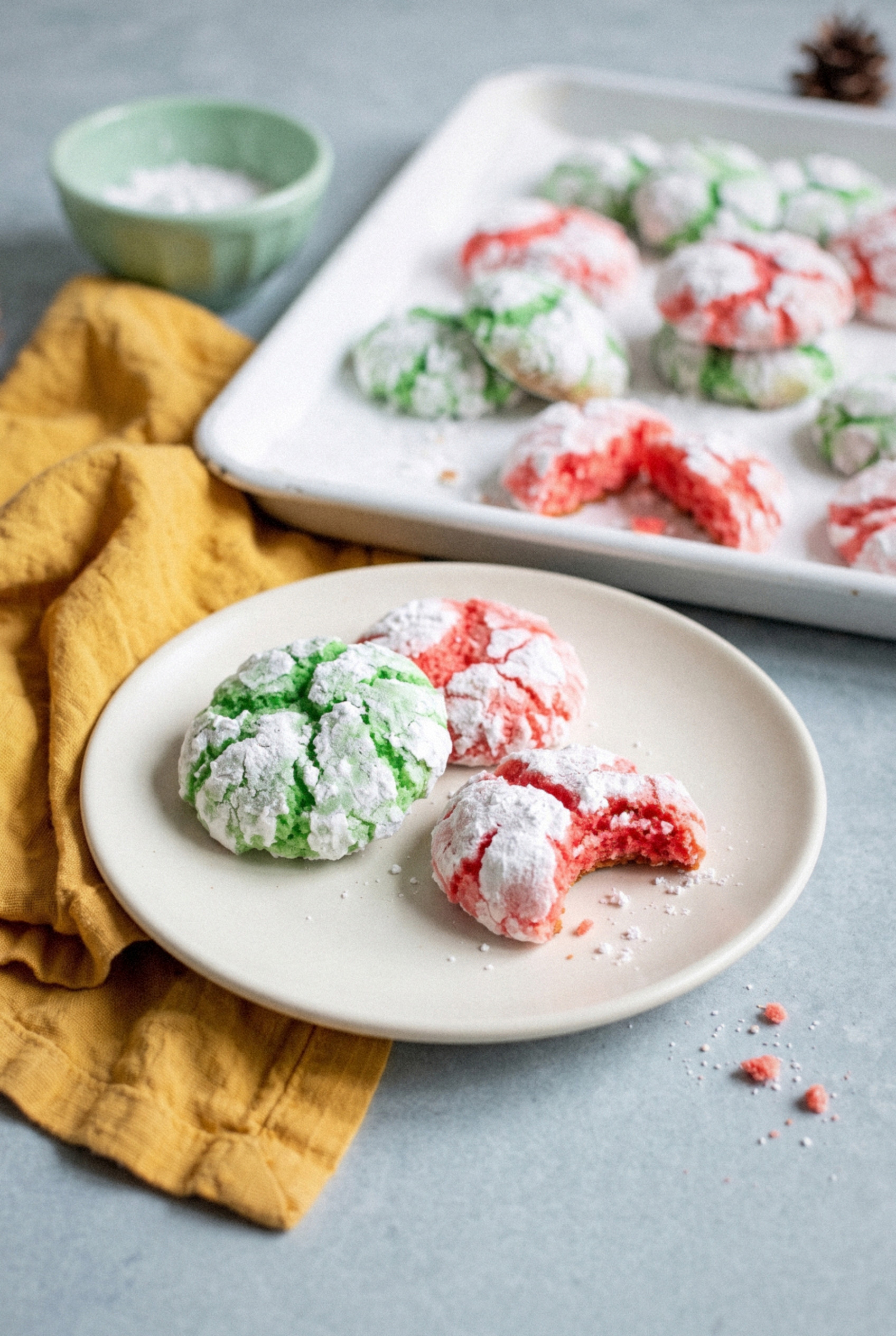
Usually the powdered sugar coat was too thin, or the dough was too warm. Roll each ball in granulated sugar, then coat it heavily in powdered sugar, and chill the dough first.
What kind of food coloring works best?
Gel food coloring. It's concentrated, so a small amount gives deep red and green without thinning the dough the way liquid coloring does.
Can I use a different flavor of cake mix?
You can, but white cake mix gives the brightest colors. Yellow mix makes the red look orange. Chocolate mix works for a red velvet look, but the green gets lost.
Can I make these from scratch instead of cake mix?
Yes. A basic butter, sugar, egg, and flour crinkle dough with baking powder works. It takes longer and needs a longer chill, which is why I stick with cake mix in December.
Can I freeze red and green crinkle cookies?
Freeze the uncoated dough balls for up to 3 months for the best results. Baked cookies freeze too, but they need a fresh dusting of powdered sugar after thawing.
Recipe
Red and Green Christmas Crinkle Cookies
Ingredients
For the Dough
- 1 box white cake mix 13.25 to 15.25 ounces
- 2 large eggs
- ⅓ cup vegetable oil
- 1 teaspoon vanilla extract
- ½ teaspoon almond extract
- ½ teaspoon red gel food coloring or to taste
- ½ teaspoon green gel food coloring or to taste
For Rolling
- ¼ cup granulated sugar
- ½ cup powdered sugar sifted
Instructions
Make the Dough
- In a large bowl, stir together the cake mix, eggs, oil, vanilla, and almond extract until no dry streaks remain.
- Divide the dough between two bowls. Tint one red and one green with gel food coloring, stirring until the color is even.
- Cover and refrigerate the dough for 30 minutes.
Roll and Bake
- Heat the oven to 350°F and line two baking sheets with parchment paper.
- Scoop 1 ½ tablespoons of dough and roll into a ball. Roll in granulated sugar, then coat thickly in powdered sugar. Place 2 inches apart on the baking sheets.
- Bake one sheet at a time for 9 to 10 minutes, until the edges are set and the tops are cracked but the centers still look soft.
- Cool on the baking sheet for 5 minutes, then transfer to a wire rack to cool completely.
Notes
- Cake mix: Use white cake mix for the brightest colors. Yellow mix dulls the red and green.
- Coloring: Use gel food coloring. Liquid coloring thins the dough.
- Coating: A thick powdered sugar coat is what creates the cracks. The granulated sugar layer underneath keeps it bright white.
- Make ahead: Freeze uncoated dough balls up to 3 months. Coat in both sugars and add 1 to 2 minutes to the bake time.
- Storage: Airtight at room temperature up to 5 days.