My aunt kept a round blue tin on top of her fridge every December.
Everybody at her Christmas Eve table knew exactly what was inside.
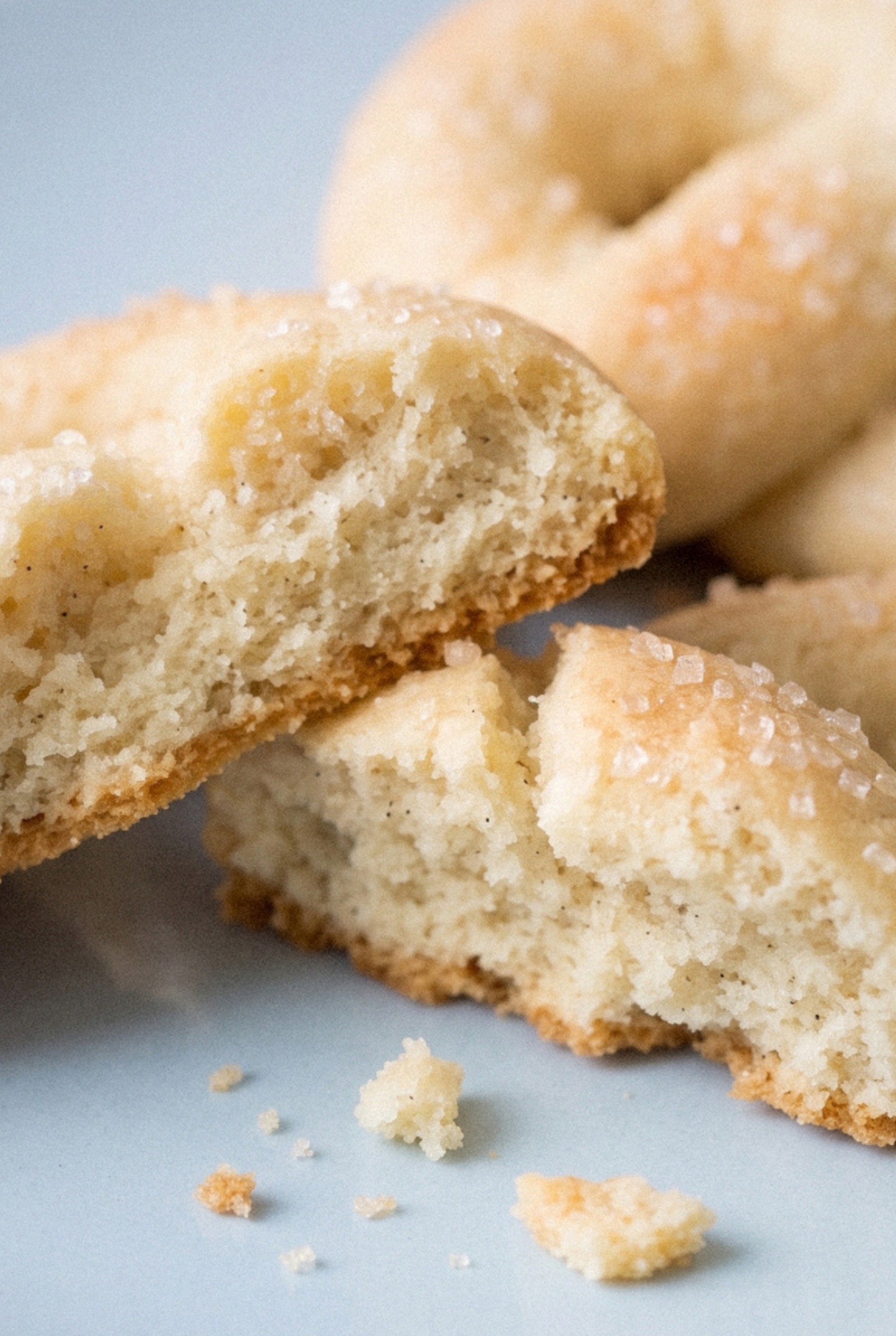
Butter cookies in little paper cups, and the ones shaped like pretzels with that crunchy sugar on top always went first.
She'd bake four kinds of cookies from scratch, and we still dug through the tin for those.
Years later I tried to make my own vanilla pretzel butter cookies, and my first few rounds were a mess.
The ropes cracked every time I twisted them, and the baked cookies tasted like plain sugar cookies in a fancy shape.
Then I borrowed an old French sable trick: a hard-cooked egg yolk pressed through a strainer right into the butter.
It sounds odd. It works.
The dough rolls into smooth ropes that bend without splitting, and the cookies bake up crisp, sandy, and full of vanilla.
My wife now asks for a double batch every year, mostly so she can pack a tin for her office.
They hold their shape, they're not too sweet, and they travel like champs.
If you've been hunting for the homemade version of that holiday tin, this is it. I promise.
Why These Vanilla Pretzel Butter Cookies Work
Three small choices make these taste like the bakery kind, not a sugar cookie in disguise. None of them are hard.
- A cooked egg yolk. A raw yolk adds water, and water makes dough sticky and cookies puffy. A hard-cooked yolk adds richness with almost no moisture, so you get that sandy, melt-in-your-mouth crumb French bakers call sable.
- A full tablespoon of vanilla. That's a lot for a small batch, and it's on purpose. Vanilla is the whole flavor here, so it needs to be loud.
- No baking powder or soda. Leavening makes cookies spread and puff, which blurs the twist. Without it, every loop stays sharp and defined.
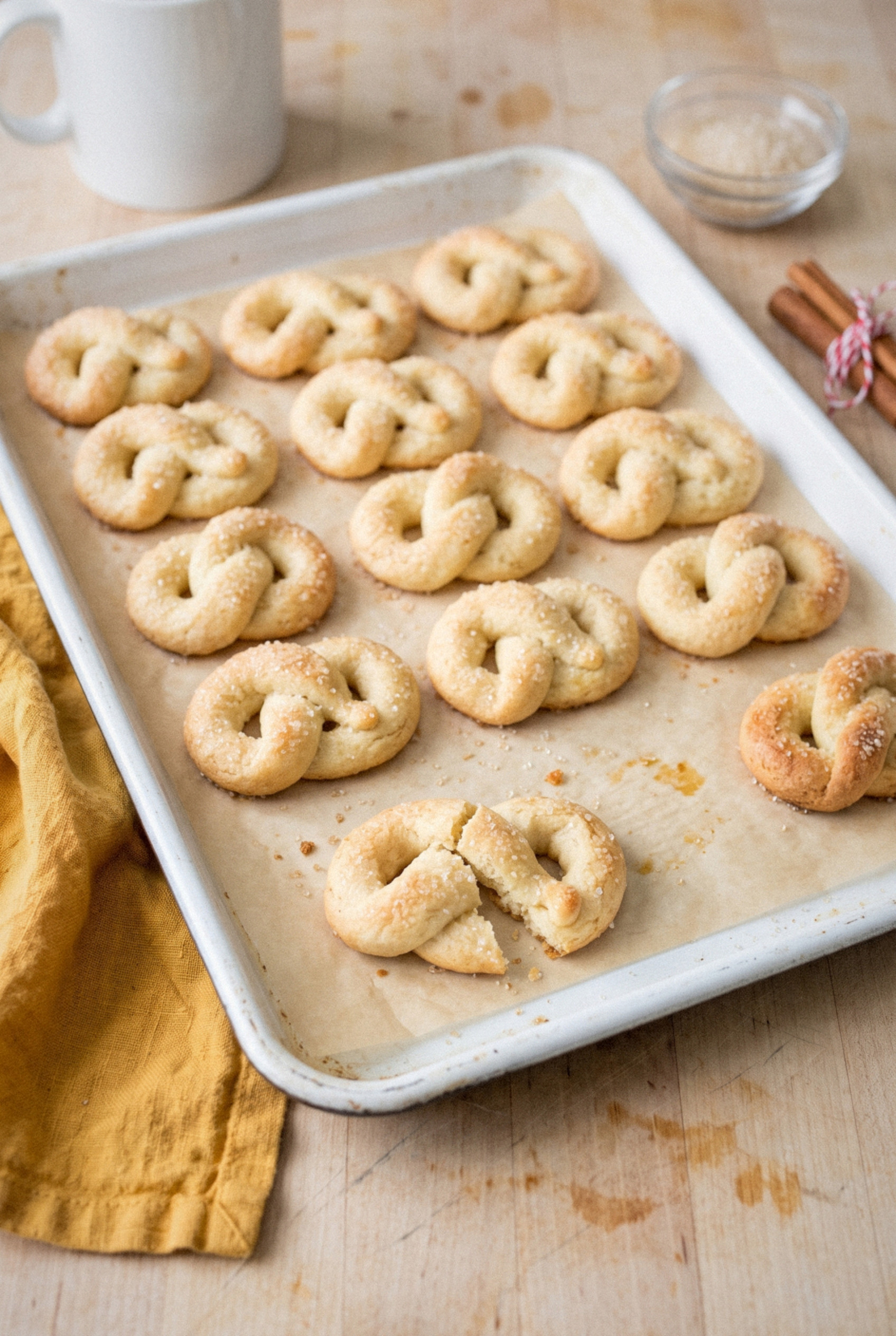
- Egg white wash and coarse sugar. The wash gives a light golden shine and glues the sugar down. The coarse sugar adds sparkle and a little crunch in every bite.
Pretzel-shaped butter cookies show up all over Europe at Christmas.
Danish bakeries sell them in those famous tins, Dutch bakers make a puff pastry cousin called krakelingen, and Scandinavian families twist tiny ones as part of the old "seven kinds of cookies" tradition.
This version leans French in texture and American in size, which is the perfect fit for a holiday cookie tray.
Ingredients You'll Need
This is a short list of pantry staples, so quality matters. Good butter and real vanilla carry the whole cookie. Exact amounts are in the recipe card below.
- Large egg (1). You hard-cook it and use only the yolk in the dough. Save the white for a snack or toss it.
- Unsalted butter (10 tablespoons). Softened to room temperature, so your finger leaves a dent but doesn't sink in. Melty butter makes greasy, flat cookies.
- Granulated sugar (⅓ cup plus 1 tablespoon). Regular white sugar keeps the cookie crisp. It's lightly sweet, not sugary.
- Table salt (¼ teaspoon). Just enough to make the butter taste like butter.
- Vanilla bean paste or pure vanilla extract (1 tablespoon). Paste gives you those little black specks. Extract tastes just as good.
- All-purpose flour (1 ½ cups, 213 grams). Spoon and level it, or better yet, weigh it. Too much flour is the main reason ropes crack.
- Egg white plus water. One large egg white beaten with 1 teaspoon of water makes the wash.
- Turbinado or coarse white sugar (3 to 4 tablespoons). The big crystals don't melt in the oven, so they stay sparkly on top.
Substitutions
- Vanilla extract for paste. Swap 1:1. You lose the specks, not the flavor.
- Granulated sugar for coarse sugar. Skip the egg wash and press the top of each shaped cookie into a shallow bowl of granulated sugar instead. You get a frosted look and a softer crunch.
- Salted butter. Use it and leave out the added salt.
- Raw yolk instead of cooked. It works in a pinch, but the dough is stickier and the cookies come out softer. Chill the dough a full hour if you go this way.
How to Make Vanilla Pretzel Butter Cookies
The method is simple, it just takes a little patience at the shaping stage. Put on some Christmas music and enjoy it.
Step 1: Cook and Sieve the Egg Yolk
Set the egg in a small saucepan, cover it with an inch of water, and bring it to a boil over high heat. Take the pan off the heat, put a lid on, and let it sit for 10 minutes.
Move the egg to a bowl of ice water for 5 minutes, then peel it and pull out the yolk. Press the yolk through a fine-mesh strainer with the back of a spoon so it falls into fine crumbs.
Pro tip: Sieve it straight into your mixing bowl. Less cleanup, and none of the yolk sticks to an extra dish.
Step 2: Make the Dough
Add the butter, granulated sugar, and salt to the sieved yolk. Beat on medium speed with a stand mixer or hand mixer for 3 to 4 minutes, until the mixture looks pale and fluffy, scraping the bowl once or twice.
Turn the mixer to low and beat in the vanilla. Add the flour all at once and mix on low for about 30 seconds, just until no dry streaks remain.
The dough will look crumbly at first. Press it together with a spatula or your hands until it forms one smooth mass.
Step 3: Shape Logs and Chill
Divide the dough in half and roll each half into a log about 6 inches long and 1 ¾ inches thick. Wrap each log in parchment and twist the ends like a candy wrapper to pack it tight.
Chill the logs for 30 minutes. You want them firm enough to slice cleanly, but NOT rock hard.
Step 4: Roll Ropes and Twist the Pretzels
Heat the oven to 350°F with racks in the upper and lower middle positions, and line two baking sheets with parchment. Slice one log into ¼-inch rounds and keep the other log in the fridge.
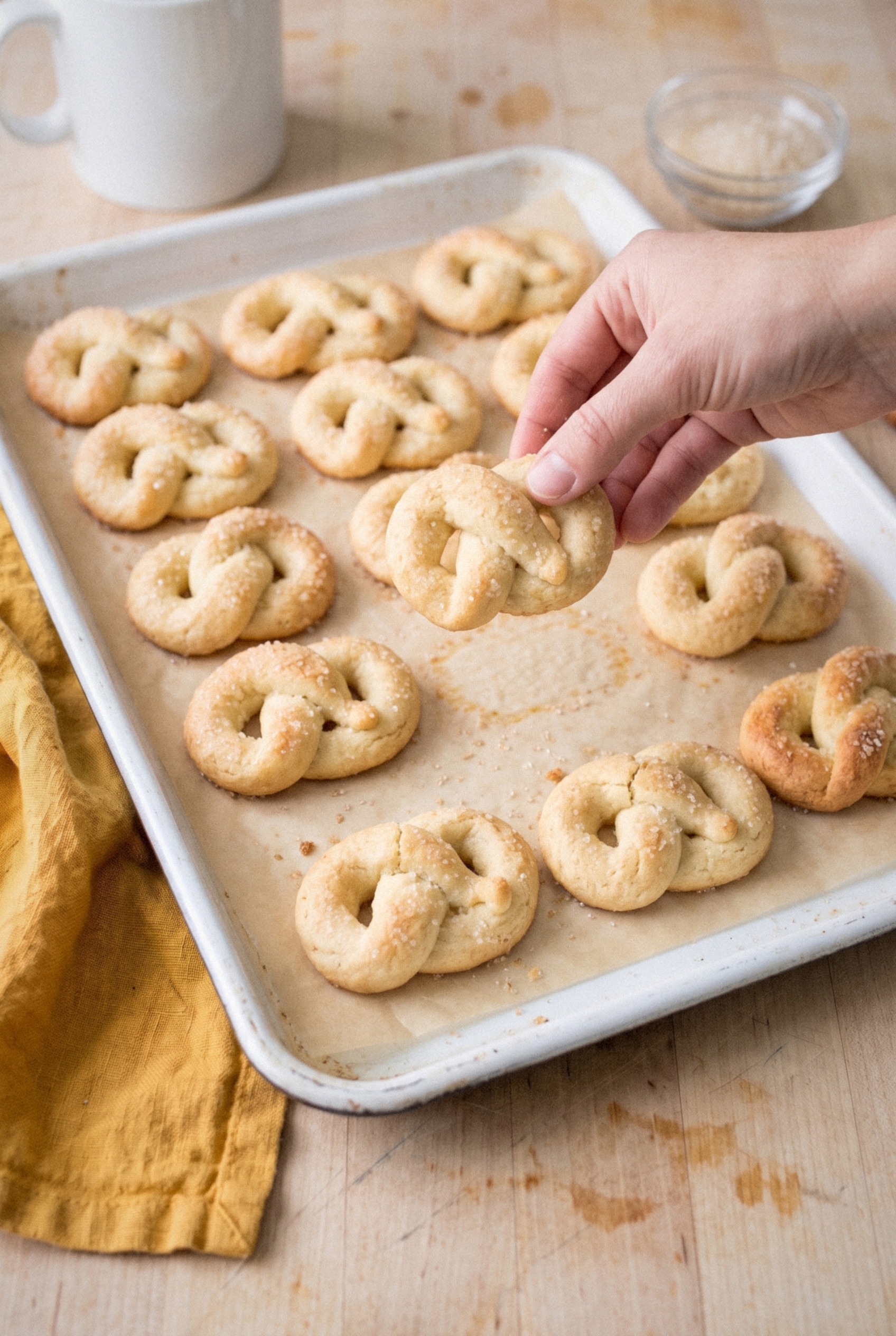
Roll each round into a ball, then roll the ball on a clean counter into a rope about 6 inches long. Bend the rope into a U, cross the ends over each other twice, then fold the twisted ends down and press them gently onto the bottom of the U.
Set the pretzels about 1 inch apart on the sheet. Flatten each one very slightly with your fingertip so they bake evenly.
Feels fiddly? Only for the first five. After that your hands just know the move.
Step 5: Wash, Sugar, and Bake
Brush the tops lightly with the egg white wash. Sprinkle the coarse sugar evenly over every cookie, letting a few crystals settle into the loops.
Bake for about 15 minutes, swapping and rotating the sheets halfway through. They're done when the centers are pale golden and the edges are a shade darker.
Cool on the sheet for 5 minutes, then move them to a wire rack. They crisp up as they cool, so don't judge the texture straight from the oven.
Tips for Shaping Pretzel Cookies
Shaping is where most batches go sideways, so here's how I fix the usual problems.
- Ropes crack when you bend them. The dough is too cold. Let the sliced rounds sit for 5 minutes, or roll each ball between your palms for a few seconds to warm it.
- Ropes stick to the counter. Flour your fingertips, not the counter. Extra flour on the work surface dries out the outside of the rope and causes more cracks.
- Dough gets soft and greasy. Your kitchen is warm. Pop the sliced rounds back in the fridge for 10 minutes.
- Uneven ropes. Roll from the middle outward with flat fingers. Thick spots bake slower than thin ones.
- Work a few at a time. Shape one round completely before rolling the next. Pre-rolled ropes dry out while they wait.
- Cookies spread in the oven. The butter was too soft or the kitchen too warm. Chill the shaped cookies on the tray for 10 minutes before baking and the loops stay sharp.
- Short on patience? Twist each rope into a simple figure eight, or roll the dough flat, sugar the top, and cut small squares. Still delicious.
Egg Wash and Coarse Sugar vs. a Sugar Dip
There are two ways to get sugar on top, and they give slightly different cookies.
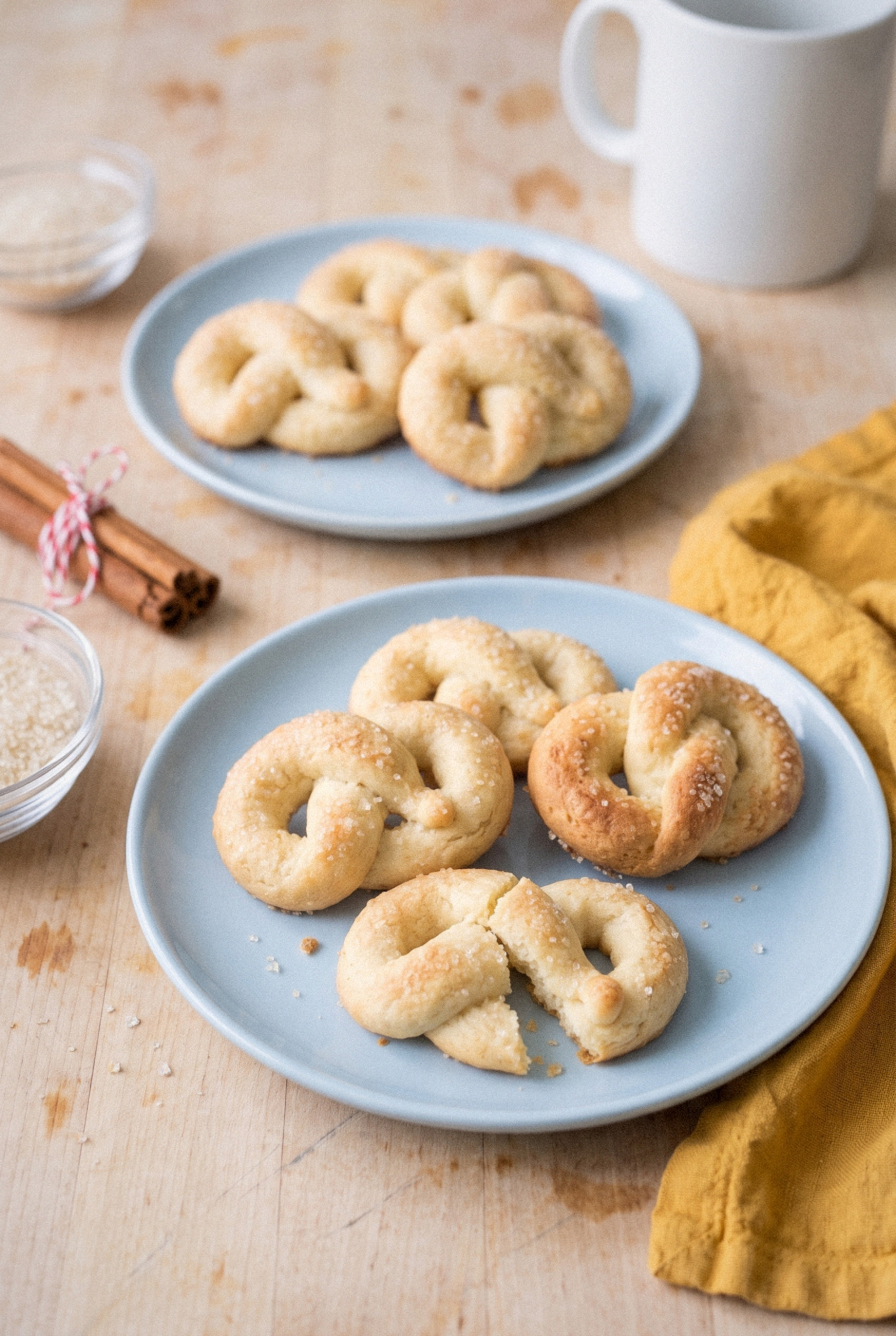
The egg white wash with turbinado sugar gives a light golden shine and big, sparkly crystals that crunch.
The no-wash method, where you press the raw shaped cookie face-down into granulated sugar, gives a paler, frosty look with sugar tucked into every nook.
- Pick the wash if you want that classic bakery-tin look and a golden top.
- Pick the dip if you'd rather skip the brush and want a snowy, wintry finish.
- Either way, sugar only the top. Sugar on the bottom burns on the baking sheet.
Variations
Once you've nailed the shape, the flavor is easy to play with.
- Citrus. Beat the zest of one orange or lemon into the butter and sugar. Orange with vanilla is a holiday favorite at my house.
- Almond. Swap 1 teaspoon of the vanilla for almond extract.
- Cinnamon sugar. Mix ½ teaspoon of cinnamon into the coarse sugar topping.
- Chocolate-dipped. Dip half of each cooled cookie into melted dark chocolate and let it set on parchment.
- Cream cheese tang. Replace 2 tablespoons of the butter with cold cream cheese for a softer, slightly tangy bite.
- Festive sugar. Use red or green coarse sugar for a Christmas cookie tray.
Make Ahead, Storage, and Gifting
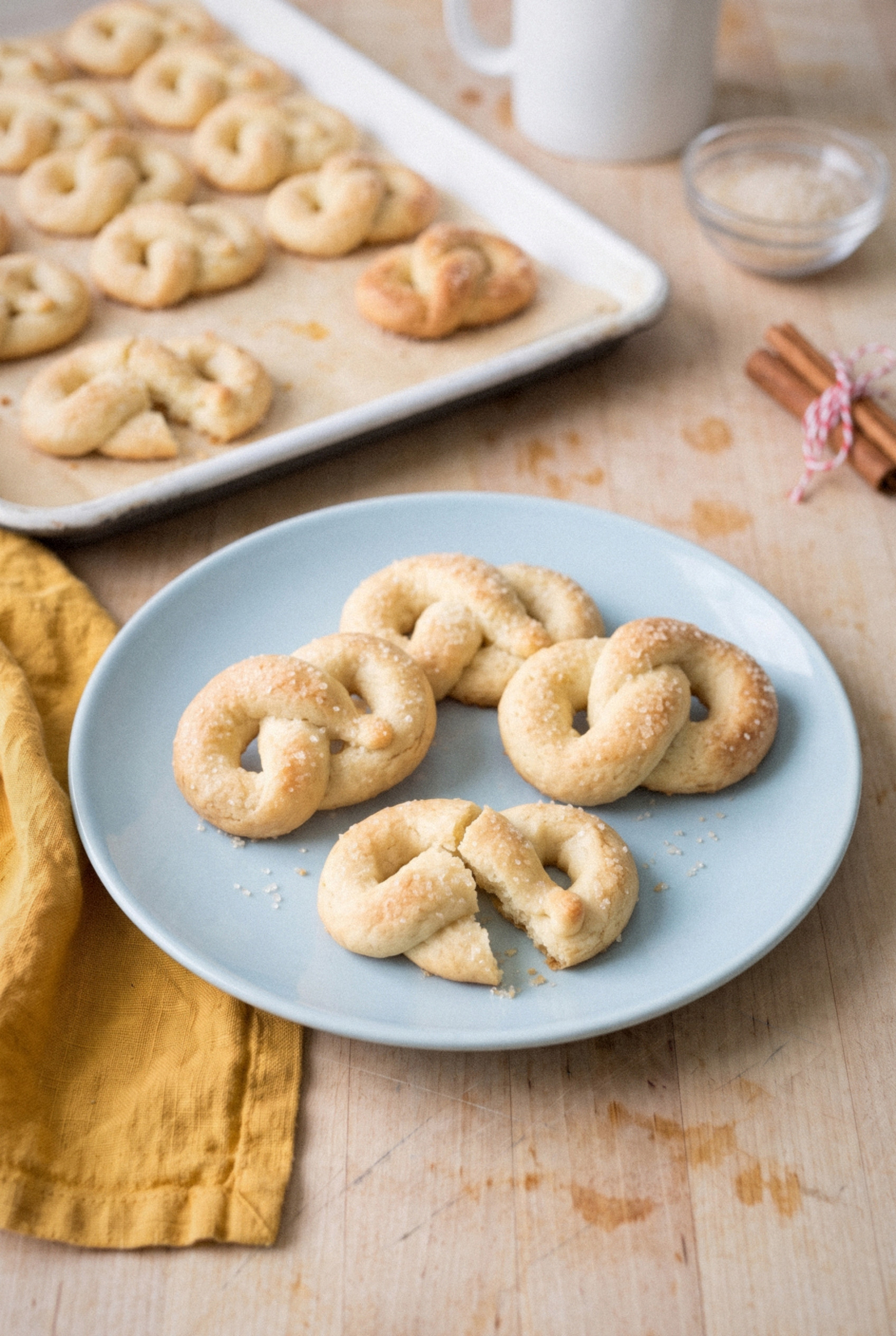
These are one of the best make-ahead Christmas cookies I know. Butter cookies with no leavening and almost no moisture keep beautifully.
- Dough logs. Wrapped tight, they keep in the fridge for 2 days. Let them sit out for 10 minutes before slicing.
- Frozen dough. Freeze the wrapped logs for up to 2 weeks. Thaw overnight in the fridge, then slice and shape.
- Baked cookies. Store in an airtight tin at room temperature for up to 1 week, with parchment between the layers so the sugar stays crisp.
- Freezing baked cookies. Freeze in a sealed container for up to 2 months. Thaw at room temperature with the lid on so they don't get damp.
- Shipping. They're sturdy and not sticky, so they ship well. Pack them snug in a tin with parchment layers and a little crumpled paper on top.
My Christmas cookie tray schedule: I make the dough on a weekend, bake about a week before the party, and stack them in tins until it's time to build the tray.
What to Serve With Them
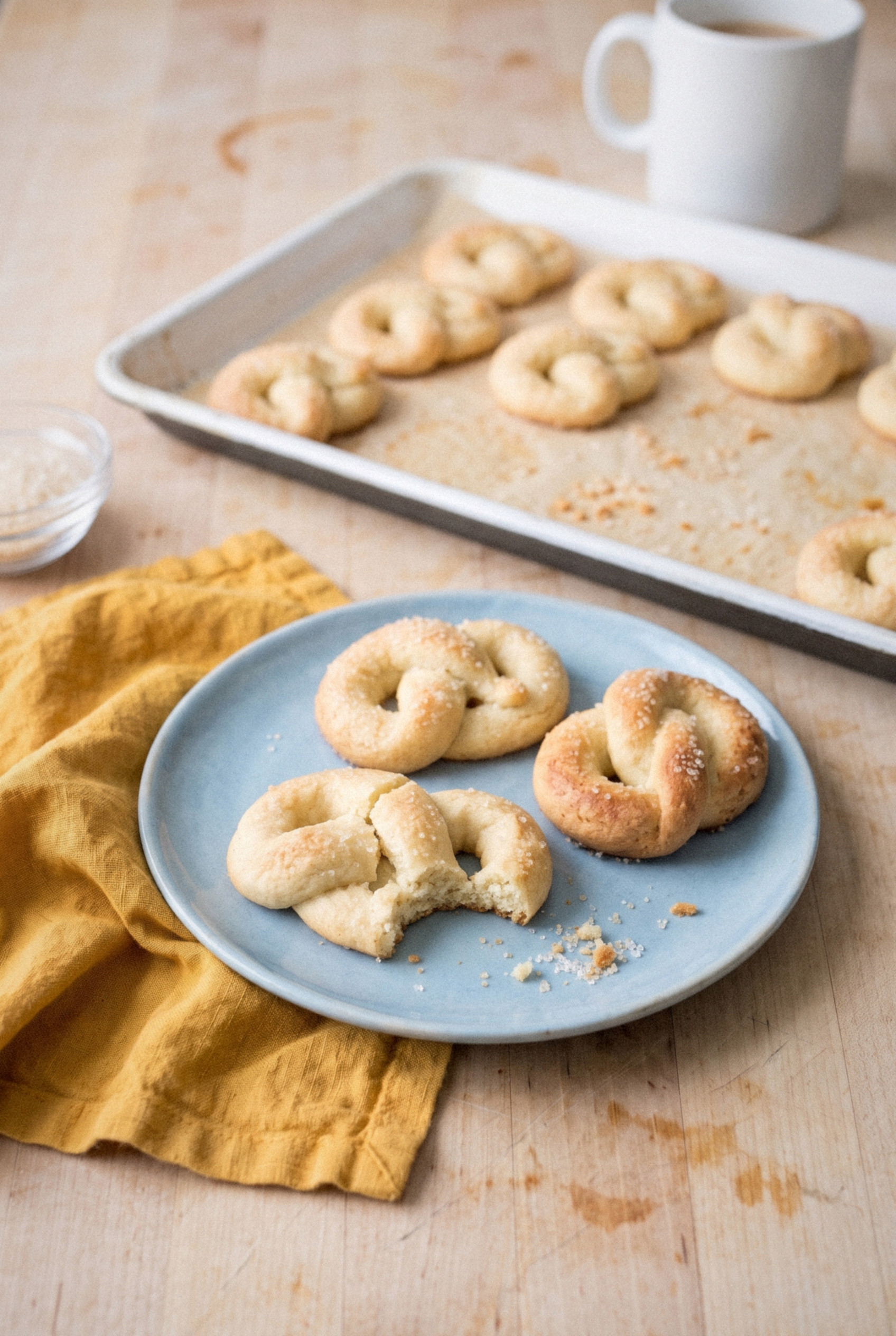
These are crisp and buttery, so they pair perfectly with anything warm or creamy.
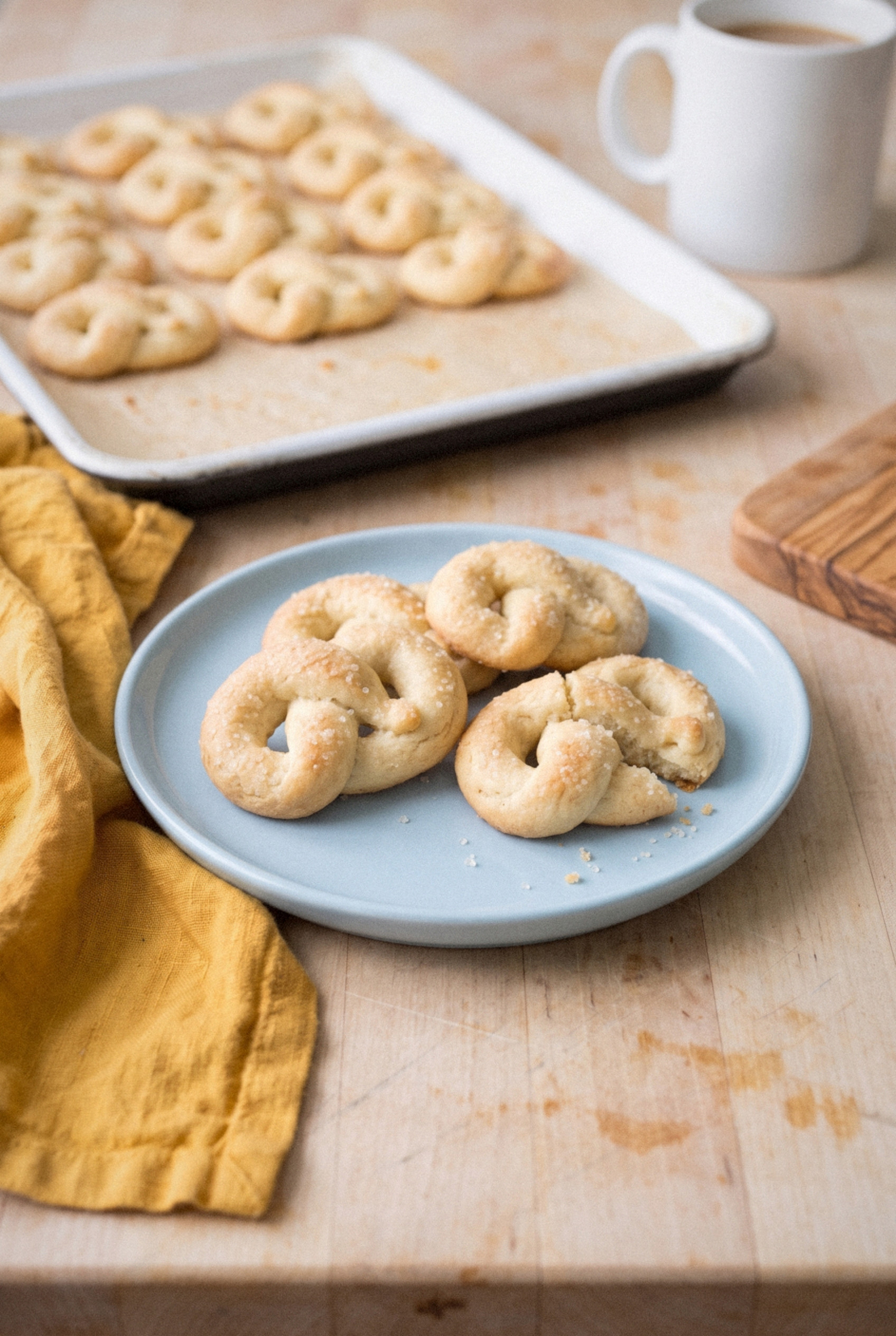
- Coffee or hot cocoa. A classic match for dunking.
- A cookie tray. Add something chewy, something chocolate, and something with jam so the tray has contrast.
- Eggnog. The vanilla in the cookie and the nutmeg in the nog are made for each other.
- A scoop of vanilla ice cream. Crumble one over the top for crunch.
Recipe
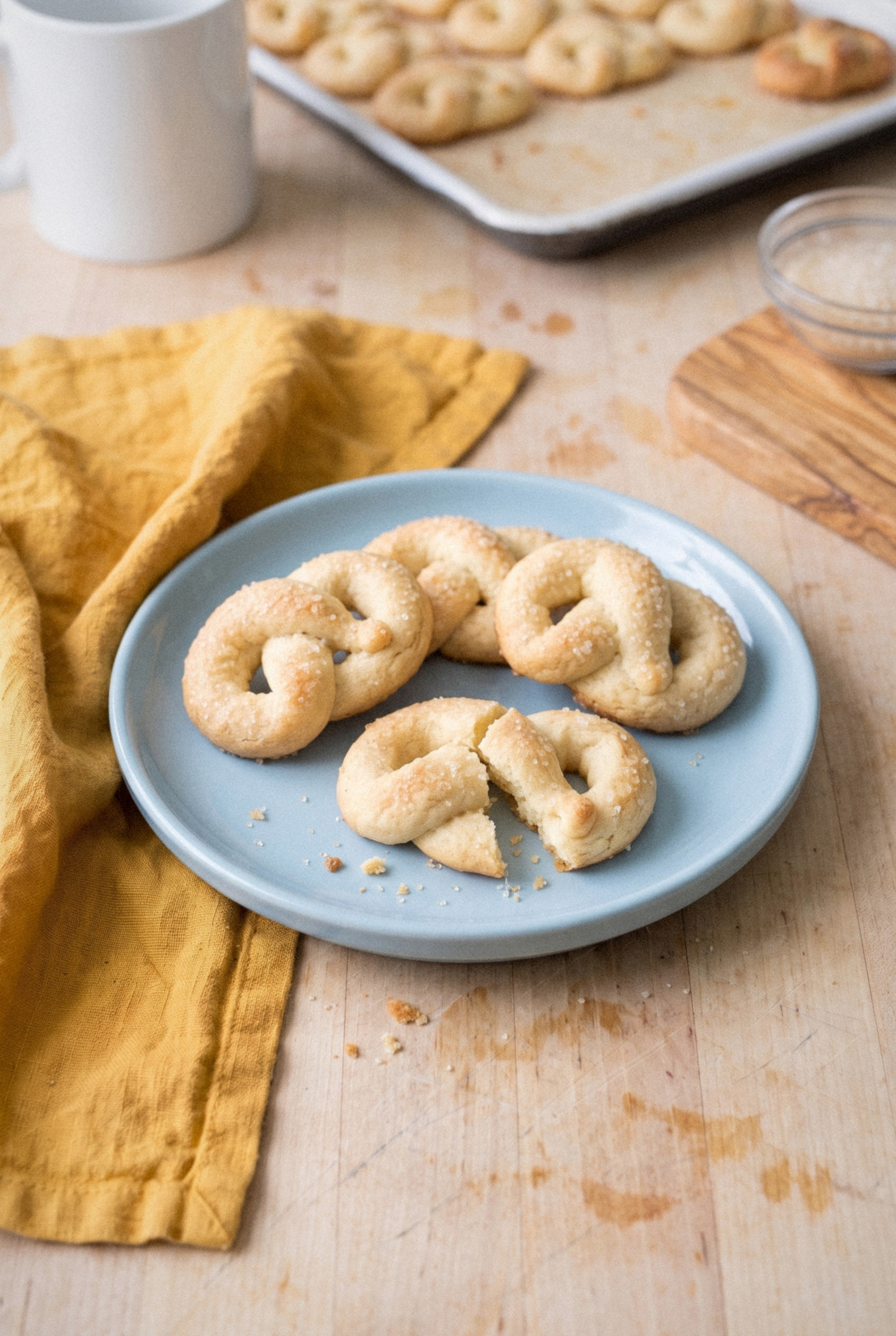
Vanilla Pretzel Butter Cookies
Ingredients
For the Dough
- 1 large egg hard-cooked, yolk only
- 10 tablespoons unsalted butter softened (142 g)
- ⅓ cup plus 1 tablespoon granulated sugar 78 g
- ¼ teaspoon table salt
- 1 tablespoon vanilla bean paste or pure vanilla extract
- 1 ½ cups all-purpose flour spooned and leveled (213 g)
For the Topping
- 1 large egg white beaten with 1 teaspoon water
- 3 tablespoons turbinado or coarse white sugar plus more as needed
Instructions
Cook the Yolk
- Place the egg in a small saucepan, cover with 1 inch of water, and bring to a boil over high heat. Remove from the heat, cover, and let stand 10 minutes.
- Transfer the egg to a bowl of ice water for 5 minutes. Peel, discard the white, and press the yolk through a fine-mesh strainer into a large mixing bowl.
Make the Dough
- Add the butter, granulated sugar, and salt to the yolk. Beat on medium speed until pale and fluffy, 3 to 4 minutes, scraping the bowl as needed.
- On low speed, beat in the vanilla. Add the flour and mix on low just until combined, about 30 seconds. Press the dough into a cohesive mass.
- Divide the dough in half and roll each half into a log 6 inches long and 1 ¾ inches thick. Wrap each log in parchment, twist the ends to compact, and refrigerate 30 minutes, until firm but not hard.
Shape and Bake
- Heat the oven to 350°F with racks in the upper-middle and lower-middle positions. Line 2 baking sheets with parchment paper.
- Slice one log into ¼-inch rounds, keeping the other log chilled. Roll each round into a ball, then into a 6-inch rope.
- Bend each rope into a U, twist the ends around each other twice, then fold the twisted ends down and press them gently onto the bottom of the curve. Place 1 inch apart on the prepared sheets and flatten very slightly. Repeat with the second log.
- Brush the tops lightly with the egg white wash and sprinkle evenly with coarse sugar.
- Bake until the centers are pale golden and the edges slightly darker, about 15 minutes, rotating and swapping the sheets halfway through.
- Cool on the sheets for 5 minutes, then transfer to a wire rack to cool completely.
Notes
- Cracking ropes: If the dough cracks when you bend it, let the slices warm for 5 minutes or roll each ball between your palms first.
- Weigh the flour: Too much flour makes dry, crumbly ropes. 213 grams is exact.
- No-wash option: Skip the egg white and press the top of each shaped cookie into a bowl of granulated sugar before baking.
- Make ahead: Wrapped dough logs keep 2 days in the fridge or 2 weeks in the freezer.
- Storage: Store baked cookies airtight with parchment between layers for up to 1 week, or freeze up to 2 months.