On Sunday afternoon I mix a bowl of dough that I have no intention of baking until Tuesday.
That's the whole trick here.
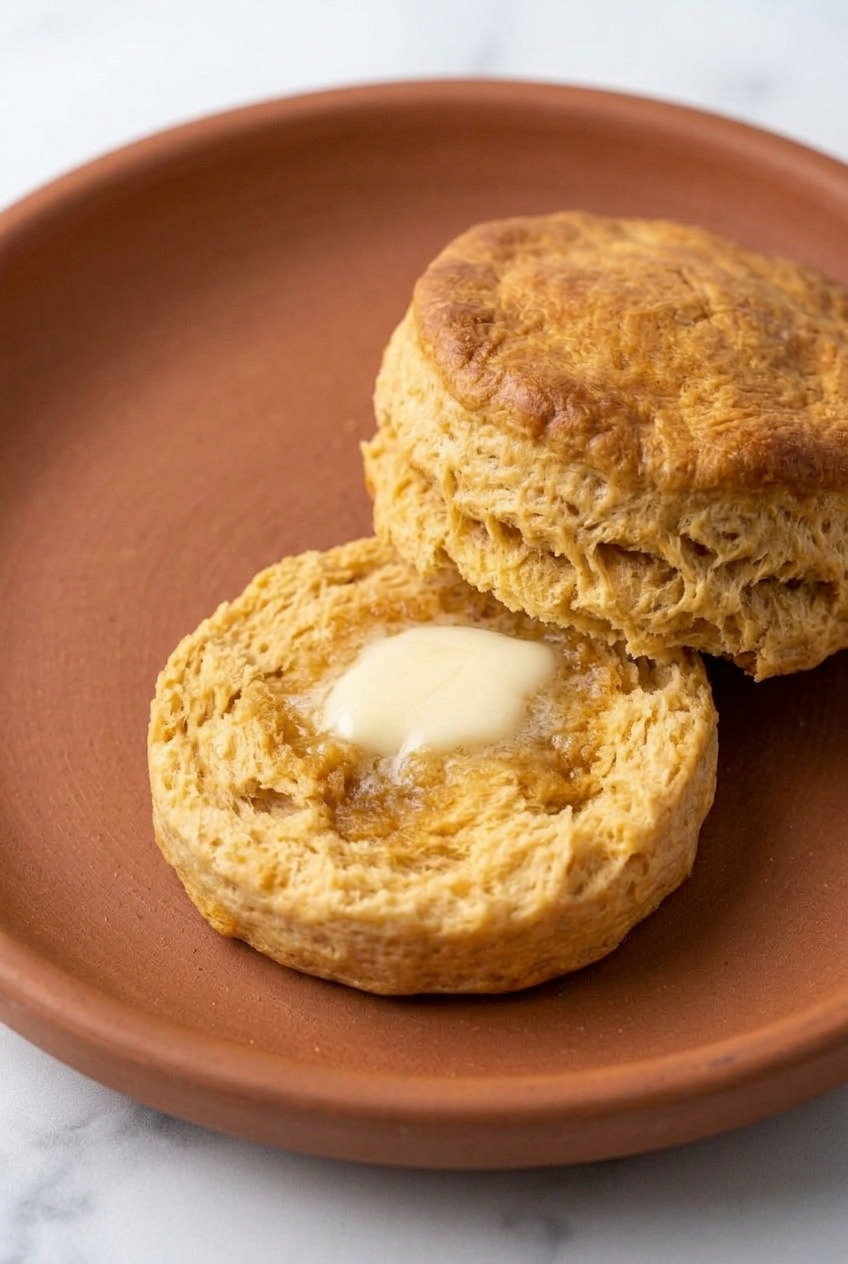
The dough sits in the fridge and waits for me.
I tear off a piece, roll it, cut six rounds, and push the rest back under plastic for later in the week.
I grew up believing biscuit dough had about eleven minutes of usable life before it turned into a hockey puck.
Then a friend outside Charleston handed me one at a church supper.
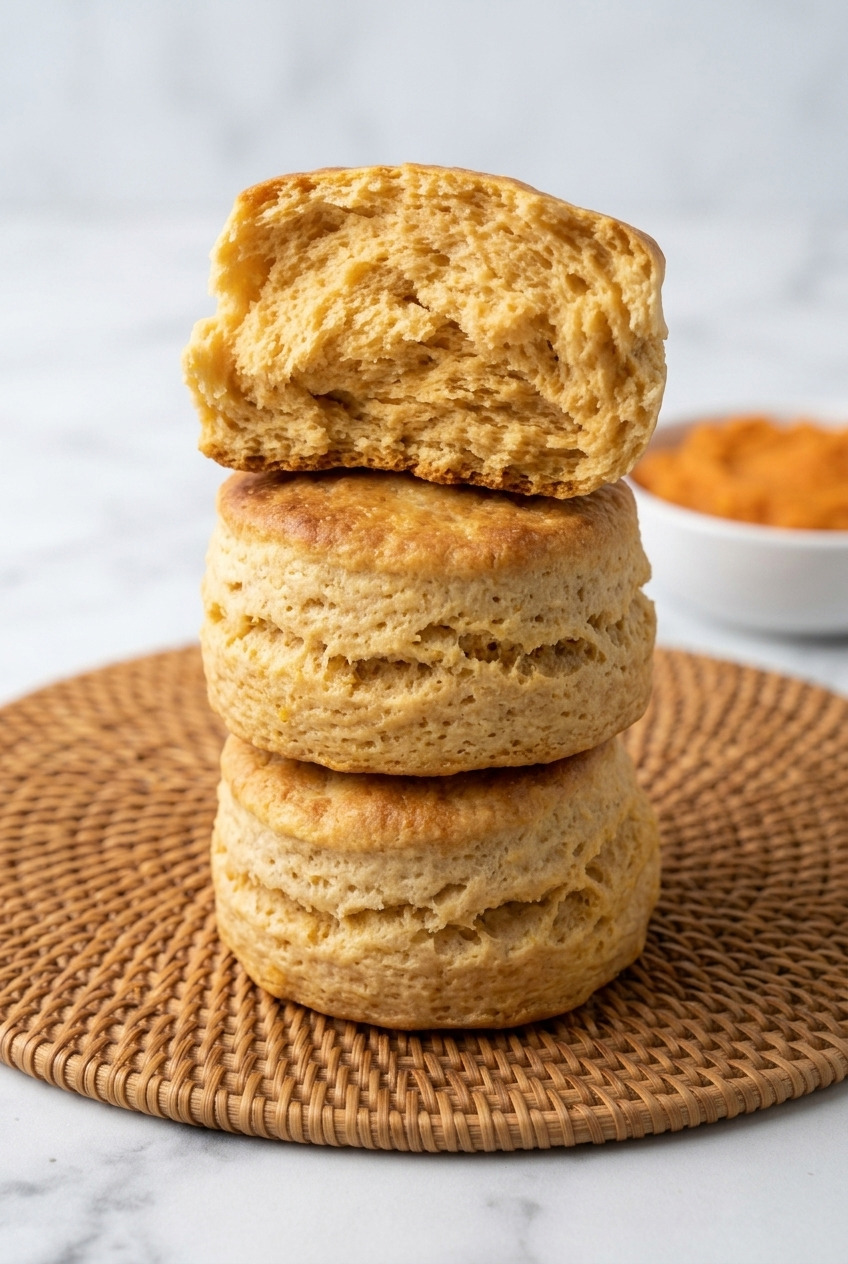
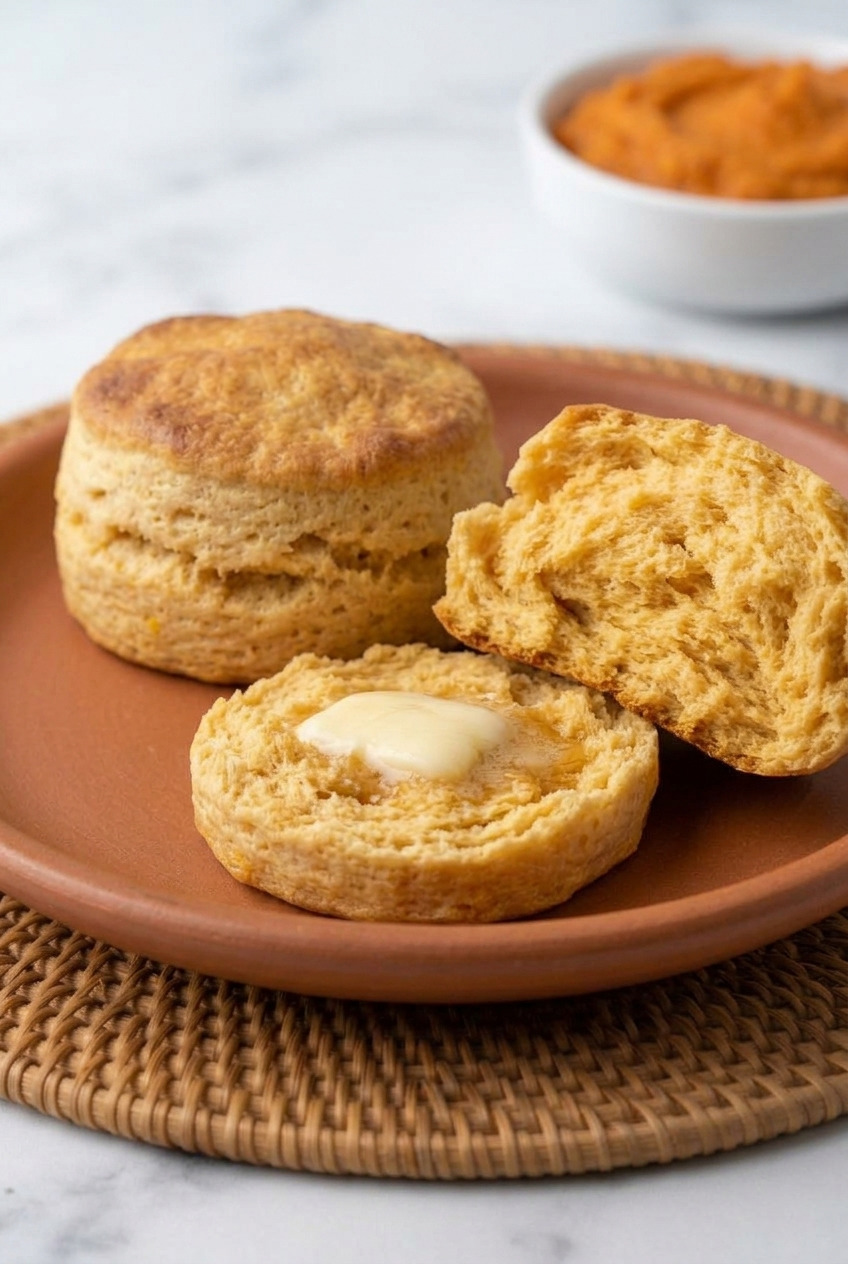
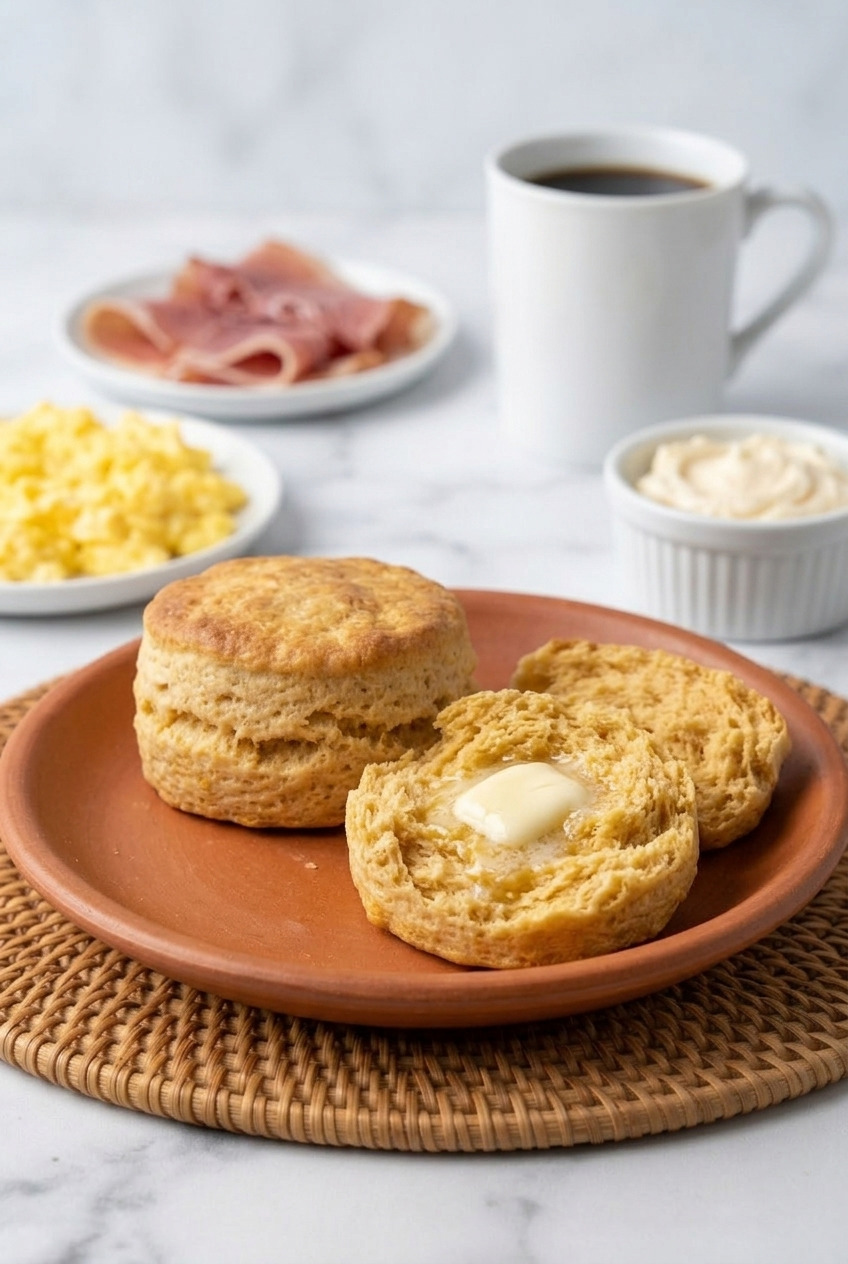
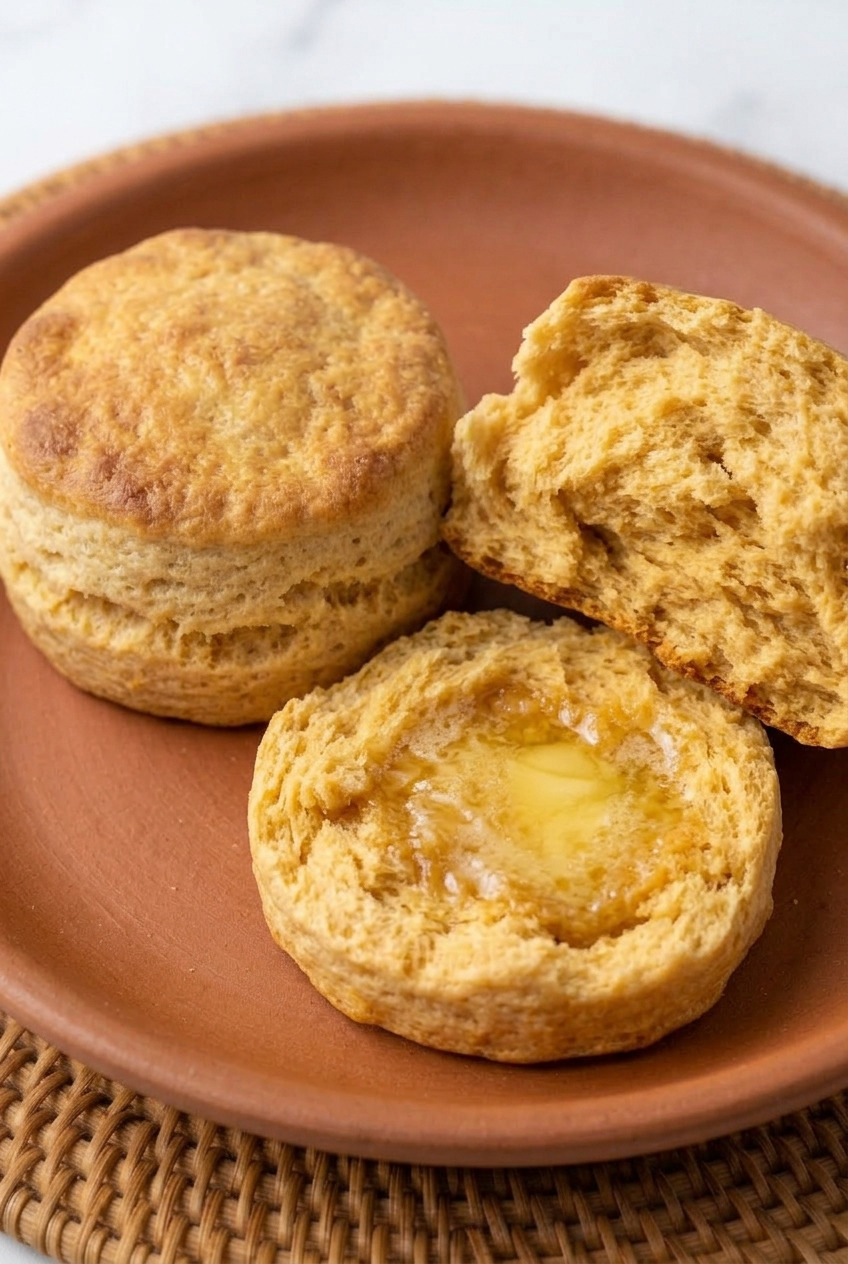
It stood two inches tall and it pulled apart in feathery sheets instead of snapping.
She told me there was yeast in it.
There's baking powder in there too, plus a little baking soda, which sounds like overkill until you eat one.
All three together give you a biscuit that is genuinely hard to ruin.
Overwork the dough and the yeast covers for you.
The mashed sweet potato keeps the crumb soft and turns the whole thing a muted orange right through the middle.
I make a batch most weeks now, usually to use up a roasted sweet potato I had sitting in the fridge anyway.
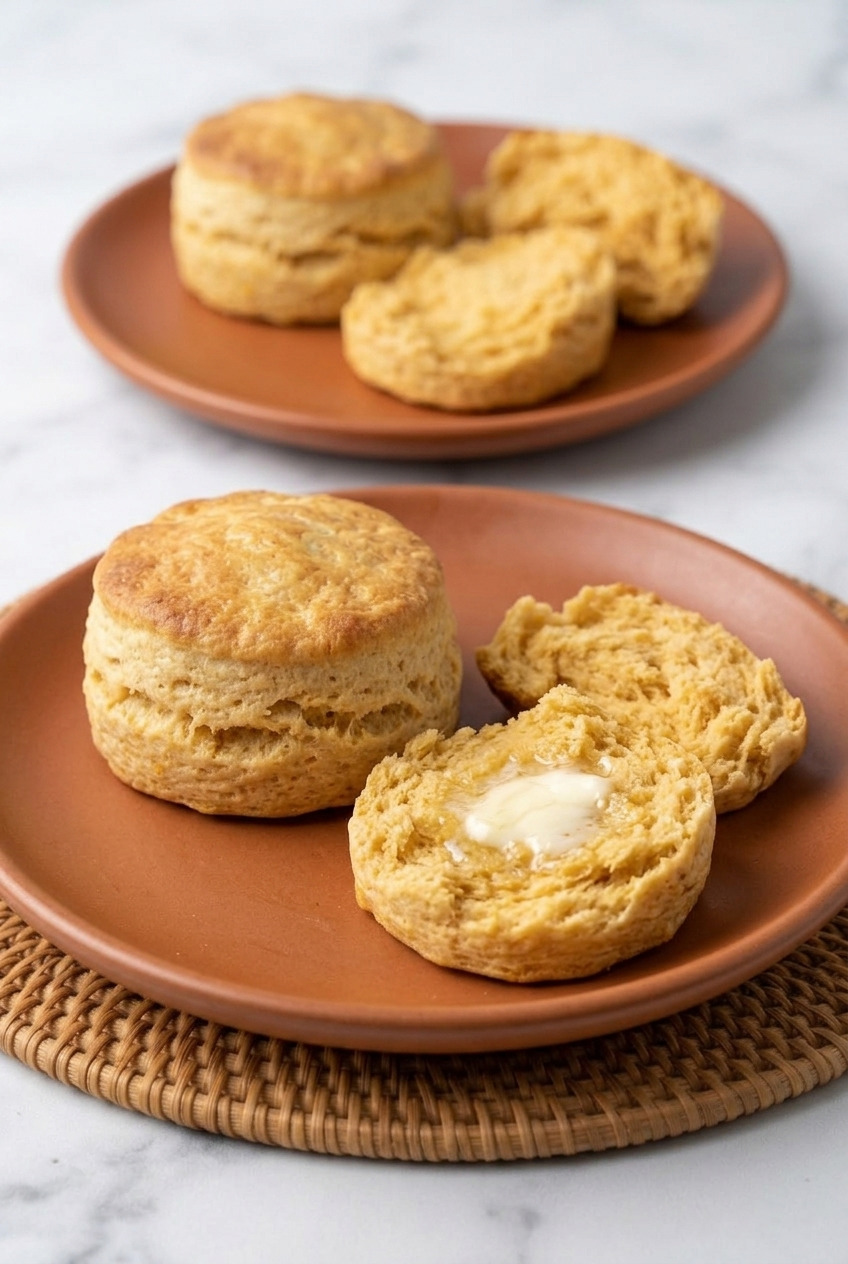
Split one hot, drop cold butter in the middle, and lay a slice of country ham over it.
You'll get why people make such a fuss!
Why You'll Love These
Three leaveners are doing the work here, which means the odds are stacked in your favor. Most biscuit recipes give you one shot and punish you for handling the dough. This one doesn't.
- They rise no matter what. Yeast, 1 tablespoon of baking powder, and baking soda all pushing at once.
- The dough keeps 5 days. Mix once, bake fresh biscuits three different mornings.
- Feathery, not crumbly. The crumb pulls apart in soft sheets instead of breaking into a dry pile.
- Forgiving with a heavy hand. You can knead these more than you should and still get a tall biscuit.
- Uses up leftover sweet potato. 1 cup of mash, which is about what one medium sweet potato gives you.
- Savory by design. Only 1 tablespoon of sugar in a batch of 12, so they can carry ham and gravy.
What Makes an Angel Biscuit Different
An angel biscuit is a biscuit with yeast in it. That's the entire definition, and it changes more than you'd expect.
A standard buttermilk biscuit gets all of its lift from baking powder in the first few minutes of the bake.
Handle that dough too much and you develop gluten, the biscuit tightens, and it comes out squat.
Here the yeast has already been working before the pan ever sees the oven.
That slow fermentation relaxes the dough and adds a faint bready flavor underneath the sweet potato.
So what is each one actually doing?
- Yeast. Slow rise, soft feathery texture, and a little tang. It's also your insurance policy against overworking.
- Baking powder. The fast lift in the oven's first 5 minutes, which is what gives you height and straight sides.
- Baking soda. Reacts with the buttermilk for extra rise and, more importantly, browning. Without it the tops stay pale.
Fair warning: these are sometimes called bride's biscuits, on the theory that a new cook couldn't mess them up. Rude, but accurate.
Ingredients You'll Need
Eleven ingredients, and the two that matter most are temperature, not brand. The water has to be warm and the butter has to be COLD.
- Warm water (¼ cup). Between 105°F and 110°F. Hot enough to feel warm on your wrist, not hot enough to sting. Anything above 120°F kills the yeast.
- Active dry yeast (2 ¼ teaspoons). One standard packet. Instant yeast works too and skips the blooming step.
- Granulated sugar (1 tablespoon). Feeds the yeast and balances the salt. That's all it's here for.
- All purpose flour (3 cups). No need for pastry flour or self rising. Plain flour and a scale, or a spooned and leveled cup.
- Baking powder (1 tablespoon). Sounds like a lot. It is a lot. It's also why these go straight up.
- Baking soda (½ teaspoon). Pairs with the buttermilk for browning and a little extra push.
- Fine salt (1 ½ teaspoons). These are savory biscuits. Don't trim this down.
- Cold unsalted butter (½ cup). Cubed, straight from the fridge. The cold pieces steam in the oven and separate the crumb into sheets.
- Mashed roasted sweet potato (1 cup), cold and smooth. Smooth is doing real work in that sentence. A lump of potato is a wet spot the dough can't lift.
- Cold buttermilk (½ cup). The tang keeps the sweet potato tasting earthy instead of sugary.
- Melted salted butter (2 tablespoons). Brushed over the tops the second they come out.
How to Make Sweet Potato Puree
Roast it, don't boil it. Boiling pushes water into the flesh, and this dough already has as much moisture as it can hold.
Prick 1 medium sweet potato a few times and roast it at 400°F for 45 to 55 minutes, until a knife goes through with zero resistance.
Underdone sweet potato is the number one cause of lumps, and lumps are the number one cause of squat biscuits.
Split it, scoop the flesh into a bowl, and mash it with a fork until you can't find a single piece.
Measure out 1 cup, spread it on a plate, and refrigerate it for at least 1 hour.
Pro tip: warm mash melts the butter you just cut into the flour, and melted butter means no layers. Cold is not optional.
Canned sweet potato puree works in a pinch. Drain canned yams in syrup very well and pat them dry first.
How to Make Sweet Potato Angel Biscuits
Step 1: Bloom the Yeast
Stir the yeast and sugar into the ¼ cup of warm water and leave it alone for 5 to 10 minutes.
You want a foamy, slightly domed surface.
Nothing happening after ten minutes? Your yeast is dead or your water was too hot. Start that part over.
Step 2: Mix the Dry and Cut in the Butter
Whisk the flour, baking powder, baking soda, and salt together for a solid 30 seconds.
Baking powder clumps, and a clump gives you a bitter bite.
Add the cold cubed butter and work it in with your fingertips or a pastry blender until the biggest pieces are the size of peas.
Leave some flat, flaky shards in there. Those are the ones that make sheets.
Step 3: Bring the Dough Together
Whisk the cold mashed sweet potato and cold buttermilk together until it's a smooth orange slurry.
Pour that in along with the foamy yeast, and stir with a fork just until there's no dry flour left.
The dough will be soft and slightly sticky. That's right.
Turn it onto a floured counter and knead it about 8 times, which is more than you'd ever do to a regular biscuit.
Step 4: Let It Rest
Cover the bowl and let the dough rise at room temperature for 1 hour, or slide it into the fridge for anywhere from overnight to 5 days.
It won't double the way a bread dough does.
You're looking for visibly puffed and softened, not dramatic.
Step 5: Roll and Cut
Pat or roll the dough to ¾ inch thick on a lightly floured counter.
Cut rounds with a 2 ½ inch cutter, pressing straight down and lifting straight up.
NEVER twist the cutter. Twisting seals the cut edge and the biscuit rises crooked and short.
Set them on a baking sheet with their sides just touching so they climb each other on the way up.
Step 6: Bench Rest and Bake
Let the cut biscuits sit on the pan for 20 to 30 minutes while the oven heats to 425°F.
Bake 14 to 16 minutes, until the tops are deep golden and the sides have set.
Brush the melted salted butter over them the moment they come out.
The Refrigerator Dough
This is the reason I make angel biscuits instead of regular ones. The dough is a thing you own for the week, not a thirty minute emergency.
Mixed dough keeps up to 5 days covered tightly in the fridge.
Here's what actually happens over those days:
- Day 1. Puffy, easy to roll, mild flavor. Biscuits rise tallest.
- Day 2 to 3. The sweet spot. Slightly tangy, still lively, and the flavor is deeper.
- Day 4 to 5. Noticeably tangier and a little slack. Rise drops maybe a quarter inch. Still excellent.
Roll straight from cold, which is honestly easier than rolling warm dough.
Give cut biscuits from a cold batch a slightly longer bench rest, closer to 40 minutes, since they're starting from fridge temperature.
Worth mixing a double batch? Every single time.
Tips for the Tallest Biscuits
- Sides touching. Biscuits with a gap around them spread outward. Biscuits packed together have nowhere to go but up.
- Keep the butter cold. If the dough ever feels greasy, put the whole bowl in the fridge for 15 minutes.
- Mash it smooth. Every lump is a dense wet pocket that drags the crumb down.
- Don't skip the bench rest. Those 20 to 30 minutes after cutting are where the yeast does its last bit of work.
- Bake hot. 425°F sets the outside fast so the inside can push up against it.
- Re roll once, not twice. Gather the scraps, pat them out, cut again, and stop there.
Serving Suggestions
These were built for salt, not jam. The sweet potato reads earthy here, not dessert like, which opens up the whole savory side of the table.
- Country ham. Split the biscuit, cold butter in the middle, a folded slice of salty ham on top. My favorite thing to do with them.
- Sausage gravy. Two split biscuits under a ladle of peppery gravy is a full dinner at my house.
- Honey butter. Whip 4 tablespoons of softened butter with 1 tablespoon of honey and a pinch of salt.
- A fried egg. Runny yolk, a little hot sauce, done.
- Thanksgiving leftovers. Turkey and a spoonful of cranberry sauce inside a warm biscuit is a genuinely great next day sandwich.
Variations
- Sage and black pepper. 1 tablespoon of finely chopped fresh sage and ½ teaspoon of coarse black pepper in the dry mix. Excellent with pork.
- Sharp cheddar. Fold in ¾ cup of grated sharp cheddar after the butter goes in.
- Bite size. Cut with a 1 ½ inch cutter and pull them at 10 to 11 minutes. You'll get about 30 for a party.
- A little warmer. ¼ teaspoon of nutmeg reads as warmth rather than dessert. Cinnamon does not. I leave cinnamon out.
Storage and Freezing
- Baked biscuits. Room temperature in a paper bag or loosely covered for 3 days. An airtight container softens the crust.
- Reheating. 350°F for 6 to 8 minutes, split side up. The microwave turns them rubbery.
- Freezing baked. Cool completely, bag them, and freeze 3 months. Reheat from frozen at 350°F for 12 minutes.
- Freezing raw. Freeze cut rounds solid on a tray, then bag them. Bake from frozen at 425°F with 4 to 5 extra minutes and a 30 minute thaw on the counter first.
- Raw dough. 5 days in the fridge, as covered above. I don't freeze the dough in bulk, the yeast comes back weak.
Frequently Asked Questions
What makes a biscuit an angel biscuit?
Yeast. An angel biscuit uses yeast alongside the usual baking powder, which gives it a softer, feathery crumb and makes the dough much more forgiving. They're also called bride's biscuits for exactly that reason.
Can I make the dough ahead and bake later in the week?
Yes, and that's the point of them. The mixed dough keeps up to 5 days tightly covered in the refrigerator. Roll it straight from cold and give the cut biscuits a slightly longer rest before they go in the oven.
Do I have to let them rise before baking?
Give them 20 to 30 minutes on the pan after cutting. They'll still bake without it, but you lose about a half inch of height and the crumb comes out denser.
Can I use canned sweet potato puree?
You can. Plain canned puree is closest to roasted. Canned yams packed in syrup need a thorough draining and a pat with paper towels, or the extra moisture and sugar will show up in the dough.
Why are my biscuits dense instead of tall?
Usually one of three things: lumpy sweet potato, dead yeast, or a twisted cutter. Check that your mash is completely smooth, that the yeast foamed before you used it, and that you pressed the cutter straight down without turning it.
Can I freeze angel biscuits?
Both ways. Freeze them baked and reheat at 350°F, or freeze the cut raw rounds and bake from frozen with a few extra minutes. Raw frozen gives you a fresher biscuit.
Are these sweet or savory?
Savory. There's 1 tablespoon of sugar in a batch of twelve and no cinnamon at all, so they lean earthy and work under butter, ham, and gravy. Add nutmeg if you want them a touch warmer.
Mix a batch on a Sunday and bake half of it on a Tuesday morning. Give it a try!
Recipe
Sweet Potato Angel Biscuits
Ingredients
Yeast Mixture
- ¼ cup warm water 105 to 110 degrees F
- 2 ¼ teaspoons active dry yeast one packet
- 1 tablespoon granulated sugar
Dry Ingredients
- 3 cups all purpose flour plus more for the counter
- 1 tablespoon baking powder
- ½ teaspoon baking soda
- 1 ½ teaspoons fine salt
Wet Ingredients
- ½ cup unsalted butter cold, cut into cubes
- 1 cup mashed roasted sweet potato cold and completely smooth
- ½ cup buttermilk cold
- 2 tablespoons salted butter melted, for brushing
Instructions
Prepare the Sweet Potato
- Prick 1 medium sweet potato and roast at 400 degrees F for 45 to 55 minutes, until a knife slides in with no resistance. Scoop the flesh out and mash it completely smooth.
- Measure 1 cup of mash, spread it on a plate and refrigerate at least 1 hour, until fully cold. This can be done up to 4 days ahead.
Make the Dough
- Stir the yeast and sugar into the warm water and let it stand 5 to 10 minutes, until foamy and slightly domed.
- Whisk the flour, baking powder, baking soda and salt in a large bowl for 30 seconds to break up any clumps.
- Add the cold cubed butter and rub it in with your fingertips or a pastry blender until the largest pieces are the size of peas, leaving some flat shards visible.
- Whisk the cold mashed sweet potato and cold buttermilk together until smooth, then pour it into the flour along with the foamy yeast. Stir with a fork just until no dry flour remains.
- Turn the soft dough onto a floured counter and knead about 8 times, until it holds together.
Rise, Cut and Bake
- Cover the dough and let it rise at room temperature for 1 hour, or refrigerate it for up to 5 days. It will puff and soften rather than double.
- Pat or roll the dough to ¾ inch thick and cut rounds with a 2 ½ inch cutter, pressing straight down and lifting straight up without twisting. Gather and re roll the scraps once.
- Arrange the biscuits on a baking sheet with their sides just touching and let them rest 20 to 30 minutes while the oven heats to 425 degrees F. Cold dough needs closer to 40 minutes.
- Bake 14 to 16 minutes, until the tops are deep golden and the sides are set. Brush with the melted salted butter as soon as they come out.
Notes
- Cold sweet potato: Warm mash melts the butter you cut in, and melted butter means no feathery sheets. Chill it fully.
- Mash it smooth: Lumps are dense wet pockets that keep the biscuits from rising.
- Never twist the cutter: Twisting seals the cut edge and the biscuit bakes short and crooked.
- Five day dough: The mixed dough keeps up to 5 days covered in the refrigerator. Day 2 to 3 has the best flavor.
- Freeze raw: Cut rounds freeze for 3 months. Thaw 30 minutes and bake with 4 to 5 extra minutes.