Sunday night in my kitchen ends with four glass jars in a row on the counter.
It started because I kept roasting more sweet potatoes than we could eat.
There's always one sitting in a container on the second shelf, cold, waiting.
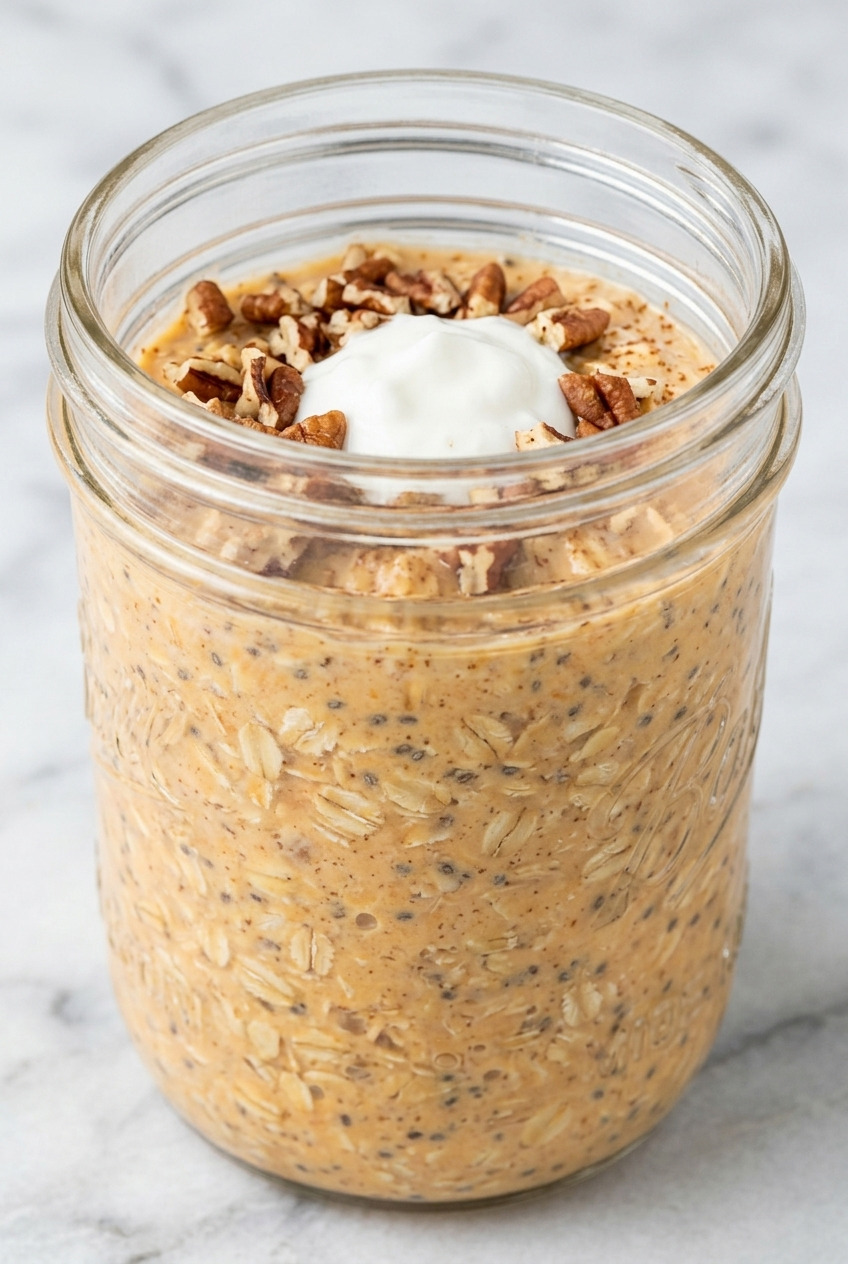
One night I scooped it into a jar with oats and yogurt instead of reheating it.
By Tuesday morning I was hooked.
Here's the part that matters, and it's the reason I'm writing this down.
Nothing in this jar ever meets heat.
The oats don't get simmered, stirred, or watched.
They soften in the fridge overnight by soaking, which leaves them chewy and distinct instead of loose and creamy the way a pot of oatmeal goes.
It's cold when you eat it, and you eat it out of the same jar you built it in.
No pan, no stove, no timer, no washing up beyond a spoon.
My wife takes hers to work still sealed and eats it at her desk at nine.
I stand at the counter and eat mine before anybody else is awake.
Ten minutes of work on Sunday buys you four breakfasts, and that's the whole pitch!
Cold, Uncooked, and Eaten From the Jar
This is the thing that separates these from every other oat recipe you're looking at. Overnight oats are never cooked.
The oats sit in cold liquid and slowly drink it up.
That's it. That's the entire technique.
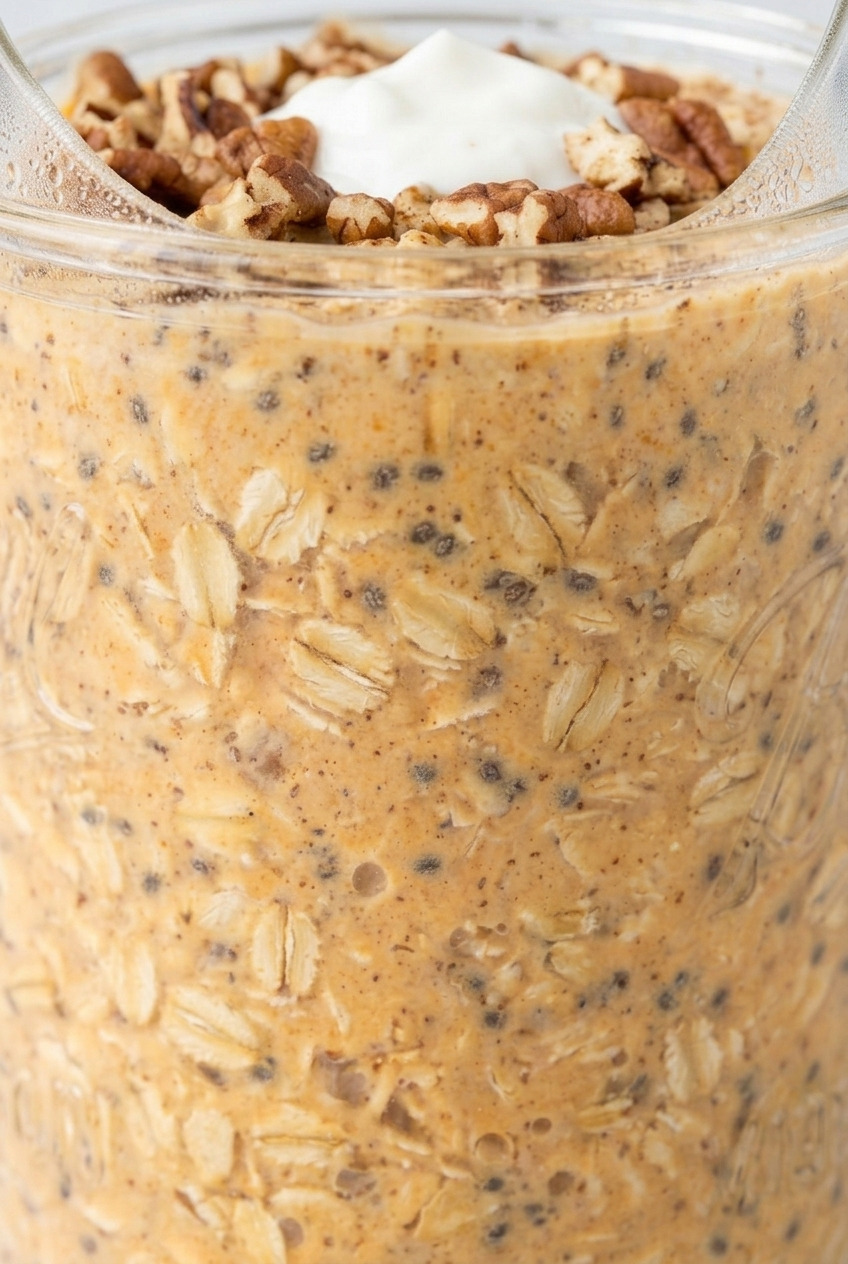
Soaking softens the flake without breaking it down, so each one keeps its shape and you can feel it between your teeth.
Simmering does the opposite, it bursts the starch and everything goes loose and creamy and blends into one texture.
Neither one is better. They're just different breakfasts.
Fair warning: if you were hoping for a warm bowl, this isn't it. This is cold, straight out of the fridge, thick and spoonable.
The jar does triple duty as the mixing bowl, the storage container and the dish.
How to Cook the Sweet Potato
Bake it, don't boil it. This is the one prep step in the whole recipe, and the method changes the result more than you'd think.
Prick a couple of medium sweet potatoes, set them on a foil lined tray, and bake at 400°F for 45 to 55 minutes until they're collapsing and leaking a little dark syrup.
Cool them completely, then scoop out the flesh and mash it smooth with a fork.
Why not boil? Boiling waterlogs the flesh.
A cold jar has no way to cook that extra water off, so you end up with a thin, watery breakfast and a sad look on your face.
Roasting does the opposite and concentrates the sugar.
- Canned puree works. Use plain sweet potato or pumpkin puree, not pie filling. It's flatter in flavor, and it'll do on a busy week.
- Batch it. One tray of four potatoes gives me enough mash for a week of jars plus a side dish.
- It has to be cold. Warm mash starts softening the oats before they're sealed, and the yogurt splits.
Ingredients and Why Each One Is There
- Rolled oats (1 cup). Old fashioned rolled, nothing else. Steel cut never softens in cold liquid and stays gritty for days. Instant oats dissolve into paste by morning.
- Mashed baked sweet potato (½ cup). Cold, smooth, no strings.
- Greek yogurt (½ cup). Plain whole milk. This is what makes the jar thick enough that a spoon stands in it.
- Whole milk (¾ cup). Sets the ratio. Less milk gives you a denser jar, more gives you something closer to cold cereal.
- Chia seeds (2 teaspoons). They gel and hold the whole thing together. A full tablespoon per jar turns it into pudding, so go easy.
- Maple syrup (2 tablespoons). Real maple. Taste the mash first, a good sweet potato needs less than you think.
- Cinnamon (1 ½ teaspoons) and ginger (¼ teaspoon). Warmth without turning it into a pie.
- Vanilla (½ teaspoon) and salt (a pinch). The salt is not optional. Without it the whole jar tastes flat and slightly dull.
- Toasted pecans. A topping, and they go on in the morning.
Building the Jar
Step 1: Mash and Loosen
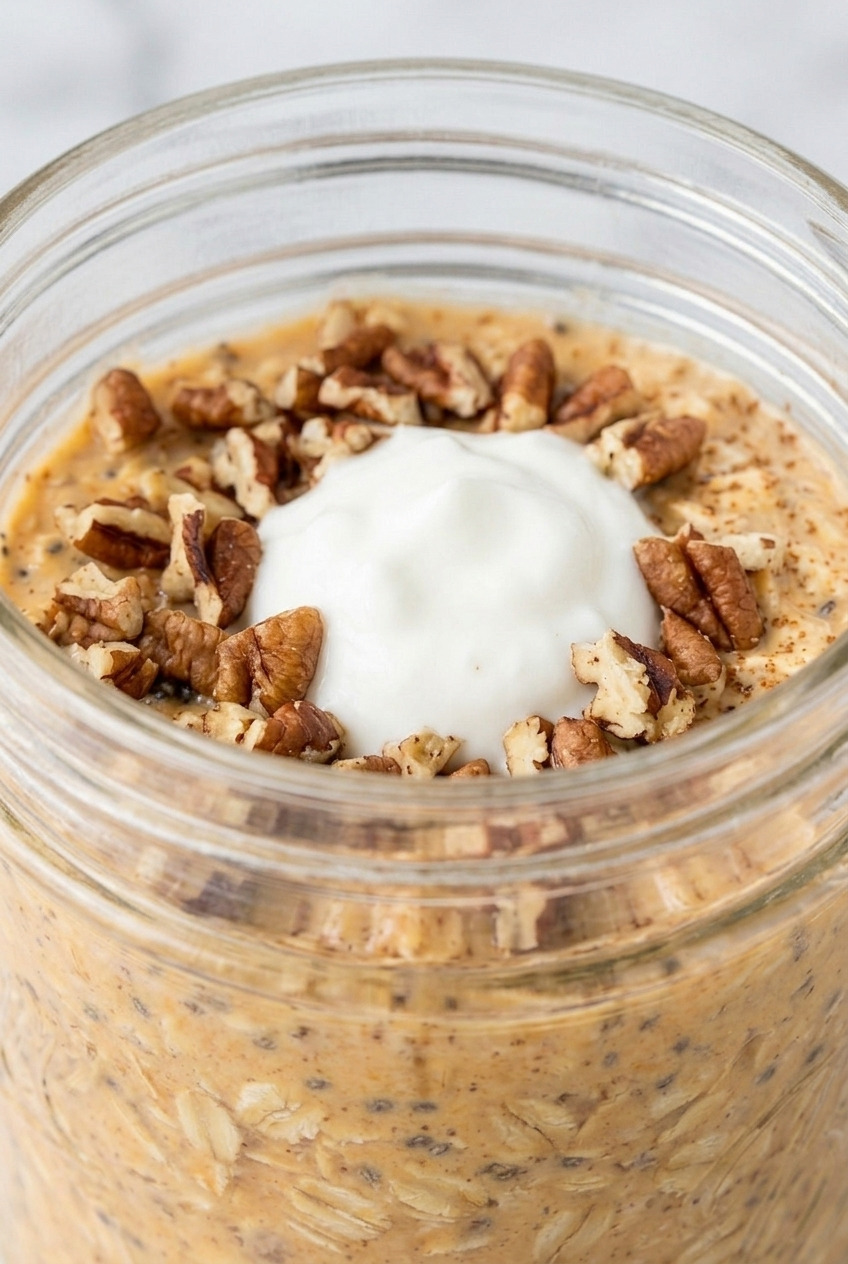
Put the cold mash in the bottom of a wide mouth jar with the maple syrup, cinnamon, ginger, vanilla and salt, and stir it into a smooth paste.
Add the yogurt and stir again until it's one even color.
Pro tip: loosening the mash before the milk goes in is the difference between a smooth jar and a jar with orange lumps in it.
Step 2: Add the Oats and Milk
Stir in the oats and chia seeds, then pour in the milk and stir until nothing dry is left at the bottom.
Scrape the sides down.
Step 3: Seal and Chill
Screw the lid on and put it in the fridge.
Walk away.
How Long It Needs to Sit
Four hours is the floor, overnight is the point. No competitor recipe tells you the minimum and it's genuinely useful to know.
- Four hours. Edible. The oats are soft but you can still taste raw flake in the middle.
- Eight to twelve hours. The sweet spot. Chewy, thick, fully hydrated.
- Day two. Thicker still, because the chia keeps working. Some people prefer it.
- Day four. Fine to eat, but stir in a splash of milk first.
Too firm? Milk, a tablespoon at a time, stirred right in the jar.
Toppings, Added in the Morning
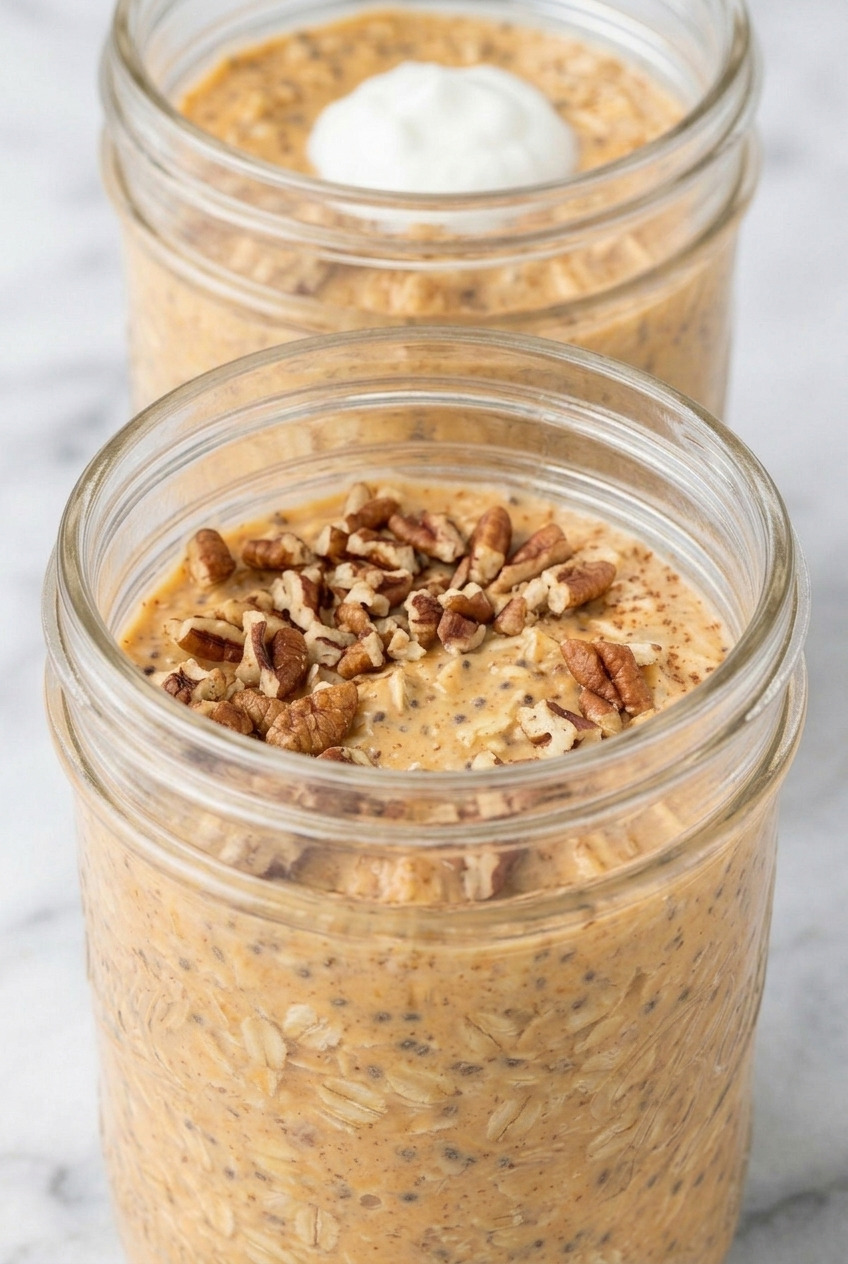
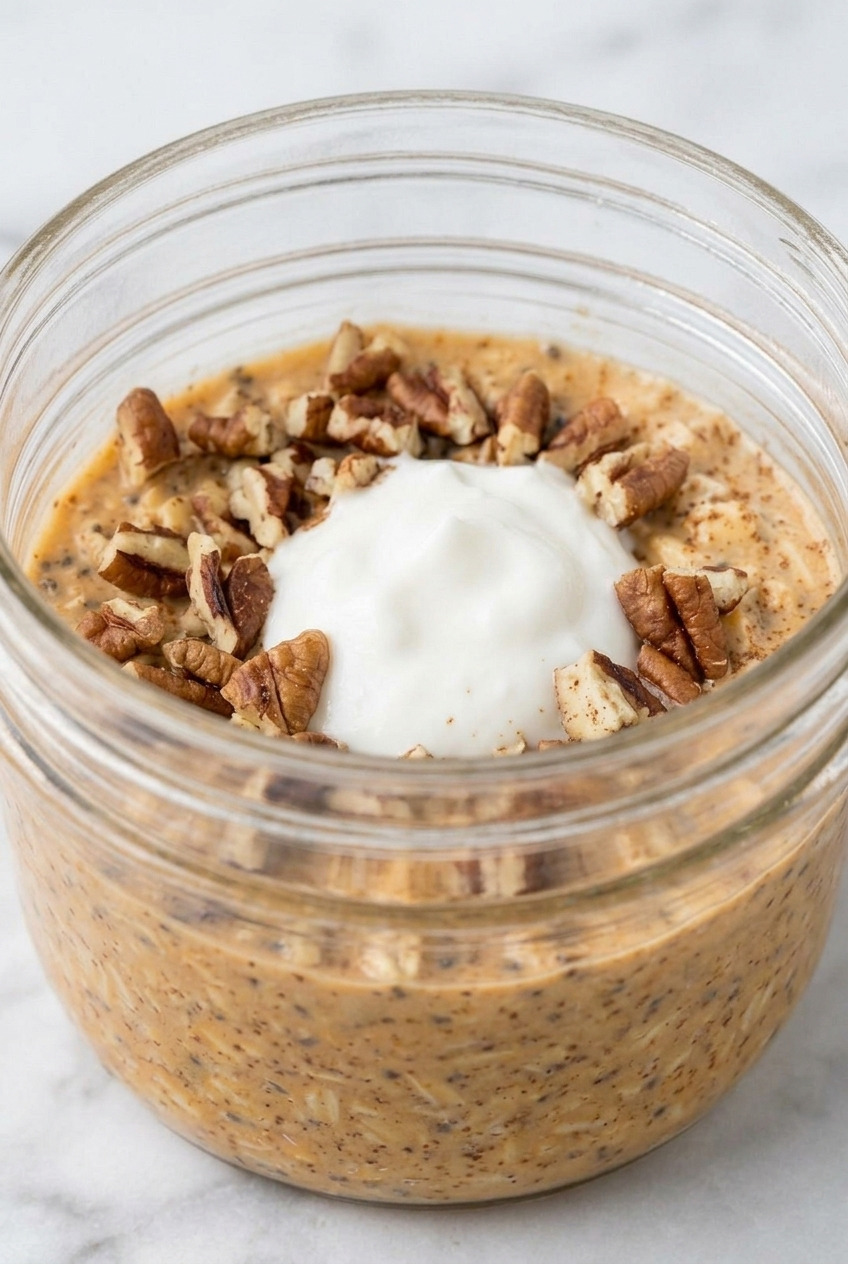
Everything crunchy goes on at breakfast, never the night before. This is the single most common mistake with overnight oats and you can see it in half the photos online.
A pecan that has sat in milk for nine hours is a wet pecan.
- Toasted pecans. Chopped, still warm from the pan if you're feeling fancy.
- A spoon of yogurt. Right on top, for the contrast.
- A thread of maple. If your potato was on the bland side.
- Coconut flakes or a pinch of flaky salt. Both better than they sound.
Variations
- Peanut butter. A heaping spoon stirred into the mash before the milk. My favorite version by a mile.
- Chocolate. A tablespoon of cocoa with the spices, and a little extra maple to balance it.
- Tahini and honey. Nuttier and much less sweet.
- Extra spice. A pinch of cardamom or a little nutmeg alongside the cinnamon.
- Dairy free. Coconut yogurt and almond milk. You lose some body, so drop the milk by two tablespoons.
Storage and Meal Prep
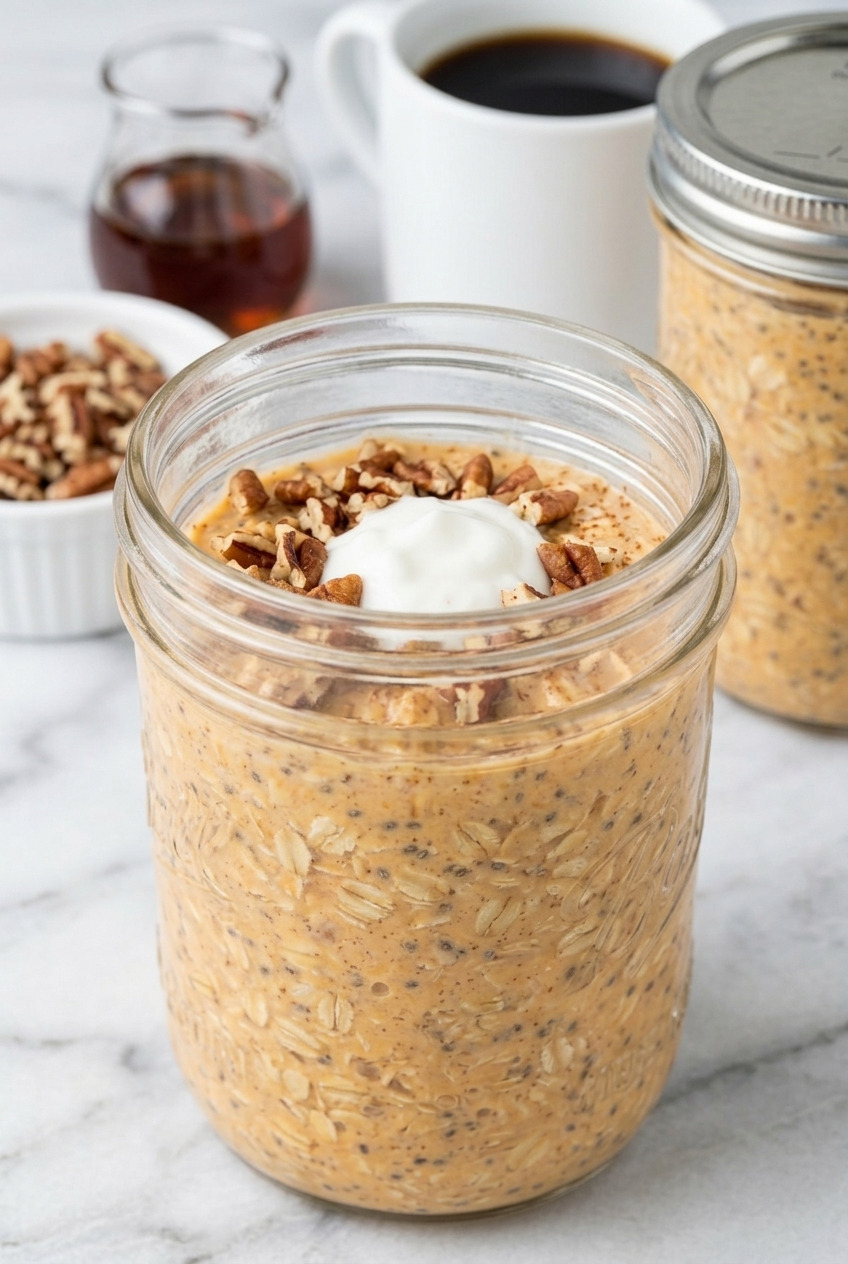
Four jars at a time is the sweet spot for a work week. I line them up, build them assembly style, and they're done in about ten minutes.
- Fridge. Five days sealed. They're best on days one through three.
- Freezing. Don't. The yogurt splits and the texture never comes back.
- Day four rescue. The oats keep drinking, so stir in a splash of milk before you eat.
- Toppings. Keep the pecans in a separate little container so they stay crisp.
Worth ten minutes on a Sunday? Every single week.
Recipe
Sweet Potato Overnight Oats
Ingredients
For the Jars
- 1 cup rolled oats old fashioned, not steel cut or instant
- ½ cup mashed baked sweet potato cooled completely
- ½ cup plain whole milk Greek yogurt
- ¾ cup whole milk
- 2 teaspoon chia seeds
- 2 tablespoon maple syrup or to taste
- 1 ½ teaspoon ground cinnamon
- ¼ teaspoon ground ginger
- ½ teaspoon vanilla extract
- ⅛ teaspoon fine salt
To Top in the Morning
- 2 tablespoon toasted pecans chopped
- 2 tablespoon plain Greek yogurt optional
Instructions
Bake the Sweet Potato
- Prick two medium sweet potatoes, set them on a foil lined tray and bake at 400F for 45 to 55 minutes until they collapse and leak a little dark syrup.
- Cool completely, scoop out the flesh and mash it smooth with a fork. Measure out ½ cup and refrigerate the rest for another batch. The mash must be cold before it goes into a jar.
Build the Jars
- Divide the cold mash between two wide mouth glass jars. Add the maple syrup, cinnamon, ginger, vanilla and salt to each and stir into a smooth paste.
- Stir the Greek yogurt into each jar until the color is even with no orange streaks left.
- Add the oats and chia seeds, then pour in the milk. Stir until nothing dry is left at the bottom and scrape down the sides.
- Seal the lids and refrigerate at least 4 hours, ideally 8 to 12 hours overnight. Do not cook or heat anything.
- In the morning, stir once, loosen with a splash of milk if it has set too firm, and top with the toasted pecans and a spoon of yogurt. Eat cold, straight from the jar.
Notes
- Bake, do not boil: boiled sweet potato carries water a cold jar cannot cook off, and the result is thin and watery. Roasting concentrates the sugar.
- Rolled oats only: steel cut stays gritty in cold liquid and instant oats dissolve into paste.
- Four hour minimum: 8 to 12 hours is the sweet spot. Day two is thicker because the chia keeps working.
- Toppings in the morning: nuts added the night before turn soft in the milk.
- Do not freeze: the yogurt splits and the texture never recovers.
- Keeps 5 days sealed: stir in a splash of milk from day four on.