There's a container of roasted sweet potato in my fridge most weeks and Saturday is where it goes.
My wife asks for pancakes about every second weekend, usually before I've had coffee.
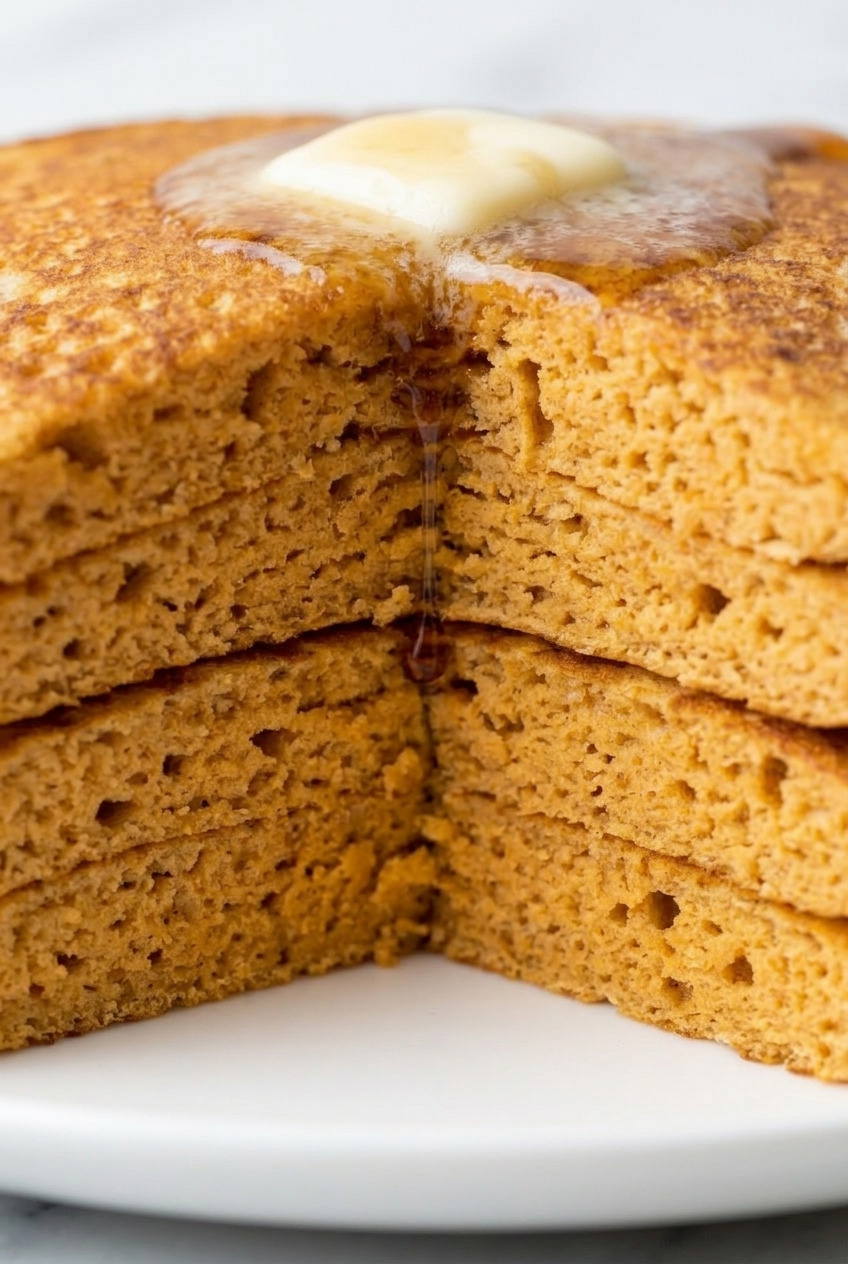
The first few times I made these they came out looking incredible and tasting like wet cake in the middle.
Deep golden brown outside, gummy and raw about a centimeter in.
I flipped them, waited, flipped them again, and made it worse.
Turns out I had two problems and they were both mine.
The batter was too loose, because sweet potato mash carries a lot of water and I was adding milk by the cup like it was a normal pancake.
And the pan was too hot, because there's real sugar in that mash and sugar browns long before the middle sets.
Fix those two things and you get what I was after the whole time.
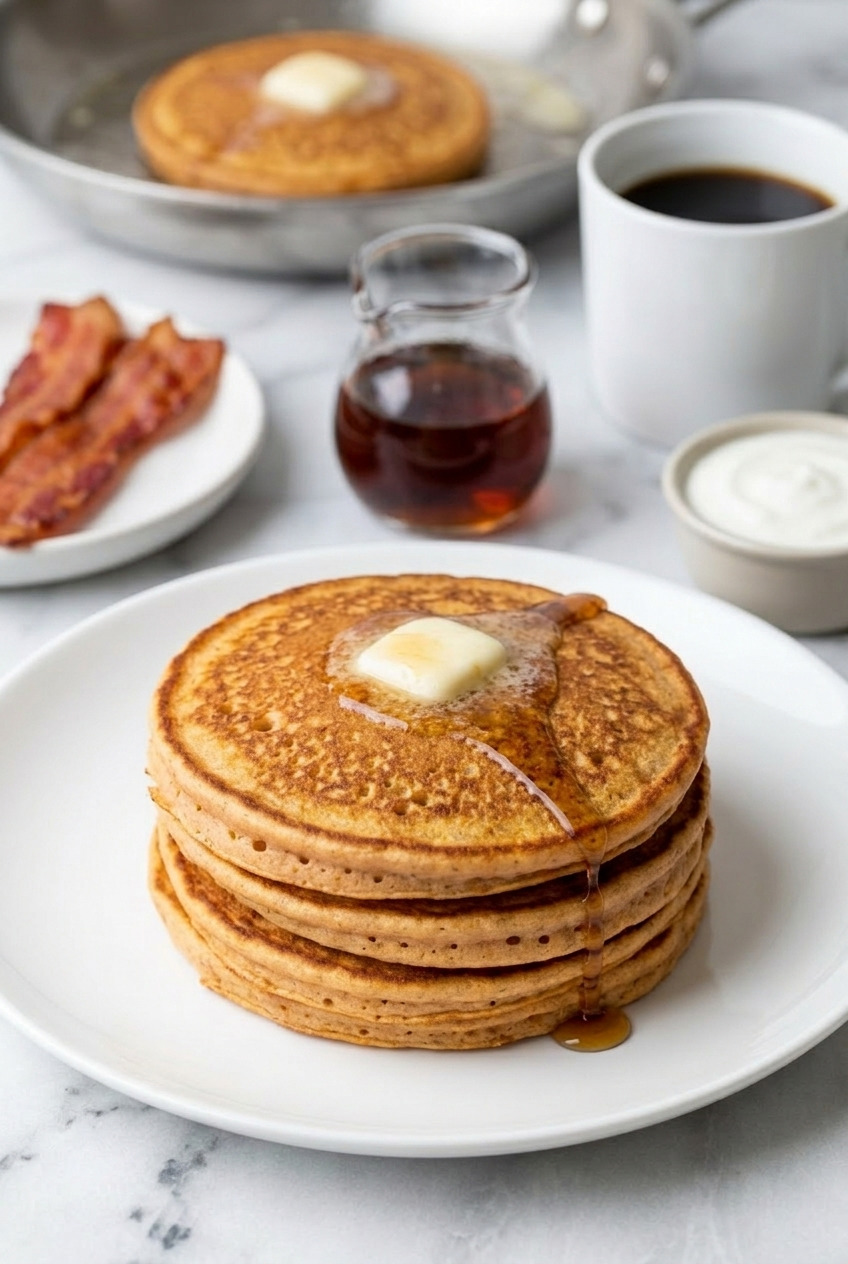
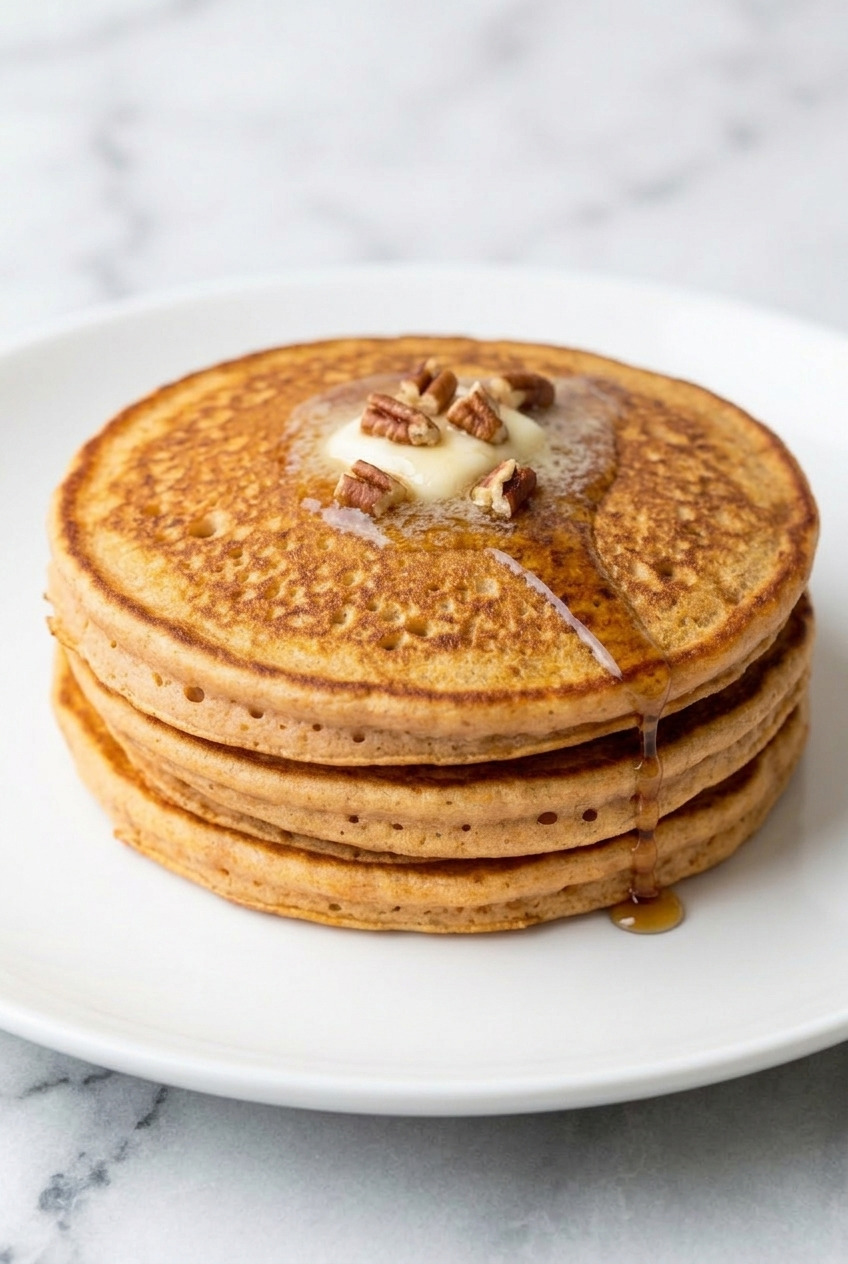
Tall, tender pancakes with a fine crumb, deep orange through the middle, faintly spiced with cinnamon and nutmeg.
They stay moist for hours, which plain pancakes never do.
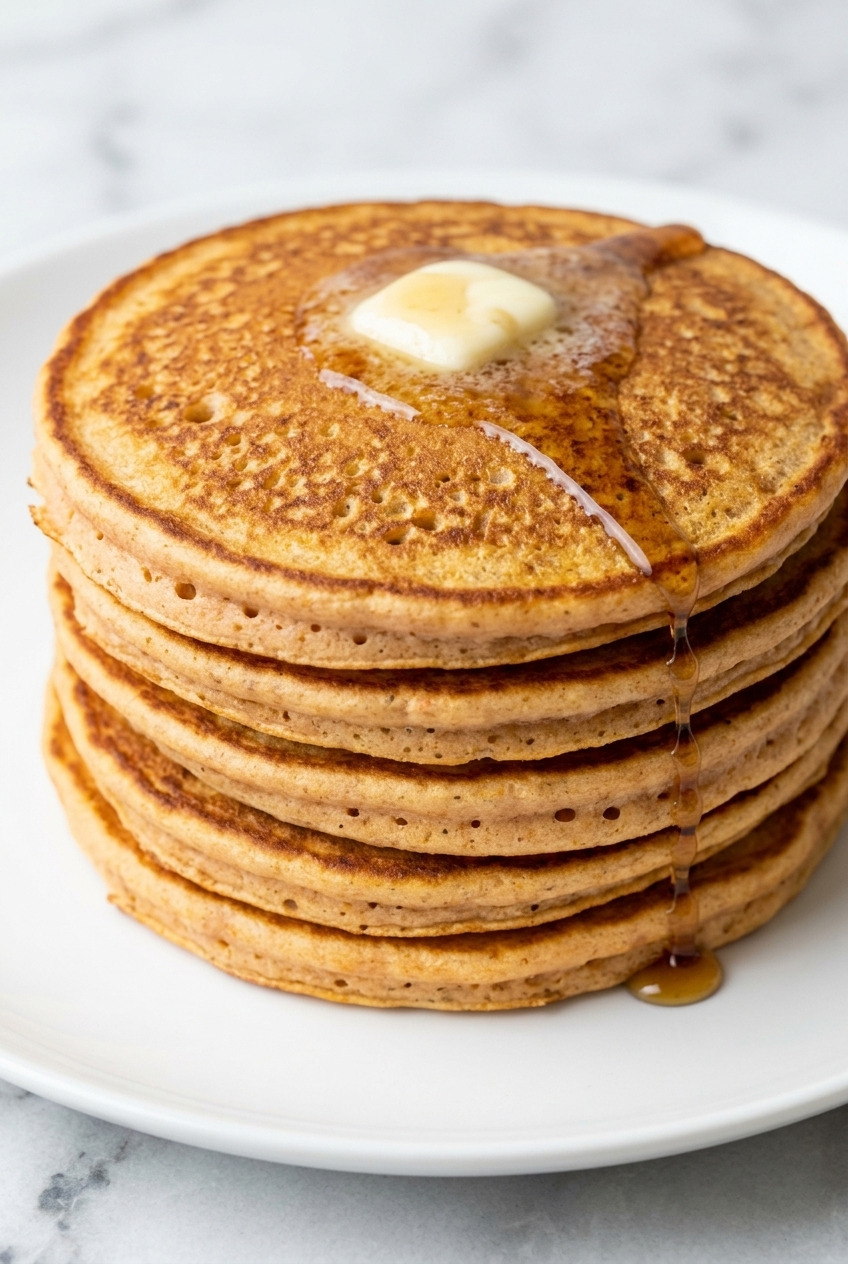
Butter melting into the top, real maple running down the stack, a few toasted pecans if you're feeling it.
Twelve pancakes, thirty five minutes, and nobody at my table talks until the plate is empty!
Why Sweet Potato Belongs in a Pancake
It's not a health swap, it's a texture swap. That's the part people miss.
- Natural sweetness. The mash brings enough sugar that two tablespoons of brown sugar is all the batter needs.
- They stay tender. Sweet potato holds moisture, so these are still soft an hour later. A plain pancake is cardboard by then.
- Real color. A warm orange crumb that looks like something, not beige.
- Built in spice. Cinnamon and nutmeg belong here in a way they don't in a plain batter.
Ingredients
- Mashed roasted sweet potato (1 cup). Roasted, cooled, mashed smooth with a fork. No strings, no lumps.
- All purpose flour (1 ½ cups). Spooned into the cup and leveled, not scooped.
- Baking powder (2 teaspoons). The only lift in here. Check the date on the tin, old baking powder is why pancakes come out flat.
- Eggs (2 large). Real eggs, room temperature.
- Whole milk (1 cup, plus more as needed). The quantity is deliberately flexible. More on that below.
- Melted butter (3 tablespoons). In the batter, plus more for the pan.
- Brown sugar (2 tablespoons). Light or dark, both fine.
- Cinnamon (1 ½ teaspoons) and nutmeg (¼ teaspoon).
- Vanilla (1 teaspoon) and salt (½ teaspoon).
Pro tip: roast the potato, don't boil it. Boiled flesh is waterlogged and it throws the batter thickness off before you've even started.
The 2 and 3 Ingredient Versions
These come up constantly, so let's be straight about what they are. They're real, they work, and they are not these pancakes.
- Two ingredients. Mashed sweet potato and eggs, about a cup to two eggs, cooked in small rounds. No flour, no leavening, so nothing rises. It's closer to a soft patty or a thick omelette than a pancake, and it's genuinely good with butter and salt.
- Three ingredients. Add a mashed banana, or a quarter cup of oat flour. The banana version is sweeter and softer, the oat flour version holds together better and tastes more like breakfast.
- When they make sense. Baby and toddler food, gluten free mornings, or when you have three things in the house.
- What you give up. Height, fluff, and that fine even crumb. There's no way around it, flour and baking powder are what do that.
How to Make Them
Step 1: Roast and Mash
Bake whole sweet potatoes at 400°F for 45 to 55 minutes until they slump, cool them, and mash the flesh smooth.
Step 2: Mix
Whisk the flour, baking powder, cinnamon, nutmeg and salt in one bowl.
In another, whisk the mash with the eggs, brown sugar, melted butter, vanilla and most of the milk.
Pour the wet into the dry and fold with a spatula until it just comes together.
Fair warning: lumps are fine. Overmixing builds gluten and gives you rubber.
Step 3: Set the Thickness
Now judge it, and add the remaining milk a tablespoon at a time until it's right.
Step 4: Rest
Leave the batter for 10 minutes. The flour hydrates and the baking powder gets going.
Step 5: Cook
Butter a skillet over medium low heat and cook them in ¼ cup scoops.
Batter Thickness Is the Whole Recipe
Sweet potato mash varies enormously in water content, so a fixed milk quantity is a lie. One potato is dry and starchy, the next is wet and stringy, and the recipe can't know which one you have.
So you set the thickness by eye and by feel, every time.
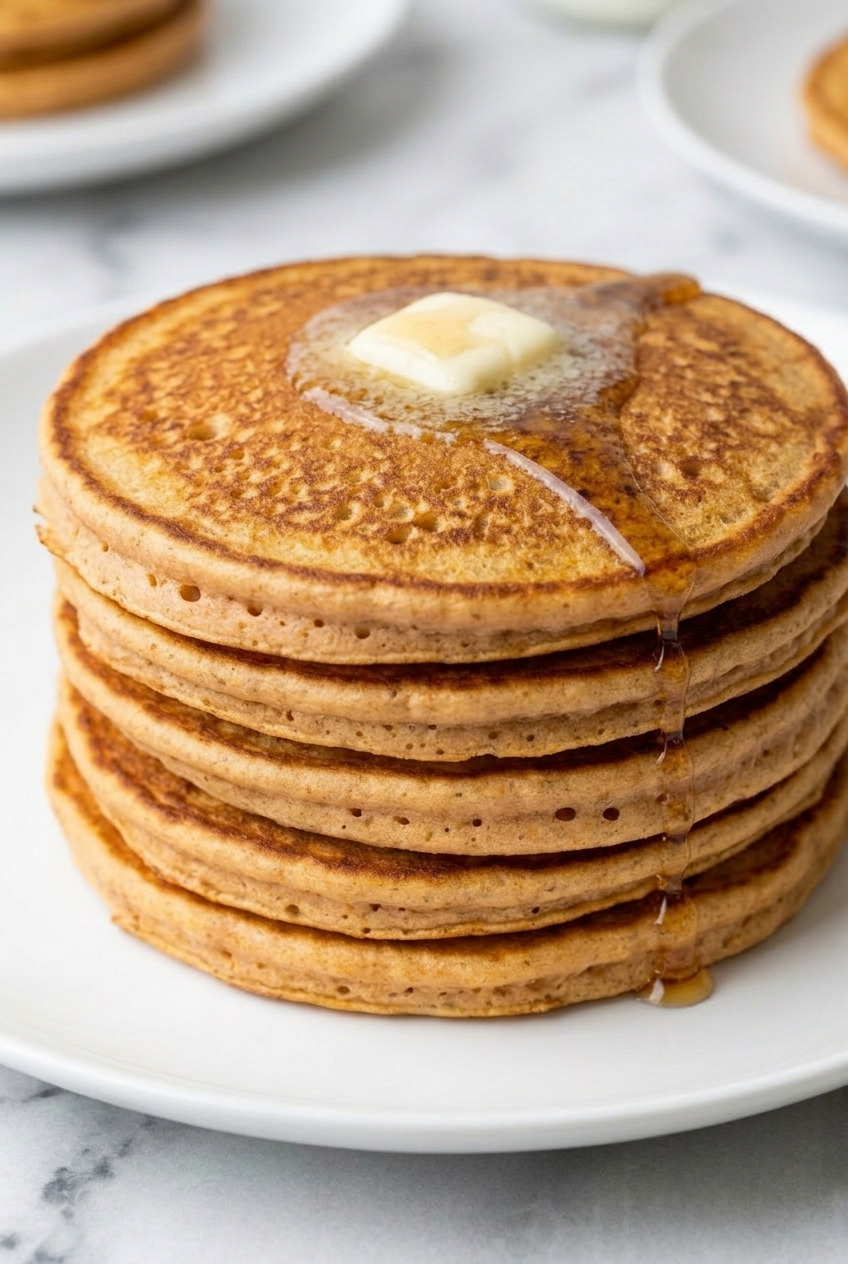
- The target. The batter should fall off the spoon in a thick slow ribbon and mound slightly in the pan before it spreads. Think of it as sitting up rather than flowing out.
- Too thin. It spreads into a wide flat disc, the edges go lacy, and the texture turns rubbery. Add two tablespoons of flour.
- Too thick. It holds a peak and won't level at all, and the middle will never cook. Add milk a tablespoon at a time.
- The test pancake. Cook one first. It costs you three minutes and it tells you everything.
Cooking Them Properly
MEDIUM LOW. Lower than you would ever cook a plain pancake, and this is the second half of the fix.
The sugar in the mash browns fast, so a hot pan gives you a dark face over a raw middle every single time.
- Butter, not oil. Wiped out between batches so it doesn't burn.
- ¼ cup per pancake. Bigger ones look impressive and stay wet in the center.
- 3 to 4 minutes on the first side. Wait for bubbles to open across the whole surface and stay open, not just at the edges.
- 2 minutes on the second side. One flip only.
- Keep them warm. On a rack in a 200°F oven. Stacking them hot traps steam and softens the faces you just browned.
Are They Healthier
A bit, and not in the way people mean. Here's the honest version.
You get real fiber and a serious amount of vitamin A from the sweet potato, and the batter needs less sugar than a plain one.
They're still pancakes made with flour, butter and eggs, and that's fine.
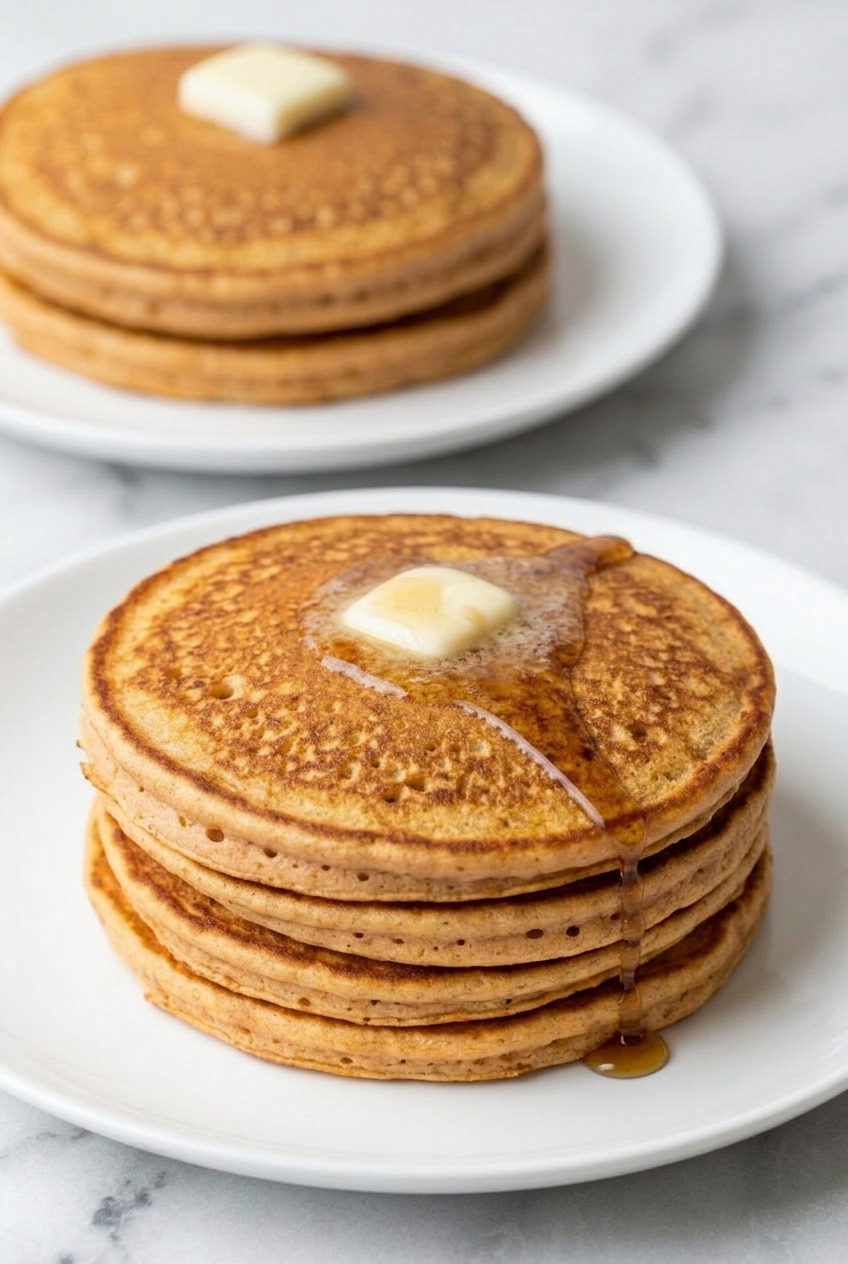
What actually moves the number on the plate is how much syrup goes over the top, not what's in the batter.
Variations
- No flour. Swap in oat flour or almond flour cup for cup. They're denser and a little more fragile, so keep them small.
- Savory. Drop the sugar and spices, add sliced scallion, black pepper and a handful of sharp cheddar. Excellent with a fried egg.
- Pecans. A half cup of chopped toasted pecans folded in at the end.
- Buttermilk. Swap it for the milk and drop the baking powder to 1 ½ teaspoons plus ½ teaspoon baking soda.
Toppings and Serving
Butter first, syrup second, and let the butter melt before the maple goes on. That's the order and I'll defend it.
- Real maple syrup. Warmed for ten seconds if you're organized.
- Toasted pecans. Chopped over the top.
- A spoon of Greek yogurt. The tang cuts the sweetness nicely.
- Bacon or sausage. Alongside, for a full plate.
Storage, Freezing and Reheating
- Fridge. Three days in a sealed container.
- Freezer. Two months, with a square of parchment between each one so they separate cleanly.
- Reheating. Straight into the toaster from frozen, or a dry skillet over low heat.
- Not the microwave. It steams them and they go limp and slightly slimy.
Make them once, get the ribbon right, and you'll never think about it again.
Recipe
Sweet Potato Pancakes
Ingredients
Dry
- 1 ½ cups all purpose flour spooned and leveled
- 2 teaspoon baking powder
- 1 ½ teaspoon ground cinnamon
- ¼ teaspoon ground nutmeg
- ½ teaspoon fine salt
Wet
- 1 cup mashed roasted sweet potato cooled
- 2 large eggs room temperature
- 1 cup whole milk plus more as needed
- 3 tablespoon melted butter plus more for the pan
- 2 tablespoon brown sugar
- 1 teaspoon vanilla extract
Instructions
Prepare the Sweet Potato
- Bake whole sweet potatoes at 400F for 45 to 55 minutes until they slump and leak syrup. Cool, scoop out the flesh and mash it smooth with a fork. Measure 1 cup. Do not boil them, boiled flesh is waterlogged and throws the batter off.
Make the Batter
- Whisk the flour, baking powder, cinnamon, nutmeg and salt together in a large bowl.
- In a second bowl whisk the mashed sweet potato with the eggs, brown sugar, melted butter, vanilla and about three quarters of the milk until smooth.
- Pour the wet into the dry and fold with a spatula until it just comes together. Lumps are fine, overmixing makes them rubbery.
- Set the thickness: add the remaining milk one tablespoon at a time until the batter falls off the spoon in a thick slow ribbon and mounds slightly before it spreads. If it is too loose, add flour two tablespoons at a time.
- Rest the batter 10 minutes.
Cook
- Melt butter in a skillet over medium low heat. This is lower than you would cook a plain pancake, because the sugar in the sweet potato browns fast.
- Cook ¼ cup scoops for 3 to 4 minutes, until bubbles open across the whole surface and stay open, then flip once and cook 2 minutes more.
- Hold the finished pancakes on a rack in a 200F oven rather than stacking them, and serve with butter first and maple syrup after.
Notes
- Thickness over measurement: sweet potato mash varies in water content, so add the last of the milk by the tablespoon until the batter falls in a thick slow ribbon.
- Cook a test pancake: three minutes that tells you whether to add flour or milk.
- Medium low heat: the sugar in the mash browns before the middle sets. A pale pan is the right pan here.
- ¼ cup scoops: larger pancakes stay wet in the center.
- Do not stack them hot: hold them on a rack in a 200F oven so the faces stay browned.
- Freezing: 2 months with parchment between them. Reheat in a toaster or a dry skillet, never the microwave.