The first time I made these I got the flour wrong and produced twelve orange hockey pucks.
My wife ate one out of loyalty.
She did not eat two.
The fix took me three more batches to find, and it was not the technique.
It was which bag of white powder I reached for.
Glutinous rice flour, potato starch and tapioca starch all look identical in the bowl and behave like three different recipes in the pan.
Once I sorted that out, these became the snack I make on a Sunday afternoon without thinking about it.
Cooked sweet potato, mashed hot, kneaded with flour into a soft dough, rolled into rounds and flattened.
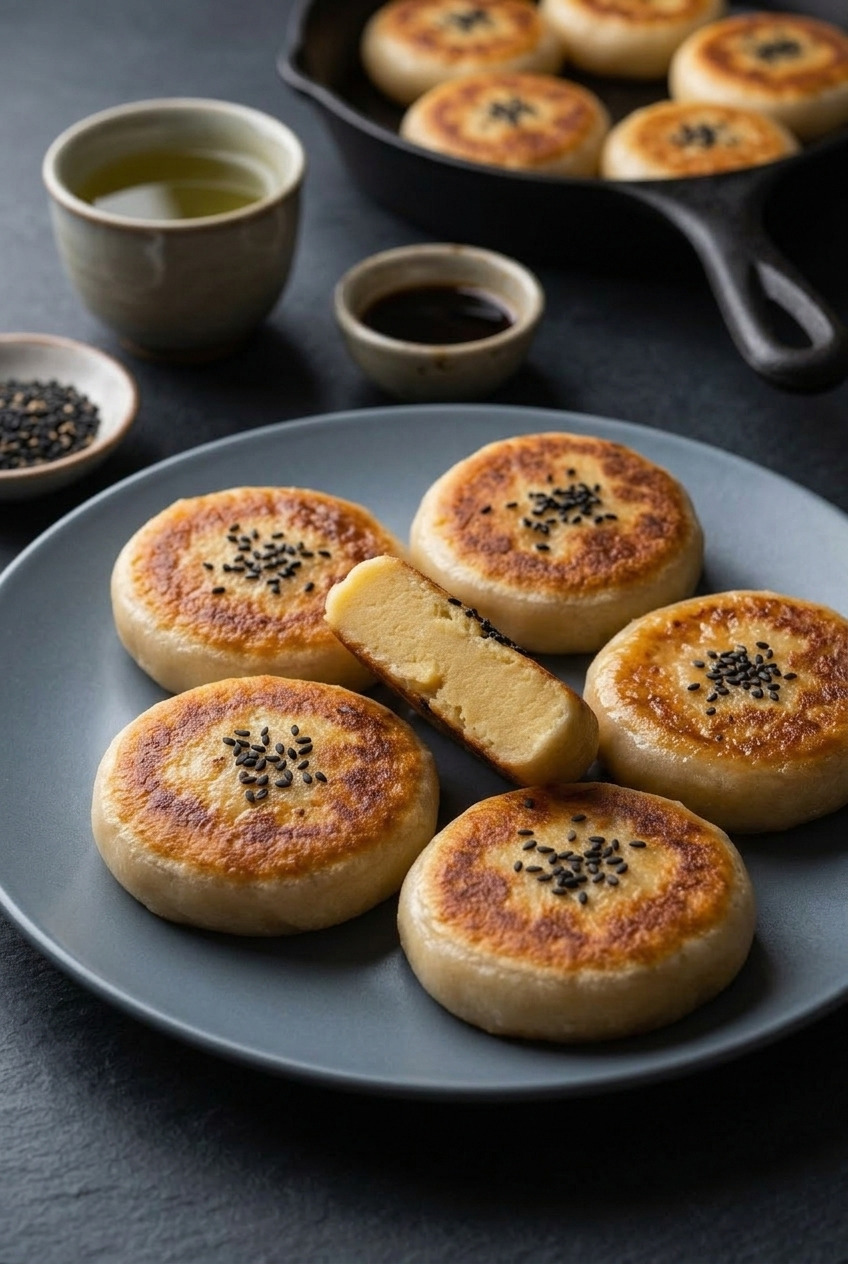
Then a thin film of oil in a pan over medium heat until each face goes deep golden and crisp.
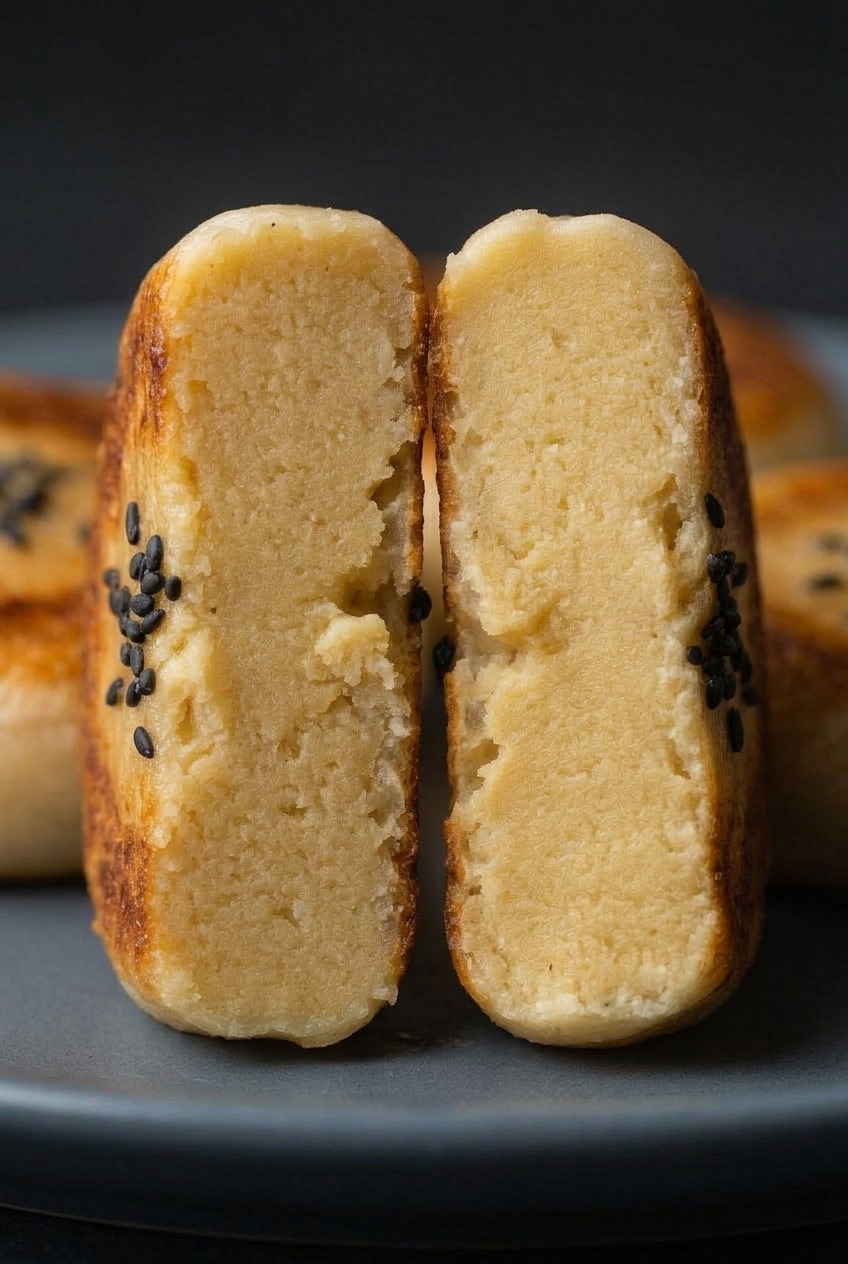
The outside crackles slightly when you bite it.
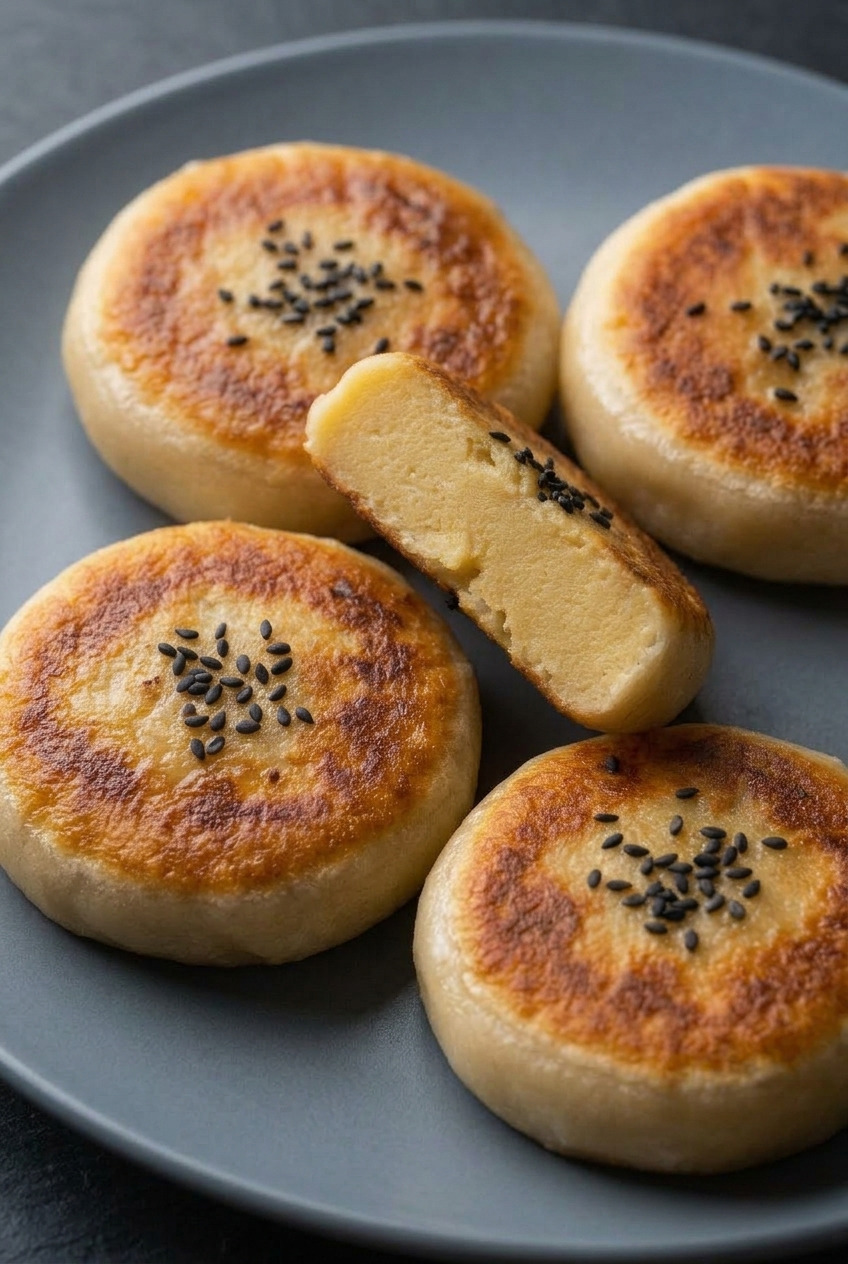
The inside is dense and chewy, closer to a soft caramel than to bread.
No yeast, no eggs, no proofing, no rolling pin.
You mix it in one bowl with a wooden spoon and finish with your hands.
Versions of this turn up all over Japan, Korea and Taiwan as a home snack and a street snack, usually made with whatever sweet potato is cheap that week.
It takes about 35 minutes start to finish.
I promise the second batch is easier than the first.
What Sweet Potato Mochi Is
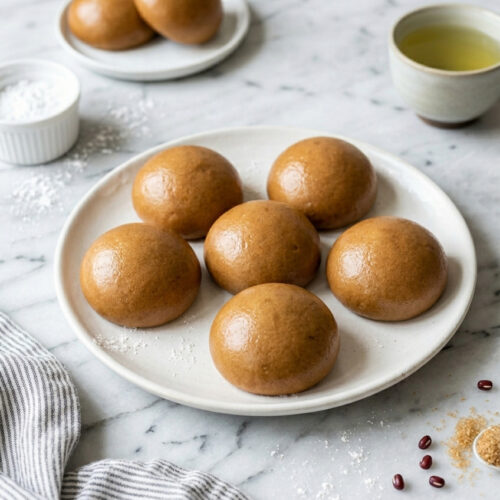
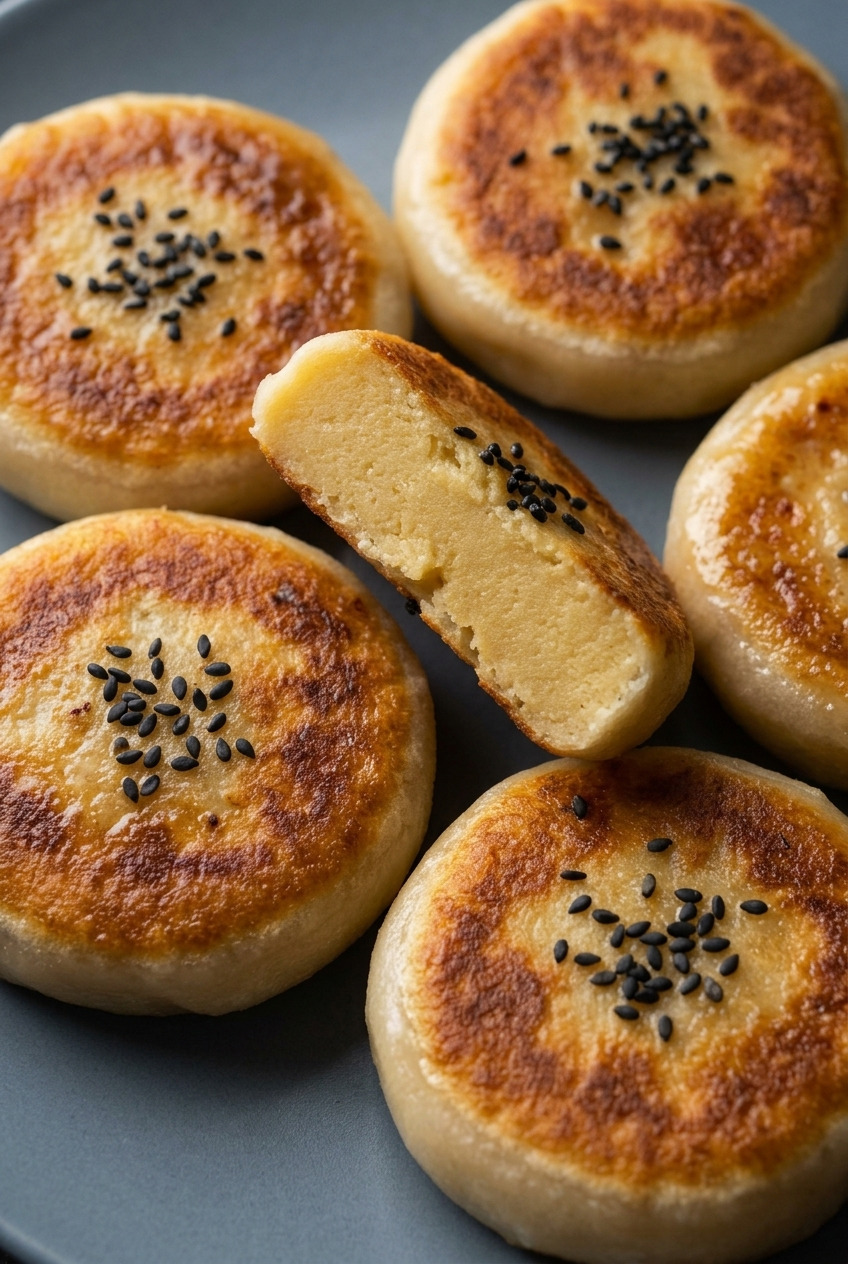
These are pan-fried rounds, not a filled dessert. Cooked sweet potato is mashed and worked with a starchy flour into a soft dough, shaped into small discs, and fried until both faces are crisp.
The name confuses things, so it's worth being clear about what this is not.
- Not daifuku. There's no red bean filling and no pounded rice cake wrapper.
- Not butter mochi. That's a baked Hawaiian cake made in a pan and cut into squares.
- Not mochi bread. That's a leavened roll with a chewy interior, baked not fried.
- Not ice cream mochi. Different world entirely.
What you get here is a snack you eat with your fingers, hot from the pan.
The interior is dense and chewy all the way through, which is exactly the point.
Ingredients You'll Need
Five ingredients, and one of them decides everything. Read the flour note twice before you shop.
- Japanese sweet potatoes (1 pound, about 2 medium). Satsumaimo, with purple skin and pale yellow flesh that turns golden and dense when cooked. This is the authentic choice and it makes a noticeably better mochi. American orange sweet potatoes are the substitute and they work, though they're wetter, so you'll need a little more flour.
- Glutinous rice flour (¾ cup, plus more as needed). Sold as mochiko or shiratamako. This is the classic binder and the one I recommend. It gives a properly dense, soft chew.
- Sugar (2 tablespoons). Restrained on purpose. The sweet potato is already sweet and these are a snack, not a dessert.
- Salt (¼ teaspoon). Small amount, big job.
- Unsalted butter (2 tablespoons, softened). Works into the dough and helps the faces brown properly in the pan.
- Whole milk (2 to 4 tablespoons). Added a teaspoon at a time, only if the dough cracks.
- Neutral oil (1 tablespoon). For the pan. A thin film, not a shallow fry.
For the Glaze, Optional
- Soy sauce (1 tablespoon), sugar (1 tablespoon), water (1 tablespoon). Simmered together into a thin, salty-sweet syrup.
- Toasted black sesame seeds (1 teaspoon). For the top.
Which Flour to Use
This is the whole article in one section. Three flours are commonly used here and they produce three different textures, so pick by the result you want.
- Glutinous rice flour (mochiko or shiratamako). Soft, dense, properly chewy, with a mild flavor that lets the sweet potato lead. The crust browns gently. This is what I use and what the recipe below is written for.
- Potato starch. The Japanese and Korean street-snack default. Bouncier and springier, and it crisps the outside faces harder than anything else. Use it if the crunch is what you're after.
- Tapioca starch. The springiest of the three, almost rubbery if you overdo it. Great in small proportion, tricky as the only flour.
What does NOT work: regular rice flour. It looks the same on the shelf and it is a completely different product. Regular rice flour has no glutinous starch, so your dough will crumble instead of holding, and you'll get those hockey pucks I made.
Sound fussy? It's the only fussy part of the recipe.
How to Make Sweet Potato Mochi
Step 1: Cook the Sweet Potatoes
Peel and cube the sweet potatoes, then steam them for 15 to 18 minutes until a fork goes through with no resistance.
You can roast them whole instead at 400°F for 45 minutes for a sweeter, drier result.
Step 2: Mash While Hot
Mash the cooked potato in a large bowl while it's still hot, along with the sugar, salt and softened butter.
Hot mash takes up the flour properly.
Cold mash fights you the whole way.
Step 3: Work in the Flour
Add the glutinous rice flour in three additions, stirring with a wooden spoon and then switching to your hands.
Knead in the bowl for about 2 minutes, until the dough stops sticking to your palm and holds a smooth ball.
It should feel like soft play clay.
Step 4: Shape the Rounds
Divide the dough into 12 pieces, roll each into a ball, and flatten to about 2 inches across and half an inch thick.
Keep them even, because uneven rounds cook unevenly and the thin ones dry out.
Step 5: Pan-Fry
Heat the oil in a nonstick or cast iron pan over medium heat.
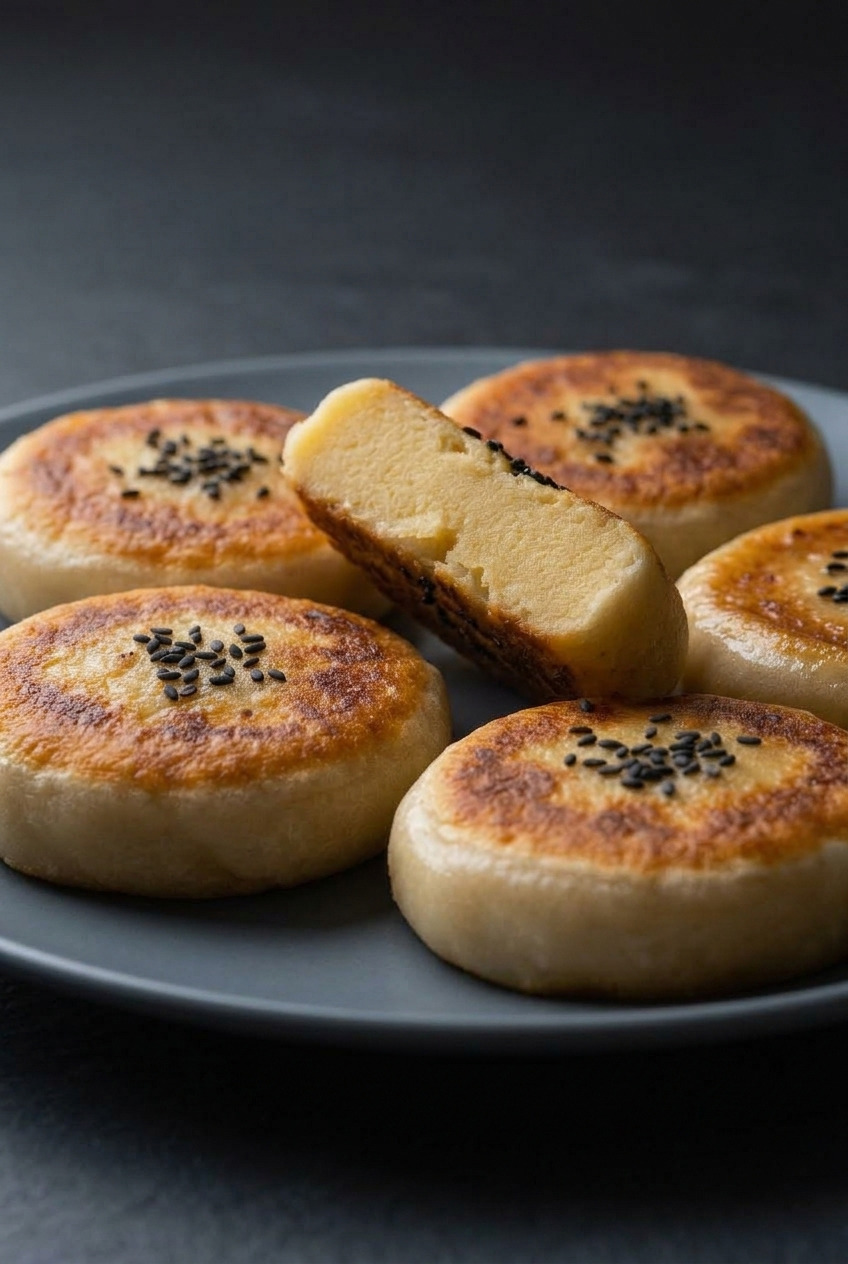
Cook the rounds in batches, about 3 minutes per side, until each face is deep golden with a crisp shell.
Don't crowd the pan and don't push the heat up, because the outside will color long before the middle is heated through.
Step 6: Glaze and Serve
If you're glazing, simmer the soy sauce, sugar and water in a small pan for 1 minute until slightly syrupy, then brush it over the hot rounds and finish with sesame seeds.
Eat them right away.
Getting the Dough Right
The dough tells you what it needs, and there are only two problems. Both are fixed in under a minute.
- Sticky and clinging to your hands. Add glutinous rice flour 1 tablespoon at a time and knead it in. Wet American sweet potatoes usually need one or two extra spoons.
- Cracking at the edges when you roll a ball. Add warm milk 1 teaspoon at a time. Cracked edges become split rounds in the pan.
The target is soft play clay: it holds a shape, takes a fingerprint, and doesn't tack to a clean palm.
Pan-Fried or Baked
Pan-fried is what most people are after. It's the only method that gives you that crisp golden face against a dense chewy middle, and it takes six minutes.
Baking is the hands-off alternative.
425°F for 20 to 25 minutes on a lined sheet gives you a softer round that's chewy all the way through with no crust.
Baked ones also hold better if you're making them for a crowd and can't stand at the stove.
Sauces and Toppings
- Soy and sugar glaze. The classic. Salty, sweet, glossy, and it makes the whole thing taste more like the street version.
- Honey butter. Equal parts melted butter and honey, brushed on hot. Very Korean, very good.
- Kinako. Roasted soybean flour with a spoon of sugar, dusted over. Nutty and dry, and it cuts the richness.
- Gochujang butter. A teaspoon of gochujang melted into butter for a savory, spicy round.
- Black sesame. Toasted, on top of any of the above.
Tips for the Best Sweet Potato Mochi
- Mash while hot. The single most important habit here.
- Add flour in stages. Sweet potatoes vary wildly in moisture and a fixed amount will fail you half the time.
- Keep the heat at medium. Higher and the crust burns before the middle warms through.
- Make them all the same thickness. Half an inch, every one.
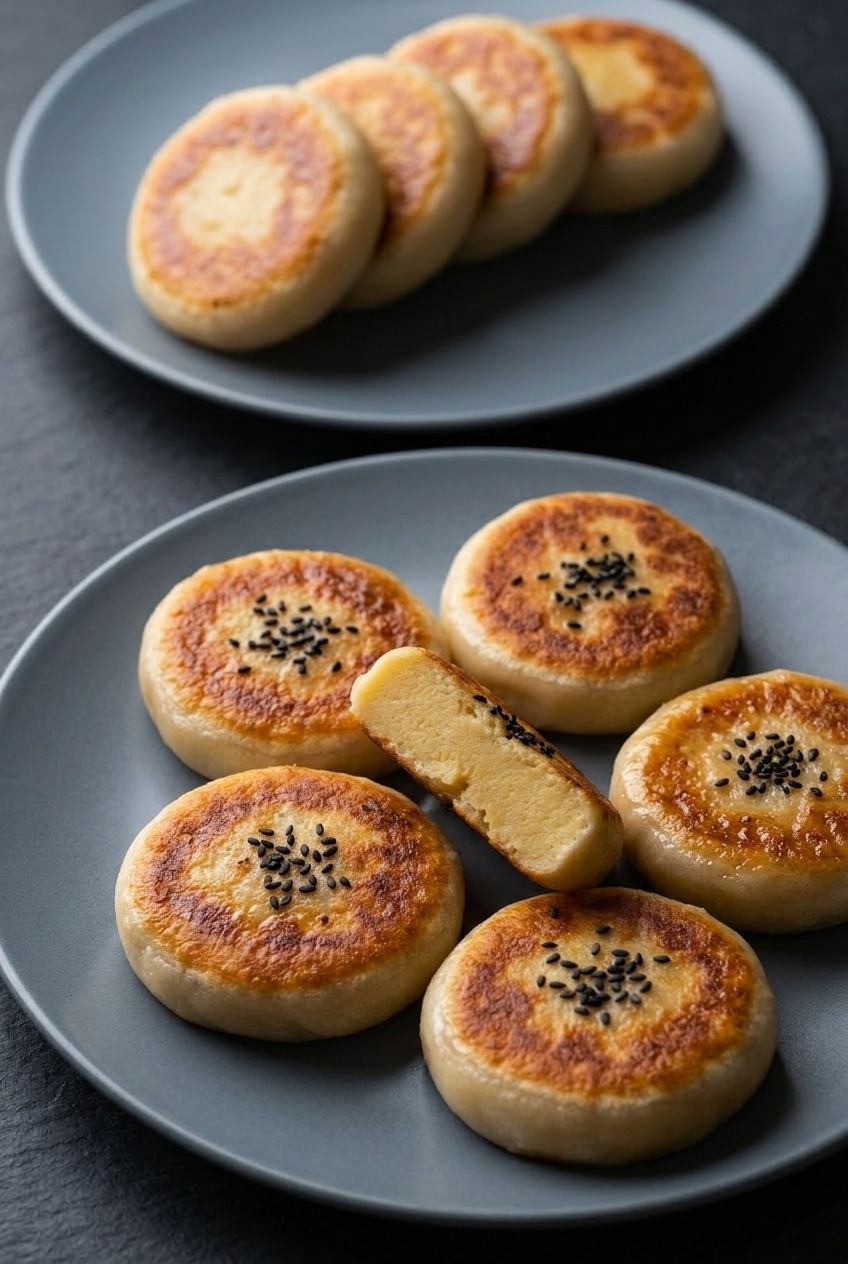
- Eat them fresh. These are at their peak in the first ten minutes out of the pan, and there's no shame in standing at the stove eating them.
Variations
- Purple sweet potato. Swap in purple-fleshed sweet potato for a dramatic color and a slightly drier dough.
- Cheese center. Press a small cube of low moisture mozzarella into each ball before flattening. A Korean street-food favorite.
- Savory version. Drop the sugar to a teaspoon, add a pinch of white pepper, and serve with the gochujang butter.
- Potato starch swap. Use potato starch instead of glutinous rice flour for a bouncier round with a harder crisp shell.
- Smaller rounds. Make 20 one-inch discs instead of 12, and cut the pan time to two minutes a side.
Storing and Reheating
- Same day. Best within an hour of frying. That crisp face softens as they sit.
- Refrigerated. Airtight up to 3 days. They firm up cold and come back with heat.
- Reheating. A dry pan over medium heat for 2 minutes per side restores the crust better than a microwave.
- Frozen. Freeze the shaped uncooked rounds on a tray, then bag them for up to 1 month. Fry from frozen, adding a minute per side.
Frequently Asked Questions
What is sweet potato mochi, and is it the same as Japanese mochi?
These are pan-fried rounds of mashed sweet potato bound with glutinous rice flour, crisp outside and dense and chewy inside. Traditional Japanese mochi is pounded steamed rice with no sweet potato in it. They share the chewy quality and the name, not the method.
Can I use regular rice flour instead of glutinous rice flour?
No. Regular rice flour has none of the starch that gives the chew, so the dough crumbles and the rounds turn hard. Look for a bag that says glutinous rice flour, mochiko, or shiratamako.
What's the difference between glutinous rice flour, tapioca starch and potato starch here?
Glutinous rice flour gives a soft dense chew, potato starch gives a bouncier round with the crispest crust, and tapioca starch gives the springiest texture of the three. All three work. They just give you different snacks.
Why is my dough sticky or cracking?
Sticky means it needs more flour, a tablespoon at a time. Cracking means it needs a teaspoon of warm milk. Sweet potato moisture varies enough that you should always expect to adjust.
Can I bake them instead of pan-frying?
Yes, at 425°F for 20 to 25 minutes. You lose the crisp face and gain a softer round that's chewy throughout. It's the better choice if you're making a big batch.
Can I use an American orange sweet potato?
Definitely. They're wetter than Japanese satsumaimo, so start with the same flour and expect to add one or two extra tablespoons. The color is more orange and the flavor a little sweeter.
How do I store and reheat them?
Airtight in the fridge up to three days, then reheated in a dry pan for two minutes a side. That brings the crust back, which the microwave does not.
Can I freeze the shaped rounds?
Yes, and it's the best make-ahead move here. Freeze them flat on a tray, bag them, and fry straight from frozen with an extra minute per side.
Recipe
Chewy Pan-Fried Sweet Potato Mochi
Ingredients
For the Mochi
- 1 pound Japanese sweet potatoes about 2 medium, or orange sweet potatoes
- ¾ cup glutinous rice flour mochiko or shiratamako, plus more as needed
- 2 tablespoons sugar
- ¼ teaspoon salt
- 2 tablespoons unsalted butter softened
- 2 tablespoons whole milk up to 4 tablespoons, as needed
- 1 tablespoon neutral oil for the pan
For the Glaze (Optional)
- 1 tablespoon soy sauce
- 1 tablespoon sugar
- 1 tablespoon water
- 1 teaspoon toasted black sesame seeds
Instructions
Make the Dough
- Peel and cube the sweet potatoes and steam them 15 to 18 minutes, until a fork goes through with no resistance.
- Mash the hot sweet potato in a large bowl with the sugar, salt, and softened butter until mostly smooth.
- Add the glutinous rice flour in three additions, stirring with a wooden spoon and then working it by hand. Knead in the bowl about 2 minutes, until the dough stops sticking and holds a smooth ball with the feel of soft play clay. Add flour a tablespoon at a time if sticky, or warm milk a teaspoon at a time if it cracks.
Shape and Fry
- Divide the dough into 12 pieces, roll each into a ball, and flatten to about 2 inches across and ½ inch thick, keeping the thickness even.
- Heat the oil in a nonstick or cast iron pan over medium heat. Fry the rounds in batches about 3 minutes per side, until each face is deep golden with a crisp shell. Do not crowd the pan or raise the heat.
- For the glaze, simmer the soy sauce, sugar, and water in a small pan 1 minute until slightly syrupy. Brush over the hot rounds and finish with sesame seeds. Serve right away.
Notes
- Use glutinous rice flour, not rice flour: regular rice flour has none of the starch that gives the chew and the rounds turn hard.
- Mash while hot: hot mash takes up the flour cleanly, cold mash resists it.
- Adjust the flour every time: sweet potato moisture varies, so go by the feel of the dough rather than the cup measure.
- Keep the heat at medium: higher and the crust colors before the middle warms through.
- Storage: 3 days refrigerated, reheated in a dry pan; shaped uncooked rounds freeze 1 month and fry from frozen.