You break one open and the shell cracks like a thin shard of glass.
Inside is soft and pale gold and still moving.
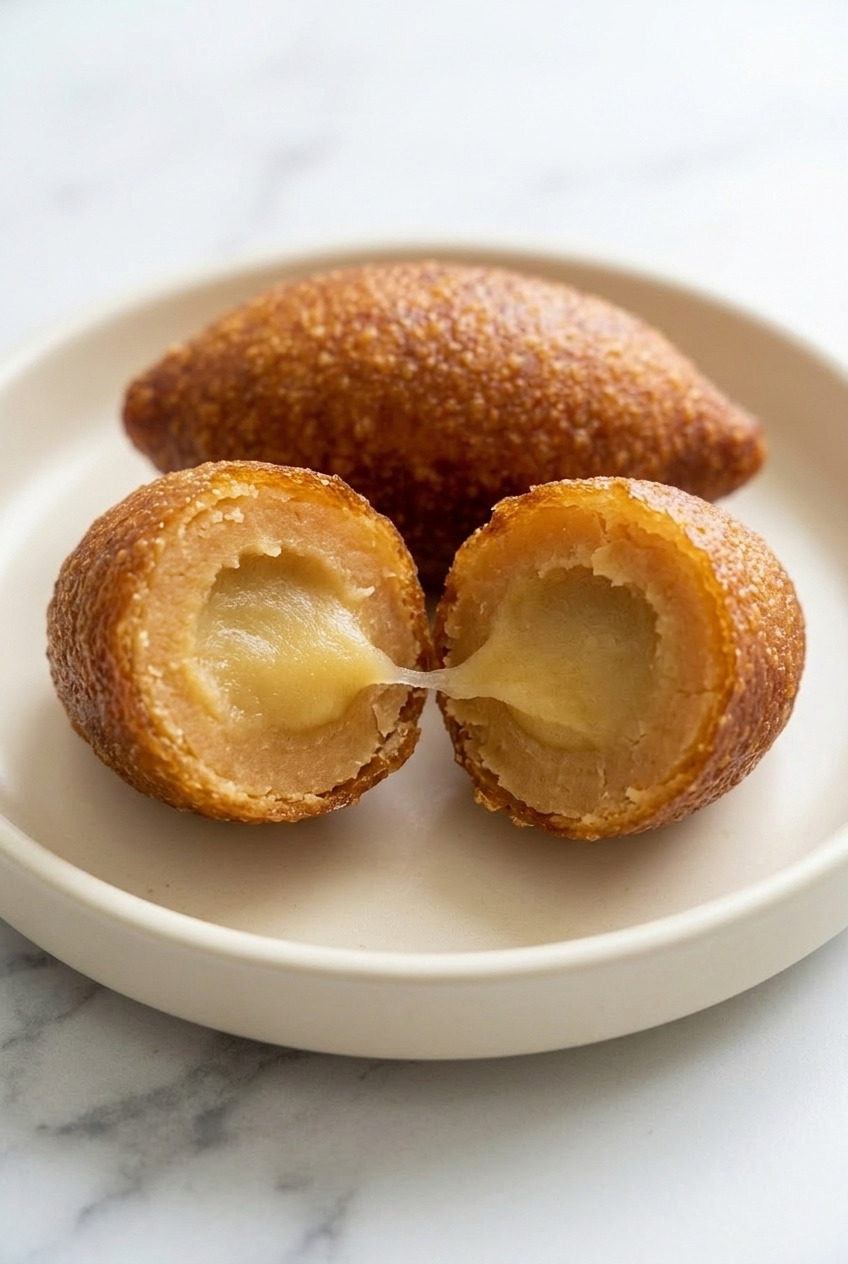
The first one I ate came off a cart on a Hanoi side street in December, out of a paper cone, too hot to hold properly.
I burned the roof of my mouth and immediately bought two more.
The name explains the shape once you know it.
Khoai lang is sweet potato, and kén means silkworm cocoon.
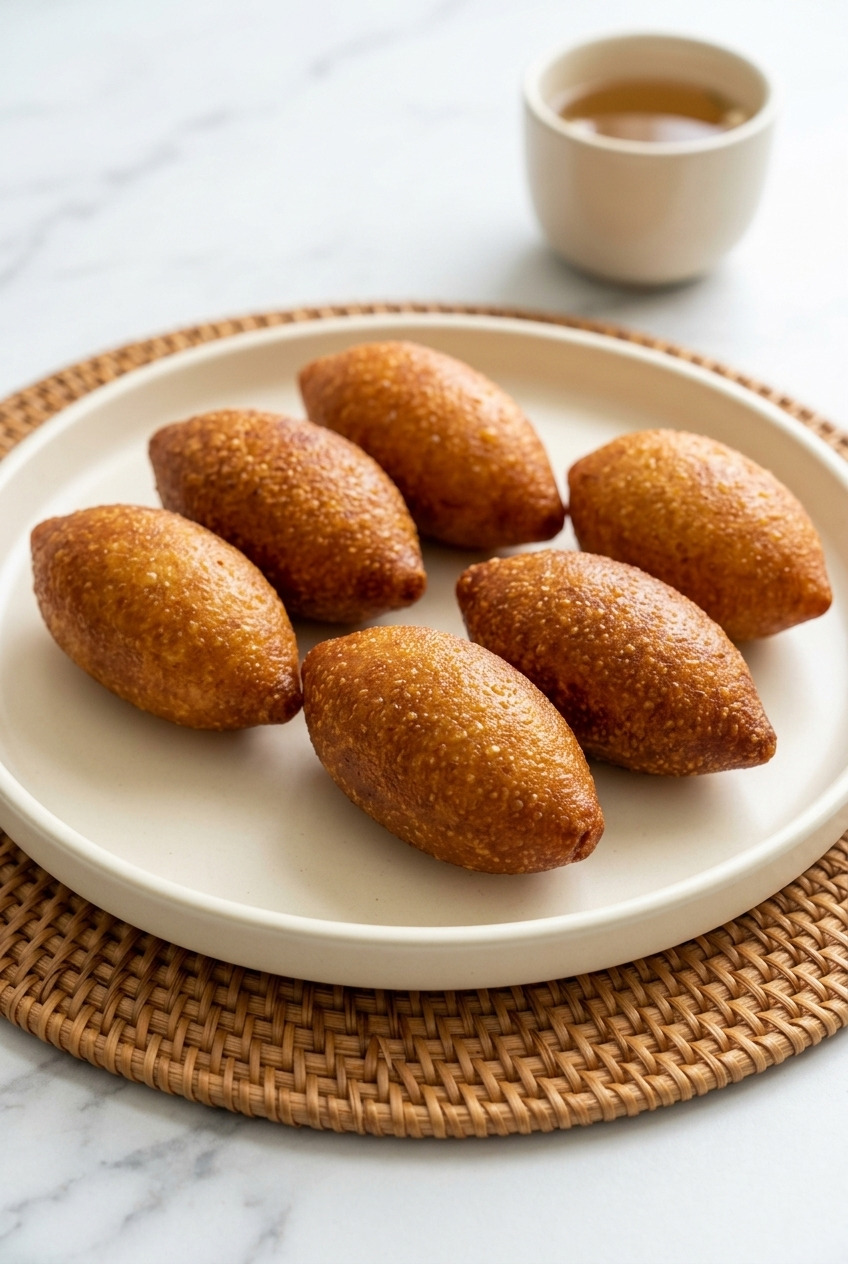
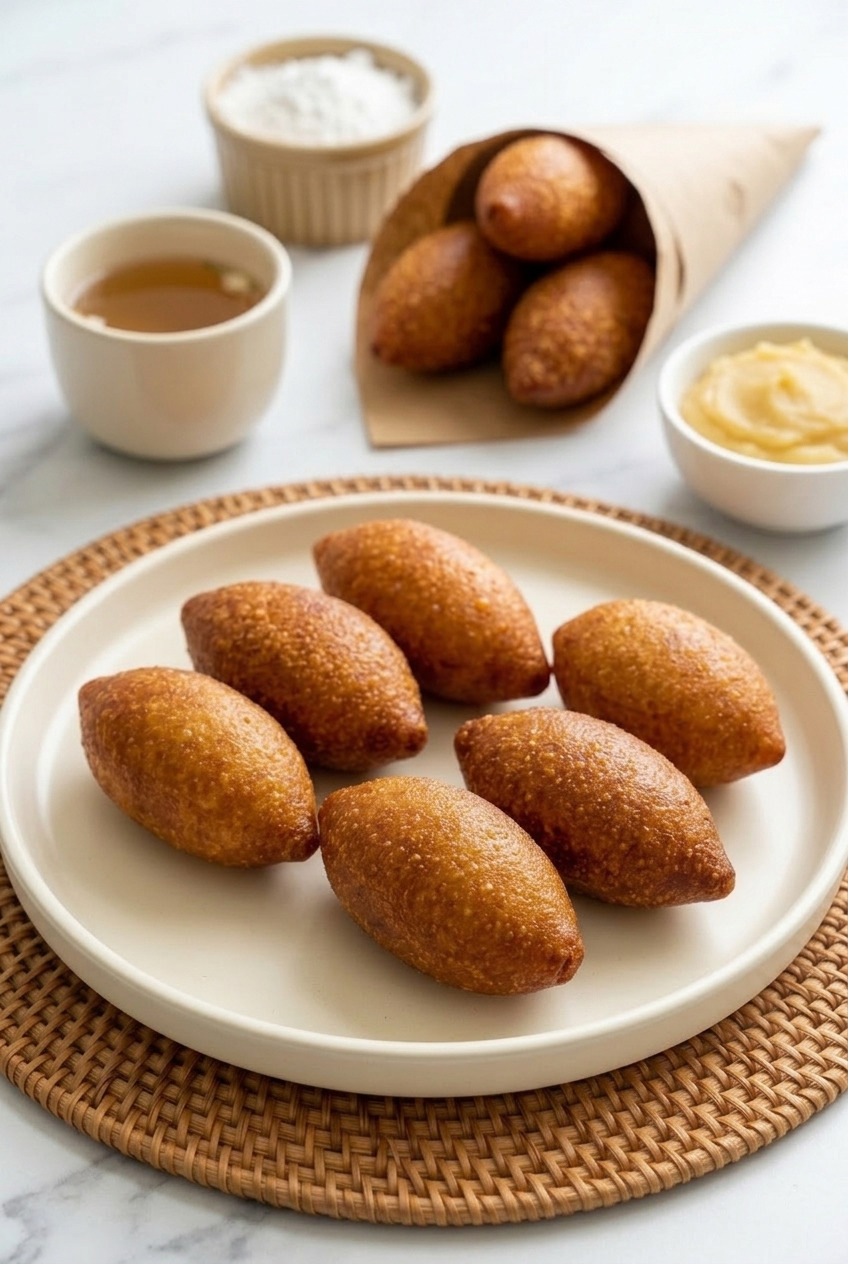
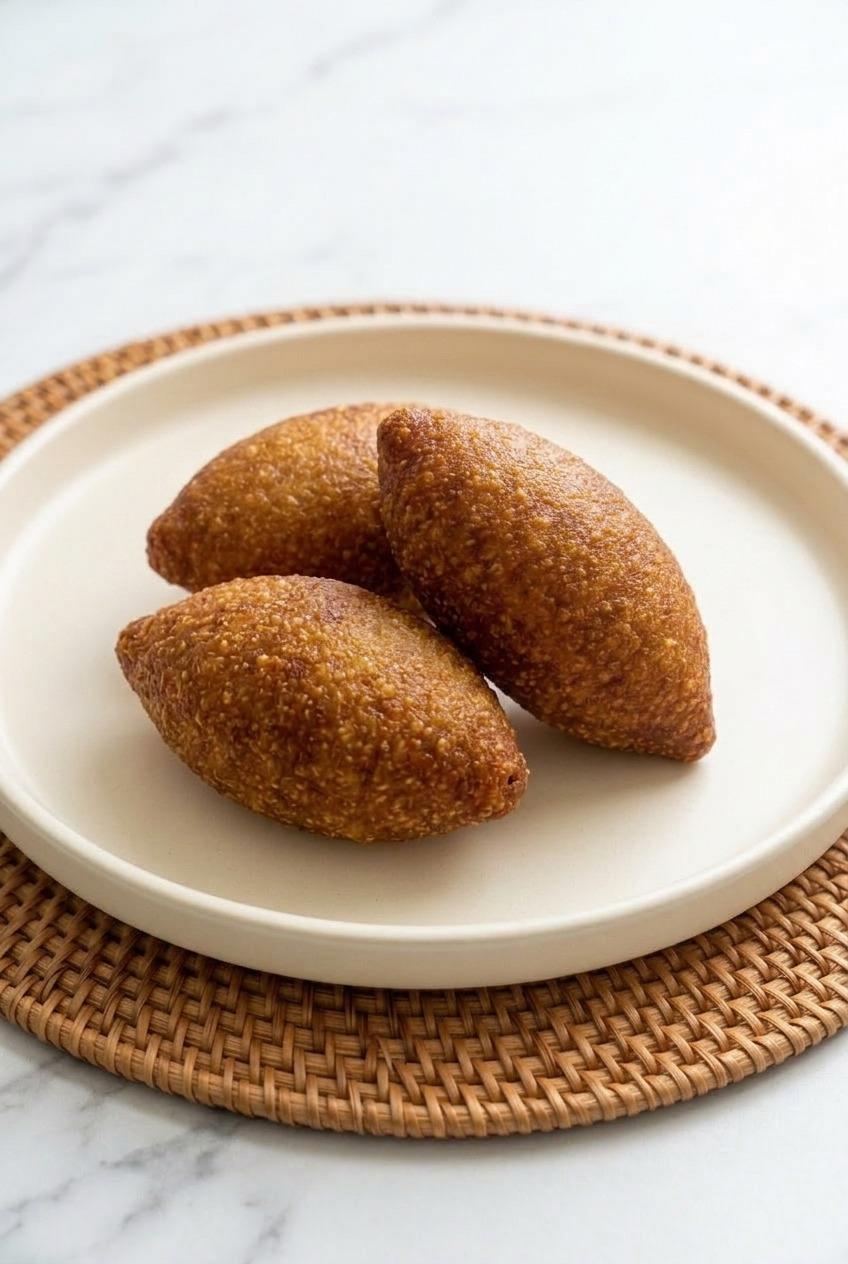
They are not spheres. They are short tapered ovals, pinched narrow at both ends, and once somebody points at a tray of them and says cocoon, you cannot unsee it.
My first batch at home burst in the oil.
All six of them, filling everywhere, a pan of sweet oil and nothing to show for it.
I had sealed them lazily and I paid for it.
The second thing I got wrong was frying them once, which gives you a pale soft shell instead of a crisp one.
They need two fries, and I'll explain exactly what each one does.
One more thing worth saying up front: if you search for these you will mostly find bánh tôm, the shrimp fritter. Different dish entirely.
This is the one from the cart.
What Is Khoai Lang Ken?
Khoai lang ken is a Vietnamese street snack of mashed sweet potato bound with glutinous rice flour, wrapped around a sweet filling, shaped into small cocoons and deep fried twice. It is sold from carts and market stalls, usually in the cooler months.
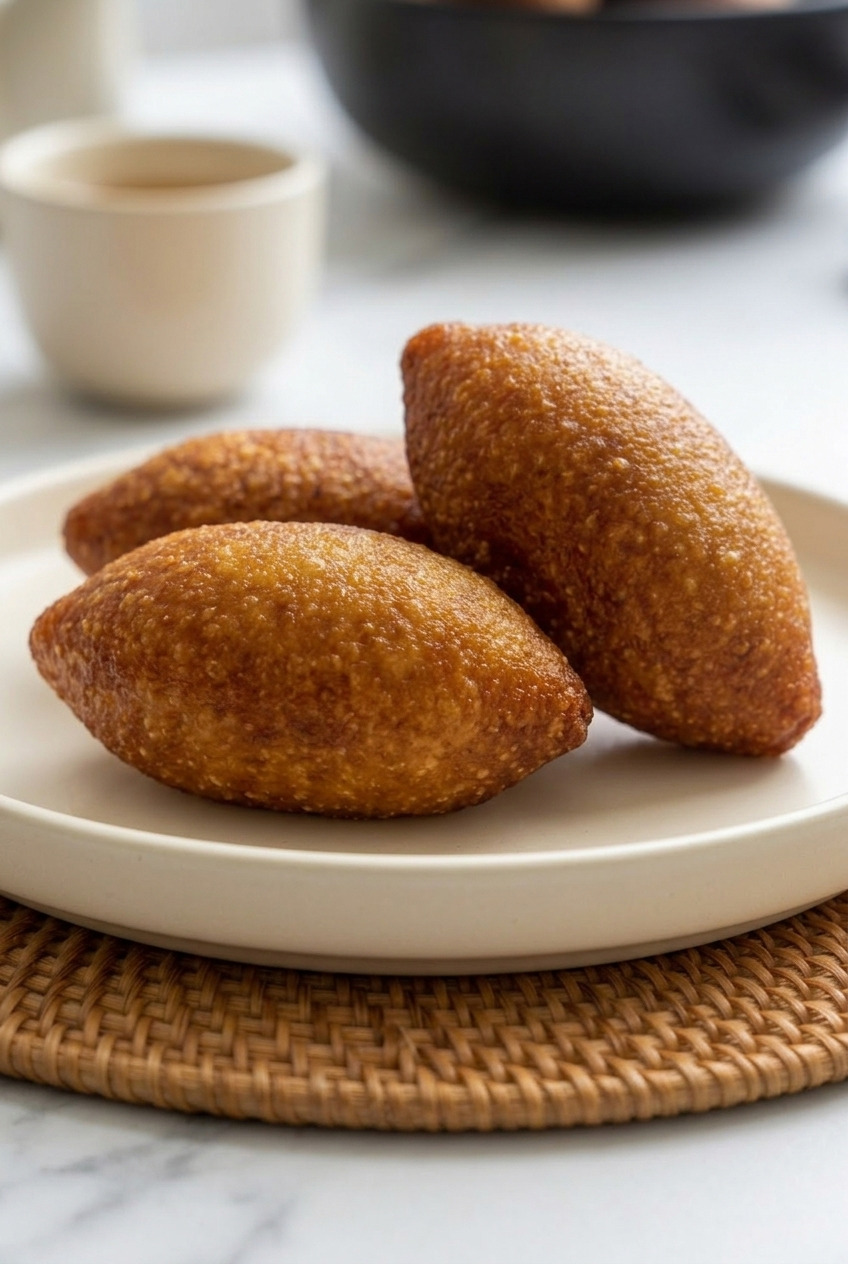
The shell is the interesting part. Glutinous rice flour gives it a faint chew under the crispness, closer to a mochi doughnut than to a croquette.
The inside is soft, sweet, and warm enough to run when you break it.
It is a snack, not a plated dessert. You eat it standing up, out of paper, with your fingers.
Roughly the size of a large date, and you will eat four without noticing.
Why It Is Called a Cocoon
The word kén is the Vietnamese word for a silkworm cocoon, and the shape is the whole reference. It is a description, not a poetic flourish.
Silk has been produced in northern Vietnam for a very long time, and a tray of cocoons is a familiar sight in silk villages outside Hanoi.
So you shape these as short ovals, roughly 2 inches long, tapered at both ends and fattest through the middle.
A perfect sphere is not wrong exactly, but it is not what the name is describing, and the oval fries more evenly because it has less depth at the ends.
It Is Not Banh Tom
Search this dish and page one will hand you bánh tôm, which is a completely different food. Google has conflated the two because both are Vietnamese, fried, and involve sweet potato.
Bánh tôm is a savory fritter: raw sweet potato cut into matchsticks, bound in a thin batter with a whole shrimp on top, fried flat and eaten with fish sauce, herbs and lettuce. It is a Hanoi West Lake specialty and it is excellent.
Khoai lang ken is sweet: the potato is cooked and mashed, the binder is glutinous rice flour, the shape is a filled cocoon, and there is no shrimp anywhere near it.
If a recipe tells you to julienne the sweet potato, you are reading about the other dish.
Ingredients You Will Need
- Sweet potatoes (1 lb). Peeled and cut into chunks. Japanese or purple fleshed varieties are the traditional choice and are drier, but orange American sweet potatoes work fine.
- Glutinous rice flour (¾ cup). The defining ingredient. Sold as sweet rice flour or bột nếp. This is what makes the shell chewy and lets the dough hold a shape.
- Rice flour (¼ cup). Regular, not glutinous. Adds crispness that the glutinous flour alone will not give you.
- Granulated sugar (3 tablespoons). The dough itself is sweet. This is a dessert snack.
- Fine salt (¼ teaspoon). Keeps it from being one flat sweet note.
- Full fat coconut milk (3 tablespoons, warm). Traditional in the dough. Adds richness and brings the mash together.
- Unsalted butter (1 tablespoon). Melted into the hot mash. A modern touch, and a good one.
- Sweetened mung bean paste (½ cup) or low moisture mozzarella (3 oz). The filling. See the section below.
- Neutral oil (4 cups). For deep frying. You need the depth for them to float.
Choosing a Filling
There are two fillings in circulation and they belong to different eras of the same dish. Both are legitimate, and one is older.
- Sweetened mung bean paste. The traditional filling. Steamed split mung beans mashed with sugar until thick and smooth, the same paste used in banh chung and countless Vietnamese sweets. Earthy, not too sweet, and it goes soft and creamy rather than liquid. Sold ready made in Vietnamese groceries.
- Low moisture mozzarella. The modern street version, and the one that dominates Vietnamese social media now. It gives you an actual stretch when you pull one apart. Cut it into small cubes and keep it cold until it goes in.
My honest take: the mung bean is the better dessert and the cheese is the better party trick. Make the mung bean version first so you know what the dish is supposed to taste like.
How to Make Khoai Lang Ken
Step 1: Steam and Mash
Steam the sweet potato chunks for 15 to 20 minutes, until a fork goes through with no resistance.
Steaming beats boiling here. Boiled potato carries water into the dough and water is your enemy in the fryer.
Mash it while it is hot, with the butter, until completely smooth.
Step 2: Work the Dough
Add the sugar, salt, glutinous rice flour and rice flour to the warm mash.
Pour in the warm coconut milk and work it with your hands until it comes together.
You want a dough that is soft, smooth, and just barely tacky, like play dough left out for an hour.
Pro tip: if it sticks to your palm, add glutinous rice flour a tablespoon at a time. If it cracks when you roll it, add coconut milk a teaspoon at a time.
Step 3: Fill and Seal
Divide the dough into 18 pieces, about a heavy tablespoon each.
Flatten one into a disc in your palm, put a teaspoon of mung bean paste or a cube of mozzarella in the middle, and draw the edges up over the filling.
Pinch the seam shut, then roll it between your palms until you cannot see the seam at all.
SEAL is the operative word. A pinhole becomes a blowout in hot oil.
Step 4: Shape the Cocoons
Roll each ball on the counter with light pressure at the ends until it lengthens into an oval about 2 inches long, fatter in the middle, tapered at both tips.
Set them on a tray, not touching.
Step 5: The First Fry
Heat the oil to 300°F.
Fry in batches of six for 6 to 7 minutes, turning them gently, until they are pale gold and firm.
They will float and puff slightly. Do not chase color yet.
Lift them onto a rack and rest 10 minutes.
Step 6: The Second Fry
Bring the oil up to 360°F.
Return the cocoons for 1 to 2 minutes, until the shells are deep gold and blistered.
Drain on the rack for 1 minute and eat them while the center is still molten.
Worth the second trip through the oil? Every time.
Why the Double Fry Matters
The two fries do completely different jobs, which is why skipping one ruins the dish. Once you know the mechanism you will never fry these once again.
- The first fry cooks the dough. At 300°F the heat moves slowly enough to reach the center and set the shell without darkening it. Fry hot from the start and the outside browns while the inside is still raw paste.
- The rest lets steam escape. Ten minutes on the rack pulls moisture out of the surface. That surface is what crisps.
- The second fry crisps and blisters. A short blast at 360°F flashes off the last surface water and sets the shell hard and glassy.
- The filling melts on the second pass. This is why they are served immediately. The molten center only exists for a few minutes.
Substitutions
- Glutinous rice flour. Very hard to replace. Tapioca starch gets you partway to the chew, but the dough is harder to shape and the shell is more brittle. Regular rice flour alone will crack. Buy the real thing if you can.
- Coconut milk. Whole milk works. You lose a layer of richness and a little of the perfume.
- Sweet potato variety. Japanese sweet potato is drier and gives a firmer dough. With orange American sweet potatoes, hold back a tablespoon of the coconut milk.
- Mung bean paste. Sweetened red bean paste is a fine stand in and behaves the same way in the oil.
- Air frying. You can, at 390°F for 12 minutes with a light oil spray. The shell comes out dry and matte rather than glassy. It is a different snack, not the same one.
Tips
- Seal completely. The single most common failure. Roll until the seam disappears, then check each one before it goes near the oil.
- Keep the filling small. A teaspoon. Overfilling thins the shell and thin shells burst.
- Keep the dough covered. It dries out fast and dry dough cracks along the seam.
- Do not crowd the oil. Six at a time. A crowded pot drops the temperature and they soak up oil.
- Cold filling, warm dough. A cold cube of cheese is much easier to seal in than a soft one.
- Drain on a rack. Paper towels trap steam under the shell and undo the second fry.
How to Serve
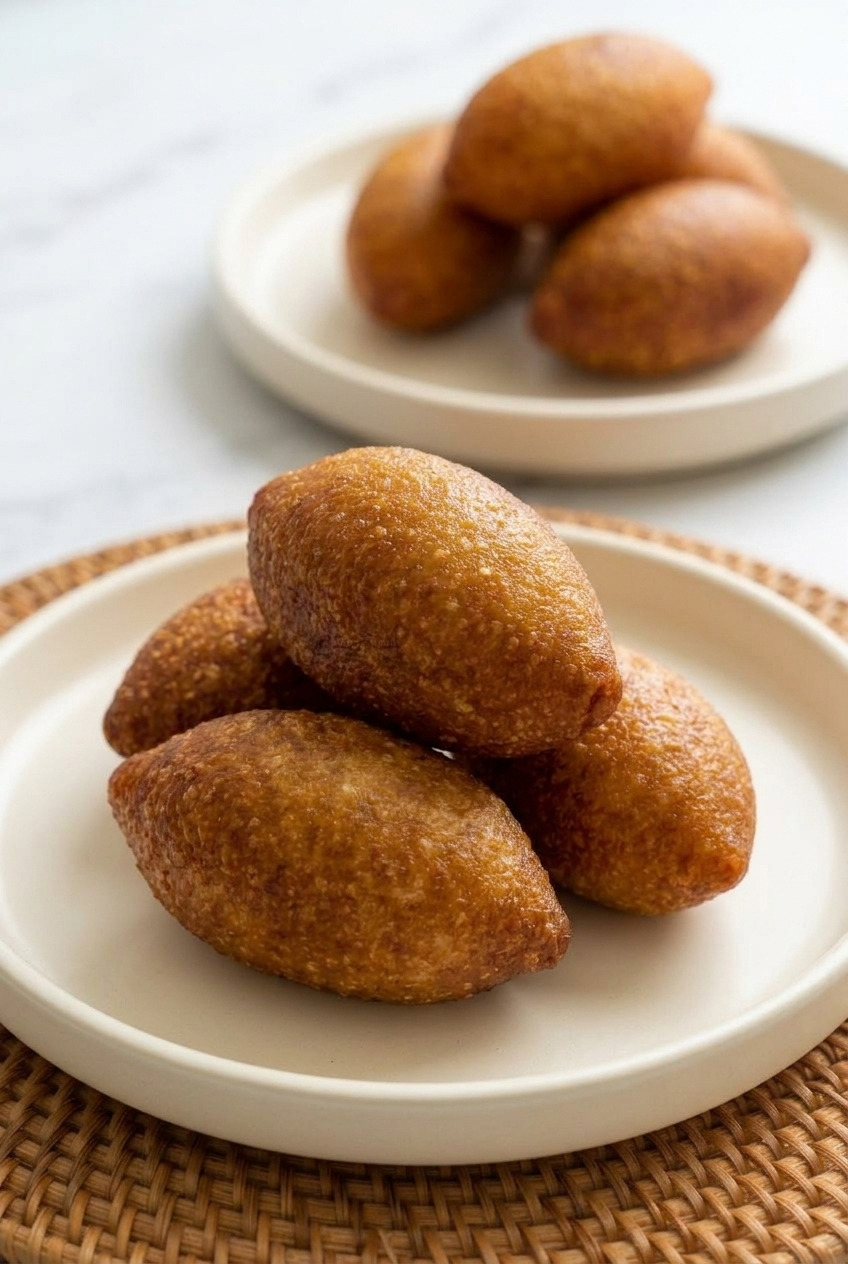
Warm and immediately. These have a window of about ten minutes and everything good about them lives inside it.
In Vietnam they come in a paper cone or a small plastic bag, eaten on the street in cold weather.
At home I pile them in a bowl and put a pot of jasmine tea next to them, because the tea cuts the sweetness cleanly.
Skip the ketchup and hot sauce you will see on some stalls. That belongs to the savory cheese filled version, and even then I am not convinced.
Make Ahead and Storage
- Shape ahead. The real make ahead move. Fill and shape them, cover tightly, refrigerate up to 24 hours, then fry to order. Add a minute to the first fry from cold.
- Freeze raw. Freeze shaped cocoons on a tray, then bag them for 2 months. Fry from frozen at 290°F for 9 minutes, then finish as usual.
- Cooked, refrigerated. Up to 2 days, though the shell softens overnight.
- Reheating. 375°F oven or air fryer for 5 minutes. It brings back some crispness and it will not bring back the molten center.
- Fair warning: nothing you do to a leftover one gets you back to a fresh one. Fry what you plan to eat.
Recipe
Khoai Lang Ken (Vietnamese Fried Sweet Potato Balls)
Ingredients
For the Dough
- 1 lb sweet potatoes peeled and cut into chunks
- ¾ cup glutinous rice flour plus more as needed
- ¼ cup rice flour
- 3 tablespoon granulated sugar
- ¼ teaspoon fine salt
- 3 tablespoon full fat coconut milk warm
- 1 tablespoon unsalted butter melted
For the Filling and Frying
- ½ cup sweetened mung bean paste or 3 oz low moisture mozzarella cut into 18 small cubes
- 4 cups neutral oil for deep frying
Instructions
Make the Dough
- Steam the sweet potato chunks 15 to 20 minutes, until a fork goes through with no resistance. Steaming keeps water out of the dough.
- Mash the hot potato with the melted butter until completely smooth.
- Add the sugar, salt, glutinous rice flour and rice flour, then the warm coconut milk. Work it with your hands into a soft, smooth, barely tacky dough. Add glutinous rice flour a tablespoon at a time if it sticks, or coconut milk a teaspoon at a time if it cracks.
Fill and Shape
- Divide the dough into 18 pieces. Flatten one into a disc in your palm, place a teaspoon of mung bean paste or a cube of mozzarella in the center, and draw the edges up over the filling.
- Pinch the seam shut and roll between your palms until the seam disappears completely. Any pinhole will blow out in the oil.
- Roll each ball on the counter with light pressure at the ends until it lengthens into a tapered oval about 2 inches long, fatter through the middle, like a silkworm cocoon. Set them on a tray, not touching.
Double Fry
- Heat the oil to 300F. Fry in batches of six for 6 to 7 minutes, turning gently, until pale gold and firm. Lift onto a rack and rest 10 minutes.
- Raise the oil to 360F and return the cocoons for 1 to 2 minutes, until the shells are deep gold and blistered.
- Drain on the rack for 1 minute and serve while the centers are still molten.
Notes
- Not banh tom: banh tom is a savory shrimp fritter made with raw julienned sweet potato. This dish is sweet, made from cooked mashed sweet potato bound with glutinous rice flour.
- Ken means silkworm cocoon: shape them as tapered ovals, not spheres.
- Seal completely: the most common failure is a leaking seam that bursts in the oil.
- The double fry: the first fry at 300F cooks the dough through, the 10 minute rest lets surface steam escape, and the short second fry at 360F crisps the shell.
- Filling: sweetened mung bean paste is traditional, low moisture mozzarella is the modern street version. Red bean paste also works.
- Make ahead: shape and refrigerate up to 24 hours, or freeze raw up to 2 months and fry from frozen at 290F for 9 minutes.