Behind a plastic curtain at a Korean market, someone is holding a tray of fried things under a heat lamp.
Squid rings. Perilla leaves. Peppers. Pale gold discs of sweet potato stacked at the front.
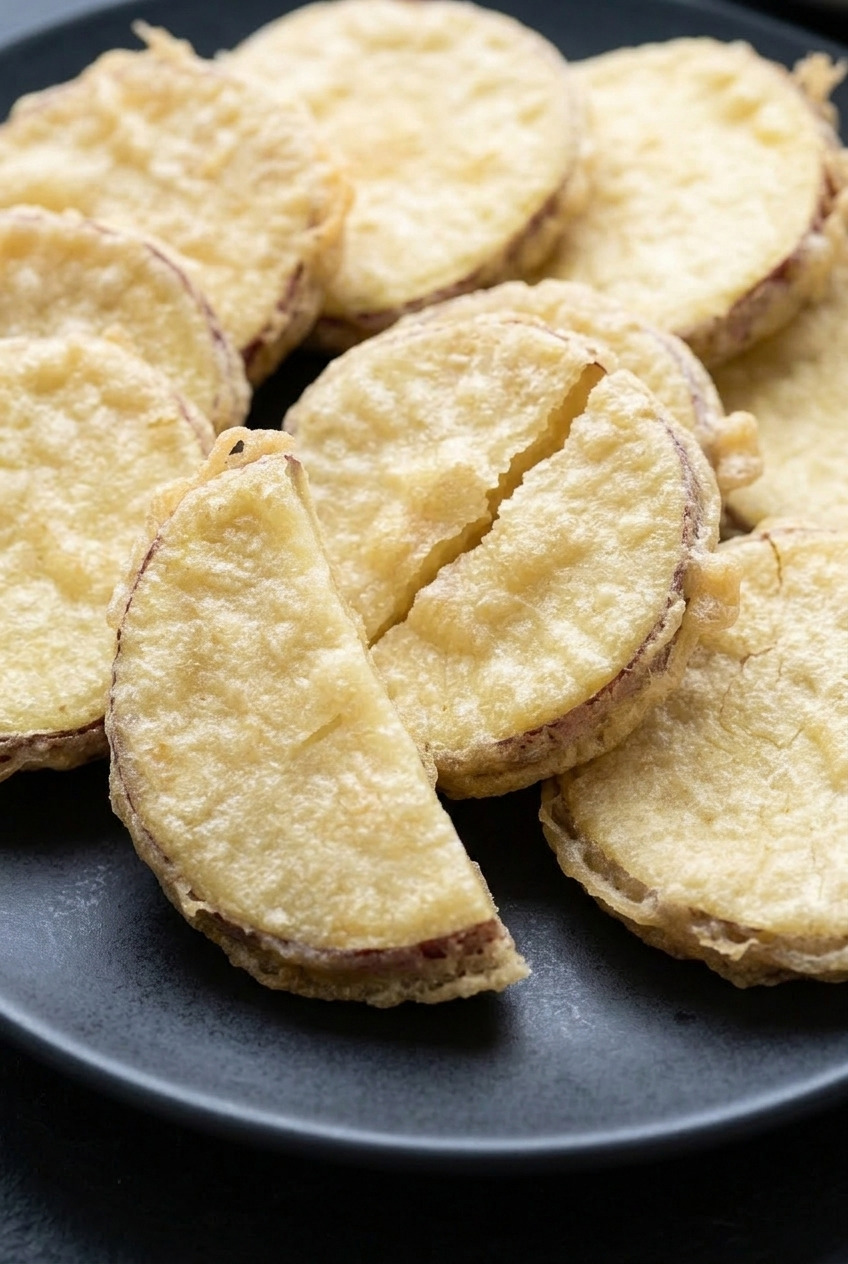
You point, they fill a paper cup, and you eat it walking.
Usually with a splash of tteokbokki sauce over the top if there's a pot nearby.
That sweet potato disc is what I came home chasing.
It's called goguma twigim, and it took me embarrassingly long to get it right.
My first attempts had batter sliding off in the oil and floating away as sad little rafts while the naked sweet potato sank.
The fix turned out to be one dry step that almost nobody publishes, and I'll get to it.
People ask whether this is just Korean tempura, and the honest answer is that they're relatives.
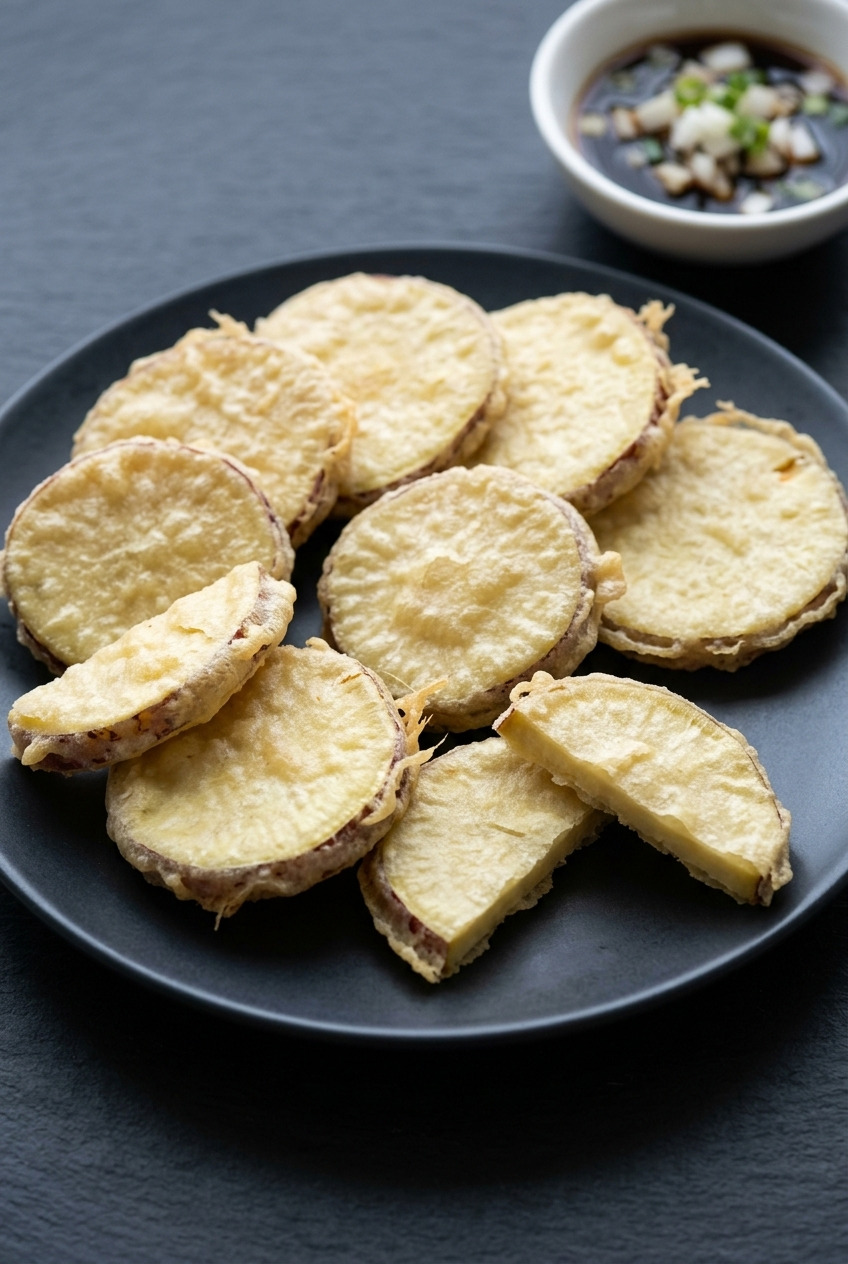
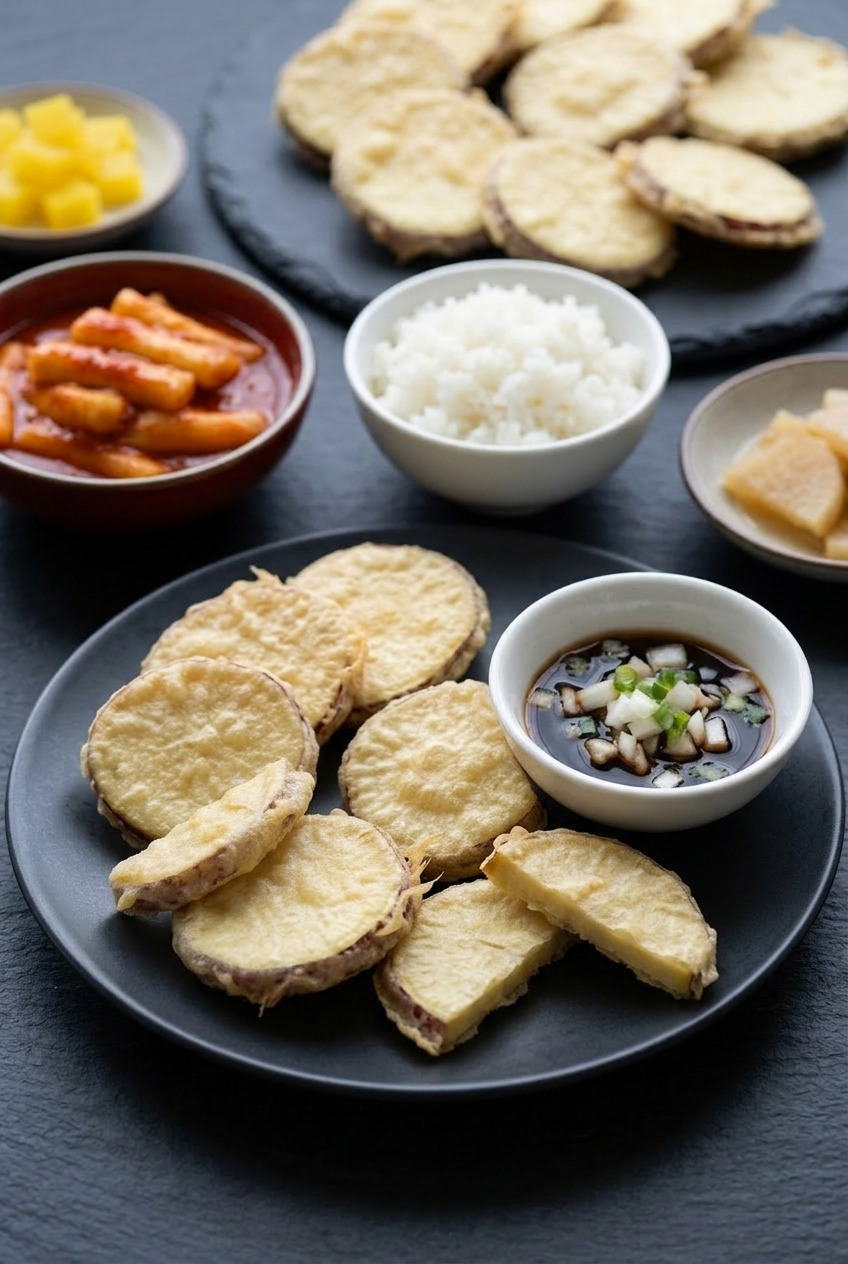
Twigim is Korea's own batter-fried family, usually a little sturdier and eaten with a soy vinegar dip instead of tsuyu and grated daikon.
Same idea, different habits, both good.
What you need is a thin slice, a batter cold enough to hurt your fingers, and oil at the right temperature.
That's it. No specialty equipment, no thermometer required if you're willing to test with a drop of batter.
Make a batch on a Friday and watch how fast the plate empties.
What Twigim Is
Twigim is the whole Korean family of batter-fried snacks, not one recipe. The word covers anything dipped in a thin batter and dropped into hot oil.
Sweet potato is the most common one.
After that it's squid, perilla leaves, green chilies, dumplings, and clumped strands of mixed vegetable known as yachae twigim.
You find it at market stalls, subway exits, and street carts, almost always sitting next to a bubbling pot of tteokbokki.
That pairing is not an accident.
The standard move is to dunk a piece of twigim into the spicy red rice cake sauce, and the combination is one of the great snack foods anywhere.
Pro tip: if you're making tteokbokki, make twigim on the side and you have a Korean snack bar on your table.
Twigim and Tempura, the Honest Comparison
These two share an ancestor and grew up in different houses. Batter-frying came to Korea from Japan, and Japan got it from Portuguese traders centuries before that.
Here's how they differ in practice:
- The batter. Japanese tempura batter is famously minimal, flour and cold water, mixed barely at all. Twigim batter usually carries potato or corn starch, often an egg, sometimes baking powder. Slightly sturdier crust.
- The dip. Tempura goes with tsuyu, a dashi and soy broth, with grated daikon and ginger stirred in. Twigim goes with a soy and vinegar dip with raw onion in it, sharp and simple.
- The setting. Tempura can be a formal counter meal. Twigim is street and market food, eaten from a paper cup with your fingers.
Neither one is a knockoff of the other.
They're cousins with different manners.
Ingredients You'll Need
For the Twigim
- Korean sweet potatoes, goguma (1 ¼ pounds). Purple-red skin, pale ivory flesh, dense and dry with a chestnut sweetness. Look for them labeled goguma or Korean yam at a Korean or Asian grocer. Regular orange sweet potatoes work, but they hold more water and go softer in the middle.
- Neutral frying oil (about 4 cups). Canola, vegetable, or rice bran. High smoke point, no flavor.
For the Batter
- Korean frying mix, twigim garu (¾ cup). This is what most Korean home cooks actually use, sold in a paper sack at any Korean grocer. It's flour, starch, leavening, and seasoning already balanced. Using it is not a shortcut to apologize for, it's the normal way.
- Or the scratch blend. ½ cup all-purpose flour, ¼ cup potato starch, ½ teaspoon baking powder, ½ teaspoon salt. Cornstarch subs for potato starch.
- Ice-cold water or club soda (¾ cup), plus 3 ice cubes. COLD is the entire mechanism. Cold batter hitting hot oil makes steam fast, and that fast expansion is what makes the crust light instead of bready.
- Egg (1 large, optional). Adds color and a slightly sturdier crust. Leave it out for a lighter, paler result.
- All-purpose flour (2 tablespoons), for dusting. Small amount, enormous consequence. See step 3.
For the Dipping Sauce
- Soy sauce (3 tablespoons) and rice vinegar (2 tablespoons). Close to equal parts, leaning soy.
- Sugar (1 teaspoon). Just enough to take the edge off the vinegar.
- Onion (2 tablespoons, finely chopped) and green onion (1, chopped). The raw onion is what makes it a Korean dip rather than plain soy sauce.
- Gochugaru (a pinch). Korean chili flakes, for color and a little warmth.
Cutting the Sweet Potato
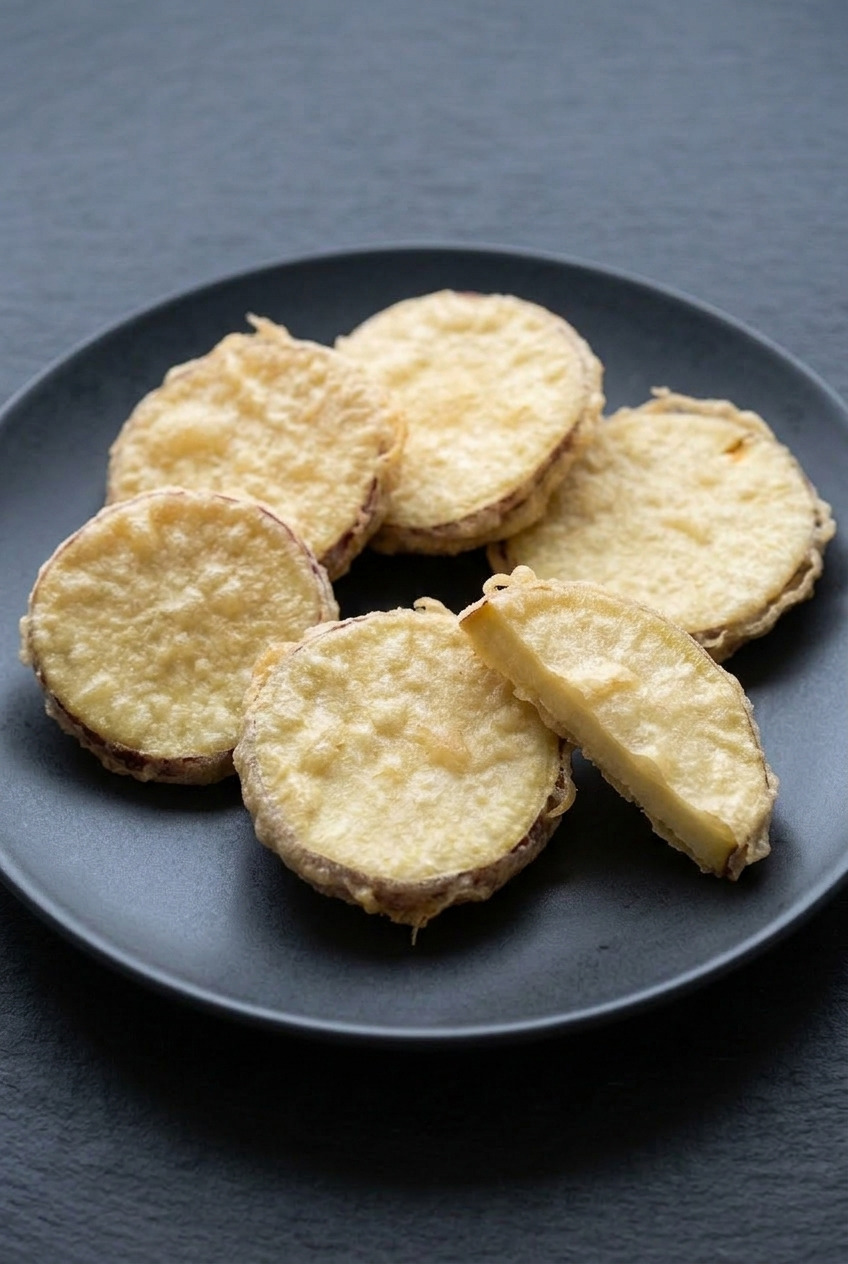
Thin rounds, about ¼ inch, and consistency matters more than precision. This is the real market-stall shape, not julienned strands.
Why so thin?
Because the batter browns in about three minutes, and a thicker slice will still be raw and chalky in the center when the outside is done.
A mandoline makes this painless. A steady hand and a sharp knife work fine.
Soak the slices in cold water for 10 minutes to pull off surface starch, which keeps them from gluing to each other in the oil.
Then dry them thoroughly on a towel.
Wet slices spit in hot oil and refuse to hold batter.
How to Make Goguma Twigim
Set up before you heat the oil. Once frying starts, the whole thing takes about ten minutes and there's no time to hunt for a rack.
Step 1: Slice, Soak and Dry
Peel the sweet potatoes and cut them into ¼-inch rounds.
Soak in cold water 10 minutes, drain, and pat completely dry on both sides.
Step 2: Mix the Batter Ice Cold and Lumpy
Put the frying mix, or the scratch blend, in a bowl and add the ice-cold water along with the ice cubes.
Stir about ten strokes and stop.
The batter should be thin enough to run off a slice in a sheet, roughly the consistency of heavy cream, and it should still have lumps in it.
Lumps are good. Overmixed batter develops gluten and fries into a chewy jacket.
Step 3: Dust with Dry Flour First
Toss the dried slices in the 2 tablespoons of plain flour until each one wears a thin pale coat.
Shake off the excess.
This is the step almost nobody publishes and it's the fix for the sliding-batter problem. The dry flour grips the damp surface of the sweet potato and gives the wet batter something to hold onto.
Skip it and your batter will float away in the oil. Ask me how I know.
Step 4: Fry at 340F in Small Batches
Heat 2 to 3 inches of oil to 340°F.
Dip each floured slice into the batter, let the excess run off for a second, and slide it into the oil away from you.
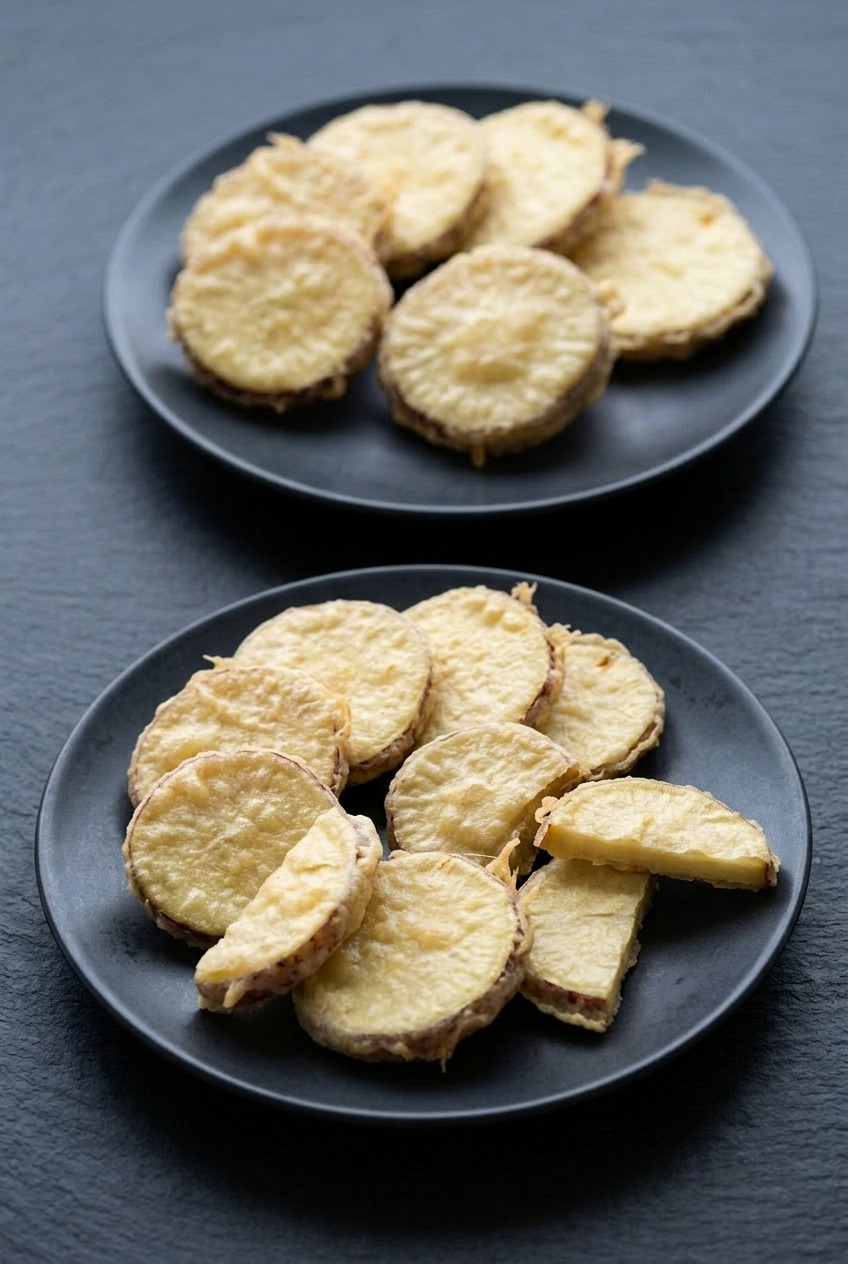
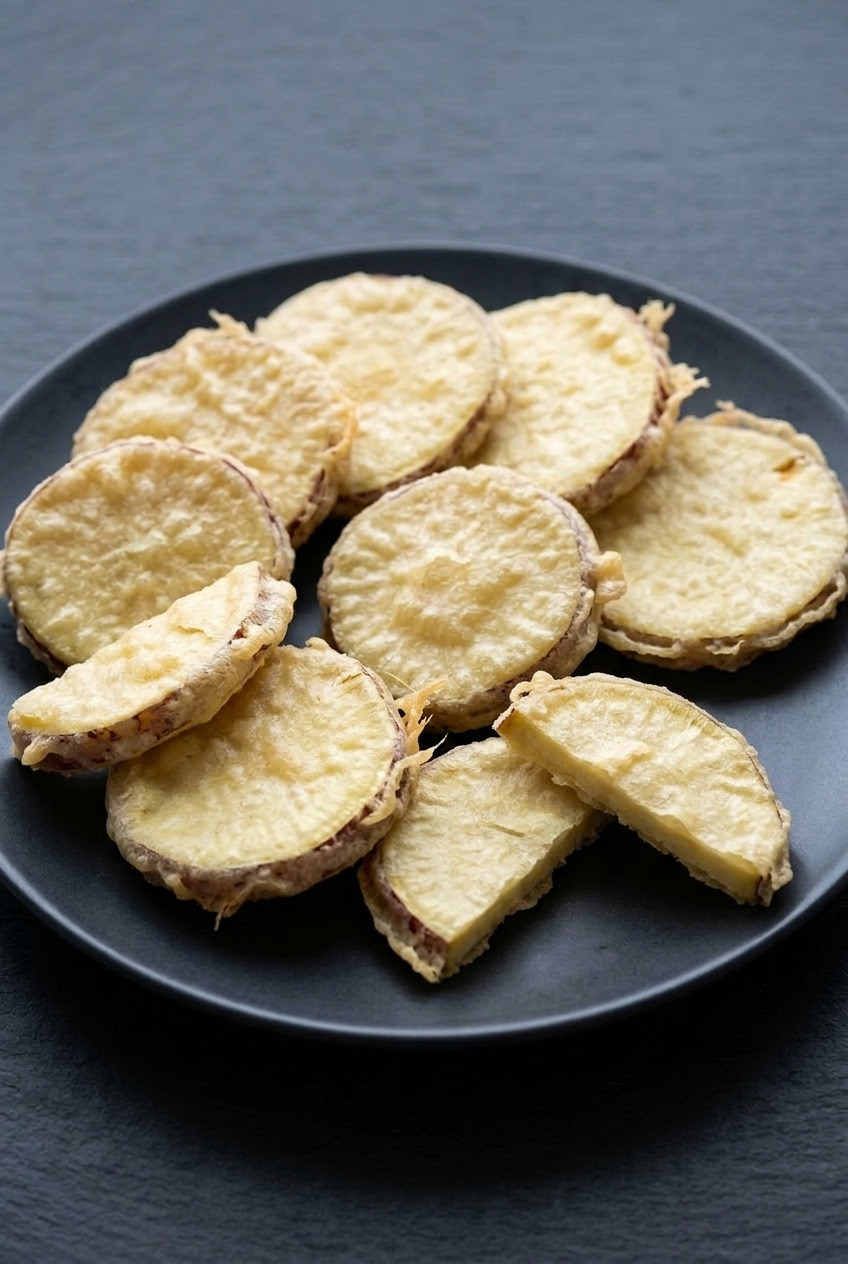
Fry 5 or 6 pieces at a time for 3 to 4 minutes, turning once, until the crust is pale gold and firm.
No thermometer? Drop in a bead of batter. It should sink halfway and rise immediately, sizzling steadily rather than violently.
Step 5: Drain on a Rack, Never on Paper
Lift the pieces onto a wire rack.
Paper towels trap moisture underneath and the bottom of every piece goes soft while you fry the rest.
Salt them lightly while they're still hot.
Frying Tips That Actually Change the Result
- Oil depth over oil quantity. You need enough depth that the pieces float free rather than sitting on the bottom. Two to three inches in a narrow pot beats a shallow layer in a wide one.
- Small batches, always. Every piece you add drops the oil temperature. Six at a time keeps you near 340°F; twelve at a time crashes it to 290 and gives you greasy, pale fritters.
- Let the oil recover. Wait 1 minute between batches.
- The optional second fry. A quick 45 seconds at 375°F after everything has cooled for ten minutes makes them noticeably crisper. Worth it if you're serving a crowd.
- Reusing the oil. Cool it completely, strain it through a coffee filter, and keep it sealed in the dark. Two or three more fries is reasonable. Once it smells sharp or foams, it's done.
- Disposal. Cooled oil goes in a sealed container in the trash, or to a local grease collection point. Never down the drain.
The Dipping Sauce
Stir it together and let it sit while you fry. Ten minutes softens the raw onion just enough.
Combine the soy sauce, rice vinegar, sugar, chopped onion, green onion, and gochugaru in a small bowl.
Taste and adjust. More vinegar for a sharper dip, more sugar if your soy sauce is very salty.
The alternative, and the one I make when there are people over, is a bowl of tteokbokki sauce for dipping instead.
Sweet, spicy, thick, and it clings to a fried edge in a way soy sauce never will.
Reheating and Air Fryer Notes
- Reheating. Oven or air fryer at 400°F for 4 to 5 minutes on a rack. They come back close to new. The microwave turns them into damp sponges.
- Air frying raw battered slices. It does not work. Wet batter needs to be surrounded by hot oil to set, and in an air fryer it just runs off and puddles.
- The air fryer version that does work. Skip the wet batter. Toss the dry rounds with 1 tablespoon oil and 2 tablespoons of the frying mix, then air fry at 390°F for 12 to 14 minutes, shaking twice. Crisp and good, though not really twigim.
- Storage. Room temperature, loosely covered, same day. They lose their crunch in the fridge.
Fried food has a short window and this one is about an hour wide.
Eat them standing at the counter like the market intended. Give it a try!
Recipe
Goguma Twigim (Korean Sweet Potato Tempura Fritters)
Ingredients
For the Twigim
- 1 ¼ pounds Korean sweet potatoes (goguma) peeled and sliced into ¼-inch rounds
- 4 cups neutral oil for frying
- 2 tablespoons all-purpose flour for dusting
For the Batter
- ¾ cup Korean frying mix (twigim garu) or ½ cup all-purpose flour plus ¼ cup potato starch, ½ teaspoon baking powder and ½ teaspoon salt
- ¾ cup ice-cold water or club soda
- 3 ice cubes
- 1 large egg optional
For the Dipping Sauce
- 3 tablespoons soy sauce
- 2 tablespoons rice vinegar
- 1 teaspoon sugar
- 2 tablespoons onion finely chopped
- 1 green onion chopped
- 1 pinch gochugaru Korean chili flakes
Instructions
Prep and Batter
- Peel the sweet potatoes and slice them into ¼-inch rounds. Soak in cold water for 10 minutes, drain, and pat completely dry on both sides.
- Stir the dipping sauce ingredients together in a small bowl and set aside so the onion softens.
- Combine the frying mix with the ice-cold water, the ice cubes and the egg if using. Stir about ten strokes only. The batter should be the consistency of heavy cream and still lumpy.
- Toss the dried rounds in the 2 tablespoons of plain flour until each wears a thin pale coat, then shake off the excess. This is what keeps the batter from sliding off in the oil.
Fry and Serve
- Heat 2 to 3 inches of oil to 340F. Test with a bead of batter: it should sink halfway and rise immediately with a steady sizzle.
- Dip each floured round in the batter, let the excess run off, and slide it into the oil away from you. Fry 5 or 6 pieces at a time for 3 to 4 minutes, turning once, until pale gold and firm.
- Lift onto a wire rack, never onto paper towels, and salt lightly while hot. Let the oil recover for 1 minute between batches.
- For extra crispness, fry everything a second time at 375F for 45 seconds after it has cooled for 10 minutes. Serve with the soy vinegar dip.
Notes
- Dust with dry flour first: the single most important step. Dry flour grips the damp sweet potato and gives the wet batter something to hold onto.
- Keep the batter ice cold and lumpy: stir about ten strokes and stop. Overmixing builds gluten and fries into a chewy jacket.
- Small batches: six pieces at a time holds the oil near 340F. Crowding drops it and gives you greasy, pale fritters.
- Korean frying mix: twigim garu is what most Korean home cooks use and it is the normal choice, not a shortcut.
- Do not air fry raw battered slices: wet batter needs hot oil around it to set. Toss dry rounds in oil and frying mix instead.