The first time I put sweet potatoes on the grill I ruined every single one.
Fourth of July, a full grate, people waiting.
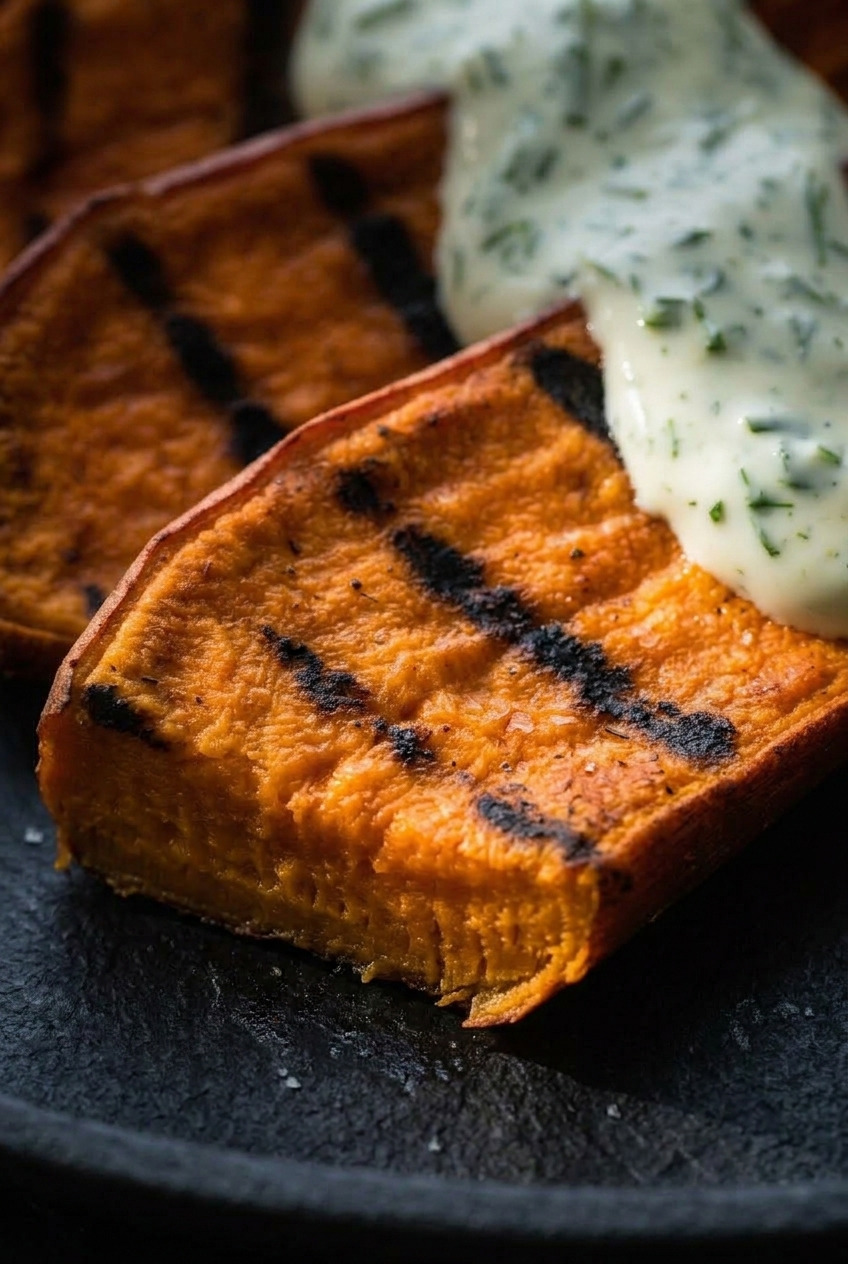
They came off black on the outside and raw enough in the middle to crunch.
I served them anyway and nobody said anything, which was somehow worse.
Sweet potatoes live in the oven for most of the year at my house, and I had assumed the grill was just an oven with better marks.
It isn't.
Direct fire hits the outside hard and fast, and a thick raw wedge has no chance of catching up.
Two things fixed it.
Boil them for eight minutes first, in water salted like pasta water.
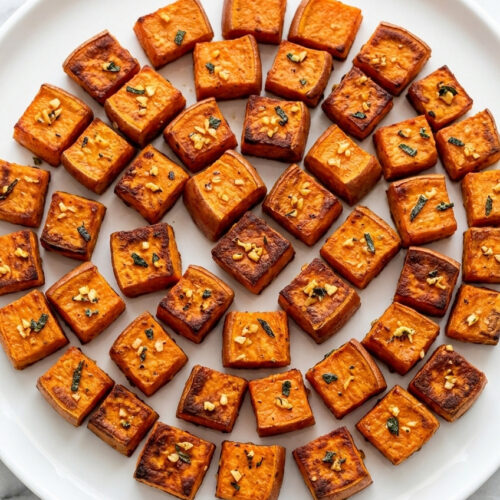
Then cut them into half inch planks, which lie flat across the grate and turn exactly once.
What you get is char against natural sweetness, which is a combination the oven cannot produce.
The sauce is the other half of this: yogurt, a lot of garlic, lemon, and a fistful of soft herbs.
My wife now requests these at every cookout, usually while I'm still lighting the coals.
They're a vegetable side that people actually fight over, and that's rare enough to be worth the eight minutes.
Why the Grill Beats the Oven Here
Fire does something to a sweet potato that dry oven heat cannot. The sugars sitting right at the surface hit the grate and char in seconds, giving you dark bitter-edged stripes.
That bitterness is the point.
Sweet potato roasted in the oven gets sweeter and rounder, which is lovely, and also a little one-note next to grilled meat.
Grilled, it comes out smoky, a bit charred, still sweet in the middle.
Add a cold garlicky sauce over the top and you've got three things happening at once.
Cut Them Into Planks, Not Wedges or Rounds
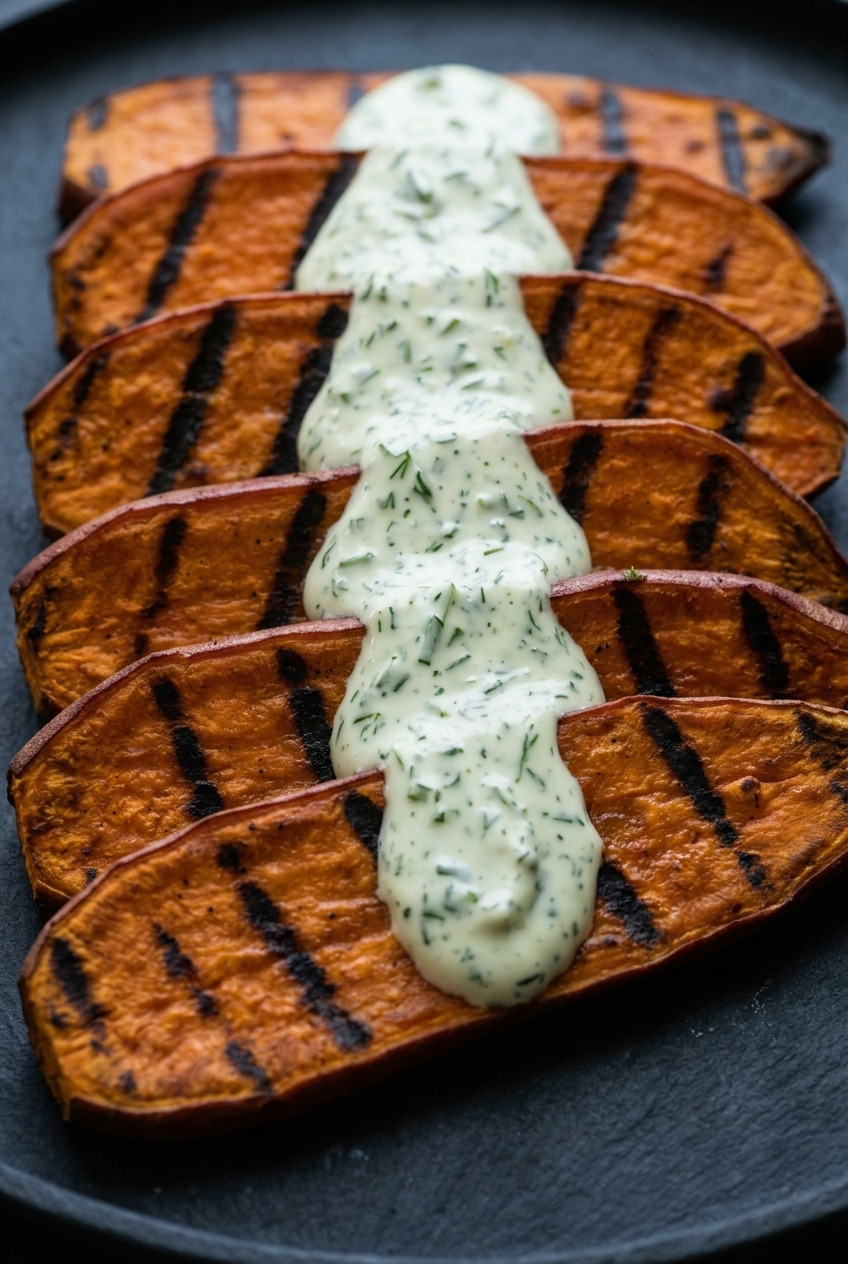
Half inch planks, cut the long way, are the only cut that behaves on a grate. I've tried the alternatives and they all have a flaw.
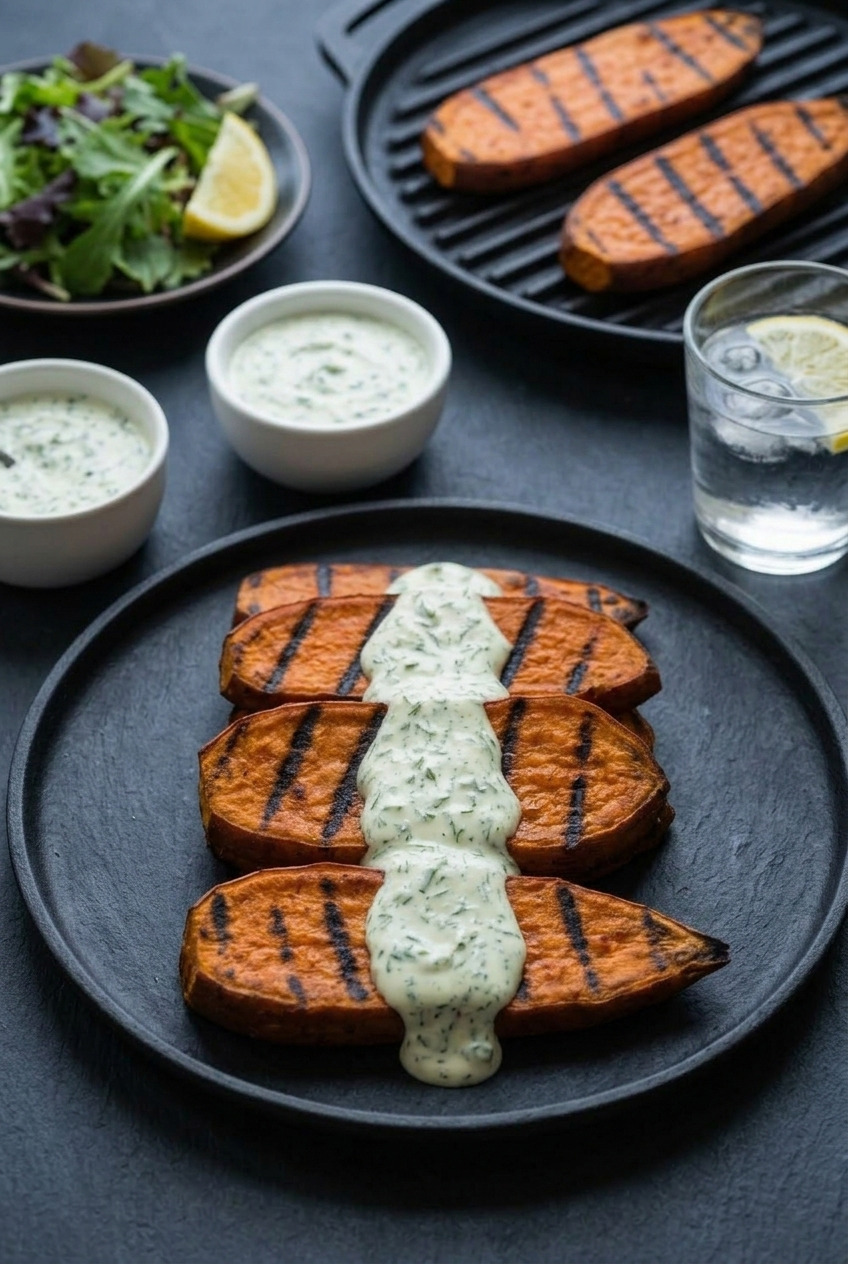
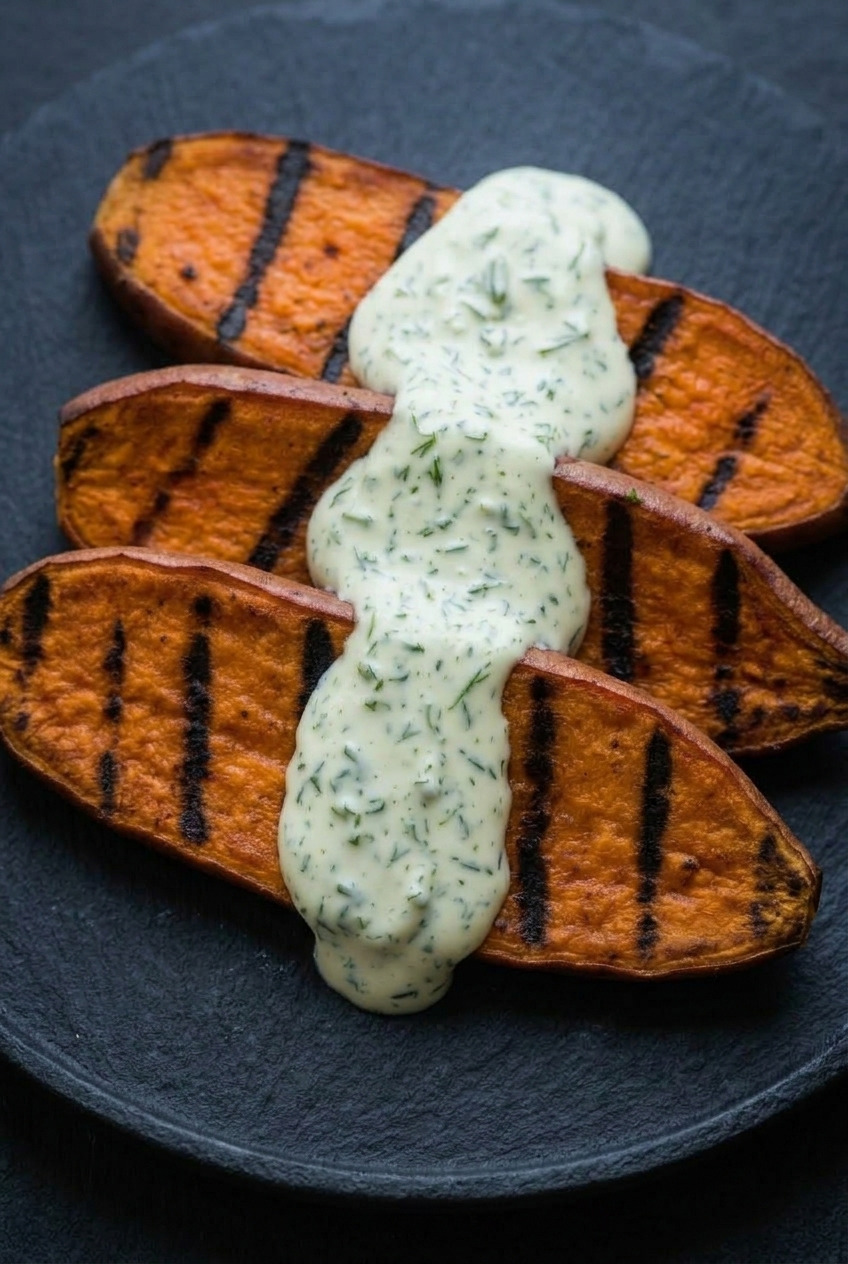
- Planks (what we use). Long, flat, and ½ inch thick. They span the bars, they take clean marks, and you turn them once with a spatula.
- Wedges. Too thick. The outside chars long before the center is done, which is exactly how I ruined my first batch.
- Rounds. They work, but every single one has to be turned individually and the small ones roll into the gaps.
- Fries or sticks. They fall straight through the grate. Save that cut for the oven.
Peel or not? Leave the skin on. It holds each plank together while you turn it, and it takes color well.
Parboil First, Then Grill
This is the step the top recipes skip, and it's the whole answer to charred outside, raw inside. Six to eight minutes in salted boiling water gets the centers to just-tender.
After that the grill only has to do the outside, which takes about ten minutes.
Two bonuses come with it.
Salted water seasons the flesh all the way through, which brushing salt on the surface never does.
And parboiled planks are far less likely to snap when you turn them.
Then dry them completely. Drain, spread the planks out, and pat them with a towel. A wet plank steams against the bars instead of marking.
Should you soak them first? No. Soaking is a trick for starchy white potatoes headed for hot oil. Here it just adds water to a surface you need dry.
The Garlicky Herb Sauce
What Goes In It
Full fat Greek yogurt is the base, and it has to be full fat. Low fat versions split and go watery the moment the lemon goes in.
Two grated garlic cloves, lemon juice, olive oil, and then a big handful of soft herbs: flat-leaf parsley, dill, and chives.
Parsley for freshness, dill for the sharp grassy note, chives for a mild onion background.
Tame the Garlic With Lemon First
Grate the garlic straight into the lemon juice and let it sit 10 minutes before anything else joins it. The acid knocks the harsh raw edge off.
Skip this and the sauce gets sharper and more aggressive as it sits in the fridge.
It's ten minutes of doing nothing, and it's the difference between garlicky and harsh.
How Thick It Should Be
You want it pourable, not a dip.
Straight yogurt is too thick to spoon over hot planks. The olive oil and lemon loosen it to about the consistency of heavy cream.
If it's still stiff, a tablespoon of cold water fixes it.
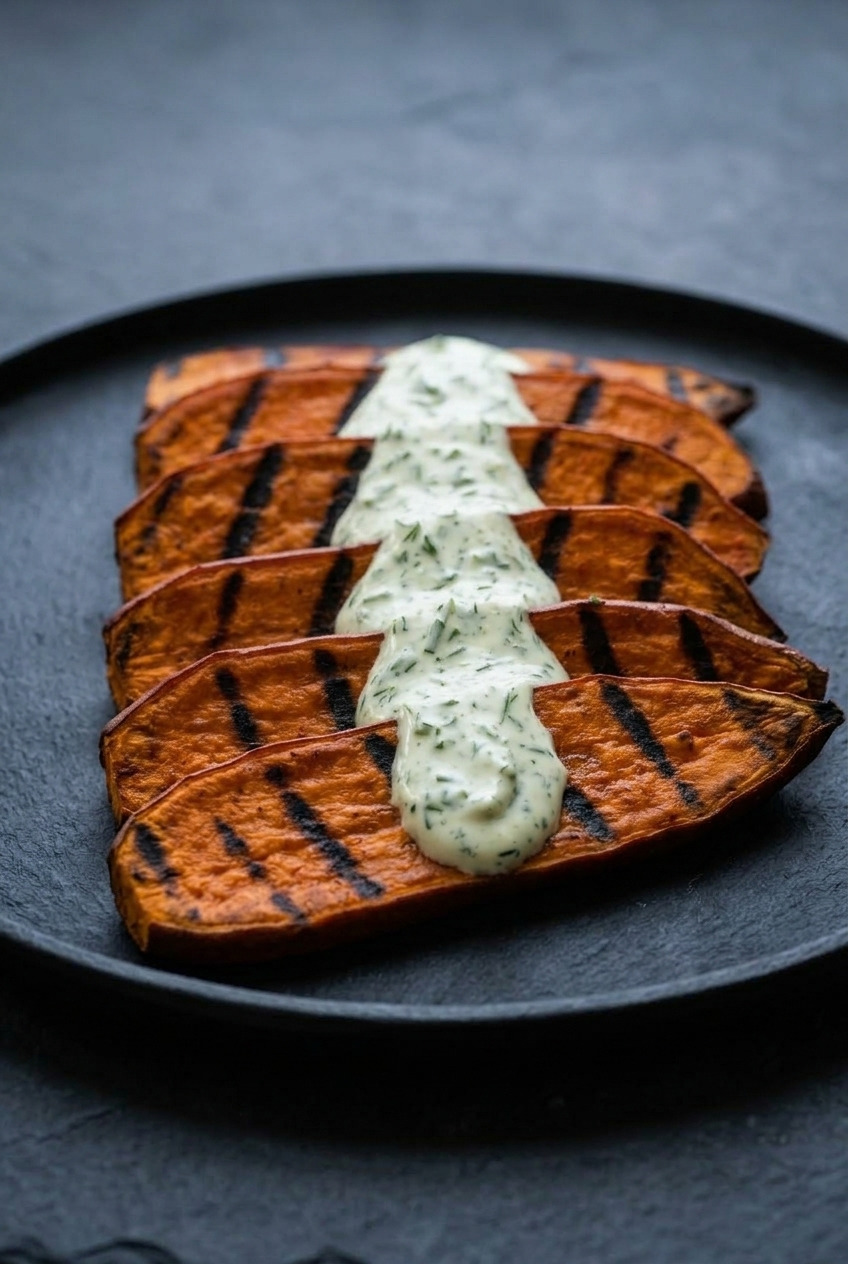
Ingredients
- Sweet potatoes (3 pounds, about 4 medium). Look for straight even ones, since they plank far better than curved lumpy potatoes.
- Kosher salt for the water (1 tablespoon). Season the flesh from the inside.
- Olive oil (3 tablespoons for the planks, 3 more for the sauce). Brushed on before the grate, whisked into the sauce after.
- Greek yogurt (¾ cup, full fat). The sauce base.
- Garlic (2 cloves, grated). Grated on a microplane, not chopped, so it disappears into the sauce.
- Lemon juice (2 tablespoons, fresh). Bottled juice tastes flat here.
- Flat-leaf parsley, dill, chives (⅓ cup, 2 tablespoons, 2 tablespoons). All fresh, all chopped fine.
- Kosher salt and black pepper. For the planks and for the sauce.
- Red chili flakes (a pinch, optional). Stirred into the sauce for a little heat.
How to Grill Them
Step 1: Cut and Parboil
Scrub the potatoes, trim the ends, and cut them lengthwise into ½ inch planks.
Drop them into salted boiling water for 6 to 8 minutes, until a knife tip just enters with a bit of resistance still there. They finish on the grill, so stop early.
Step 2: Dry and Oil the Planks
Drain gently, lay them on a towel, and pat them dry on both sides.
Brush with olive oil and season with salt and pepper.
Step 3: Clean and Oil the Grates, Medium-High Heat
Get the grill to medium-high, around 425 to 450°F, scrape the bars clean, then wipe them with an oiled towel.
Sugar sticks to a dirty grate. This step is not optional.
Step 4: Grill, Turn Once, and Check the Center
Lay the planks across the bars and leave them for 4 to 5 minutes until they release on their own and show dark stripes.
Turn once, grill another 4 to 5 minutes.
A knife should slide through the thickest plank with no resistance at all.
Step 5: Salt Hot, Sauce at the Table
Salt them the second they come off, while the surface is still hot enough to grab it.
Spoon the sauce over just before serving, or put it alongside so the planks stay crisp-edged.
Why They Stick, and How to Stop It
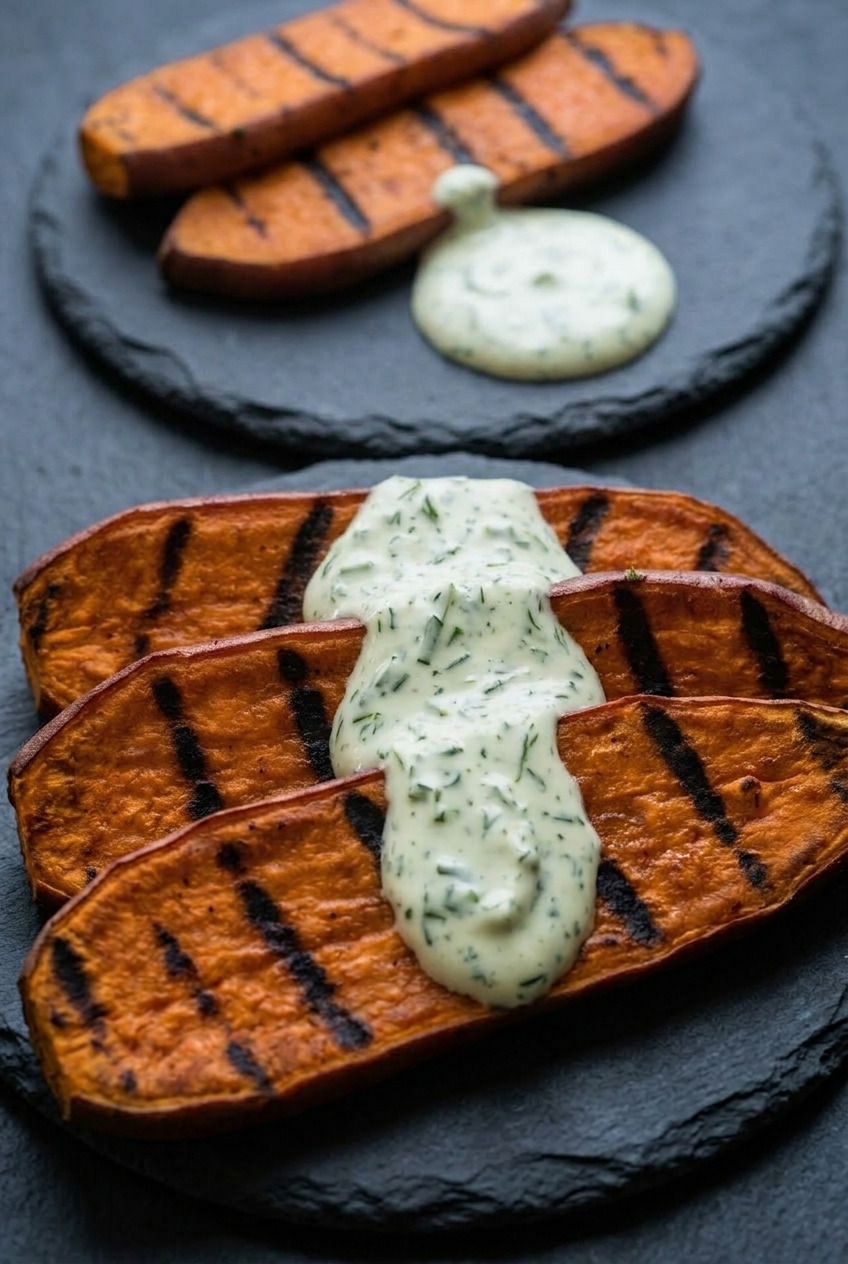
Sweet potato sugar is glue on a dirty grate. Almost every torn plank traces back to one of these.
- The grate wasn't clean. Scrape it while it's hot, before the food goes on.
- The grate wasn't oiled. Tongs, a folded paper towel, a little oil, one quick wipe.
- The grill wasn't hot enough. A cool grate lets the surface bond before it sears.
- You moved them too soon. They release themselves when the crust forms. If a plank resists, give it another minute.
- They went on wet. Water plus sugar equals a sticky mess.
Herb Swaps and Variations
- Cilantro and lime. Swap all the herbs for cilantro and the lemon for lime. Excellent alongside anything Mexican.
- Mint and dill. Cooler and more Greek. Great with lamb.
- Basil. Softer and sweeter, and it pairs well with grilled chicken.
- Hotter. A minced fresh chili in the sauce, or chili flakes over the hot planks.
- No yogurt. Skip it and make a loose herb and garlic oil instead, more like a chimichurri.
- Indoors. A ripping hot cast iron grill pan does a decent job. So does a bare sheet pan at 450°F for 20 minutes, though you lose the smoke.
Make Ahead and Storage
- The sauce. Keeps 4 days refrigerated and it's better on day two. Stir before serving.
- Parboil ahead. Boil and dry the planks a day ahead, refrigerate them in a single layer, then oil and grill straight from cold.
- Leftover planks. 3 days refrigerated. Reheat on the grill or in a hot dry skillet for 2 minutes a side.
- Don't microwave them. The edges go soft and you lose everything the fire did.
What to Serve Them With
- Grilled chicken thighs. The sauce works on both, so make extra.
- Steak. Sweet and charred against beef is hard to beat.
- Burgers. A better cookout side than a bowl of chips.
- Corn on the cob. Everything on one grate, done at the same time.
- A big green salad. Serve the planks warm on top and call it dinner.
Recipe
Grilled Sweet Potatoes With Garlicky Herb Sauce
Ingredients
For the Grilled Sweet Potatoes
- 3 pounds sweet potatoes about 4 medium, scrubbed, skin on
- 1 tablespoon kosher salt for the boiling water
- 3 tablespoons olive oil
- ¾ teaspoon kosher salt
- ½ teaspoon black pepper freshly ground
For the Garlicky Herb Sauce
- ¾ cup Greek yogurt full fat
- 2 cloves garlic grated on a microplane
- 2 tablespoons lemon juice fresh
- 3 tablespoons olive oil
- ⅓ cup flat-leaf parsley finely chopped
- 2 tablespoons fresh dill finely chopped
- 2 tablespoons chives finely sliced
- ½ teaspoon kosher salt
- 1 pinch red chili flakes optional
Instructions
Make the Sauce
- Grate the garlic into the lemon juice and let it sit 10 minutes. The acid takes the harsh raw edge off the garlic.
- Whisk in the yogurt, olive oil, and salt, then stir in the parsley, dill, chives, and chili flakes. It should pour like heavy cream. Loosen with a tablespoon of cold water if it is too thick. Refrigerate until serving.
Cut and Parboil
- Trim the ends off the sweet potatoes and cut them lengthwise into ½ inch planks, skin on.
- Bring a large pot of water to a boil with 1 tablespoon kosher salt. Boil the planks 6 to 8 minutes, until a knife tip just enters with some resistance left. They finish on the grill, so stop early.
- Drain gently, lay the planks on a towel, and pat both sides completely dry. Brush with olive oil and season with salt and pepper.
Grill
- Heat the grill to medium-high, around 425 to 450F. Scrape the grates clean, then wipe them with an oiled towel. Sweet potato sugar sticks to a dirty grate.
- Lay the planks across the bars and grill 4 to 5 minutes without moving them, until they release on their own and show dark stripes.
- Turn once and grill another 4 to 5 minutes, until a knife slides through the thickest plank with no resistance.
- Salt the planks the moment they come off the grill, then spoon the garlicky herb sauce over them or serve it alongside.
Notes
- Parboil first: 6 to 8 minutes in salted water is the fix for charred outside and raw inside, and it seasons the flesh all the way through.
- Half inch planks: they span the grate, mark evenly, and turn once. Wedges are too thick and sticks fall through.
- Do not soak: soaking is for starchy white potatoes going into oil. The surface here has to be dry to mark.
- Clean, oiled, hot grate: the three things that stop planks from tearing.
- Full fat yogurt only: low fat versions split when the lemon goes in.
- Make ahead: the sauce keeps 4 days and improves overnight, and the planks can be parboiled a day ahead.