A friend asked me to bring a sweet potato dish to a dinner last October and I said yes before thinking about it.
Then I saw the rest of the menu.
Cider-glazed carrots, a squash gratin, cranberry something.
The table was already sweet in four directions and I was about to add a fifth.
So I went the other way completely.
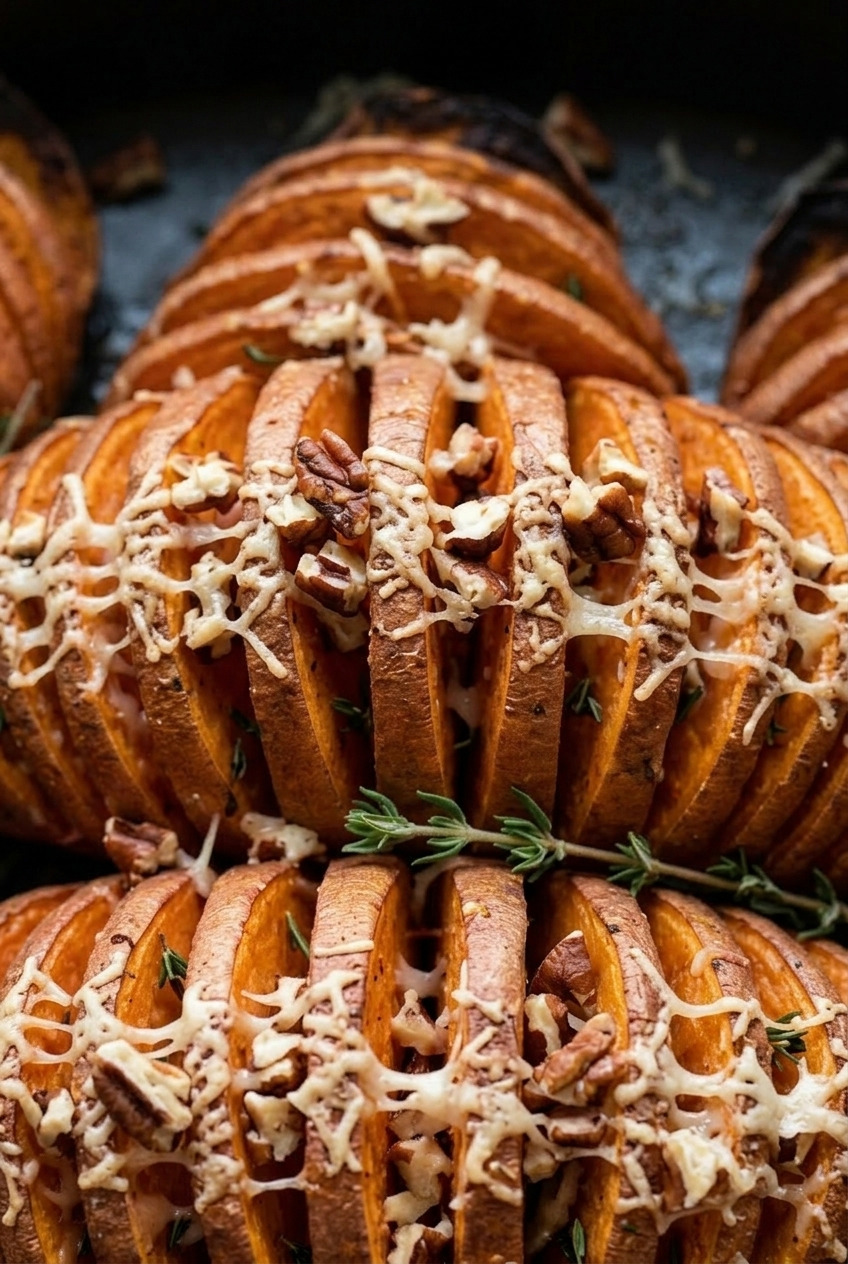
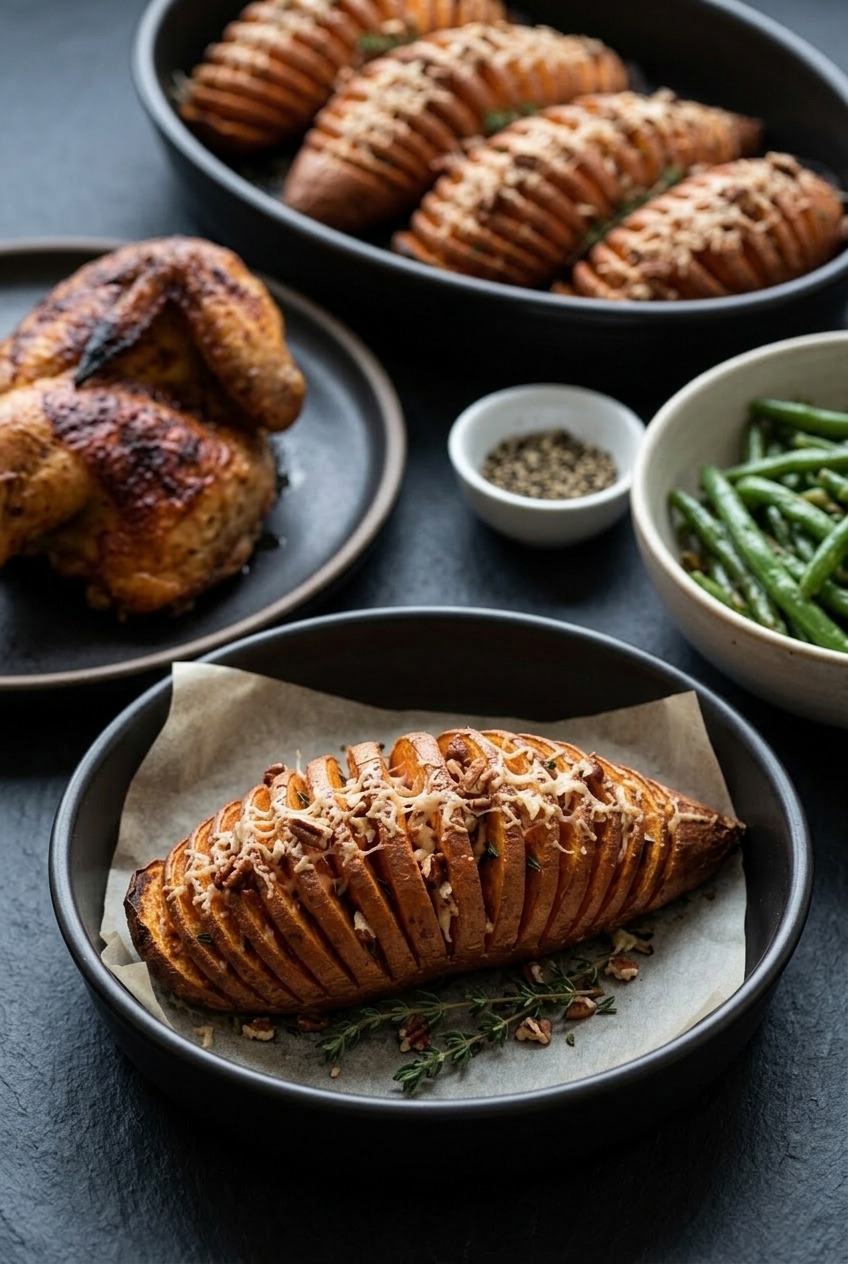
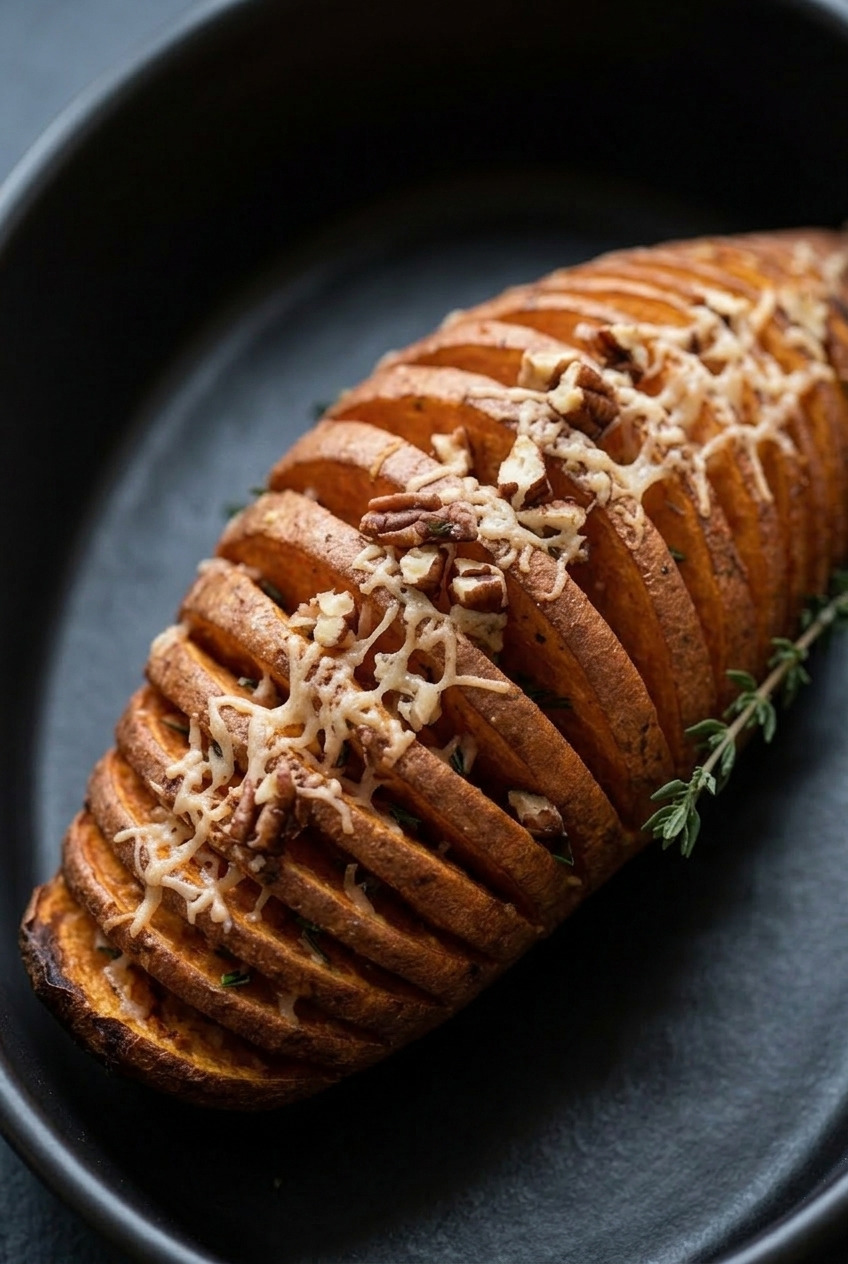
I sliced the potatoes into thin fans, roasted them until the slices opened up, then pushed thyme down into every slit and finished them with toasted pecans and a lot of grated parmesan.
No maple.
No cinnamon, no brown sugar, nothing sweet added at all.
The sweet potato brings plenty of that on its own, and salt and hard cheese are what it's been missing.
They came back to the kitchen empty, which is the only review I care about.
I've made them probably fifteen times since, mostly on weeknights next to a roast chicken.
My wife requests them specifically when we have steak.
One thing to know going in, because it's the mistake I made the first time.
The parmesan and the pecans do not go in at the start.
Cheese turns bitter and nuts go acrid long before a sweet potato is cooked through, so both go on in the last ten minutes and come out crisp instead of scorched.
A Sweet Potato Side That Is Actually Savory
Sweet potatoes are already sweet, so adding sugar to them is piling on. Most recipes double down anyway: maple, brown sugar, marshmallows, cinnamon.
This one goes the opposite direction.
The natural sugar in the potato is still there, and it's doing something useful. It gives the parmesan something to push against, and it's the reason the fan tips brown so fast and taste almost nutty at the edges.
Salt, olive oil, a woody herb and a hard aged cheese are the four things that turn that sweetness into flavor instead of dessert.
Looking for the sweet version? My hasselback sweet potatoes with maple cinnamon butter are the ones you want for a holiday table next to the turkey. This version is for a Tuesday with roast chicken, or a Saturday with a steak. Same cut, completely different dish.
What a Hasselback Sweet Potato Is
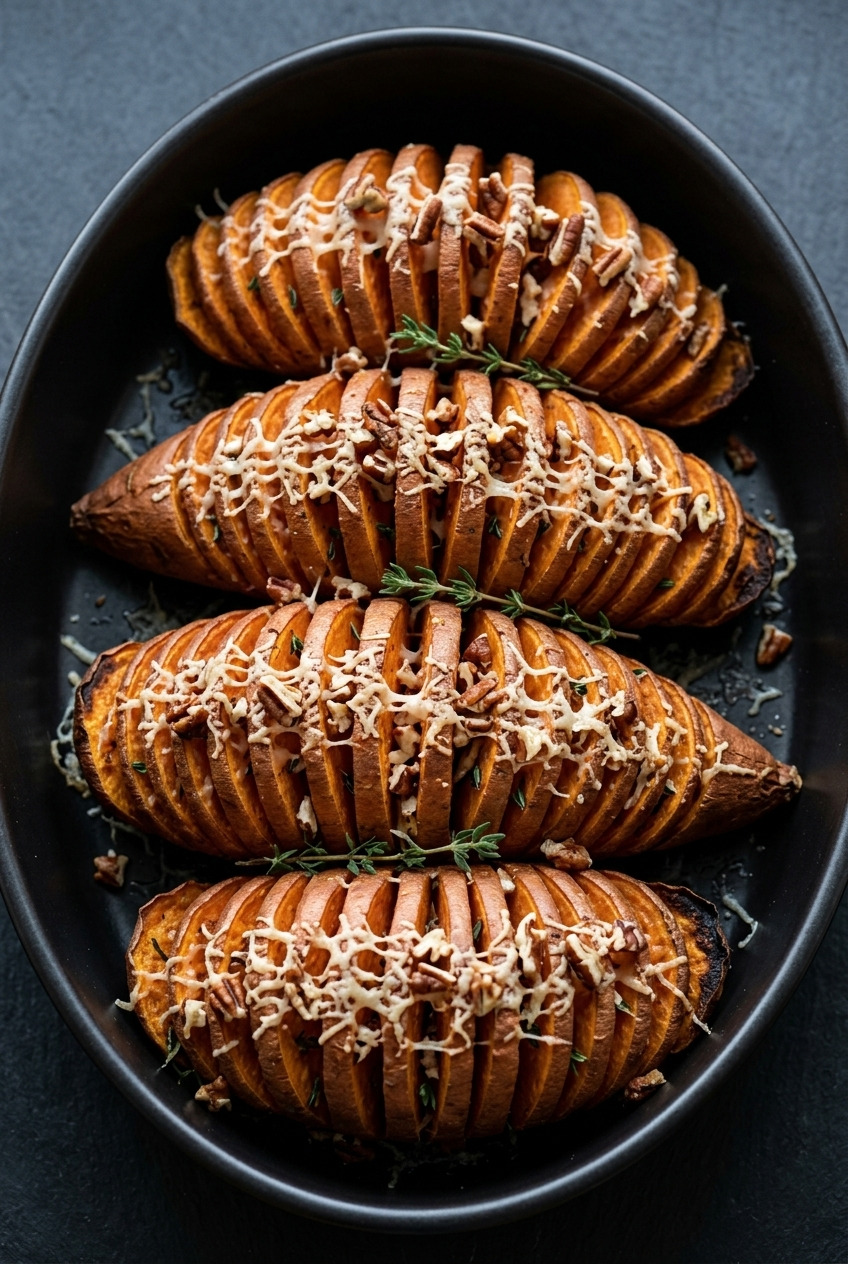
It's a potato sliced thinly almost all the way through so it opens like an accordion. The cut came from a Stockholm restaurant in the 1950s and it stuck around because it does two useful things.
It multiplies the edges, so instead of one skin you get twenty crisp rims.
And it creates twenty slits, which is exactly where thyme leaves and grated parmesan want to live.
A whole roasted sweet potato can't hold seasoning anywhere except its surface. This one holds it all the way through.
Ingredients
Nine things, and three of them decide how this tastes. Cheap parmesan, dried sage-style herbs and stale pecans will each drag it down on their own.
- Sweet potatoes (4 medium, 6 to 8 ounces each). Straight and evenly thick, not fat and curved. Skin stays on. A curved potato is genuinely hard to slice evenly.
- Olive oil (3 tablespoons). More than you think, because it has to get down between the slices. Some recipes call for a third of a cup, which is too much and leaves the fans oily.
- Garlic (2 cloves, minced). Mixed into the oil so it clings to the potato rather than sitting loose on the pan where it burns.
- Fresh thyme (1 tablespoon leaves, plus small sprigs). Thyme over sage as the lead herb, because sage goes bitter and dominant fast at high heat. Sage is the alternate, not the default.
- Smoked paprika (½ teaspoon). A half teaspoon does a lot here. It adds a low savory smoke that reads almost like bacon without any bacon in the dish.
- Pecans (⅓ cup, toasted and chopped). Toast them separately in a dry pan. NEVER leave raw pecans in the oven for an hour, they turn acrid and there's no fixing it.
- Parmigiano Reggiano (⅔ cup, finely grated). Real aged parmesan, grated fine on a microplane so it slides down into the slits. Pre-shredded cheese has anti-caking starch on it and it clumps instead of crisping.
- Kosher salt (1 teaspoon) and black pepper. Salt at the start, not the end. It needs the whole roast to do its job.
How to Cut a Hasselback Sweet Potato
The knife will want to go all the way through, and once it does that slice is gone. Sweet potatoes are denser than russets and they taper at both ends, which is where nearly every failure happens.
Step 1: Flatten One Side
Cut a thin sliver off one long side and set the potato down on that flat face.
A potato that can roll will roll, and it always picks the worst moment.
Step 2: Stop the Knife
Put a wooden chopstick or a thin skewer along each long side of the potato, pressed right up against it, and cut straight down until the blade stops on them.
The other version: nest the potato in the bowl of a big wooden spoon. The curve does the same job.
Either way you're leaving about a half inch of uncut potato at the bottom holding everything together.
Step 3: Cut a Scant ¼ Inch
Even slices, about ¼ inch, from one end to the other.
Thinner than that and the slices tear off the base when you move the potato.
Thicker and the fans never really open, which ruins the entire point.
Pro tip: slow way down over the last inch at each tapered end. That's the shallow part, and it's where the knife suddenly finds the board.
How to Get the Fans to Open and Crisp
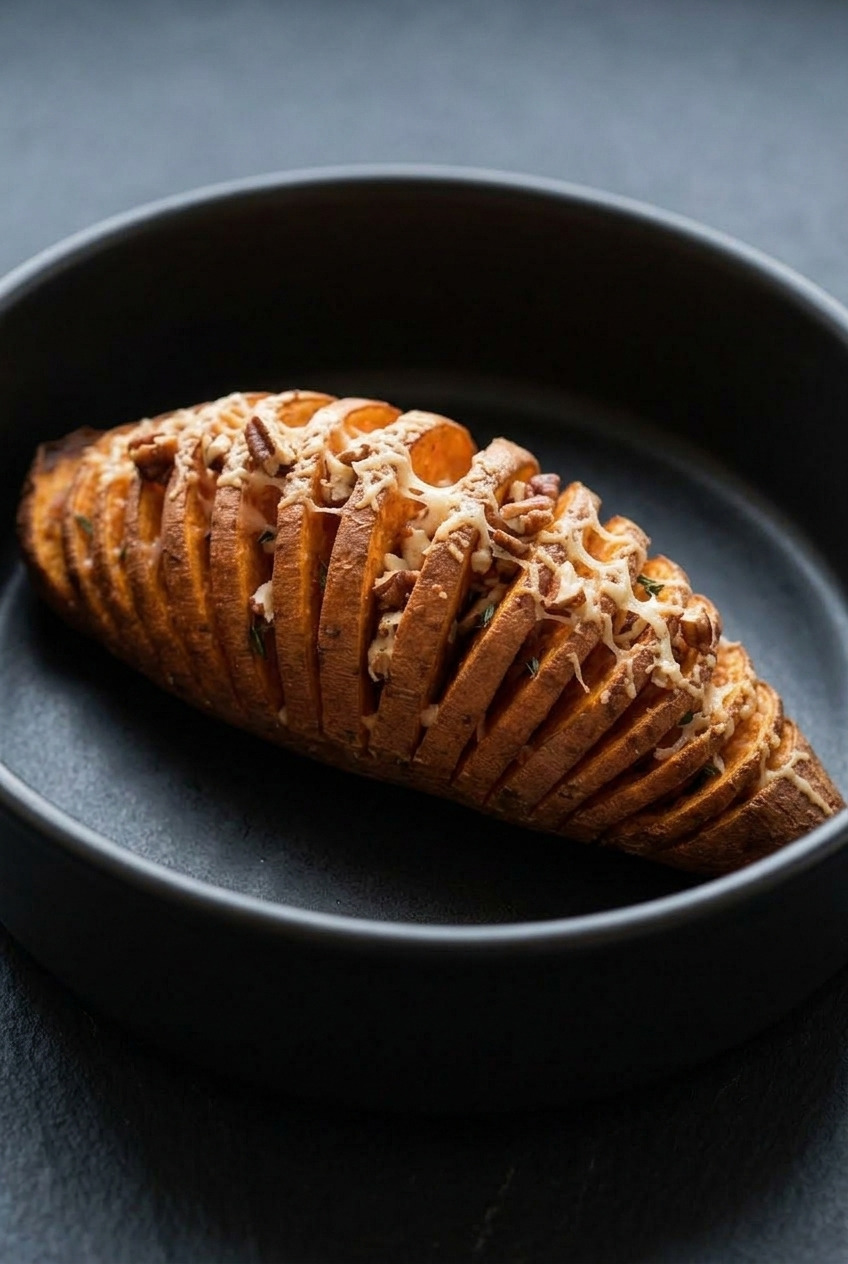
Nothing holds the slices apart except the roast itself, so this is the section that matters. Here's what's actually happening in the oven.
- The cut faces dry out. Each slice loses moisture, shrinks a little, and pulls away from its neighbor.
- The potato slumps. Softening starch settles the whole thing outward and downward, which spreads the fan wider.
- Oil wicks down into the gaps. Once fat gets between two slices they can't reseal, and the exposed faces brown instead of steaming.
Fans that stay shut come down to three fixable things.
- Slices too thick. Anything over ⅓ inch and the potato just bakes as a lumpy whole potato.
- The pan is crowded. Potatoes touching each other trade steam, and steam is the enemy of every crisp edge you want.
- Not enough oil in the slits. Brushing the top only gets you a shiny top. Work the oil down into the cuts with your fingers.
For the crisp itself: 400°F, cut side up, a shallow dish or a preheated sheet pan so there's real heat under the base, and no foil for the first forty minutes.
Want the crispest possible tips? Give them the last five minutes under the broiler, watching the whole time.
Stuffing the Crevices
This is the step nobody explains, and you can only do it at the right moment. At minute zero the slices are still shut tight and nothing will go into them.
Around 35 to 40 minutes the fans are open and the gaps are wide enough to work with.
That's when you go in.
- Thyme first. Drop leaves and a few small sprigs into the slits and nudge them down with the back of a small spoon.
- Then the parmesan. Grated fine, it falls into the gaps on its own if you scatter it over the top and tap the dish.
- Pecans last, on top. They're too big for the slits and they'd burn down there anyway.
What lands inside the slits melts along the cut faces and seasons the potato from the inside.
What lands on the ridges crisps into lace.
You want both, which is why you don't try to push all the cheese down.
How to Make Them
Step 1: Oil, Season, and Roast
Heat the oven to 400°F.
Stir the garlic, smoked paprika, salt and pepper into the olive oil, then rub it all over the potatoes, pushing it down into the cuts.
Arrange them in a shallow dish with space between them and roast for 35 minutes.
Step 2: Add the Thyme
The fans should be clearly open now.
Tuck thyme leaves and small sprigs down into the slits, then baste the potatoes with the oil that's collected in the dish.
Back in for 10 minutes.
Step 3: Cheese and Pecans
Scatter the parmesan over the tops, tapping the dish so some falls into the gaps, then add the toasted pecans.
Roast 10 to 12 minutes more, until the cheese on the ridges is golden and lacy.
Step 4: Check and Serve
A thin knife should slide into the thickest part with no resistance, usually 55 minutes total.
Rest 5 minutes so the cheese sets, then finish with a little more thyme and black pepper.
Tips for Success
- Toast the pecans separately. Three minutes in a dry pan. This is the difference between nutty and acrid.
- Grate the parmesan yourself, fine. A microplane gives you cheese that melts into the slits. Shredded cheese from a bag sits on top in clumps.
- Don't parboil. Soft slices tear off the base the second you lift the potato.
- Dry the skin properly. Wet skin steams. Scrub, then towel dry before the oil goes on.
- Space in the dish. An inch between potatoes. Two dishes beat one crowded dish.
- Save a little cheese for after. A last pinch on the hot potatoes right out of the oven melts into something completely different from the crisped stuff.
Skin On or Skin Off
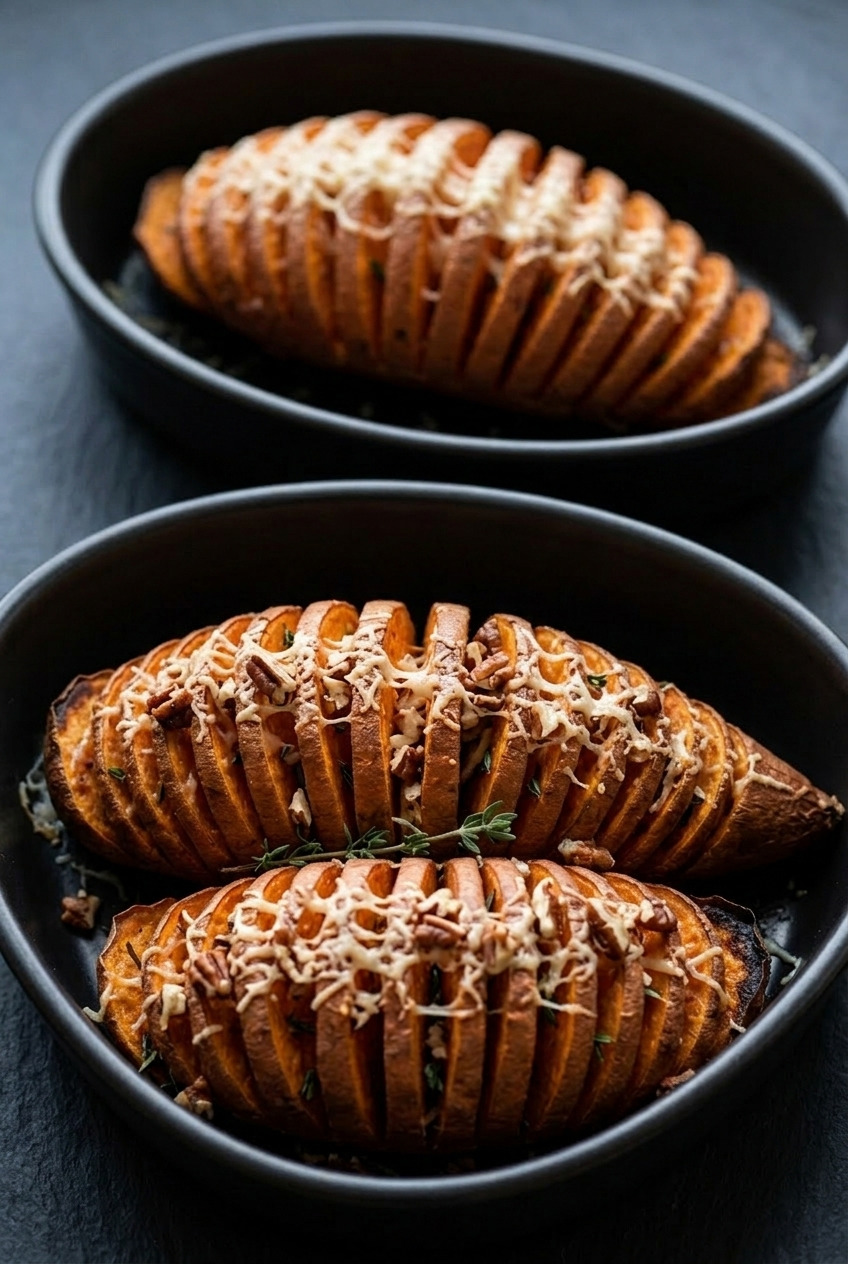
Skin on, and it isn't close. Recipes disagree on this and I understand why, since a peeled hasselback looks tidier.
Three reasons I leave it.
- The skin crisps. That thin dark rim on the outer curve of each slice is the best bite on the plate.
- It holds the base together. The uncut strip at the bottom is stronger with skin on it, so fewer slices tear free.
- A peeled potato is slippery. Slicing something that wants to shoot out from under your knife is not worth the tidier look.
Just scrub them well, since the skin is going on the plate.
What to Serve Them With
- Roast chicken. The default here. Both things want a 400°F oven, so they share it.
- Steak. The request my wife makes by name. Parmesan and thyme against a seared ribeye is hard to beat.
- Pork chops. Thick cut, pan seared, with the pan juices spooned over everything.
- A bean and greens supper. White beans, garlicky kale, and one of these on the side is a full dinner.
- A holiday table that's already sweet. The original reason I made these, and still the best argument for them.
Storage and Reheating
- Fridge. Airtight, up to 4 days.
- Oven reheat. 400°F for 10 minutes brings the fan tips and the cheese lace back.
- Air fryer reheat. 370°F for 5 minutes, and honestly it's the better option.
- Not the microwave. Soft, damp, and every crisp edge gone.
- Freezing. Skip it. The slices go watery and the fan collapses.
Frequently Asked Questions
How do I stop the knife cutting all the way through?
Lay a wooden chopstick or a thin skewer tight along each long side of the potato and cut down until the blade stops on them. A large wooden spoon works the same way: set the potato in the bowl and the curve catches the knife. Trim a sliver off one side first so the potato sits flat instead of rolling.
Why did my fans never open?
Almost always slices cut too thick, or potatoes crowded in the pan. The fans open because the cut faces dry and shrink and oil wicks between the slices, and neither happens if the slices are chunky or if the potatoes are steaming each other. Aim for a scant ¼ inch and leave an inch of space between them.
Do sweet potato and parmesan actually go together?
They're excellent together, and it's the same logic as parmesan on butternut squash or on roasted carrots. The salt and the aged funk of the cheese cut straight across the potato's sweetness, and the sweetness keeps the parmesan from tasting harsh. Use real Parmigiano Reggiano, since a mild cheese won't stand up to it.
Do I need to parboil them first?
No. Parboiling softens the slices before they have any structure, so they tear off the base as soon as you move the potato. Raw slices roast through in under an hour and hold their fan the whole time.
Why did my parmesan turn bitter?
It was in the oven too long. Cheese and nuts both go bitter well before a sweet potato finishes cooking, which is why they only go on for the last 10 to 12 minutes. Some recipes roast the cheese for over an hour and it will taste burnt every time.
Can I use sage or rosemary instead of thyme?
Yes, with adjustments. Sage is stronger and goes bitter at high heat, so use whole leaves tucked into the slits at the 40 minute mark rather than chopped. Rosemary is even more assertive, so use half the amount and chop it fine.
Can I prep these ahead of a dinner?
Slice them up to a day early and hold them in cold water in the fridge, then drain and dry them very well. You can also do the plain 35 minute roast in advance and finish with the thyme, cheese and pecans for about 20 minutes before you serve.
Recipe
Hasselback Sweet Potatoes With Thyme, Pecans and Parmesan
Ingredients
For the Potatoes
- 4 medium sweet potatoes 6 to 8 ounces each, scrubbed, skin on
- 3 tablespoons olive oil
- 2 cloves garlic minced
- ½ teaspoon smoked paprika
- 1 teaspoon kosher salt
- ½ teaspoon black pepper
For the Finish
- 1 tablespoon fresh thyme leaves plus a few small sprigs
- ⅓ cup pecans toasted and roughly chopped
- ⅔ cup Parmigiano Reggiano finely grated
Instructions
Cut the Potatoes
- Heat the oven to 400F. Scrub the sweet potatoes and dry them completely, leaving the skins on.
- Trim a thin sliver off one long side of each potato so it sits flat and cannot roll.
- Lay a wooden chopstick or thin skewer tight along each long side of the potato, or set the potato in the bowl of a large wooden spoon. Slice straight down in even cuts a scant ¼ inch apart, letting the blade stop on the sticks so about a half inch of uncut potato holds the slices together at the base. Slow down over the tapered ends.
Roast and Finish
- Stir the garlic, smoked paprika, salt and pepper into the olive oil. Rub it over the potatoes, working it down into the cuts with your fingers, and arrange them in a shallow baking dish with about an inch of space between them.
- Roast for 35 minutes, until the fans have clearly opened and the cut faces look dry and browned at the tips.
- Tuck the thyme leaves and small sprigs down into the slits, then baste the potatoes with the seasoned oil collected in the dish. Return to the oven for 10 minutes.
- Scatter the grated parmesan over the tops, tapping the dish so some falls into the gaps, then add the toasted pecans. Roast 10 to 12 minutes more, until the cheese on the ridges is golden and lacy.
- The potatoes are done when a thin knife slides into the thickest part with no resistance, about 55 minutes total. Rest 5 minutes so the cheese sets, then finish with a little more thyme and black pepper.
Notes
- Cheese and nuts go on late: the last 10 to 12 minutes only. Parmesan turns bitter and pecans go acrid well before a sweet potato is cooked through.
- Toast the pecans separately: 3 minutes in a dry pan before they ever see the oven.
- Grate the parmesan fine: a microplane gives cheese that slides into the slits and crisps on the ridges. Pre-shredded cheese clumps.
- Space in the dish: an inch between potatoes, or they steam each other and the fans stay soft.
- Skin on: it crisps, it holds the uncut base together, and a peeled potato is slippery to slice.
- Storage: 4 days refrigerated. Reheat at 400F for 10 minutes or in an air fryer at 370F for 5 minutes, never the microwave.