For about two years I made sweet potato wedges that were, honestly, sad.
Limp orange batons that slumped when I lifted them off the pan.
I kept blaming the oven.
Then one Sunday I cut a batch thicker than usual, ran out of patience waiting for them to dry, and dumped a spoonful of cornstarch over them out of pure stubbornness.
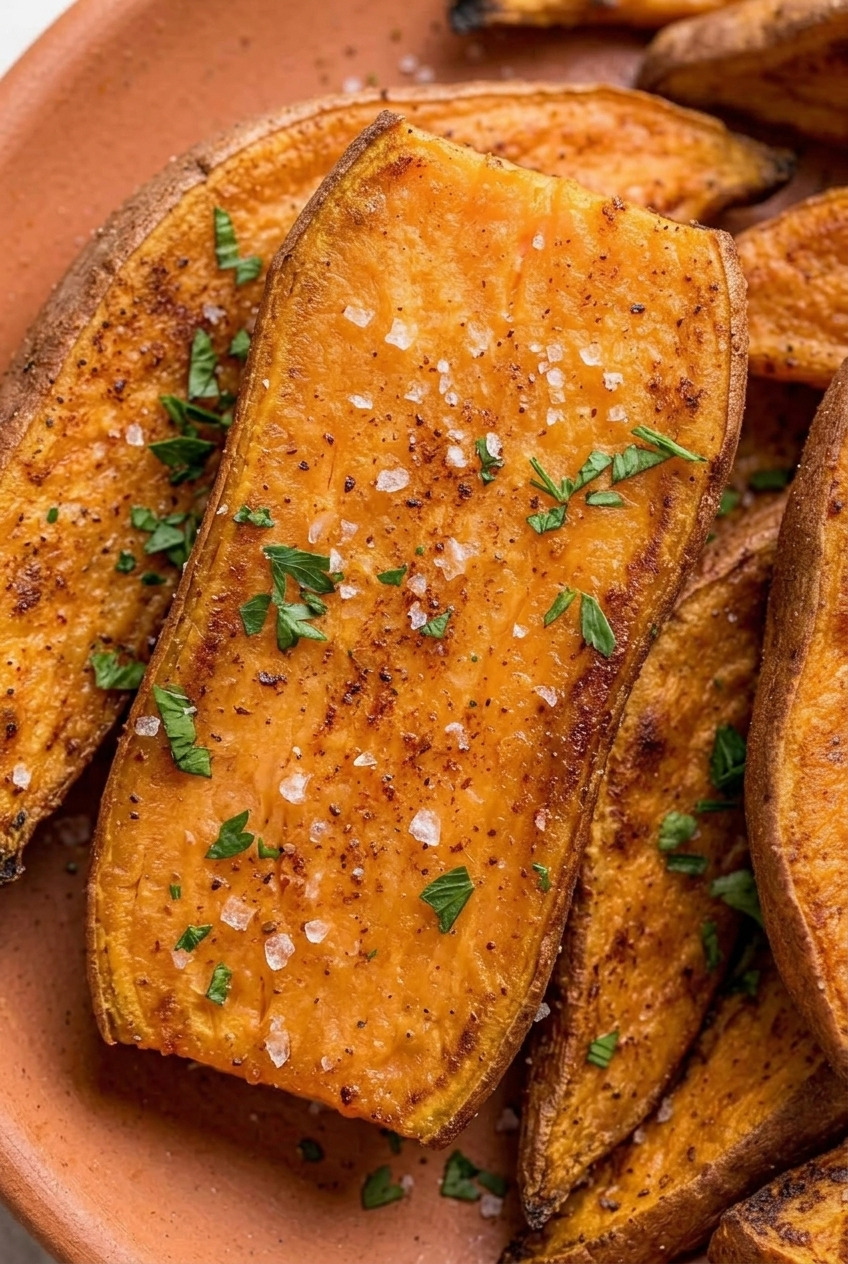
They came out with a shell.
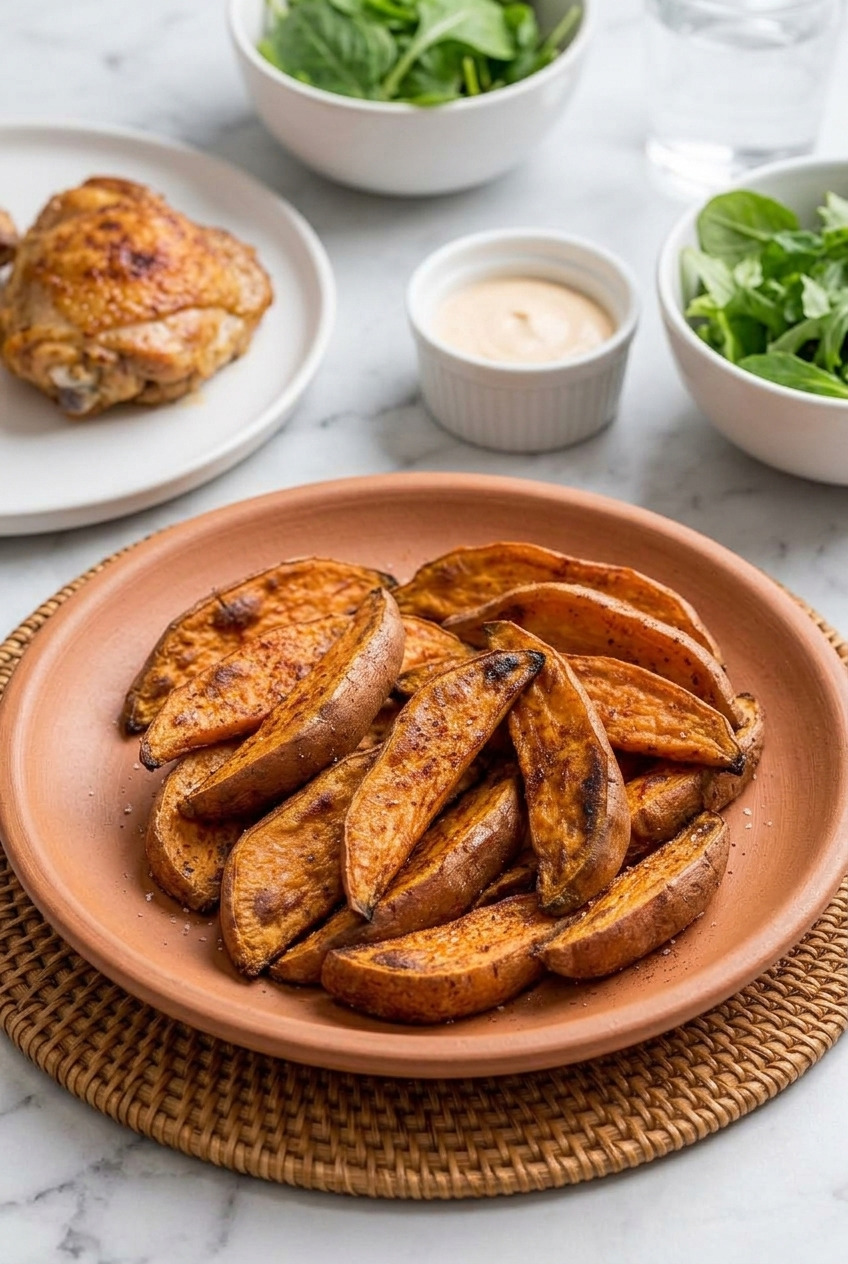
An actual crisp, browned, slightly rough shell on the flat faces, and a middle so soft it was almost custard.
That was the whole answer, and none of it was the oven's fault.
Thickness, a dry surface, and a thin dusting of starch.
I make these two or three times a month now, usually alongside a roast chicken or a burger, and my wife has decided the corner wedges with the darkest edges belong to her.
These are wedges, not fries, and I want to be clear about that up front.
Skin on, cut into sixths, about an inch thick at the spine.
A fry is all crust and no interior.
A wedge gives you both in one bite, which is why it belongs next to dinner instead of in a paper cone.
Forty minutes, one sheet pan, seven things you already own.
Make them once with the starch and you'll stop making the sad version.
Wedges, Not Fries
The cut is the entire recipe here. A sweet potato cut into thin fries has almost no interior left, so what you taste is crust and seasoning.
Cut into thin rounds, it's all surface too, just flatter.
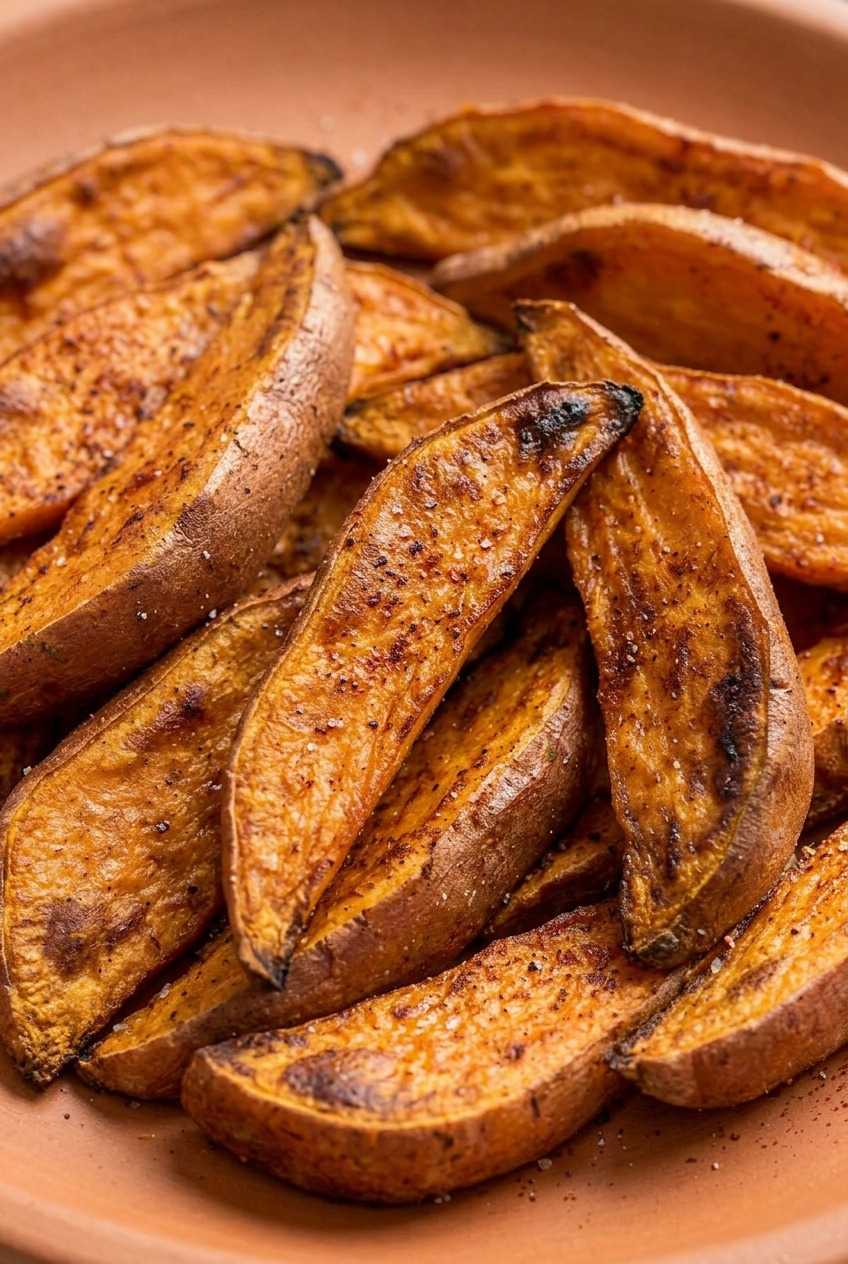
A wedge keeps a fat spine, roughly an inch across at the widest point, and that spine stays soft and creamy while the two cut faces brown against the metal.
That contrast is the whole point.
Crisp on the outside, almost custard on the inside, and you get both textures in the same mouthful.
Pick wedges when: you want a dinner side with substance, something that eats like a vegetable rather than a snack.
Pick fries or rounds when: you want maximum crunch per bite and don't care about a soft middle.
Sound like a small distinction? It changes what you cook them for.
How to Cut Sweet Potatoes Into Wedges
Six wedges per medium potato is the number I keep coming back to. Any more and you've made fries. Any fewer and the middle won't cook through before the outside goes dark.
Step 1: Trim and Halve
Scrub the potatoes well, because the skin stays on, then cut a thin slice off each pointed end so they sit steady.
Cut each potato in half lengthwise.
Step 2: Halve Again
Lay each half flat side down and cut it lengthwise into two long pieces.
Now you have quarters.
Step 3: Split the Fat Ones
The two quarters from the belly of the potato will be noticeably fatter than the ones from the ends.
Cut those in half once more.
You should end up with six wedges, all roughly 1 inch thick at the spine.
Pro tip: Even sizing matters more than exact sizing. A tray of wedges that all match will finish together. A tray with two skinny stragglers will give you two burnt ones every time.
Ingredients You'll Need
Nothing exotic, and the cornstarch is the only unusual guest. It's the difference between a shell and a slump.
- Sweet potatoes (2 pounds, about 3 medium). Scrubbed, skin ON. The skin holds the wedge together and crisps into something genuinely good.
- Cornstarch (1 tablespoon). The crisping agent. It gelatinizes on the surface in the heat and sets into a thin dry shell.
- Olive oil (2 tablespoons). Enough to coat, not enough to fry. Too much and the starch turns to paste.
- Smoked paprika (1 teaspoon). Savory smoke against the sweetness. This is what keeps the dish firmly savory.
- Garlic powder (1 teaspoon). Powder, not fresh. Fresh garlic burns black at this temperature.
- Onion powder (½ teaspoon). Background depth. You won't taste it on its own and you'd miss it if it were gone.
- Kosher salt (1 teaspoon). Sweet potatoes need more salt than you think.
- Black pepper (½ teaspoon). Freshly ground.
- Cayenne (¼ teaspoon, optional). A little heat plays beautifully against the sweetness.
How to Roast Sweet Potato Wedges
The order of operations matters more than any single ingredient. Starch goes on dry wedges first, oil goes on second. Reverse that and you get gummy patches instead of an even coat.
Step 1: Soak, Then Dry
Cover the cut wedges with cold water and let them sit 20 minutes.
This pulls surface starch off, which sounds backwards until you remember we're adding our own starch in a controlled amount.
Then dry them HARD. Two towels, both faces of every wedge, until they feel matte instead of slick.
Step 2: Dust with Cornstarch
Put the dry wedges in a big bowl, sprinkle the cornstarch over, and toss until you see a faint pale film on every surface.
No wet clumps anywhere.
Step 3: Oil and Season
Add the olive oil and toss again, then the paprika, garlic powder, onion powder, salt, pepper, and cayenne.
Toss until the color is even.
Step 4: Arrange Cut Side Down
Heat the oven to 425°F.
Lay the wedges on a bare sheet pan with one flat face against the metal and at least half an inch of space between them.
Skip the parchment. It insulates the pan and traps steam, and steam is the enemy here.
Step 5: Roast and Flip Once
Roast 20 minutes, flip each wedge onto its other flat face, then roast 10 to 12 minutes more.
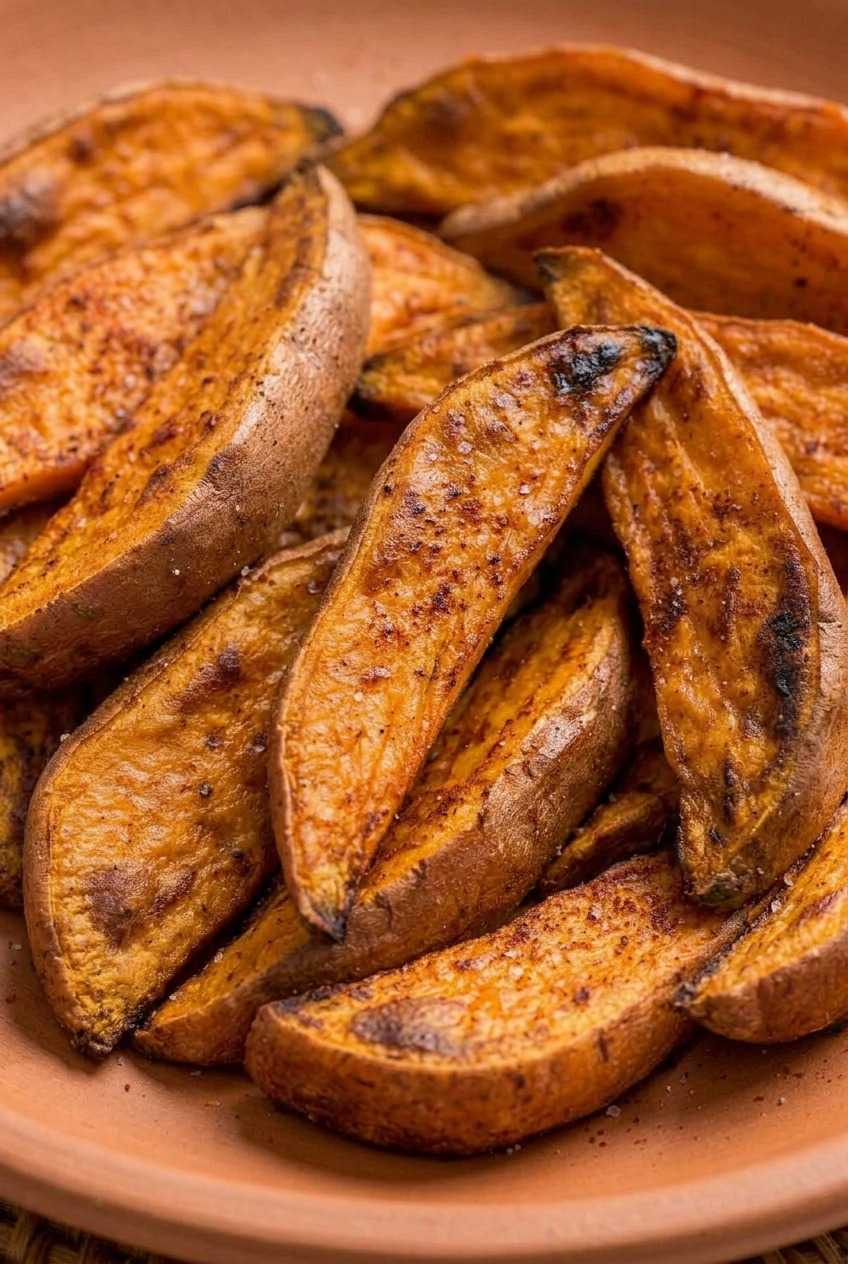
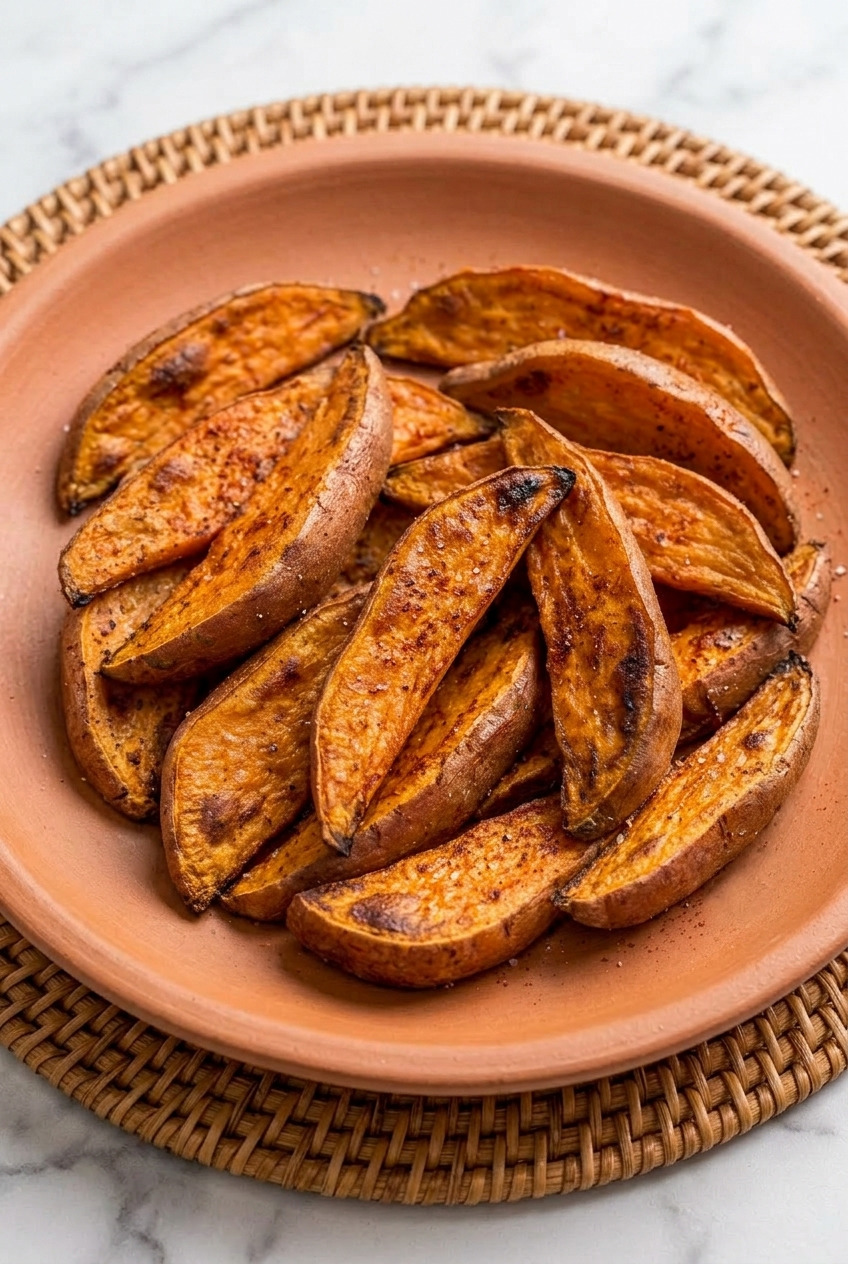
They're done when both faces are deep bronze and a knife slides into the spine with no resistance.
Salt them again the second they come out.
The Four Things That Make Them Crisp
Every one of these is doing real work. Skip one and you'll get a decent wedge. Skip two and you're back to sad.
- A dry surface. Water on the potato boils before it browns, and boiling means steaming. Dry wedges start browning almost immediately.
- Cornstarch. It forms a thin, dry, slightly rough layer that crisps hard and, unlike the potato's own moisture-heavy surface, stays crisp for a few minutes on the plate.
- Space on the pan. Each wedge releases steam. Crowded wedges steam each other. Use two pans if you have to.
- 425 degrees with one flip. High enough to brown before the interior overcooks, and one flip gives you two browned faces instead of one.
Worth the twenty minute soak? On a weeknight I sometimes skip it and just dry them well. The soak is a small upgrade, the drying is non-negotiable.
Why Sweet Potato Wedges Go Soggy
Five causes, and I've been guilty of all of them.
- A crowded pan. The single most common cause. Wedges touching each other trap moisture and never get above boiling temperature on the contact faces.
- A wet surface. Straight from the soak to the pan, no towel. The first ten minutes of roasting go to evaporating water instead of browning.
- Parchment or foil. Both insulate the wedges from the hot metal. You lose the hard sear on the down face.
- Too much oil. Puddled oil poaches the bottom of the wedge. Two tablespoons for two pounds is plenty.
- Uneven cuts. Thin pieces are done and darkening while thick ones are still raw in the middle, so you compromise and pull everything early.
Fair warning: even a perfect wedge softens after about fifteen minutes on the counter. Sweet potato holds a lot of moisture and it migrates outward. Serve them hot.
Variations
- Chili lime. Swap the smoked paprika for 1 teaspoon chili powder and squeeze half a lime over them straight out of the oven.
- Herbes de Provence. 2 teaspoons in place of the paprika and garlic powder. Rosemary and thyme against sweet potato is a great combination.
- Curried. 2 teaspoons of curry powder and a pinch of cayenne. Serve with a yogurt and lime dip.
- Parmesan. Toss with ¼ cup of finely grated parmesan in the last five minutes of roasting so it melts and browns rather than burns.
- Steam first. The upgrade for a weekend. Steam the cut wedges 5 minutes, cool and dry them completely, then proceed. It roughs up the surface and gives you a shaggier crust.
What to Serve With Them
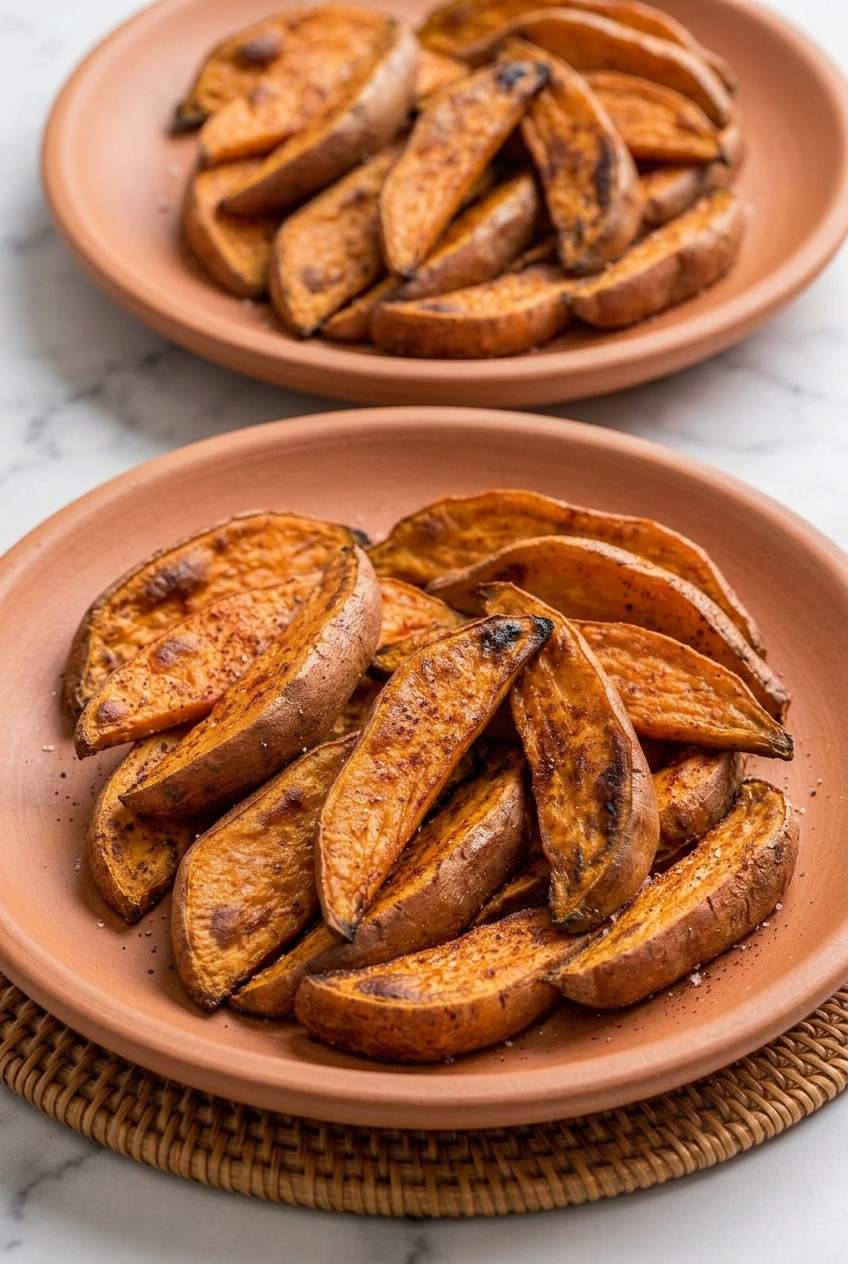
- Burgers. The obvious one, and still the best one.
- Roast chicken. They go into the oven when the chicken comes out to rest.
- Salmon. The sweetness and the smoked paprika work well against an oily fish.
- Grain bowls. Cut the wedges in half crosswise first so they sit in the bowl.
- Dips. Chipotle mayo, garlic aioli, or plain Greek yogurt with lime and salt.
Make Ahead and Storage
- Cut ahead. Wedges hold in cold water in the fridge for 24 hours. Dry them thoroughly before they meet the starch.
- Refrigerated. Cooked wedges keep 4 days in an airtight container. They will be soft when cold, which is normal.
- Reheating. A wire rack over a sheet pan at 425°F for 8 minutes. The rack is what brings the crisp back. A microwave gives you a warm sponge.
- Freezing. I don't recommend it for cooked wedges. The cell walls collapse and they thaw watery.
Air Fryer Sweet Potato Wedges
The air fryer is genuinely good at this, with one caveat. Capacity. Two pounds of wedges is two or three batches in most baskets.
Prep them exactly the same way, starch first and then oil.
Cook at 380°F for 15 to 18 minutes in a single layer, shaking the basket once at the halfway point.
They come out slightly drier and a little more crisp than the oven version, with a marginally less creamy middle.
On a weeknight for two people, I use the air fryer. For four people, the oven wins.
FAQ
How do I make sweet potato wedges crispy in the oven?
Dry the cut surfaces completely, toss with a tablespoon of cornstarch before the oil goes on, spread them in a single layer on a bare metal sheet pan with space between them, and roast at 425 degrees F with one flip at the twenty minute mark.
Why soak sweet potatoes before roasting?
Soaking pulls loose surface starch and some sugar off the cut faces. Less surface sugar means the exterior browns instead of scorching, and pulling the potato's own starch lets you replace it with a controlled dusting of cornstarch. Twenty minutes is plenty, and drying afterward matters more than the soak itself.
Do I peel sweet potatoes for wedges?
No. The skin holds the wedge together while the interior goes soft, and it crisps into the best part. Scrub them well and leave it on. Peel only if the skin is damaged or you genuinely dislike the texture.
How long do sweet potato wedges take in the oven?
About 30 to 32 minutes at 425 degrees F for one inch wedges: twenty minutes on the first face, then ten to twelve after the flip. Thicker wedges need longer. Judge by the knife test in the spine, not the clock.
Why did my wedges come out soggy?
Almost always a crowded pan or a wet surface. Wedges that touch steam each other, and water on the surface has to evaporate before browning can start. Parchment paper and too much oil are the next two suspects.
Can I make these in an air fryer?
Yes. Same prep, 380 degrees F for 15 to 18 minutes in a single layer, shaking once. Work in batches, because a crowded basket steams just like a crowded sheet pan.
Wedges or fries, which should I make?
Wedges when you want a soft creamy interior and a side dish that eats like a vegetable. Fries when you want maximum crunch and minimum interior. They are genuinely different foods from the same potato.
Can I prep them ahead?
Cut them up to a day in advance and hold them submerged in cold water in the fridge. Drain and dry them thoroughly before dusting with cornstarch. Do not season them in advance, salt pulls water to the surface and works against you.
Recipe
Roasted Sweet Potato Wedges
Ingredients
For the Wedges
- 2 pounds sweet potatoes about 3 medium, scrubbed, skin on
- 1 tablespoon cornstarch
- 2 tablespoons olive oil
Seasoning
- 1 teaspoon smoked paprika
- 1 teaspoon garlic powder
- ½ teaspoon onion powder
- 1 teaspoon kosher salt plus more for finishing
- ½ teaspoon black pepper freshly ground
- ¼ teaspoon cayenne pepper optional
To Finish
- 2 tablespoons fresh parsley chopped, optional
Instructions
Cut and Soak
- Scrub the sweet potatoes and trim a thin slice off each end. Cut each potato in half lengthwise, cut each half lengthwise again, then split the two fattest quarters once more, for 6 wedges per potato about 1 inch thick at the spine.
- Cover the wedges with cold water and soak 20 minutes.
- Drain and dry the wedges thoroughly with towels. Every cut face should feel matte, not slick.
Season and Roast
- Heat the oven to 425 degrees F.
- Toss the dry wedges with the cornstarch in a large bowl until a faint pale film coats every surface with no wet clumps.
- Add the olive oil and toss again, then add the smoked paprika, garlic powder, onion powder, salt, pepper, and cayenne and toss until the color is even.
- Arrange the wedges on a bare metal sheet pan with one flat face against the metal and at least half an inch of space between them. Do not line the pan.
- Roast 20 minutes, flip each wedge onto its other flat face, and roast 10 to 12 minutes more, until both faces are deep bronze and a knife slides into the spine with no resistance.
- Salt again immediately, scatter over the parsley if using, and serve hot.
Notes
- Dry them hard: The drying step matters more than the soak. Water on the surface has to evaporate before browning can start.
- Starch before oil: Dust the dry wedges with cornstarch first, then add the oil. The reverse order gives you gummy patches.
- No parchment: A bare metal pan gives the down face a hard sear. Parchment and foil insulate and trap steam.
- Space them out: Wedges that touch steam each other. Use two pans if one is crowded.
- Air fryer: Same prep, 380 degrees F for 15 to 18 minutes in a single layer, shaking once. Work in batches.
- Storage: 4 days refrigerated. Reheat on a wire rack at 425 degrees F for 8 minutes to bring the crisp back.