Autumn announces itself in our kitchen with a bag of sweet potatoes I did not plan to buy.
For years those went straight into dessert, because that's the American reflex.
Butter, brown sugar, marshmallows if my wife has any say in it.
Then a friend cooked me a bowl of rice with sweet potato in it and no sugar anywhere near it.
Savory. Salty. Faintly sweet only where you bit into a cube.
It completely rearranged how I think about this vegetable.
That dish is satsumaimo gohan, and both halves of the name are worth knowing.
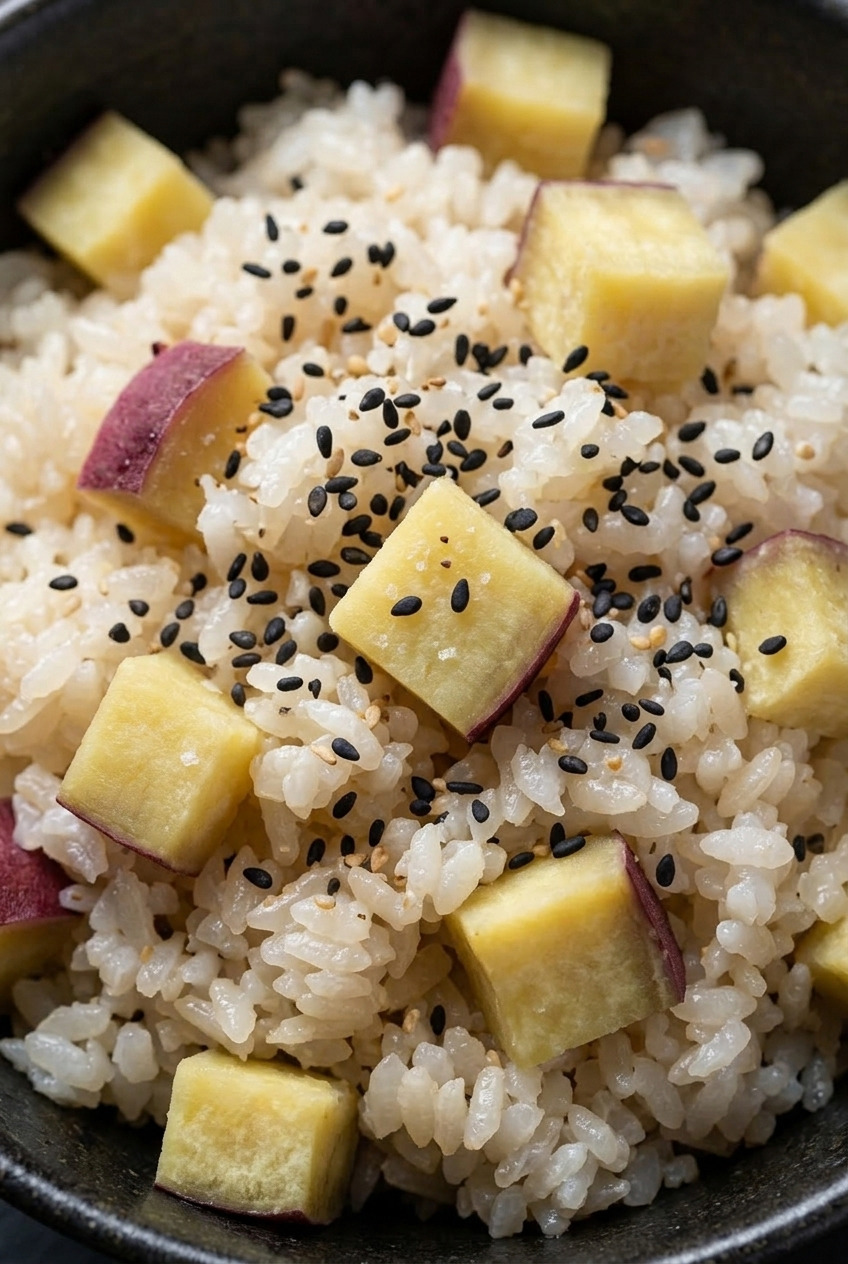
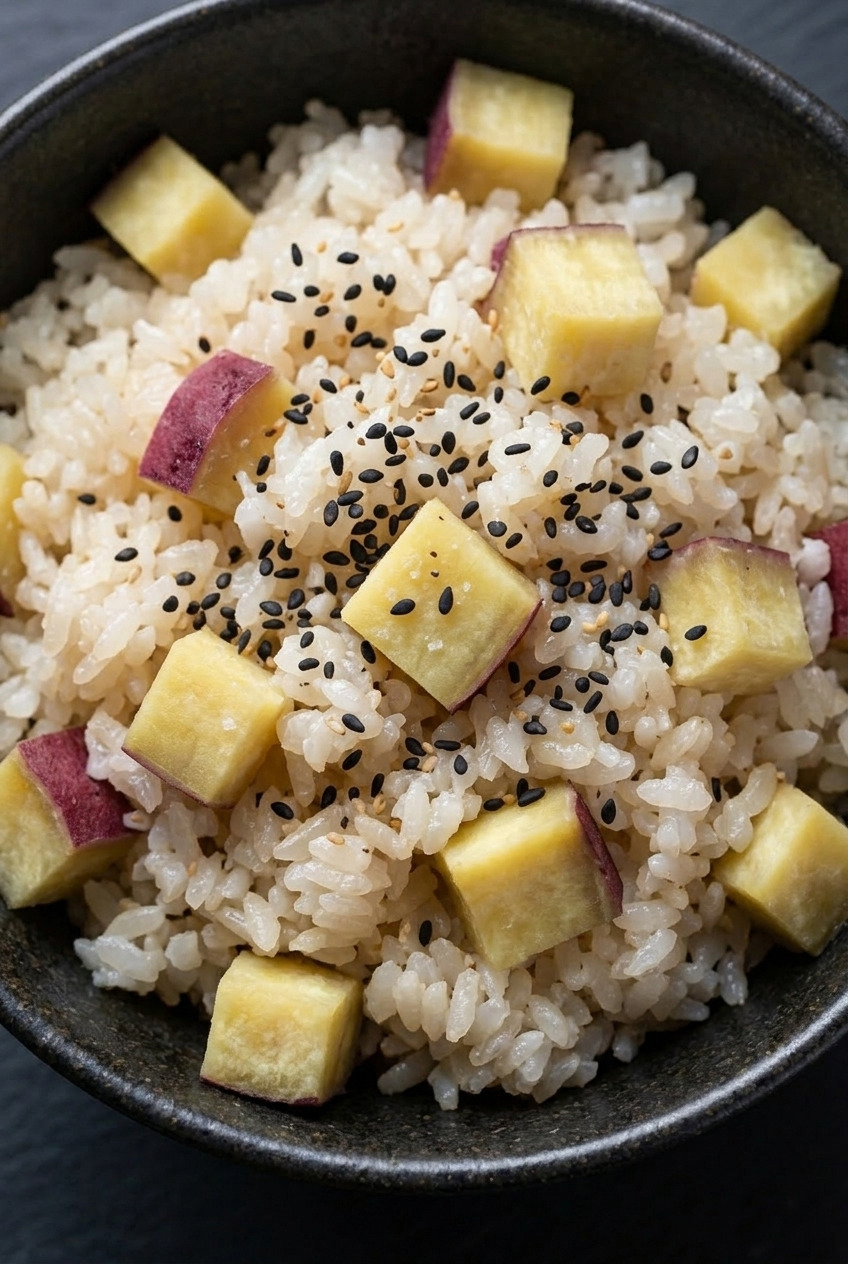
Satsumaimo is the Japanese sweet potato, magenta skinned and pale gold inside, and gohan just means cooked rice.
It belongs to a family called takikomi gohan, rice simmered together with its ingredients rather than rice with something spooned on top afterward.
In Japan this is a genuine autumn staple, the sort of thing that turns up on a weeknight table alongside grilled fish and a bowl of miso soup.
Here's my one departure from every recipe I learned from: I make it in a Dutch oven.
I don't own a Japanese rice cooker and neither do most people I cook for.
A heavy pot with a tight lid does this beautifully, and it takes about 45 minutes start to finish.
What Satsumaimo Gohan Is
This is a rice dish, not a side dish of sweet potatoes. The distinction changes how you serve it and how much you make.
Takikomi gohan is a whole category of Japanese home cooking where rice, seasoning liquid and one or two other ingredients all go into the pot together.
The rice absorbs the seasoning as it cooks, so every grain carries flavor instead of just the top layer.
Mushroom, chestnut, bamboo shoot, chicken and burdock, sweet potato. The ingredient rotates with the season and that's the point of it.
Sweet potato is the autumn one.
Now the part that trips up American cooks, and it tripped up me: this is savory.
There's no sugar in it. The salt, the sake and the mirin push it toward a dinner dish, and the sweetness of the potato reads as a contrast rather than a dessert note.
Think of it the way you'd think of a savory roasted carrot.
It's also served the way plain steamed rice is served, which means it's the rice course of the meal rather than the centerpiece.
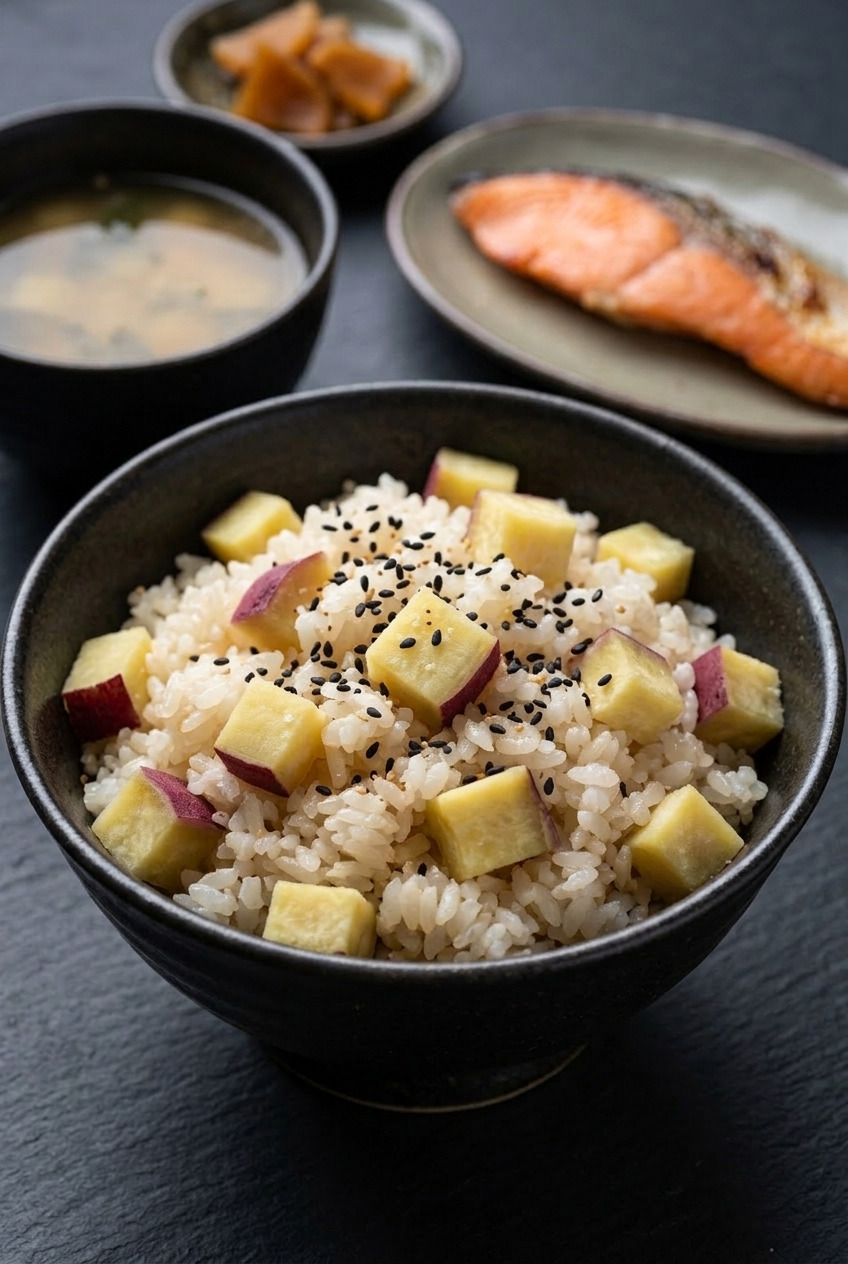
A bowl of this, a piece of salted salmon, miso soup and a pickle is a complete Japanese dinner.
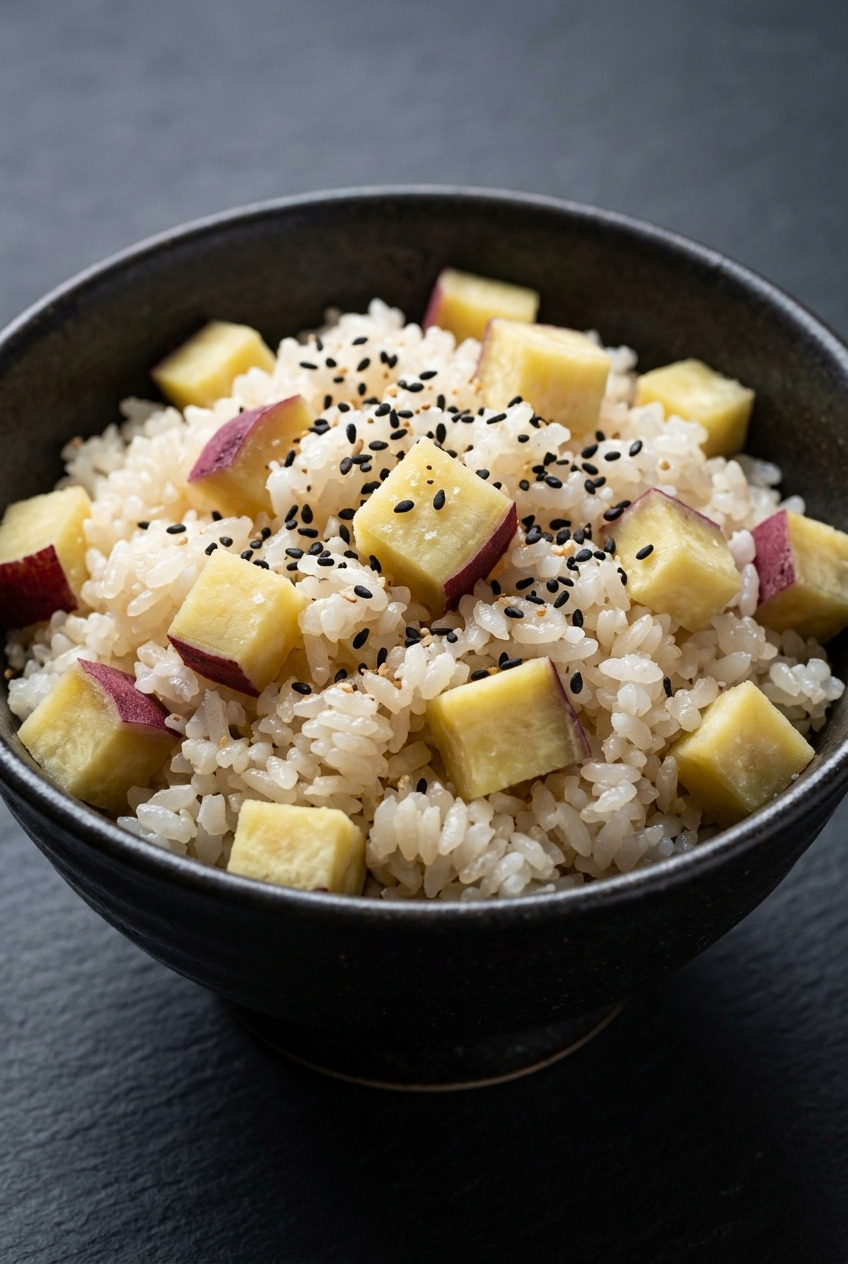
A Note on Satsumaimo
The Japanese sweet potato is genuinely a different eating experience from the orange one. Worth seeking out, and worth knowing what changes if you can't.
The skin is a deep magenta, almost purple, and the flesh inside is pale creamy yellow.
It's drier and starchier than the orange American sweet potato, with a chestnutty flavor and a fluffy, almost chalky texture when cooked.
That dryness is exactly why it works in rice. It holds its cubes and it doesn't leak water into the pot.
- Where to buy it. Japanese and Korean groceries in the fall, reliably. H Mart carries it year round in most stores. Regular supermarkets increasingly label it "Japanese sweet potato" or "murasaki sweet potato."
- The best substitute. A Stokes Purple sweet potato. Similar dryness, holds its shape, though the flesh is purple so the finished rice looks different.
- The fallback. An ordinary orange sweet potato works, and I want to be straight with you about what changes. It's wetter and noticeably sweeter, the cubes soften more, and some will slump into the rice. The dish tilts sweeter than it should. Cut it slightly larger to compensate.
- Is it healthier? Roughly the same calorie and fiber picture. The orange one carries far more beta carotene. The Japanese one has a lower glycemic response for most people. Neither is a health food story worth chasing.
Ingredients You'll Need
Six things, and two of them are the rice and the water. This is a very short list for how good it tastes.
- Japanese short grain rice (2 rice cooker cups, 360 ml). Koshihikari, Tamanishiki, Nishiki, or anything labeled sushi rice. Short grain only. Long grain rice will not give you the sticky texture that holds the cubes.
- Satsumaimo (1 medium, about 10 ounces). Scrubbed, skin ON, cut into ¾ inch cubes. That magenta skin against white rice is half the reason this dish looks the way it does.
- Water or kombu dashi (1 ¾ cups). Water is the standard home version. Kombu dashi adds a savory floor that's genuinely noticeable.
- Sake (2 tablespoons). Not optional in my kitchen. It rounds out the salt and takes away any raw starchy edge. Use drinking sake or cooking sake, both fine. Dry sherry substitutes at a pinch.
- Mirin (1 tablespoon). Sweet rice wine. It balances the salt and adds a faint gloss. Substitute 1 teaspoon of sugar plus an extra splash of sake.
- Kosher salt (1 teaspoon). Sea salt works. This is the only savory seasoning, so don't cut it.
- Kombu (one 2 inch piece, optional). Tucked in with the rice. Free umami for zero effort.
- Toasted black sesame seeds and flaky salt. For the gomashio at the end. See below, because it matters more than it sounds.
About rice cups: a Japanese rice cooker cup is 180 ml, not a US cup. Two rice cups is about 1 ⅔ US cups. Getting this wrong is the single most common way people ruin this recipe.
How to Make Satsumaimo Gohan
The whole dish is about restraint. Rinse, soak, don't stir, and leave it alone while it cooks.
Step 1: Rinse the Rice, Then Soak It
Put the rice in a bowl, cover with cold water, and swirl with your fingers for about 15 seconds.
Pour off the cloudy water and repeat 3 or 4 times, until the water runs mostly clear.
Then let the rinsed rice soak in fresh cold water for 30 minutes and drain it well in a sieve.
Soaking gets water into the center of each grain so it cooks evenly. Skip it and you get a chalky core.
Step 2: Cut and Soak the Sweet Potato
Scrub the satsumaimo well but leave the skin on.
Cut it into ¾ inch cubes and drop them into a bowl of lightly salted cold water for 10 to 15 minutes.
Why bother? Two reasons, and both are real.
Cut sweet potato oxidizes fast and the cut faces go grey brown within minutes. The soak stops that dead.
It also pulls surface starch off the cubes, which is what would otherwise turn your rice cloudy and gluey around each piece.
Drain and pat them dry.
Step 3: Set the Liquid
Read this part twice. The sake and mirin go INSIDE the total liquid, not on top of it.
Put the drained rice in your pot. Add the sake, the mirin and the salt, then pour in enough water or dashi to reach 1 ¾ cups total liquid including those seasonings.
Stir once, just to dissolve the salt, and then level the rice.
Sweet potato releases almost no water as it cooks, which is why the ratio stays the same as it would for plain rice. This is the thing every recipe online gets tangled up in.
Step 4: Cook, Covered
Lay the sweet potato cubes evenly over the surface of the rice.
Do NOT stir them in. They steam on top and stay in one piece, and stirring is exactly what makes them dissolve into mush.
Tuck the kombu in at the edge if you're using it.
Cover the pot and bring it to a boil over medium-high heat, which takes about 5 minutes.
The moment you hear it boiling, drop to low and cook for 13 minutes.
Lid stays on the whole time. No peeking.
Step 5: Rest and Fold
Kill the heat and let the pot sit, still covered, for 10 minutes.
This rest finishes the cooking with residual steam and it is not optional.
Then take the lid off, remove the kombu, and fold with a rice paddle or a wide spatula using a cutting motion rather than a stirring one.
You're separating the grains and lifting the cubes without crushing them.
Scoop into bowls and shower with gomashio.
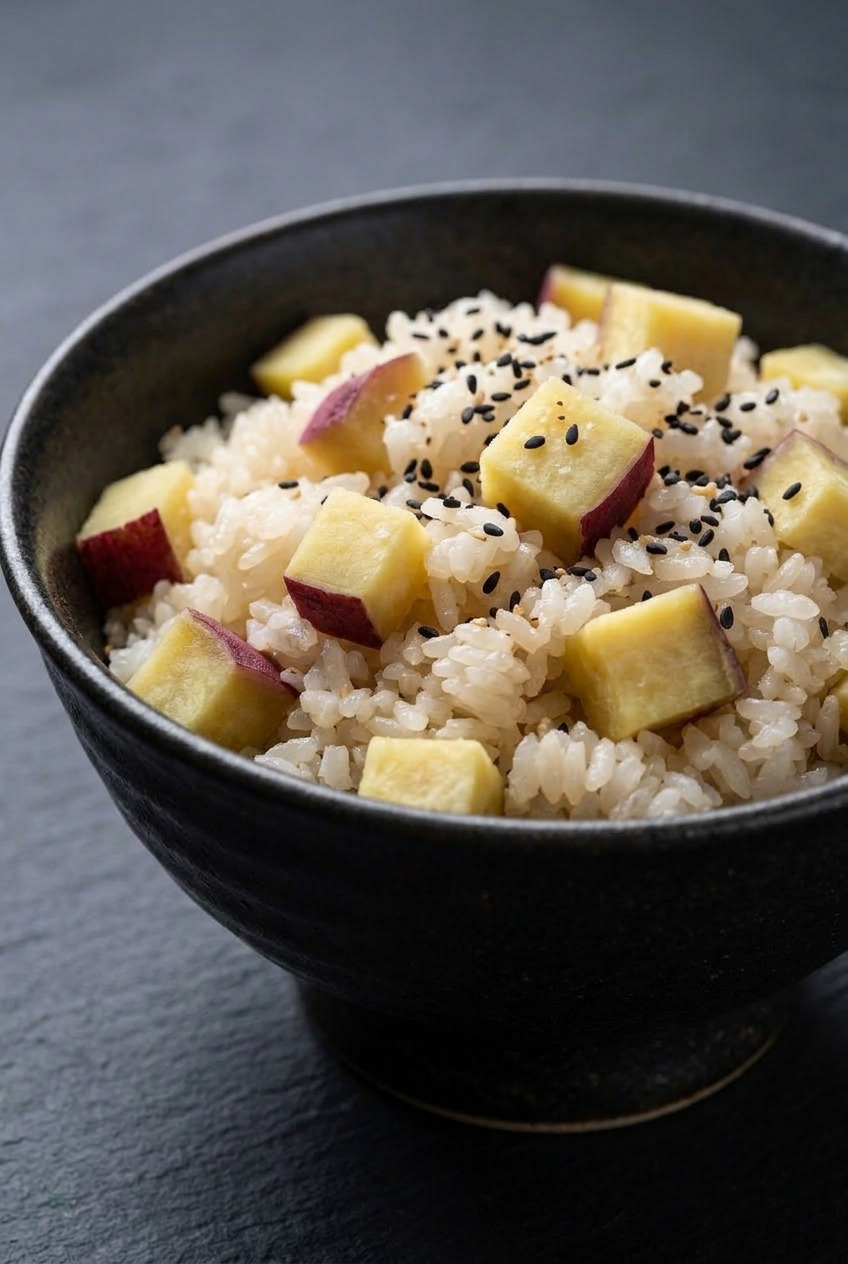
No Rice Cooker? Use a Heavy Pot
This is how I make it every single time. A Dutch oven is not a compromise here, it's genuinely great.
- Dutch oven or heavy saucepan. A 3 to 4 quart pot with a tight lid. High heat to a boil, then low for 13 minutes, then 10 minutes off the heat with the lid on. Exactly as written above.
- Donabe. The Japanese clay pot, and the traditional vessel for takikomi gohan. Same timing, but start on medium rather than high so the clay heats evenly.
- Rice cooker. Add everything to the bowl, fill to the 2 cup line for white rice, lay the sweet potato on top, and run the standard white rice or the mixed rice setting. Let it rest 10 minutes after it switches to warm.
- Instant Pot. Reduce the liquid to 1 ½ cups since nothing evaporates. High pressure for 5 minutes, then a full 10 minute natural release.
Three Things That Decide How This Turns Out
I've made this badly enough times to know exactly where it goes wrong. All three are easy to get right once someone tells you.
- Soak both the rice and the sweet potato. Thirty minutes for the rice, fifteen for the cubes. The rice soak prevents a hard center, the cube soak prevents grey edges and gluey rice.
- Never stir before cooking. The cubes sit on top and steam. Stir them into the rice and they'll break apart, release their starch, and give you a sweet orange porridge instead of rice with sweet potato in it.
- Count the sake and mirin as part of the liquid. Total liquid is 1 ¾ cups for 2 rice cups of rice, and the 3 tablespoons of sake and mirin come out of that total. Add them on top and you get wet, heavy rice.
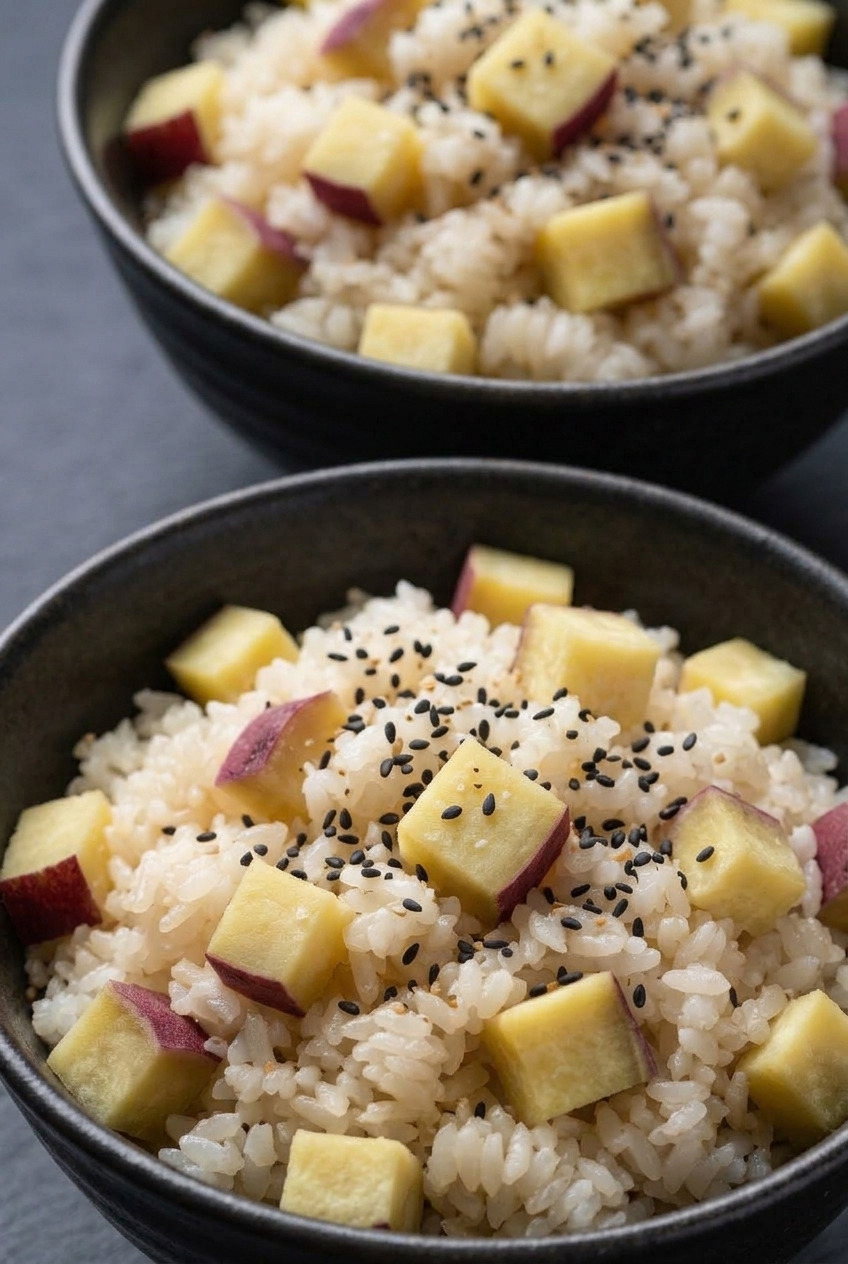
Gomashio, the Black Sesame Salt on Top
Do not treat this as a garnish. It's the seasoning that keeps the whole bowl on the savory side of the line.
Gomashio is nothing but toasted black sesame seeds and salt, ground lightly together.
Toast 2 teaspoons of black sesame seeds in a dry pan over medium heat for 2 minutes, shaking constantly, until they smell nutty.
Grind them with ½ teaspoon of flaky salt in a mortar, just enough to crack maybe half the seeds. You want texture, not powder.
The salt hits your tongue at the same moment the sweet potato does, and that contrast is the entire flavor idea of this dish.
Without it the rice tastes gently sweet and a little aimless. With it, it snaps into focus.
What to Serve With It
Build the meal around it the way a Japanese home cook would. Rice, soup, a protein, a pickle.
- Salted grilled salmon. Shiozake. The classic pairing and the one I make most often.
- Miso soup. Tofu and wakame, nothing fancy. The salt in the soup and the salt on the rice do the same job.
- Tsukemono. Any Japanese pickle. Quick cucumber, takuan, umeboshi. The acid resets your palate between bites.
- Chicken karaage or tonkatsu. If you want something heartier, fried and savory plays beautifully against the sweet cubes.
- A simple spinach ohitashi. Blanched spinach with soy and dashi. Cool, green, takes five minutes.
Storage and Reheating
Cooked Japanese rice does not love the refrigerator. Freeze it instead, which sounds wrong and is completely right.
- Freezer, and this is the way. Portion the still-warm rice into individual mounds, wrap each tightly in plastic while it's warm so it traps its own steam, and freeze for up to 1 month. Microwave 90 seconds to 2 minutes from frozen and it comes back almost perfect.
- Refrigerator. Up to 3 days in an airtight container. The starch firms up and goes a bit hard, so sprinkle a teaspoon of water over the portion before you microwave it.
- Reheating. Cover the bowl loosely and microwave in 45 second bursts. Steam is what softens it back up, so a damp paper towel over the top helps.
- The gomashio. Keeps 2 weeks in a small jar at room temperature. Make a triple batch, you'll put it on everything.
One pot, six ingredients, and it tastes like the season. Give it a try!
Recipe Card
Recipe
Satsumaimo Gohan (Japanese Sweet Potato Rice)
Ingredients
For the Rice
- 2 rice cups Japanese short grain white rice 360 ml, about 1 ⅔ US cups
- 1 medium satsumaimo (Japanese sweet potato) about 10 oz, scrubbed, skin on, cut into ¾ inch cubes
- 1 ¾ cups water or kombu dashi total liquid, including the sake and mirin below
- 2 tablespoon sake
- 1 tablespoon mirin
- 1 teaspoon kosher salt
- 1 piece kombu 2 inch square, optional
For the Gomashio
- 2 teaspoon black sesame seeds toasted
- ½ teaspoon flaky salt or kosher salt
Instructions
Prepare the Rice and Sweet Potato
- Rinse the rice in cold water 3 or 4 times, swirling and pouring off the cloudy water, until it runs mostly clear. Soak the rinsed rice in fresh cold water for 30 minutes, then drain well in a sieve.
- Scrub the satsumaimo, leave the skin on, and cut it into ¾ inch cubes. Soak the cubes in lightly salted cold water for 10 to 15 minutes to stop them browning and to remove surface starch. Drain and pat dry.
Cook the Rice
- Put the drained rice in a 3 to 4 quart heavy pot. Add the sake, mirin and salt, then add enough water or kombu dashi to reach 1 ¾ cups of total liquid, counting the sake and mirin as part of that total. Stir once to dissolve the salt and level the rice.
- Lay the sweet potato cubes evenly over the surface of the rice. Do not stir them in. Tuck in the kombu if using.
- Cover and bring to a boil over medium-high heat, about 5 minutes. As soon as it boils, reduce to low and cook for 13 minutes with the lid on. Do not lift the lid.
- Turn off the heat and let the pot rest, still covered, for 10 minutes.
Finish and Serve
- Toast the black sesame seeds in a dry pan over medium heat for 2 minutes, shaking constantly. Grind lightly with the flaky salt in a mortar, cracking about half the seeds.
- Remove the kombu, then fold the rice with a rice paddle using a cutting motion so the grains separate and the sweet potato cubes stay whole. Serve in bowls sprinkled with the gomashio.
Notes
- Rice cups are 180 ml: A Japanese rice cooker cup is not a US cup. Two rice cups is about 1 ⅔ US cups.
- Count the sake and mirin inside the liquid: Total liquid is 1 ¾ cups, and the sake and mirin come out of that total, not on top of it.
- Do not stir before cooking: The cubes steam on top of the rice. Stirring them in makes them break down into the grains.
- Substitute: Stokes Purple sweet potato is the closest substitute. An ordinary orange sweet potato works but is wetter and sweeter, so the cubes soften more and the dish tilts sweet.
- Storage: Freeze warm portions wrapped tightly for up to 1 month, which holds the texture far better than refrigerating.