I stood in my kitchen last winter reading the back of a box of frozen breakfast sausage.
Eleven ingredients, four of which I couldn't identify without my phone.
Six dollars for twelve patties the size of a bottle cap.
I put the box back and bought a pound of ground pork instead.
Here's what I learned making my own: the thing that makes a sausage patty taste like breakfast sausage is sage.
Not maple. Not brown sugar.
Sage, black pepper, and a little thyme, and suddenly you're eating the thing you thought you were buying.
The sweet potato in these is a binder, not a flavor.
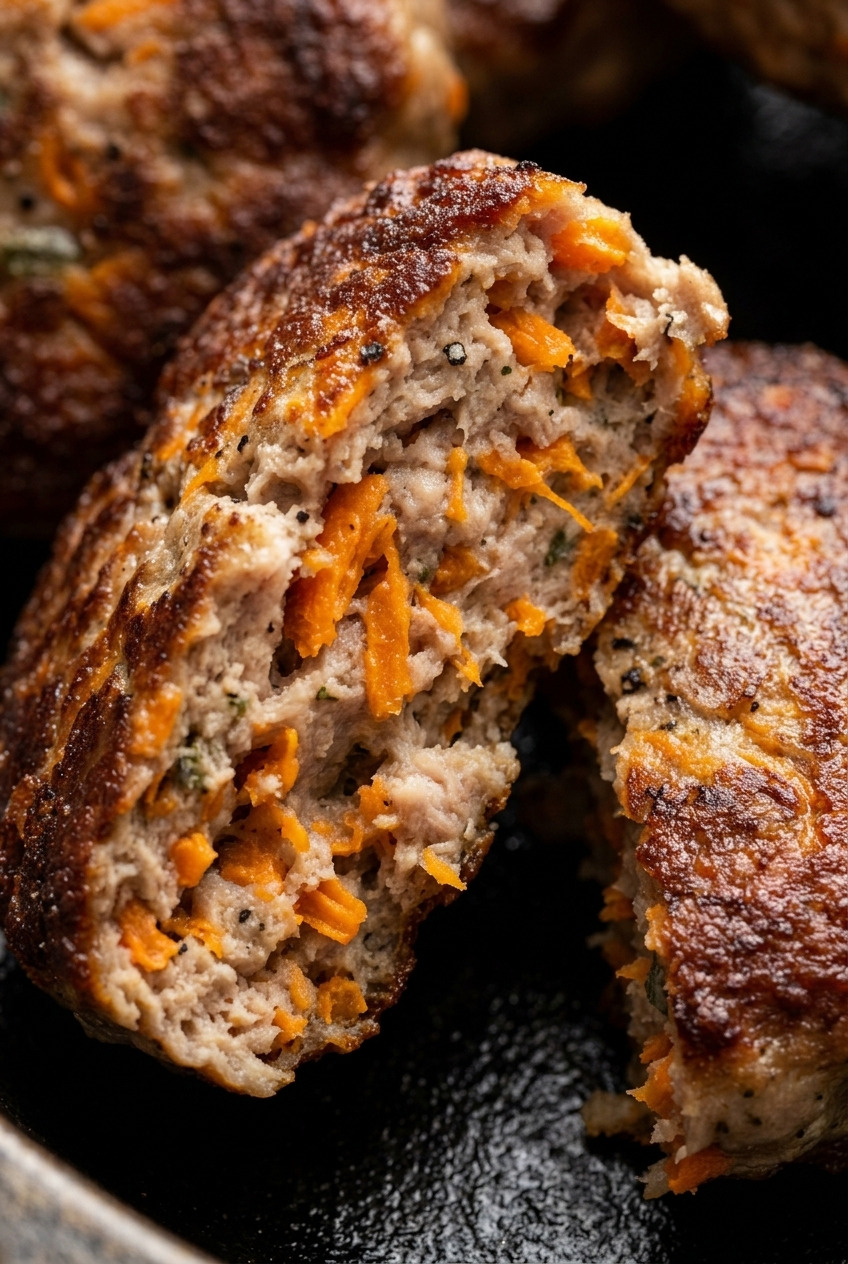
I grate it raw on a box grater and fold it straight into the meat, and the starch it releases holds the patty together with no flour and no egg.
Let me be clear about one thing: these are savory.
There's one tablespoon of maple syrup in the whole batch of 12 patties, sitting behind the sage where you'd struggle to name it.
Nothing gets drizzled on top and nothing gets glazed.
They take 20 minutes to mix and shape, 20 minutes in the fridge, and 8 minutes in a skillet.
I freeze half the batch raw and cook them straight from the freezer on a Wednesday.
Make these once and that box in the freezer aisle stops looking like an option.
What Makes a Patty Taste Like Breakfast Sausage
American breakfast sausage isn't a link, it's a seasoned ground meat patty, and the seasoning is short and specific.
I went through four batches getting this right, and every one of them taught me something.
- Rubbed sage (2 teaspoons). This is the flavor. It's piney and slightly savory-bitter and it's the single note your brain reads as breakfast sausage. Nearly every sweet potato sausage recipe out there skips it, and every one of them tastes like a small spiced burger instead.
- Coarse black pepper (¾ teaspoon). Coarsely ground, so you get little hits of heat instead of an even hum.
- Dried thyme (½ teaspoon). Sits underneath the sage and rounds it out.
- Red pepper flakes (¼ teaspoon). Not enough to call it spicy. Enough to keep the back of your tongue interested.
- Kosher salt (1 teaspoon). One teaspoon per pound is the ratio. Sausage lives or dies on this.
- Maple syrup (1 tablespoon). Across the whole pound. It balances the sage and helps the crust brown. It does NOT make these sweet.
Rubbed versus ground sage. Rubbed sage is the whole dried leaf crumbled into a fluffy, almost weightless powder, and it's much gentler than ground sage. If all you have is ground, use 1 teaspoon instead of two or it'll turn medicinal.
Is sage really the whole secret? Pretty much, yes.
Why Grated Sweet Potato Is the Binder
Every version I found either pre-cooks the sweet potato and dices it in, or adds flour to hold the mix together. Neither is necessary.
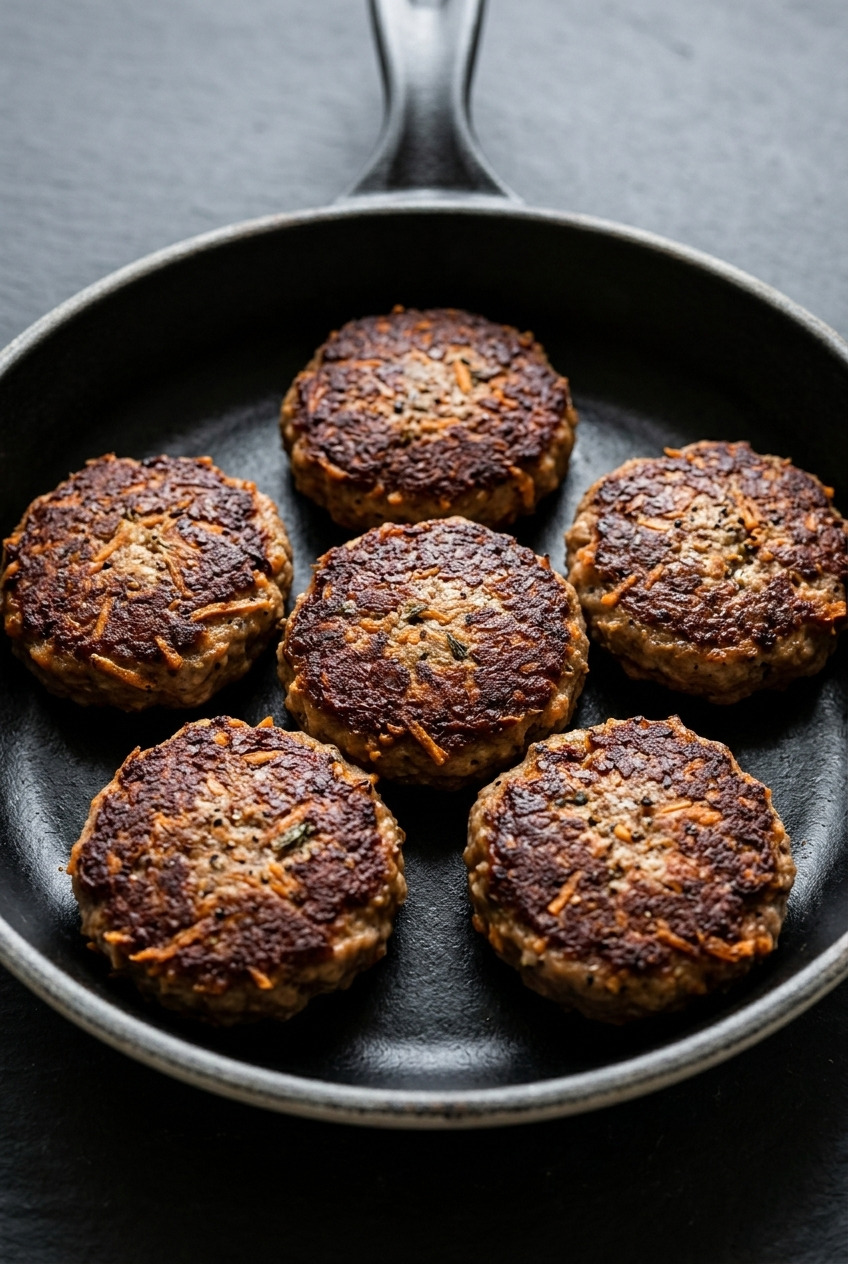
Grate it raw on the large holes of a box grater and four things happen at once.
- It cooks in the right time. Raw shreds that thin are tender after 4 minutes a side, exactly when the pork hits 160°F. No pre-cooking, no separate pan.
- It binds by itself. Grating breaks the cells and releases starch, which turns tacky against the meat and glues the patty. No flour, no egg, nothing added.
- It distributes evenly. Cooked diced potato sits in the mix as wet chunks that act like fault lines and split the patty when you flip it. Shreds thread through the whole thing.
- It keeps them juicy. Pork sausage from the store runs fatty for a reason. The moisture in the shreds does part of that job with less fat.
Squeeze it, but only a little. Grab the grated potato in your fist and give it one firm press over the sink. You want to lose the free water and keep the starch. Wringing it out like a dishcloth takes the binder with it.
Ingredients
For the Patties
- Ground pork (1 pound). Around 80/20. Lean pork makes a dry, crumbly patty and this is one place I don't compromise.
- Grated raw sweet potato (1 cup). From about one small potato, on the large holes, lightly squeezed.
- Yellow onion (½ small, grated or very finely chopped). Grate it and it disappears into the mix instead of steaming a hole in your patty.
- Garlic (1 clove, grated).
The Seasoning
- Rubbed sage (2 teaspoons). The lead flavor, and non-negotiable.
- Kosher salt (1 teaspoon).
- Coarse black pepper (¾ teaspoon).
- Dried thyme (½ teaspoon).
- Red pepper flakes (¼ teaspoon).
- Pure maple syrup (1 tablespoon). Background balance only.
For Cooking
- Neutral oil (1 tablespoon). Just enough to stop the first patty sticking. The pork gives up plenty of its own fat after that.
Ingredient Notes
Pork versus turkey. Ground pork at 80/20 is the traditional meat and it browns and stays juicy. Ground turkey works, but it's much leaner, so add 1 tablespoon of olive oil to the mix and expect a softer patty.
Grating the onion. Onion holds a lot of water. Grated fine it melts into the meat, while a rough chop leaves wet pockets that break the patty apart in the pan.
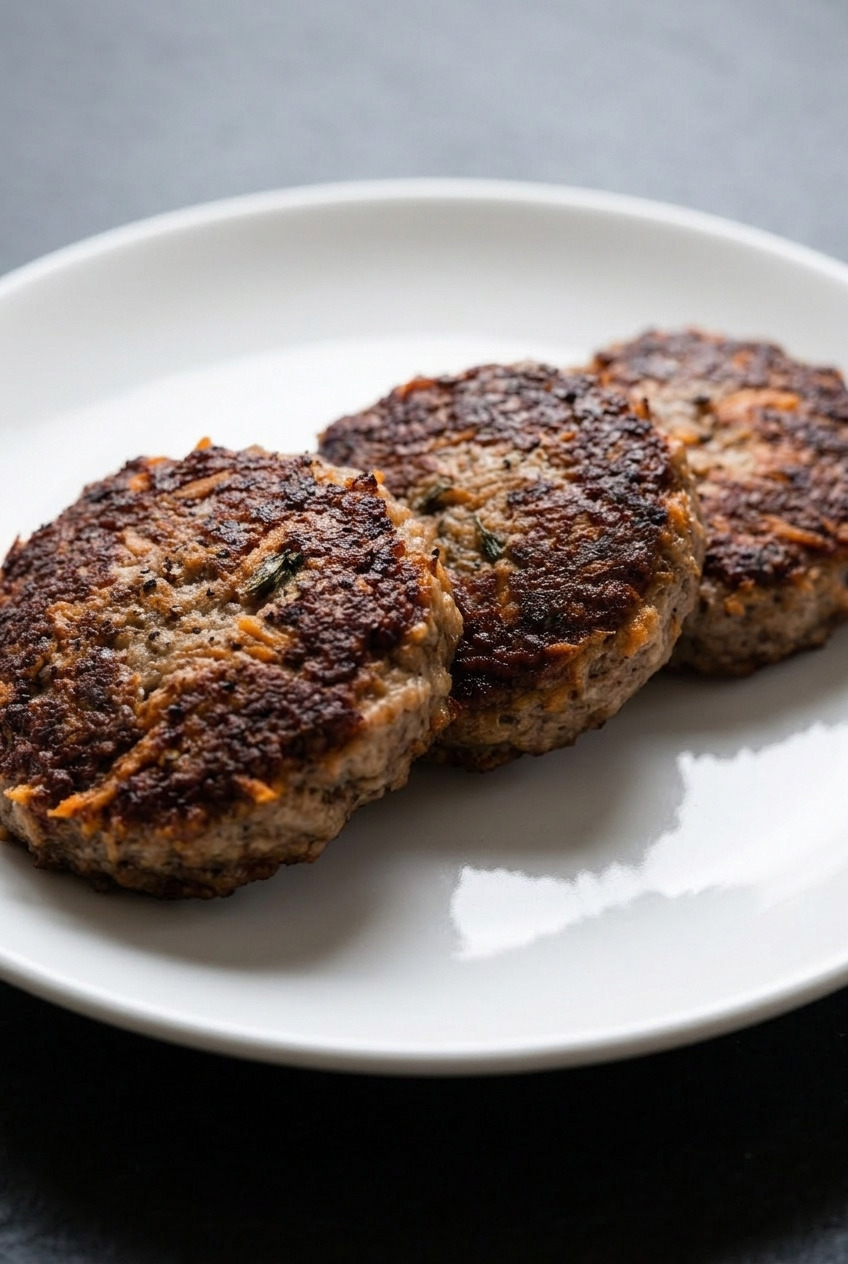
How to Make Sweet Potato Breakfast Sausage Patties
Twenty minutes of work, twenty minutes of chilling, and you're done.
Step 1: Grate and Squeeze
Peel one small sweet potato and grate it on the large holes of a box grater until you have 1 cup, loosely packed.
Grate the onion half and the garlic clove into the same pile.
Gather it all in your hand and give it one firm squeeze over the sink.
Step 2: Season the Pork First
Put the ground pork in a large bowl and add the sage, salt, pepper, thyme, red pepper flakes, and maple syrup.
Mix that alone with your fingers until the seasoning is evenly through the meat.
Seasoning the pork before the vegetables go in is the only way to be sure it's distributed.
Step 3: Fold In the Shreds
Add the grated sweet potato, onion, and garlic and fold everything together with a light hand.
Stop the moment it looks uniform.
Overworking ground meat makes it springy and dense, and a sausage patty should be tender.
Step 4: Portion and Shape
Divide the mix into 12 portions, a scant ¼ cup each.
Roll each one into a ball and flatten it to about 3 inches across and ½ inch thick.
Press a shallow dimple into the center of each with your thumb, which stops them doming up into meatballs in the pan.
Step 5: Chill
Lay them on a lined tray and refrigerate for 20 minutes.
The fat firms up and the starch sets, and a chilled patty keeps its round shape when it hits the heat.
Skip this and they slump.
Step 6: Fry Them
Heat the oil in a heavy skillet over medium heat.
Lay the patties in with space between them and cook 4 minutes without touching them.
Flip once and cook another 3 to 4 minutes, until the center reads 160°F.
Let them rest a minute before serving.
Cooking Them Right
Medium heat and one flip. That's the entire technique.
- Not high heat. High heat browns the outside in two minutes and leaves the pork pink inside. Medium builds a real crust while the middle catches up.
- Don't crowd the pan. Six at a time in a 12 inch skillet. Packed in tight they steam and go grey instead of browning.
- Never press them flat. Pressing squeezes out the fat and moisture that makes a sausage patty worth eating.
- One flip only. Every extra turn interrupts the crust. Leave them alone for the full four minutes.
- Check the temperature. 160°F in the center. Ground pork is not the place to guess.
Fair warning: the first patty is always the ugliest one. That's the pan finding its temperature, and it tastes exactly the same.
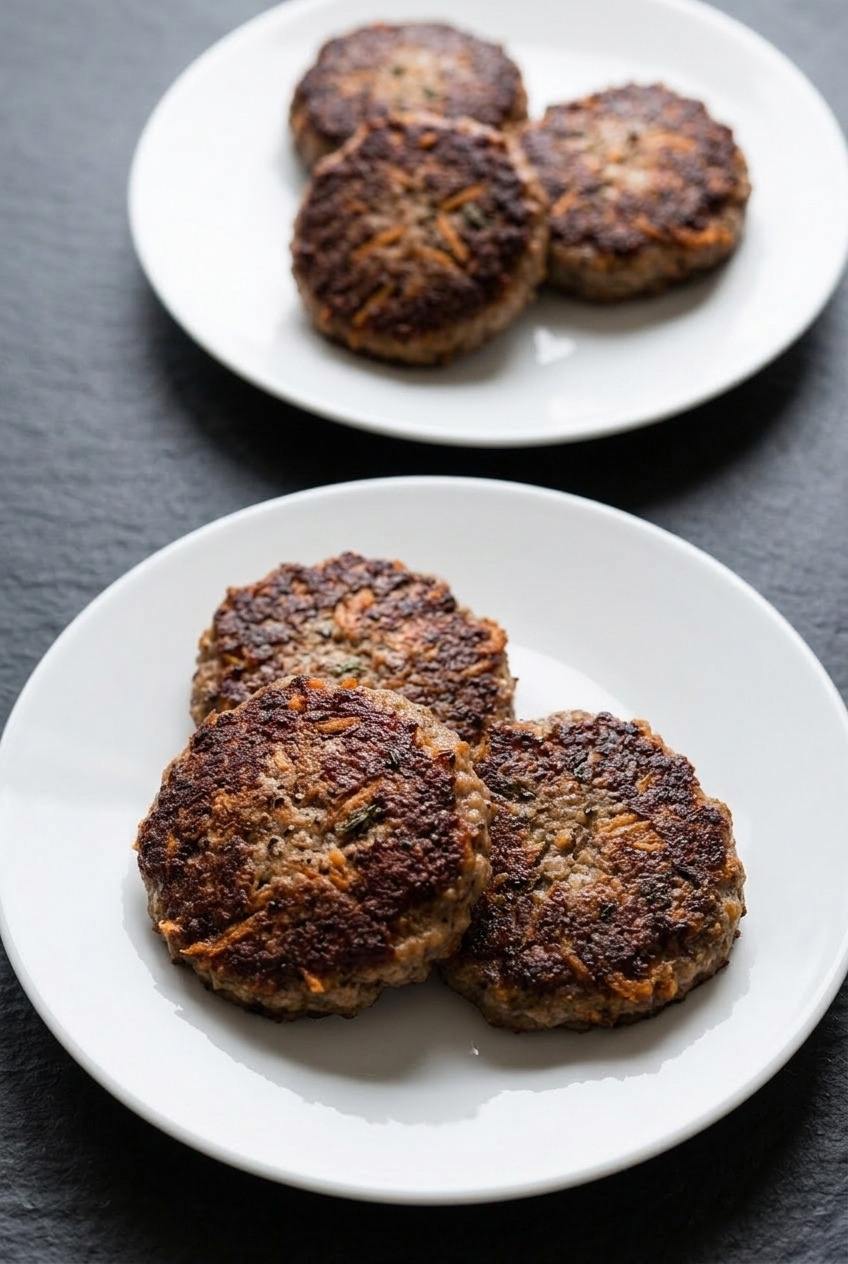
Freezing and Make Ahead
Freezing them raw is the whole reason I make a full pound at a time.
- Freeze raw, on a tray. Shape the patties, freeze them in a single layer for 2 hours, then stack with squares of parchment between them in a bag. They keep 3 months.
- Cook from frozen. Straight into a medium-low pan, covered, for 6 minutes a side. Do not thaw them first, they go mushy.
- Cook ahead instead. Fully cooked patties keep 4 days in the fridge and reheat in a dry skillet in 2 minutes.
- The mix itself. Refrigerate the raw mixture up to 24 hours before shaping. The sage actually gets better overnight.
What to Serve With Them
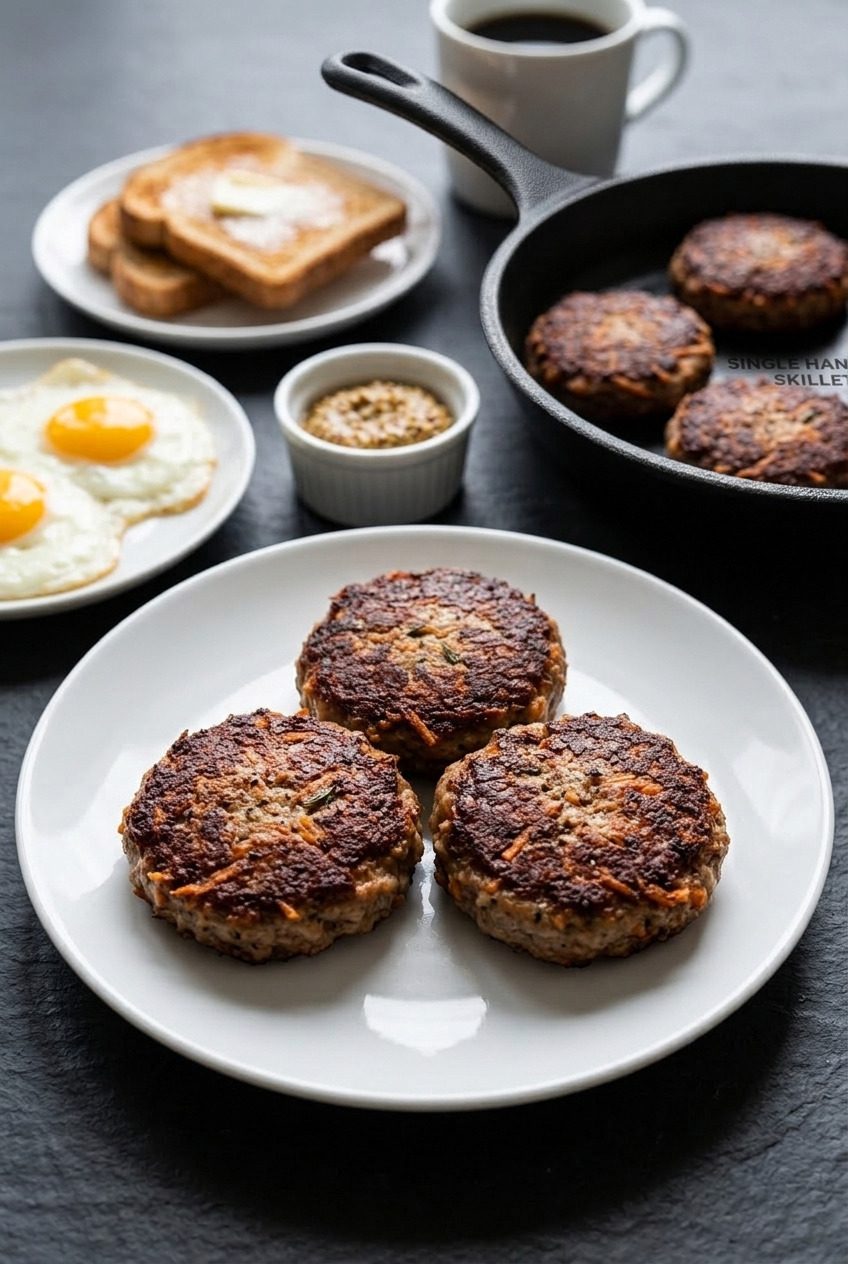
Two patties, two fried eggs, and a slice of buttered toast is the standard order in my house.
They also sit perfectly alongside a sweet potato hash, which sounds like doubling up until you eat it.
My favorite use is a breakfast sandwich: a patty, a folded egg, and a slice of sharp cheddar on a toasted English muffin.
Wrapped in foil, that goes out the door with you.
FAQ
What is the secret to a flavorful sausage patty?
Sage, and enough salt. Rubbed sage is the flavor your brain identifies as breakfast sausage, and one teaspoon of kosher salt per pound of meat is what makes it taste seasoned rather than flat. Add coarse black pepper and a little thyme behind it. Everything else is detail.
Can I use ground turkey or chicken instead of pork?
Yes, with one change. Both are much leaner than pork, so add a tablespoon of olive oil to the mix or the patties come out dry. The texture is a little softer and the flavor milder, so I'd nudge the sage up to two and a half teaspoons.
Do I need to cook the sweet potato first?
No, and you shouldn't. Grated raw on the large holes of a box grater, the shreds are thin enough to cook through in the eight minutes the patty needs. Raw shreds also release the starch that binds the mix, which is exactly what pre-cooked potato cannot do.
Can I freeze these raw?
That's how I store most of every batch. Shape them, freeze them in a single layer on a tray for two hours, then stack them with parchment between and bag them for up to three months. Cook straight from frozen in a covered pan over medium-low for about six minutes a side.
Why did my patties fall apart in the pan?
Usually one of three things. You wrung the grated sweet potato out too hard and lost the starch that binds it, you skipped the twenty minute chill, or you flipped them before the first side had four full minutes to form a crust. The crust is structural, so leave them alone.
What do I serve with them?
Fried eggs and toast is the classic. They're excellent next to a sweet potato hash, and my favorite is a breakfast sandwich with a folded egg and sharp cheddar on a toasted English muffin. Two patties is a serving for most people.
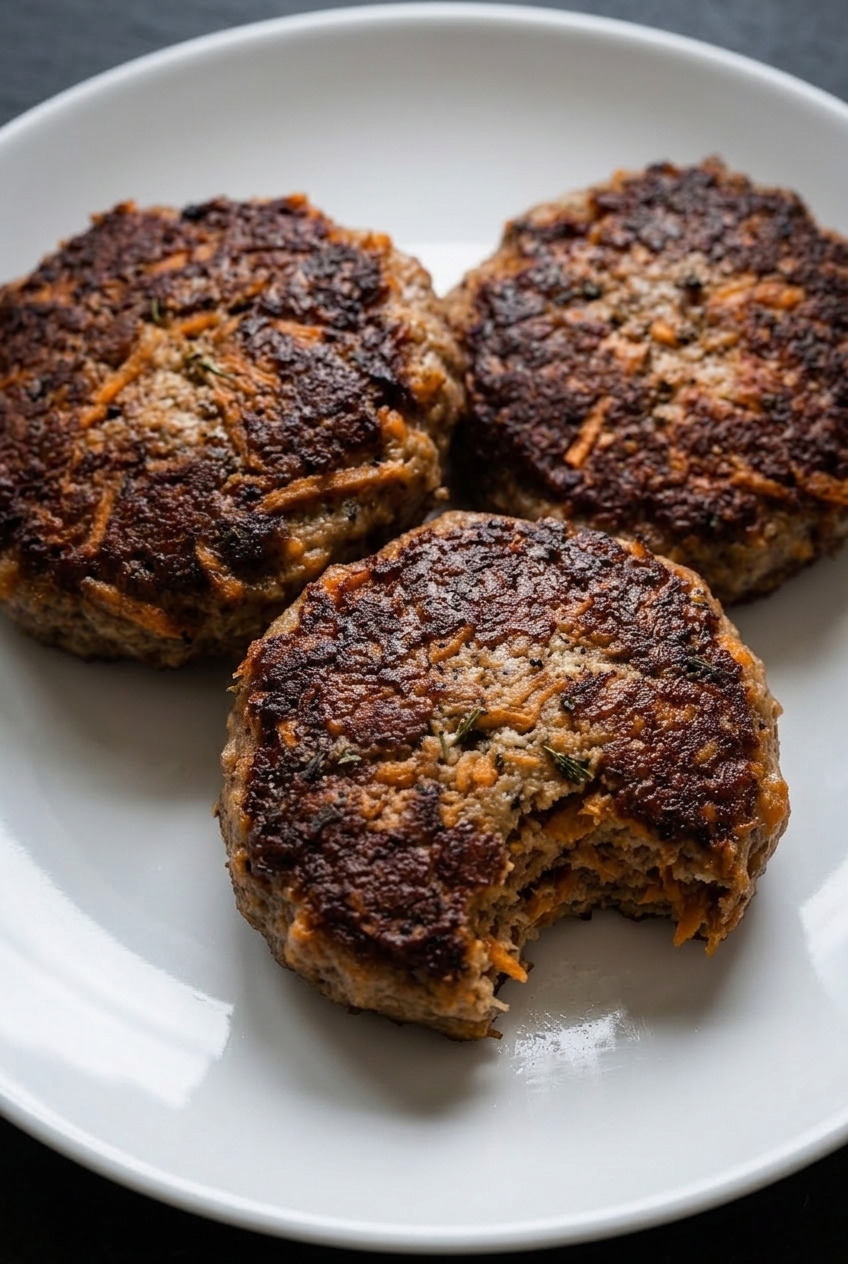
Recipe
Sweet Potato Breakfast Sausage Patties
Ingredients
For the Patties
- 1 pound ground pork about 80/20
- 1 cup grated raw sweet potato large holes of a box grater, lightly squeezed
- ½ small yellow onion grated or very finely chopped
- 1 clove garlic grated
The Seasoning
- 2 teaspoons rubbed sage or 1 teaspoon ground sage
- 1 teaspoon kosher salt
- ¾ teaspoon black pepper coarsely ground
- ½ teaspoon dried thyme
- ¼ teaspoon red pepper flakes
- 1 tablespoon pure maple syrup for balance, not sweetness
For Cooking
- 1 tablespoon neutral oil for the pan
Instructions
Grate and Mix
- Peel a small sweet potato and grate it on the large holes of a box grater to make 1 loosely packed cup. Grate the onion and garlic into the same pile.
- Gather it in your hand and give it one firm squeeze over the sink to lose the free water. Do not wring it dry.
- Put the ground pork in a large bowl with the sage, salt, pepper, thyme, red pepper flakes, and maple syrup, and mix with your fingers until the seasoning is even.
- Fold in the grated sweet potato, onion, and garlic with a light hand, stopping as soon as the mixture looks uniform.
Shape and Chill
- Divide the mixture into 12 portions of a scant ¼ cup each.
- Roll each into a ball and flatten to about 3 inches across and ½ inch thick, then press a shallow dimple into the center with your thumb.
- Lay them on a lined tray and refrigerate for 20 minutes so the fat firms and the starch sets.
Fry
- Heat the oil in a heavy skillet over medium heat and lay the patties in with space between them, about 6 at a time.
- Cook undisturbed for 4 minutes, until a deep brown crust forms.
- Flip once and cook another 3 to 4 minutes, until the center reads 160F.
- Rest for 1 minute before serving.
Notes
- Sage is the flavor: rubbed sage is what makes a patty read as breakfast sausage. Use half as much if you only have ground sage.
- Grate raw: raw shreds cook in the same time as the pork and release the starch that binds the mix. No flour or egg needed.
- Squeeze gently: one firm press only. Wringing the potato out removes the binder.
- Chill 20 minutes: chilled patties keep their round shape in the pan.
- Freeze raw: freeze on a tray, stack with parchment, keep 3 months, and cook from frozen covered over medium-low for 6 minutes a side.