A friend from St. John's brought a foil packet to a potluck in our kitchen about four years ago.
She set it on the counter without any explanation and told me to wait ten minutes before opening it.
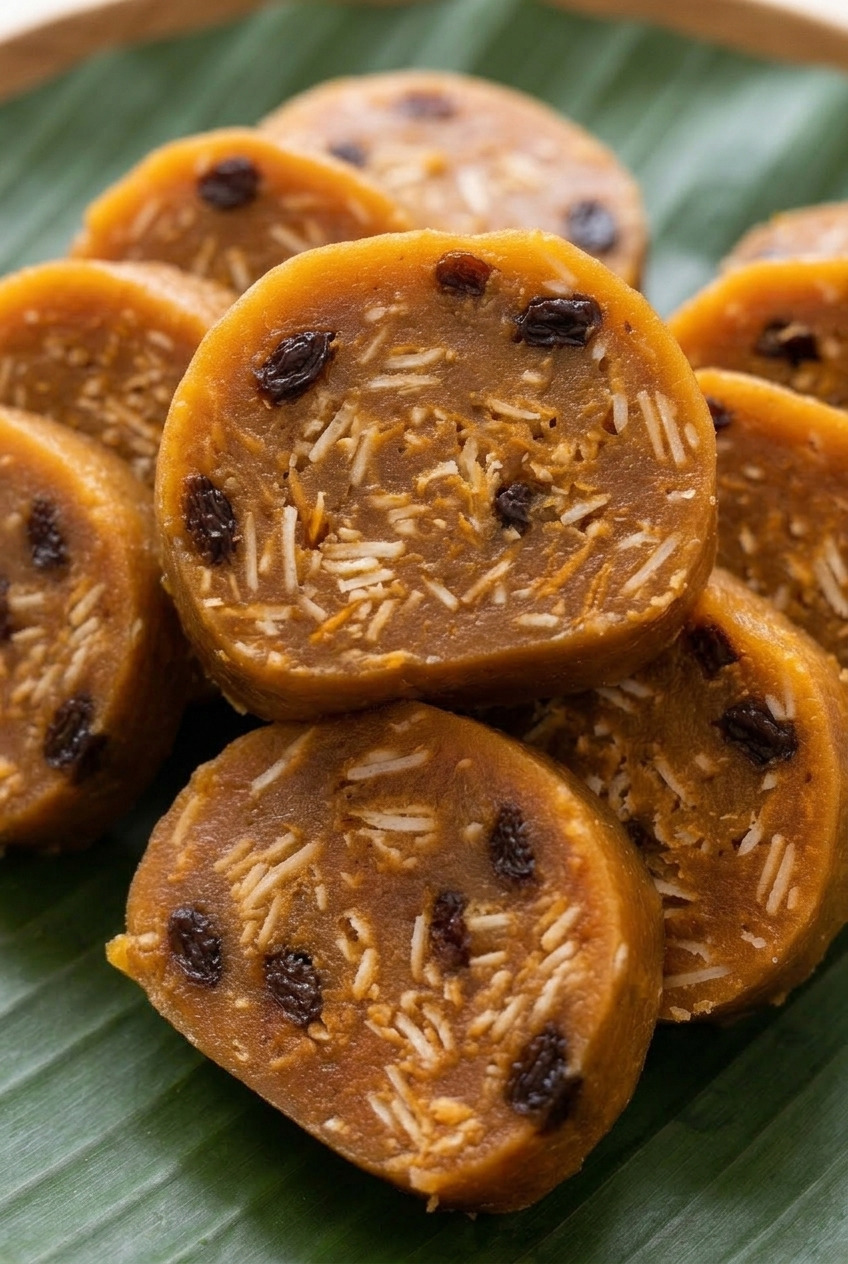
When I finally peeled the foil back, the smell was coconut and nutmeg and something green underneath it, like tea leaves.
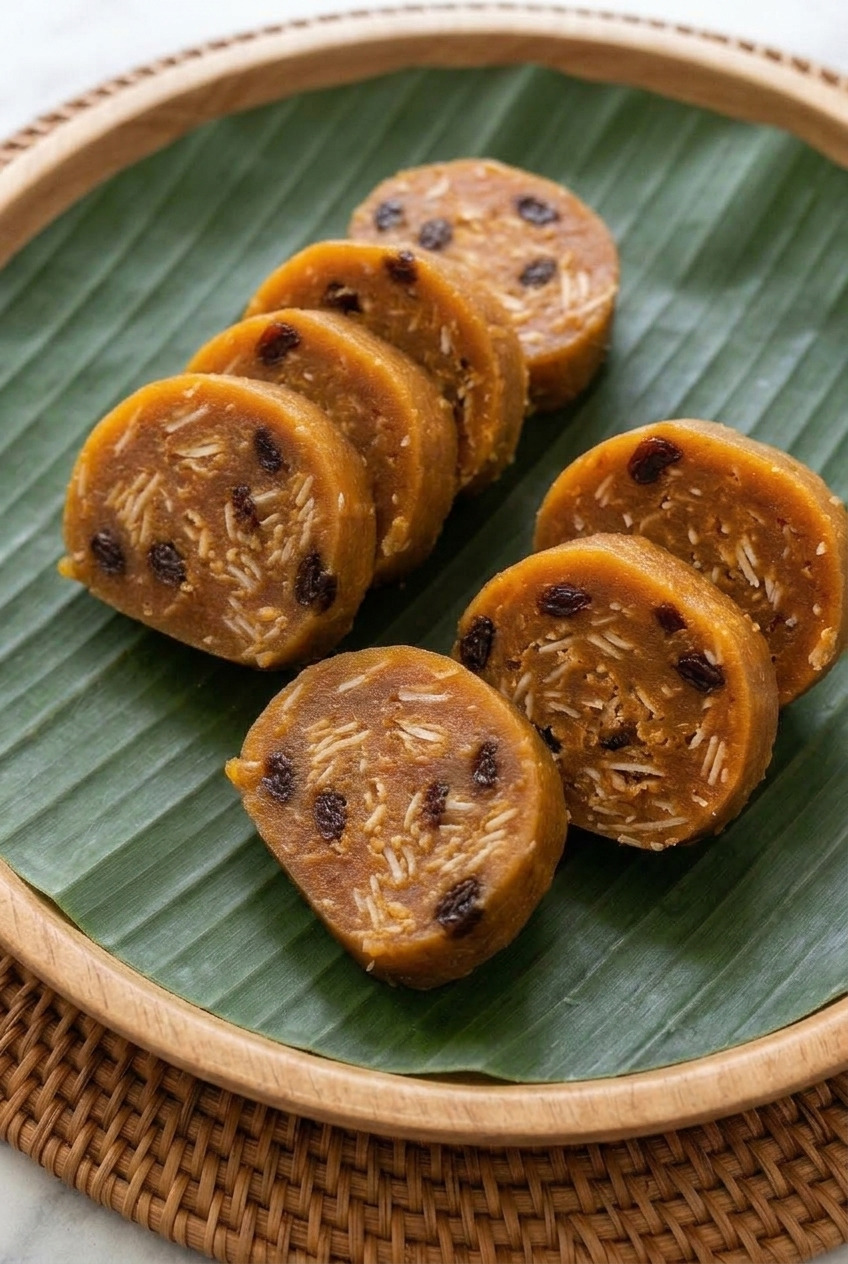
Inside was a dense orange log, firm enough to slice, flecked white with coconut.
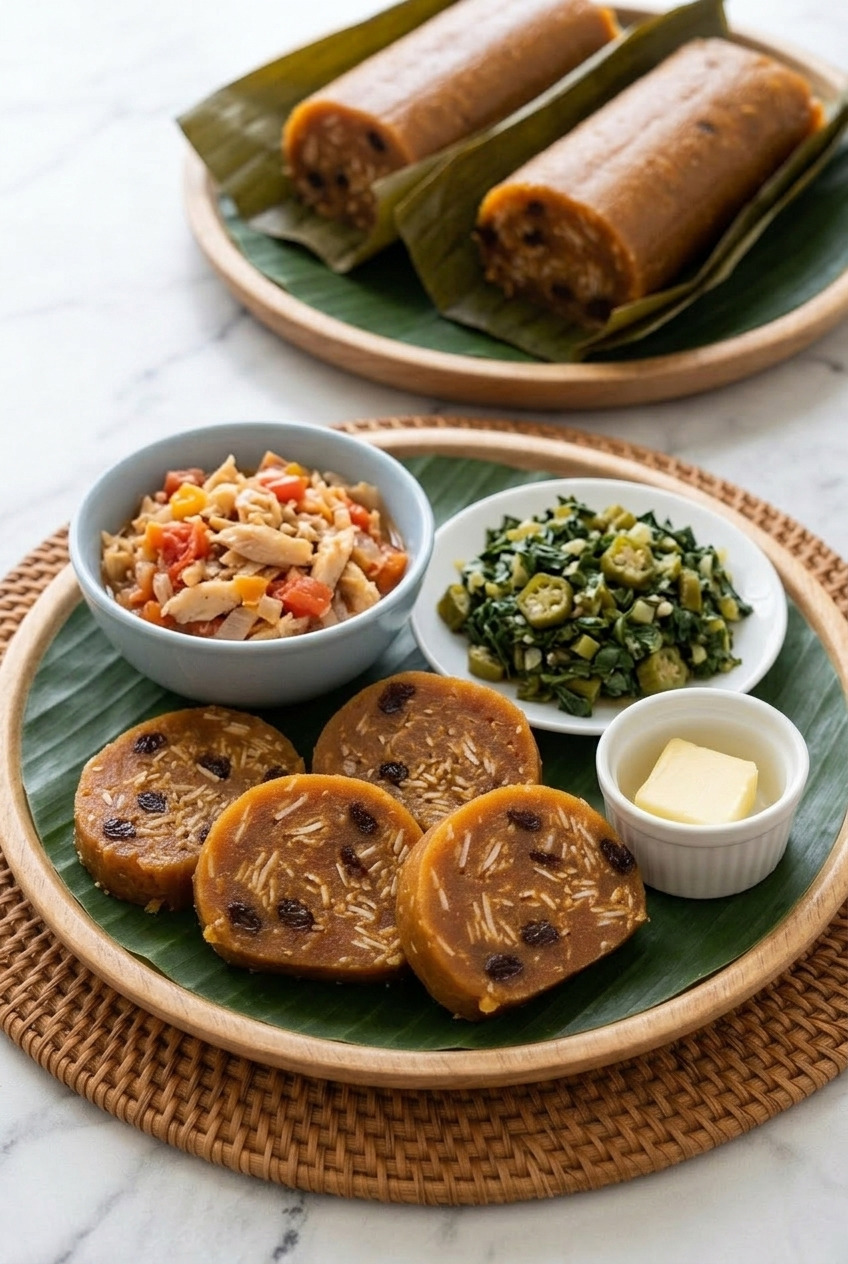
She cut it into rounds and put it on a plate next to salted codfish stewed with tomato and onion.
That plate rearranged what I thought sweet potato could do.
This was chewy, barely sweet, and completely at home next to something salty.
My wife went back for a third slice and asked why we don't eat like this every Sunday.
I've made it more times than I can count since then, and it has become the thing I bring when someone tells me not to bring dessert.
The whole thing is grated raw sweet potato, grated coconut, a little sugar and spice, and just enough flour to hold it together.
You tie it in a banana leaf and boil it.
It takes about half an hour of grating and folding, and the pot does everything after that.
Make it once with the saltfish and you'll understand why Antiguans eat it for Good Friday breakfast!
What Is Ducana?
Ducana is a boiled sweet potato and coconut dumpling from Antigua and Barbuda. It shows up on tables across Montserrat and the wider Leewards too, and versions travel down through the islands.
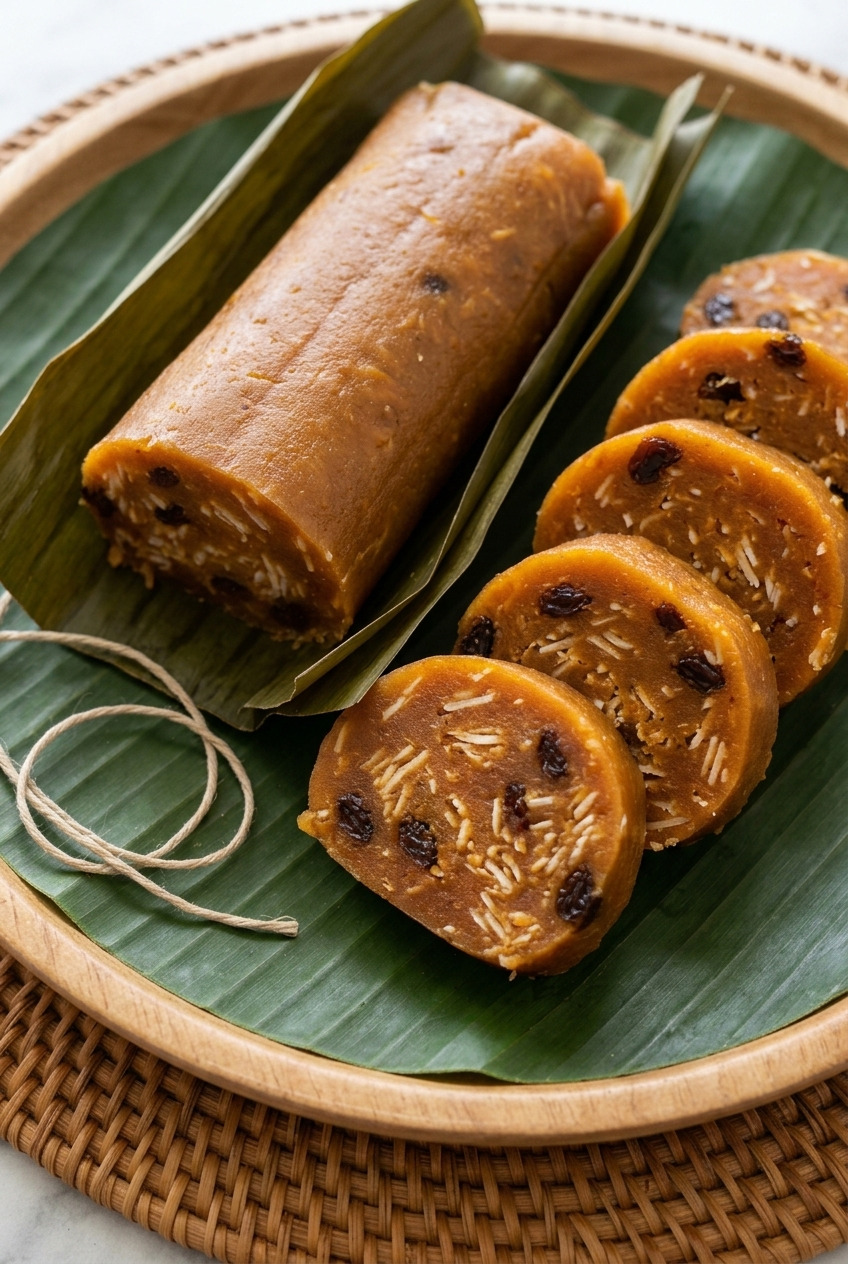
Raw sweet potato gets grated fine, mixed with grated coconut, sugar, cinnamon, nutmeg and flour, then wrapped in a banana leaf and dropped in boiling water.
What comes out is dense, chewy, and slightly translucent at the edges, closer to a steamed pudding than anything you'd call a dumpling in an American kitchen.
It is sweet, but not dessert sweet.
That restraint is the point, because ducana is a side dish.
It sits next to salted fish the way cornbread sits next to chili, and it is especially tied to Easter and Good Friday breakfast.
Fair warning: the first slice tastes odd if you're expecting cake. The second one is when it clicks.
Ducana Is Not Jamaican Duckanoo
These two dishes get mixed up constantly online, and they are not the same food.
Jamaican duckanoo, also called blue drawers or tie-a-leaf, is built on cornmeal and green banana, sometimes with coconut milk, and it is soft and pudding like.
Antiguan ducana is built on grated sweet potato and grated coconut, bound with flour, and it is firm enough to slice and fry the next day.
The names sound alike and both dishes get tied in a leaf and boiled, which is where the confusion comes from.
Different island, different starch, different texture.
If a recipe hands you cornmeal and calls it ducana, you're looking at the Jamaican dish.
Ingredients You Will Need
Six things carry this recipe, and none of them are hard to find. The wrapper is the only item that takes a little hunting.
- Sweet potatoes (2 medium, about 2 cups finely grated). Peel them and grate them raw on the fine side of a box grater. Raw is not negotiable. The raw starch is what sets during boiling and gives ducana its chew. Cooked mash will never firm up. A food processor works if you pulse it fine, because long shreds make a stringy dumpling.
- Grated coconut (1 cup, unsweetened). Fresh grated is the authentic choice and the flavor is noticeably better. Frozen grated coconut from an international market is the next best thing and it's what I usually buy. Bagged unsweetened flake works last, and if all you can find is sweetened flake, cut the sugar by 2 tablespoons.
- All purpose flour (1 ¼ cups, plus more as needed). This is the binder and the amount is a range on purpose. Sweet potatoes vary wildly in moisture. Too little flour and the dumpling dissolves in the pot. Too much and it goes bready.
- Granulated sugar (½ cup). Enough to read as sweet next to salty fish, not enough to make it a dessert. Brown sugar works and gives a deeper, more molasses flavor.
- Unsalted butter (3 tablespoons, softened). Richness, and it keeps the crumb from drying out on day two.
- Ground cinnamon (1 ½ teaspoons) and freshly grated nutmeg (¾ teaspoon). Grate the nutmeg yourself if you possibly can. Whole nutmeg is a Caribbean pantry staple and the pre ground stuff tastes like dust next to it.
- Vanilla extract (1 teaspoon) and salt (½ teaspoon). The salt matters. A sweet dumpling with no salt tastes flat, and yes, some published recipes call for a full tablespoon, which is far too much for this batch size.
- Raisins (¼ cup, optional). Traditional in plenty of Antiguan kitchens and skipped in plenty of others. I go back and forth.
- Water or whole milk (3 to 4 tablespoons, as needed). Only if the mixture won't come together.
- Banana leaves and kitchen twine, or heavy duty foil. Frozen banana leaves live in Latin American, Caribbean and Southeast Asian markets, usually in one pound packs. Foil is the honest fallback and I say more about that below.
How to Make Ducana
Step 1: Grate the Sweet Potato and Coconut
Peel 2 medium sweet potatoes and grate them on the fine holes of a box grater into a large bowl.
You want short, fine shreds, not long ribbons.
Do not squeeze the liquid out and do not rinse them.
That starchy liquid is doing structural work.
Add the 1 cup of grated coconut and toss the two together with your fingers.
Step 2: Mix the Dough
Work in the softened butter, sugar, cinnamon, nutmeg, vanilla, salt and raisins if you're using them.
Use your hands. A spoon fights you here.
Now add the flour about ⅓ cup at a time, mixing after each addition.
Stop when the mixture holds a shape in your fist and doesn't smear.
If it's crumbly and dry, add water a tablespoon at a time until it comes together.
Step 3: Soften and Cut the Banana Leaves
Thaw frozen banana leaves and wipe both sides with a damp cloth.
Pass each leaf over a gas flame for a few seconds a side, or dip it in very hot water, until it turns glossy and deep green and folds without cracking.
Skip this and the leaf splits the moment you fold it.
Cut the softened leaves into rectangles roughly 8 by 10 inches, trimming out the thick central rib.
Step 4: Wrap and Tie
Scoop about ⅔ cup of the mixture onto the center of a leaf and shape it into a squat log with your hands.
Fold the long sides over first, then the ends, like wrapping a small gift.
Tie it with kitchen twine, snug but not tight.
The dumpling swells as the starch cooks, so leave it a little room to grow.
Pro tip: I wrap each leaf parcel in a second layer of foil. It's belt and suspenders, and it has saved me from a pot full of loose sweet potato more than once.
Step 5: Boil
Bring a large pot of unsalted water to a boil, then drop it back to a gentle boil.
Slide the parcels in and make sure they're fully submerged, weighing them down with a plate if they bob.
Cook 35 to 45 minutes.
Thirty five gives you a softer ducana. Forty five gives you one firm enough to slice and pan fry tomorrow.
A hard rolling boil batters the parcels open, so keep it steady and lazy.
Step 6: Rest and Unwrap
Lift the parcels out and let them sit 10 minutes before you open anything.
They firm up considerably as they cool.
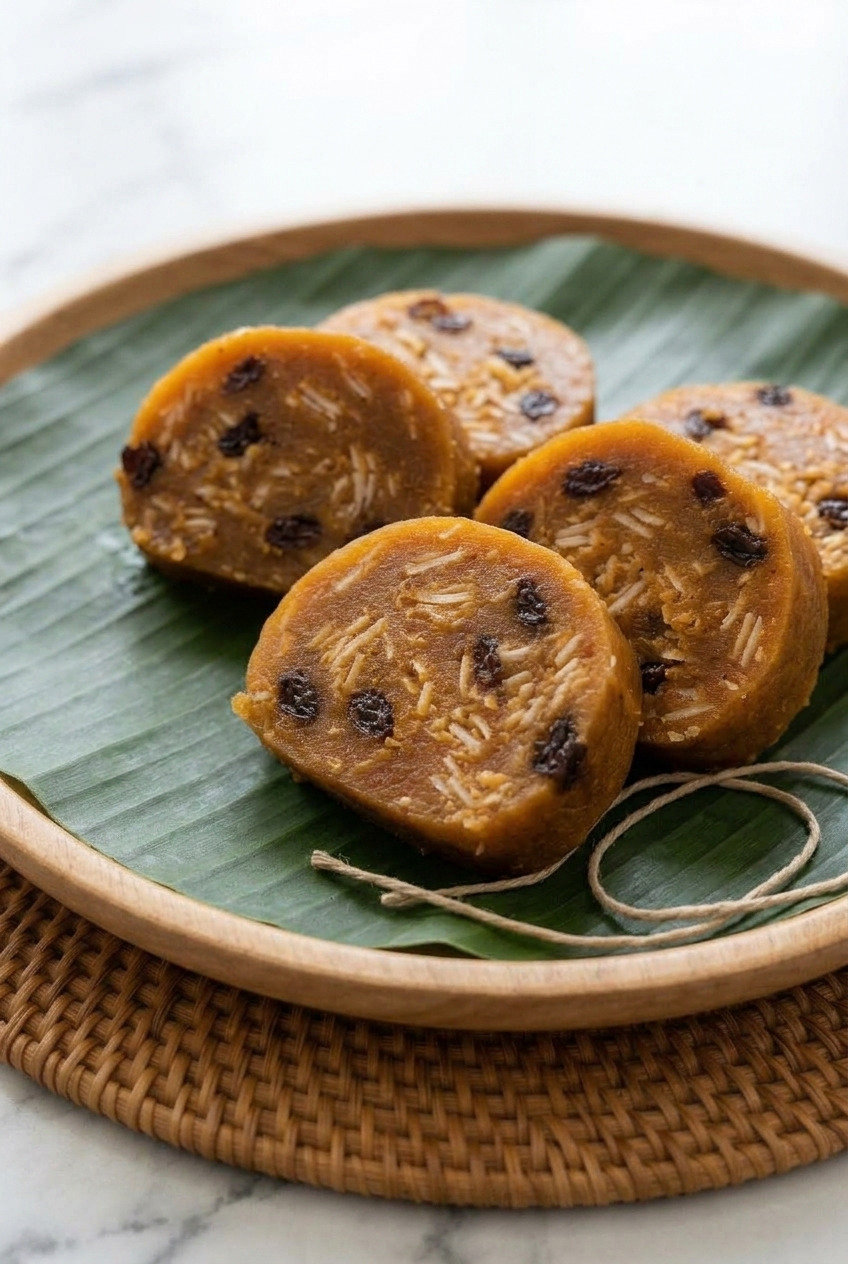
Cut the twine, open the leaf, and slice into thick rounds.
Getting the Texture Right
Ducana should be dense and chewy with a faint translucence at the edges. It should hold a clean slice without crumbling and without bouncing like a gummy.
The whole outcome rides on the flour, and this is exactly where published recipes disagree with each other.
One calls for a cup, another calls for three, and both are right for their own sweet potatoes.
So work by feel instead.
The squeeze test: grab a handful and close your fist. It should hold the shape of your fingers and release cleanly off your palm.
If it slumps and runs, you need more flour.
If it cracks apart at the edges, you need a splash of water.
A ducana that fell apart in the pot was almost always short on flour, not overcooked.
How to Serve Ducana
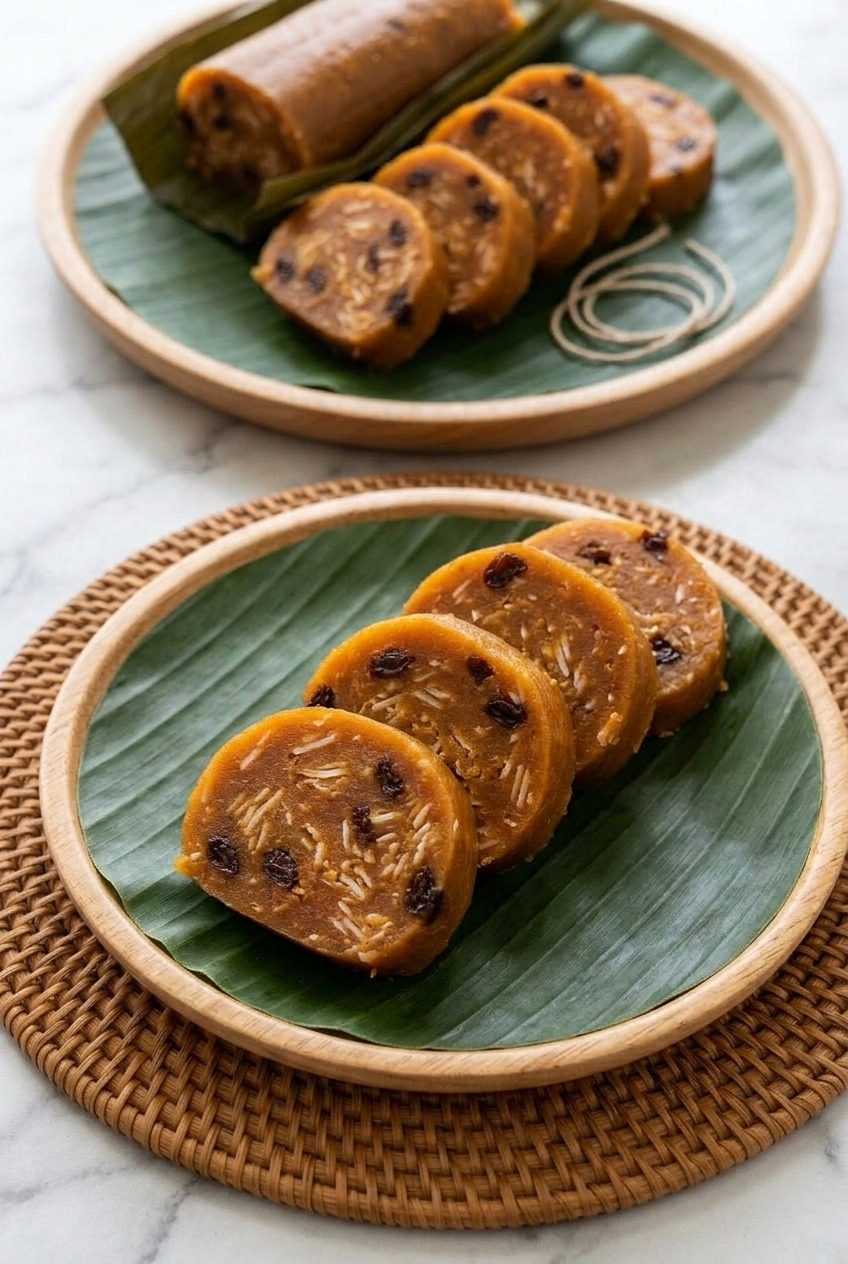
The classic plate is ducana and saltfish, and it is genuinely one of the great sweet and salty combinations.
Salt cod gets soaked overnight, with two or three water changes, then flaked and stewed with onion, tomato, sweet pepper, thyme and a slick of oil.
You put the sliced ducana on the plate, the saltfish next to it, and often chop up alongside, which is spinach, eggplant and okra cooked down soft.
Antiguans eat this for breakfast, especially on Good Friday.
Sweet, salty, soft, chewy, all in one forkful.
Off that plate, a slice with butter is a fine breakfast on its own, and leftovers fried in butter until the edges crisp are arguably better than the original.
Tips for the Best Ducana
- Grate fine. Long shreds make a stringy, loose dumpling. If you're using a food processor, pulse rather than run it, and check the shred length.
- Don't overfill the wrap. A fat parcel cooks unevenly and strains the leaf. Two smaller ducana beat one giant one every time.
- Keep the water at a gentle boil. Violent water is the number one cause of a burst parcel.
- Double wrap if the leaf tears. A cracked leaf plus a layer of foil still works perfectly.
- Taste the raw mixture. It's all cooked starch and sugar, no eggs, so a small taste is safe. Adjust the sugar and nutmeg before you wrap anything.
- Use foil without guilt. You lose the faint green tea note the leaf gives, and the surface comes out slightly wetter. The dumpling itself is still excellent.
Variations
- Mashed ripe banana. Work in one mashed banana for a sweeter, softer, fruitier ducana. You'll need an extra 2 tablespoons of flour to compensate.
- Chopped nuts. A half cup of chopped almonds or cashews adds a nice interruption to the chew.
- Grated carrot. Swap in ½ cup for some of the sweet potato. Common on the islands and it brightens the color.
- A splash of dark rum. One tablespoon in place of some of the water. Caribbean and correct.
- A pinch of clove. Just ⅛ teaspoon. Any more and it takes over the whole dumpling.
Storage and Reheating
- Refrigerator. Leave them in their wrappers and refrigerate up to 4 days. The wrapper keeps them from drying out.
- Freezer. Wrapped and bagged, they freeze well for 3 months. Thaw overnight in the fridge before reheating.
- To reheat. Drop the wrapped ducana back into simmering water for 10 minutes, or steam it for the same. The microwave makes it rubbery.
- The best leftover. Slice cold ducana into ½ inch rounds and pan fry in butter over medium heat until the outsides are crisp and browned. Crisp on the outside, chewy in the middle, and it's the reason I always make extra!
Recipe
Ducana (Antiguan Sweet Potato Dumplings)
Ingredients
For the Ducana
- 2 cups finely grated raw sweet potato about 2 medium, peeled
- 1 cup grated coconut fresh or frozen, unsweetened
- 1 ¼ cups all purpose flour plus more as needed
- ½ cup granulated sugar
- 3 tablespoons unsalted butter softened
- 1 ½ teaspoons ground cinnamon
- ¾ teaspoon nutmeg freshly grated
- 1 teaspoon vanilla extract
- ½ teaspoon salt
- ¼ cup raisins optional
- 3 tablespoons water or whole milk as needed
For Wrapping
- banana leaves and kitchen twine, or heavy duty foil about 5 rectangles, 8 by 10 inches
Instructions
Make the Mixture
- Peel the sweet potatoes and grate them raw on the fine holes of a box grater into a large bowl. Do not rinse or squeeze out the liquid.
- Add the grated coconut and toss together.
- Work in the softened butter, sugar, cinnamon, nutmeg, vanilla, salt and raisins with your hands until evenly combined.
- Add the flour about ⅓ cup at a time, mixing after each addition, until the mixture holds a shape when squeezed in your fist. If it is crumbly, add water a tablespoon at a time.
Wrap and Boil
- Thaw the banana leaves, wipe both sides clean, and pass each over a flame or dip in very hot water until glossy and pliable. Cut into rectangles about 8 by 10 inches, trimming out the thick central rib.
- Scoop about ⅔ cup of the mixture onto the center of a leaf and shape it into a squat log. Fold the long sides over, then the ends, and tie with kitchen twine, leaving a little room for the dumpling to swell. Wrap in foil for extra security if you like. Repeat with the remaining mixture.
- Bring a large pot of unsalted water to a boil, then reduce to a gentle boil. Add the parcels and make sure they stay submerged, weighing them down with a plate if needed.
- Cook 35 to 45 minutes, 35 for a softer ducana and 45 for one firm enough to slice and fry.
- Lift the parcels out and rest 10 minutes before unwrapping. Cut the twine, open the leaf and slice into thick rounds. Serve with saltfish.
Notes
- Grate raw, not cooked: The raw starch is what sets during boiling and gives ducana its chew. Cooked mash will not firm up.
- Flour is a range: Sweet potatoes vary in moisture. Go by the squeeze test rather than the measurement.
- Foil substitute: Heavy duty foil works if banana leaves are not available. You lose the faint green leaf aroma and the surface comes out slightly wetter.
- Leftovers: Slice cold ducana into ½ inch rounds and pan fry in butter until crisp.
- Not the same as duckanoo: Jamaican duckanoo, or blue drawers, is a cornmeal and green banana dish. Ducana is sweet potato and coconut.