My wife pushed the platter back across the counter at me a couple of winters ago and said the wedges were good but they had gone floppy.
She was right.
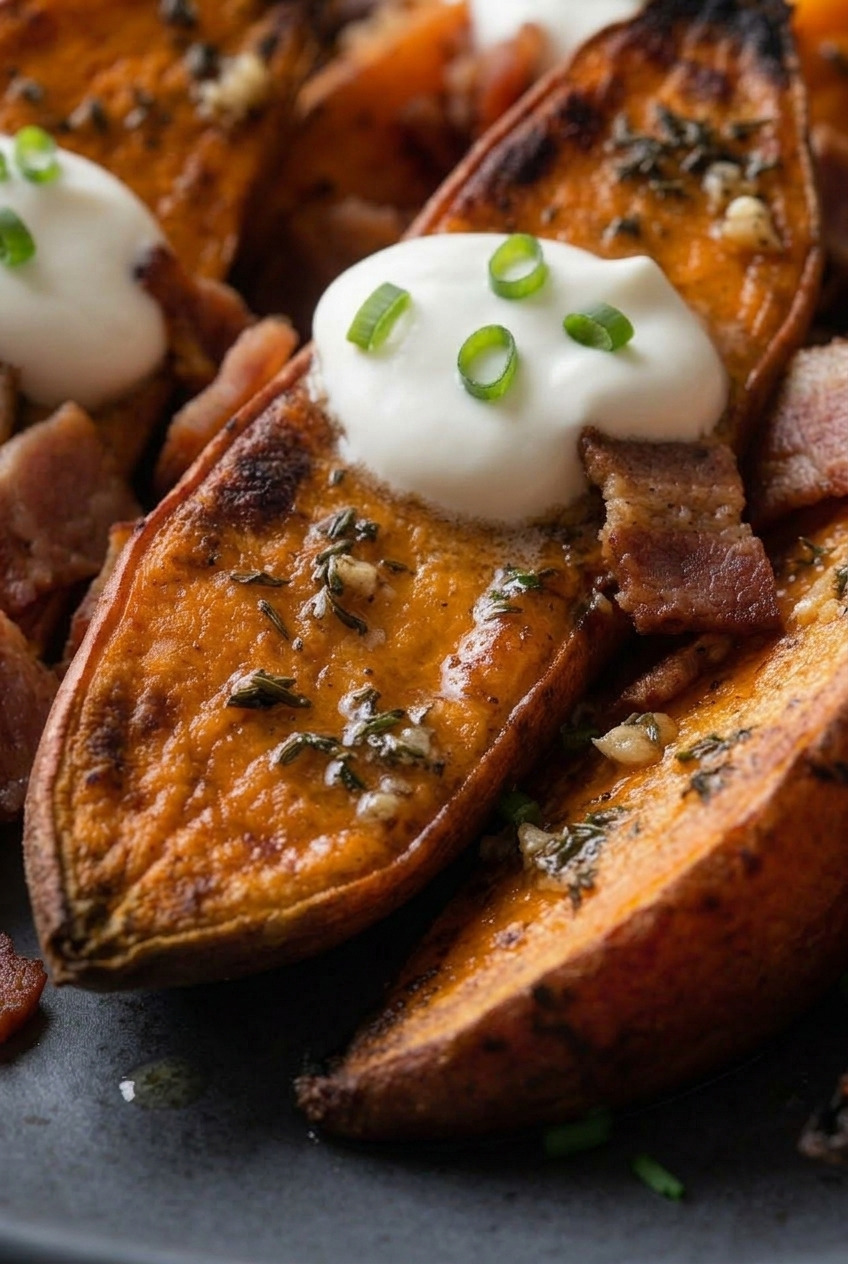
I had loaded the whole sheet pan at the oven, carried it fifteen feet to the table, and by the time anyone sat down the sour cream had done its work.
That was the night I stopped treating a wedge like a fry.
A wedge is a different animal entirely.
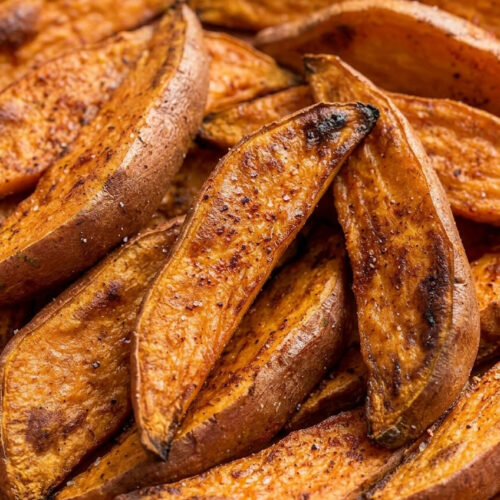
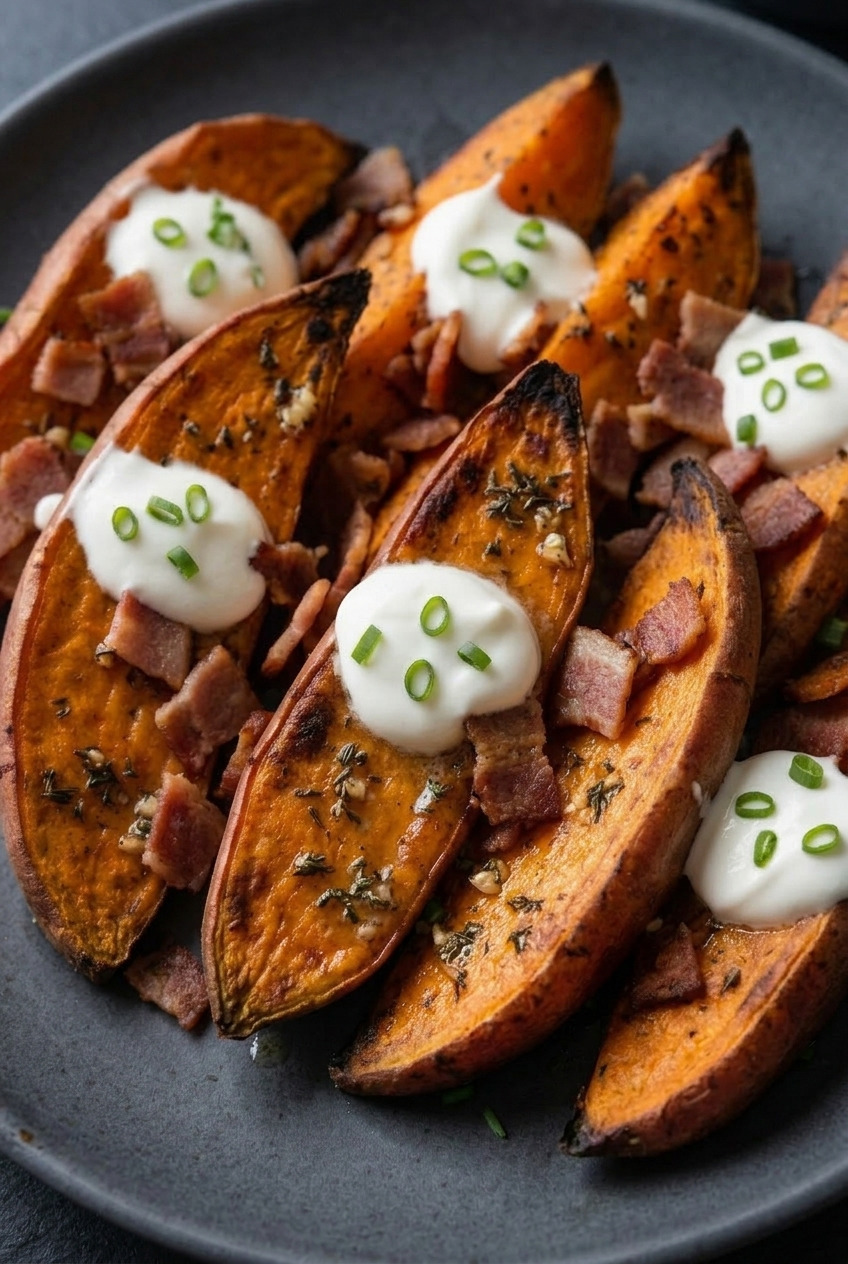
Cut a sweet potato into sixths and you get something with a browned, almost caramel-edged face and an interior that goes soft and creamy, closer to a baked potato than to anything from a drive-through window.
That soft middle is the whole point, because it is what holds a spoonful of sour cream without turning to mush underneath it.
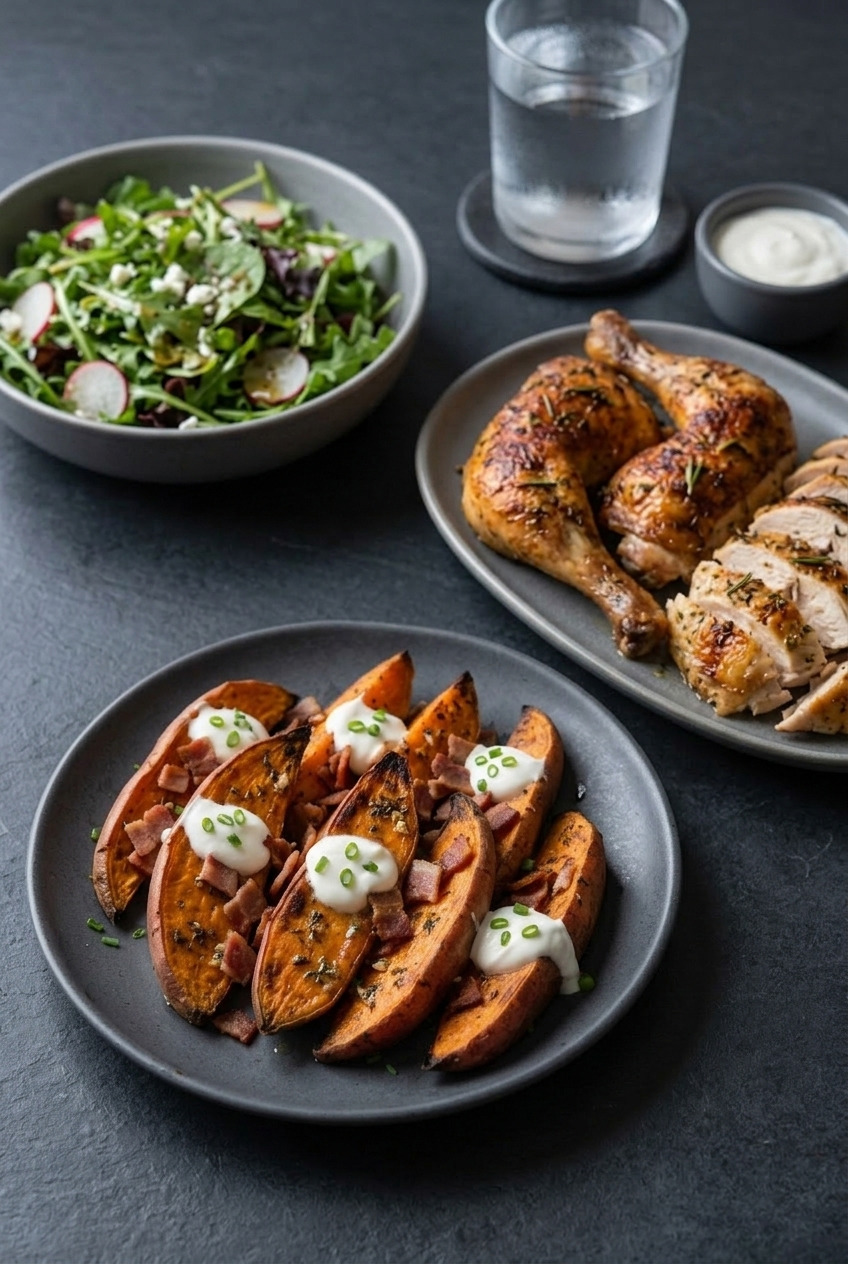
I make these next to a roast chicken most Sunday nights now.
My kids fight over the two darkest wedges every single time.
The fix for the floppy problem turned out to be embarrassingly simple, and I will hand it over right now.
You load them on the serving plate, not on the pan.
Forty minutes start to finish, one sheet pan, and they arrive at the table with the edges still crisp and the butter still melting.
Why Wedges, Not Fries
The cut is the entire reason this recipe exists. Every other sweet potato side is chasing the same crunch, and a wedge is not built for that chase.
Here is the geometry. A fry is mostly surface. A wedge is mostly interior.
That means a wedge browns on two or three faces and stays tender everywhere else, which gives you a texture contrast in a single piece instead of across a whole plate.
It also means far less surface area for a wet topping to soak into.
A loaded fry has nowhere to hide from sour cream. A loaded wedge has a whole thick spine of dry, hot potato underneath.
Fair warning: if you cut these too thin chasing crunch, you have made fries, and you should go make the fries recipe instead.
What I love about this version is how forgiving the thicker cut is. You can leave them in an extra three minutes and get a deeper edge instead of a burnt one.
How to Cut Sweet Potato Wedges
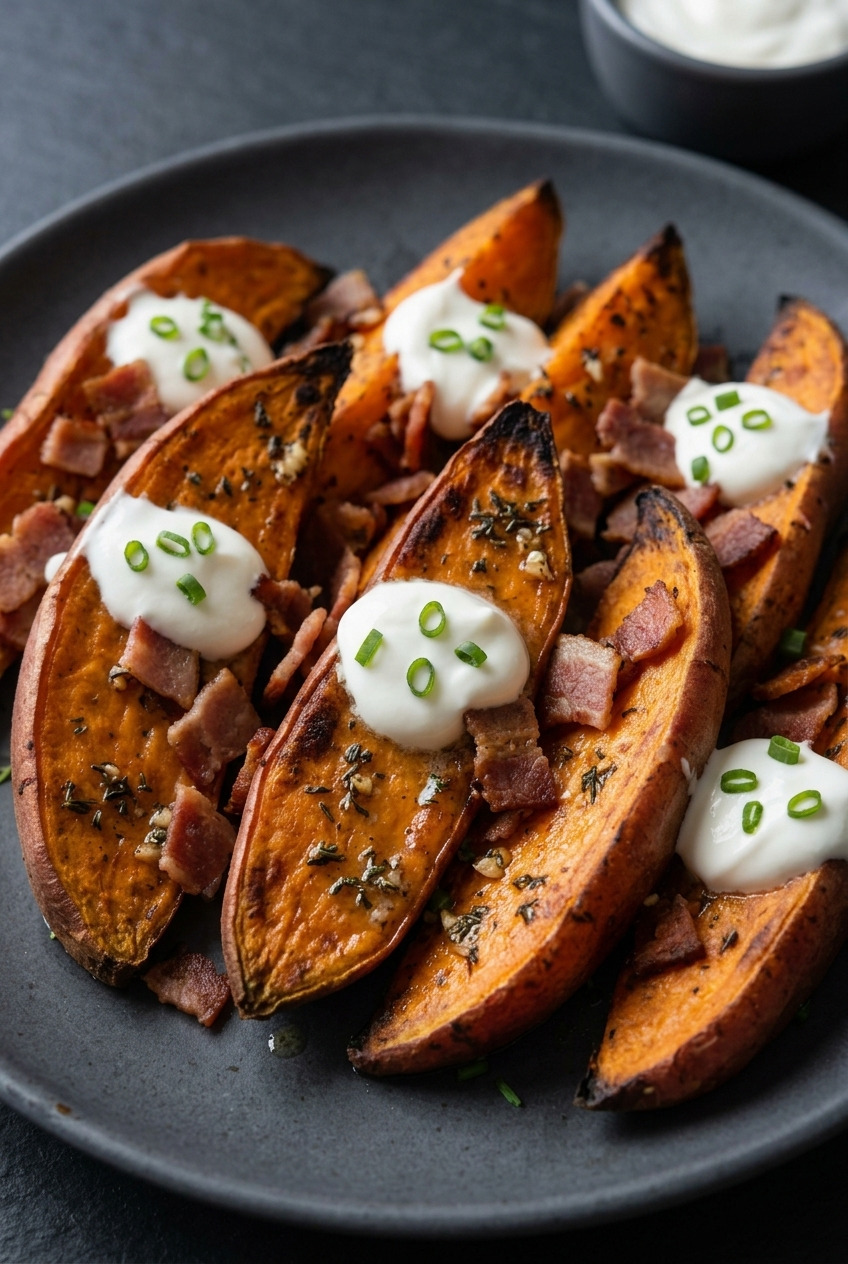
Sixths from a medium potato is the number. Halve it lengthwise, lay each half flat, then cut each half into three long wedges.
You are aiming for about 1 inch across the thick spine and roughly 4 inches long.
Uniform beats pretty. Every wedge on the pan should be within a quarter inch of the others, or the thin ones burn while the fat ones are still raw in the middle.
Leave the skin on. Sweet potato skin is thin, it crisps into something almost papery at the edges, and it is the structural spine that keeps a wedge from splaying open when you flip it.
Scrub them properly, though. Skin on means dirt on if you skip that part.
If you have one giant sweet potato instead of three medium ones, cut it into eighths rather than sixths and check it at the same time.
Ingredients You Need
There are two fats in this recipe and they do different jobs. The oil roasts, the butter finishes. Do not try to combine them into one step.
- Sweet potatoes (3 medium). Look for firm, unblemished ones of roughly equal size so your wedges match. Skin on, scrubbed, dried.
- Olive oil (2 tablespoons). This is the roasting fat. It has a high enough smoke point for 425°F and it helps the spices stick.
- Smoked paprika (1 teaspoon). Smoke against natural sweetness is the flavor backbone here. Sweet paprika works but you lose the depth.
- Garlic powder (¾ teaspoon). Powder, not fresh, in the roast. Fresh garlic scorches at this temperature and turns bitter.
- Kosher salt (1 teaspoon) and black pepper (½ teaspoon). Salt before roasting, then a pinch again at the plate.
- Unsalted butter (3 tablespoons, melted). The finishing fat. Brushed on hot wedges it soaks into the cut faces instead of sitting on top.
- Fresh garlic (2 cloves, minced). This goes in the butter, off the heat, where it stays sharp and green-tasting.
- Dried thyme (1 teaspoon). Thyme and sweet potato is one of those pairings that just works. It cuts the sweetness sideways.
- Thick-cut bacon (6 slices). Cooked crisp and crumbled. Thick-cut holds its crunch on a warm wedge where thin bacon goes limp in a minute.
- Sour cream (½ cup). Full fat. Light sour cream is thinner and runs straight off.
- Fresh chives (3 tablespoons, chopped). Mild onion, no bite, and they do not wilt the way scallion tops do.
No cheese in this one, and that is deliberate. Melted cheese on a thick wedge slides off in a sheet and takes the good edge with it.
How to Make Loaded Baked Sweet Potato Wedges
Dry the cut wedges
Cut them, then lay them on a clean towel and pat every face dry.
Sweet potato holds a lot of water and a wet surface steams before it browns.
Ten seconds with a towel is the difference between a golden face and a pale one.
Season and space them on the sheet pan
Toss the wedges with the oil first, then the paprika, garlic powder, salt, and pepper.
Oil first means the spice sticks to the potato instead of the bowl.
Arrange them on a bare metal sheet pan, cut side down, with at least half an inch of clear pan between every wedge.
Skip the parchment. Paper insulates the contact face and traps the moisture that comes off the potato. Bare hot metal is what gives you the dark side.
Roast, flip once
Into a 425°F oven for 20 minutes, then flip each wedge onto its second cut face and give it another 12 to 15 minutes.
They are done when the edges are deep brown, the flat faces are freckled, and a paring knife slides through the spine with no resistance.
Do not flip them early and do not flip them twice. Each face needs uninterrupted contact to brown.
Brush with thyme garlic butter
Melt the butter, pull it off the heat, and stir in the minced garlic and thyme.
Brush it over the wedges while they are still on the hot pan.
You will hear it hiss, which is the sound of it going into the potato rather than pooling on it.
Load the plate
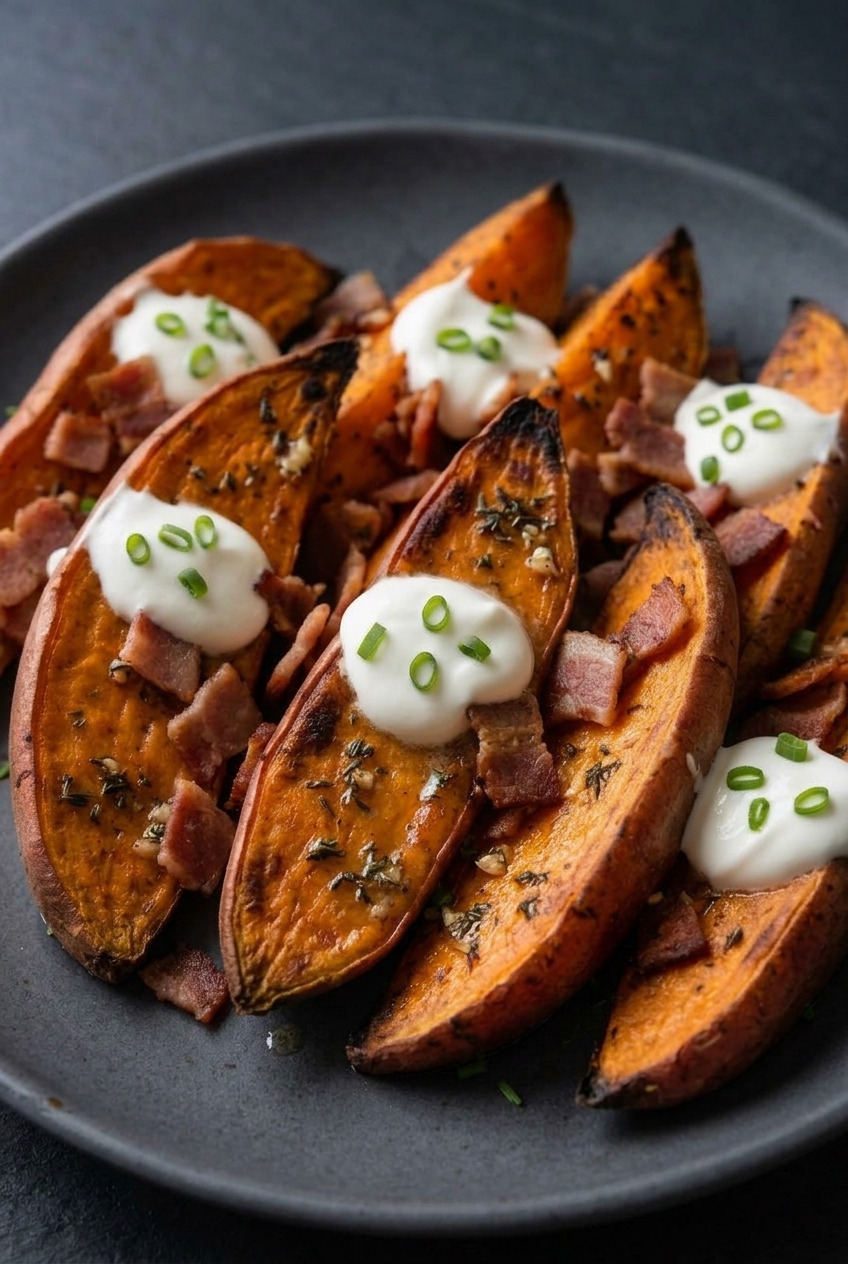
Move the wedges to your serving plate first. Every topping goes on after they land.
Crumbled bacon, then spoonfuls of sour cream, then chives, then a last pinch of salt.
Carry it straight to the table.
The Trick to Crisp Edges on a Thick Wedge
Sweet potato is working against you and it helps to know why. It carries more water and more sugar than a russet, so it browns fast and steams easily, sometimes both at once.
- Dry surface. Pat the cut faces. Every time. This is the cheapest win available.
- Bare metal, no liner. Parchment and foil both put a layer between the potato and the heat.
- One single layer with visible gaps. Crowded wedges release steam into each other and you get a pale, damp pan. Use two pans if you need to.
- Cut face down first. The flat side gets the longest uninterrupted contact with the hot pan, which is where the dark edge comes from.
- 425°F, not 450°F. A thick wedge at 450 blackens its edges before the middle is cooked. This is where a fry recipe and a wedge recipe genuinely diverge.
- Salt at the start, not after the toss. Salt pulls water out. Do it right before the pan goes in, not twenty minutes ahead.
Sound fussy? It takes about a minute of extra attention and it is the whole ballgame.
How to Load Them Without Going Soggy
Order matters more than quantity here. The problem is never how much sour cream, it is when the sour cream arrives.
- Hot and dry first. Bacon goes on the moment the wedges hit the plate, so the fat and salt land on a dry surface.
- Butter second. It has already soaked in on the pan, this is just the last brush.
- Sour cream in spoonfuls. Six or seven distinct dollops, not a drizzle across everything. Half the wedges should have a bare, crisp face.
- Chives last. They are a garnish and a bit of bite, nothing more.
- Extra sour cream in a small bowl. Put it on the table and let people add their own. This one habit fixed the problem for me permanently.
Pro tip: assemble with the plate already at the table if you can. A loaded wedge has a shelf life of about ten minutes and you want to spend all ten of them eating.
What to Serve These With
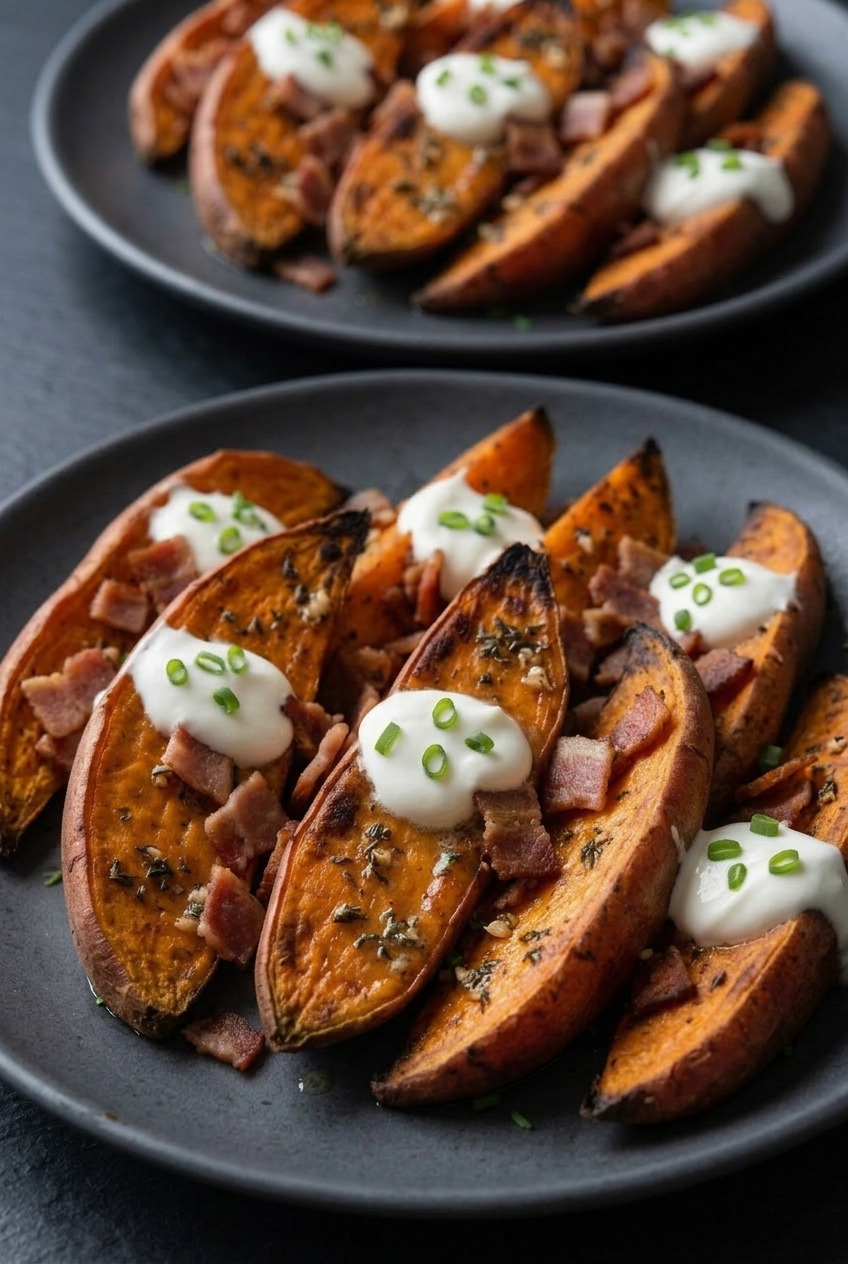
This is a shareable side, not a snack plate. It wants a piece of protein next to it and something green.
- Roast chicken. My default. The pan juices and the thyme butter are talking the same language.
- Pork chops. Thick bone-in chops, seared. The bacon on the wedges ties the two together.
- Steak. Cut it into strips for the middle of the table and let everyone build a plate.
- A sharp green salad. Something with vinegar in it. The wedges are rich and they need the contrast.
Figure on 4 to 5 wedges per person as a side. Three medium potatoes gives you eighteen, which feeds four comfortably.
Variations
- Rosemary instead of thyme. Chop it fine, it is more assertive. Use half the amount.
- Add heat. A quarter teaspoon of cayenne in the spice mix, or a few dashes of hot sauce stirred into the sour cream.
- Skip the bacon. The wedges stand up fine without it. Add toasted pepitas for crunch and a little smoked salt.
- Scallions for chives. Thinly sliced green tops only. Slightly sharper, works just as well.
- Air fryer. 400°F for 18 to 20 minutes, one basket layer only, shaken once. You will need two batches for three potatoes.
Storing and Reheating
- Loaded wedges. They do not store. The sour cream and the crisp edge are incompatible after about twenty minutes in a fridge.
- Plain roasted wedges. Up to 3 days in an airtight container in the fridge. This is the part worth saving.
- Reheating. Spread them on a bare sheet pan at 425°F for 8 to 10 minutes. They come back genuinely crisp.
- NEVER the microwave. It steams them from the inside and you get a wet, sad wedge with no edge left.
- Cut ahead. You can cut and refrigerate raw wedges in cold water for a day. Drain and dry them thoroughly before they touch oil.
Make them once with the toppings at the table and you will see why the sheet pan version never worked.
Recipe
Loaded Baked Sweet Potato Wedges
Ingredients
For the Wedges
- 3 medium sweet potatoes scrubbed, skin on, cut into sixths
- 2 tablespoons olive oil
- 1 teaspoon smoked paprika
- ¾ teaspoon garlic powder
- 1 teaspoon kosher salt
- ½ teaspoon black pepper
For the Thyme Garlic Butter
- 3 tablespoons unsalted butter melted
- 2 cloves garlic minced
- 1 teaspoon dried thyme
For Loading
- 6 slices thick-cut bacon cooked crisp and crumbled
- ½ cup sour cream full fat
- 3 tablespoons fresh chives chopped
Instructions
Cut and Season
- Heat the oven to 425 degrees F. Scrub the sweet potatoes and dry them well, leaving the skin on.
- Halve each potato lengthwise, lay the halves flat, and cut each half into 3 long wedges, about 1 inch across the thick spine. Pat the cut faces dry with a towel.
- Toss the wedges with the olive oil first, then add the smoked paprika, garlic powder, salt, and pepper and toss again until evenly coated.
Roast
- Arrange the wedges cut side down on a bare metal sheet pan in a single layer with at least half an inch of clear pan between them. Do not line the pan.
- Roast 20 minutes, then flip each wedge onto its second cut face and roast another 12 to 15 minutes, until the edges are deep brown and a paring knife slides through with no resistance.
Butter and Load
- Melt the butter, take it off the heat, and stir in the minced garlic and dried thyme. Brush it over the wedges while they are still on the hot pan.
- Move the wedges to a serving plate. Scatter the crumbled bacon over them, add 6 or 7 spoonfuls of sour cream, then the chopped chives and a final pinch of salt.
- Serve right away, with extra sour cream in a small bowl at the table.
Notes
- Load at the plate: Never top the wedges on the sheet pan. Toppings go on after the wedges reach the serving plate, right before they go to the table.
- No parchment: Bare metal is what gives you the dark browned face. Paper insulates and traps steam.
- Uniform wedges: Keep every wedge within a quarter inch of the others so they finish at the same time.
- Air fryer: 400 degrees F for 18 to 20 minutes, one basket layer, shaken once. Two batches for 3 potatoes.
- Storage: Plain roasted wedges keep 3 days refrigerated. Reheat on a bare sheet pan at 425 degrees F for 8 to 10 minutes, never the microwave. Loaded wedges do not store.