There's a hierarchy at the holiday dessert table, and sweet potato pie has been stuck near the bottom of it my whole life.
Pumpkin gets the good platter and the seat of honor.
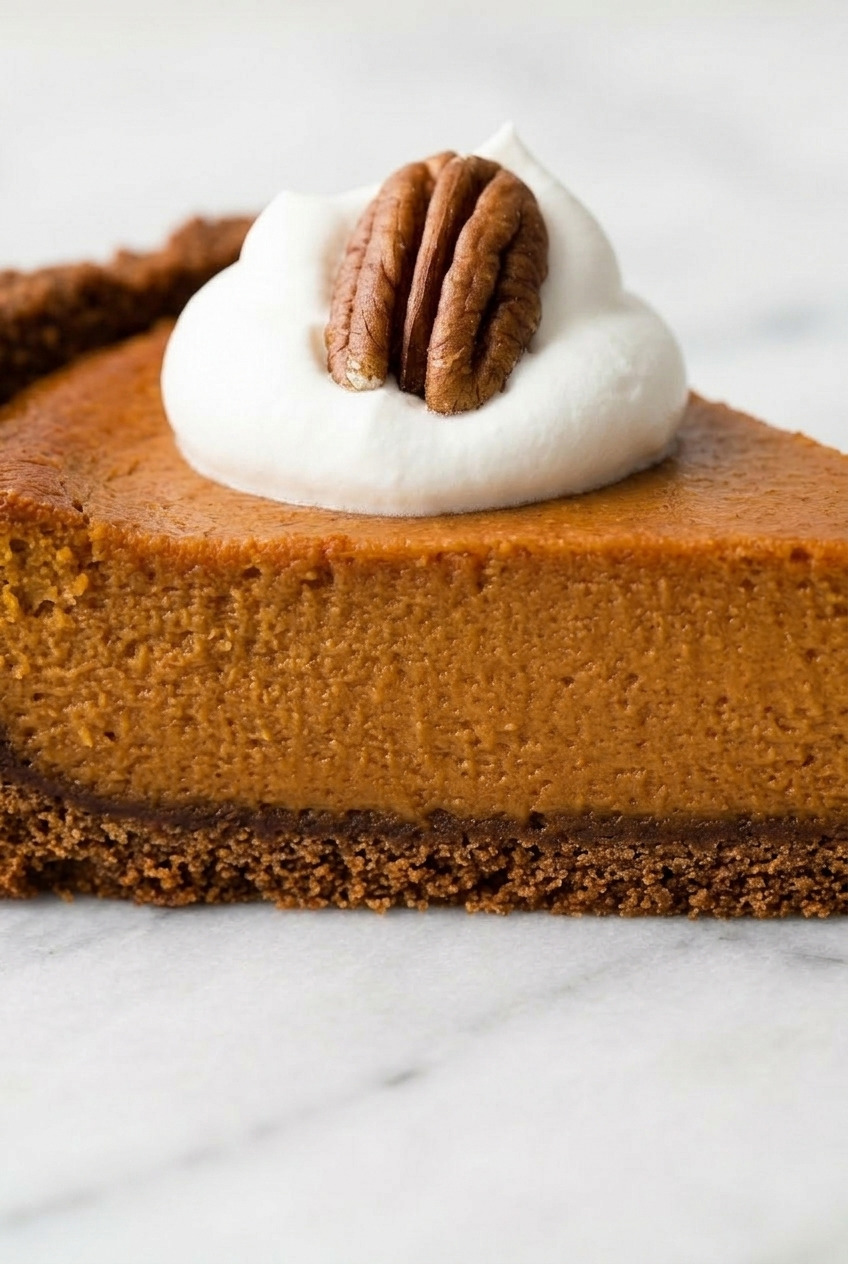
Sweet potato gets a corner of the counter and whatever plate is left.
I decided a few years ago that the problem was never the filling.
It was the crust.
A plain pastry shell asks the sweet potato to do all the talking, so most recipes answer by dumping in more cinnamon, more ginger, more cloves, until the potato disappears under the spice rack.
So I moved the spice into the crust instead.
Two cups of gingersnap crumbs, some brown sugar, and melted butter, pressed straight into the dish.
No rolling, no chilling, no crimping.
The crust brings the heat and the snap, which lets the filling stay quiet and taste like actual sweet potato.
Canned puree works fine here, and I've stopped pretending otherwise.
I bake this one the day before every single time, because it slices cleaner cold and it gets my oven back.
Make it once and pumpkin pie is going to have some competition.
Why This Pie Beats the Standard Sweet Potato Pie
The whole recipe turns on one decision: the crust carries the spice, so the filling doesn't have to. Gingersnaps already have ginger, molasses, and usually cinnamon and clove baked right into them.
Grind them up and you get a shell that tastes like the best part of the pie before you add a single spoonful of anything.
That frees up the filling to stay restrained, which is where the sweet potato finally gets to be the flavor you notice.
Sweetened condensed milk does the second job. It brings sugar and dairy in one pour, and it gives the custard a firm, clean set that cuts into real slices instead of collapsing into a spoonable pudding.
And a pressed crumb crust is simply faster than pastry.
Nothing to roll, nothing to chill, nothing to patch when it tears.
Sound too easy for a holiday pie? It is, and that's the point.
Ingredients You'll Need
Three short lists, and none of them send you anywhere unusual. Here's what each piece is doing.
For the Gingersnap Crust
- Gingersnap cookie crumbs (2 cups, about 40 small cookies). Grind them fine, like wet sand. Coarse chunks leave gaps, and gaps are where filling leaks through and turns the bottom soft.
- Light brown sugar (2 tablespoons, packed). Just enough to help the crumbs caramelize at the edge and set into a solid shell.
- Fine salt (¼ teaspoon). Gingersnaps are sweet. Salt keeps the crust from reading like a cookie.
- Unsalted butter (7 tablespoons), melted. The binder. Less than this and the crust crumbles when you cut it, more and it pools greasy at the bottom.
For the Sweet Potato Filling
- Sweet potato puree (1 ½ cups), smooth and not watery. Roasted is best, canned is genuinely fine, and I'll cover both below.
- Sweetened condensed milk (1 cup). Sugar, dairy, and set in one can. This is what makes the slices hold their shape.
- Light brown sugar (¼ cup, packed). A little molasses depth to meet the gingersnaps halfway.
- Eggs (3 large), at room temperature. Cold eggs seize the melted butter into little flecks. Set them on the counter while the oven heats.
- Unsalted butter (3 tablespoons), melted. Richness, and it keeps the custard silky rather than chalky.
- Ground cinnamon (½ teaspoon) and ground ginger (½ teaspoon). Yes, that is a small amount of ginger on purpose. The crust already brought plenty.
- Freshly grated nutmeg (¼ teaspoon) and ground allspice (⅛ teaspoon). Background warmth. You should not be able to name them in a bite.
- Vanilla extract (1 teaspoon) and fine salt (¼ teaspoon). Both are there to keep a sweet filling from tasting flat.
For the Whipped Topping
- Heavy cream (1 cup), COLD. Straight from the fridge, into a cold bowl. Warm cream will not hold a peak.
- Powdered sugar (2 tablespoons). It dissolves instantly and it stabilizes the whip slightly better than granulated.
- Vanilla extract (½ teaspoon). A half teaspoon, no more, so the cream stays a soft background.
- Toasted pecan halves (¼ cup, optional). For the top of a slice. I keep them out of the crust so the gingersnap stays the headline.
How to Make the Sweet Potato Puree
You want 1 ½ cups of smooth puree that holds its shape on a spoon. Watery puree is the number one reason a sweet potato pie never sets.
There are three routes, and all three work.
- Roasting (best flavor). Prick 2 pounds of sweet potatoes, set them on a foil-lined sheet, and roast at 400°F for 50 to 60 minutes, until a knife slides in with zero resistance and the skins have started to weep sugar. Cool, peel, and mash or process smooth.
- Microwave (fastest). Prick, microwave 8 to 12 minutes turning once, then rest 5 minutes before peeling. The flavor is a step behind roasting but nobody at the table will run a blind test.
- Canned (completely fine). Use canned sweet potato puree, not the syrup-packed kind in the can with the orange label. If it looks loose, spread it on a plate for 10 minutes and blot the surface with a paper towel.
Pro tip: if your roasted potatoes are stringy, run the flesh through a food processor for 30 seconds instead of mashing by hand. Strings are texture you'll notice in a custard.
How to Make Gingersnap Crust Sweet Potato Pie
The order matters more than the technique here. Crust first, filling second, and the two meet while the crust is still warm.
Press and Bake the Crust
Heat the oven to 350°F.
Stir the crumbs, brown sugar, and salt together, then pour in the melted butter and mix until every crumb looks damp.
Dump it into a 9 to 10 inch pie dish and press it up the fluted edge first, then across the bottom.
Doing the sides first is the trick, because if you start at the bottom you run out of crumbs before you reach the rim.
Press hard with the flat bottom of a measuring cup.
Bake it 10 minutes, just until it smells like gingerbread and looks dry.
Why bother pre-baking a crumb crust? Because a wet custard sitting on raw crumbs is exactly how you get a soggy bottom, and ten minutes of blind bake sets the butter into a waterproof shell.
Whisk the Filling
One bowl, and go in this order.
Puree first, then the brown sugar, salt, and all the spices, whisked until the color is even.
Then the eggs, one at a time.
Then the condensed milk, melted butter, and vanilla.
Do not aerate it. Whisk to combine and stop, because air whipped into a custard puffs in the oven and then sinks into a crater as it cools.
Assemble the Pie
Pour the filling into the crust while the crust is still warm.
That warm surface flash-sets the seam where the filling meets the crumbs, which is the second half of the soggy-bottom fix.
Smooth the top level with the rim and don't overfill.
Bake and Cool
Bake at 350°F for 45 to 55 minutes.
Check the crust edge at the 25 minute mark, and if it's browning fast, ring it with a strip of foil or a pie shield. A butter-heavy crumb rim scorches long before a pastry one would.
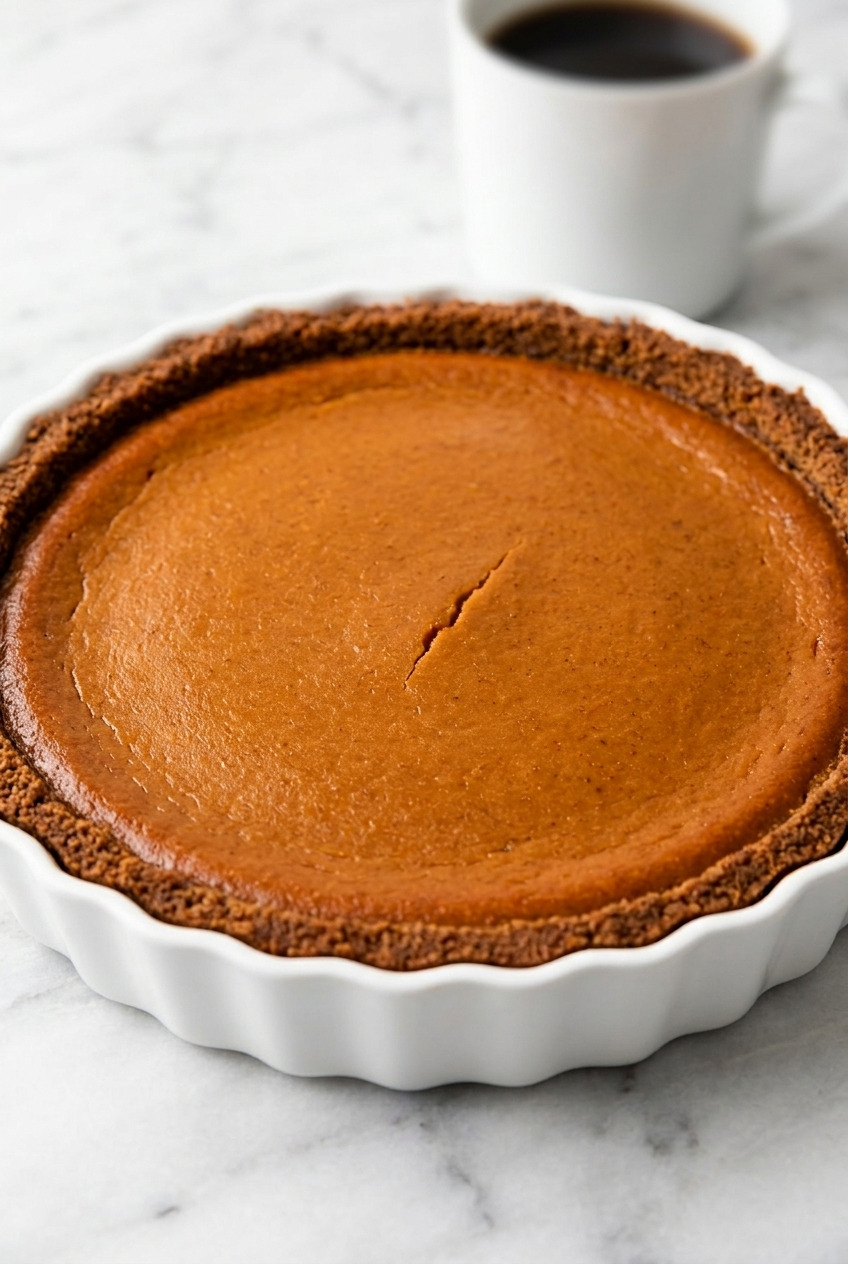
How do you know it's done? The outer two inches should look set and matte, and the center circle, about the size of a coffee cup, should still jiggle as one soft piece when you nudge the dish.
If the middle ripples in waves, give it 5 more minutes.
If it doesn't move at all, it's a touch overbaked, and it will still taste great.
Cracked across the top? You did not ruin it. A surface crack on a custard pie means the edge baked a little past the center, and a spoonful of whipped cream erases the evidence.
Cool on a rack at room temperature for at least 3 hours before the first slice.
The pie is still setting during that whole window. Cutting early is the only truly unfixable mistake in this recipe.
Make It Ahead and How to Store It
- The crust alone. Press and bake it up to 2 days ahead. Cover it once fully cool and leave it at room temperature.
- The whole pie. Bake it a full day ahead. Cool completely, refrigerate uncovered until cold, then cover. Covering a warm pie traps warmth and beads water all over the surface.
- Leftovers. Refrigerated and covered, it holds 4 days. The crust softens slightly by day three, which has never stopped anyone in my house.
- Freezing. Wrap the cooled, un-topped pie in plastic and then foil and freeze up to 2 months. Thaw overnight in the fridge.
- The whipped cream. Whip it fresh, within an hour or two of serving. It's a five minute job and day-old whipped cream weeps.
Variations and Substitutions
- No gingersnaps in the store. Graham crackers work, and Biscoff cookies work even better since they bring their own spice. You lose the ginger bite, so bump the ground ginger in the filling to 1 teaspoon.
- Pecans. Toast and scatter them over the finished slices rather than mixing them into the crust. Nuts in a crumb crust make it harder to press and easier to crack.
- Mascarpone whip. Fold 4 ounces of mascarpone into the cream before whipping for a tangier, sturdier topping that holds for hours.
- Marshmallow top. Spread marshmallow creme over the cooled pie and brown it under the broiler for 30 to 60 seconds. Watch it the entire time.
- Evaporated instead of condensed. You can, but it isn't a swap. Use 1 cup evaporated milk plus ⅔ cup granulated sugar, and expect a softer set.
Tips From My Kitchen
- Crumb fineness is everything. A food processor gets you there in 20 seconds. A zip bag and a rolling pin works, it just takes longer and you have to keep going past the point you think you're done.
- Press with cold fingers. Warm hands melt the butter out of the crumbs and the crust turns greasy at the touch points. Run your hands under cold water first.
- Room temperature eggs, every time. Cold eggs plus melted butter equals butter flecks, and those flecks float to the top and bake into a mottled surface.
- The cooling window is longer than you want it to be. Three hours minimum, overnight if you can. This is the single biggest difference between a clean slice and a slumped one.
- Wipe the knife. Warm the blade under hot water, dry it, cut, wipe, repeat. Every slice comes out looking like the first one.
What to Serve With It
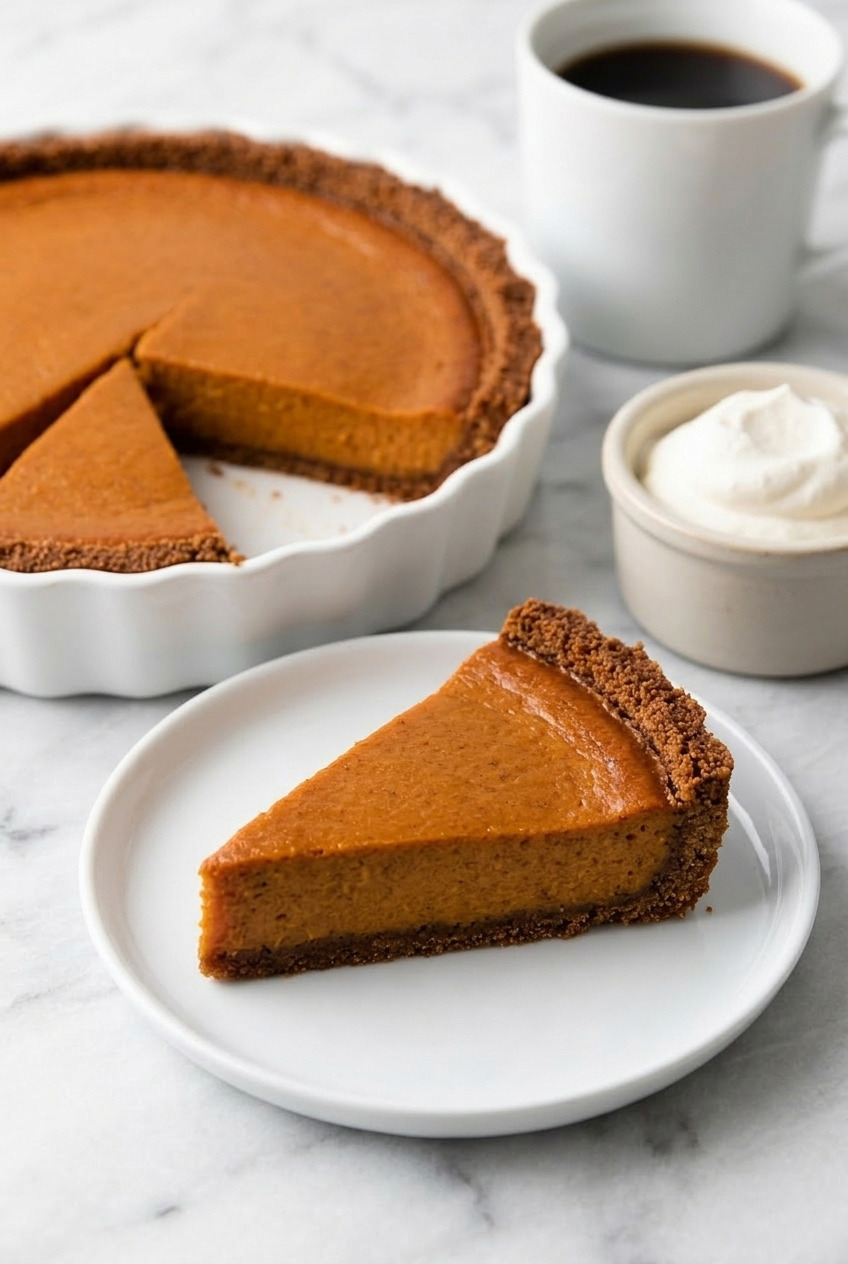
This pie is rich, so the plate around it should be simple. A cup of black coffee is my default, and it cuts the condensed milk sweetness better than anything else.
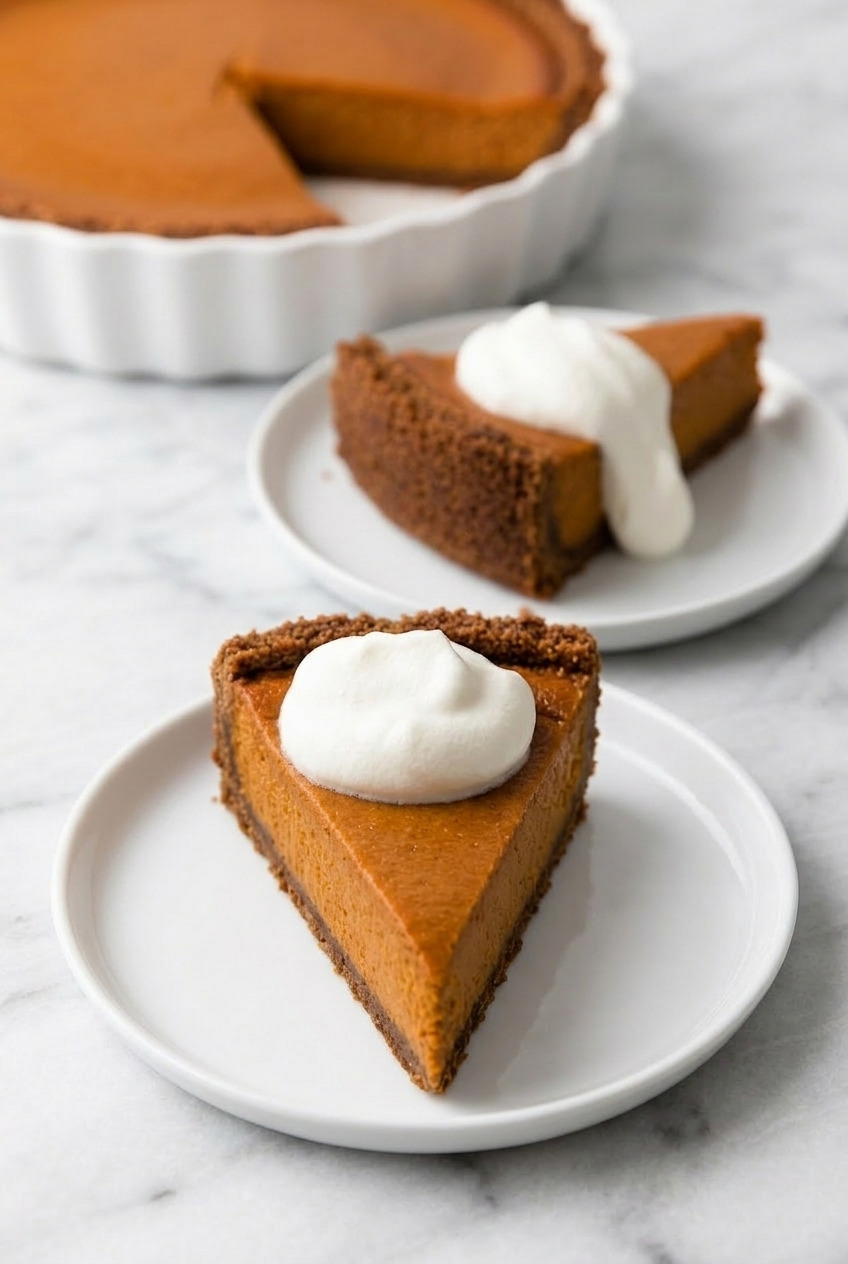
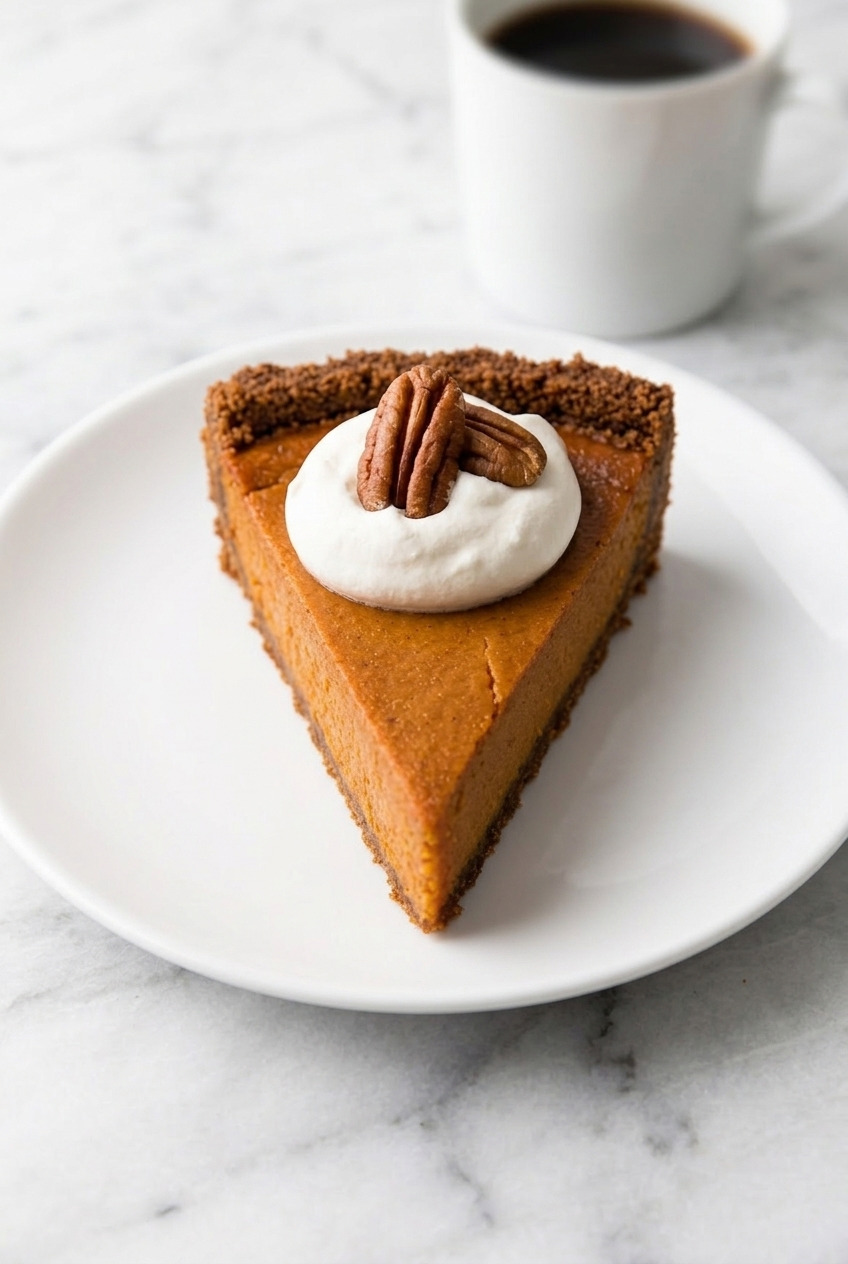
Lightly sweetened whipped cream on the slice, never on the whole pie, so the surface stays clean for round two.
And if it's going on a full holiday dessert spread, put it next to something tart. A cranberry or citrus dessert on the same table keeps three slices from tasting like the same slice.
Recipe
Gingersnap Crust Sweet Potato Pie
Ingredients
For the Gingersnap Crust
- 2 cups gingersnap cookie crumbs about 40 small cookies, ground fine
- 2 tablespoon light brown sugar packed
- ¼ teaspoon fine salt
- 7 tablespoon unsalted butter melted
For the Sweet Potato Filling
- 1 ½ cups sweet potato puree smooth, from about 2 lb sweet potatoes, or canned
- 1 cup sweetened condensed milk
- ¼ cup light brown sugar packed
- 3 large eggs at room temperature
- 3 tablespoon unsalted butter melted
- 1 teaspoon vanilla extract
- ½ teaspoon ground cinnamon
- ½ teaspoon ground ginger
- ¼ teaspoon nutmeg freshly grated
- ⅛ teaspoon ground allspice
- ¼ teaspoon fine salt
For the Whipped Topping
- 1 cup heavy cream cold
- 2 tablespoon powdered sugar
- ½ teaspoon vanilla extract
- ¼ cup pecan halves toasted, optional
Instructions
Make the Puree
- Prick 2 pounds of sweet potatoes and roast at 400°F on a foil-lined sheet for 50 to 60 minutes, until a knife slides in with no resistance. Cool, peel, and process or mash until completely smooth. You need 1 ½ cups. Canned sweet potato puree works too; blot it if it looks loose.
Press and Bake the Crust
- Heat the oven to 350°F. Stir the gingersnap crumbs, brown sugar, and salt together, then mix in the melted butter until every crumb is damp.
- Press the mixture up the sides of a 9 to 10 inch pie dish first, then across the bottom, packing it firmly with the flat bottom of a measuring cup.
- Bake for 10 minutes, until the crust looks dry and smells like gingerbread. Leave the oven on.
Mix, Fill, and Bake
- Whisk the sweet potato puree with the brown sugar, salt, cinnamon, ginger, nutmeg, and allspice until the color is even.
- Whisk in the eggs one at a time, then the condensed milk, melted butter, and vanilla. Mix only until combined, do not whip air into it.
- Pour the filling into the still-warm crust and smooth the surface level with the rim.
- Bake for 45 to 55 minutes. Shield the crust edge with foil once it browns, around the 25 minute mark. The pie is done when the outer two inches are set and matte and a circle at the center still jiggles as one soft piece.
- Cool on a rack at room temperature for at least 3 hours before slicing, or refrigerate overnight for the cleanest cut.
Whip and Serve
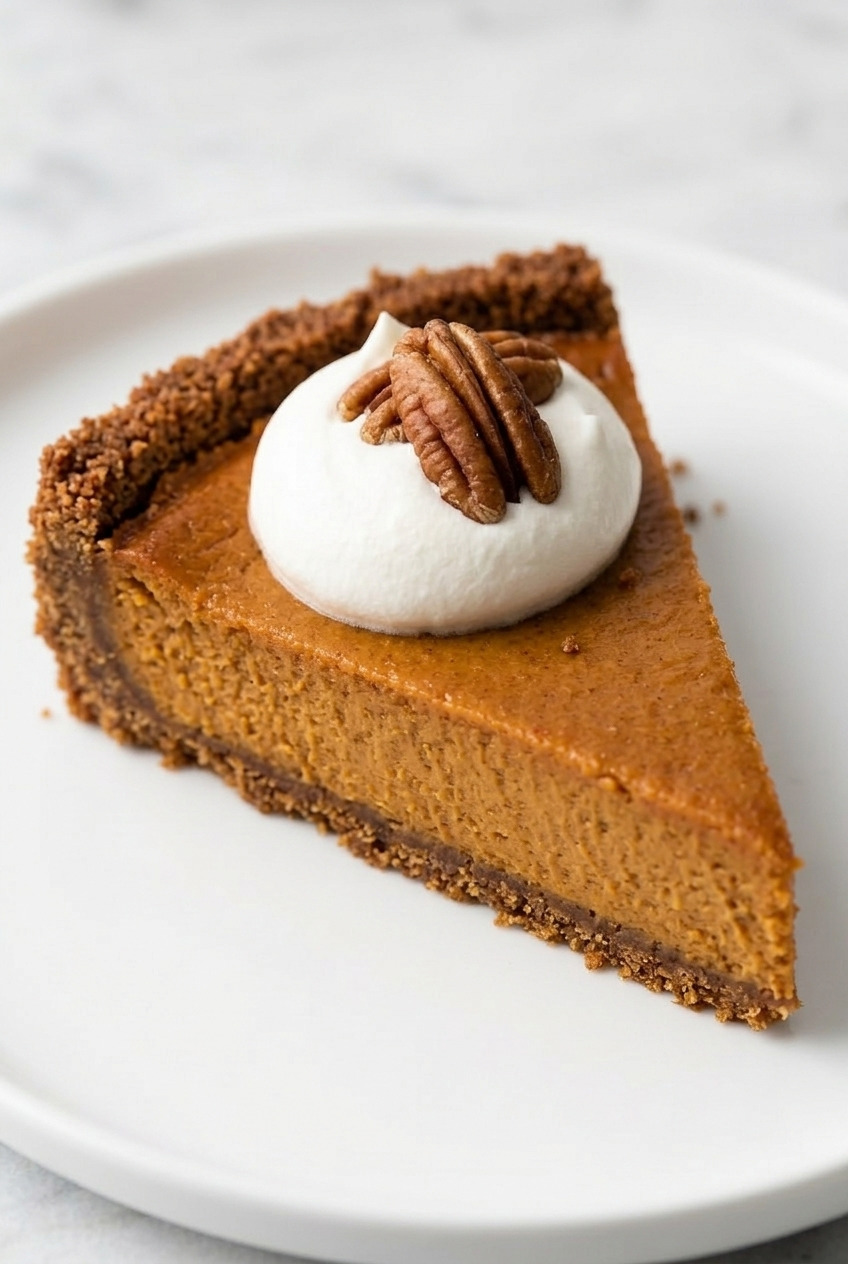
- Whip the cold heavy cream with the powdered sugar and vanilla to soft peaks. Spoon it onto each slice and top with toasted pecans if using.
Notes
- Grind the crumbs fine: Coarse crumbs leave gaps for filling to seep through.
- Pour into a warm crust: The warm surface sets the seam and keeps the bottom from going soggy.
- Doneness: Set and matte at the edge, a coffee-cup-sized jiggle at the center.
- A surface crack is normal and disappears under whipped cream.
- Make ahead: Bake a full day ahead, refrigerate uncovered until cold, then cover. Whip the cream fresh.