There's a small white dish at Korean barbecue that nobody talks about and everybody empties.
Pale, cold, faintly sweet, sitting between the kimchi and the pickled radish while the grill does the loud work.
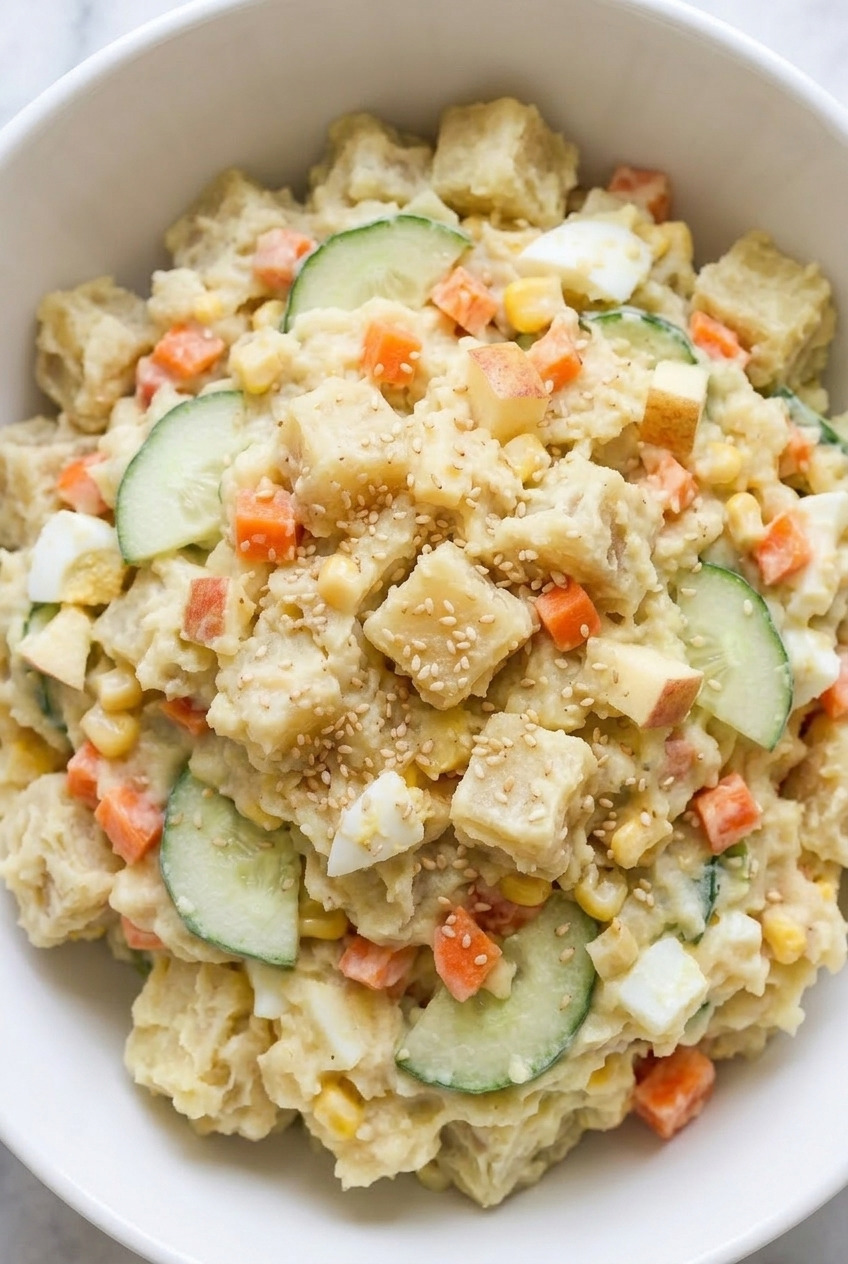
I asked for a third refill of it once and the server laughed at me.
Worth it.
That dish is gamja salad, Korean potato salad, and it has a whole history behind it that I only picked up later.
It came into Korea by way of Japanese potato salad and settled in for good after the war.
Not ancient, not traditional, completely beloved.
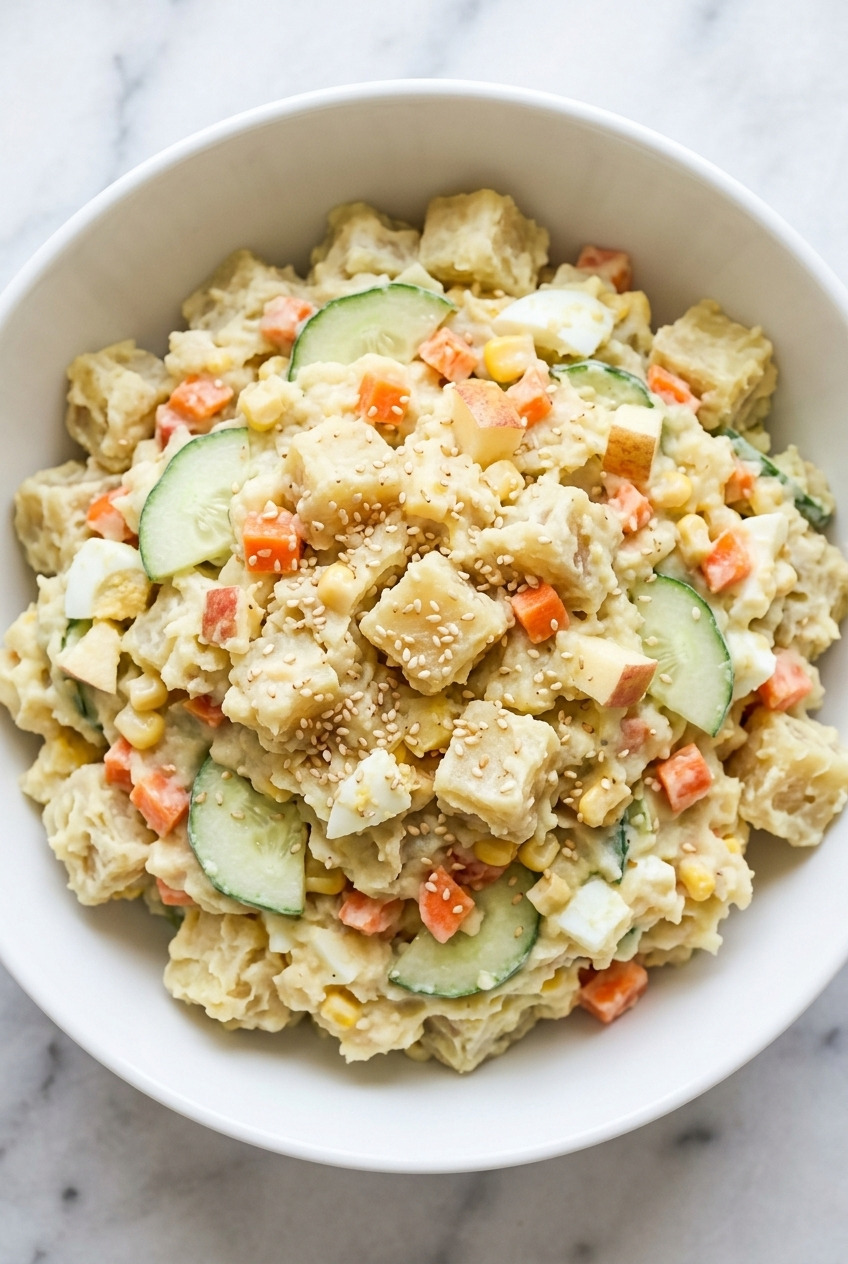
What I make at home is the sweet potato version of it, goguma salad, which is common in Korean home kitchens and lunchboxes even though the restaurant standard is regular potato.
I switched over for one reason and stayed for three.
The reason: Korean sweet potato is denser, so the cubes hold their edges instead of dissolving into paste.
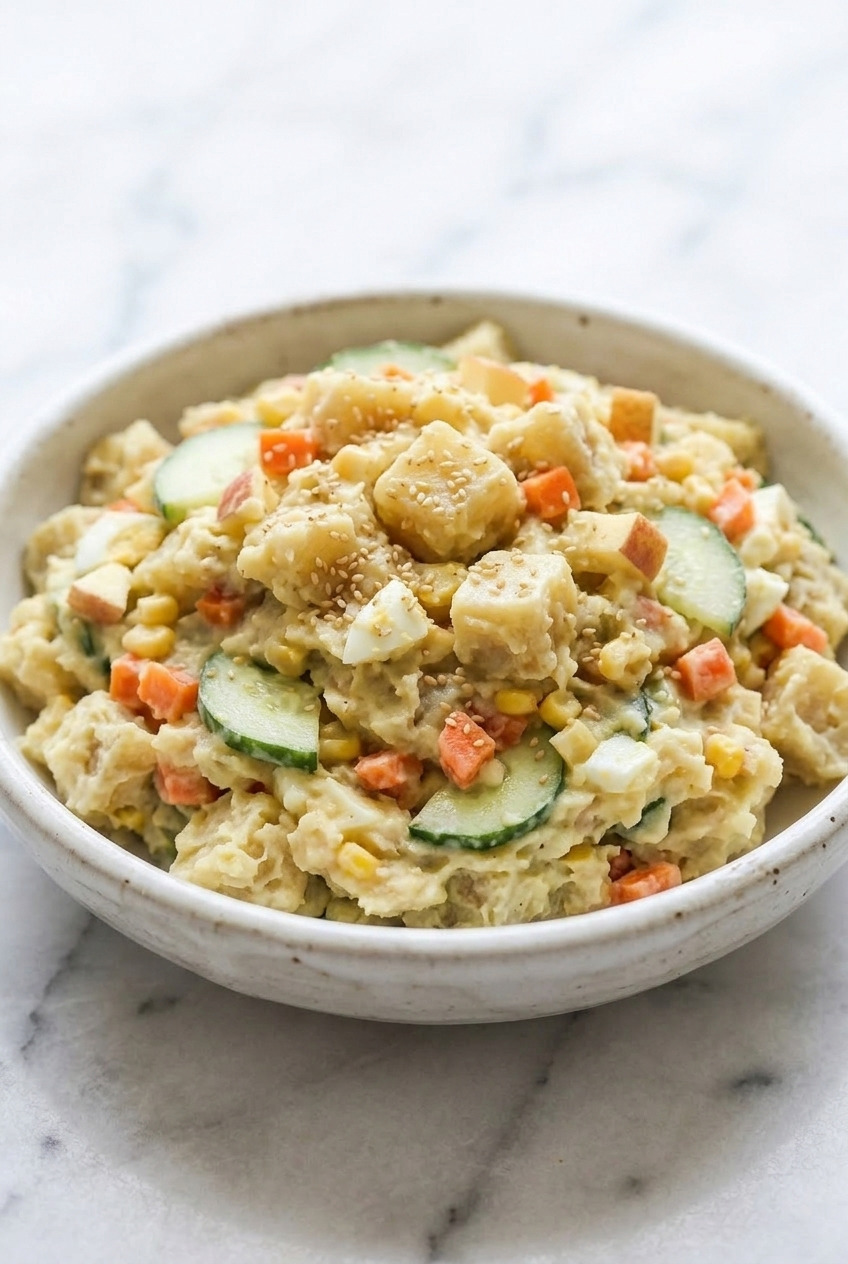
The three: it's naturally sweet enough that I cut the sugar way back, it takes the apple and cucumber crunch even better, and it looks like something instead of a bowl of beige.
It's cold, it's creamy, and it takes about twenty minutes of actual work.
My wife eats it standing at the open fridge with the lid still in her hand.
What Goguma Salad Is, and How It Differs from Gamja Salad
Let's be clear about the names before anything else. Goguma is sweet potato. Gamja is potato. The classic Korean banchan, the one you get at every barbecue table, is gamja salad, made with regular potato.
This recipe is the goguma version.
It's a real thing in Korean home cooking, especially in lunchboxes and in bakery sandwiches, but I'm not going to tell you it's the traditional one. It isn't.
The dish itself arrived in Korea through Japanese potato salad, and the American army bases after the war pushed mayonnaise into everyday Korean kitchens.
Korean cooks then did what Korean cooks do and made it their own.
Apple went in. Cucumber went in. Egg got mashed into the dressing instead of sitting in it as chunks.
Here's what changes when you swap in sweet potato:
- Less added sugar. Goguma brings its own. A tablespoon of sugar in a potato version becomes two teaspoons here.
- Firmer dice. The lower moisture means the cubes survive the folding and stay visible in the bowl.
- Rounder flavor. Sweet and creamy against the tang of the mayo, with a chestnut note underneath that regular potato just doesn't have.
Why This Version Works
Three things do all the work here, and none of them is complicated.
- The goguma holds its shape. Two thirds mashed, one third left in cubes, so it's creamy and still has bite.
- Apple and cucumber carry the crunch. Without them this is just a sweet mayo mash. With them it's a salad.
- Mashed egg yolk makes the dressing. The yolks go into the mayo and thicken it into something rich. The whites stay in pieces. That single move is what makes it taste Korean instead of American.
Sound too simple? It is. That's the appeal.
Ingredients You'll Need
Everything here is at a regular grocery store except the goguma itself. Even that is showing up in more places every year.
For the Salad
- Korean sweet potatoes, goguma (1 ½ pounds). Purple-red skin, pale ivory flesh, dense and dry with a chestnut sweetness. Look for them at a Korean or Asian grocer, often labeled goguma or Korean yam. Regular orange sweet potatoes work as a substitute, but they hold more water and taste sweeter, so cut the sugar to 1 teaspoon and expect a softer texture.
- Persian or Kirby cucumber (1). Thin skin, small seeds, real crunch. English cucumber works. The big waxed slicing cucumbers do not.
- Carrot (1 medium). Finely diced. Color and a firm little snap.
- Fuji or Honeycrisp apple (½). This is the Korean signature and it is non-negotiable for me. Sweet-tart and crisp. Granny Smith gives you a sharper, more acidic version if that's your preference.
- Eggs (3 large). Hard-boiled. Yolks for the dressing, whites for texture.
- Corn kernels (½ cup, optional). Drained canned or thawed frozen. A small sweet pop, and very common in Korean versions.
For the Dressing
- Kewpie mayonnaise (½ cup). The Japanese egg-yolk mayo in the squeeze bottle, richer and slightly sweeter with a hit of rice vinegar built in. This is what most Korean home cooks reach for. If you can't find it, use regular mayonnaise plus ½ teaspoon of lemon juice.
- Rice vinegar (2 teaspoons). Keeps the mayo from going flat and heavy.
- Sugar (2 teaspoons). Sounds odd in a savory salad. It's the flavor that makes people ask what's in it.
- White pepper (¼ teaspoon). Not black pepper. White pepper is floral and slightly musty and it's a real Korean detail that black pepper cannot fake.
- Salt (½ teaspoon plus more for the cucumber).
- Toasted sesame seeds. To finish.
The Two Steps That Decide the Texture
Skip either of these and you get soup by tomorrow morning. They take five minutes between them and they're the entire difference between banchan and disappointment.
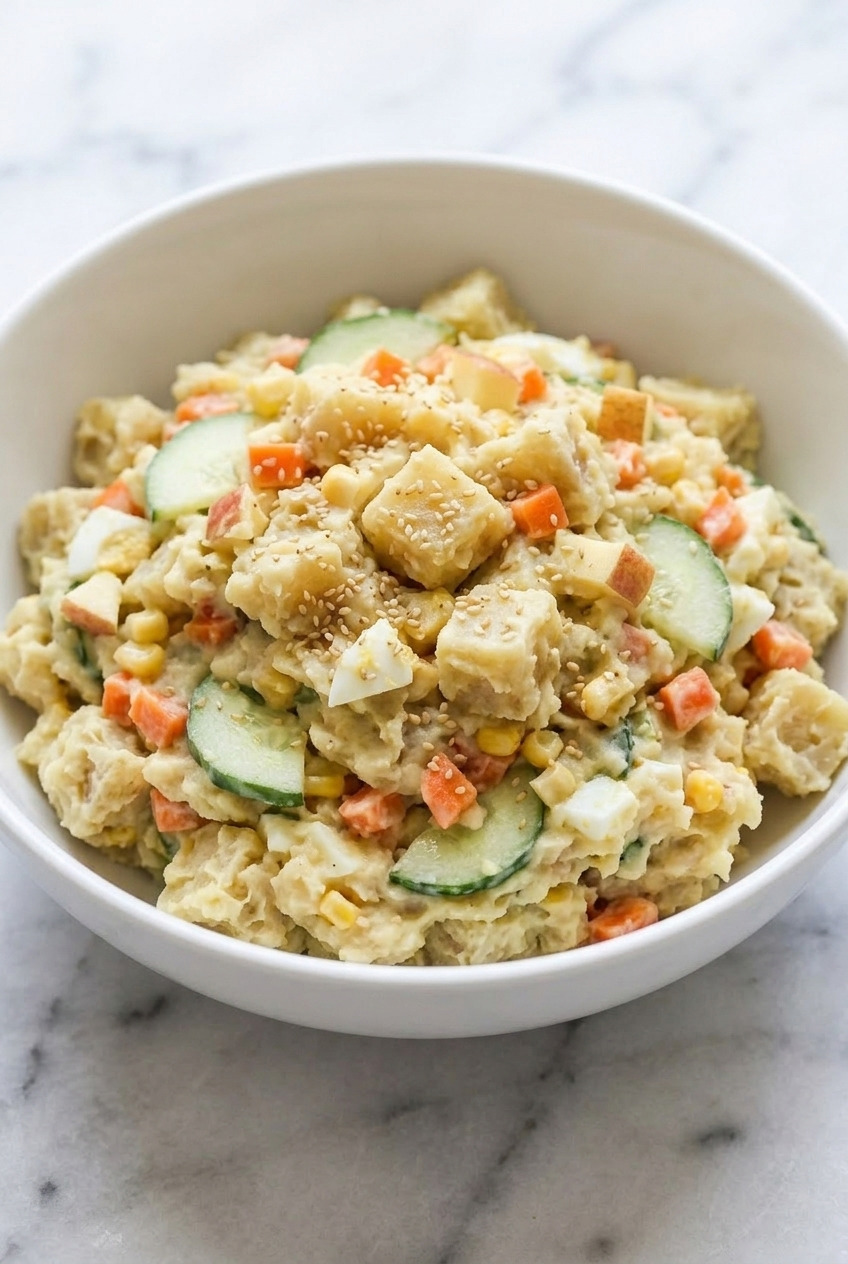
Salt and squeeze the cucumber. Dice it, toss it with 1 teaspoon of salt, and let it sit for 10 minutes.
Then squeeze it in your palm over the sink until the water stops running.
You'll be surprised how much comes out. All of that would have ended up in your dressing.
Dry the goguma completely. After cooking, spread the cubes out and let them sit until they stop giving off any warmth or moisture, at least 15 minutes.
Warm potato thins mayonnaise and breaks it.
NEVER dress the sweet potato while it's hot. That's the one rule I'd tattoo on the recipe card.
How to Make Goguma Salad
Everything can happen in parallel if you start the potatoes and the eggs first. Total hands-on time is about twenty minutes.
Step 1: Cook and Cool the Goguma
Peel the sweet potatoes and cut them into ¾-inch cubes.
Steam them for 12 to 15 minutes, or boil in salted water for about 10 minutes, until a fork goes in with only slight resistance.
Drain well and spread them on a sheet pan to cool completely.
Steaming beats boiling here because less water gets in. Roasting also works but pushes the sweetness too far against the mayo.
Step 2: Salt and Squeeze the Cucumber
Quarter the cucumber lengthwise, slice it thin, toss with 1 teaspoon of salt, and let it drain for 10 minutes.
Squeeze dry and set aside.
Do the same with the diced carrot only if you like it softened, otherwise leave it raw and crisp.
Step 3: Boil and Break the Eggs
Cover the eggs with cold water, bring to a boil, cover, and pull off the heat for 10 minutes.
Cool them in ice water, peel, then separate the yolks from the whites.
Mash the yolks into a fine crumb and chop the whites into rough pieces.
Step 4: Mix the Dressing
Stir the mashed yolks into the ½ cup of Kewpie mayonnaise with the rice vinegar, sugar, white pepper, and salt.
It should look pale yellow, thick, and glossy.
Taste it now. It should be slightly too sweet and slightly too salty on its own, because the sweet potato will mute both.
Step 5: Fold, Chill and Taste Again Cold
Put about two thirds of the cooled sweet potato in a large bowl and mash it roughly, leaving real lumps.
Add the remaining cubes whole, then the squeezed cucumber, carrot, apple, corn, and egg whites.
Fold the dressing through with a light hand until everything is coated. Do not beat it smooth.
Chill for at least 1 hour, then taste again and adjust the salt.
Cold food tastes less sweet and less salty than room temperature food, so the final seasoning has to happen after the fridge.
Variations
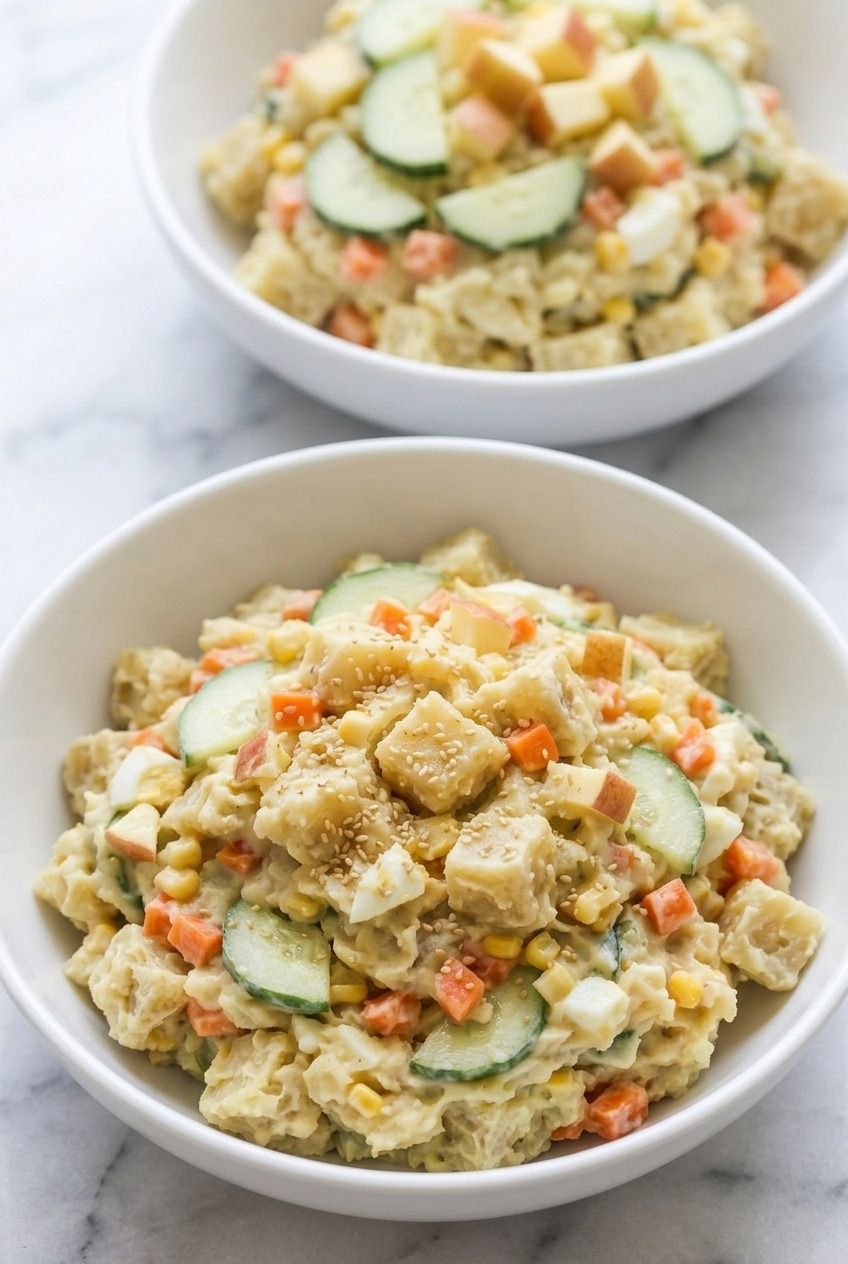
- Add macaroni. A half cup of cooked elbow macaroni folded in is standard in a lot of Korean versions and stretches the bowl.
- Raisins. The lunchbox version. Sweeter, and kids go for it.
- Kimchi and bacon. A different dish entirely, and a good one. Chopped drained kimchi, crisp bacon, and a spoonful of gochujang in the dressing. Serve that one warm.
- Gochujang heat. Just 1 teaspoon stirred into the dressing gives a low warm burn without turning it red.
- Skip the egg. It works without, though the dressing stays thinner and the flavor is plainer.
How to Serve It
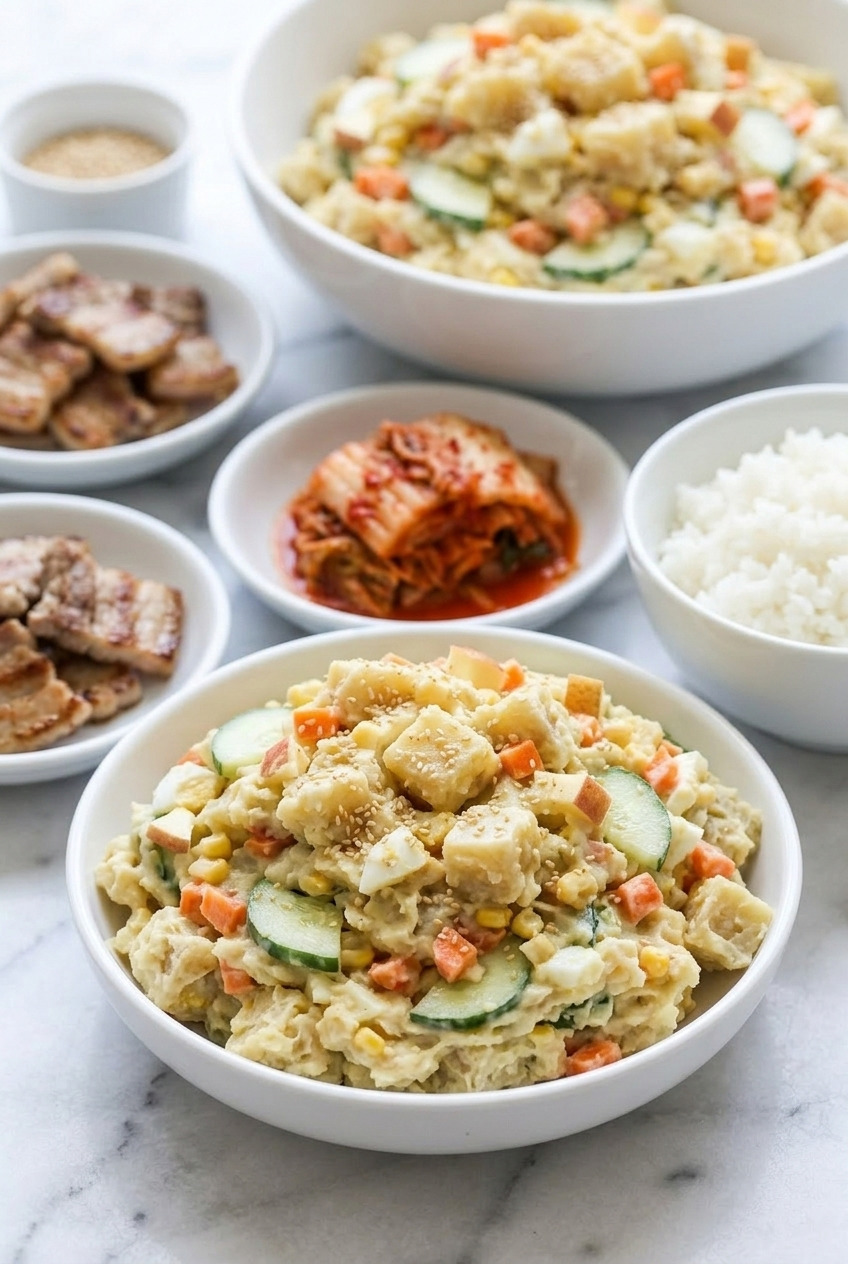
Cold, in a small dish, next to something rich and salty. That's the whole idea behind sweet banchan.
- With Korean barbecue. Grilled pork belly or bulgogi, with this as the cool sweet counterweight. This is where it belongs.
- In a sandwich. Korean bakeries pile it into soft milk bread with the crusts off. It's fantastic.
- In a lunchbox. It travels well and it's better on day two.
- With fried chicken. Korean fried chicken and a cold creamy side is a pairing that needs no defending.
Storage and Make Ahead
- Fridge. Covered, 3 to 4 days. Make it the day before if you can, the flavors settle.
- Day three revival. A tablespoon of fresh mayo folded through brings the creaminess back after the potato absorbs the dressing.
- Freezer. No. Mayonnaise splits and the cucumber turns to water.
- Prep ahead. Cook and cube the goguma up to two days early and keep it dry in the fridge, then assemble in ten minutes.
Make it once and see if it lasts three days in your house.
It has never lasted three days in mine.
Recipe
Goguma Salad (Korean Sweet Potato Mayo Salad)
Ingredients
For the Salad
- 1 ½ pounds Korean sweet potatoes (goguma) peeled and cut into ¾-inch cubes
- 1 Persian or Kirby cucumber quartered lengthwise and thinly sliced
- 1 teaspoon salt for the cucumber
- 1 medium carrot finely diced
- ½ Fuji or Honeycrisp apple finely diced
- 3 large eggs hard-boiled
- ½ cup corn kernels drained, optional
For the Dressing
- ½ cup Kewpie mayonnaise or regular mayonnaise plus ½ teaspoon lemon juice
- 2 teaspoons rice vinegar
- 2 teaspoons sugar
- ¼ teaspoon ground white pepper
- ½ teaspoon salt plus more to taste
- 1 teaspoon toasted sesame seeds to finish
Instructions
Prep the Vegetables and Eggs
- Peel and cube the sweet potatoes, then steam for 12 to 15 minutes or boil in salted water for about 10 minutes, until a fork meets slight resistance. Drain and spread on a sheet pan to cool completely, at least 15 minutes.
- Toss the sliced cucumber with 1 teaspoon salt and let it drain for 10 minutes, then squeeze it dry in your palm until no more water comes out.
- Cover the eggs with cold water, bring to a boil, cover and pull off the heat for 10 minutes. Cool in ice water and peel. Mash the yolks to a fine crumb and chop the whites into rough pieces.
Dress and Chill
- Stir the mashed yolks into the mayonnaise with the rice vinegar, sugar, white pepper and salt until pale, thick and glossy. It should taste slightly too sweet and salty on its own.
- Mash about two thirds of the cooled sweet potato in a large bowl, leaving real lumps, then add the remaining cubes whole.
- Add the squeezed cucumber, carrot, apple, corn and chopped egg whites, then fold the dressing through with a light hand until coated. Do not beat it smooth.
- Chill at least 1 hour. Taste again cold and adjust the salt, then finish with toasted sesame seeds.
Notes
- Salt and squeeze the cucumber: skipping this is the number one reason Korean potato salad turns watery in the fridge.
- Never dress warm potato: heat thins mayonnaise and breaks the dressing. Cool the goguma completely first.
- Season after chilling: cold mutes both salt and sugar, so the final adjustment happens out of the fridge.
- This is the goguma version: the classic Korean banchan is gamja salad, made with regular potato. Sweet potato is the home-kitchen variant.
- Substitute: regular orange sweet potatoes work but are wetter and sweeter, so cut the sugar to 1 teaspoon.