For about ten years running, the sweet potato dish at our holiday table was the same orange casserole with a lid of toasted marshmallows.
Everybody said they loved it.
Almost nobody took seconds.
Two Novembers ago I got tired of watching half a pan go back in the fridge, so I made these instead and said nothing about it.
My wife's aunt asked me twice what I'd done to them.
Nothing complicated, honestly.
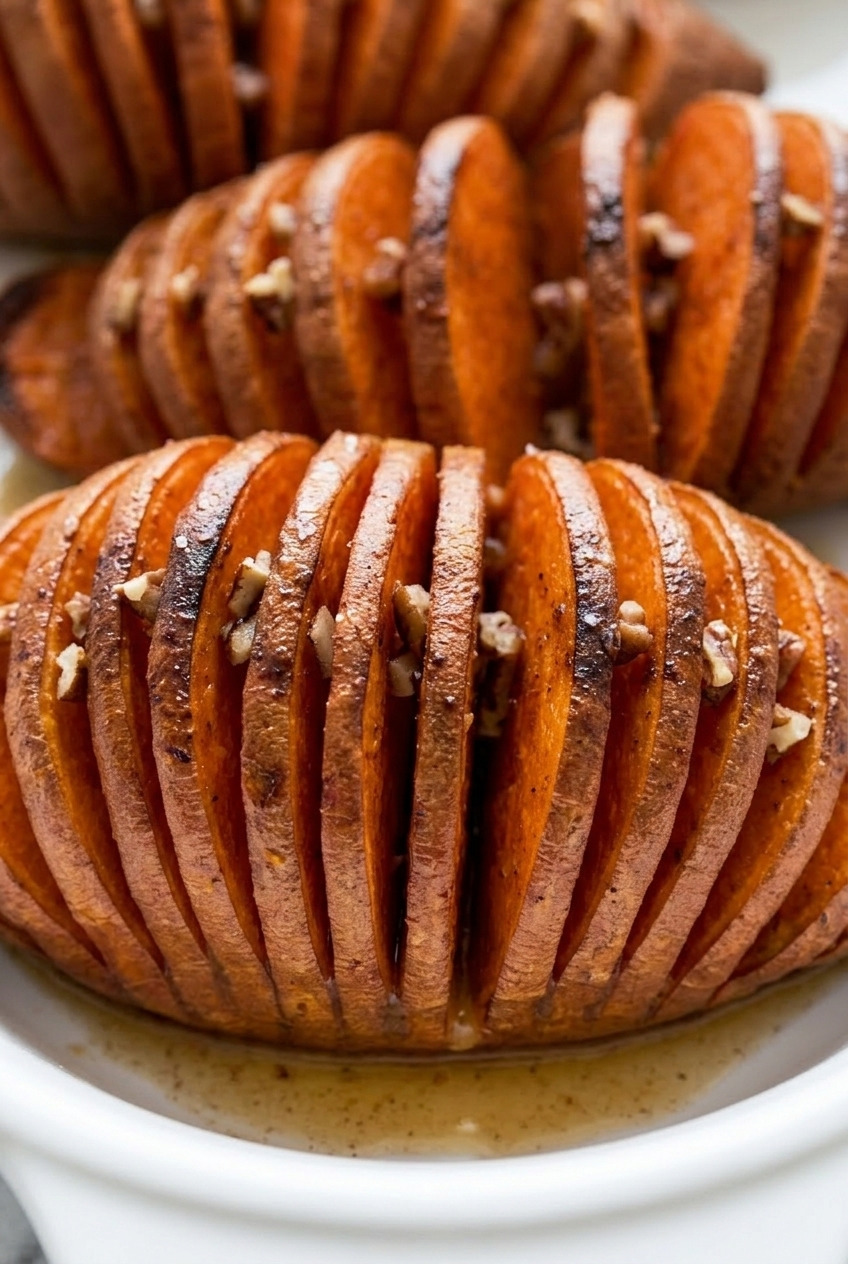
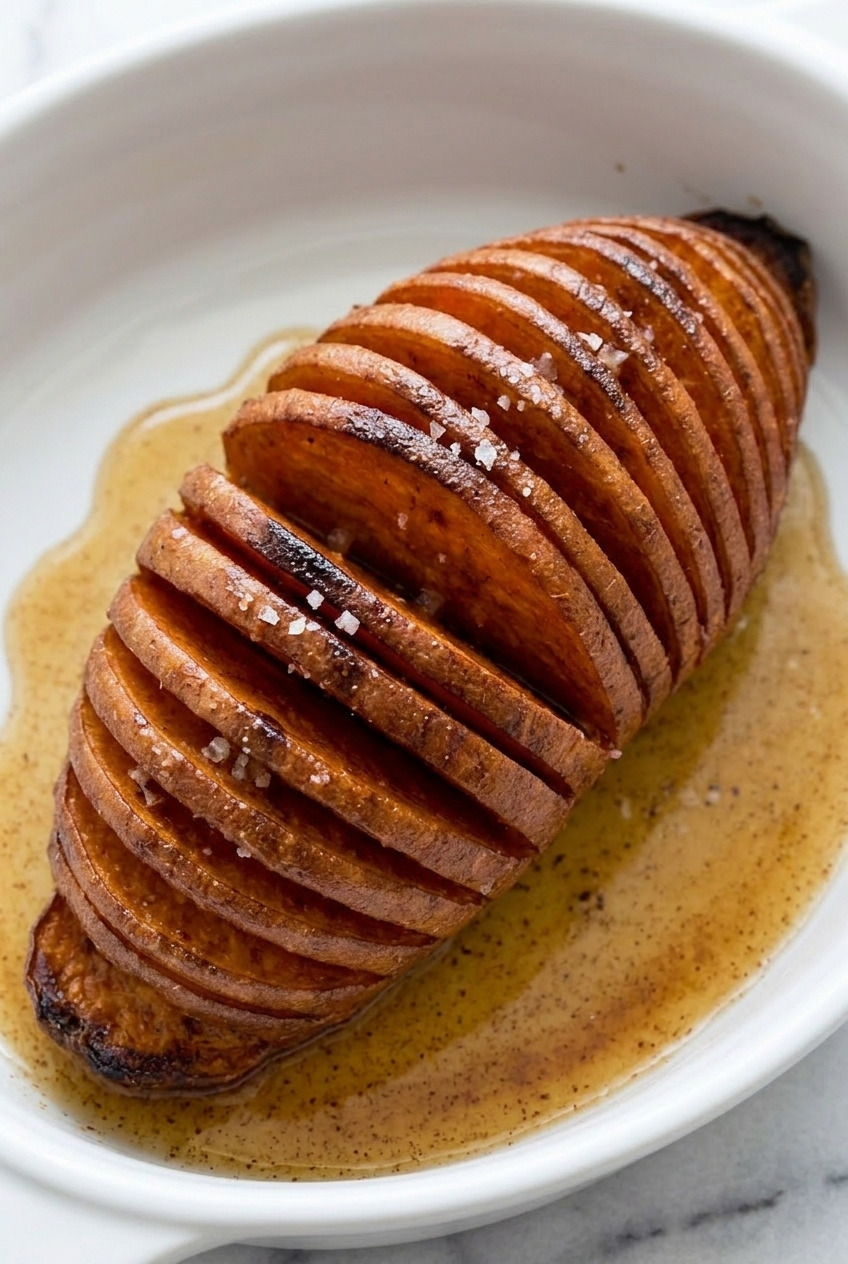
I cut each potato most of the way through in thin slices, roasted them until the slices fanned open like a deck of cards, and then started spooning maple cinnamon butter down into the gaps.
Same maple, same cinnamon, same butter you'd put in the casserole.
The difference is that it still tastes like a potato, and the edges of every slice go crisp and a little chewy at the tips.
I've made them at least a dozen times since, and I make them now on regular Sundays with a roast chicken, not just in November.
One warning before you start, because I learned it the hard way.
The maple butter does not go on at the beginning.
Maple burns long before a sweet potato is cooked through, so the first half hour is plain, and the glaze goes on in stages after that.
Get that one thing right and these are close to foolproof.
What a Hasselback Sweet Potato Is
A hasselback potato is just a potato sliced thinly almost all the way through, so it opens like an accordion. The cut came out of a Stockholm restaurant called Hasselbacken back in the 1950s and it never really went away.
The point isn't the look, even though the look is very good.
The point is surface area.
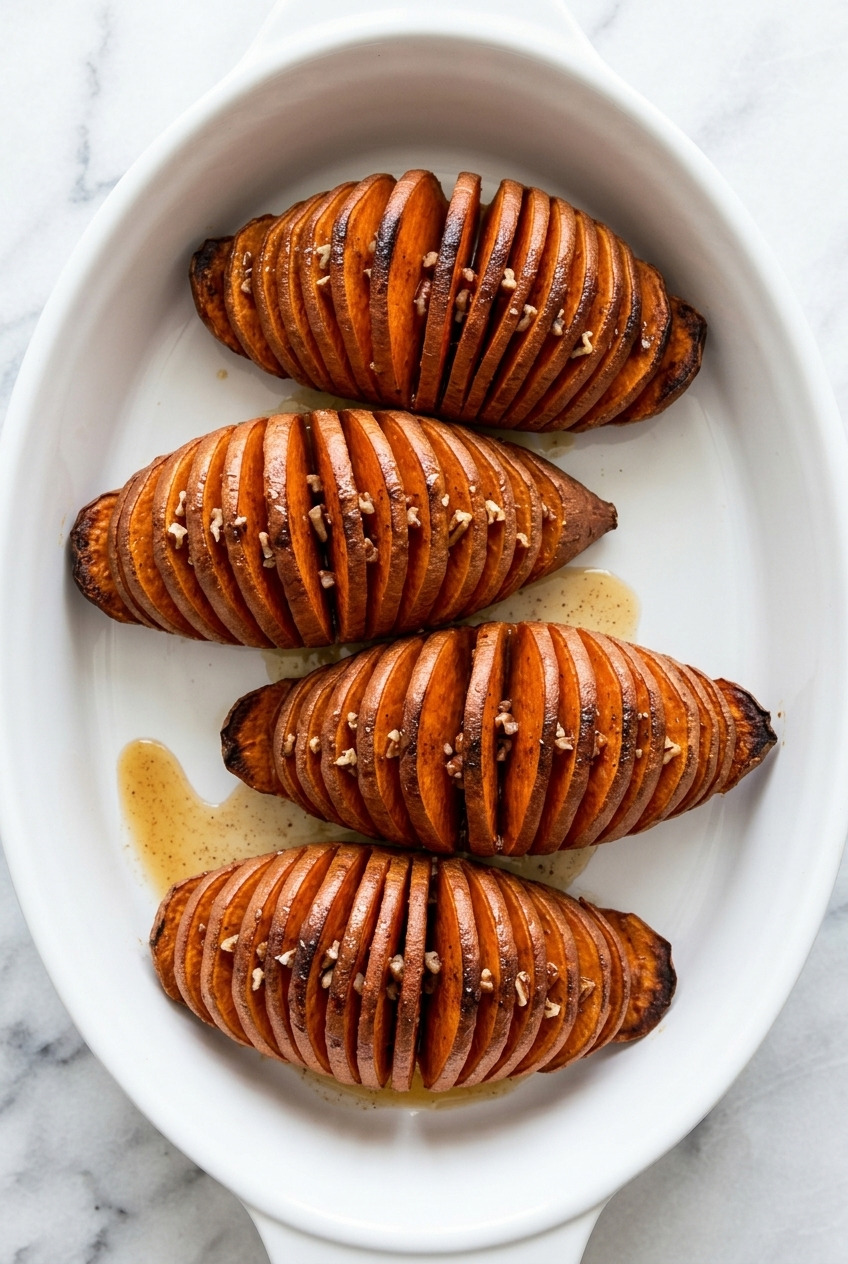
One whole roasted sweet potato has one skin and one soft interior. A hasselback has fifteen or twenty edges that dry out, brown, and crisp, plus fifteen or twenty slits that hold onto glaze instead of letting it slide off.
Why These Instead of Sweet Potato Casserole
This is the same flavor with a completely different texture. If your family likes the maple and cinnamon part of the casserole but nobody's excited about the mashed part, this is the swap.
- No mixer, no mashing. You cut, you roast, you baste. That's the whole job.
- Everybody gets their own. One potato per person, so nobody's fighting over the crispy corner of the pan.
- Texture contrast. Crisp fanned edges on the outside, soft and custardy down at the base of the slices.
- It looks like you tried. A tray of these on the table gets a reaction that a casserole dish does not.
- Less sugar overall. Three tablespoons of maple across four potatoes, and no marshmallows.
Sound like a downgrade to the casserole loyalists? Serve both once and see which pan empties.
Ingredients
There are seven things in this recipe and you probably have five of them. Nothing here is fussy, but a couple of choices matter more than they look.
- Sweet potatoes (4 medium, 6 to 8 ounces each). Small and straight beats big and lumpy every time. A fat, curved potato is hard to slice evenly and it takes forever to cook through. Leave the skin on.
- Unsalted butter (4 tablespoons). Real butter. It browns slightly in the slits and that toasted flavor is half the appeal.
- Pure maple syrup (3 tablespoons). Grade A dark if you can find it. Pancake syrup is corn syrup with flavoring and it tastes like it here.
- Ground cinnamon (¾ teaspoon). This is the named flavor, so don't be shy with it. Fresh cinnamon, not the jar from four years ago.
- Ground nutmeg (⅛ teaspoon). Just enough to sit behind the cinnamon. You shouldn't be able to name it in a blind taste.
- Olive oil (1 tablespoon). For the first plain roast, because butter alone would brown too fast at the start.
- Kosher salt (¾ teaspoon). Split between the potatoes and the butter. Without it the whole thing reads flat and one-note.
What's deliberately not in here: pecans and bacon. Plenty of versions online add both, and both are good, but they push this into a different dish. If nutty and savory is what you're after, my thyme, pecan and parmesan version is the one you want. This one is butter, maple and cinnamon, full stop.
How to Cut a Hasselback Sweet Potato
The whole recipe lives or dies on one thing: not cutting all the way through. Sweet potatoes are denser than russets and they taper hard at both ends, so the knife catches and then suddenly doesn't.
Here's what actually works.
Step 1: Give It a Flat Side
Trim a thin sliver off one long side of the potato and set it down on that flat.
A potato that can roll will roll, usually mid-slice.
Step 2: Build a Knife Stop
Lay a wooden chopstick along each long side of the potato, snug against it, and cut straight down until the blade lands on the sticks.
No chopsticks? Set the potato in the bowl of a large wooden spoon, and the curve stops your knife for you.
I use two chopsticks and a thin ruler-straight paring approach, and I still slow down at the tapered ends.
Step 3: Slice a Scant ¼ Inch
Work from one end to the other in even slices about ¼ inch thick.
Thinner fans open wider and crisp more, but they also tear off the base.
A scant ¼ inch is the number I've landed on after a lot of torn slices.
Fair warning: the last inch at each tapered end is where almost everybody cuts through. Slow down there, and if one slice does come free, just lay it back in place. It bakes right back into the fan.
Why the Fans Open in the Oven
Nobody tells you this and it explains the whole method. When the potato goes in, the slices are still pressed flat against each other.
Three things happen as it roasts.
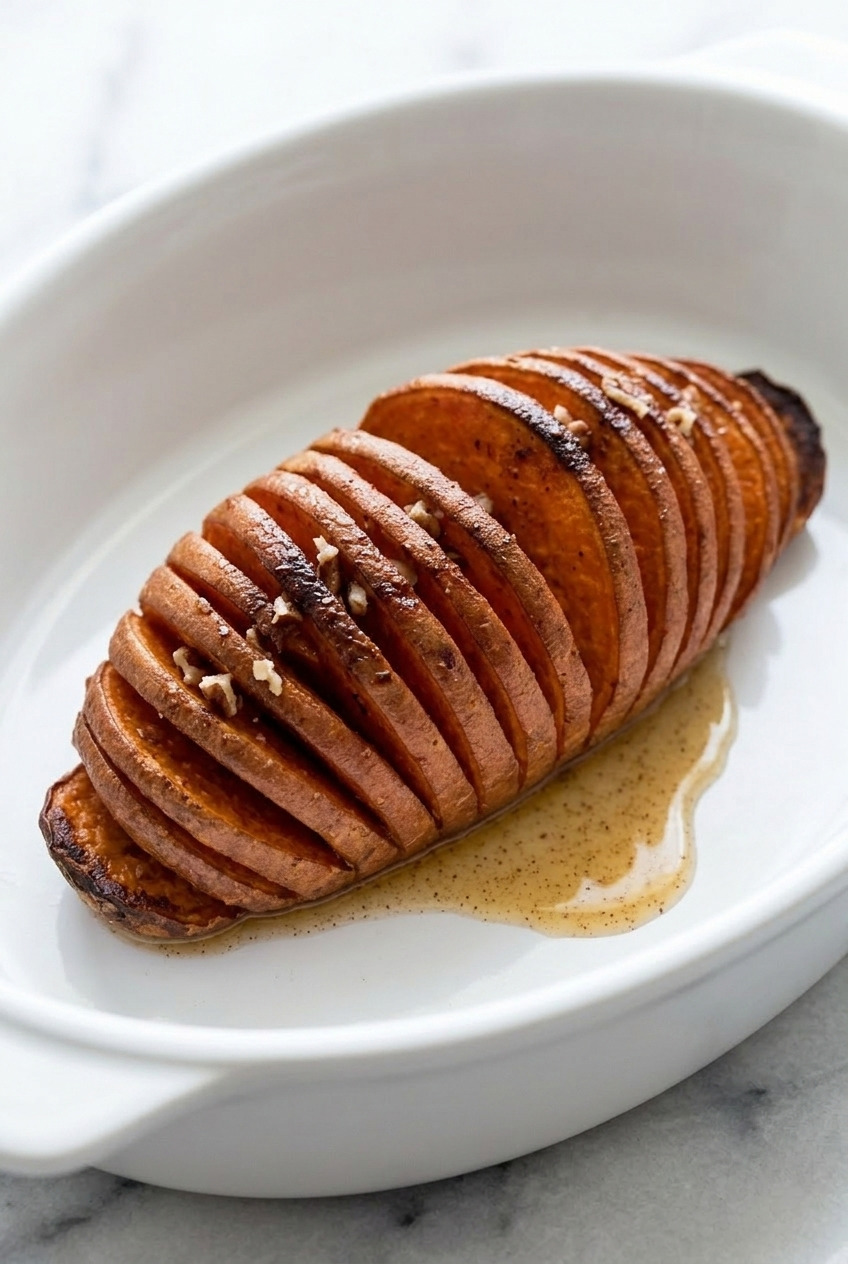
- The cut faces lose moisture. Each slice shrinks slightly and pulls away from its neighbor.
- The potato slumps. As the starch softens, the whole thing settles outward and downward, which spreads the fan.
- Fat wicks down between the slices. Oil, then butter, runs into every gap and keeps the slices from resealing.
That third one is exactly why the glaze goes on late.
At minute zero the slices are shut tight, so anything you brush on just sits on top of the potato and scorches. At minute thirty the fan is open, the gaps are there, and the maple butter goes where you actually want it.
How to Make Them
Step 1: Oil, Salt, and Roast Plain
Heat the oven to 400°F.
Rub the cut potatoes with 1 tablespoon of olive oil, working a little down into the slits with your fingers, and season with half the salt.
Roast for 30 minutes, untouched.
Step 2: Make the Maple Cinnamon Butter
Melt 4 tablespoons of butter with the maple syrup, cinnamon, nutmeg, and the rest of the salt.
Whisk it, because the syrup and the butter want to separate.
Keep it warm and pourable.
Step 3: Start Basting
At the 30 minute mark the fans should be visibly open.
Spoon or brush about a third of the maple butter over the potatoes, using the back of the spoon to nudge it down into the slits rather than just wetting the tops.
Back in the oven for 10 minutes.
Step 4: Baste Twice More
Repeat at 40 minutes and again at 50 minutes, using the rest of the butter.
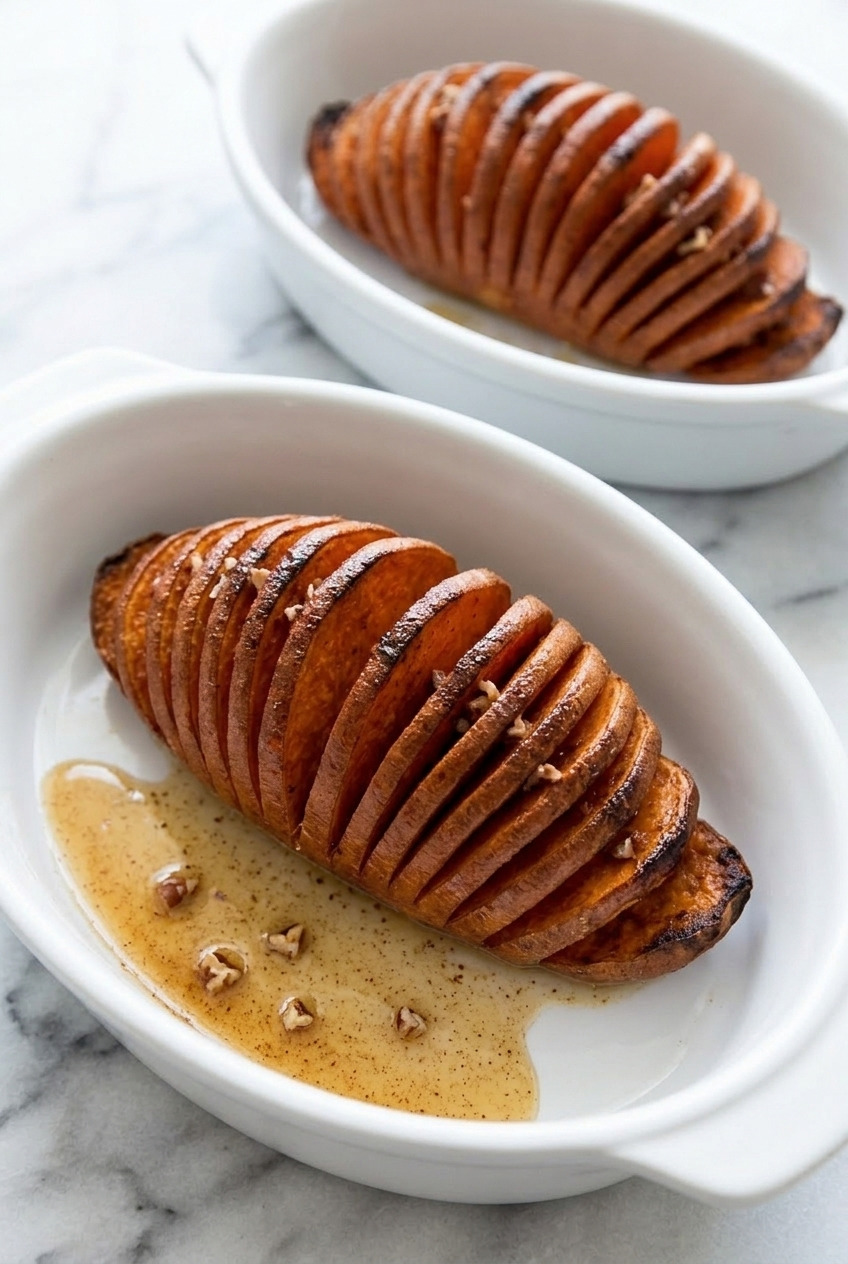
By the third pass there'll be glaze pooled in the dish, and that's the good stuff. Spoon it back over the potatoes.
Step 5: Check and Rest
They're done when a thin knife slides into the thickest part with zero resistance and the outer slice tips are dark and slightly curled, usually 50 to 60 minutes total.
Rest 5 minutes, spoon the pan glaze over one last time, and finish with flaky salt if you have it.
The Basting Schedule
If you remember one thing from this article, make it this. Sweet potatoes need close to an hour. Maple syrup starts to burn in about twenty minutes at 400°F.
Those two facts are why so many hasselback sweet potato photos online have black tips.
The schedule I use:
- Minutes 0 to 30. Olive oil and salt only. Nothing sweet.
- Minute 30. First baste, about a third of the butter, worked into the slits.
- Minute 40. Second baste.
- Minute 50. Third and final baste, then finish.
Three thin coats build a layered glaze that clings. One thick coat at the start builds a burnt crust and a bitter aftertaste.
Worth setting a timer for? Every single time.
Tips for Success
- Buy small, straight potatoes. Six to eight ounces, roughly even in thickness. This one decision fixes half the problems people have with hasselbacks.
- Don't parboil. It sounds helpful and it isn't. Softened slices tear off the base as soon as you move the potato.
- Dry the skin. Scrub them, then towel them properly dry before oiling. Wet skin steams instead of crisping.
- Give them room. Space between the potatoes in the dish, or they trap steam and the fans stay soft.
- Use a shallow dish, not a deep one. A deep dish shields the sides of the potatoes from the heat and you lose the crisp edges.
- Spoon the pooled glaze back on. The best-tasting butter in the whole recipe ends up in the bottom of the dish. NEVER leave it there.
- Reheat the butter if it seizes. Ten seconds in the microwave and a whisk brings it back together.
Make Ahead and Air Fryer
These are genuinely holiday-friendly, which not every side dish is. Two ways to get ahead of it.
- Cut ahead. Slice the potatoes up to a day early and hold them submerged in cold water in the fridge. Drain and dry them very well before roasting.
- Roast ahead. Do the plain 30 minute roast in the morning, leave them at room temperature, then finish with the three bastes for about 25 minutes before dinner.
- Air fryer. Two potatoes at 370°F for 25 to 30 minutes, plain for the first 15, then basting twice. Faster, crispier tips, and a good option when the oven is full of turkey.
What to Serve Them With
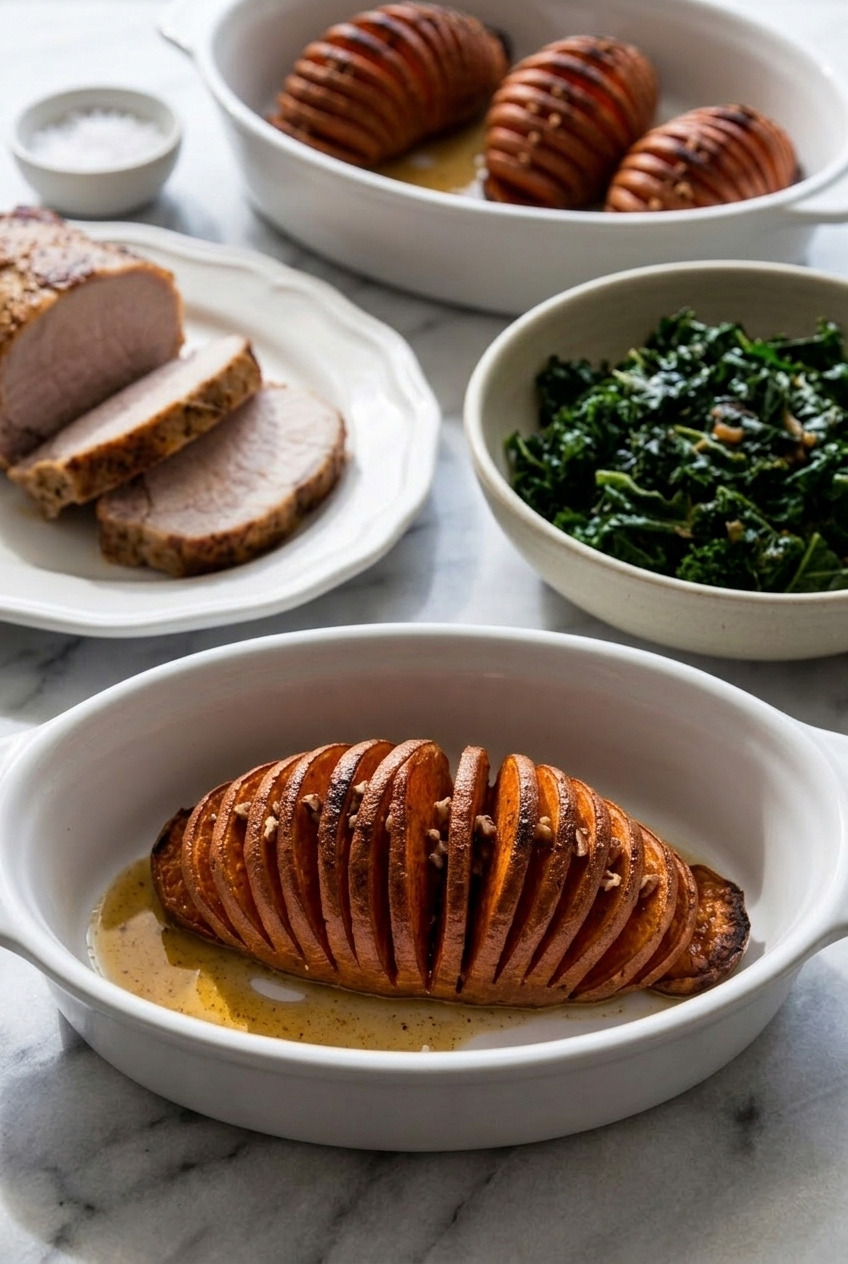
This is a side dish for a savory meal, not a dessert. The maple and cinnamon read as seasoning here, the way they would in a glaze on a ham.
- Roast turkey. The obvious one, and the reason most people search for this in November.
- Glazed ham. Maple against salty pork is hard to beat.
- Pork loin or thick chops. My favorite pairing, honestly, and a Sunday regular here.
- Roast chicken. Weeknight version. The potatoes go in the oven first and the chicken joins them.
- Something sharp on the side. A bitter green salad or braised greens with vinegar keeps the plate from going all sweet.
Storage and Reheating
- Fridge. Airtight, up to 4 days. The glaze firms up cold and that's normal.
- Oven reheat. 400°F for 10 to 12 minutes on a sheet pan. The edges crisp back up almost completely.
- Air fryer reheat. 370°F for 5 minutes, and it's arguably better than the oven.
- Not the microwave. It'll be hot and it'll be soft, and every crisp edge you worked for will be gone.
- Freezing. I don't. The slices go watery and the fan collapses on thawing.
Frequently Asked Questions
How do I stop the knife from cutting all the way through?
Lay a wooden chopstick tight along each long side of the potato and cut down until the blade hits them. A large wooden spoon works too: set the potato in the bowl of the spoon and the curve stops the blade. Trim a sliver off one side first so the potato sits flat and can't roll.
Do I need to parboil hasselback sweet potatoes?
No, and I'd argue against it. Parboiling softens the slices before they have any structure, so they tear away from the base when you move the potato. A raw sweet potato holds its fan and roasts through fine in under an hour.
How long do they take, and how do I know they're done?
50 to 60 minutes at 400°F for a 6 to 8 ounce potato. Done means a thin knife slides into the thickest part with no resistance, the fan is fully open, and the outer slice tips have darkened and curled slightly.
Why did my maple butter burn?
It went on too early. Maple starts to scorch in around twenty minutes at 400°F, and the potato needs closer to an hour. Roast plain for the first 30 minutes, then baste in three thin coats at 30, 40 and 50 minutes.
What does the cinnamon actually do here?
It gives the sweetness somewhere to go. Sweet potato plus maple alone is one flat note of sugar. Cinnamon adds a warm, slightly bitter, woody edge that makes the whole thing taste seasoned rather than just sweet, which is also why the salt matters as much as it does.
Can I make these ahead for a holiday dinner?
Yes. Either slice them a day early and hold them in cold water in the fridge, or do the plain 30 minute roast in the morning and finish with the bastes for about 25 minutes before you eat. The second option is the one I use when the oven is busy.
My slices tore off at the base. What went wrong?
Usually the slices were cut too thin, or the cut ran too deep at the tapered end where the potato is shallow. Aim for a scant ¼ inch and leave a good half inch of uncut potato at the bottom. A slice that does come loose can be laid back in place before roasting and nobody will know.
Recipe
Hasselback Sweet Potatoes With Maple Cinnamon Butter
Ingredients
For the Sweet Potatoes
- 4 medium sweet potatoes 6 to 8 ounces each, scrubbed, skin on
- 1 tablespoon olive oil
- ⅜ teaspoon kosher salt for the plain roast
For the Maple Cinnamon Butter
- 4 tablespoons unsalted butter
- 3 tablespoons pure maple syrup Grade A dark preferred
- ¾ teaspoon ground cinnamon
- ⅛ teaspoon ground nutmeg
- ⅜ teaspoon kosher salt
- black pepper a few grinds
- flaky salt to finish, optional
Instructions
Cut the Potatoes
- Heat the oven to 400F. Scrub the sweet potatoes and dry them completely, leaving the skins on.
- Trim a thin sliver off one long side of each potato so it sits flat and cannot roll.
- Lay a wooden chopstick tight along each long side of the potato, or set the potato in the bowl of a large wooden spoon. Slice down in even cuts a scant ¼ inch apart, letting the blade stop on the chopsticks so the slices stay attached at the base. Slow down at the tapered ends, where the knife most often cuts through.
Roast and Baste
- Rub the potatoes with the olive oil, working a little down into the slits with your fingers, and season with the ⅜ teaspoon of salt. Arrange them in a shallow baking dish with space between them.
- Roast plain for 30 minutes. Nothing sweet goes on yet: maple scorches long before a sweet potato is cooked through.
- While they roast, melt the butter with the maple syrup, cinnamon, nutmeg, remaining salt and a few grinds of pepper. Whisk until smooth and keep it warm and pourable.
- At 30 minutes the fans should be visibly open. Spoon about a third of the maple cinnamon butter over the potatoes, nudging it down into the slits with the back of the spoon. Return to the oven for 10 minutes.
- Baste again at 40 minutes and a third time at 50 minutes, using the rest of the butter and spooning any glaze pooled in the dish back over the potatoes.
- They are done when a thin knife slides into the thickest part with no resistance and the outer slice tips are dark and slightly curled, 50 to 60 minutes total.
- Rest 5 minutes, spoon the pan glaze over one last time, and finish with flaky salt.
Notes
- Baste late, baste three times: nothing sweet for the first 30 minutes, then thin coats at 30, 40 and 50 minutes. One thick coat at the start burns.
- Buy small, straight potatoes: 6 to 8 ounces and even in thickness. This fixes most hasselback problems before you pick up the knife.
- Do not parboil: softened slices tear off the base as soon as the potato is moved.
- Shallow dish, with space: a deep dish shields the sides and the fans stay soft instead of crisping.
- Make ahead: slice a day early and hold in cold water, or do the plain 30 minute roast in the morning and finish with the bastes before dinner.
- Storage: 4 days refrigerated. Reheat at 400F for 10 to 12 minutes or in an air fryer at 370F for 5 minutes, never the microwave.