I roasted sweet potatoes wrong for years and never once questioned it.
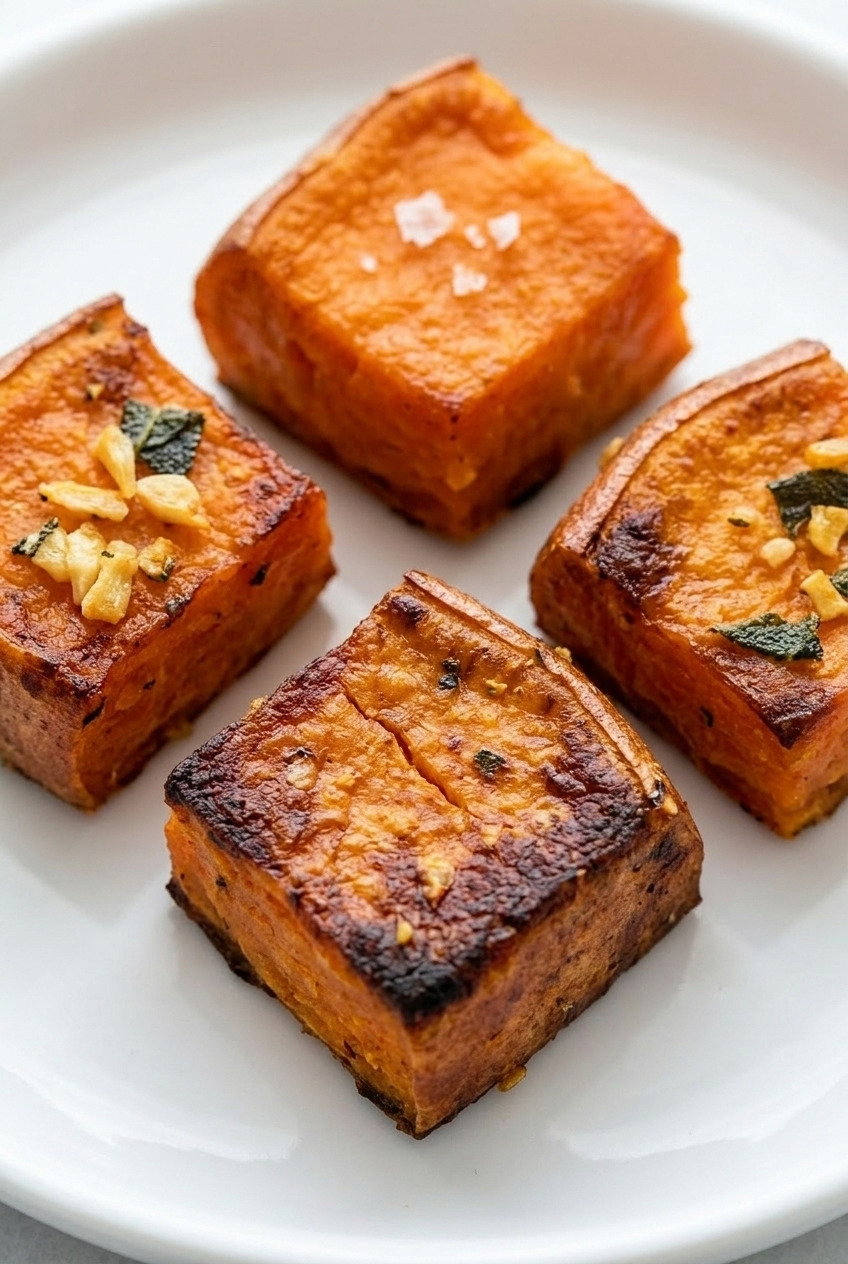
Cubes went on a pan, oil went over them, garlic went in with everything else, and 30 minutes later I'd pull out a tray of soft orange squares that all tasted vaguely of scorch.
They were fine.
Nobody complained.
But nothing on that pan had a browned edge, and the garlic tasted like it had been punished.
Two things fixed it, and neither one costs any extra effort.
The first was giving the cubes room. Crowded cubes steam each other, and a wet surface will never brown no matter how hot your oven runs.
The second was holding the garlic and sage back until the last eight minutes.
Minced garlic burns to bitter in about fifteen minutes at high heat, and chopped sage dries out and turns acrid right alongside it.
Add them at the end instead and they bloom in the hot oil already clinging to the potatoes.
Now I get browned faces, soft centers, and garlic that actually tastes like garlic.
This is a weeknight side in under 30 minutes, and it's the one sweet potato dish I deliberately make extra of.
Cold cubes go into a grain bowl the next day, which is more than I can say for a tray of wedges.
Cubes, Not Wedges or Fries
The shape you cut decides everything about how this dish behaves. Wedges, fries, rounds and cubes are all the same potato and they are not the same food.
- A cube browns on several faces at once. Six flat sides, four or five of them touching hot metal or hot air, versus a wedge that gets two.
- It cooks in 25 minutes. A ¾ inch cube is small enough to cook through fast and big enough not to dry into a chip.
- It scoops. Cubes go into a bowl, a salad, a taco, under a fried egg. A wedge just sits on the plate looking like a side dish.
- Leftovers actually work. This is the real argument. Cold roasted cubes are great the next day, and cold fries are a sad thing.
If you want the long crisp version, that's fries. This is the one you make when dinner is in half an hour.
The Five Things You Need
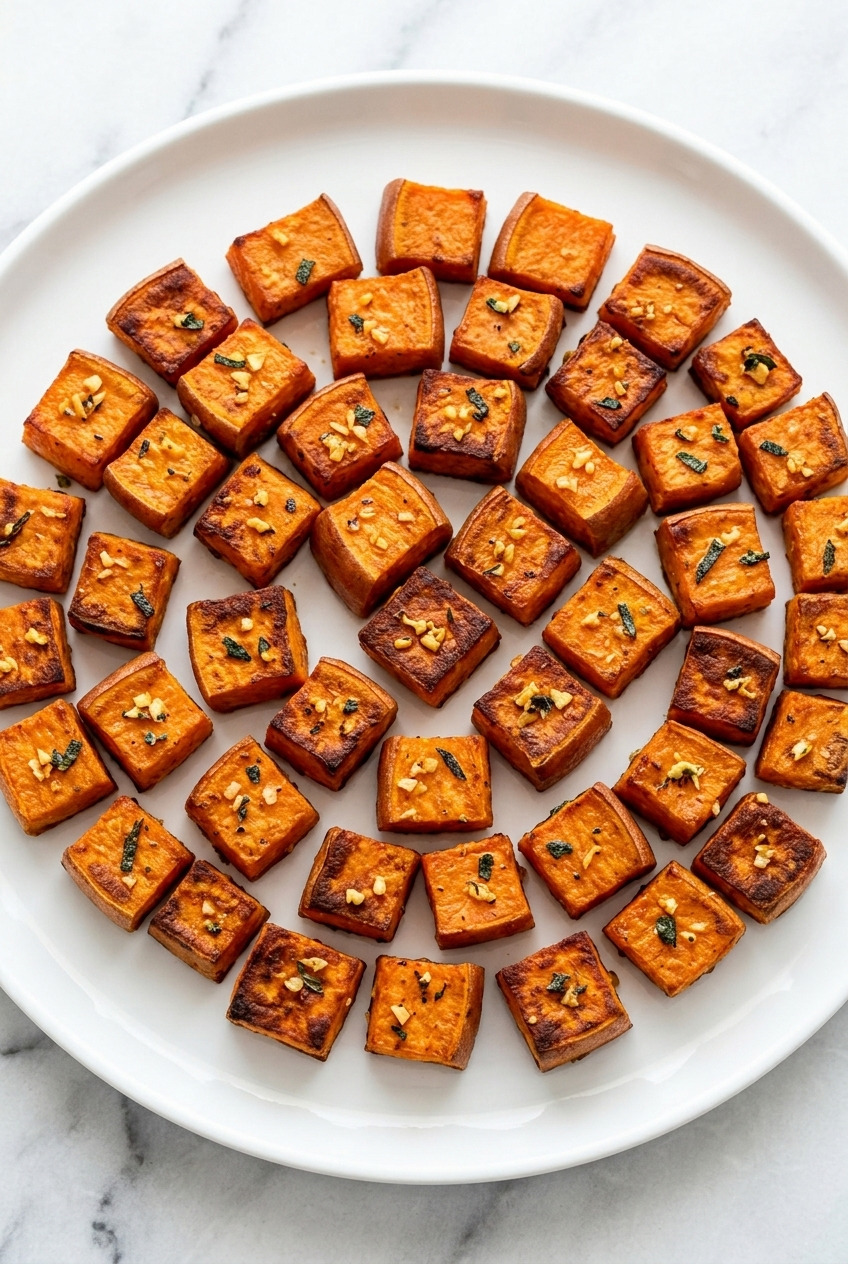
Five ingredients, and the only one people get wrong is the herb. Everything here is a pantry item except the sage.
- Sweet potatoes (2 pounds). Skin on. It crisps, it holds the cube together, and peeling two pounds of sweet potato is fifteen minutes you don't get back.
- Olive oil (2 tablespoons). Enough to coat every face. Some recipes use a single tablespoon for this much potato and the cubes come out dry and pale.
- Garlic (3 cloves, minced). Fresh, minced, and added late. Garlic powder is a different flavor entirely and it won't do this.
- Fresh sage (1 tablespoon, finely chopped). Fresh only. Dried sage is dusty and it goes bitter in a hot oven. Sage is strong, so a tablespoon across two pounds is the right amount.
- Kosher salt (1 teaspoon) and black pepper. Salt goes on at the start with the oil. It draws a little moisture to the surface early and that helps the browning.
Optional but good: flaky salt and lemon zest at the very end. The zest in particular wakes the whole pan up.
How to Cut Sweet Potato Cubes
Uniform matters more than size. Mixed cube sizes give you burnt small ones and raw big ones on the same pan, and there's no oven setting that fixes it.
Step 1: Give It a Flat Face
Cut a thin slice off one long side so the potato lies still instead of rolling under your knife.
Step 2: Planks, Then Batons, Then Cubes
Cut the potato lengthwise into ¾ inch planks.
Stack a couple of planks and cut them into ¾ inch batons.
Turn the batons and cut across into cubes.
Three cuts, and every piece comes out the same size.
Step 3: Deal With the Skinny End
The tapered ends won't give you full cubes and that's fine.
Cut them a little thicker so they end up roughly the same volume as everything else.
Pro tip: if a few pieces come out noticeably small, put them at the edges of the pan where the heat is gentler.
Why Roasted Sweet Potatoes Come Out Soggy
This is the complaint, and it's four causes in a predictable order. Fix them in this order and the problem goes away.
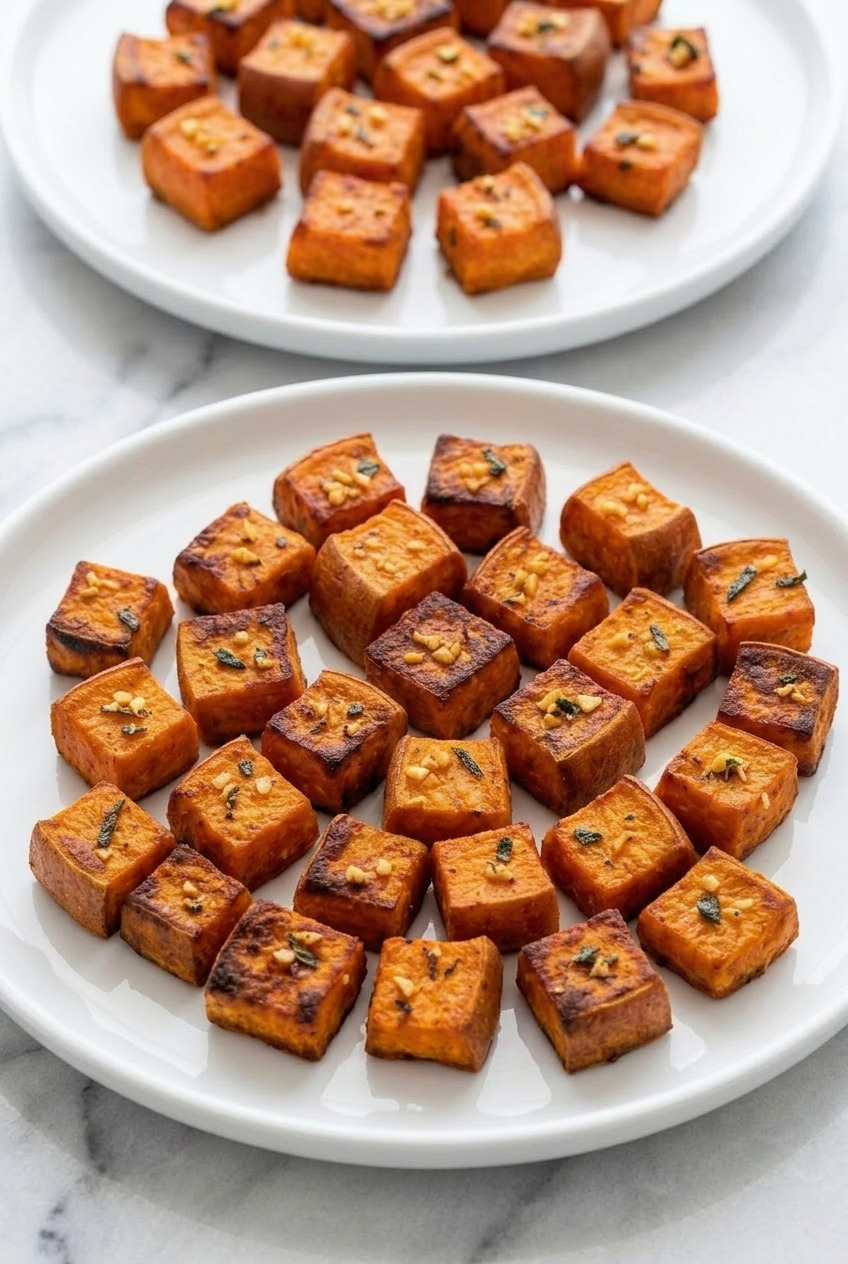
- The pan is crowded. Cubes touching each other release steam into the gaps between them, that steam has nowhere to go, and the surfaces never dry out enough to brown. You need visible space around every cube. One large pan, or two pans, never one small crowded one.
- The surface was wet. Wash the potatoes, then dry them properly with a towel before cutting. Any water on the outside has to boil off before browning can even start.
- The oven was too cool. 425°F is the number. At 375°F the cubes cook through and go soft before they ever brown.
- You stirred too much. Every stir breaks whatever crust has started to form. One flip at the halfway point, and that's it.
Three things people try that make it worse.
- Don't soak them. Soaking pulls out surface starch, which sounds useful, and then leaves you with a wet potato to dry again. Not worth the mess.
- Don't parboil. You end up with a soft cube that falls apart on the pan.
- Don't cover the pan. Foil traps the exact steam you're trying to get rid of.
Add the Garlic and Sage Late
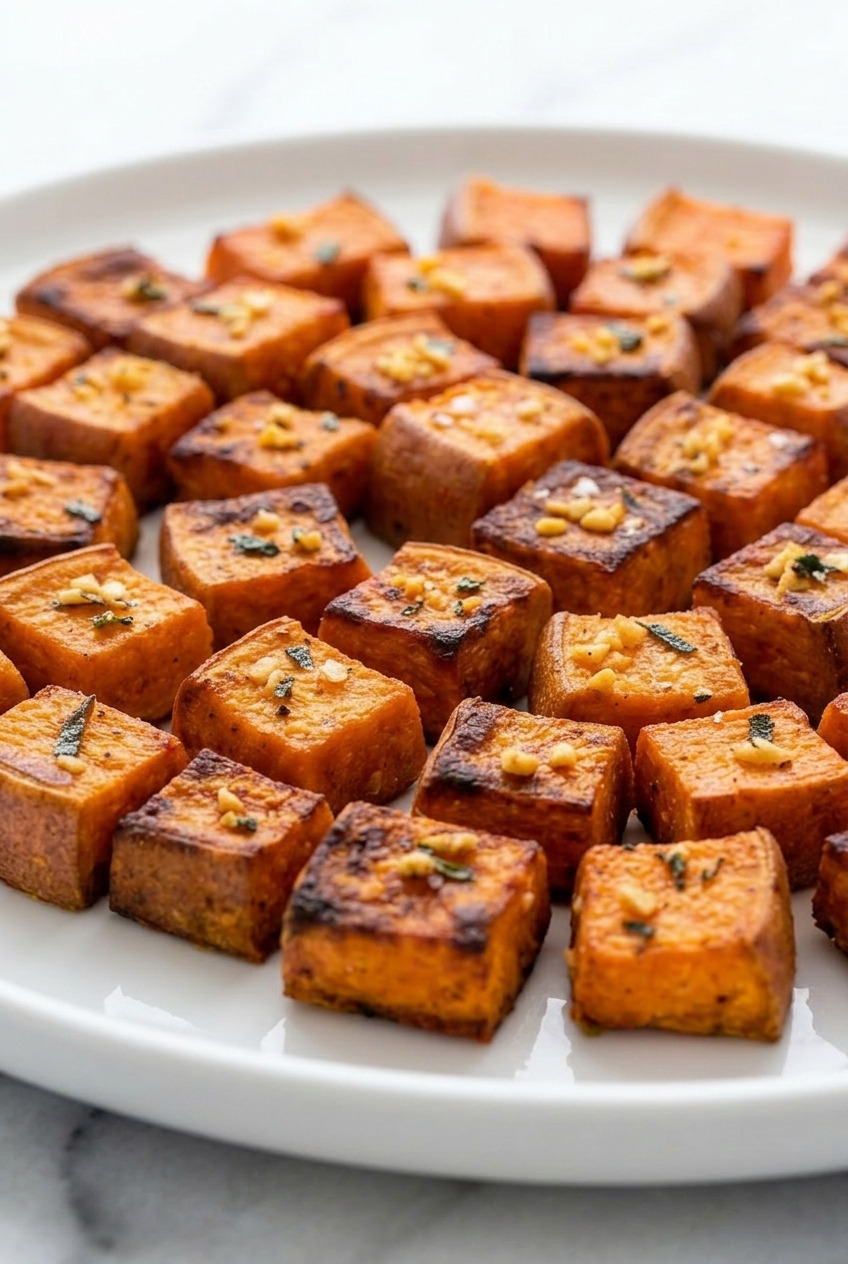
This is the change that makes the dish, and almost every recipe out there gets it wrong. Minced garlic and chopped sage go in with the oil at the start in most versions, then spend 25 minutes at 425°F.
Garlic that small turns bitter in about fifteen minutes at that heat.
Sage dries out, darkens and goes acrid on roughly the same schedule.
So they go in with 8 to 10 minutes left.
Pull the pan, scatter the garlic and sage over the cubes, toss quickly so they land in the oil that's already clinging to the potatoes, and slide it back in.
They cook just enough to lose the raw bite and perfume the whole tray.
Worth pulling the pan out mid-roast? Every time, and it takes twenty seconds.
How to Roast Them
Step 1: Preheat the Pan
Heat the oven to 425°F with a large rimmed sheet pan on the middle rack.
A hot pan sears the first face on contact, which is free browning.
Step 2: Toss Dry Cubes in Oil and Salt
Toss the dried cubes with the 2 tablespoons of olive oil, the salt and the pepper until every face is coated.
No garlic and no sage yet.
Step 3: Spread With Space
Spread them on the hot pan in a single layer with gaps between the cubes.
If it looks tight, use a second pan. This is the whole game.
Step 4: Roast, Flip Once
Roast 15 minutes, flip everything once, then roast another 5 minutes.
Step 5: Garlic, Sage, Finish
Add the garlic and sage, toss, and roast a final 8 minutes.
They're done when the flat faces are deep browned and a cube crushes easily against the pan.
Finish with flaky salt and lemon zest while they're hot.
Tips for Success
- Towel dry the cubes. Ten seconds of effort, visible difference in browning.
- Use the biggest pan you own. Two pounds of cubes needs more room than most people give it.
- Preheat the pan. The single easiest upgrade in this recipe.
- One flip only. Constant stirring is why home roasted vegetables look pale.
- Salt early, flaky salt late. One seasons, the other adds crunch and a hit of salinity on top.
- Don't crowd the corners. The edges of a sheet pan run hotter, so put the biggest cubes there.
- Taste one before the garlic goes in. That tells you if they need more salt while you can still fix it.
Other Seasonings to Try
- Rosemary and thyme. The classic pairing with sweet potato. Thyme can go in early, rosemary should go in late like the sage.
- Smoked paprika and cumin. Warm and savory, and it turns these into taco filling.
- Chili and lime. A pinch of chili flakes in the oil, lime zest and juice at the end.
- Za'atar. Tossed on in the last two minutes, with a little olive oil over the top after.
- Parmesan. A handful of finely grated parmesan in the final five minutes if you want them richer.
How to Serve Them
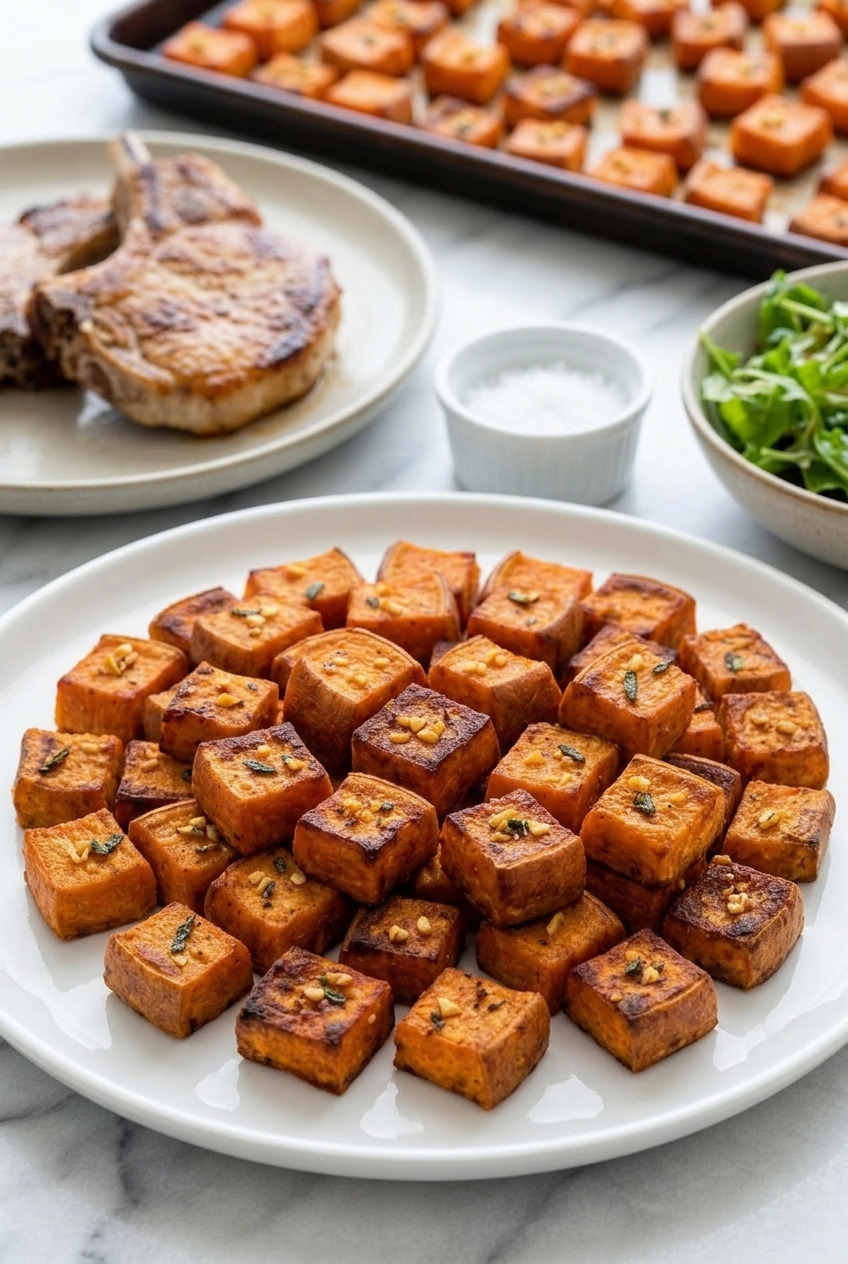
- As a straight side. Roast chicken, pork chops, a pan-seared steak. Anything with pan juices to spoon over.
- In a grain bowl. Farro or rice, greens, something pickled, a yogurt sauce, and these on top.
- Over salad greens. Warm cubes on arugula with a sharp mustard dressing is a full lunch.
- Under a fried egg. My favorite way to eat the leftovers, with hot sauce.
- In tacos. Especially with the smoked paprika and cumin version, with black beans and lime.
Storage and Reheating
- Fridge. Airtight, up to 4 days. They keep better than most roasted vegetables.
- Oven reheat. 425°F on a sheet pan for 5 to 7 minutes and the edges come right back.
- Air fryer reheat. 390°F for 4 minutes. Fastest and crispest.
- Not the microwave. It turns them to mush and there's no recovering from it.
- Cold is fine. Straight from the fridge into a bowl or a salad, no reheating needed.
- Freezing. Works, but the texture goes soft. Better to just eat them.
Frequently Asked Questions
Do I need to peel sweet potatoes before roasting?
No. The skin crisps up, it holds the cube together on the pan, and it saves you a real amount of prep time. Just scrub them well under cold water and dry them properly, since the skin is going on the plate.
Should I soak or parboil the cubes first?
Neither. Soaking removes some surface starch but leaves you with a wet potato that has to be dried again before it will brown, and parboiling softens the cubes so they break apart on the pan. Raw, dry and well spaced beats both.
What size should I cut the cubes?
Three quarters of an inch, and uniform matters more than the exact number. Mixed sizes mean the small pieces burn while the big ones are still raw. Cut planks, then batons, then cubes, and everything comes out even.
Why are my roasted sweet potatoes soggy instead of crisp?
Almost always a crowded pan. Cubes that touch each other release steam into the gaps and the surfaces never dry out enough to brown. Use a bigger pan or split them across two, run the oven at 425°F, dry the cubes before oiling, and flip them only once.
Why did my garlic taste burnt?
It went in too early. Minced garlic turns bitter in around fifteen minutes at 425°F, and most recipes leave it in for the full roast. Add the garlic and the sage with 8 to 10 minutes left and toss so they land in the oil already coating the cubes.
What herbs pair best with sweet potatoes?
Sage is the one I reach for here, with rosemary and thyme close behind. All three are woody herbs with enough bitterness to balance the sweetness. Thyme is the most forgiving and can go in early, while sage and rosemary need to be added late or they turn acrid.
How long should I roast them, and at what temperature?
About 28 minutes total at 425°F for ¾ inch cubes: 15 minutes, a flip, 5 more minutes, then the garlic and sage for a final 8. They're ready when the flat faces are deep browned and a cube crushes easily against the pan.
Recipe
Herb Roasted Sweet Potato Cubes With Garlic and Sage
Ingredients
For the Sweet Potato Cubes
- 2 pounds sweet potatoes scrubbed, skin on, cut into ¾ inch cubes
- 2 tablespoons olive oil
- 1 teaspoon kosher salt
- ½ teaspoon black pepper
Added at the End
- 3 cloves garlic minced
- 1 tablespoon fresh sage finely chopped
- flaky salt and lemon zest to finish, optional
Instructions
Prep the Cubes
- Heat the oven to 425F with a large rimmed sheet pan on the middle rack.
- Scrub the sweet potatoes and dry them thoroughly with a towel. Leave the skins on.
- Trim a thin slice off one long side so each potato sits flat. Cut lengthwise into ¾ inch planks, stack the planks and cut into ¾ inch batons, then cut across into cubes. Cut the tapered ends a little thicker so every piece is roughly the same volume.
- Toss the dry cubes with the olive oil, salt and pepper until every face is coated. Do not add the garlic or sage yet.
Roast
- Spread the cubes on the hot sheet pan in a single layer with visible space around each one. If the pan looks tight, split them across two pans: crowding is the main cause of soft, pale cubes.
- Roast 15 minutes, flip everything once, then roast 5 minutes more.
- Scatter the minced garlic and chopped sage over the cubes, toss quickly so they land in the oil clinging to the potatoes, and roast a final 8 minutes.
- They are done when the flat faces are deep browned and a cube crushes easily against the pan. Finish with flaky salt and lemon zest while hot.
Notes
- Garlic and sage go in late: minced garlic turns bitter in about 15 minutes at 425F and chopped sage goes acrid on the same schedule. Add both with 8 to 10 minutes left.
- Space is the whole trick: cubes that touch each other steam instead of browning. One big pan or two, never one crowded one.
- Dry the cubes: towel them off before oiling. Surface water has to boil away before browning can start.
- Do not soak or parboil: soaking leaves a wet potato and parboiling gives you cubes that fall apart on the pan.
- One flip only: every extra stir breaks the crust that is forming.
- Storage: 4 days refrigerated, and genuinely good cold in a grain bowl or a salad. Reheat at 425F for 5 to 7 minutes or in an air fryer at 390F for 4 minutes, never the microwave.