The sound is the whole point.
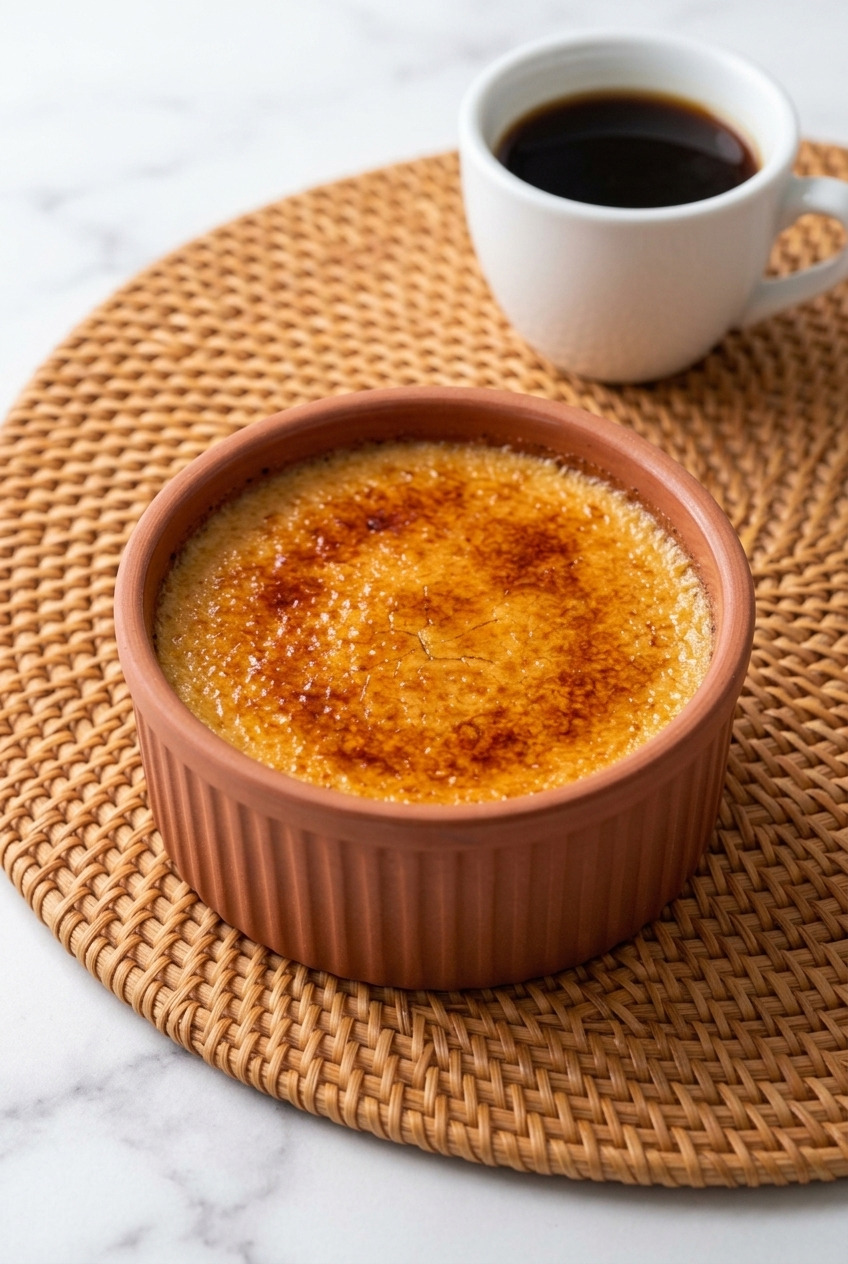
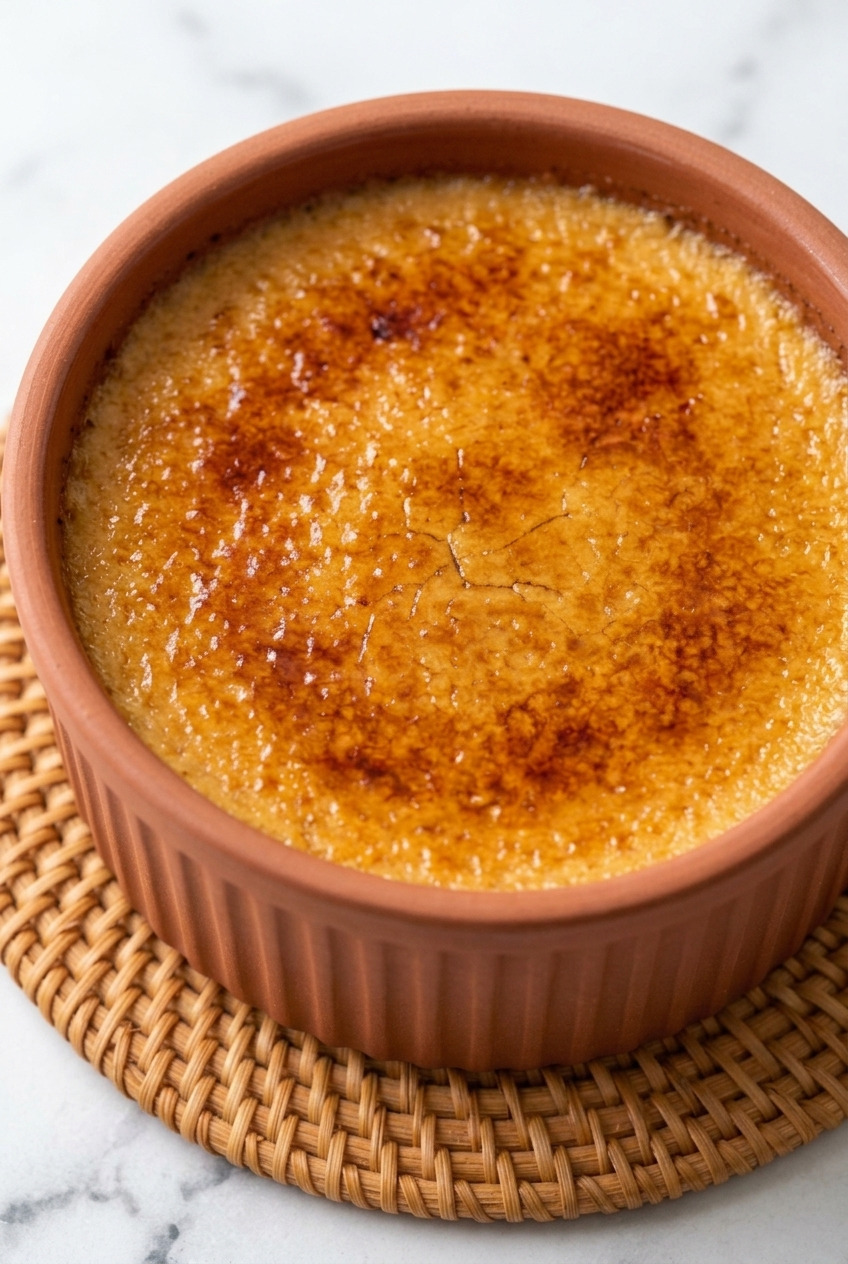
That sharp crack when the spoon breaks through the sugar shell, then the drag as it pulls up cool, dense custard from underneath.
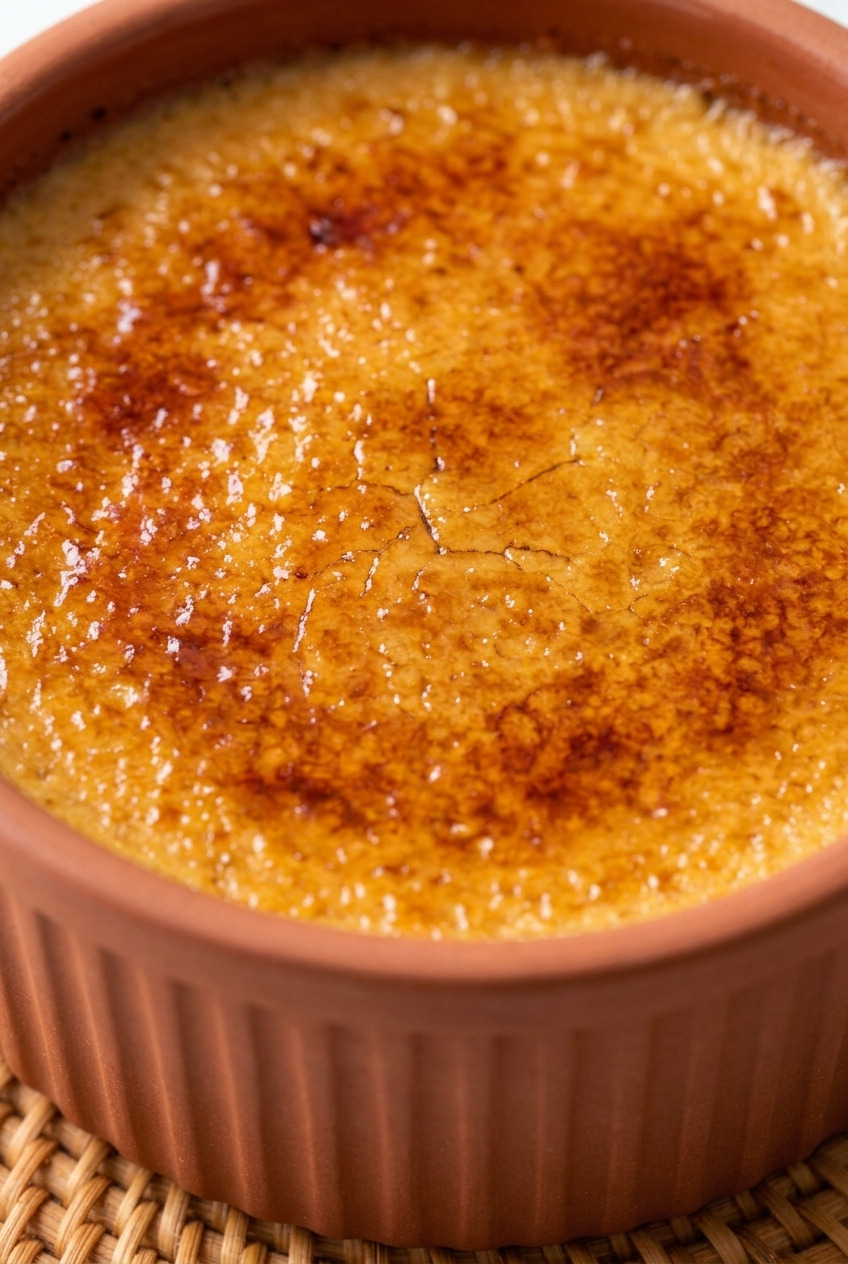
Warm caramelized top, cold creamy middle. It's one of the great texture tricks in dessert.
Now put roasted sweet potato in that custard and see what happens.
The flavor goes deeper and slightly earthy, the color turns a soft amber, and the whole thing starts tasting like the best possible version of a holiday dessert without turning into pie.
Because that's really what this is for.
Every November the sweet potatoes at my house end up either under marshmallows or inside a crust, and both of those are fine, and both of those are exactly what everybody expected.
This is what I bring out instead when I want the table to go quiet for a second.
It sounds far harder than it is.
Six ingredients, real heavy cream, real egg yolks, no dairy-free workarounds, no pastry to roll and blind bake.
The custards bake in a water bath and then sit in the fridge for up to two days doing nothing.
All that's left at dessert time is a spoonful of sugar and about forty seconds with a torch.
Nothing else I make gets that reaction for that little effort.
Why Creme Brulee Works for Sweet Potato
Sweet potato and custard want the same things. Both are built on gentle heat, richness, and restraint.
Sweet potato brings natural sugar and a starchy body that thickens the custard slightly, so it sets softer and creamier than a plain vanilla brulee.
It also brings color. The finished custard is a warm amber that looks like it took far more work than it did.
The key is proportion.
Use too much puree and it goes pasty, closer to a spiced mash than a custard. About ½ cup of roasted puree against 2 cups of cream is the ratio that keeps it recognizably creme brulee.
Then there's the crust.
The bitter edge of burnt sugar is what cuts the sweetness of sweet potato, which is the exact thing marshmallow topping fails to do.
Sweet against slightly bitter, cold against warm. That's why this works and a sweeter topping doesn't.
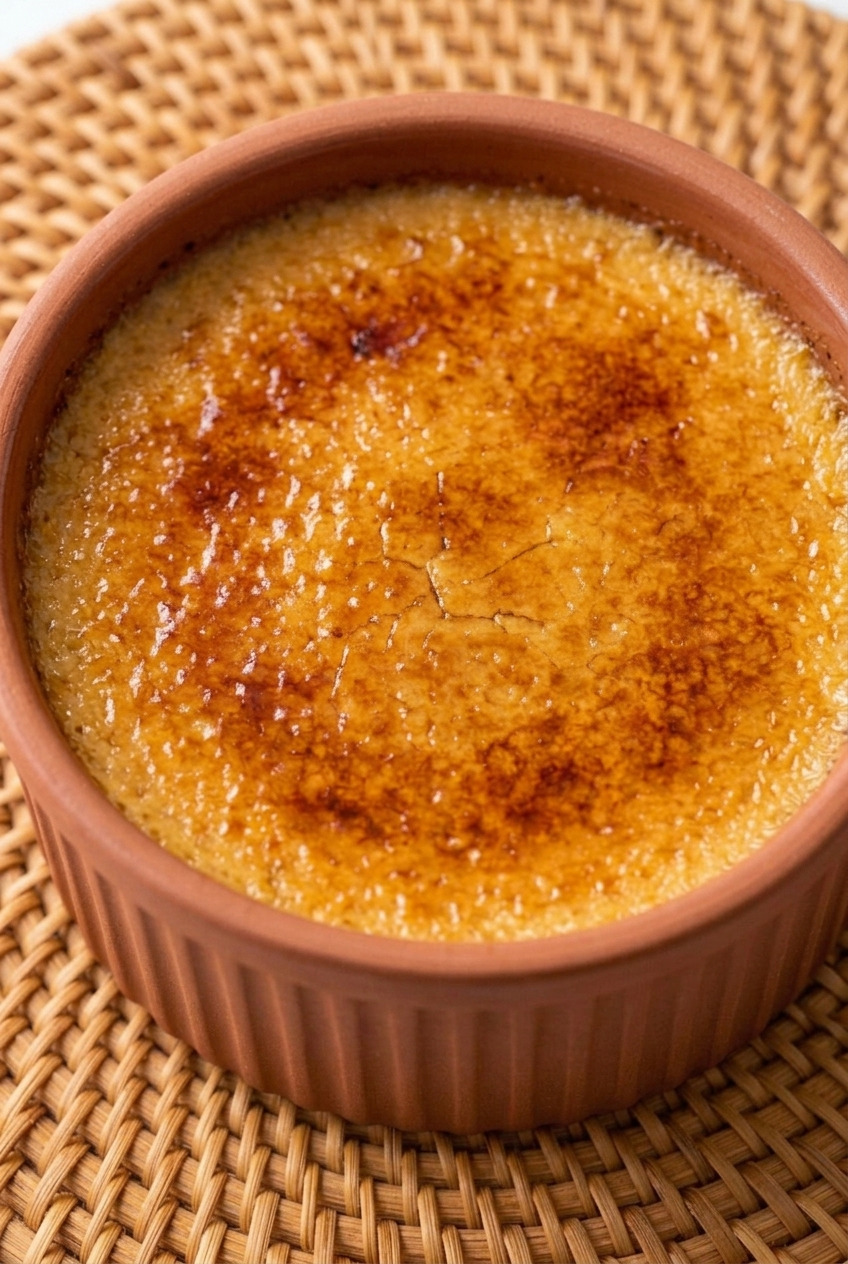
Ingredients You'll Need
Six ingredients, and there's no substituting your way around the dairy. Cream and yolks are what make it custard.
- Sweet potato (1 medium, roasted, about ½ cup puree). Roast it whole. Boiled sweet potato adds water, and water is the enemy of a clean set.
- Heavy cream (2 cups). Full fat, nothing lighter. Half and half will set but it comes out thin and slightly icy.
- Egg yolks (5 large). Yolks only. Whites add protein that sets too firm and turns the texture rubbery.
- Granulated sugar (¼ cup for the custard). Plus 1 to 1 ½ teaspoons per ramekin for the crust.
- Vanilla extract (1 teaspoon). A split vanilla bean steeped in the cream is better if you have one.
- Cinnamon (a pinch) and salt (a pinch). Just enough cinnamon to nod at the sweet potato without turning this into pumpkin spice.
Sugar note: plain granulated sugar torches more evenly than turbinado. The large crystals in raw sugar melt at different rates and leave you with a patchy crust.
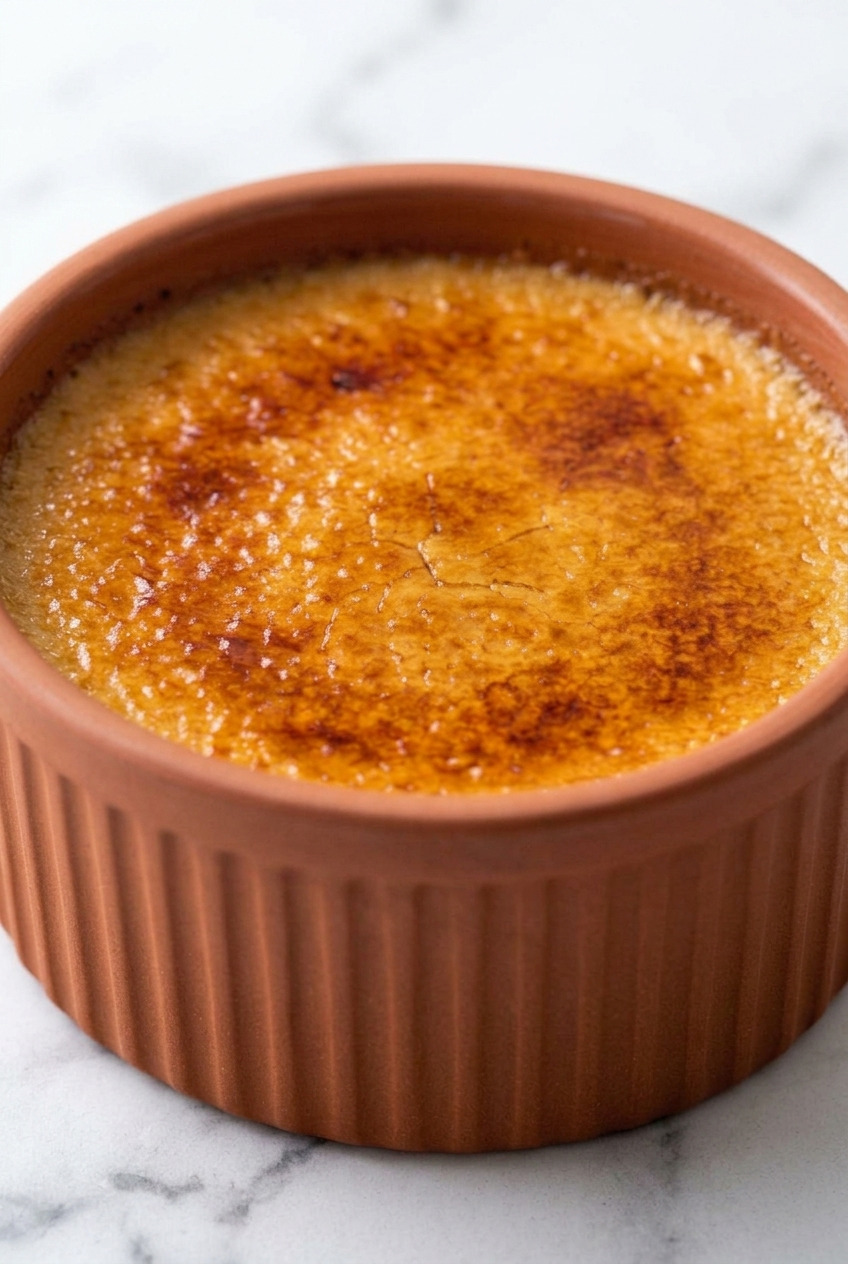
How to Make Sweet Potato Creme Brulee
Three stages, and only the first one is hands-on for long. Roast, bake, torch.
Step 1: Roast the Sweet Potato
Heat the oven to 400°F, pierce the sweet potato, and roast it whole for 45 to 60 minutes.
It should be completely soft, with caramelized syrup weeping out at the seams.
Peel it, then push the flesh through a fine-mesh sieve. This takes two minutes and it's the difference between silky and stringy.
Measure out ½ cup and set the rest aside.
Step 2: Make the Custard Base
Drop the oven to 325°F.
Heat the cream in a saucepan over medium heat with the cinnamon and salt until it's hot at the edges but not simmering.
Whisk the yolks and sugar in a bowl until pale, about 1 minute.
Now temper: pour the hot cream into the yolks in a thin stream while whisking constantly. Slowly. Dumping it in scrambles the eggs and there's no recovering from that.
Whisk in the sweet potato puree and the vanilla.
Strain the finished base through a fine-mesh sieve into a pitcher. Do not skip this, it catches any bits of cooked egg and every fiber the first sieve missed.
Step 3: Bake in a Water Bath
Divide the base between four 6-ounce ramekins in a deep baking dish.
Pour hot water into the dish until it comes halfway up the ramekins.
Bake 35 to 45 minutes, until the edges are set and the centers still wobble as one soft piece.
Lift them out, cool for 30 minutes, then refrigerate for at least 4 hours and preferably overnight.
Step 4: Torch the Sugar Crust
Blot the custard surfaces dry with a paper towel. Condensation makes sugar dissolve instead of caramelize.
Sprinkle 1 to 1 ½ teaspoons of granulated sugar over each one and tilt the ramekin until the layer is thin and even, then tip out any excess.
Torch in small circles, keeping the flame moving, until the sugar melts, bubbles, and turns deep amber.
Rest for 2 minutes so the crust hardens, then serve immediately.
Serving and Garnishing Suggestions
The crust is the garnish. Anything you pile on top gets in the way of the crack.
Serve them cold from the fridge with the top still warm from the torch. That contrast is the entire experience.
If you want something alongside, a small spoonful of lightly whipped cream on the plate next to the ramekin works, and so does a few fresh berries.
A light dusting of cinnamon over the finished crust is the one addition I'd actually recommend.
Skip caramel sauce, skip candied pecans, skip anything sticky. They soften the sugar shell within minutes.
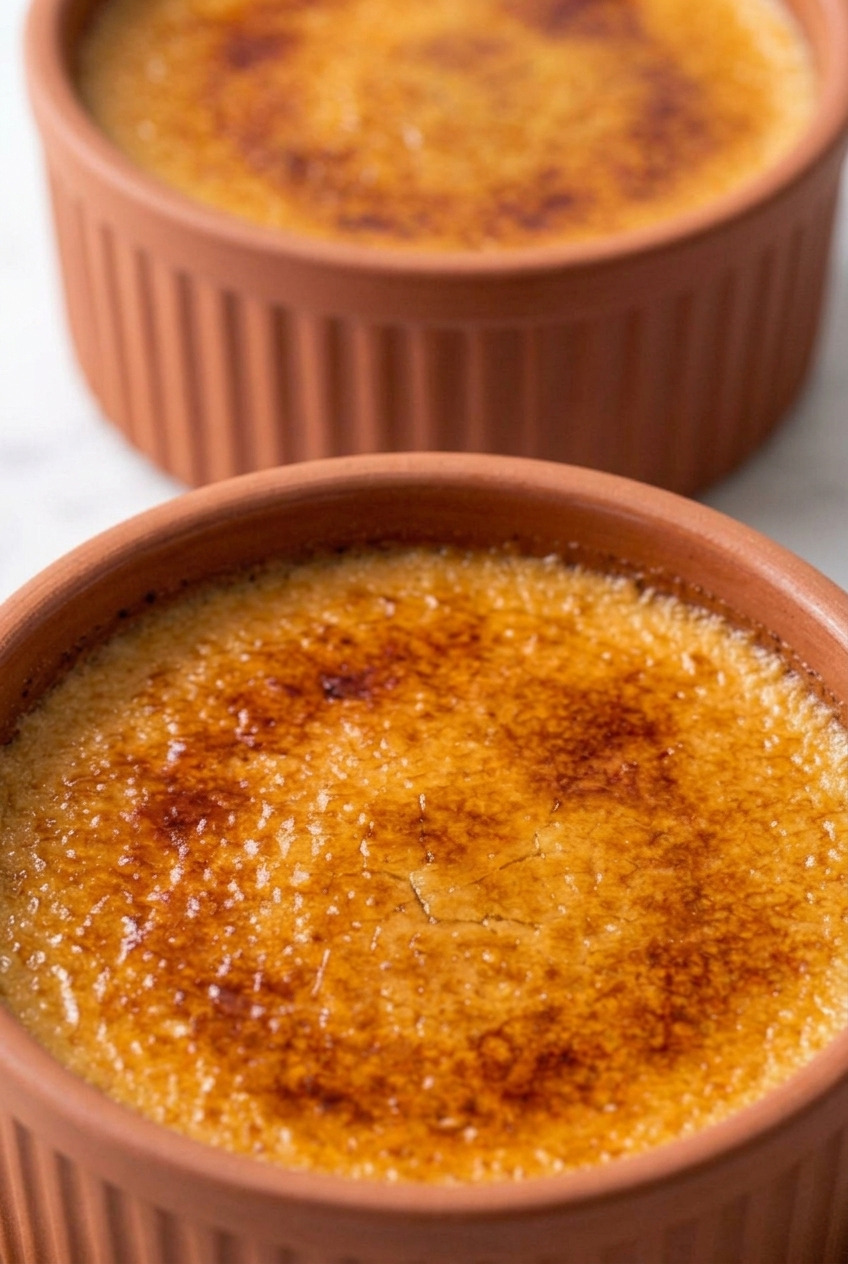
Tips for a Perfect Sugar Crust
The custard is forgiving. The crust is where people get frustrated. These are the fixes.
- No torch? Use the broiler. Set the ramekins on a sheet pan, surround them with ice cubes so the custard stays cold, and broil on the top rack for 2 to 4 minutes. Watch them the entire time. Sugar goes from amber to black in seconds.
- Thin and even beats thick. A heavy layer of sugar melts unevenly and gives you a crust that's chewy in spots rather than glassy.
- Keep the flame moving. Hold the torch a few inches away and work in small circles. A stationary flame scorches one spot and leaves the rest raw.
- Two thin passes. Sprinkle, torch, then add a second whisper-thin layer and torch again. That's how you get a crust that shatters.
- Grainy custard means the water boiled. If your bake came out curdled, the water bath got too hot. Drop the oven 25°F next time.
- Torch to order. A finished crust stays crisp for about 20 minutes before the custard's moisture starts softening it. Do it right before serving, NEVER ahead.
Make-ahead: bake the custards up to 2 days in advance and keep them covered in the fridge. It's the best part of this recipe for entertaining, since the only thing standing between you and dessert is a torch and two minutes.
Sound too fussy for a weeknight? Sure. For a holiday table, it's the easiest impressive thing I know.
Recipe Card
Recipe
Sweet Potato Creme Brulee
Ingredients
For the Custard
- ½ cup sweet potato puree from 1 medium roasted sweet potato, sieved
- 2 cups heavy cream
- 5 large egg yolks
- ¼ cup granulated sugar
- 1 teaspoon vanilla extract
- 1 pinch ground cinnamon
- 1 pinch salt
For the Sugar Crust
- 4 teaspoon granulated sugar about 1 teaspoon per ramekin
Instructions
Roast the Sweet Potato
- Heat the oven to 400°F. Pierce the sweet potato and roast it whole for 45 to 60 minutes, until completely soft.
- Peel the sweet potato and push the flesh through a fine-mesh sieve. Measure out ½ cup of puree.
Make and Bake the Custard
- Reduce the oven to 325°F. Heat the cream with the cinnamon and salt over medium heat until hot at the edges but not simmering.
- Whisk the egg yolks and sugar for about 1 minute, until pale. Pour the hot cream into the yolks in a thin stream while whisking constantly.
- Whisk in the sweet potato puree and vanilla, then strain the base through a fine-mesh sieve into a pitcher.
- Divide between four 6-ounce ramekins set in a deep baking dish. Pour hot water into the dish until it comes halfway up the sides of the ramekins.
- Bake for 35 to 45 minutes, until the edges are set and the centers wobble as one soft piece. Lift the ramekins out, cool 30 minutes, then refrigerate at least 4 hours or overnight.
Torch the Crust
- Blot the custard surfaces dry with a paper towel. Sprinkle 1 to 1 ½ teaspoons of granulated sugar over each, tilting to spread it thin and even, and tip out any excess.
- Torch in small circles, keeping the flame moving, until the sugar melts and turns deep amber. Rest 2 minutes so the crust hardens, then serve.
Notes
- No torch: Broil on the top rack for 2 to 4 minutes with ice cubes packed around the ramekins to keep the custard cold. Watch constantly.
- Temper slowly: Pouring the hot cream in too fast scrambles the yolks.
- Strain twice: Sieve the sweet potato and then the finished base for a silky custard.
- Make-ahead: Bake the custards up to 2 days ahead and torch just before serving.
- Water bath: If the water boils, the custard curdles. Drop the oven 25°F if that happens.