The first piece I ever ate made a sound.
Not a chew, an actual crack, like biting the top of a good creme brulee.
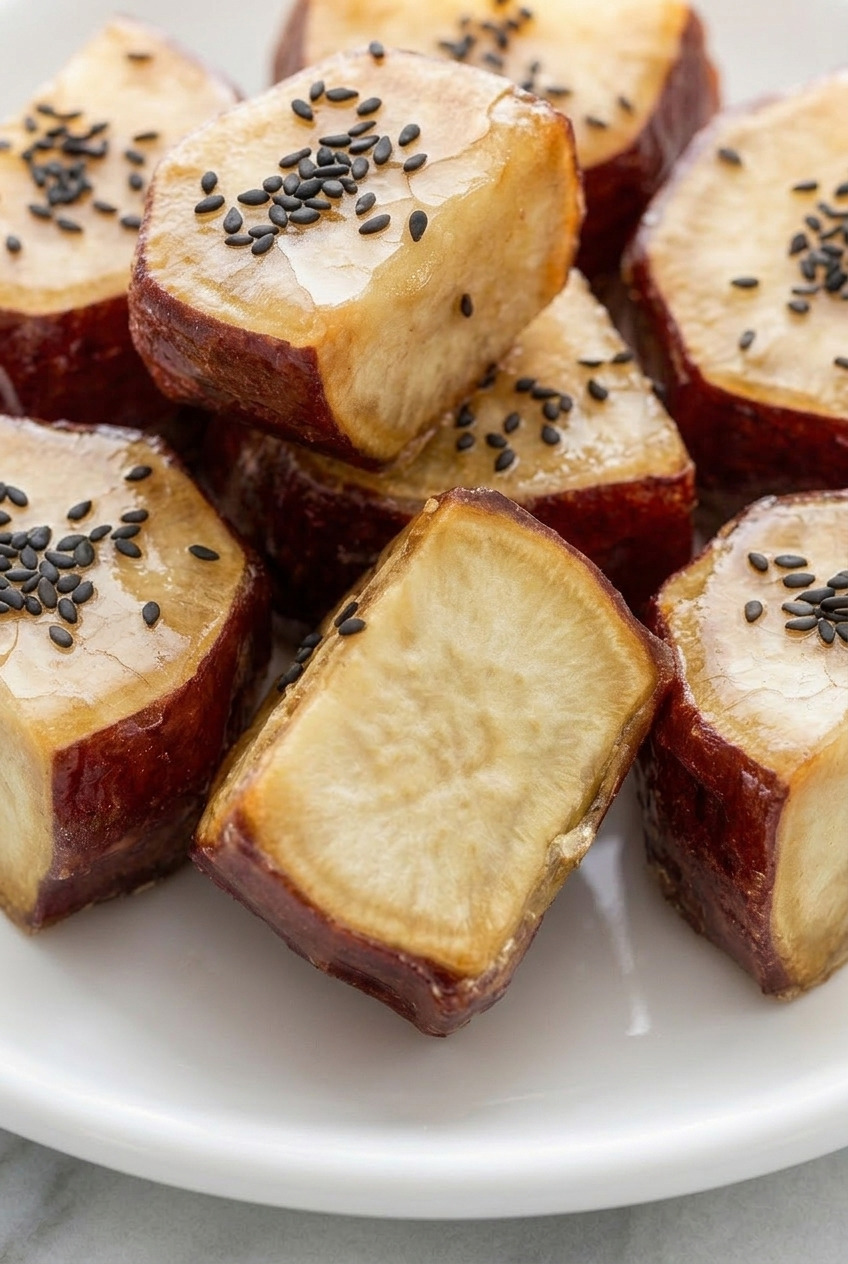
I was standing outside a market stall in Koreatown with a paper cup of these in one hand and no idea what I was in for.
I had been expecting something sticky.
Everything I knew about candied sweet potatoes came from a Thanksgiving table, where they arrive swimming in butter and brown sugar with marshmallows melted on top.
This was the opposite of that.
No butter. No cinnamon. No nutmeg.
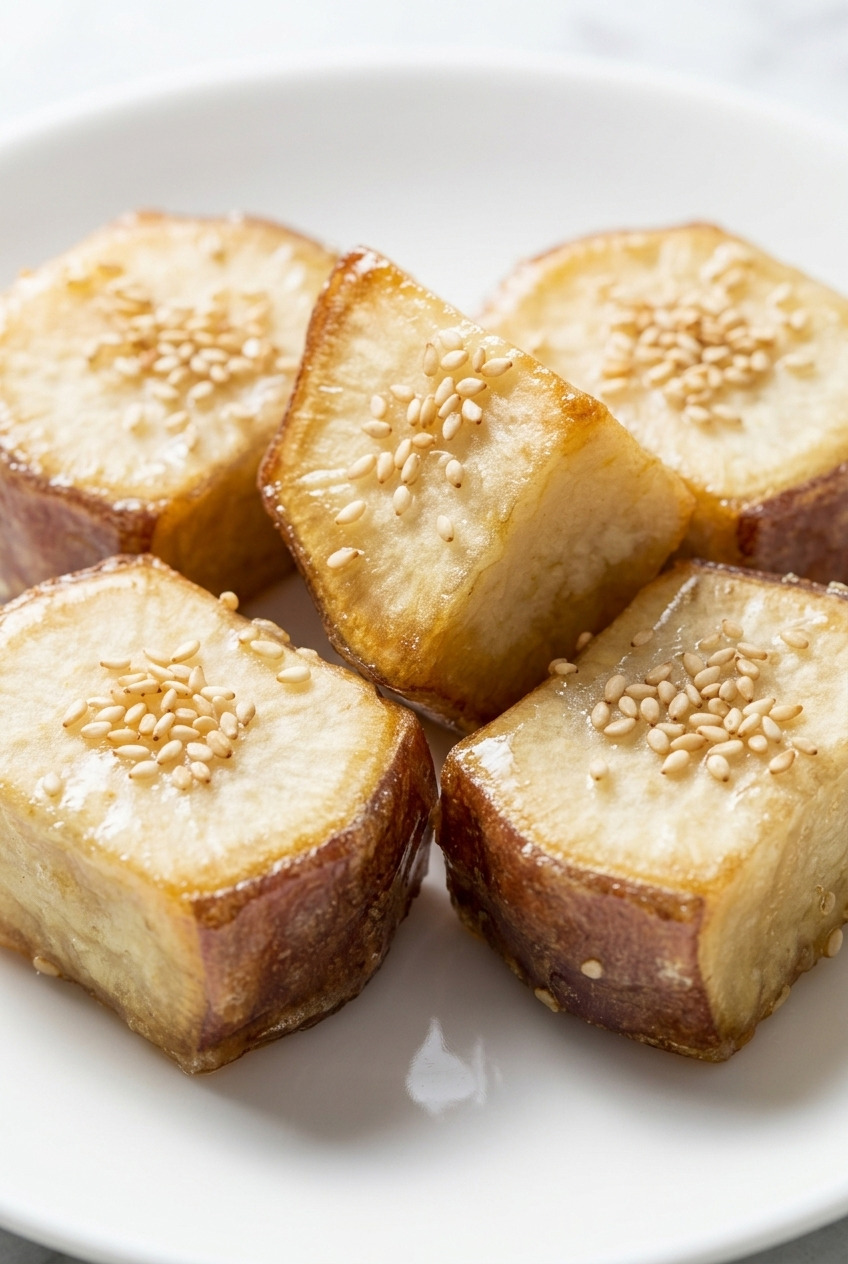
Just fried sweet potato in a thin sugar shell so hard and dry it snaps.
I went home that night and made a sticky, sad batch that glued itself into one lump on the tray.
It took me a few tries to work out that the shatter has nothing to do with a special ingredient.
It comes from how you cook the sugar and, just as much, from what you do in the sixty seconds after.
My wife has a habit of standing at the counter picking pieces off the cooling tray before they have properly set, which is how I know a batch is good.
You need four things and about half an hour.
Get the sugar right and every piece cracks. I promise.
What Goguma Mattang Is
Goguma mattang is bite-size fried sweet potato in a hard candy shell. Goguma means sweet potato, and mattang is the candied preparation itself.
In Korea it lands in two places on the table.
It shows up as a snack, sold in market stalls and packed into lunchboxes, and it shows up as a sweet banchan, one of the small side dishes that circles a Korean meal.
It's also a standard order with beer, which makes more sense once you've had a salty-sweet piece next to a cold glass.
The Korean spelling is 고구마 맛탕, and you'll see it written as matang, mattang, or matang-i depending on who romanized it.
Same dish every time.
Mattang vs Daigaku Imo, the Difference That Matters
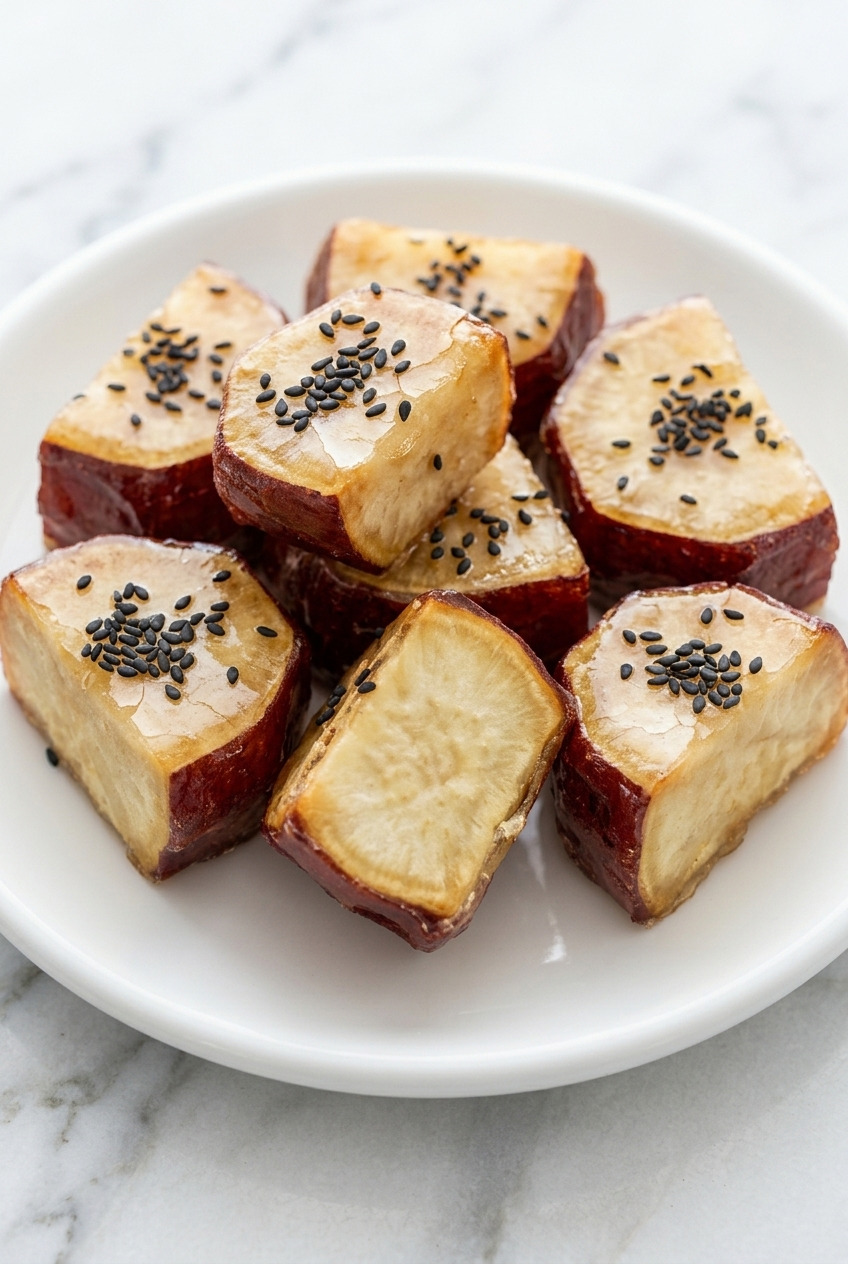
These two dishes look nearly identical in a photo and taste nothing alike. If you only remember one thing from this article, make it this one.
- Goguma mattang (Korean). Plain sugar, sometimes with a spoonful of Korean starch syrup. The coating dries into a hard, thin, glassy shell. It cracks.
- Daigaku imo (Japanese). Soy sauce, mirin, and honey or starch syrup cooked into a glaze. The coating stays soft, glossy, and tacky. It clings.
Same vegetable, opposite texture goal.
So here's a useful test. If your mattang came out sticky and your fingers are shiny, you didn't fail at mattang.
You accidentally made the Japanese dish, and it's delicious, but it isn't this.
Fair warning: a lot of English-language recipes blur the two together and toss soy sauce and mirin into a "Korean" candied sweet potato. Those will never crack.
Ingredients You'll Need
Four things, and one of them is the frying oil. There is nowhere to hide in a recipe this short, so the sweet potato choice matters more than usual.
- Korean sweet potatoes, goguma (1 ½ pounds). Purple-red skin, pale ivory flesh, dense and dry and chestnut-sweet when cooked. This is the one to look for at a Korean or other Asian grocer, often labeled goguma or Korean yam. Regular orange sweet potatoes work as a substitute, but they carry more water, so they fry softer and slump a little under the sugar.
- Neutral oil for frying (about 4 cups). Canola, rice bran, or vegetable oil. Nothing with a flavor of its own.
- Granulated sugar (⅓ cup). Plain white sugar. Raw or turbinado sugar works too and gives a slightly deeper color.
- Neutral oil for the sugar (1 tablespoon). This one is not optional. It keeps the melted sugar loose enough to coat every piece before it seizes.
- Korean starch syrup, mulyeot or oligodang (1 tablespoon, optional). The traditional gloss. Light corn syrup is the standard substitute and behaves almost the same. It makes the shell shinier and much harder to ruin, at a small cost in crispness.
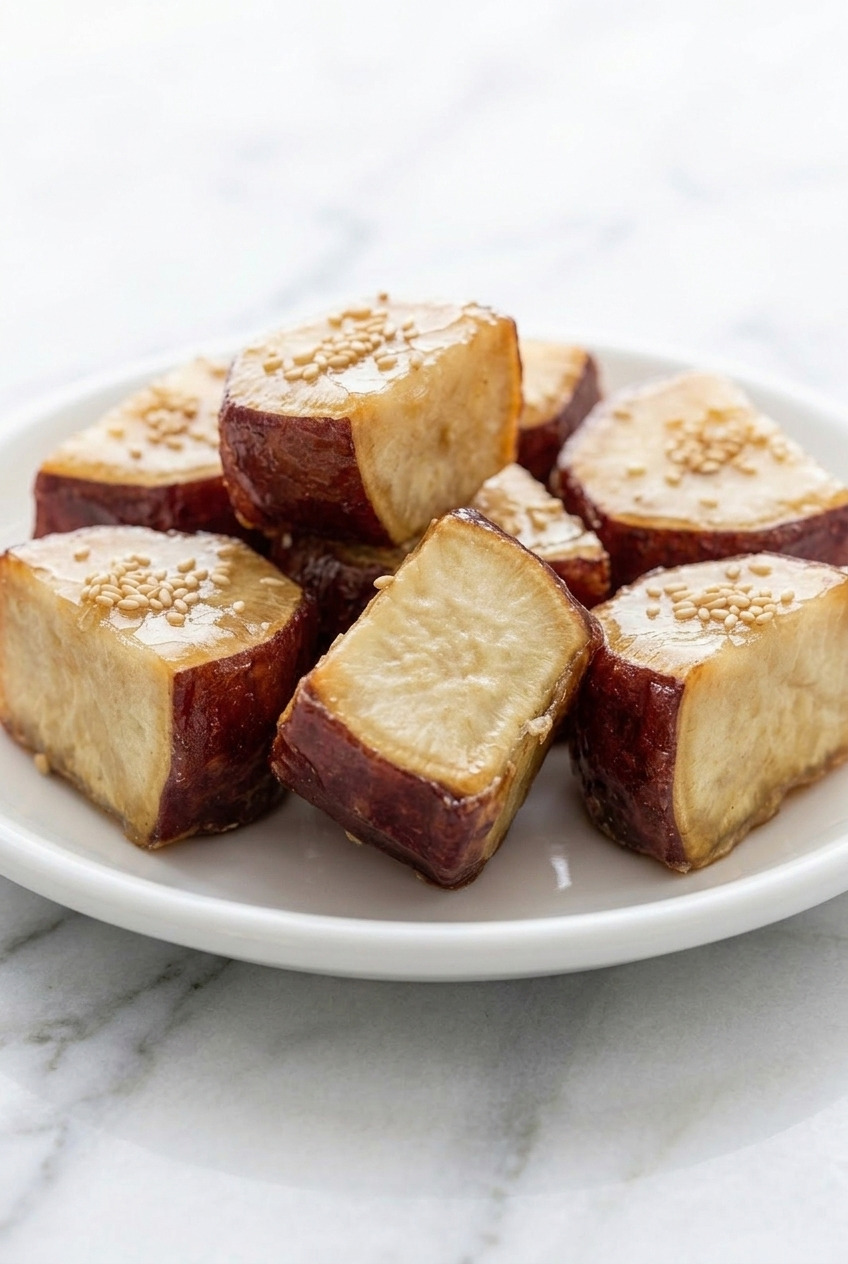
- Toasted sesame seeds (1 tablespoon). White or black. The classic finish, and black seeds look sharp against the pale gold.
- Flaky salt (a pinch, optional). Not traditional, but a few grains on hot candy is hard to argue with.
Choosing and Cutting the Sweet Potato
Dense flesh is what holds the shape under all that sugar. Korean sweet potatoes have noticeably less moisture than the orange ones most American stores stock, and that's exactly why they fry into firm little nuggets instead of collapsing.
Pick ones that feel heavy and firm, with taut skin and no soft spots.
Medium is better than huge. A very large goguma tends to be fibrous down the middle.
Roll-cut them. Lay the peeled potato down, cut at a 45 degree angle, roll it a quarter turn, cut again at the same angle, and keep going.
You get chunky wedges with angled faces instead of flat-sided cubes.
Why bother? More surface, more caramel, better crunch per piece.
Aim for pieces about 1 inch across. Uniform size matters here, because a small piece and a big piece will not finish frying at the same moment.
How to Make Goguma Mattang
The frying part is forgiving and the sugar part is not. Read all four steps before you start, because once the sugar goes amber you have less than a minute to work.
Step 1: Cut and Dry
Peel the sweet potatoes and roll-cut them into 1-inch pieces.
Rinse them in cold water to wash off loose surface starch, then drain.
Now dry them properly, spread on a towel, patted on all sides.
Surface water is the enemy of a hard shell, and it also makes hot oil spit at you.
Step 2: Fry Twice
Heat the oil to 300°F in a deep pot, filling it no more than a third of the way up.
Fry the pieces for 6 to 8 minutes, until a fork slides in easily and the outside is barely blond. Work in two batches so the oil temperature holds.
Lift them out onto a rack and let them sit for 5 minutes.
Raise the oil to 375°F and fry them again for 1 to 2 minutes, until the edges go golden and the surface looks dry.
That second pass drives off the last of the surface moisture, and dry is what candy needs.
Step 3: Melt the Sugar
Pour off the frying oil and wipe out a wide skillet, or just grab a clean one.
Add the 1 tablespoon of neutral oil, then the ⅓ cup of sugar and the starch syrup if you're using it.
Set it over medium heat and leave it alone.
Do NOT stir it. Swirl the pan instead, and let the sugar melt from the edges inward until it's a clear, pale amber liquid with no grains left.
Stirring is what makes sugar crystallize back into sand.
Step 4: Toss Fast and Separate
Tip all the fried pieces in at once and toss for about 30 seconds, until every surface has a thin coat.
Shower the sesame seeds over while everything is still moving.
Then get them out of the pan and onto a lightly oiled tray or a sheet of parchment, and here is the part people skip.
Push the pieces apart so no two are touching.
They set individually in about 10 minutes, and any two that cool while touching will fuse into a lump you have to break with a spoon.
The Ice Water Trick
A two-second dip in ice water snaps the shell glass-hard. It's a genuine Korean trick and it does something no amount of patience on a tray will do.
Set a bowl of water with plenty of ice next to your pan before you start the sugar.
As soon as the pieces are coated, drop them in for 2 seconds, no longer, then lift them straight out onto a rack.
The candy chills instantly and goes brittle.
What it costs: a little of the gloss, and a slightly damp exterior on the sweet potato itself if you leave them in even a few seconds too long.
Worth it? On a humid summer day, absolutely. In dry winter air I skip it, because the tray does the job on its own.
Baked and Air Fryer Versions
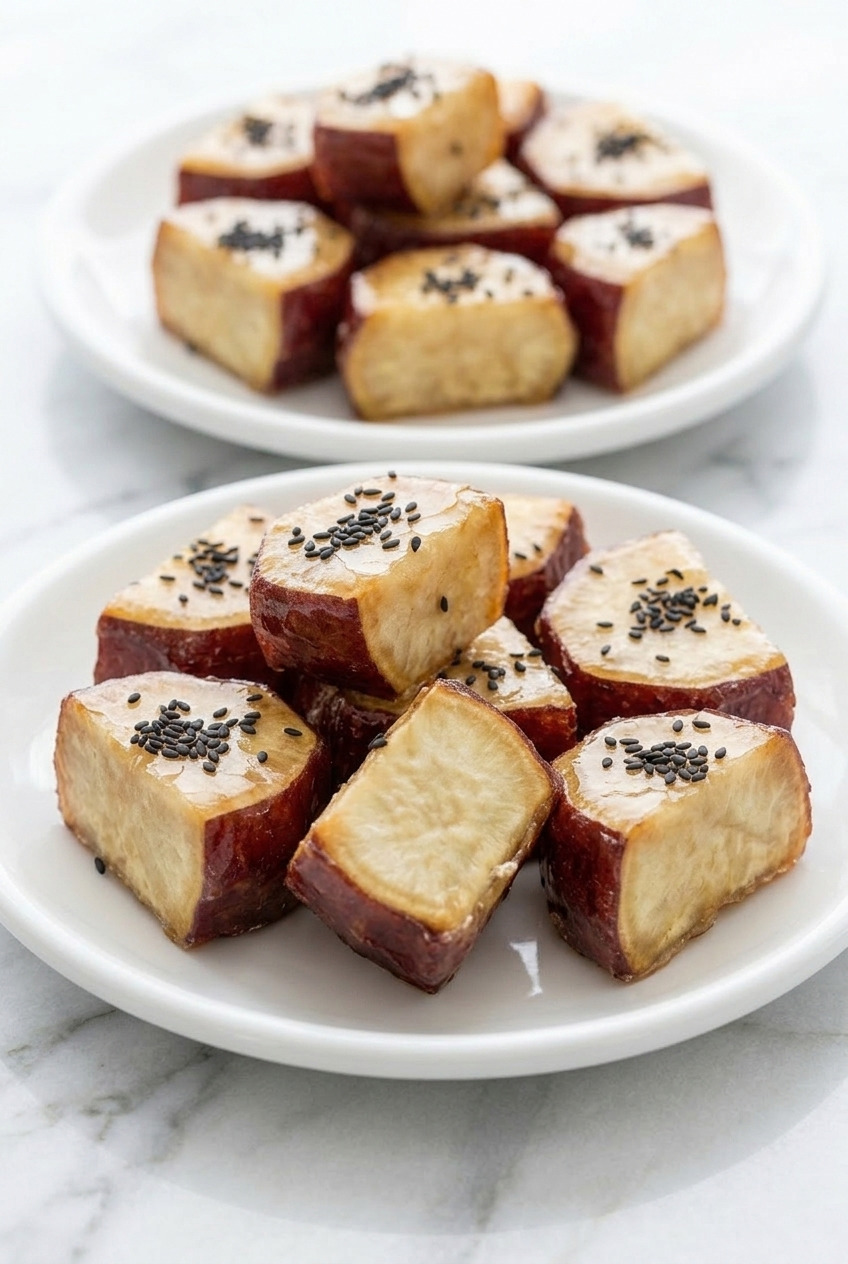
Both work, and both give up some crunch. I'd rather tell you that plainly than pretend otherwise.
- Oven. Toss the cut pieces with 2 tablespoons of oil and roast at 425°F for 25 to 30 minutes, turning once. The outside firms up but never gets that fried shell underneath the candy.
- Air fryer. Same oil toss, 400°F for 18 to 20 minutes, shaking the basket twice. Closer to fried than the oven gets, and the fastest weeknight route.
- Either way, the sugar step doesn't change. Melt, toss, separate. The candy behaves the same no matter how the potato was cooked.
The honest verdict: fried pieces stay crisp for hours, baked ones start softening in about twenty minutes.
Why Your Mattang Went Sticky
Sticky is the default outcome, and every cause is fixable. Here's what actually went wrong, in the order it usually happens.
- You pulled the sugar too early. Pale yellow syrup with a few unmelted grains still in it will never set hard. Wait for an even, clear amber with no grit.
- The sweet potato was damp. Steam from the surface thins the candy from underneath. The second fry exists specifically to prevent this.
- You crowded the cooling tray. Touching pieces trap heat between them and stay soft where they meet.
- You stirred the melting sugar. Crystals form on the spoon and spread. Swirl the pan, don't stir the sugar.
- The kitchen is humid. Sugar pulls water out of the air. Run the ice water dip and eat them sooner.
- You sealed them warm. A lid over warm candy is a steam bath. Let them cool completely and uncovered.
How to Serve and Store
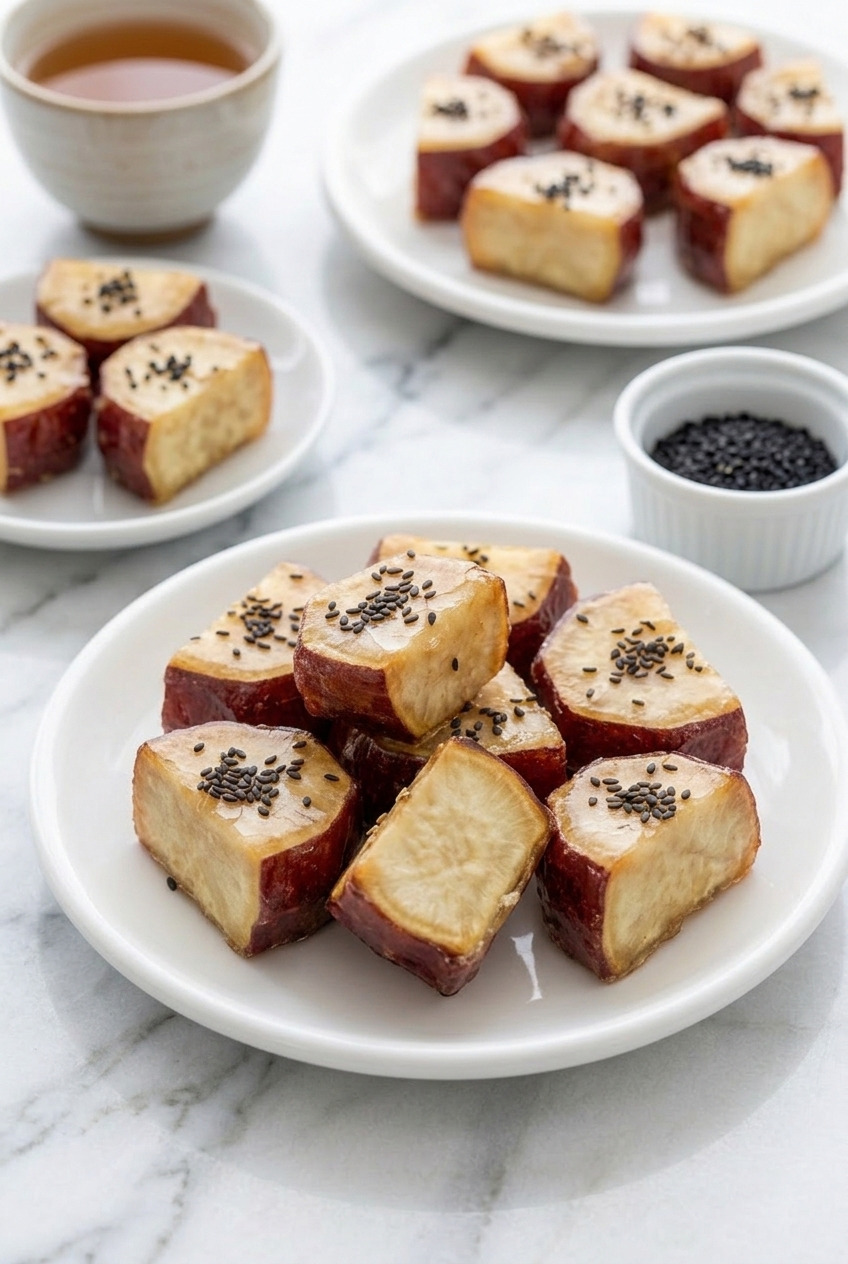
Mattang is at its best about fifteen minutes out of the pan. Warm inside, hard outside, which is the whole point of the dish.
- As a snack. A bowl on the coffee table, eaten with fingers or a toothpick. This is how it disappears fastest in my house.
- As sweet banchan. A small dish of it next to something savory and salty, grilled pork belly or a spicy braise, the way sweet sides work in a Korean spread.
- With a drink. Cold beer, or barley tea if you want the traditional pairing.
- In a lunchbox. It travels for a few hours, though the shell softens by the time it's eaten.
- Storage. Loosely covered at room temperature, same day only. NEVER refrigerate, because the cold pulls moisture into the candy and turns the shell to syrup overnight.
Leftovers aren't really a category here.
Half a batch has never made it past the evening in my kitchen, and I'm not sure it's supposed to.
Recipe
Goguma Mattang (Korean Candied Sweet Potatoes)
Ingredients
For the Sweet Potatoes
- 1 ½ pounds Korean sweet potatoes (goguma) peeled and roll-cut into 1-inch pieces
- 4 cups neutral oil for frying
For the Sugar Shell
- ⅓ cup granulated sugar
- 1 tablespoon neutral oil
- 1 tablespoon Korean starch syrup (mulyeot) optional, or light corn syrup
- 1 tablespoon toasted sesame seeds white or black
- 1 pinch flaky sea salt optional
Instructions
Fry the Sweet Potatoes
- Peel the sweet potatoes and roll-cut them into 1-inch pieces: cut at a 45 degree angle, roll a quarter turn, and cut again.
- Rinse the pieces in cold water, drain, and dry them thoroughly on a towel. Surface water keeps the candy from setting hard.
- Heat the frying oil to 300F in a deep pot, filling it no more than a third full. Fry the pieces in two batches for 6 to 8 minutes each, until a fork slides in easily.
- Drain on a rack for 5 minutes. Raise the oil to 375F and fry again for 1 to 2 minutes, until the edges are golden and the surface looks dry.
Candy and Cool
- Wipe out a wide skillet. Add the tablespoon of oil, the sugar, and the starch syrup if using, and set it over medium heat.
- Swirl the pan, do not stir, until the sugar melts into a clear pale amber liquid with no grains left.
- Add all the fried sweet potato at once and toss for about 30 seconds until every surface is coated. Shower the sesame seeds over while tossing.
- Turn the pieces out onto a lightly oiled tray or parchment and push them apart so none are touching. Let them set uncovered for 10 minutes, then finish with flaky salt if you like.
- For a glass-hard shell, dip the coated pieces in ice water for 2 seconds before setting them on a rack.
Notes
- Do not stir the sugar: swirl the pan instead. Stirring makes the sugar crystallize back into grains and the shell will never set.
- Cool them separated: any two pieces touching as they cool will fuse into a lump and stay soft where they meet.
- Not daigaku imo: the Japanese version uses soy sauce and mirin for a soft, sticky glaze. Mattang uses plain sugar for a hard shell that cracks.
- Substitute: regular orange sweet potatoes work but hold more water, so they fry softer and the shell is less crisp.
- Never refrigerate: cold pulls moisture into the candy and turns the shell to syrup overnight. Eat the same day.