There is a bag of these in almost every convenience store in Japan.
Cellophane, a cartoon sweet potato on the front, sitting next to the rice crackers.
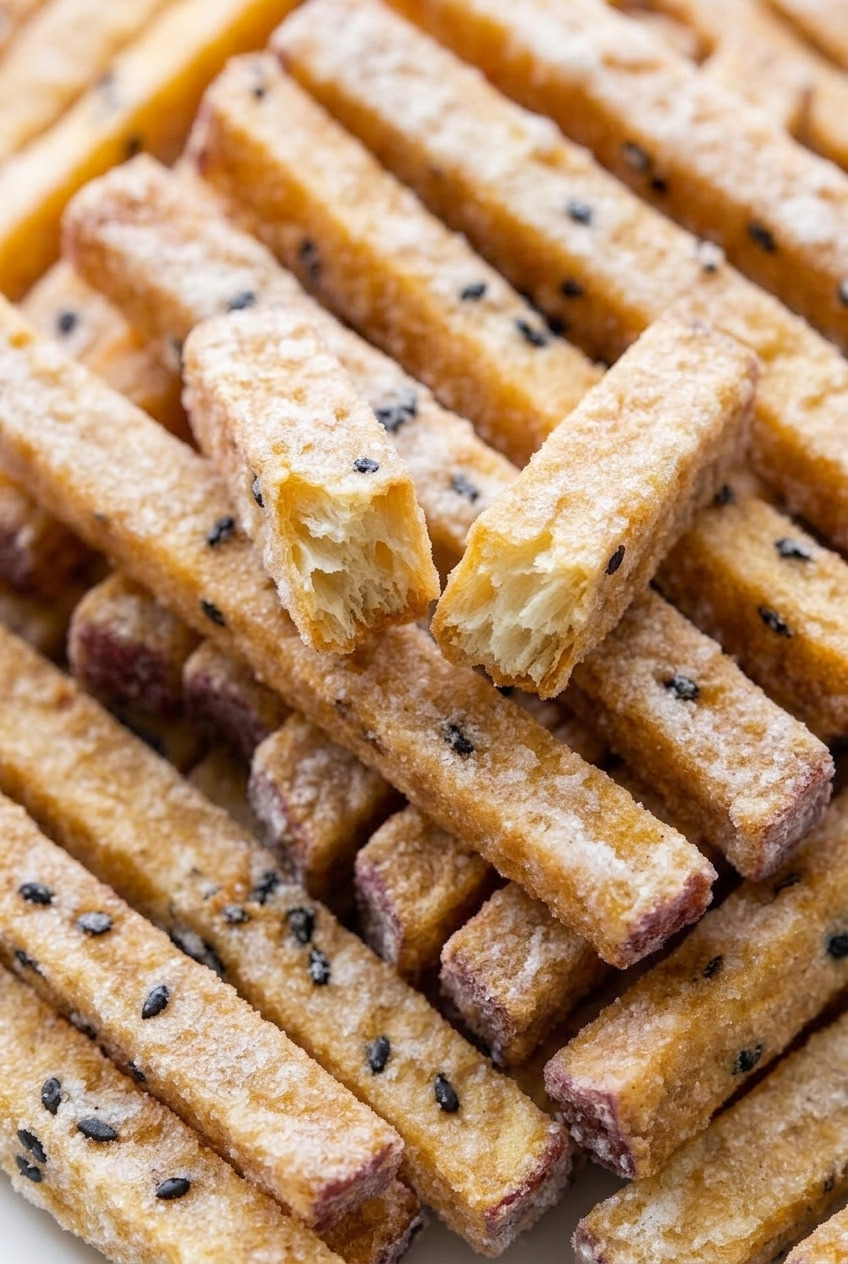
I bought one on a train platform in Kochi because I had twenty minutes and nothing else to do.
Then I ate the entire bag before the train left.
The name is imo kenpi. Imo is sweet potato, and kenpi is an old word for a dried, sweetened snack.
Kochi Prefecture claims them, and Kochi is right to.
What surprised me is how little they resemble the candied sweet potatoes I already knew.
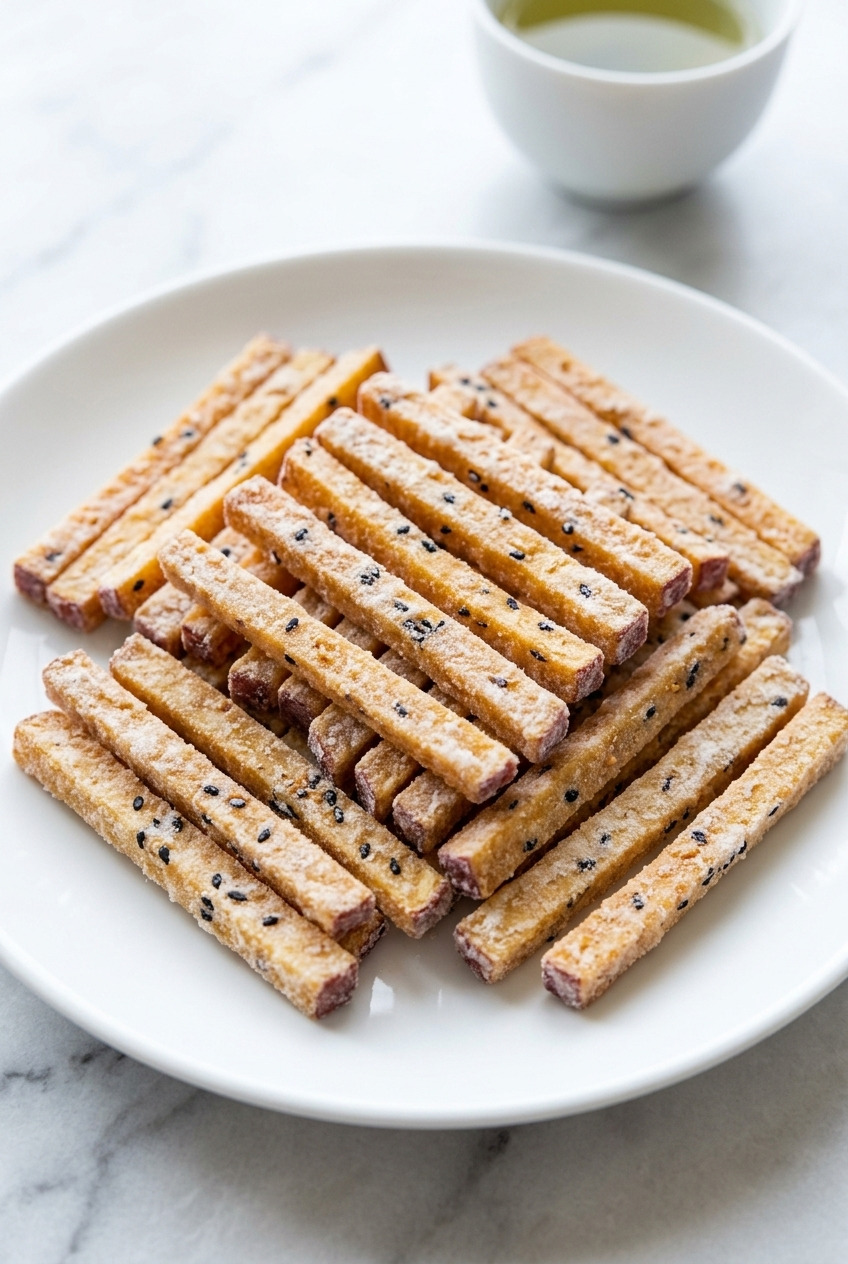
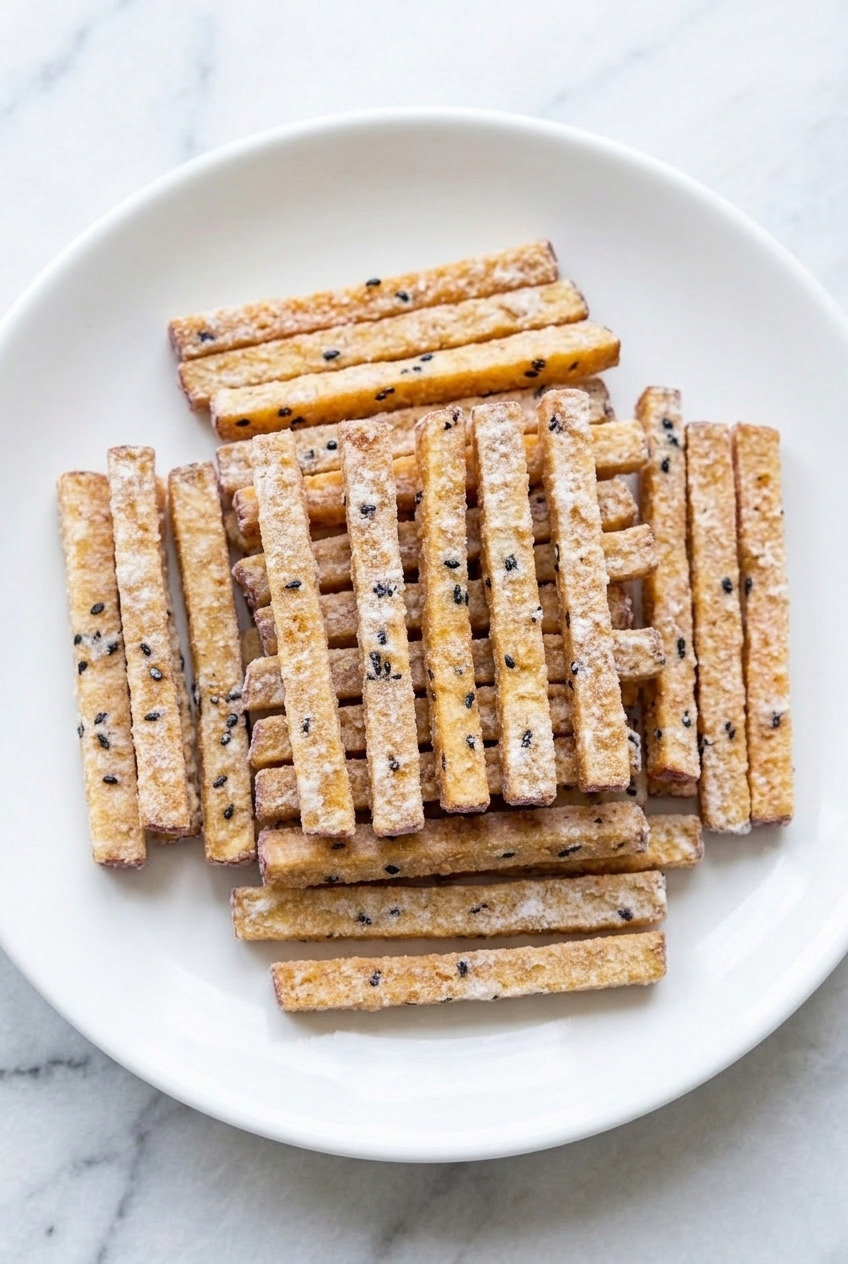
These are thin matchsticks, fried until the inside dries out, then coated in a sugar that goes powdery and matte instead of sticky.
They snap between your teeth like a pretzel stick.
I spent most of a year getting them wrong at home.
My first six batches were chewy, and every one of them was chewy for the same reason: I pulled the syrup off the heat while it still looked like syrup.
You have to take it further than feels comfortable.
Once I understood that, they came out right every single time.
My wife now keeps a jar of them on the counter, and a jar is the point, because these keep for weeks.
Give them one afternoon and you'll have a snack you can't buy outside Japan.
What Is Imo Kenpi?
Imo kenpi is a Japanese sweet snack made of thin sweet potato sticks, deep fried and coated in crystallized sugar. It is sold in bags, eaten by the handful, and treated the way Americans treat pretzels or potato chips.
The dish belongs to Kochi Prefecture on the island of Shikoku, where sweet potatoes have been a staple crop for centuries.
Kenpi originally described a family of dried, sugared confections, and the sweet potato version is the one that took over the country.
These are unmistakably a sweet confection, not a savory side. The sugar is the whole point.
What makes them worth the oil is the texture. Crisp on the outside, dry and light on the inside, with a coating that crackles rather than clings.
Imo Kenpi vs Daigaku Imo
These two dishes get confused constantly, and almost every English language recipe for imo kenpi is actually a recipe for daigaku imo. They are not the same thing.
- The cut. Imo kenpi is cut into thin matchsticks, roughly ¼ inch square. Daigaku imo is cut into thick irregular chunks.
- The coating. Imo kenpi gets a dry, sandy, crystallized sugar coat. Daigaku imo gets a wet, glossy, sticky lacquer.
- The texture. Imo kenpi snaps. Daigaku imo is tender inside with a chewy glaze.
- The shelf life. Imo kenpi keeps for two to three weeks in a jar. Daigaku imo is a same day dish.
- The occasion. Kenpi is a bagged snack you carry around. Daigaku imo is served warm, often as an after school treat.
If you want the glossy chunks, make daigaku imo. If you want the thing in the cellophane bag, you are in the right place.
Which Sweet Potatoes to Use
The authentic choice is satsumaimo, the Japanese sweet potato. Purple skin, pale yellow flesh, dense and starchy and only mildly sweet.
That dryness matters more than the flavor. A dry potato loses its water fast in the oil, which is exactly what you want in a stick that has to snap.
Look for them at Japanese and Korean grocers, and increasingly at regular supermarkets under the name Japanese sweet potato or Murasaki.
If you cannot find them, the standard American orange sweet potato works. It is wetter and sweeter, so cut the sticks a touch thicker, fry them a minute or two longer, and expect a slightly darker color.
Do not use a purple Okinawan sweet potato here. The flesh is too moist and the sticks go limp.
Ingredients You Will Need
- Japanese sweet potatoes (1 lb, about 2 medium). Scrubbed and peeled. The dense yellow flesh is what gives you a stick that dries out instead of going soft.
- Salt (1 teaspoon, for the soak). Pulls surface starch off the cut sticks so they fry clean and don't glue together.
- Neutral oil (2 cups). Canola, rice bran, or vegetable. You need real depth for an even fry.
- Granulated sugar (5 tablespoons). This is the coating. White sugar crystallizes cleanly. Brown sugar stays soft and will not give you the snap.
- Water (1 ½ tablespoons). Just enough to dissolve the sugar so it cooks evenly.
- Mirin (1 tablespoon). Adds gloss and a faint savory depth underneath the sweetness.
- Rice vinegar (1 teaspoon). A small amount keeps the sugar from seizing into one hard sheet as it cools.
- Soy sauce (½ teaspoon). Tiny. You will not taste soy, you will taste that the sugar has somewhere to go.
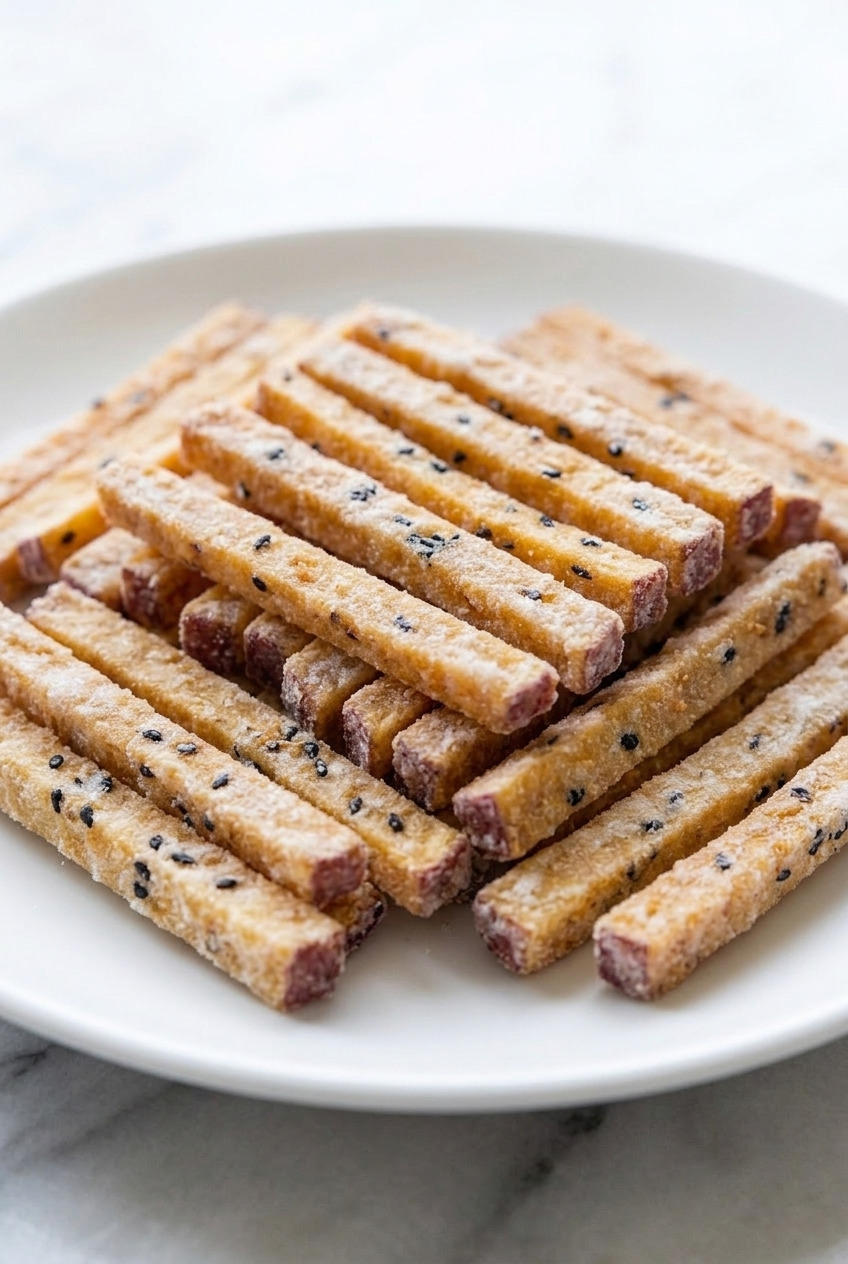
- Toasted black sesame seeds (2 teaspoons). The traditional finish, and the visual signature of the snack.
How to Make Imo Kenpi
Step 1: Cut the Matchsticks
Peel the sweet potatoes and cut them into planks about ¼ inch thick, then cut the planks into sticks.
Aim for 2 to 3 inches long and square in cross section.
Keep them even. Uneven sticks fry unevenly, and the thin ones will be dark before the thick ones are done.
Step 2: Soak and Dry
Drop the sticks into a bowl of cold water with the salt and let them sit 15 minutes.
The water will go cloudy. That is the starch leaving.
Drain, rinse once, then spread the sticks on a clean towel and pat them completely dry.
Pro tip: Wet sticks will spit in the oil and steam instead of frying. Take the extra two minutes.
Step 3: Fry Them Twice
Heat the oil to 320°F in a deep pot.
Fry the sticks in two batches for 6 to 8 minutes, until they are pale gold and no longer bubbling much.
Lift them out and rest them on a rack for 5 minutes.
Bring the oil to 350°F and fry each batch again for 1 to 2 minutes, until they are a light amber and rigid.
Drain them on the rack while you make the syrup.
Step 4: Cook the Syrup Past Sticky
Wipe out a wide skillet and add the sugar, water, mirin, vinegar, and soy sauce.
Bring it to a boil over medium heat without stirring.
It will bubble hard, then the bubbles will get smaller and slower, and the whole surface will look thick and lazy. That is about 240°F, and it takes 3 to 4 minutes.
This is the moment everyone gets wrong. If you stop here the coating stays sticky. Keep going another 30 to 45 seconds.
Step 5: Toss and Crystallize
Pull the pan off the heat and add all the fried sticks at once.
Toss constantly with a heatproof spatula.
For fifteen seconds it will look glossy and wrong. Then the sugar turns cloudy, then white and sandy, and every stick separates.
That sandy stage is finished imo kenpi.
Step 6: Cool and Finish
Spread the sticks in a single layer on parchment.
Scatter the black sesame seeds over them while the coating is still faintly warm.
Let them cool 20 minutes before you touch them, and they will snap.
The Pan Fried Version
You can make these with a few tablespoons of oil instead of two cups. The trade is real, so know what you are giving up.
- Use a wide skillet and 3 tablespoons of oil. Cook the sticks over medium heat for 12 to 15 minutes, turning often.
- Expect a denser stick. Shallow frying dries the outside faster than the inside, so the center stays a little chewy.
- Skip the second fry. There is no benefit here, just cook them until they stop softening.
- Make the syrup the same way. The coating behaves identically.
Is it as good? Not quite. Is it good enough on a Tuesday? Absolutely.
Tips for Snappy Kenpi
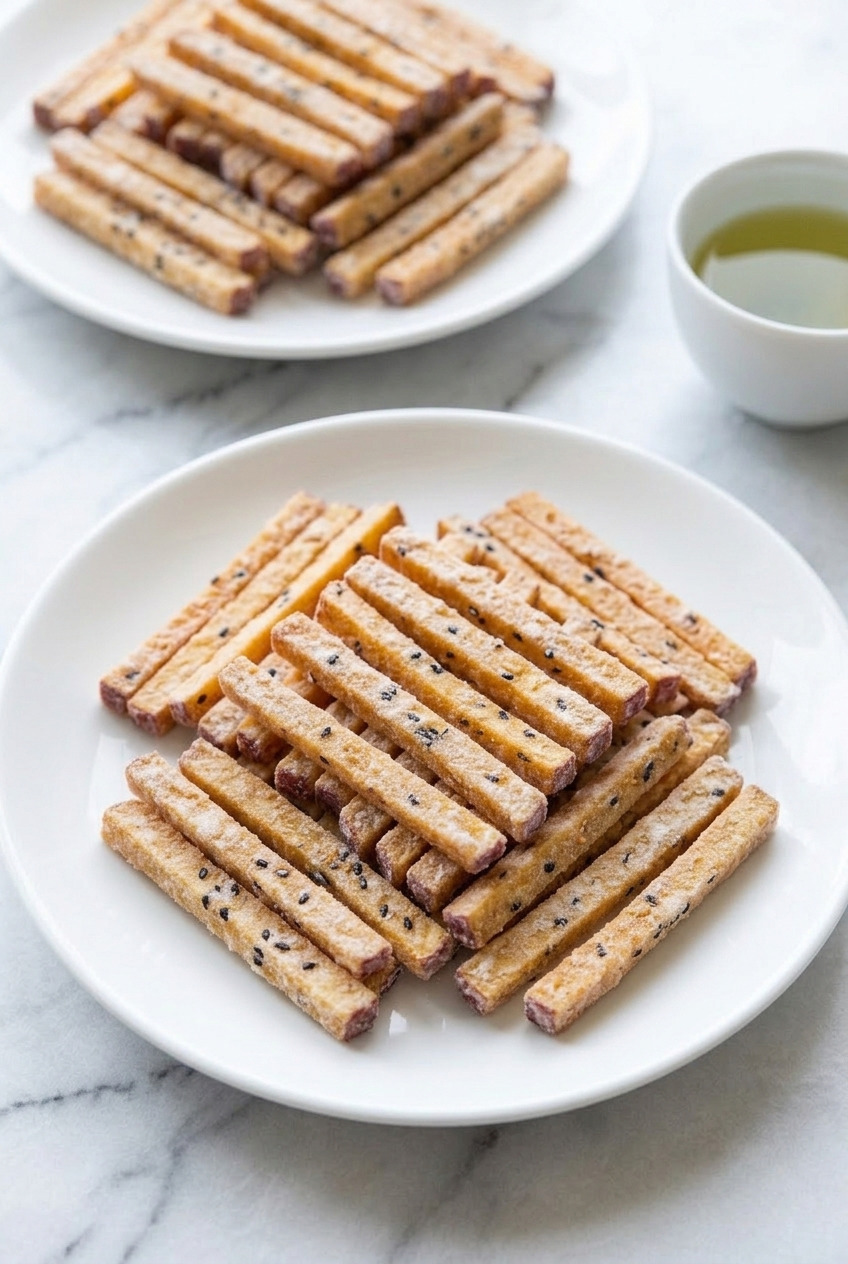
- Dry the sticks properly. This is the single biggest difference between a snap and a bend.
- Do not crowd the oil. Two batches, always. A crowded pot drops the temperature and the sticks absorb oil instead of losing water.
- Take the syrup past sticky. Cloudy and sandy, not glossy and clear. If your first batch is tacky, that is your fix.
- Work fast once the sticks go in. You have maybe forty seconds before the sugar sets.
- Cool in a single layer. Pile them warm and they fuse into a brick.
- NEVER use brown sugar or honey as the base. Both stay soft and you will get daigaku imo by accident.
Storage
- Room temperature. An airtight jar on the counter, 2 to 3 weeks. They genuinely do not go stale.
- Humidity is the enemy. The sugar coat pulls moisture out of the air and goes tacky. Add a paper towel to the jar in a humid kitchen.
- Do not refrigerate. The fridge is damp and it softens them within a day.
- To revive a soft batch. Spread on a sheet pan and warm at 250°F for 10 minutes, then cool uncovered.
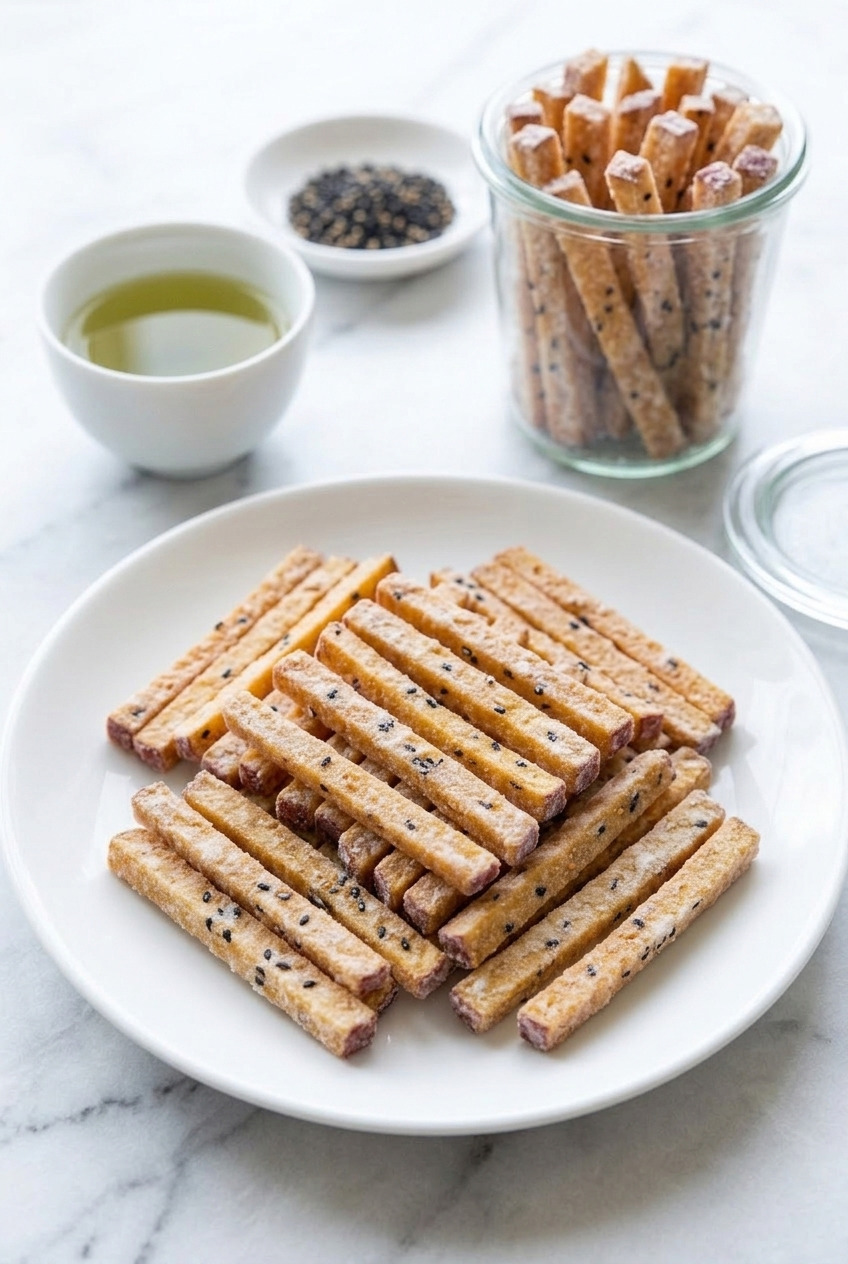
How to Serve
These are a snack, not a plated dessert. Eat them out of a bowl with your hands.
A cup of green tea is the traditional pairing, and the bitterness against that sugar is genuinely hard to beat.
They also travel beautifully in a bento or a lunch box, and they are one of the few sweets that survive a backpack.
My favorite version of this: a small bowl of kenpi and a black coffee at four in the afternoon. Yum!
Recipe
Imo Kenpi (Japanese Candied Sweet Potato Sticks)
Ingredients
For the Sweet Potato Sticks
- 1 lb Japanese sweet potatoes (satsumaimo) about 2 medium, peeled
- 1 teaspoon fine salt for the soaking water
- 2 cups neutral oil for frying
For the Sugar Coating
- 5 tablespoon granulated sugar
- 1 ½ tablespoon water
- 1 tablespoon mirin
- 1 teaspoon rice vinegar unseasoned
- ½ teaspoon soy sauce
- 2 teaspoon toasted black sesame seeds
Instructions
Prep the Sticks
- Peel the sweet potatoes and cut them into planks about ¼ inch thick, then cut the planks into sticks 2 to 3 inches long and square in cross section. Keep them as even as you can.
- Soak the sticks in cold water with the salt for 15 minutes. The water will turn cloudy as the surface starch comes off.
- Drain, rinse once, then spread the sticks on a clean towel and pat them completely dry. Wet sticks steam instead of frying.
Fry
- Heat the oil to 320F in a deep pot. Fry the sticks in two batches for 6 to 8 minutes each, until pale gold and barely bubbling. Lift onto a rack and rest 5 minutes.
- Raise the oil to 350F and fry each batch again for 1 to 2 minutes, until light amber and rigid. Drain on the rack.
Coat and Cool
- In a wide skillet, combine the sugar, water, mirin, rice vinegar, and soy sauce. Bring to a boil over medium heat without stirring and cook 3 to 4 minutes, until the bubbles are small and slow and the surface looks thick, about 240F.
- Cook another 30 to 45 seconds past that point. This is what makes the coating crystallize instead of staying sticky.
- Take the pan off the heat, add all the fried sticks at once, and toss constantly. The syrup will look glossy, then turn cloudy, then go white and sandy as the sticks separate.
- Spread the sticks in a single layer on parchment, scatter the black sesame seeds over them while the coating is still warm, and cool 20 minutes before eating.
Notes
- Imo kenpi is not daigaku imo: kenpi is thin matchsticks with a dry crystallized coat, daigaku imo is chunks in a sticky glaze.
- Sweet potato substitute: American orange sweet potatoes work but are wetter, so cut the sticks slightly thicker and fry a minute or two longer.
- Do not use brown sugar or honey: both stay soft and you lose the snap.
- Storage: airtight at room temperature for 2 to 3 weeks. Never refrigerate, the damp softens the coating.
- Pan fried version: 3 tablespoons of oil in a wide skillet, medium heat, 12 to 15 minutes, turning often. The center stays a little chewier.