My friend Chidi cooks the way his mother did in Enugu, which means the blender comes out before anything else does.
Red bell pepper, red onion, one scotch bonnet.
He blitzed all three into a rough orange paste while a pot of sweet potatoes bubbled behind him, and I stood there wondering what a pepper base was doing anywhere near a fritter.
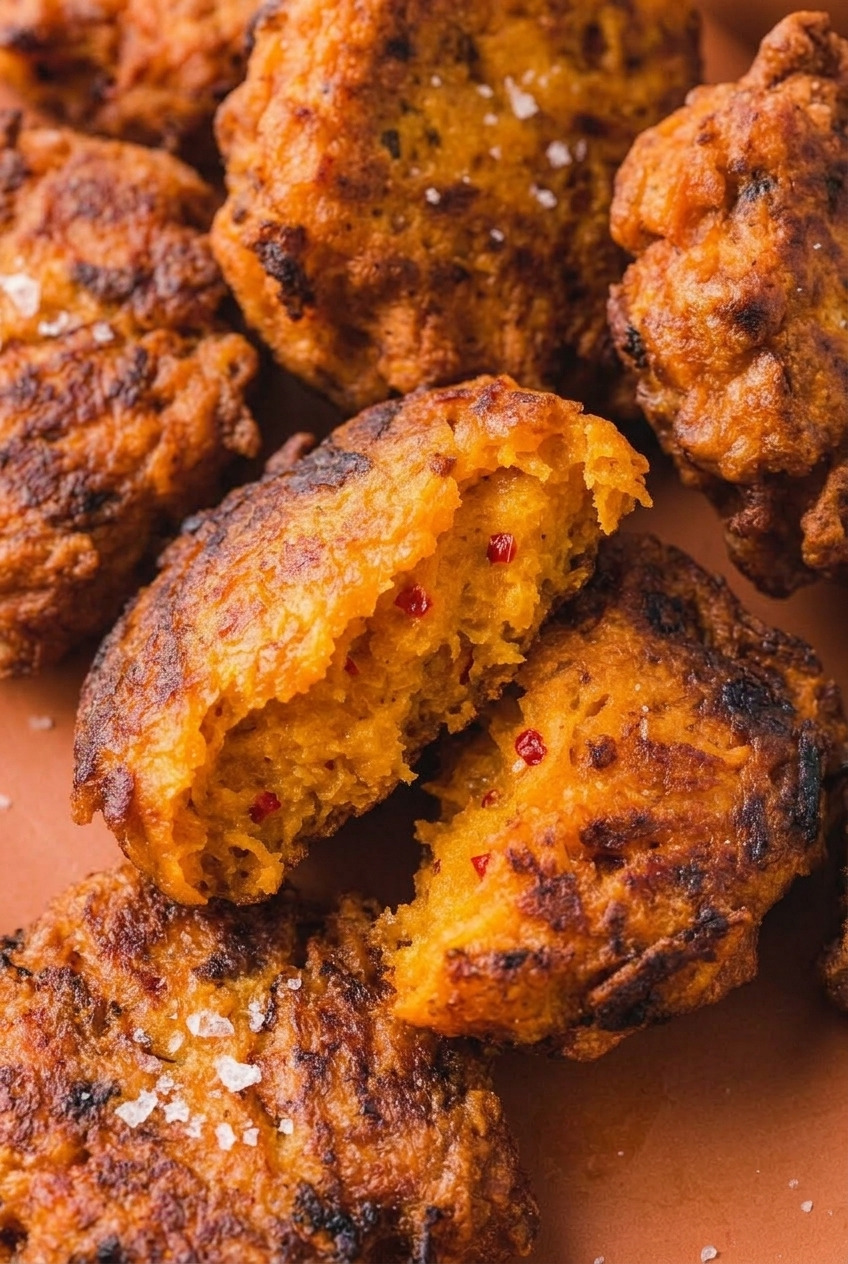
Then he mashed the potatoes, folded the paste through with an egg and a little flour, and started dropping spoonfuls into hot groundnut oil.
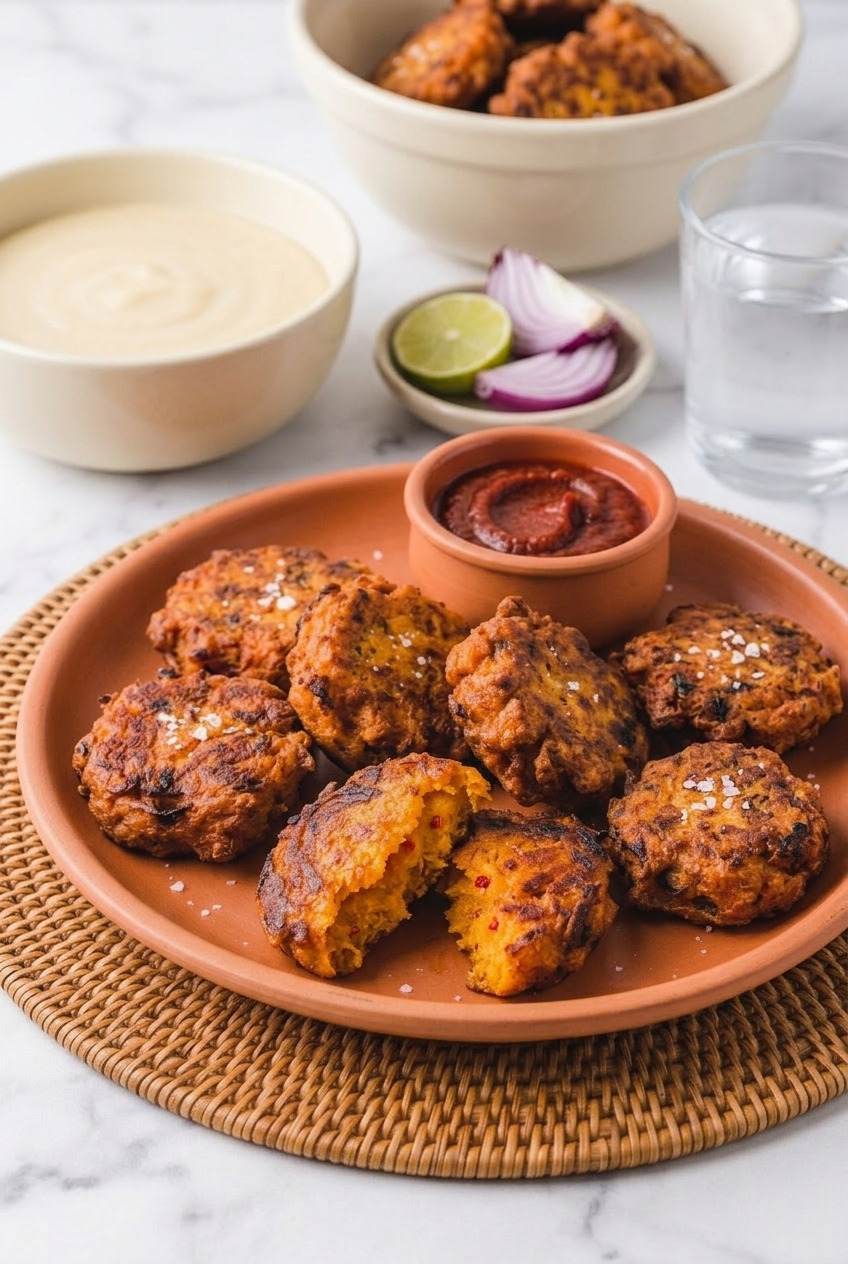
They puffed and turned deep gold in about three minutes.
The first one burned my fingers and I ate it anyway.
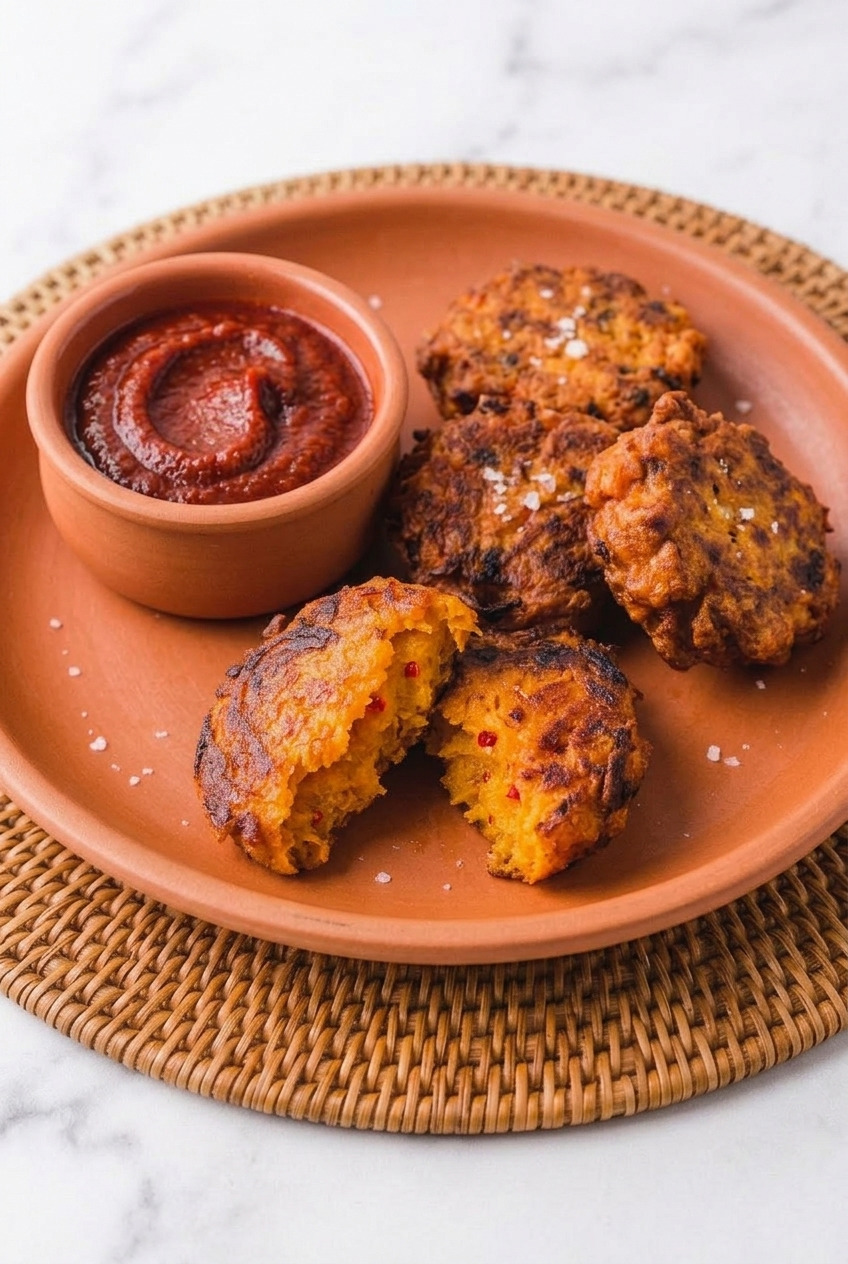
Crisp on the outside, soft and almost dumpling-like on the inside, with a slow heat that arrives after you've already committed to a second one.
I've made them every few weeks since, and my wife rations them.
They show up in our kitchen as small chop, the Nigerian party snack spread of little fried things you eat standing up with a drink in your other hand.
What surprised me most is how little work they are.
Boil, blend, mash, fry, done in about 40 minutes from a bag of sweet potatoes.
The whole thing rests on two levers, a mash that is properly dry and oil that is properly hot.
Get those right and you'll never fry a heavy, greasy fritter again.
What Makes These Nigerian
Search for sweet potato fritters and you'll get a page of grated Western patties wearing somebody else's name. These are not those. A few specific things make this version Nigerian.
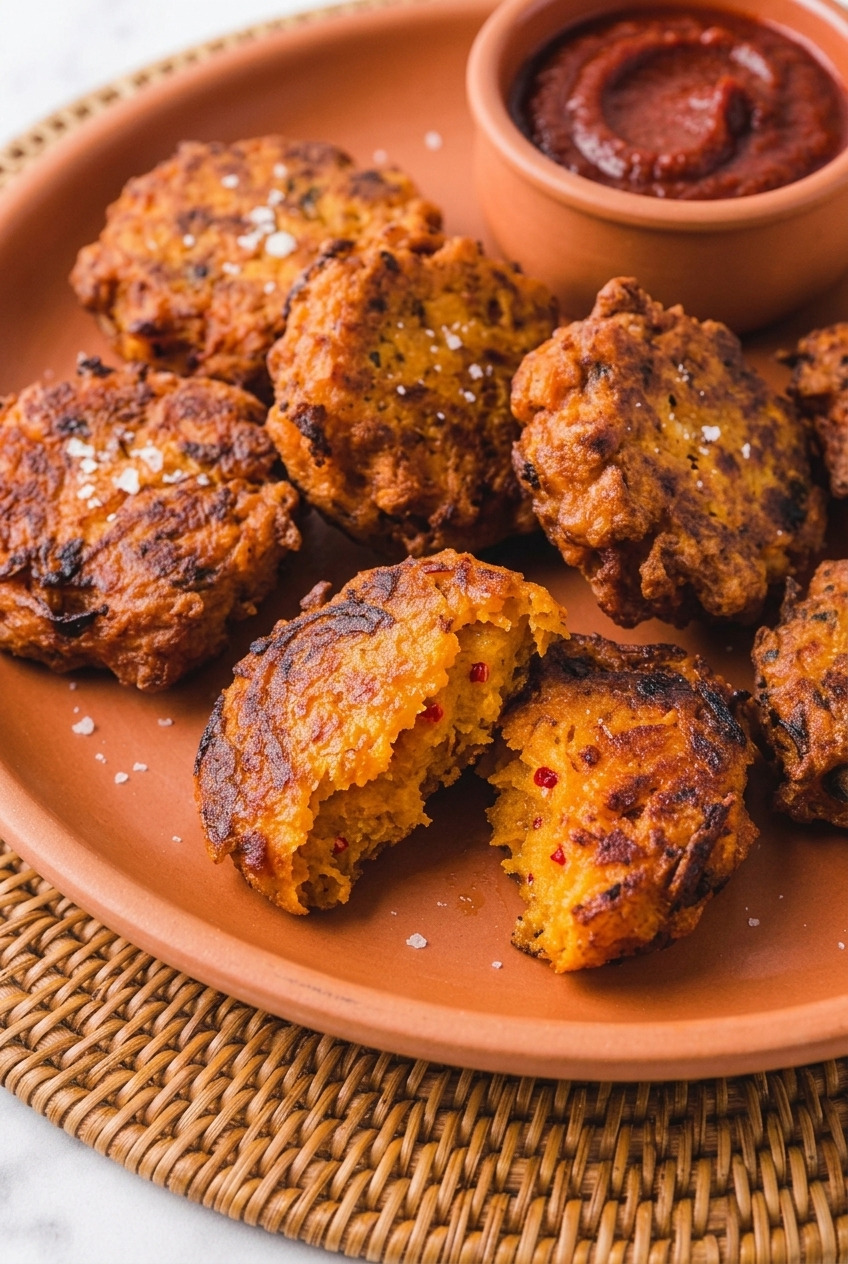
- The fresh pepper base. Red bell pepper, red onion and scotch bonnet blended raw, not a shake of cayenne from a jar. That blended pepper mix is the backbone of Nigerian cooking, the same base that starts jollof rice and stew, and it is what makes these taste like nothing else in the fritter category.
- The mash, not the grate. The potatoes are boiled and mashed into a batter, so the inside is soft and steamy rather than shaggy and lacy. Closer in spirit to akara, the bean fritter sold from roadside pans all over the country.
- The spoon-dropped shape. No flattening into patties. Spoonfuls go straight into deep oil and puff into rough rounds.
- The small chop context. These belong on a tray with puff puff and chin chin at a party, or next to pap at breakfast, not as a brunch side under a poached egg.
One naming note: the orange sweet potato most Americans buy is not the true African yam, which is a large, starchy, pale tuber and a completely different vegetable. Nigerians call sweet potato exactly that, sweet potato, and the local varieties often have paler cream flesh. Either works here.
Ingredient Notes
Two ingredients decide whether these come out light or heavy. Read the sweet potato note and the oil note closely. The rest is a short shopping list.
- Sweet potatoes (2 pounds, about 3 medium). Peel and cube them so they cook evenly. The single most important step is drying the mash, which I cover in the method. Nigerian cream-fleshed sweet potatoes are drier and starchier if you can find them at an African market, and the orange ones you get everywhere work fine.
- Scotch bonnet (1 to 2). The authentic pepper, fruity and floral before the heat lands. Habanero is the closest substitute and is easier to find in a US supermarket. One pepper gives a warm background hum, two makes them properly Nigerian.
- Red bell pepper (1 medium). Sweetness, colour and body in the base. Do not skip it thinking it is filler.
- Red onion (1 small). Sharper than yellow and standard in this blend.
- Eggs (2 large). The binder. Real eggs, no substitutions needed here.
- All-purpose flour (¾ cup). Just enough to hold the batter together. More flour means a bready fritter.
- Baking powder (1 teaspoon). Lift. It gives you that puffed, open interior instead of a dense little ball.
- Ground crayfish (½ teaspoon, optional). Dried ground crayfish is sold in every Nigerian kitchen and adds a savory background you can't get any other way. Find it at an African grocery or online. Leave it out if you can't, and the fritters are still excellent.
- Groundnut oil (for deep frying). Peanut oil is what West African cooks use and its flavor belongs here. Any neutral oil with a high smoke point is the fallback.
How to Make Nigerian Sweet Potato Fritters
One pot, one blender, one pan of oil. The order matters more than the technique.
Step 1: Boil and Dry the Sweet Potatoes
Peel and cube 2 pounds of sweet potatoes and boil them in salted water for 12 to 15 minutes, until a knife goes through with no resistance.
Drain them well, then put them back in the empty hot pot over low heat for 2 minutes.
Shake the pot once or twice and you'll see the surfaces go chalky as the water steams off.
This is the step everyone skips and it is the difference between a light fritter and a greasy one.
Step 2: Blend the Pepper Base
Roughly chop the red bell pepper, red onion and scotch bonnet, then blend them to a coarse paste with no added water.
You want texture, not juice.
Pro tip: Wear gloves or wash your hands twice after handling scotch bonnets. I learned that the way most people learn it.
Step 3: Mix the Batter
Mash the dried sweet potatoes until smooth while they're still warm.
Fold in the pepper paste, the 2 eggs, ¾ cup flour, 1 teaspoon baking powder, 1 ½ teaspoons salt and the ground crayfish if you're using it.
Stop mixing the second it comes together.
The batter should hold its shape on a spoon and fall off slowly when you tip it.
If it runs, add flour 1 tablespoon at a time.
Let it rest 10 minutes while the oil heats.
Step 4: Fry in Batches
Heat 2 inches of groundnut oil to 350°F.
Temperature is not negotiable here. Cooler oil soaks in, hotter oil browns the shell before the middle cooks.
Drop rounded tablespoons of batter into the oil, never more than five or six at a time.
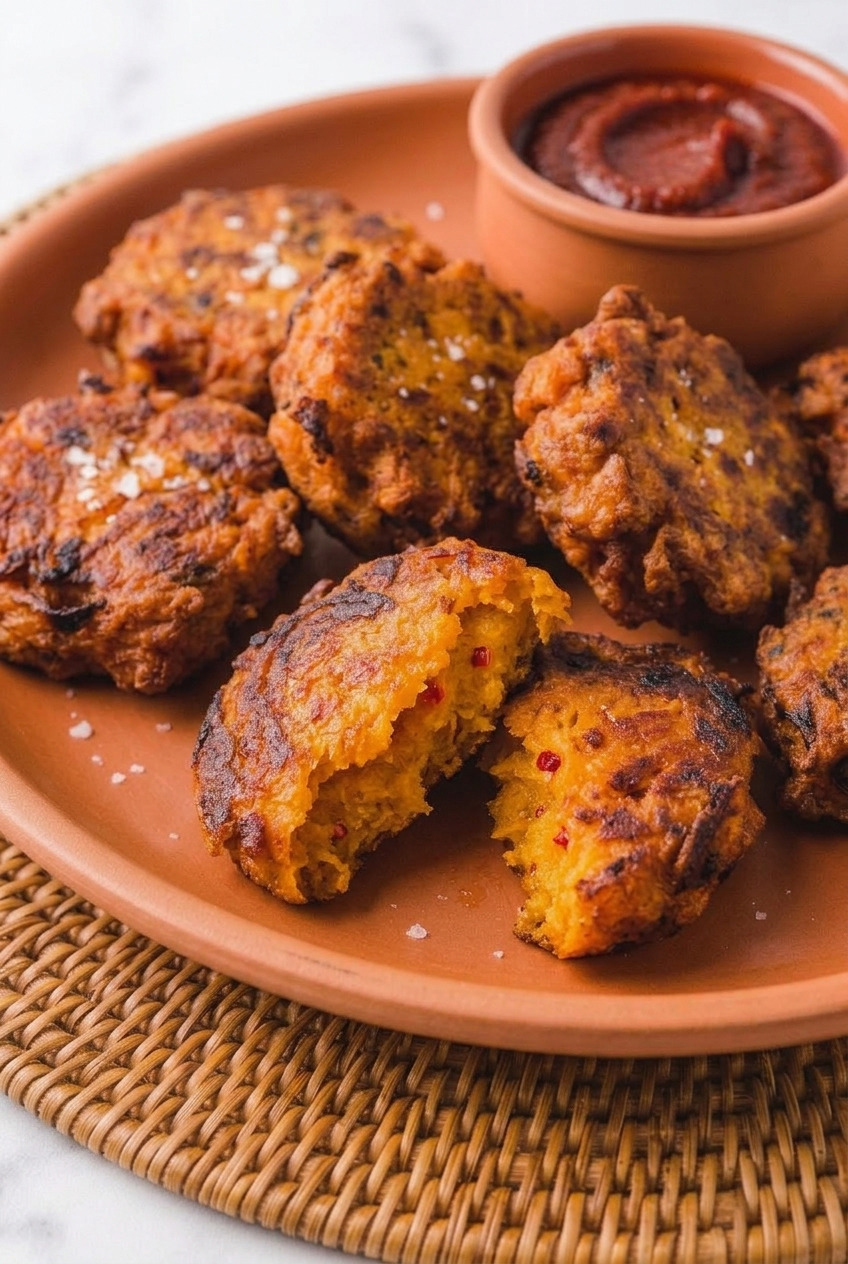
Fry 3 to 4 minutes, turning them once, until they are deep golden brown all over.
Let the oil come back up to temperature between batches.
Step 5: Drain and Season
Lift them onto a wire rack, not paper towels.
A rack keeps air moving underneath so the bottoms stay crisp instead of steaming soft.
Hit them with a pinch of salt while they're still glossy.
Eat at least one immediately. That's the cook's tax.
Frying Tips for Light, Crisp Fritters
Every one of these is about managing water and heat. Fritters fail for exactly two reasons and both are fixable.
- Dry the mash, always. Two minutes back in the hot pot pulls out the water that would otherwise turn to steam and blow your fritter open in the oil.
- Blend with no water. Every tablespoon of liquid in the pepper base has to be balanced with more flour, and more flour means a heavier fritter.
- Use a thermometer. Guessing costs you a batch. 350°F is the window, and a clip-on thermometer is about ten dollars.
- Fry small batches. Six fritters drop the oil temperature by 20 to 25 degrees. Twelve drop it off a cliff.
- Rest the batter. Ten minutes lets the flour hydrate so the fritters hold together instead of feathering apart.
- Don't press them. Let them puff. Flattening them in the oil squeezes out the air you worked to get in.
Fair warning: if your batter looks wet and slack, do not fry it hoping for the best. Add flour or drain more moisture. A wet batter fritter is oil-logged in the middle every single time.
The Pepper Dip
Nigerian fried snacks get a pepper sauce, not ranch. This takes five minutes and uses the same aromatics as the batter.
- Blend it. One red bell pepper, half a red onion, one scotch bonnet and one plum tomato, blended coarse.
- Cook it down. Fry the blend in 3 tablespoons of oil over medium heat for 10 to 12 minutes, until it darkens and the raw edge cooks off.
- Season it. Salt, a pinch of ground crayfish, and a splash of water if it tightens up too much.
- Cool it slightly. Warm, not hot, is where it tastes best against a crisp fritter.
- The mild option. Thick plain yogurt with lemon juice and salt, for anyone at the table who taps out on heat.
What to Serve With Them
These slot into a lot of meals. Here's where they earn their place in my kitchen.
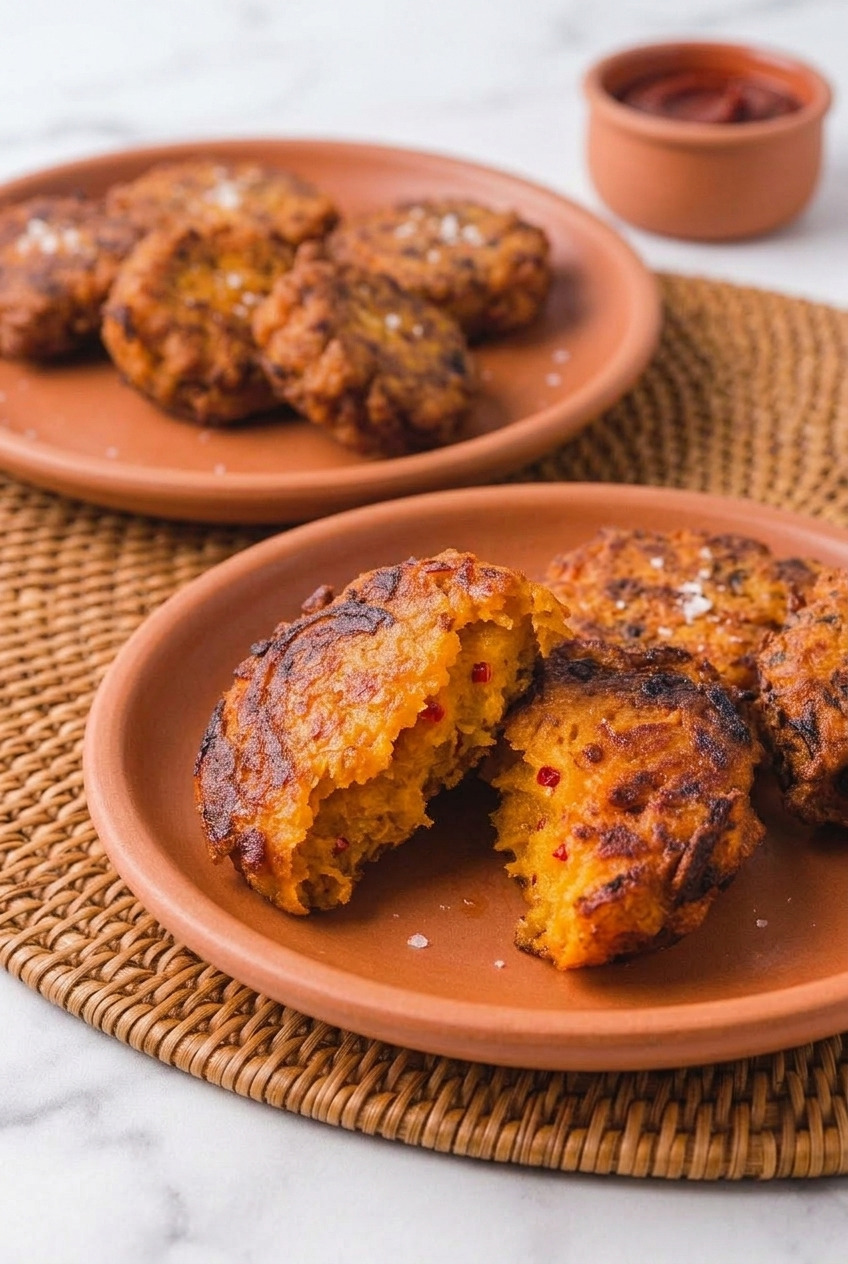
- As small chop. On a tray with puff puff, chin chin and toothpicked suya for a party. This is their natural home.
- With pap. Fermented corn pudding, called ogi or akamu, is the classic Nigerian breakfast partner for anything fried.
- Alongside jollof rice. A plate of jollof with two or three of these on the side is a full dinner.
- With eggs. Fried eggs and a bowl of pepper sauce turns them into a weekend breakfast.
- As a soup partner. They're excellent dunked into a bowl of pepper soup on a cold night.
Variations
The batter takes changes well. These are the ones I've actually made more than once.
- The grated version. Grate the sweet potato raw, squeeze it hard in a towel, and mix it with the same pepper base. Shaggier, lacier, faster, and less traditional.
- Smoked fish. Flake ½ cup of smoked mackerel into the batter for a deeply savory version that eats like a meal.
- Extra crayfish. Push the ground crayfish to 2 teaspoons if you want that background note front and center.
- The sweet version. Drop the pepper base, add 3 tablespoons of sugar and ½ teaspoon of grated nutmeg, and serve them dusted with sugar.
- Air fryer. Shape them into patties, spray both sides with oil, and cook at 400°F for 14 minutes, flipping halfway. Good, not the same.
- Shallow fry. One inch of oil in a skillet, flattened slightly, 3 minutes a side. Uses less oil and gives you a denser fritter.
Storage and Reheating
Fried food waits badly, so plan around it. These still keep better than most.
- Room temperature. Best within 2 hours of frying. This is genuinely a fresh-fried snack.
- Refrigerator. Cool completely on the rack, then store in an airtight container up to 3 days.
- Reheating. Oven or air fryer at 375°F for 6 to 8 minutes. They come back close to new.
- NEVER the microwave. It turns the crisp shell to wet cloth in forty seconds.
- Freezer. Freeze fried and cooled fritters on a tray, then bag them up to 2 months. Reheat from frozen at 375°F for 12 minutes.
- Make-ahead batter. The batter holds covered in the fridge for 24 hours. Stir it and let it sit out 15 minutes before frying.
Nigerian Sweet Potato Fritters FAQ
What do they call sweet potatoes in Nigeria?
Sweet potato, in English, which is one of Nigeria's official languages. In Yoruba it's anamo or odunkun, and in Igbo it's ji nwannu. The important thing is that sweet potato is not the same as the true African yam, a big pale starchy tuber that shows up in pounded yam and porridge. Two different vegetables that Americans often mix up.
Are these the same thing as puff puff?
No, though they live on the same party tray. Puff puff is a yeasted sweet dough fried into soft balls, closer to a doughnut. These are a savory sweet potato batter with a pepper base, fried the same way but eaten as a snack or side rather than a sweet.
What is the secret to fritters that are crisp outside and light inside?
Dry mash and hot oil. Dry the boiled potatoes in the empty pot for 2 minutes so they aren't carrying water into the batter, and hold the oil at 350°F in small batches. Water in the batter turns to steam and leaves you with a soggy centre, and cool oil soaks straight in.
Should I mash or grate the sweet potato?
Mash for the Nigerian version. Mashing gives the soft, almost dumpling-like interior these are known for, and it holds the pepper base evenly through the batter. Grating gives a crisper, shaggier Western-style fritter, which is a fine thing to eat but a different dish.
Can I make these without scotch bonnet?
Yes. Habanero is the nearest match in both heat and that fruity note. Fresno or red jalapeno gives you the colour and a much gentler burn. If you want no heat at all, use only the red bell pepper and add ¼ teaspoon of smoked paprika so the base still has depth.
Can I fry these ahead and reheat them?
You can, and it works well for a party. Fry them up to a day ahead, cool them completely on a rack, and refrigerate in an airtight container. Reheat on a tray at 375°F for 6 to 8 minutes just before serving. The alternative is holding the batter in the fridge overnight and frying fresh, which is better still.
Can I bake or air fry them instead?
The air fryer is the better of the two. Shape the batter into flat patties, spray both sides with oil, and cook at 400°F for about 14 minutes, flipping at the halfway mark. Baking at 425°F for 20 minutes works too. Both give you a drier, more roasted texture, so accept it as its own thing rather than a copy of the fried version.
Recipe
Nigerian Sweet Potato Fritters
Ingredients
For the Fritters
- 2 pounds sweet potatoes peeled and cubed
- 1 medium red bell pepper seeded and roughly chopped
- 1 small red onion roughly chopped
- 1-2 scotch bonnet peppers or habanero, stemmed
- 2 large eggs
- ¾ cup all-purpose flour plus more if needed
- 1 teaspoon baking powder
- 1 ½ teaspoons salt plus more for finishing
- ½ teaspoon ground crayfish optional but traditional
- 6 cups groundnut oil peanut oil, for deep frying
For the Pepper Dip
- 1 medium red bell pepper seeded and chopped
- ½ small red onion chopped
- 1 scotch bonnet pepper or habanero
- 1 plum tomato chopped
- 3 tablespoons groundnut oil
- ½ teaspoon salt to taste
Instructions
Boil and Dry the Sweet Potatoes
- Boil the peeled cubed sweet potatoes in salted water for 12 to 15 minutes, until a knife passes through with no resistance.
- Drain well, return them to the empty hot pot over low heat, and shake for 2 minutes until the surfaces look dry and chalky. Do not skip this step.
Blend the Pepper Base
- Blend the red bell pepper, red onion and scotch bonnet to a coarse paste with no added water.
Mix and Fry
- Mash the warm dried sweet potatoes until smooth.
- Fold in the pepper paste, eggs, flour, baking powder, salt and ground crayfish if using, mixing only until the batter comes together. It should hold its shape on a spoon and fall off slowly.
- Rest the batter 10 minutes while you heat 2 inches of groundnut oil to 350 degrees F.
- Drop rounded tablespoons of batter into the oil, no more than five or six at a time, and fry 3 to 4 minutes, turning once, until deep golden brown all over.
- Lift onto a wire rack, season with a pinch of salt, and let the oil return to temperature between batches.
Make the Pepper Dip
- Blend the red bell pepper, red onion, scotch bonnet and tomato to a coarse puree.
- Fry the blend in 3 tablespoons of oil over medium heat for 10 to 12 minutes, until it darkens and the raw edge cooks off. Season with salt and serve warm alongside the fritters.
Notes
- Dry the mash: Two minutes back in the hot empty pot removes the water that makes a fritter greasy.
- Blend dry: No water in the pepper base, or you will need extra flour and end up with a heavy fritter.
- Oil temperature: Hold 350 degrees F and fry five or six at a time. Six fritters drop the oil 20 to 25 degrees.
- Scotch bonnet substitute: Habanero is the closest. Fresno or red jalapeno for a milder version.
- Ground crayfish: Sold at African groceries and online. Optional, but it adds a savory note nothing else gives.
- Storage: Airtight in the fridge up to 3 days, reheat at 375 degrees F for 6 to 8 minutes. Never the microwave.
- Freezer: Freeze on a tray, then bag up to 2 months. Reheat from frozen at 375 degrees F for 12 minutes.