Nobody in Korea buys a roasted sweet potato to eat right away.
You buy it, take the paper bag, and put the whole thing inside your coat.
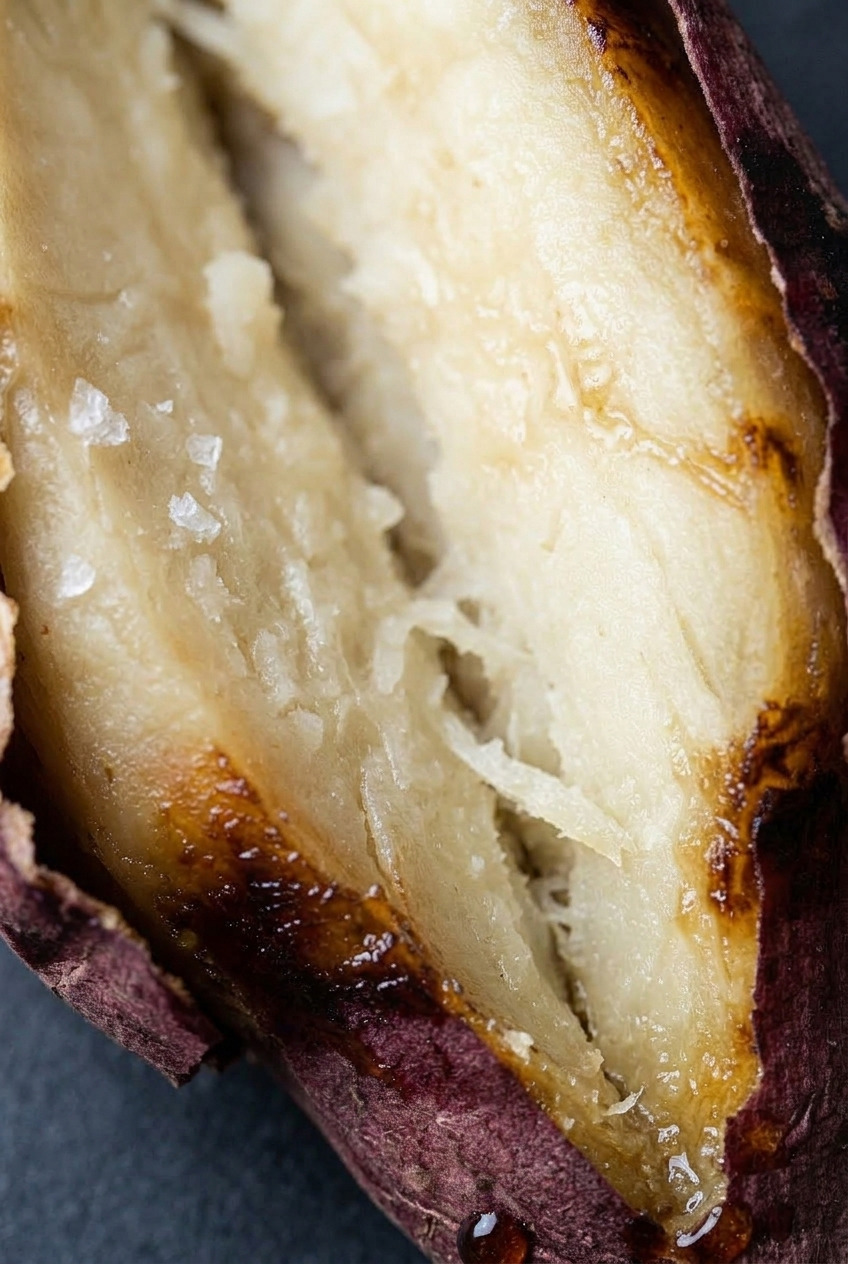
Hands wrapped around it while you walk. That's half the point on a cold night.
The carts show up when the temperature drops, usually an oil drum converted into a roaster with a grate over hot pebbles inside.
You can smell one from a block away, this dark caramel smell that doesn't come from anything added.
What's in a gun goguma is a sweet potato. That's the entire ingredient list.
I chased that flavor at home for a couple of winters and kept getting something starchy and beige instead.
Cranking the oven higher only made it worse.
The answer turned out to be the opposite: go slower, hold the potato in a specific temperature range longer, and let it make its own sugar.
An oven can absolutely do this. It just can't do it in forty minutes at 425.
My wife judges a batch by the sticky black beads that leak out at the bottom of the pan.
She's right. That syrup is the whole tell, and I'll show you exactly what to look for.
Two ingredients, one of which is optional salt.
You'll never look at a foil-wrapped baked potato the same way.
What Goguma Actually Is
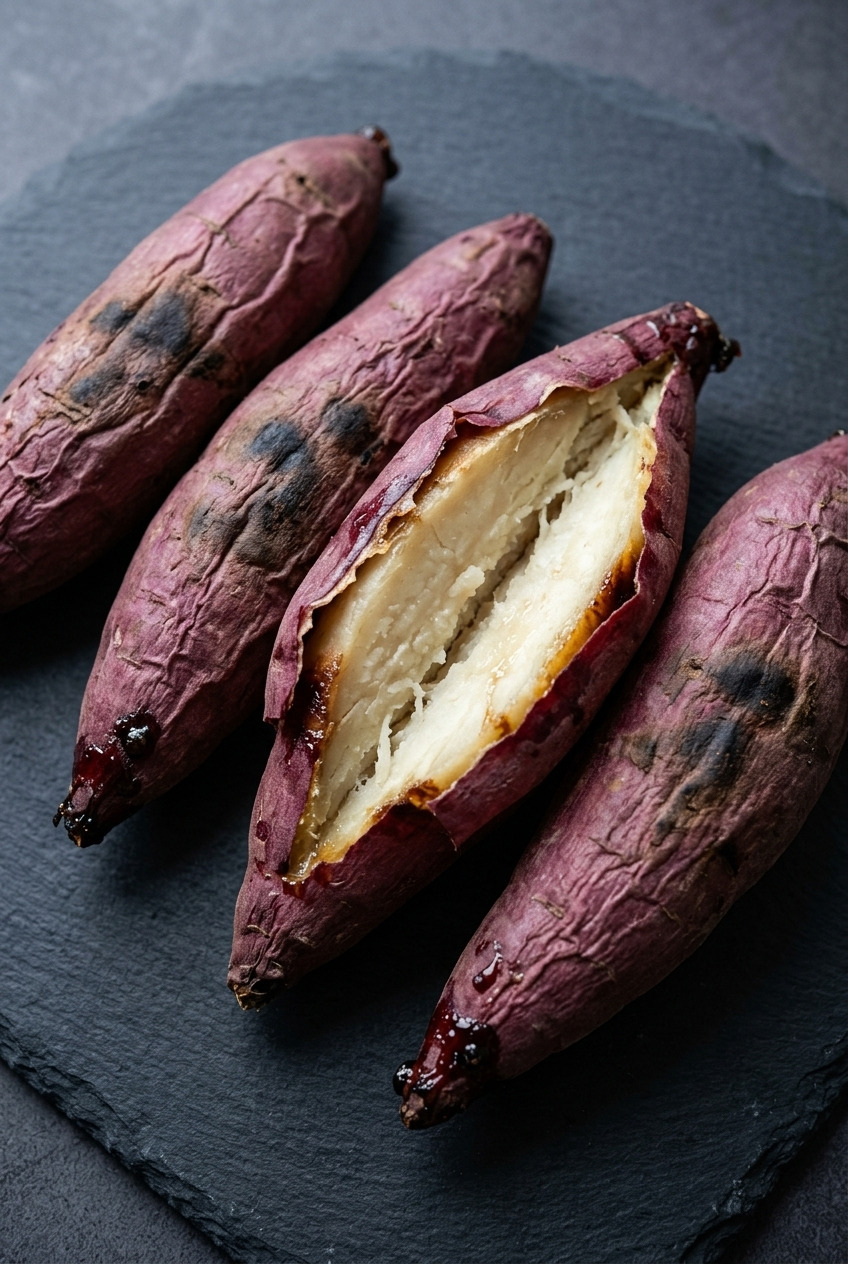
Goguma is not the orange sweet potato in your grocery store. Gun means roasted, goguma means sweet potato, and the variety matters more here than in any other recipe I know.
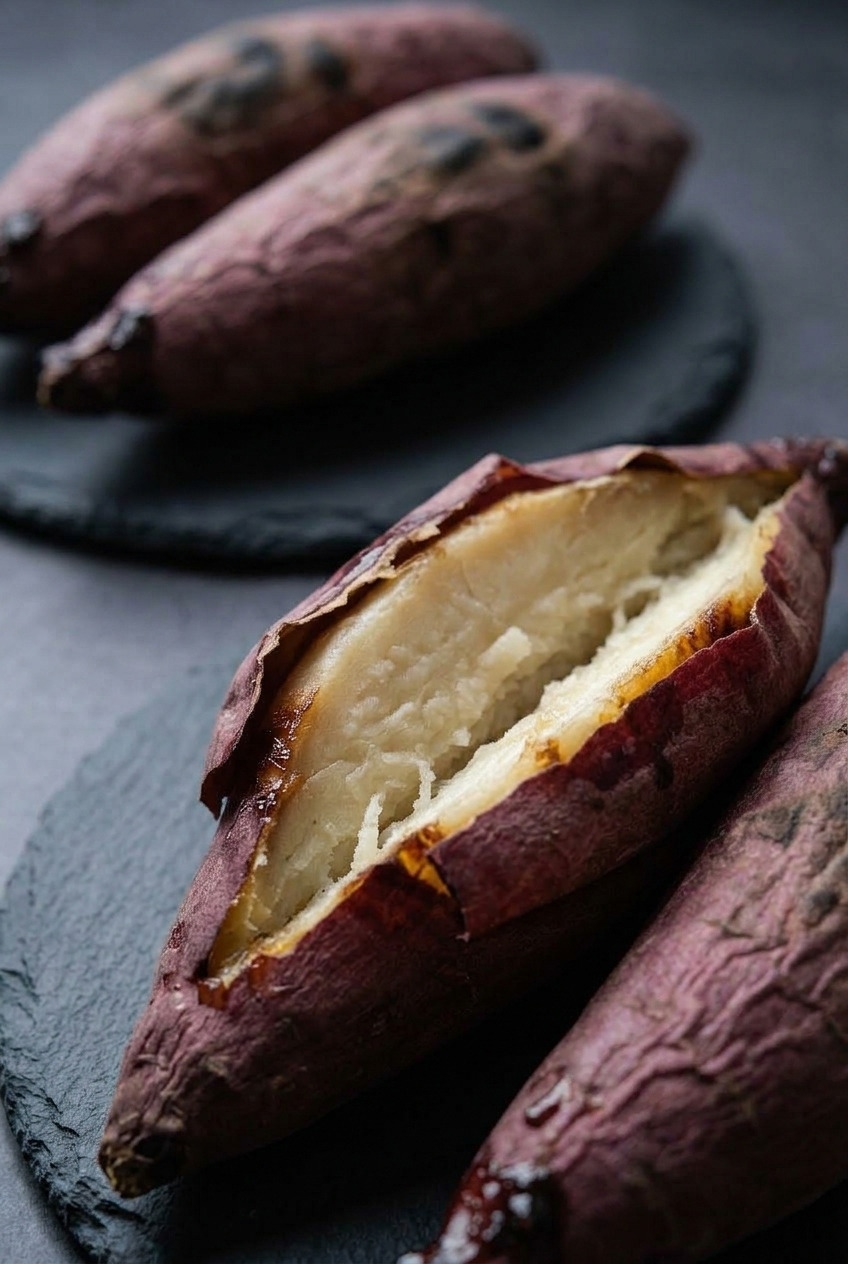
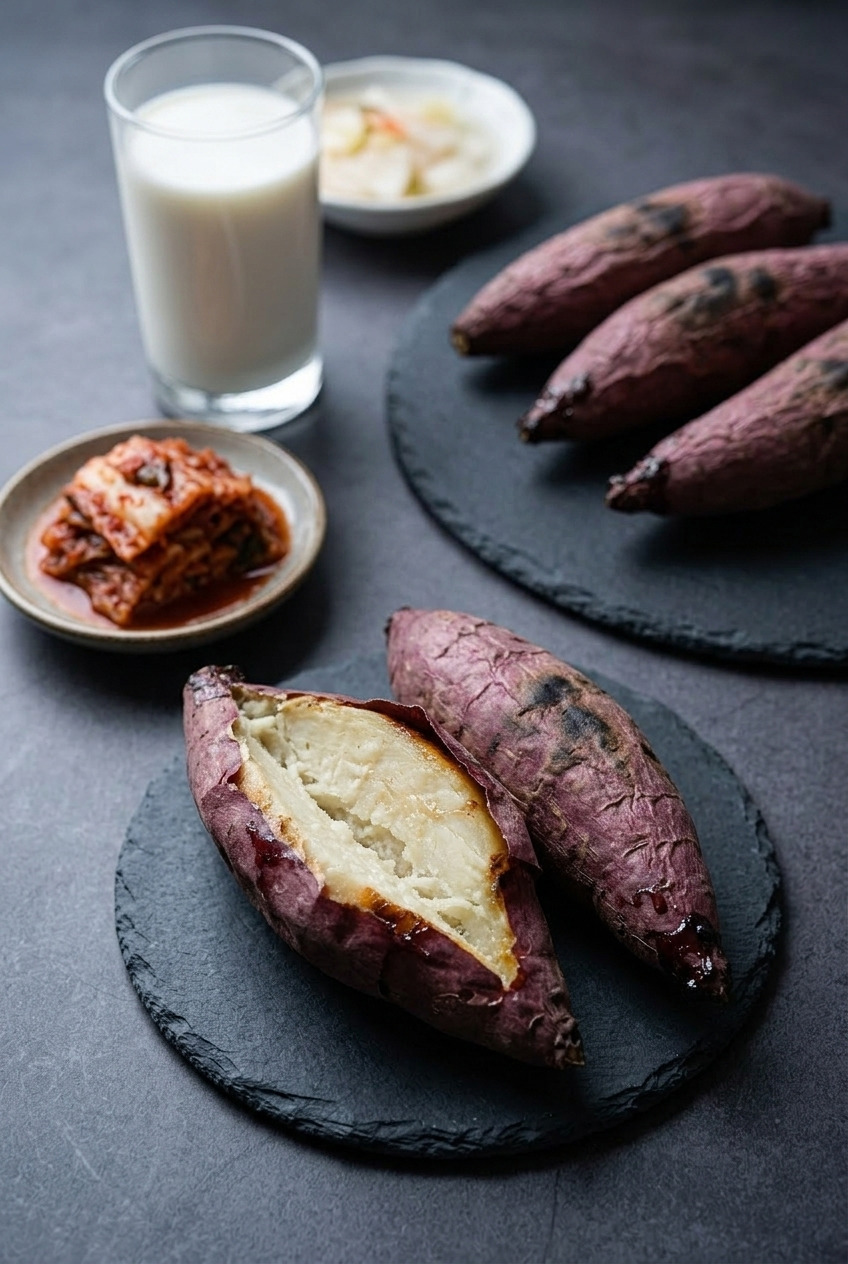
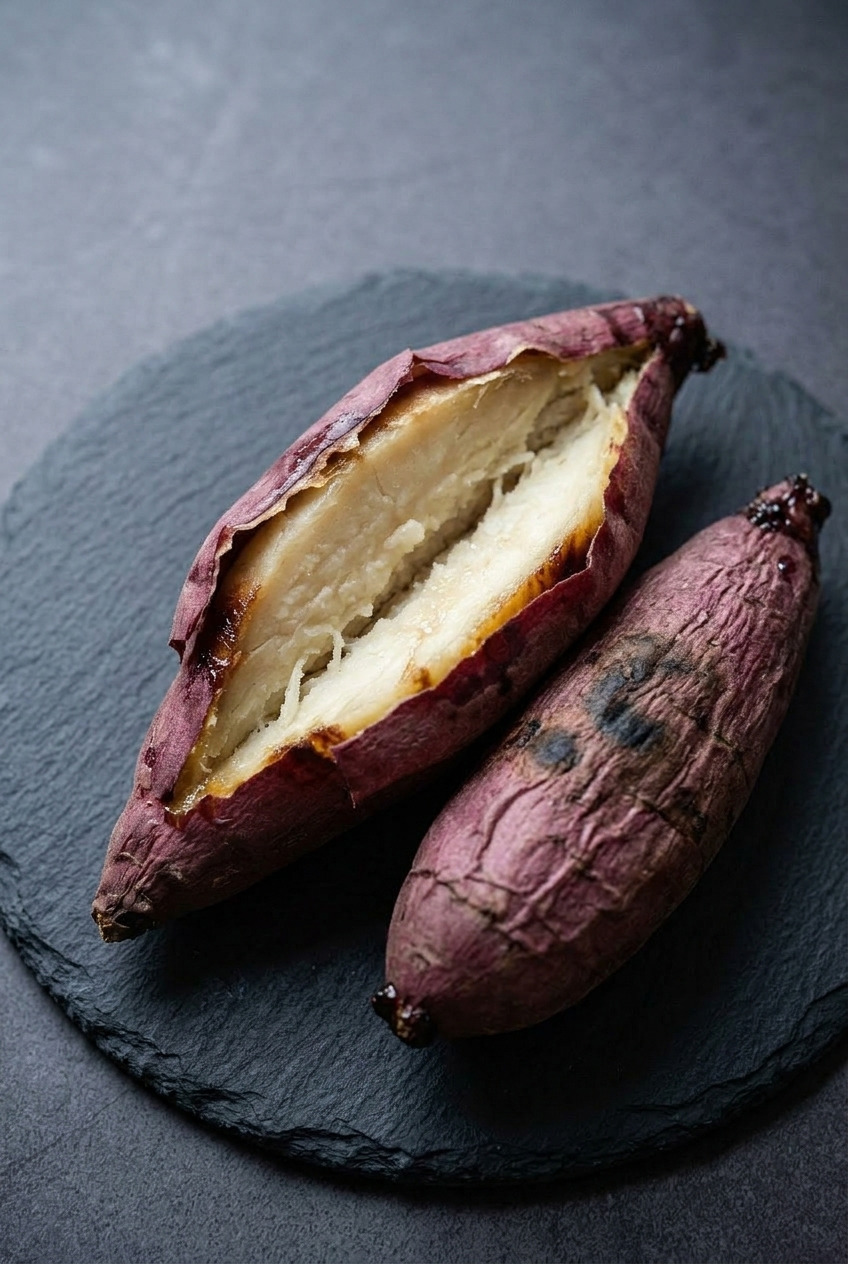
- The skin. Purple to reddish-purple, thin, and it wrinkles as it roasts.
- The flesh. Pale ivory to cream, not orange.
- The texture. Dense, dry, almost crumbly, closer to a chestnut than to a yam.
- The sweetness. Deeper and less watery than the orange varieties, and it concentrates hard when roasted.
Korean and Japanese sweet potatoes are close cousins, not identical twins.
Japanese satsumaimo like beniharuka behave almost the same way in an oven, and if that's what your store carries you'll get a good result.
Where to buy them: Korean grocers, H Mart, and most larger Asian markets, sold loose by weight and often labeled goguma or Korean yam. They keep for weeks in a cool dark spot, and honestly they get sweeter after a couple of weeks of storage.
Why the Street Vendor Version Tastes Sweeter
The sugar in a roasted goguma is made, not added. Nobody at that cart is brushing anything on.
Sweet potatoes contain an enzyme called beta-amylase, and its job is to chop starch into maltose, which is a sugar.
That enzyme works in a temperature window, roughly 135°F to 170°F, and it stops for good once the potato gets hotter than that.
So the longer your potato spends passing through that window, the more of its starch turns to sugar.
A blazing hot oven rushes the potato through it in minutes.
A slow ramp keeps it there for half an hour, and the result is a potato that tastes like it was candied.
The pebble roaster does this beautifully because stone releases heat gradually.
Your oven can imitate it with nothing but a lower starting temperature and patience.
Ingredients You'll Need
- Korean sweet potatoes, goguma (4 medium, about 2 pounds). Pick them similar in size so they finish together, roughly the thickness of your wrist. Firm all over, taut skin, no soft or shriveled spots. Skip the enormous ones, they tend to be fibrous down the center.
- Flaky sea salt (optional, to finish). Not remotely traditional. A few grains on a sweet, dense bite is very good anyway.
- Aluminum foil (optional). A tool, not an ingredient, and I explain below when it helps.
That's the list. No oil, no butter, no sugar, no cinnamon.
Anything you add is competing with the potato instead of helping it.
How to Make Gun Goguma
The schedule is the recipe. Two temperatures, one visual cue, and about seventy minutes of mostly ignoring the oven.
Step 1: Pick and Prep the Potatoes
Scrub the sweet potatoes under cold water and dry them well.
Do NOT peel them. The skin holds everything in and it's part of how you eat this.
Do not oil them either, and skip the fork-piercing you were taught for baked potatoes. Piercing lets the syrup escape early and you want it staying put as long as possible.
Line a sheet pan with foil, because the sugar that eventually leaks will weld itself to bare metal.
Step 2: Start Low
Put the potatoes on the pan with space between them and slide them into a cold oven.
Set it to 300°F and roast for 40 minutes.
Starting cold is the trick. The potato climbs slowly through that enzyme window instead of blowing past it, and this single change is the difference between starchy and syrupy.
If you want a softer, moister interior, wrap each potato loosely in foil for this phase only.
Step 3: Finish Hot
Raise the oven to 425°F and roast for another 25 to 30 minutes.
Unwrap anything you wrapped.
This phase dries and wrinkles the skin and pushes the leaked sugars into real caramelization at the contact points.
Step 4: Read the Syrup
Look at the pan, not the clock.
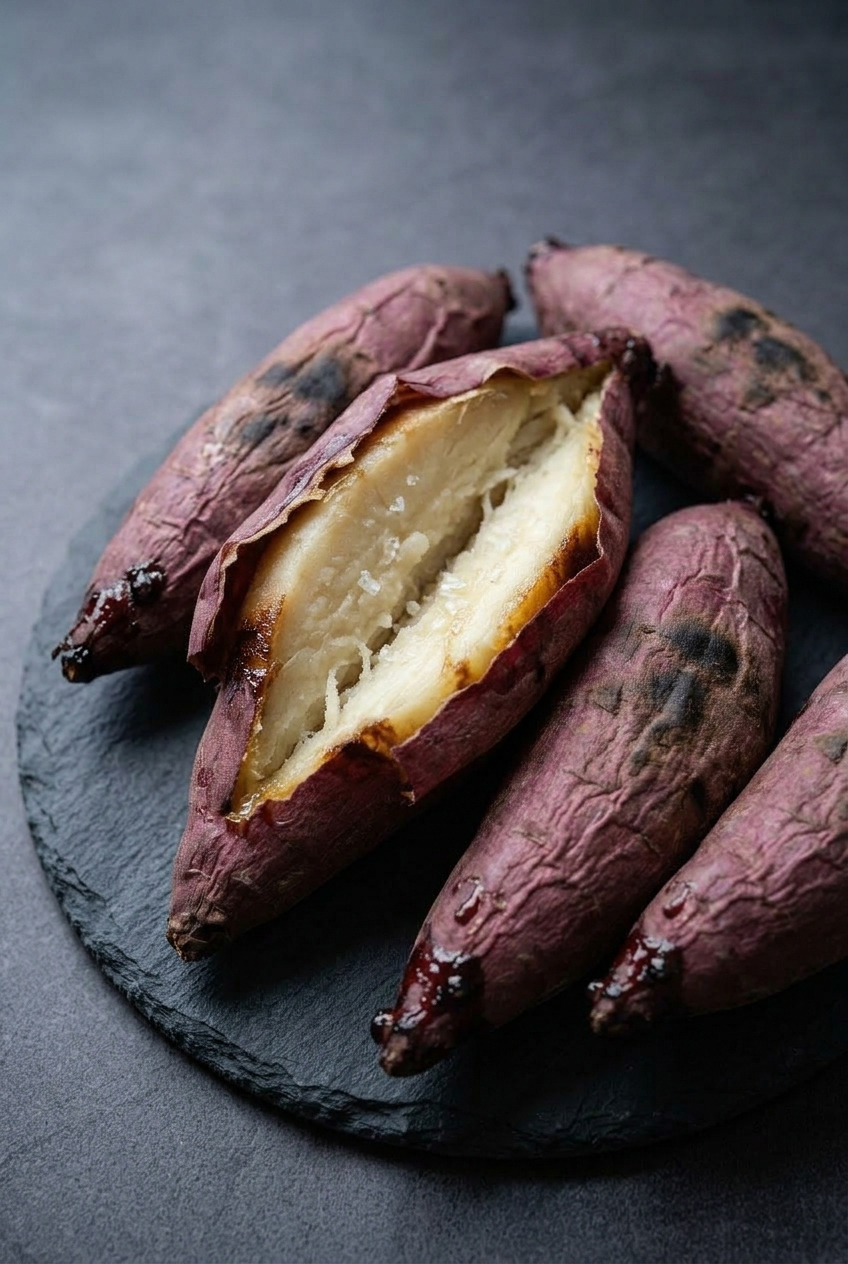
You want to see dark sticky beads of syrup that have leaked out at the ends and pooled where the potato touches the foil, going from amber to almost black at the edges.
The skin should be visibly wrinkled and loose, and the potato should give completely when you press it with a folded towel.
No syrup means not done, even at ninety minutes. Give it another 10 minutes and check again.
Let them rest 10 minutes before eating, both because they're molten inside and because the texture firms into something better.
The Stovetop Method
You don't need an oven for this at all. This is the closest home equivalent to the pebble roaster and it's what I use when I'm making two rather than six.
Put the scrubbed potatoes in a heavy pot or Dutch oven with a tight lid, no water.
Set it over low heat and cover.
Turn them every 10 minutes for 45 to 55 minutes, until the skin is scorched in patches and the potato is soft through.
You get more blistering and char than the oven gives you, and the smell is closer to the cart.
The trade-off is that you have to be in the kitchen turning them.
Air Fryer and the Viral Hack
The air fryer is fast and it costs you the syrup. Here's my honest take on the shortcuts.
- Air fryer. 380°F for 35 to 45 minutes, depending on thickness. Good skin, soft flesh, noticeably less sweetness because the potato never lingers in the enzyme window.
- The slow air fryer version. Start at 250°F for 25 minutes, then finish at 400°F for 20 minutes. This gets you most of the way back, and it's what I'd actually recommend.
- The viral microwave-then-roast hack. Microwave 5 minutes, then roast hot. It's quick and the texture is fine. It also skips the entire sugar-making phase, which is the part that makes this dish worth doing.
- Slow cooker. Wrapped in foil on low for 6 hours. Very sweet, very soft, no crisped skin at all.
How Koreans Actually Eat Gun Goguma
You tear it open and eat it out of the skin. No butter, no plate required, no fuss.
- With kimchi. The classic winter pairing, and it sounds strange until you do it. Sour, spicy cabbage kimchi or watery dongchimi radish kimchi against the sweetness. It's the same logic as salt on caramel.
- With cold milk. The other standard. Dense sweet potato is genuinely dry in the throat, and cold milk fixes it. This is what Korean kids get after school in winter.
- Cold from the fridge. Not a leftover strategy, an actual preference. A chilled roasted goguma has a firm, fudgy texture that a lot of people like more than the hot version.
- As a side dish. Halved lengthwise next to grilled meat, where its sweetness works the same way a sweet banchan does.
Who doesn't love a food that requires zero equipment to eat?
Storage and Reheating
- Room temperature. Wrapped loosely, 1 day.
- Fridge. 5 days in a covered container. Remember that cold is a legitimate way to eat these, not a compromise.
- Freezer. 3 months, whole and wrapped. Korean stores sell frozen roasted goguma for exactly this reason and it works better than you'd expect.
- Reheating. 350°F oven for 15 minutes, or an air fryer at 380°F for 8 minutes to bring the skin back.
- Frozen and half-thawed. A frozen goguma left out for twenty minutes eats like ice cream. That's a real Korean snack, not something I invented.
Two ingredients, one of them optional, and about an hour of oven time you don't have to supervise.
Make them on the first genuinely cold night of the year.
Recipe
Gun Goguma (Korean Roasted Sweet Potatoes)
Ingredients
For the Roasted Sweet Potatoes
- 4 medium Korean sweet potatoes (goguma) about 2 pounds total, similar in size
- 1 pinch flaky sea salt optional, to finish
Instructions
Roast Slow, Then Hot
- Scrub the sweet potatoes under cold water and dry them well. Do not peel, do not oil, and do not pierce them.
- Line a sheet pan with foil and set the potatoes on it with space between them. Slide the pan into a cold oven, then set the oven to 300F and roast for 40 minutes.
- For a softer, moister interior, wrap each potato loosely in foil for this low phase only.
- Raise the oven to 425F, unwrap any foil, and roast another 25 to 30 minutes.
Check and Rest
- Look for dark sticky beads of syrup leaked onto the pan, a visibly wrinkled loose skin, and flesh that gives completely under gentle pressure. If there is no syrup, give it another 10 minutes.
- Rest 10 minutes before eating. Tear open and eat from the skin, with flaky salt if you like.
Stovetop Method
- Put the scrubbed potatoes in a heavy pot or Dutch oven with a tight lid and no water. Cook over low heat, covered, turning every 10 minutes for 45 to 55 minutes, until the skin is scorched in patches and the potato is soft through.
Notes
- Start in a cold oven: the slow climb keeps the potato in the 135F to 170F range where its own enzymes turn starch into sugar. This is the whole difference between starchy and syrupy.
- Do not pierce them: holes let the syrup escape before it can caramelize.
- Read the syrup, not the clock: dark sticky beads on the pan and a wrinkled loose skin mean done.
- Variety matters: Korean goguma has purple skin and pale ivory flesh. Japanese satsumaimo behaves the same. Orange American sweet potatoes are wetter and less sweet.
- Eat it cold: a chilled roasted goguma has a firm, fudgy texture that many Koreans prefer to the hot version.