School lets out at three in the afternoon and the carts are already parked at the gate.
Banana cue on one, kamote cue on the next, turon on the one after that.
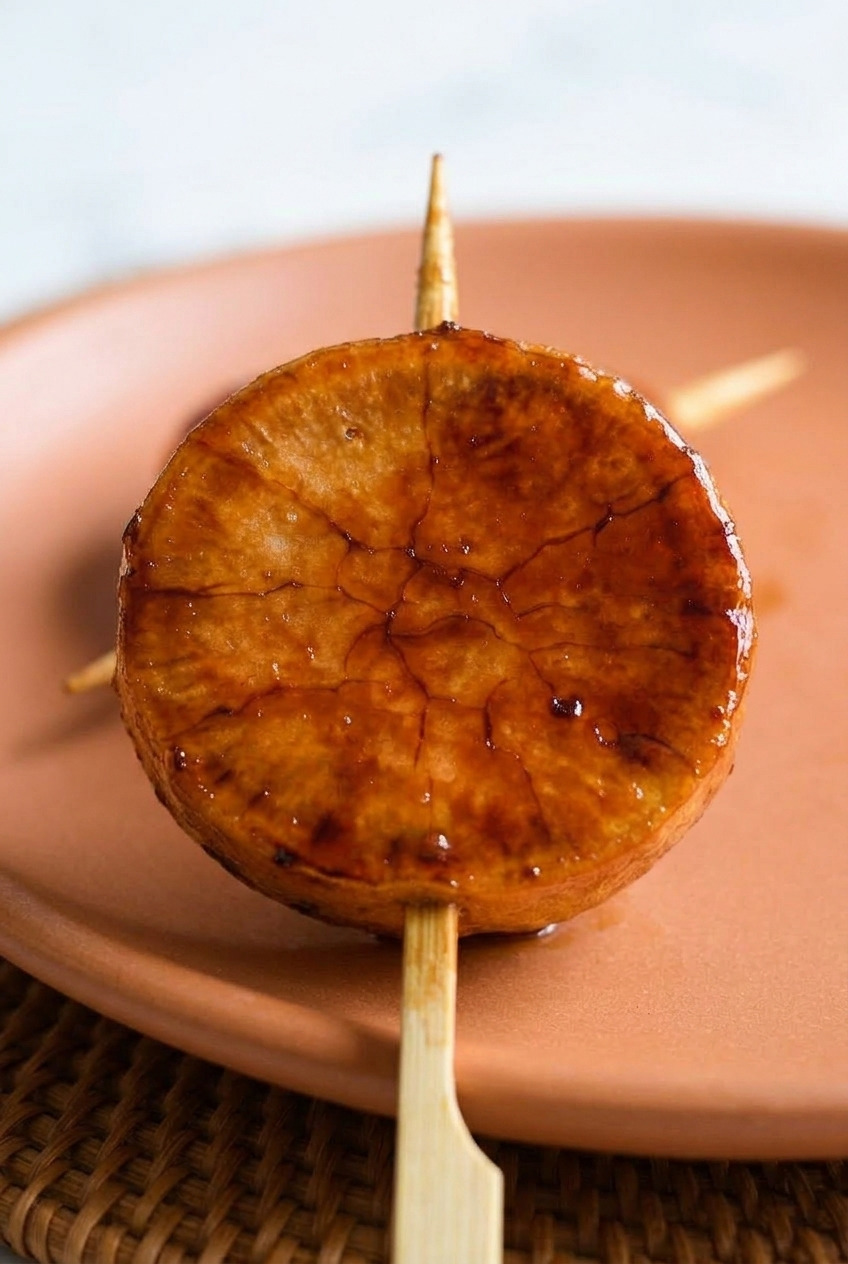
You hear the sugar before you see it, that hard hiss when it hits the oil.
Then somebody hands you a bamboo skewer with three caramelized rounds on it and you eat it walking.
My friend Marlon fed me my first one outside a school in Quezon City, and he was genuinely offended that I had never had it.
Kamote is sweet potato. Cue comes from barbecue, because it is sold on a stick from a cart, the same way banana cue is.
It is merienda, the Filipino afternoon snack, and it is not a dessert anybody plates.
Three ingredients. Sweet potato, brown sugar, oil.
I came home and made a pan of burnt sugar on the first try, and then a pan of pale soggy slices on the second.
What nobody had told me is that the sugar goes into the frying oil.
Not a syrup poured over afterward. Straight into the oil.
Once I got that, it took ten minutes and it has been in my rotation ever since.
The caramel sets glassy as it cools and cracks when you bite it, and that first crack is the whole reason this snack exists.
What Is Kamote Cue?
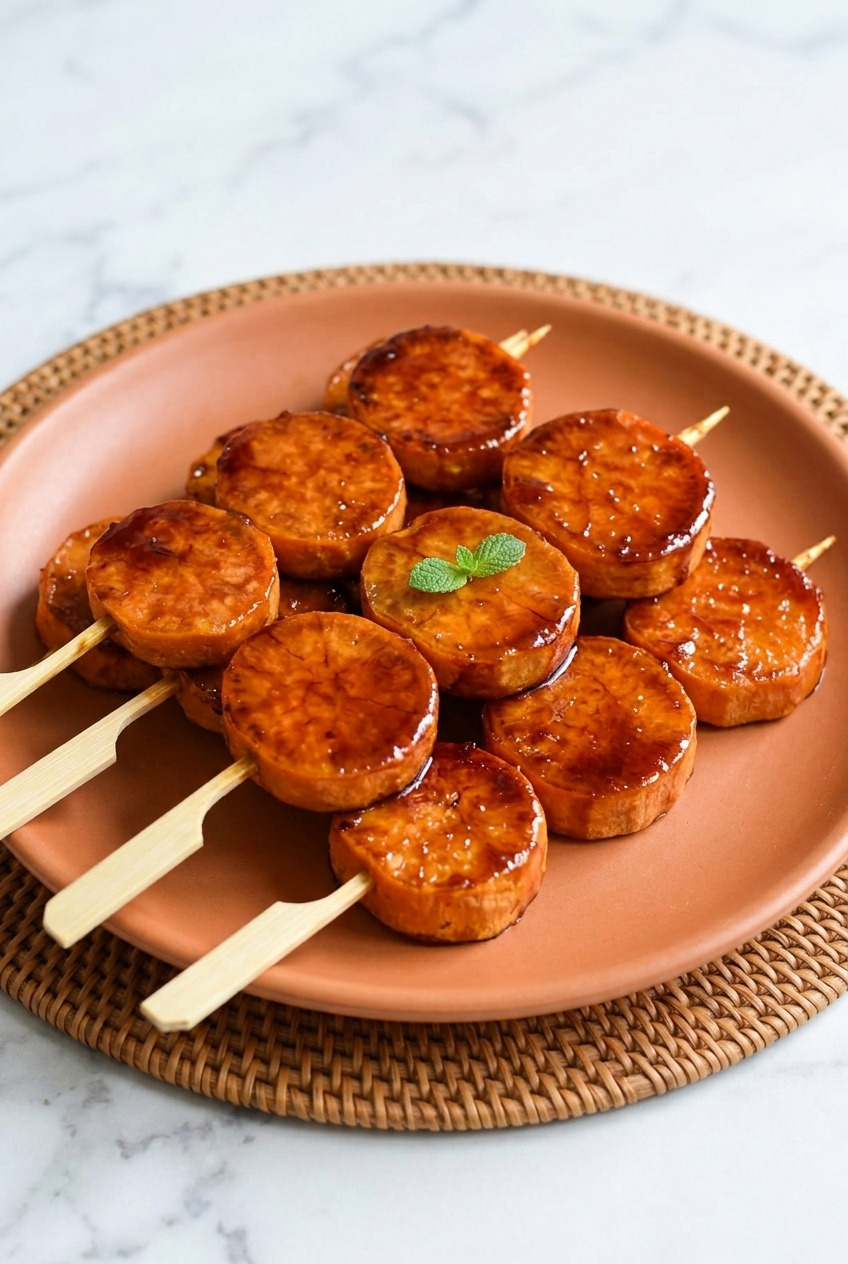
Kamote cue is a Filipino street snack of sweet potato slices deep fried and caramelized in brown sugar, then threaded onto a bamboo skewer. It is sold from carts, sidewalk stalls, and school gates all over the Philippines.
The name is half Tagalog and half borrowed English. Kamote is the sweet potato, and cue is a clipped version of barbecue that just means it comes on a stick.
Its twin is banana cue, made the same way with saba bananas. The two are almost always sold side by side from the same pot.
The texture is the appeal. The potato goes soft and creamy inside while the sugar hardens into a thin brittle shell outside.
It is eaten warm, standing up, within a few minutes of leaving the oil.
A Short History
Kamote cue belongs to Filipino street vendor culture, and specifically to merienda. Merienda is the mid afternoon eating break that sits between lunch and a late dinner, and it is a genuine institution.
Sweet potato has been a cheap, abundant Philippine staple for centuries, planted widely enough that it became a fallback food in hard years.
Frying it in sugar turned a poverty crop into something people would pay a few pesos for on the way home.
The cart format is the other half of the story. A wok of oil, a bag of brown sugar, a bundle of bamboo skewers, and you have a business.
You will find kamote cue on the same cart as banana cue, turon, maruya, and camote fries, and the vendor will cook them all in the same pot of sugared oil.
Ingredients You Will Need
This is a three ingredient recipe and that is not a marketing line. Anything else you add is somebody's invention, not the dish.
- Sweet potatoes (2 lb). Peeled and cut into rounds about ½ inch thick. Orange or the paler Filipino varieties both work.
- Brown sugar (1 cup, packed). This is the entire coating. Light or dark, dark gives a deeper color and a faint molasses edge.
- Neutral oil (1 ½ cups). Canola or vegetable. You need enough depth for the slices to float.
- Fine salt (¼ teaspoon). Not universal, but common in home versions, and it keeps a cup of sugar from tasting flat.
- Bamboo skewers (8). Soaked in water so they do not splinter. These are the serving vessel, not a garnish.
No cinnamon. No butter. No vanilla. The Philippines is not asking for any of it.
The Sugar Goes in the Oil
This is the technique that makes kamote cue kamote cue, and almost no English recipe explains it. Get this and the rest is easy.
You fry the sweet potato slices until they are nearly tender.
Then you sprinkle the brown sugar directly into the hot oil, on top of the potato.
It does not dissolve the way it would in water. It sinks, melts, and turns into a dark bubbling caramel suspended in the oil, and the slices tumble through it and pick up a coat.
Here is what to watch for, in order:
- The sugar clumps. First thirty seconds. Looks wrong, is fine, leave it.
- It melts and goes glossy. The oil darkens and starts smelling like caramel. Start moving the slices.
- It thickens and clings. The caramel grabs the potato instead of sliding off. This is your window.
- It turns bitter. Thirty seconds past the window. Deep mahogany going to black, sharp smell. Too late.
That whole sequence is about 3 minutes. Stay at the pan.
How to Make Kamote Cue
Step 1: Cut Them Thick
Peel the sweet potatoes and slice them into rounds about ½ inch thick.
Thin slices turn into chips. You want a creamy center under that shell, and thickness is how you get it.
If a potato is very wide, cut the rounds in half so every piece fits on a skewer.
Step 2: Fry Until Nearly Tender
Heat the oil in a wok or deep skillet over medium heat, around 325°F.
Add the slices in a single layer and fry 6 to 8 minutes, turning once, until a skewer slides in with just a little resistance.
Do not brown them yet. They should still be pale.
Step 3: Add the Sugar
Sprinkle the brown sugar and salt evenly over the slices, straight into the oil.
Leave it for 30 seconds, then start turning the slices through the melting caramel.
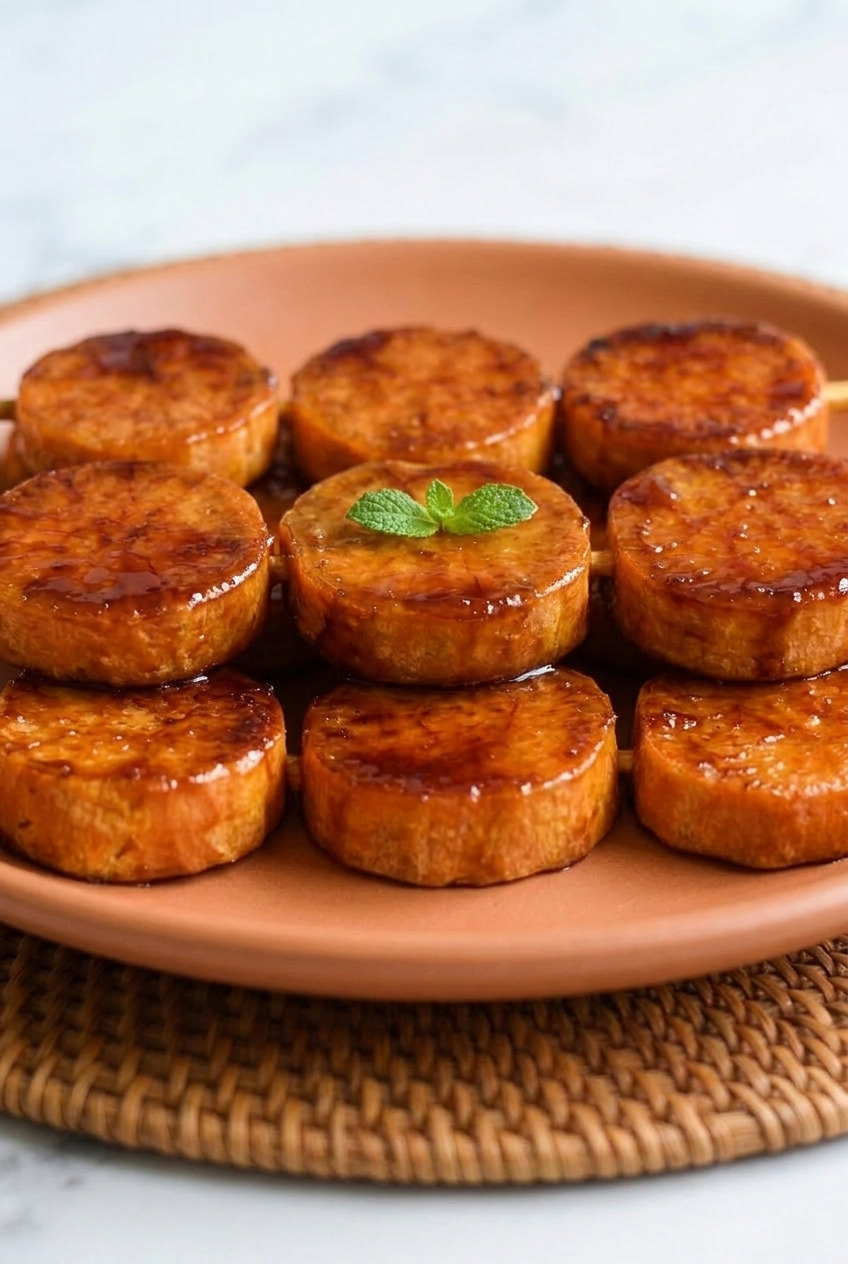
Keep them moving for 2 to 3 minutes, until every slice is coated in a dark amber shell and the caramel clings instead of running.
Step 4: Drain
Lift the slices onto a wire rack set over a sheet pan, spaced apart so they do not fuse.
Let them sit 2 minutes. The caramel goes from soft to glassy.
Pro tip: use a rack, not paper towels. Paper sticks to hot caramel and you will be picking it off.
Step 5: Skewer and Eat
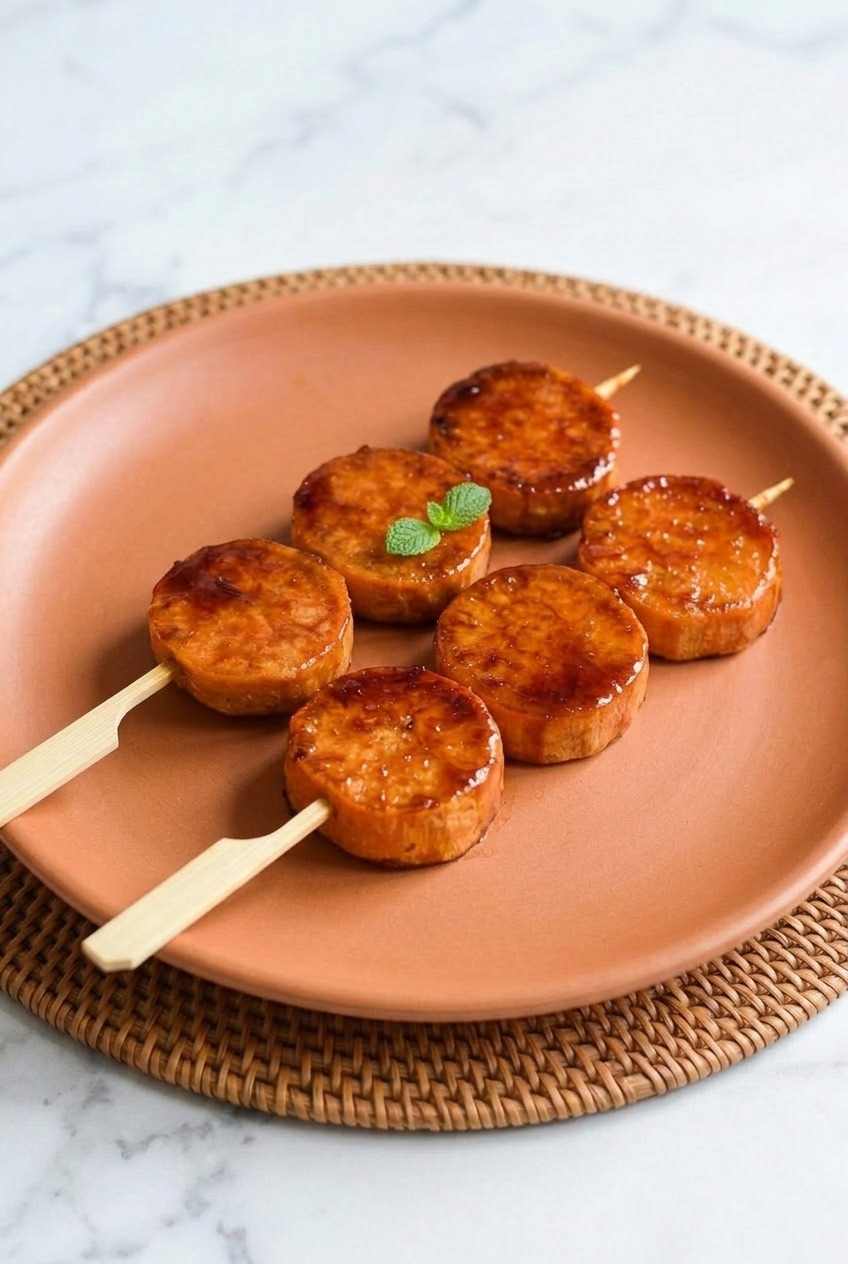
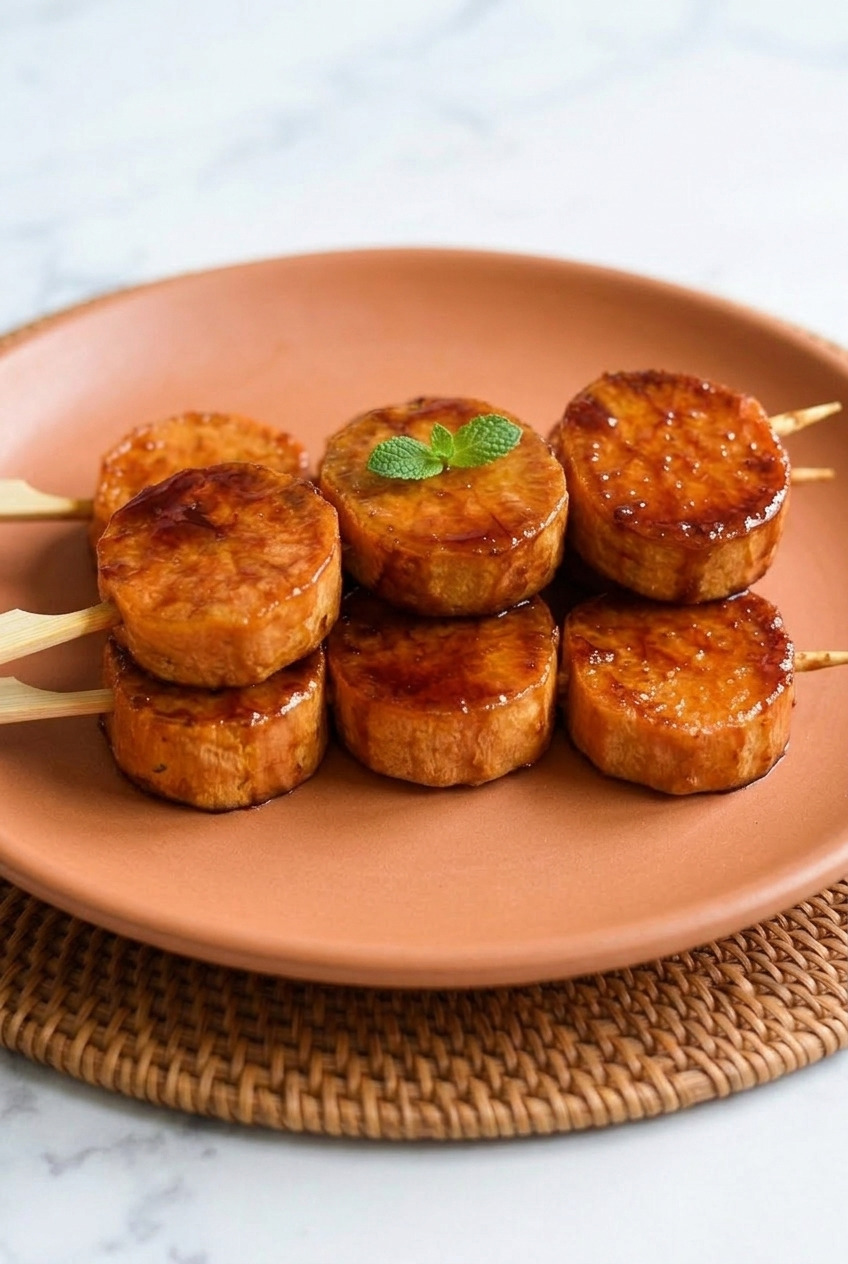
Thread 2 to 3 slices onto each soaked bamboo skewer, then serve them warm.
Sound too easy? It is. That is why there are carts.
How to Skewer Them
Every photo of this dish sells the stick and no recipe tells you how to load it. It takes fifteen seconds to learn.
- Soak the bamboo. Twenty minutes in water. Dry bamboo splinters and leaves shards in the caramel.
- Push from one end only. The pointed tip goes in first and stays inside the food. The blunt end stays clear as the handle. You never push a second stick in from the other side.
- Go through the center of each round. Off center and the slice spins and slides off.
- Leave 2 inches bare. That is the handle. This is street food, it is meant to be held.
- Point them the same way. When you lay several on a plate, all the handles face the same direction. That is how they sit in the vendor's tray.
- Skewer while warm. Cold caramel cracks and the slice breaks apart as the stick goes through.
Kamote Fries, the Other Version
The same cart usually sells a second version cut into batons. It is a different eating experience and worth knowing.
- Cut into sticks. Roughly ½ inch by 3 inches, like a thick French fry.
- Fry hotter and shorter. 350°F for 4 to 5 minutes, until crisp at the edges.
- Sugar off the heat. Drain them, then toss in a bowl with ¼ cup of brown sugar while still hot. Lighter coating, no caramel shell.
- Serve in a paper cone. No skewer. These are a handful, not a stick.
Tips
- Cut thick. Half an inch minimum. This is the difference between kamote cue and sweet potato chips.
- Do not crowd the pan. Two batches if you need them. Crowding drops the oil temperature and the slices go greasy.
- Watch the color, not the clock. Dark amber is done. Mahogany is thirty seconds from ruined.
- Move fast after the sugar goes in. Have your rack and skewers ready before you start.
- Reuse the oil once. Strain it while warm. The caramel bits will burn on a second run if you leave them in.
- Keep the pieces separated. Warm caramel welds slices together into one lump within a minute.
How to Serve
Warm, in your hand, in the afternoon. That is the correct answer and I am not going to complicate it.
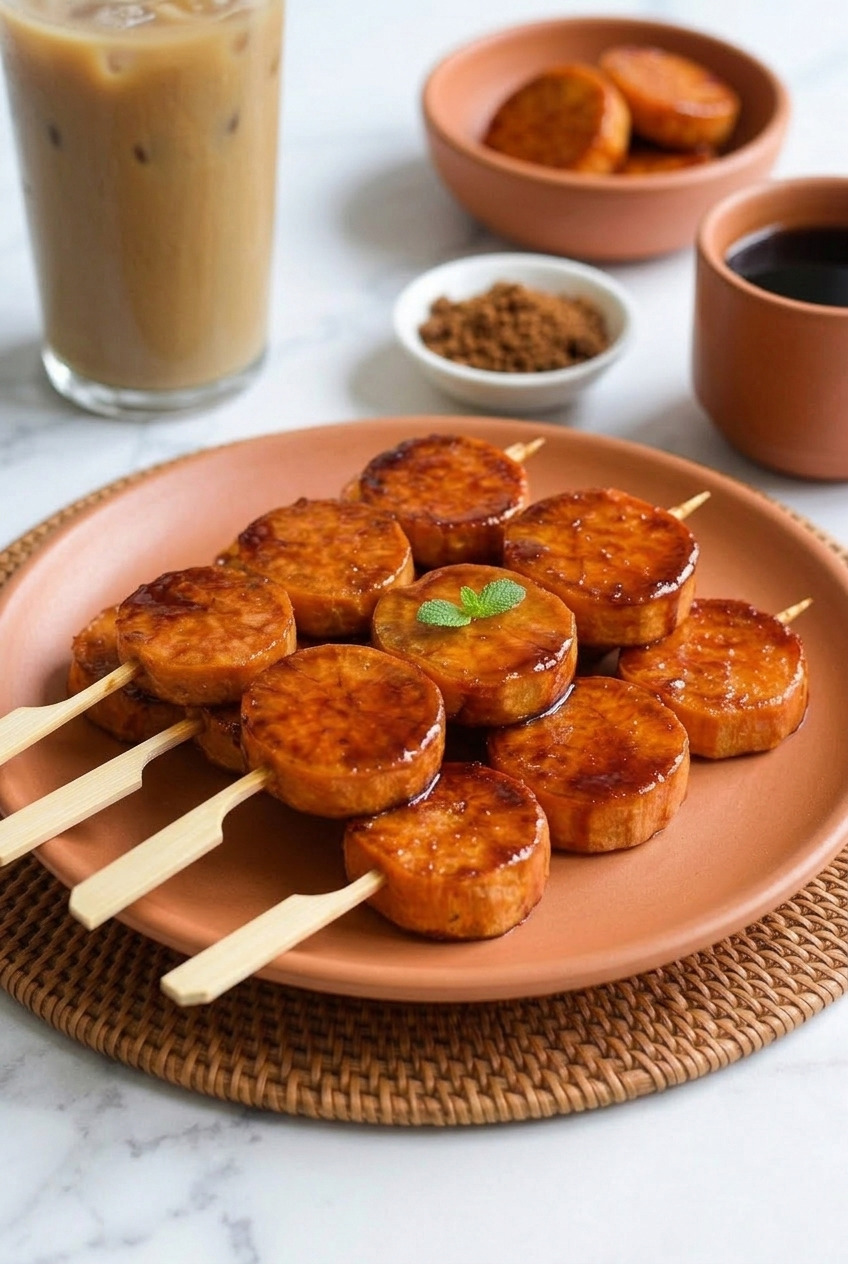
In the Philippines it comes with something cold: sago at gulaman, a bottle of soda, or iced coffee from the same stretch of sidewalk.
At home I serve them with black coffee around four o'clock and they disappear before the pot is empty.
Treat it as merienda rather than dessert. It is a snack that holds you until a late dinner, which is exactly the job it was invented to do.
Storage and Make Ahead
- Honestly, eat them now. Kamote cue is at its best within 30 minutes of leaving the pan, and I am not going to pretend otherwise.
- Room temperature. They hold for a few hours, but the caramel softens as it pulls moisture from the potato.
- Refrigerated. Up to 2 days in an airtight container. The shell is gone at this point and they are chewy.
- Reheating. 375°F oven or air fryer for 5 minutes brings back some crispness. It is a compromise, not a restoration.
- Prep ahead instead. Peel and slice the potatoes in the morning, hold them in cold water, then dry and fry when you want them.
Recipe
Kamote Cue (Filipino Caramelized Sweet Potato Skewers)
Ingredients
For the Kamote Cue
- 2 lb sweet potatoes (kamote) peeled, cut into ½ inch rounds
- 1 cup brown sugar packed
- 1 ½ cups neutral oil for frying
- ¼ teaspoon fine salt
- 8 bamboo skewers soaked in water 20 minutes
Instructions
Fry
- Peel the sweet potatoes and cut them into rounds about ½ inch thick. Halve any very wide rounds so every piece fits on a skewer.
- Heat the oil in a wok or deep skillet over medium heat, around 325F. Fry the slices in a single layer for 6 to 8 minutes, turning once, until a skewer slides in with slight resistance. They should still be pale.
Caramelize
- Sprinkle the brown sugar and salt evenly over the slices, straight into the hot oil. Leave it 30 seconds while it clumps and melts.
- Turn the slices through the melting caramel for 2 to 3 minutes, until every piece wears a dark amber shell and the caramel clings instead of running. Pull them before the color goes mahogany.
Drain and Skewer
- Lift the slices onto a wire rack set over a sheet pan, spaced apart so they do not fuse. Rest 2 minutes until the caramel turns glassy.
- Thread 2 to 3 slices onto each soaked bamboo skewer, pushing the stick in from one end only through the center of each round and leaving about 2 inches bare as a handle. Serve warm.
Notes
- The sugar goes into the frying oil: it is not a syrup made separately and poured over. That is the technique that defines this dish.
- Cut thick: ½ inch rounds. Thin slices become chips and lose the creamy center.
- Watch the color: dark amber is done, mahogany going to black is burnt and bitter.
- Use a rack to drain: paper towels stick to hot caramel.
- Kamote fries variation: cut into ½ by 3 inch batons, fry at 350F for 4 to 5 minutes, then toss with ¼ cup brown sugar off the heat and serve in a paper cone.
- Best within 30 minutes: the caramel shell softens as it sits. Reheat at 375F for 5 minutes to recover some crispness.